
103 cities · 199 sites
Kyūshū faces Korea and the Chinese mainland, and for centuries it was Japan's front door. The ancient state ran the island's provinces, diplomacy and coastal defense from its headquarters at Dazaifu. The minister Sugawara no Michizane was sent there in 901 and died there in 903; students still pray for exam success at Dazaifu Tenmangū, the shrine that grew from his grave. After the first Mongol invasion in 1274, the Kamakura shogunate had a stone wall built along Hakata Bay; stretches of the Genkō Bōrui survive in Fukuoka.
Nagasaki became the center of Japanese Christianity in the late sixteenth century. Under the Tokugawa ban the Shimabara–Amakusa Uprising of 1637 ended in the siege of Hara Castle, and in 1641 the Dutch trading post was moved onto the artificial island of Dejima, for two centuries Japan's main formal link to Europe. In the far south, Kagoshima was the castle town of the Shimazu, lords of Satsuma. In the 1850s Shimazu Nariakira built cannon and shipbuilding works beside the family villa at Sengan-en. In 1877 Saigō Takamori led former samurai against the new government; the war ended with his death on Shiroyama.
Shuri Castle was the royal seat of the Ryūkyū Kingdom, whose kings were invested by Chinese dynasties from the late fourteenth century. In 1609 Satsuma sent an expedition south; King Shō Nei surrendered Shuri, was taken to Kagoshima, and returned in 1611 after swearing an oath to the Shimazu. The kingdom kept its king and its tribute missions to China while Satsuma controlled its trade and finances. Japanese scholars often call this dual subordination; historians disagree about how much autonomy the royal government kept. In 1879 the Meiji government sent officials, police and soldiers into Shuri and, over the royal government's objection, replaced the kingdom with Okinawa Prefecture. Meiji officials called this the Ryūkyū Disposition; Chinese works usually call it Japan's annexation of Ryūkyū, and Okinawan scholars remain divided.
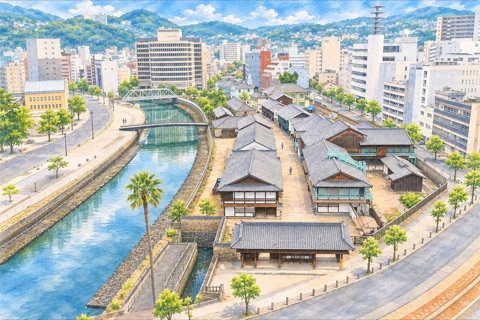 NagasakiDejima
Fan-shaped artificial island that housed the Dutch trading post from 1641 to 1859, now being rebuilt in stages.
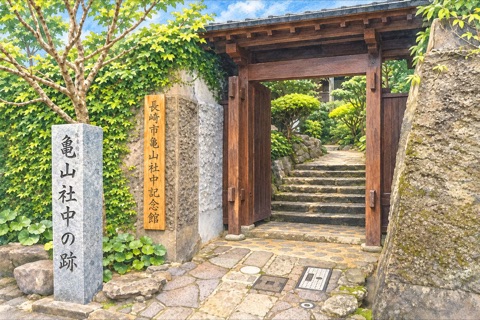 NagasakiKameyama Shachū and Ryōma’s Nagasaki
Hillside base of the trading and shipping group Sakamoto Ryōma founded in 1865, later the Kaientai; now a city memorial museum.
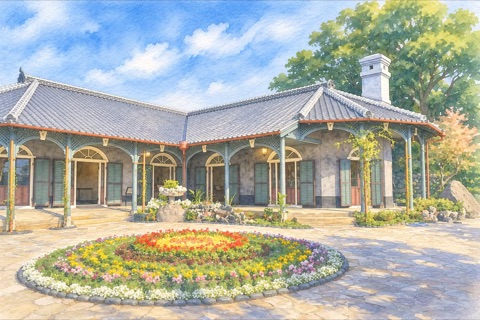 NagasakiGlover Garden
Hillside complex of treaty-port Western houses in Nagasaki, centered on the 1863 Glover House overlooking the harbor.
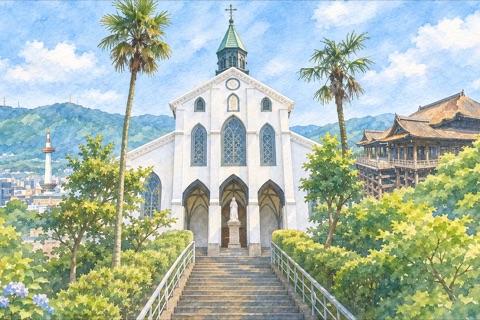 NagasakiŌura Cathedral and Minamiyamate Foreign Settlement
Japan’s oldest surviving church, where hidden Christians revealed their faith in 1865, set in Nagasaki’s former foreign settlement.
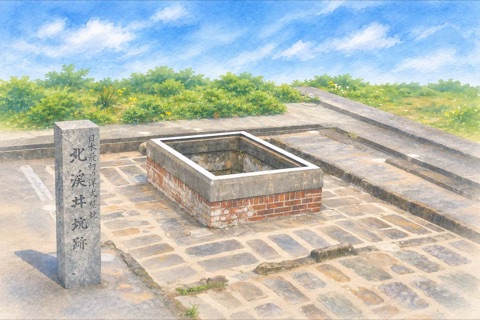 NagasakiTakashima Coal Mine Hokkei Shaft
Remains of an 1869 steam-powered coal shaft on Takashima, regarded as the start of mechanized coal mining in Japan.
Royal capital and port of the Ryūkyū Kingdom, now the capital of Okinawa Prefecture.→
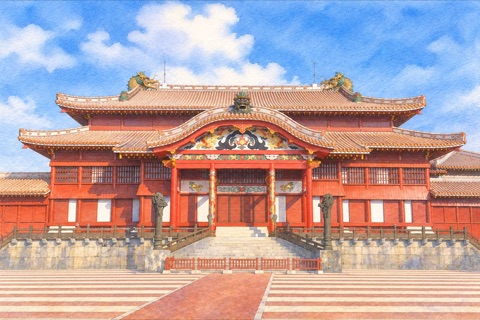 NahaShuri Castle
Royal castle of the Ryukyu Kingdom for over four centuries; its red main hall has been rebuilt after war and fire.
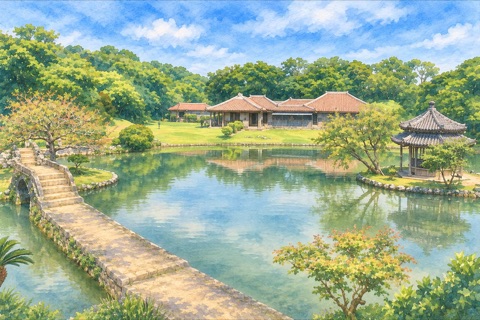 NahaShikina-en
The Ryukyu royal family’s largest villa garden, used to host Qing envoys and restored over two decades after the war.
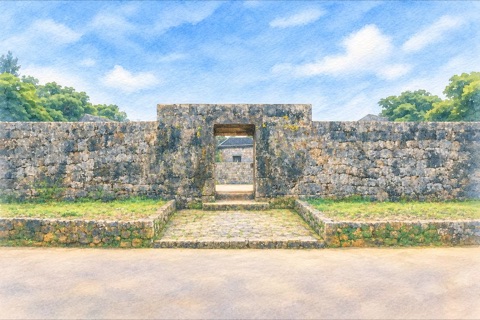 NahaTamaudun
Royal mausoleum of the Second Shō dynasty, a three-chamber limestone tomb built in 1501 beside Shuri Castle.
Seat of the ancient government of Kyushu and resting place of Sugawara no Michizane.→
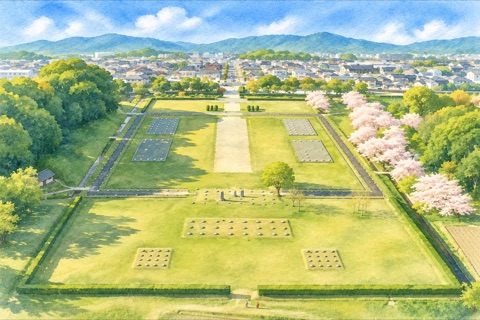 DazaifuDazaifu Government Office Ruins
Site of the central offices of ancient Dazaifu, which governed Kyushu and handled diplomacy and frontier defense.
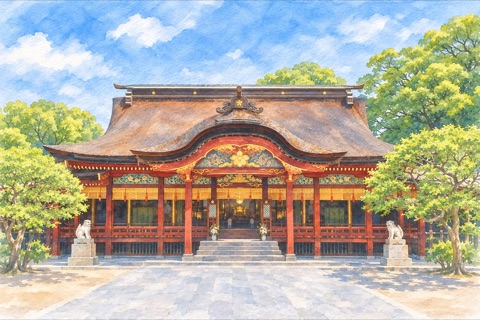 DazaifuDazaifu Tenmangū
Shrine built over Sugawara no Michizane’s grave, a center of Tenjin worship known for prayers for scholarly success and plum trees.
Shimazu castle town of Satsuma, home of Restoration leaders and the Satsuma Rebellion’s end→
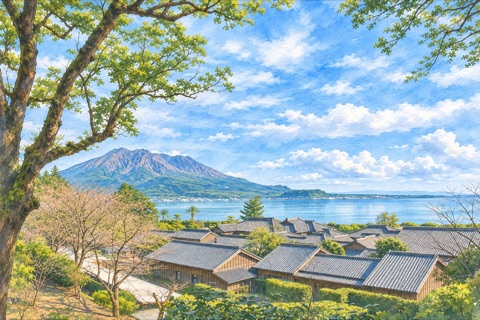 KagoshimaSengan-en
The Shimazu lords’ seaside villa garden framing Sakurajima, beside the remains of Nariakira’s Shūseikan industrial works.
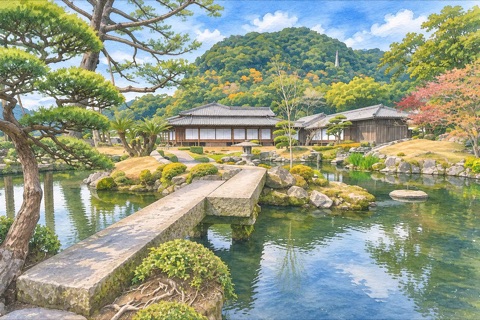 KagoshimaKagoshima: Shiroyama and Tsurumaru Castle
The keepless seat of the Shimazu lords of Satsuma, and the hill where Saigō Takamori made his last stand in 1877.
Ōita hot-spring town that grew from a bathing retreat into a modern resort city.→
Northern Kyushu’s gateway to the continent, where Mongol forces attacked Hakata Bay twice.→
Nabeshima castle town, a technologically advanced late-Edo domain and Ōkuma Shigenobu’s birthplace→
Birthplace of Hachiman worship in Kyushu, home of the head Hachiman shrine→
Southwestern Okinawan islands shaped by the Ryūkyū poll tax and forced migration→
Forested island south of Kagoshima, known for Yakusugi cedars and centuries of logging→
Western trading port of Portuguese ships, Dutch and English factories, and hidden Christians.→
The island where matchlock guns arrived in 1543, now home to the Tanegashima Space Center.→
Seat of the Hokuzan kings of Okinawa’s Three Kingdoms period, at Nakijin Castle.→
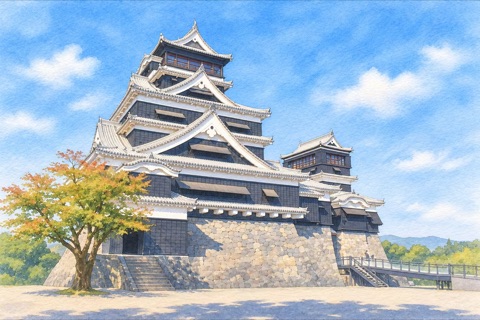 KumamotoKumamoto Castle
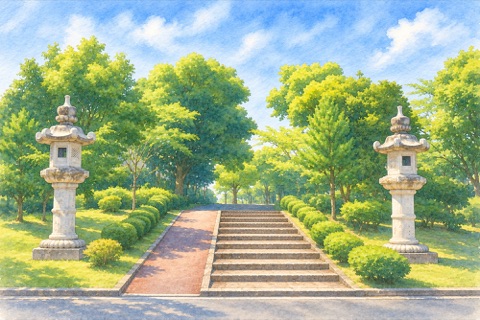 KumamotoTabaruzaka
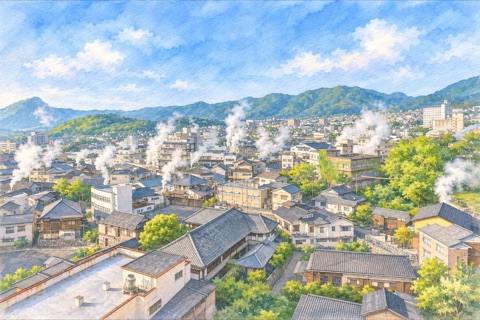 BeppuBeppu Onsen and the Hot-Spring City
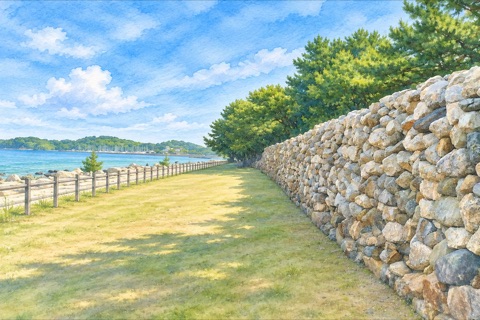 FukuokaHakata Bay Genkō Bōrui
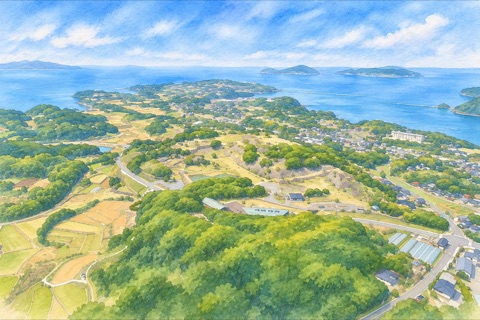 KaratsuHizen Nagoya Castle Ruins
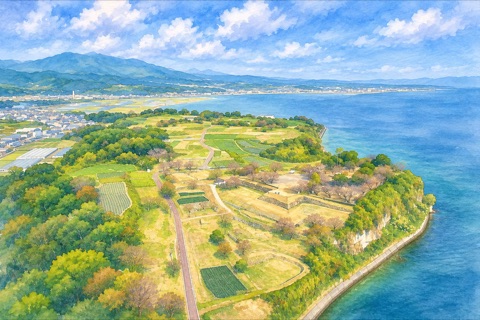 MinamishimabaraHara Castle Ruins
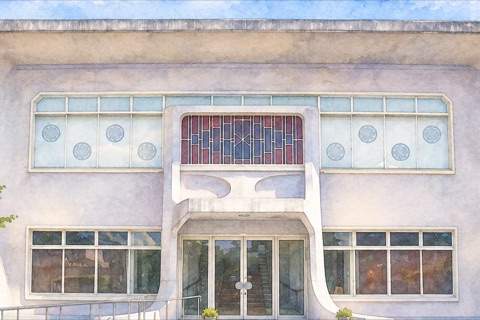 SagaŌkuma Shigenobu Memorial Museum / Saga Castle Reform Area
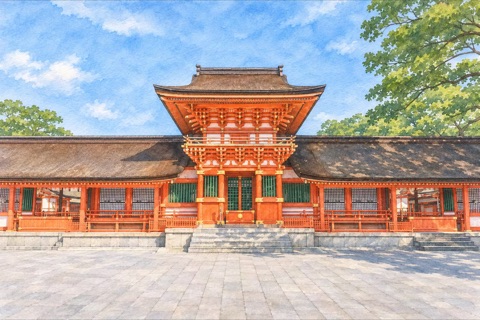 UsaUsa Jingu
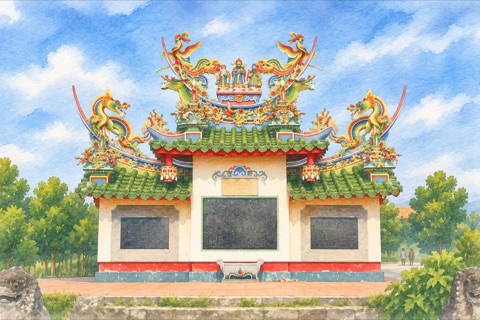 YaeyamaYaeyama Historical Systems
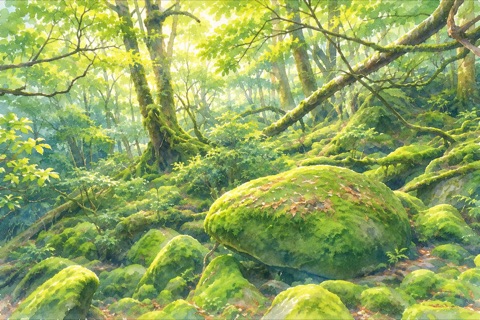 YakushimaYakushima Forest History
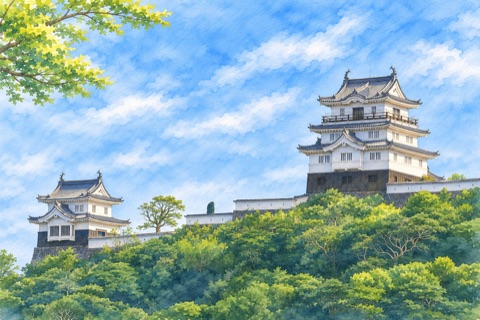 HiradoHirado
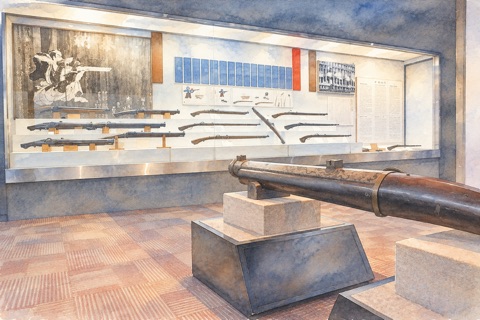 TanegashimaTanegashima
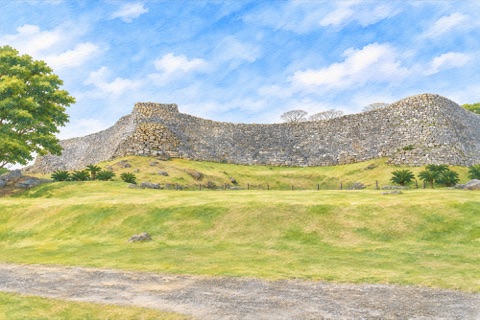 NakijinNakijin Castle Ruins