
Matsushima, a town in central Miyagi Prefecture, faces Matsushima Bay a short distance northeast of Sendai. More than 200 small pine-covered islands are scattered across the bay, and in the Edo period the Confucian scholar Hayashi Shunsai listed it with Amanohashidate and Miyajima as the Three Views of Japan. Matsuo Bashō came here in 1689 on the journey recorded in The Narrow Road to the Deep North and wrote in wonder at the scenery.
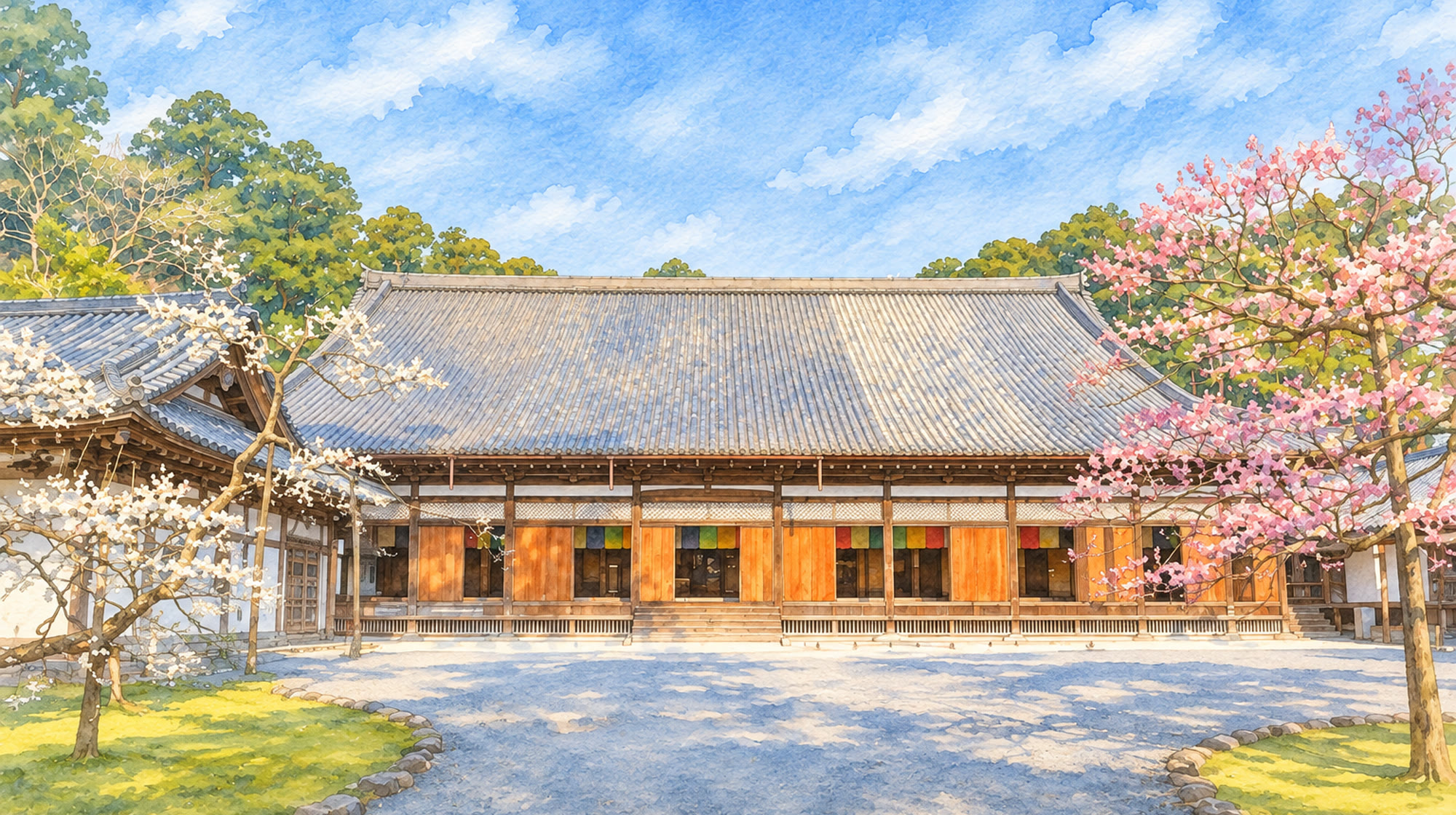
The site covered here is Matsushima and Zuigan-ji. According to the temple’s own tradition, Zuigan-ji began as Enpuku-ji, a Tendai temple founded in the Heian period by the monk Ennin, and became a Rinzai Zen temple in the Kamakura period. It declined in the Sengoku period, and Date Masamune, founder of Sendai domain, rebuilt it on a large scale between 1604 and 1609. Its main hall and kitchen-residence are designated National Treasures, and it became the family temple of the Date. Masamune also rebuilt the Godaidō, a small hall on an islet at the water’s edge, regarded as the oldest surviving Momoyama-style building in the Sendai area.
1Matsushima and Zuigan-jiOne of the Three Views of Japan, with the Zen temple Date Masamune rebuilt in 1604–1609; its main hall is a National Treasure.