
103 cities · 199 sites
For most of Japanese history, Tōhoku and Hokkaidō lay at the northern edge of the state. In the late eighth century the imperial court sent repeated armies against the people of northern Honshū who lived outside its rule, whom it called "Emishi," a label applied by the court rather than a name they used themselves. Aterui, a leader in the Isawa area, routed a court force in 789; in 802, as the court built Isawa Castle, he surrendered and was later executed. After two eleventh-century wars, Fujiwara no Kiyohira moved to Hiraizumi and founded the Northern Fujiwara, who ruled Mutsu and Dewa for nearly a century until Minamoto no Yoritomo destroyed them in 1189. Kiyohira's Chūson-ji, whose Golden Hall became the family's burial chapel, is where a visit to Hiraizumi begins.
After Sekigahara, Date Masamune built Sendai Castle on Aobayama and laid out the town below it. In 1689 Matsuo Bashō walked north through Matsushima, Hiraizumi and Yamadera. The region's sharpest modern memory is the Boshin War. Aizu's lord Matsudaira Katamori had policed Kyoto for the shogunate, and in 1868 his Tsuruga Castle held out for about a month before surrendering. The war ended at Hakodate, where Enomoto Takeaki's former shogunal fleet occupied the Western-designed fort of Goryōkaku until its surrender in 1869.
Hokkaidō, known in the Edo period as Ezochi, was Ainu land. The Ainu are the Indigenous people of Hokkaidō, Sakhalin, the Kuril Islands and the northern tip of Honshū, with their own language and culture. In 1869 the Meiji government created the Kaitakushi (Hokkaidō Development Commission), renamed the island and laid out Sapporo on a grid. The Former Hokkaidō Government Office district records that project, which also took Ainu land and livelihoods and pushed assimilation. For Ainu history told from an Ainu perspective, go to Upopoy in Shiraoi and to Nibutani on the Saru River in Biratori, a living Ainu community.
Castle town in Fukushima, last stronghold of the Aizu domain in the 1868 Boshin War.→
Treaty port in southern Hokkaidō where the Boshin War ended at Goryōkaku→
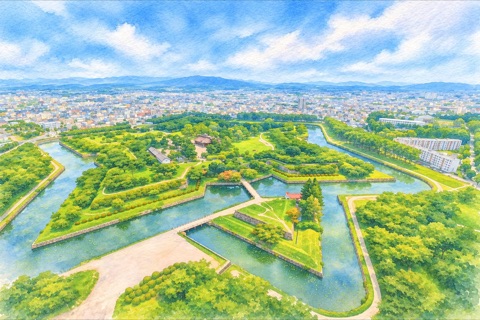 HakodateGoryōkaku
Star-shaped bastion fort built for the shogunate’s Hakodate magistrate; the Boshin War ended here in 1869.
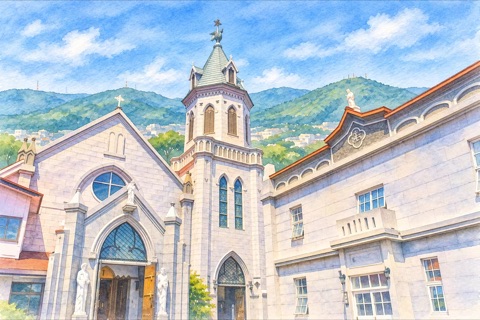 HakodateHakodate Motomachi Churches and Hekketsuhi
Orthodox, Catholic and Anglican churches of Hakodate’s treaty-port slopes, and a memorial to the shogunate’s Hakodate War dead.
Northern capital of the Ōshū Fujiwara and their Buddhist Pure Land→
Hokkaidō’s capital, planned by the Meiji Kaitakushi as the center of northern colonization→
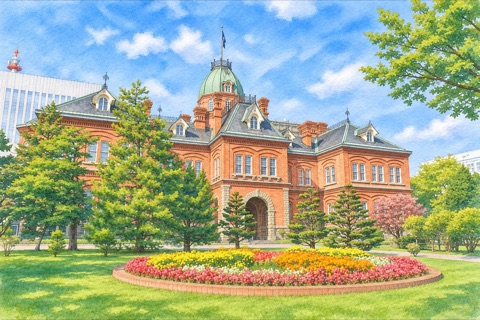 SapporoFormer Hokkaidō Government Office–Kaitakushi Sapporo Heritage Area
Red-brick 1888 government office, Kaitakushi office site and Clock Tower: the center of Meiji rule over Hokkaidō.
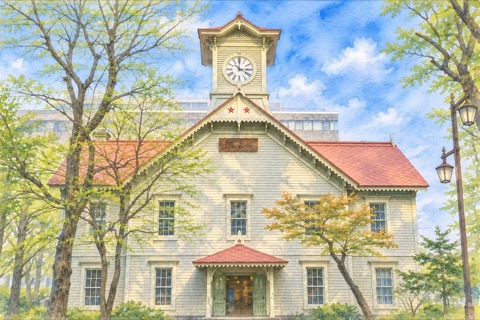 SapporoSapporo Clock Tower
Wooden drill hall of the Meiji-era Sapporo Agricultural College, with a tower clock striking the hours since 1881.
Castle town founded by Date Masamune, seat of the largest domain in northeastern Japan→
Hokkaido town on the Saru River whose Nibutani district is a center of Ainu culture.→
Tsugaru family castle town with Tōhoku’s only surviving Edo-period keep→
Otaru: Hokkaido port where the island’s first railway began, once its financial center.→
Gateway to the north at the Shirakawa Barrier, castle town once ruled by Matsudaira Sadanobu→
Pacific-coast town in Hokkaidō, home of the national Ainu museum and park.→
Inland Tōhoku castle town of Mogami Yoshiaki, and the mountain temple Bashō visited→
Matsushima Bay, one of the Three Views of Japan, and Date Masamune’s Zuigan-ji.→
Seat of the Nara-period Mutsu provincial government and the court’s base in the northeast.→
Castle town of Matsumae domain, a stage for trade and conflict between Wajin and Ainu.→
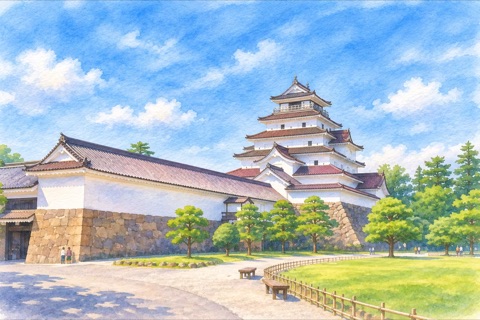 AizuwakamatsuTsuruga Castle
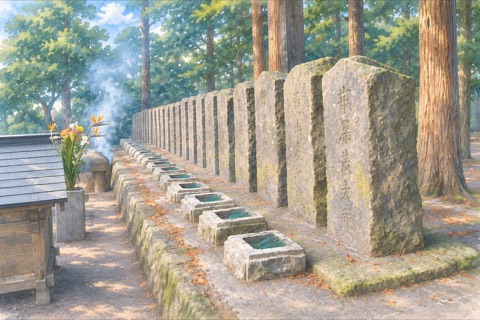 AizuwakamatsuMount Iimori–Byakkotai Sites
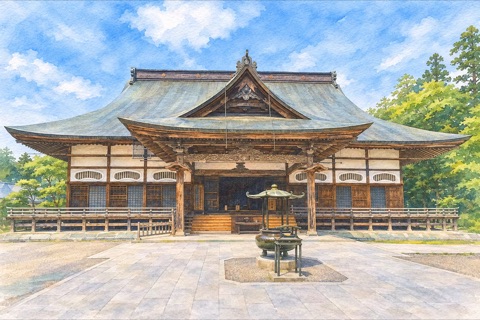 HiraizumiChūson-ji
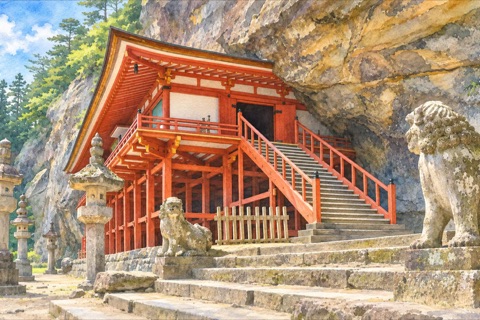 HiraizumiIsawa Castle–Takkoku no Iwaya Historic Area
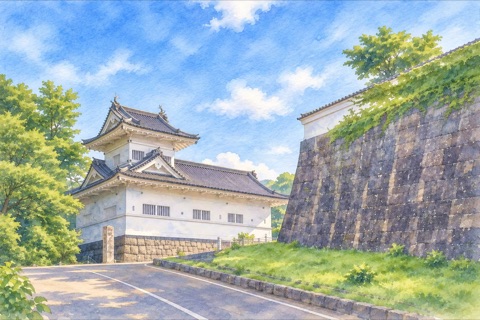 SendaiSendai Castle Ruins
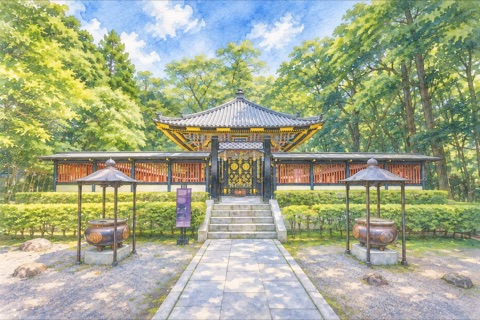 SendaiZuihōden
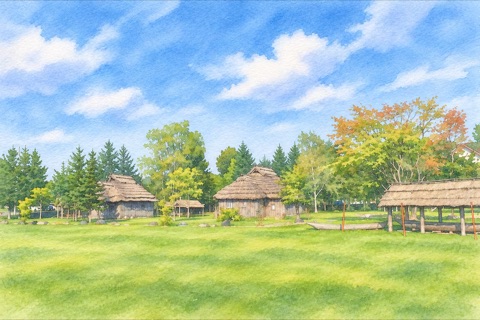 BiratoriNibutani Ainu Cultural Landscape
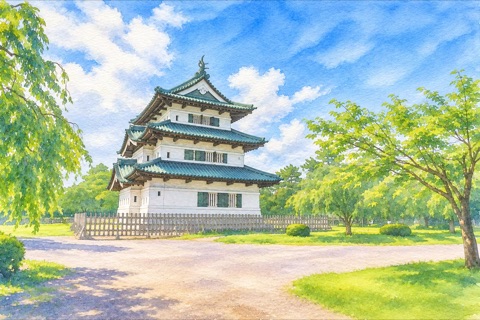 HirosakiHirosaki Castle
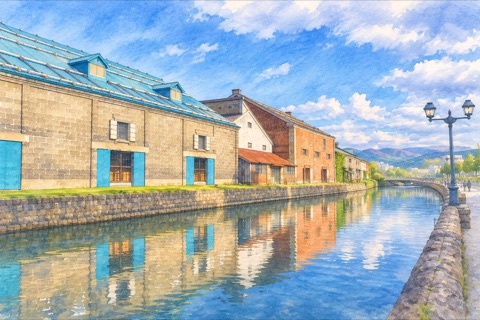 OtaruOtaru Port–Rail–Warehouse Historic Area
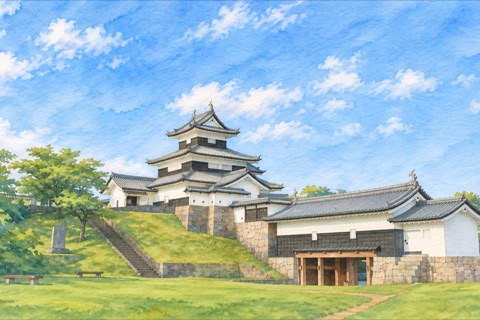 ShirakawaShirakawa Komine Castle
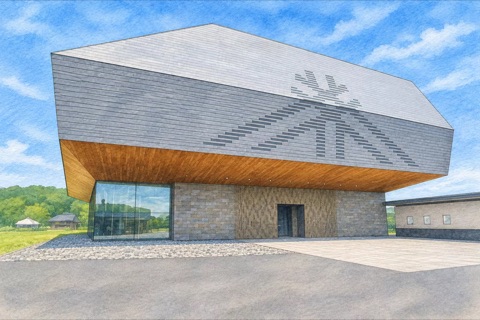 ShiraoiUpopoy National Ainu Museum and Park
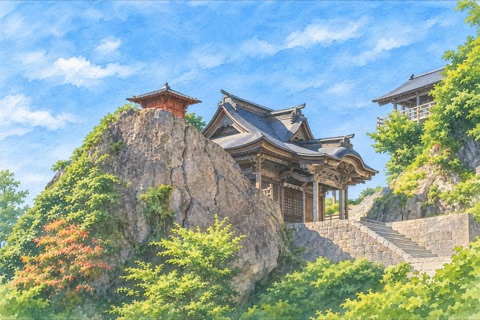 YamagataRisshaku-ji (Yamadera)
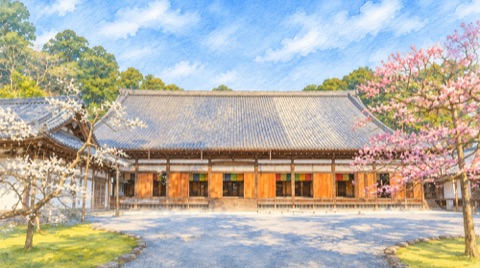 MatsushimaMatsushima and Zuigan-ji
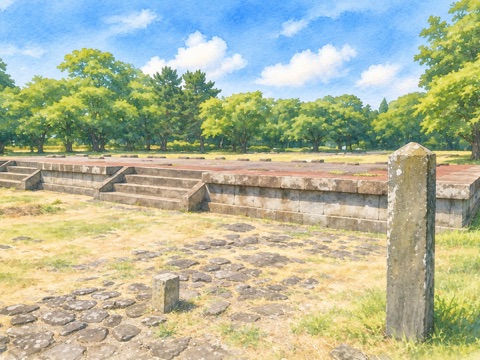 TagajōTagajō Ruins
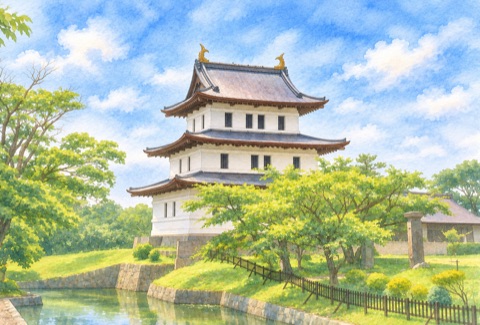 MatsumaeMatsumae Castle