
Mito, the prefectural capital of Ibaraki, lies in the center of the prefecture. In the Edo period it was the castle town of the Mito Tokugawa, one of the three senior branch houses of the shogun’s family. In 1657 the second lord, Tokugawa Mitsukuni, began compiling the Dai Nihon shi (History of Great Japan). The Mito school that grew out of it stressed reverence for the emperor and later strongly shaped the movement to "revere the emperor and expel the barbarians." Most of the men who assassinated Ii Naosuke outside the Sakurada Gate of Edo Castle in 1860 were former Mito retainers, and the last shogun, Tokugawa Yoshinobu, was born into the Mito house.
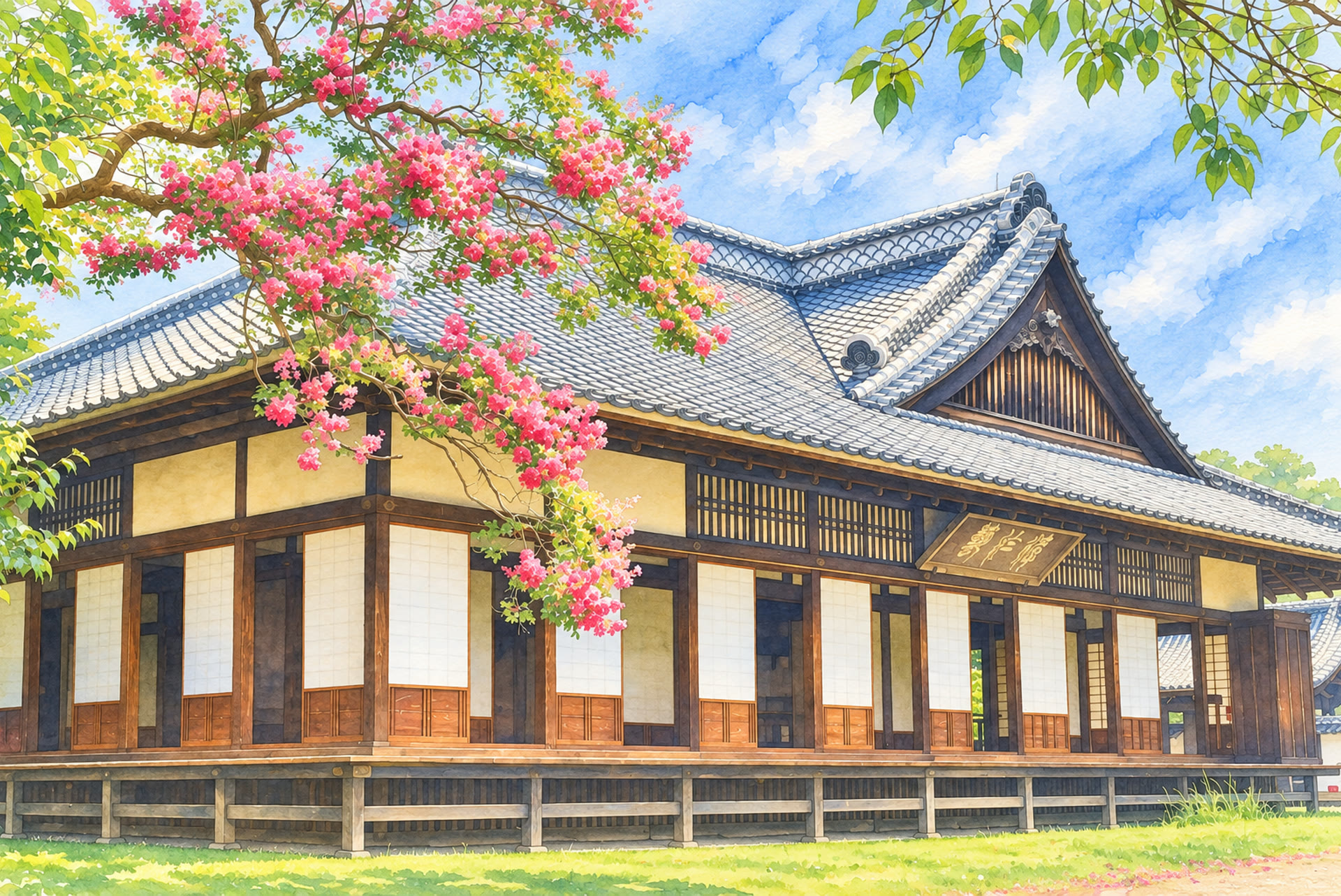
The sites covered here, Kairaku-en and the Kōdōkan, were both created by the ninth lord, Tokugawa Nariaki. The Kōdōkan, opened in 1841, was the domain school, teaching both letters and martial arts. Kairaku-en opened in 1842. Famous for its plum trees, it was named for the idea of enjoying pleasures together with the people and was opened to commoners on set days. After Edo Castle was surrendered in 1868, Yoshinobu went to Mito and lived in confinement in a room of the Kōdōkan.
1Kairaku-en and the KōdōkanA domain school and a public plum garden founded by Tokugawa Nariaki, paired as places of study and rest; heart of Mitogaku.