
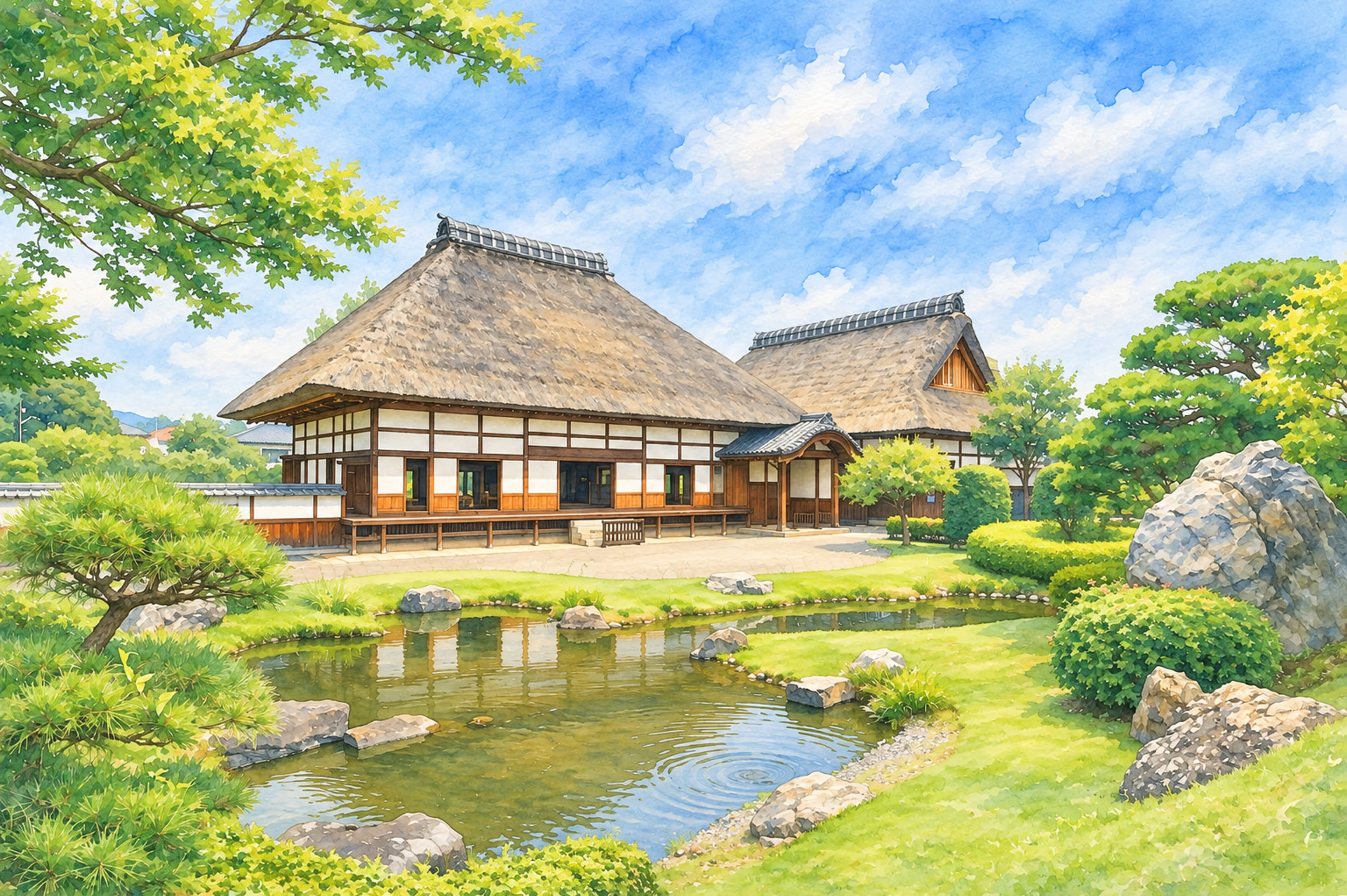
Ashikaga lies in southwestern Tochigi Prefecture, with the Watarase River running through the city and Gunma Prefecture to the south. It is the cradle of the Ashikaga family. In the late Heian period Minamoto no Yoshiyasu, a grandson of Minamoto no Yoshiie, took the Ashikaga estate in Shimotsuke Province as his base, and his descendants adopted its name. One of them, Ashikaga Takauji, founded the Muromachi shogunate in the 14th century. The family’s old residence later became Banna-ji, which still stands in the center of the city.
The site covered here is the Ashikaga School. Its founding date is uncertain: traditions credit the Nara period, Ono no Takamura in the Heian period, or Ashikaga Yoshikane in the Kamakura period, and none can be confirmed. What is certain is that around 1439 Uesugi Norizane, the Kantō deputy, donated books and invited a Zen monk to run it, and the school revived. In the Sengoku period it taught Confucian learning and the Book of Changes to monks who came from across Japan, and Francis Xavier, in a letter of 1549, called the academy of Bandō the largest and most famous in Japan.
1Ashikaga SchoolMedieval center of Confucian and divination studies revived by Uesugi Norizane, with a Confucian shrine built in 1668.