
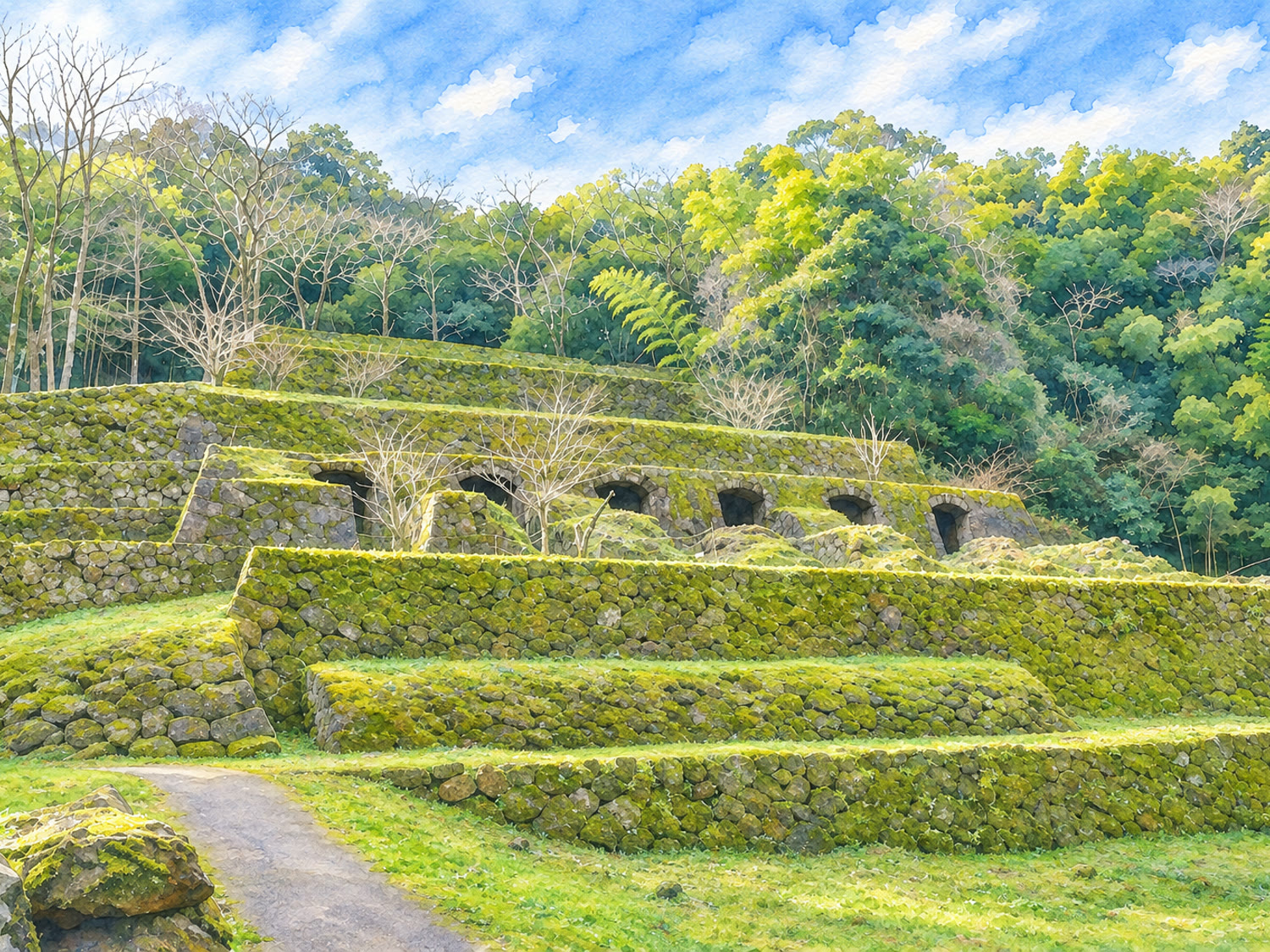
Ōda lies in central Shimane Prefecture on the Sea of Japan, and it owes its place in Japanese history to the Iwami Ginzan silver mine. According to the records, the Hakata merchant Kamiya Jutei began working the mine around 1526, and in 1533 he brought in technicians who introduced the cupellation method of refining, which had come from the Korean Peninsula, sharply increasing output. The Ōuchi, Amago and Mōri fought repeatedly for control of the mine. After the Battle of Sekigahara in 1600 it came under direct Tokugawa rule and was run by Ōkubo Nagayasu and others. In the 16th and 17th centuries Japan was one of the world’s major silver producers, and silver from Iwami flowed through Chinese and Portuguese merchants into the trade networks of East Asia and Europe.
The site covered here is Iwami Ginzan. Mining ended in 1923, leaving mine shafts known as mabu, the site of the magistrate’s office, the streets of Ōmori, and the ports such as Yunotsu and Tomogaura through which the silver was shipped. In 2007 "Iwami Ginzan Silver Mine and its Cultural Landscape" was inscribed as a World Heritage Site.
1Iwami GinzanOne of Japan’s chief silver mines in the 16th–17th centuries, whose silver entered East Asian trade; World Heritage since 2007.