
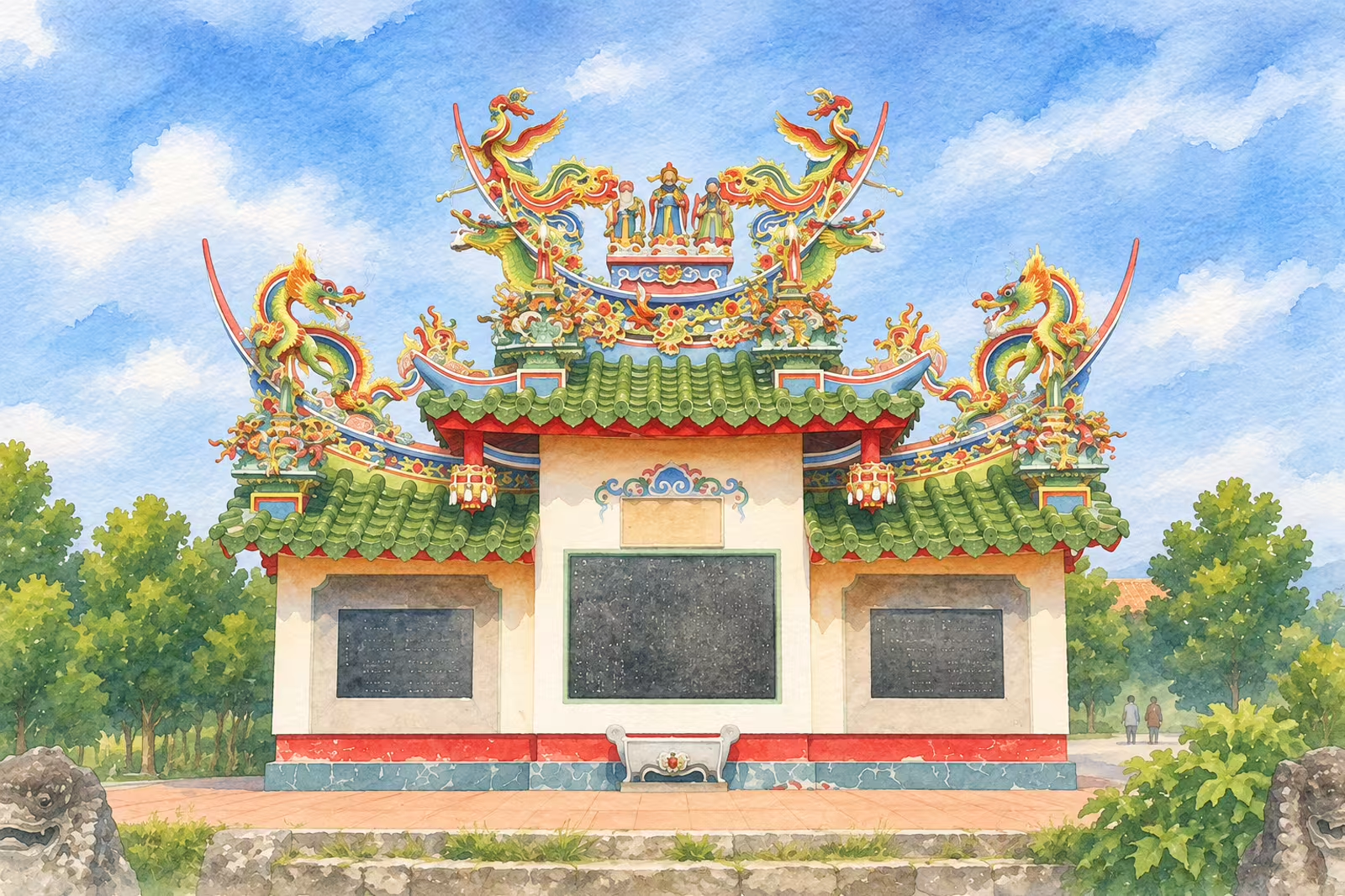
The Yaeyama Islands lie at the southwestern tip of Okinawa Prefecture. Centered on Ishigaki, they include Iriomote, Taketomi and Yonaguni, among others, and sit about 400 kilometers from Okinawa Island, closer to Taiwan than to Shuri. This entry covers the systems by which Yaeyama was governed under the Ryūkyū Kingdom and in the early Meiji years: how Shuri ran these distant islands, and how a poll tax, natural disaster and forced migration shaped island society. Today the Miyara Dunchi residence, the site of the Kuramoto office and the local museum on Ishigaki are the main places to trace this history.
01Joining the Ryūkyū Kingdom
Before the 15th century the islands were divided among local chiefs. In 1500 Oyake Akahachi, a chief on Ishigaki, rose against Shuri. King Shō Shin sent forces to crush the revolt, and from then on Yaeyama was ruled directly by the Ryūkyū Kingdom. The royal government set up an administrative office on Ishigaki called the Kuramoto, staffed by local gentry who carried out Shuri’s orders.
02Satsuma and the poll tax
In 1609 the Satsuma domain invaded Ryūkyū, and the kingdom was obliged to pay tribute to Satsuma. Much of that financial pressure passed down to the outer islands. From around 1637, it is generally held, Miyako and Yaeyama were subject to a poll tax: fixed quotas of rice or cloth assessed by age and sex, regardless of harvest. The burden was severe. The royal government also moved people by order from crowded islands to found new villages on malarial land. In 1771 the Meiwa tsunami struck Yaeyama. Records put the dead at about 9,000, close to half the population, and many villages were abandoned. The population took a very long time to recover.
03After 1879, and what can be seen today
In 1879 the kingdom was abolished and Okinawa Prefecture created. To keep the region stable, the Meiji government left the old system in place for a time, and the poll tax was not abolished until 1903, when a modern land tax replaced it. On Ishigaki today, Miyara Dunchi is a gentry residence built around 1819 in the style of Shuri’s upper class. According to tradition, the royal government ordered it altered because it exceeded what its owner’s rank permitted. The house is an Important Cultural Property and its garden a national Place of Scenic Beauty. The Kuramoto site, Tōrin-ji temple and the Ishigaki City Yaeyama Museum also preserve traces of this period.