
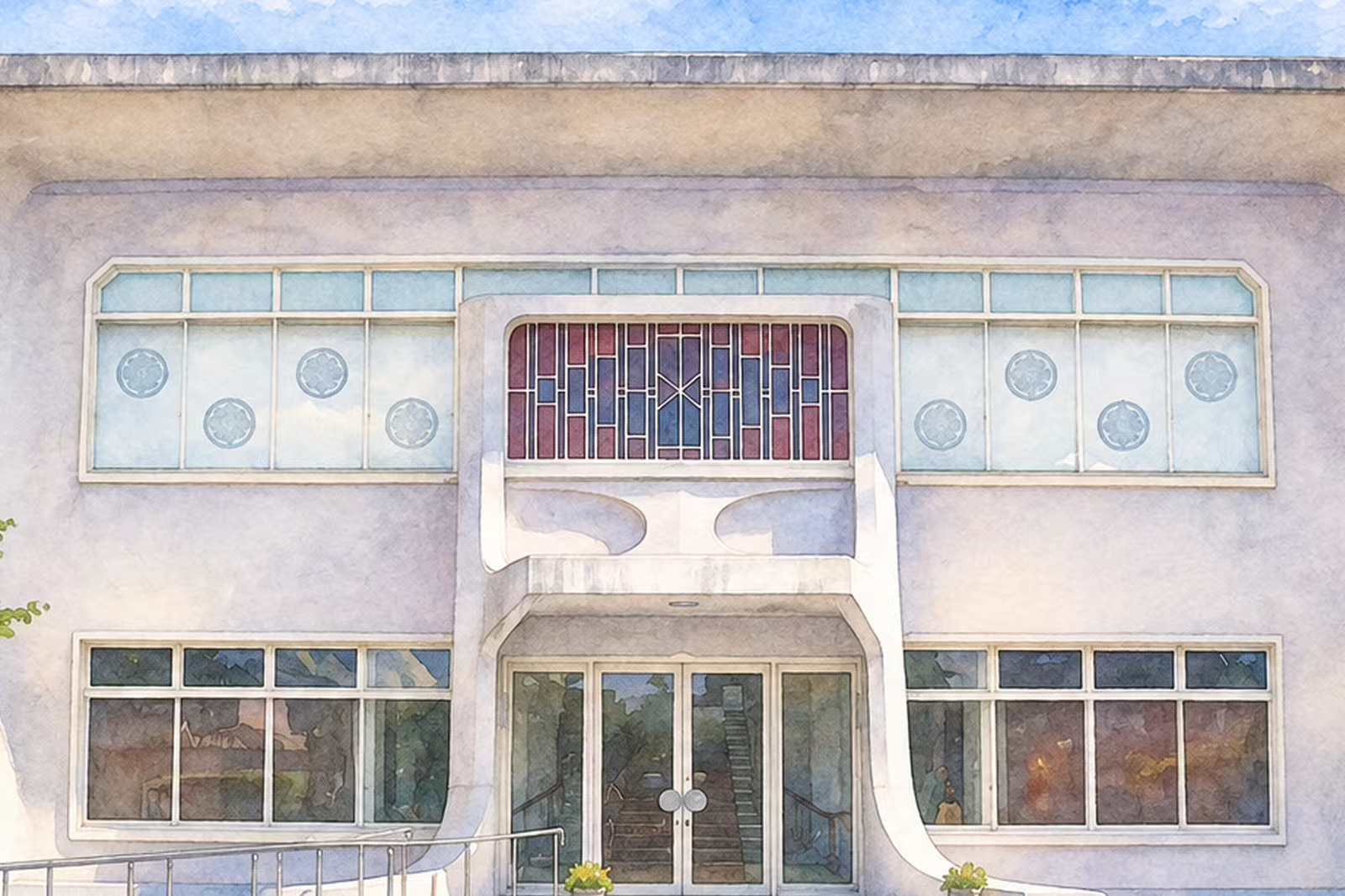
The Ōkuma Shigenobu Memorial Museum and his birthplace stand in the old castle town of Saga, in Saga Prefecture, a short distance north of Saga Castle. The castle’s main enclosure, in turn, was the center of the reforms carried out by Saga domain at the end of the Edo period. Seen together, the two sites help explain why so many figures in the Meiji government came from Saga, and where the best known of them, Ōkuma Shigenobu, started out.
01Ōkuma Shigenobu and his birthplace
Ōkuma was born in 1838 into a samurai family of gunnery instructors in Saga domain. As a boy he entered the domain school, the Kōdōkan, later turned to Dutch studies, and then studied English in Nagasaki, where he is said to have been taught by the missionary Guido Verbeck. After the Meiji Restoration he handled finance and foreign affairs in the new government. Forced out in the political crisis of 1881, he founded the Rikken Kaishintō party and Tokyo Senmon Gakkō, the later Waseda University, the following year. In 1889, while foreign minister, he lost his right leg in a bomb attack. He served twice as prime minister (1898 and 1914–1916) and died in 1922 at the age of 83.
The house where he was born and grew up is a late Edo-period samurai residence; he is said to have studied in a small upstairs room. It is designated a national historic site. The Ōkuma Memorial Museum next to it opened in 1966. Designed by the architect Imai Kenji, it displays documents and personal belongings and plays recordings of his voice.
02Saga Castle and Nabeshima Naomasa’s reforms
Saga Castle, seat of the Nabeshima clan, was built in the early Edo period and surrounded by a broad moat; trees are said to have been planted so thickly that the castle was hard to see from outside. After the main enclosure burned in 1835, the tenth lord, Nabeshima Naomasa, rebuilt its palace in 1838 and made it the base for his reforms. He restored the domain’s finances, enlarged the Kōdōkan, built reverberatory furnaces to cast iron cannon, promoted smallpox vaccination, and studied steam engines and Western ships. Saga’s duty of guarding Nagasaki gave it early contact with Western knowledge and weapons, which formed the background to these efforts. Later generations grouped Naomasa, Ōkuma, Etō Shinpei, Soejima Taneomi, Ōki Takatō, Sano Tsunetami and Shima Yoshitake as the "Seven Wise Men of Saga."
03What can be seen today
In 2004 part of the main-enclosure palace was reconstructed from excavation results and old plans and opened as the Saga Castle Honmaru History Museum; it covers about a third of the original palace. The Shachi Gate and its adjoining turret, built in 1838, are original and designated an Important Cultural Property, and the gate still bears bullet marks from the Saga Rebellion of 1874. The keep base, stone walls and moats also largely survive. Ōkuma’s house is original, while the museum is a postwar memorial building.