
At a glance
How wabi tea grew from Jukō to Sen no Rikyū, what the tea room, utensils and two teas mean, and how to be a guest at a tea session.
- In chanoyu the host prepares a bowl of matcha in front of guests through a fixed sequence of movements and hands it over.
- Wabi tea began with Murata Jukō, was carried further by Takeno Jōō, and was given its form by Sen no Rikyū in the 16th century.
- Rikyū’s Taian has a tea space of only two mats; the nijiriguchi of a grass-hut tea room is about 60–70 cm square and entered on the knees.
- A formal chaji lasts about four hours, with charcoal, kaiseki and both thick and thin tea; a visitor’s tea experience usually takes about an hour.
- After Rikyū’s grandson Sen Sōtan, the family split into Omotesenke, Urasenke and Mushakōjisenke, together called the three Sen houses.
Most people meet Japanese tea ceremony as a curiosity: a kimono-clad host, a hushed room, a bowl turned twice before drinking. What looks like ritual for its own sake is a centuries-old method of hosting, in which every gesture has been worn smooth by use until nothing unnecessary is left. This introduction explains what actually happens in a tea room, why a bowl of whisked green tea came to carry so much meaning, how three men in the fifteenth and sixteenth centuries turned a rich man’s pastime into an art of poverty, and what you can expect, and do, when you sit down as a guest at a tea gathering in Kyoto or Tokyo.
01What Is Actually Happening
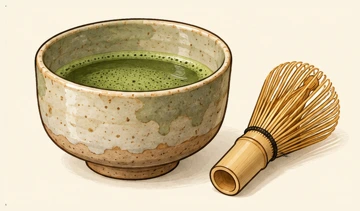
The Japanese name is chanoyu, literally "hot water for tea." Another term, sadō or chadō, "the way of tea," came into common use later and stresses the discipline behind it. Both point to the same scene. In a small room floored with tatami mats, a host kneels beside a sunken hearth or a brazier on which an iron kettle simmers. The host scoops powdered green tea, matcha, into a bowl with a slender bamboo scoop, ladles in hot water, and whisks it with a bamboo whisk until it turns smooth and pale green. The bowl is set before a guest, who bows, drinks, admires the bowl, and returns it.
- 1
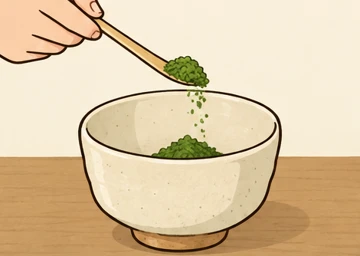 Matcha powder goes into the bowl with a bamboo scoop
- 2
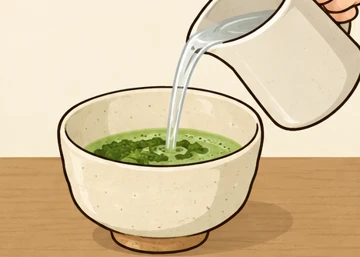 Hot water is added (in the tea room, ladled from the kettle)
- 3
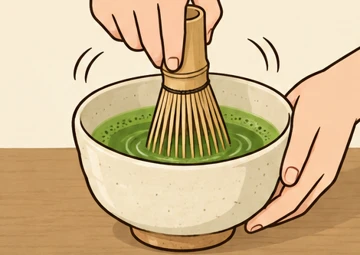 The whisk is moved quickly back and forth
- 4
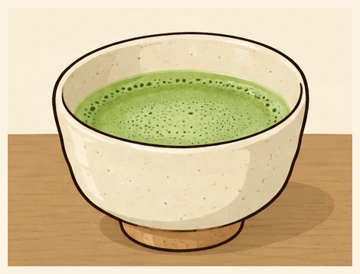 Once the tea is smooth, it is ready for the guest
That is all. And yet it can take four hours.
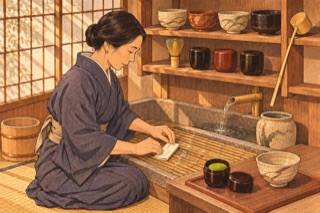
The reason is that the bowl of tea is the endpoint of a long act of preparation. Before guests arrive, the host has swept and watered the garden path, chosen a hanging scroll and a single flower to suit the day, laid and lit the charcoal so that the water will be at the right heat at the right moment, and cooked a modest meal. The guests, for their part, have come prepared to notice all of this. Chanoyu is an art of hosting in which host and guest share responsibility for the occasion.
The host’s sequence of movements is called temae, "procedure." Each step, from folding the silk cloth to resting the ladle on the kettle, follows a set form. Beginners often find this rigid, but the forms are less arbitrary than they seem. Over generations, teachers settled on the way to wipe a bowl that leaves it cleanest in one pass, the way to set a ladle down that never drips, the arrangement of utensils that keeps the host’s hand from crossing in front of a guest. Once the body knows the sequence, the host no longer has to think about what comes next and can attend instead to the guests and the moment.
Tea people often summarize the spirit of the practice with four characters: wa, harmony; kei, respect; sei, purity; and jaku, tranquility. The phrase is traditionally attributed to Sen no Rikyū, the great sixteenth-century master, though it was probably formulated by later followers. A second phrase, ichigo ichie, "one time, one meeting," expresses the idea that this particular gathering, these people, this weather, this scroll, will never come together again in quite the same way, and so it deserves full attention. The idea goes back to Rikyū’s circle; the four-character phrase was popularized in the nineteenth century by Ii Naosuke, the shogunate’s chief minister, who was a serious tea practitioner and wrote about it.
02From Monastery Medicine to Shogun’s Treasure
Tea reached Japan with Buddhist monks returning from China as early as the eighth and ninth centuries, but the form that became chanoyu arrived later. In the late twelfth century the monk Eisai (also read Yōsai), who brought Rinzai Zen to Japan, returned from Song-dynasty China with the practice of grinding tea leaves to powder and whisking them in hot water. In 1211 he wrote Kissa yōjōki, "Drinking Tea for Health," which praised tea as medicine, and he is said to have offered tea to the shogun Minamoto no Sanetomo to cure a hangover. Around the same time the monk Myōe planted tea at Kōzan-ji in Toganoo, northwest of Kyoto, and Toganoo tea became the standard by which others were judged.
By the fourteenth century tea had become a social game for warriors and aristocrats. At tōcha, tea-tasting contests, participants sampled many cups and guessed which came from Toganoo, the "true tea," and which from elsewhere. Prizes were awarded, wagers made, and the parties were known for drinking and extravagance.
Under the Ashikaga shoguns of the Muromachi period, tea moved indoors into the formal reception halls known as shoin, with their display alcoves and built-in shelves. The shoguns collected karamono, "Chinese things": celadon vases, tenmoku tea bowls with their dark glazes, small ceramic tea caddies, and paintings by Song and Yuan masters. A staff of aesthetic advisers called dōbōshū cataloged and displayed these treasures; the most famous were three generations named Nōami, Geiami, and Sōami. They codified how tea should be prepared on a lacquered stand, the daisu, in a formal hall. The eighth shogun, Ashikaga Yoshimasa, presided over this culture from his retreat in the eastern hills of Kyoto, the villa now known as Ginkaku-ji, the Silver Pavilion. Objects gathered by the Ashikaga shoguns up to his time became known as Higashiyama gomotsu, "the Higashiyama treasures," and were prized for centuries afterward.
Shoin tea was formal, splendid, and expensive. It was a way of showing off a collection. What happened next was a turn in the opposite direction.
03Three Men and the Invention of Wabi
The first figure in the story of wabi-cha, the austere style of tea, is Murata Jukō (also read Shukō, 1423–1502). Born in Nara, he became a monk as a youth and, according to tradition, studied Zen under the eccentric priest Ikkyū Sōjun at Daitoku-ji in Kyoto. One well-known story says Ikkyū gave him a piece of calligraphy by the Chinese Zen master Yuanwu Keqin, which Jukō hung in his tea room, joining tea and Zen. The story is later legend, but it reflects something real: Jukō brought the plainness of the Zen temple into tea.
Jukō left a short letter to his disciple Furuichi Harima, later called the Kokoro no fumi, "Letter of the Heart." In it he urged tea practitioners to blur the line between Chinese and Japanese things, to set rough local wares beside the prized imports rather than worship imports alone. A saying attributed to him holds that the moon is not pleasing unless partly hidden by clouds. Jukō reduced the tea space to four and a half mats, about eight square meters, and used humbler bowls. Wabi originally meant the forlorn feeling of someone fallen on hard times. In tea it came to mean the quiet beauty found in what is simple, imperfect, and spare.
The second figure is Takeno Jōō (1502–1555), a wealthy merchant of Sakai, the bustling port near present-day Ōsaka that grew rich on foreign trade and governed itself through a council of merchants. Jōō was first a poet of linked verse, renga, and studied classical poetry with the court noble Sanjōnishi Sanetaka. He carried the sensibility of poetry into tea, simplifying both room and utensils, favoring modest objects such as a lid rest cut from bamboo, and bringing rough unglazed Japanese stoneware from kilns such as Shigaraki and Bizen into the tea room. Later tea writers say Jōō explained wabi with a poem by Fujiwara no Teika: looking out over the bay, there are no cherry blossoms and no autumn leaves, only a reed-thatched hut by the shore in the autumn dusk. The beauty of flowers and leaves is gone, and what remains is the quiet loneliness that tea sought.
The third figure, and the one who shaped chanoyu as it is practiced today, is Sen no Rikyū (1522–1591). He too was a Sakai man, born to a family that dealt in fish wholesale; his childhood name was Yoshirō and his Buddhist name was Sōeki. The name Rikyū was a lay title granted in 1585, when he assisted at a tea presentation for Emperor Ōgimachi at the imperial palace. He studied first with Kitamuki Dōchin and then with Takeno Jōō.
Rikyū lived at a time when tea was deeply political. The warlord Oda Nobunaga collected famous tea utensils and used them as rewards for his generals, in place of land; permission to host a tea gathering became a privilege granted by the ruler. Rikyū served Nobunaga as one of his tea masters, alongside Imai Sōkyū and Tsuda Sōgyū, both also Sakai merchants. After Nobunaga’s death in 1582, Toyotomi Hideyoshi, who unified Japan, kept Rikyū in his service, and Rikyū’s influence reached its height; he received a stipend of 3,000 koku and was among the most influential figures at Hideyoshi’s side.
In Hideyoshi’s service Rikyū is linked to two projects that seem to contradict each other. One was the Golden Tea Room, in which he is generally thought to have had a hand: a portable room whose walls, ceiling, and pillars were covered in gold leaf, which Hideyoshi had carried into the imperial palace to serve tea to the emperor. The other was Taian, a tea room of just two mats, with mud-plastered walls, dim light, and an entrance so low that guests had to crawl in. In 1587 Hideyoshi held the Grand Kitano Tea Gathering at Kitano Tenmangū shrine in Kyoto, announcing that anyone, regardless of rank, could attend with a kettle, a well bucket, and a tea bowl; anyone without tea could bring roasted barley flour instead. Rikyū was among the masters who served tea.
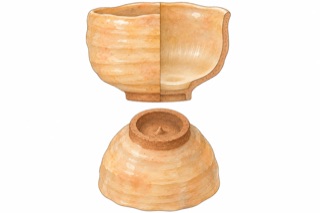
Rikyū also worked with a tile maker named Chōjirō to create a new kind of tea bowl, shaped by hand rather than thrown on a wheel and fired at low temperature. These became known as Raku ware. A black Raku bowl is dark, slightly irregular, thick-walled, and warm to hold. It would look out of place in a golden room. In a mud-walled hut it looks exactly right. Tea lore says Hideyoshi preferred red bowls, while Rikyū favored black.
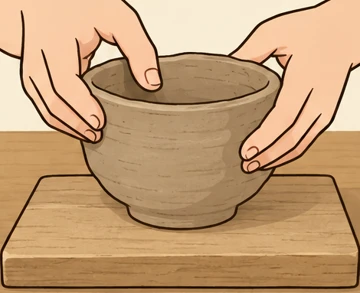
Raku bowls are shaped by hand rather than thrown on a wheel (illustration)
In 1591 Hideyoshi ordered Rikyū to commit ritual suicide. Why remains uncertain. The most common explanation involves a wooden statue of Rikyū, wearing sandals, that was installed in the upper story of the main gate at Daitoku-ji, which Rikyū had paid to complete; anyone passing through the gate, Hideyoshi included, would pass beneath Rikyū’s feet. Other explanations include accusations that Rikyū profited from dealing in tea utensils, political rivalries at Hideyoshi’s court, and a deeper clash of taste between the two men. Rikyū was in his seventieth year by the traditional Japanese count. His line survived, and his grandson Sen Sōtan rebuilt the family’s fortunes.
04The Garden Path and the Grass Hut
At a formal tea gathering the first thing a guest experiences is not tea but a garden. The path leading to the tea room is called the roji, often translated "dewy path." It is usually divided into an outer and an inner garden, separated by a simple middle gate. Guests wait on a roofed bench in the outer garden until the host comes to the gate. Host and guests bow to each other in silence, and the guests proceed.
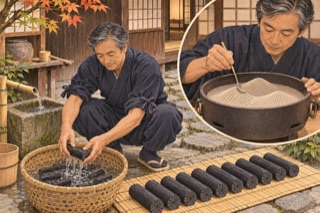
The path is made of stepping stones, tobiishi, set at intervals and heights that slow the walker and make you look down. Stone lanterns light the way at evening gatherings. Near the tea room sits a low stone basin called a tsukubai, from a word meaning "to crouch," because you must crouch to use it. Guests rinse their hands and mouth here with a bamboo dipper, a gesture of leaving the dust of the world behind. On a side path you may see a small stone tied with black cord, a sekimori-ishi, which tells guests without words that the way is closed. The host waters the path shortly before guests arrive, so the stones and moss glisten; it is a quiet sign that everything is ready.
- 1
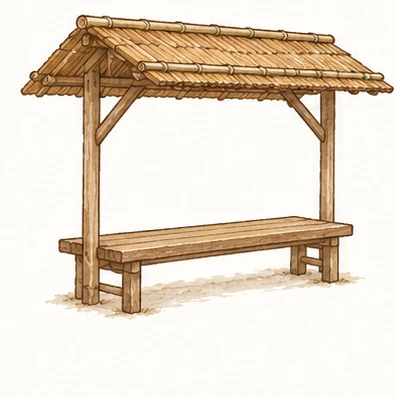 Guests first wait on the roofed koshikake bench
- 2
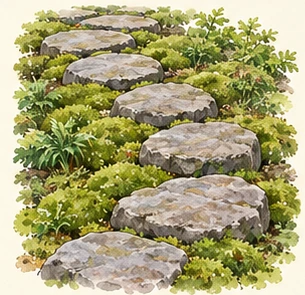 Stepping stones slow the walk toward the tea room
- 3
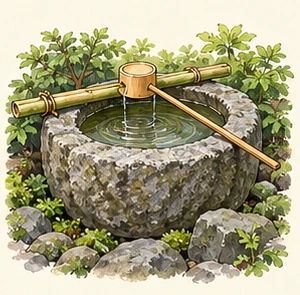 At the low tsukubai basin, guests rinse hands and mouth with a bamboo ladle
At the end of the path stands the tea room. The rustic type that Rikyū perfected is called sōan, "grass hut," and is modeled on a farmhouse or hermit’s cottage rather than a formal hall. Posts are often unplaned logs with the bark left on; walls are clay plaster mixed with straw; windows may be nothing more than an opening in the wall exposing the bamboo lath beneath, covered with paper. The standard size is four and a half mats. Rooms of four and a half mats or fewer are called koma, small rooms; larger ones hiroma.
The most distinctive feature is the guests’ entrance, the nijiriguchi, or "crawl-in entrance," roughly sixty to seventy centimeters square. To enter you kneel, bow your head, and shuffle through on your knees. Tradition holds that Rikyū took the idea from the low entrances of river boats at the Hirakata landing near Ōsaka. Whoever you were outside, warlord or merchant, you entered bowed, and a samurai had to leave his sword on a rack outside. Inside, there were only host and guests.
Taian, at the temple Myōkian in Ōyamazaki, between Kyoto and Ōsaka, is the only surviving tea room believed to have been designed by Rikyū, and it is a National Treasure. The tea space itself is two mats, one for the host and one for the guest; with an anteroom and a preparation area, the whole structure is only about four and a half mats. The corners and ceiling of the alcove are plastered over in clay so that no posts or frames show, a style called murodoko, softening the edges so that the tiny room does not feel cramped. Host and guest sit almost close enough to touch.
Inside any tea room, the place of honor is the tokonoma, the alcove. It holds a hanging scroll, usually calligraphy by a Zen priest, with phrases like nichinichi kore kōjitsu, "every day is a good day." The scroll sets the theme of the gathering, and it is considered the most important object in the room. A single flower or two, arranged in a bamboo or ceramic vase, may join it. A rule attributed to Rikyū says to arrange flowers as they grow in the field, which means one seasonal stem, not a bouquet.
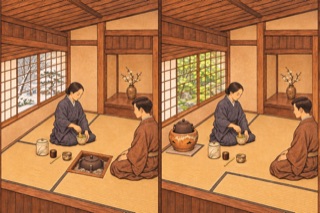
Season governs the room. From November through April the kettle sits over a sunken hearth, the ro, cut into the floor, which warms the room. From May through October the hearth is covered and the kettle moves onto a portable brazier, the furo, set farther from the guests. The opening of the hearth in November, robiraki, is often called the New Year of tea, and it is one of the most important occasions of the year. It is also when the new tea, picked in spring and stored in sealed jars through the summer, is first opened.
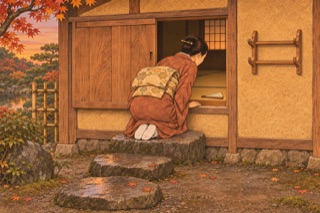 Deep diveThe Tea RoomA small Japanese tea room can look almost artless: a box of earth walls and straw mats, a few odd little windows, a recess with a single scroll.8 chapters
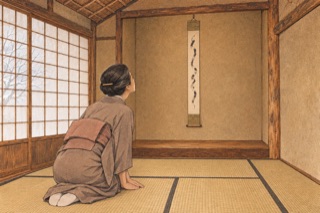 Deep diveThe AlcoveWhen guests enter a tea room, they do not sit down straight away.8 chapters
 Deep diveThe Tea YearWalk into the same tea room in January and in August and you might think you had come to two different houses.8 chapters
05Objects in the Hand
Tea utensils are called dōgu, and guests spend a surprising amount of time looking at them. At the end of a gathering, guests may ask to examine the caddy and scoop more closely, and ask the host about their makers and names. The objects are there to be used and to be appreciated.
The tea bowl, chawan, matters most. Early on, the most valued bowls were Chinese tenmoku and Korean bowls. Among the latter, Ido bowls, generally thought to have been made in Korea as ordinary rice or food bowls, were discovered by Japanese tea masters, who prized their rough, unassuming beauty above almost anything. Later, Japanese kilns produced their own tea bowls, and a well-known saying ranks them: first Raku, second Hagi, third Karatsu. A bowl has a front, usually its most attractive face, which the host turns toward the guest. Bowls change with the seasons too: in summer, wide, shallow bowls let the tea cool; in winter, tall cylindrical bowls hold the heat.
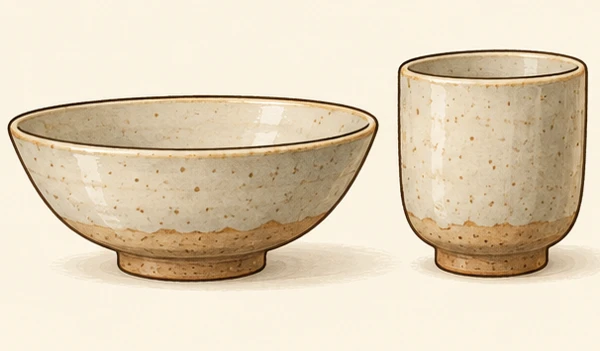
Left: a wide, shallow bowl that cools tea in summer. Right: a cylindrical bowl that keeps it warm in winter
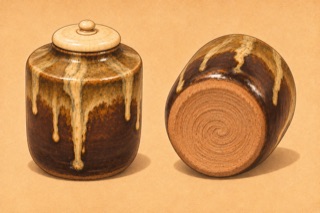
Powdered tea is kept in two kinds of container. For thick tea there is the chaire, a small ceramic jar with an ivory lid, dressed in a pouch of fine fabric called a shifuku. For thin tea there is the natsume, a lacquered wooden caddy named for its resemblance to a jujube fruit. In the sixteenth century a famous chaire could be worth as much as a province, and warlords fought, bargained, and betrayed for them.
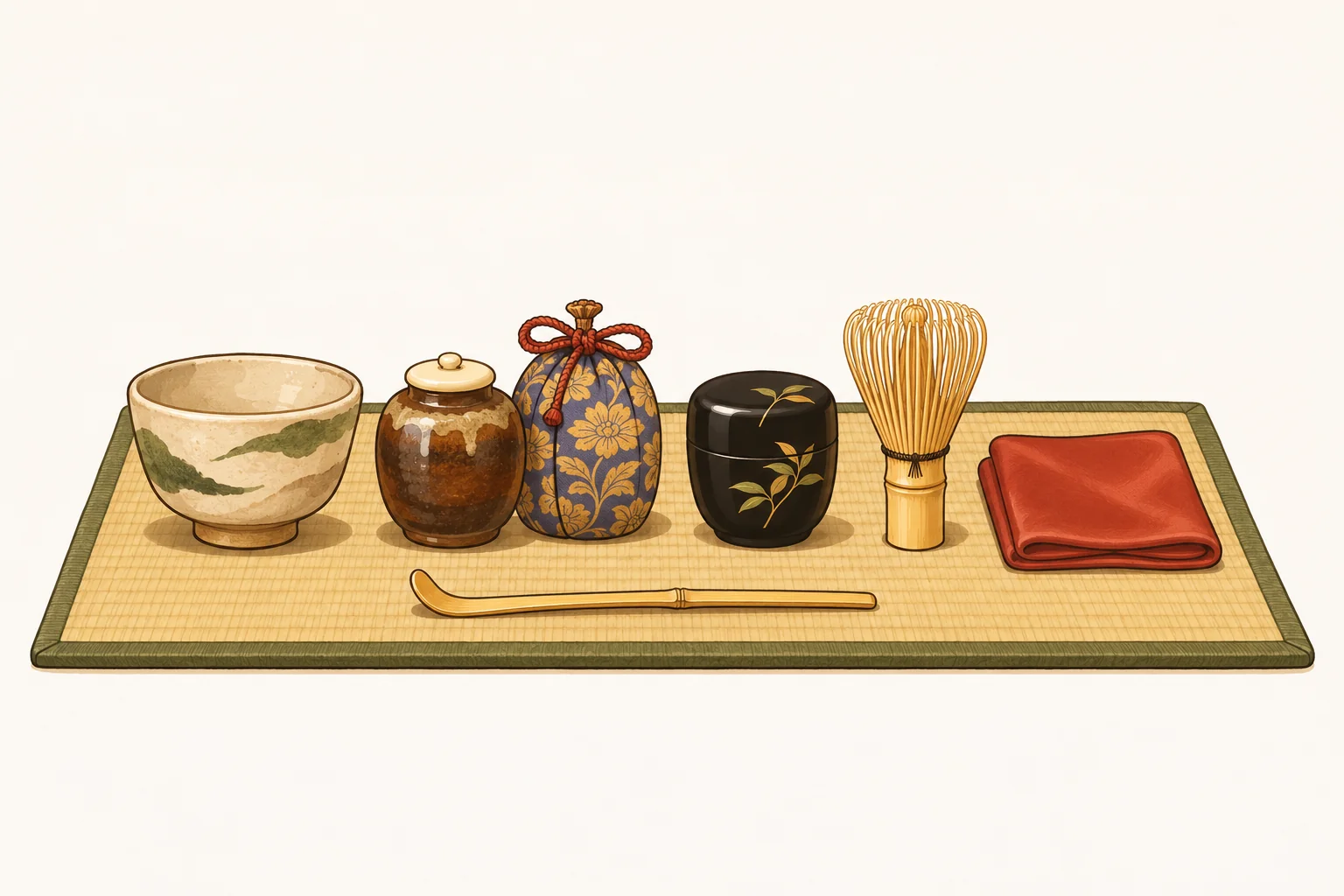
Tea utensils: a chaire in its shifuku, a lacquered natsume, chashaku, whisk, fukusa and tea bowl.
The tea scoop, chashaku, is a thin strip of bamboo with a bent tip. It looks like the humblest object in the room, yet it often reveals the most about a host’s taste, because tea masters carved their own and gave them poetic names. A scoop comes in a bamboo tube inscribed with the maker’s name and the scoop’s name. One of the most famous is "Namida," "Tears," which Rikyū is said to have carved and used at his last tea gathering. It passed to his disciple Furuta Oribe, who, the story goes, made a tube with a small window for it and venerated it like a memorial tablet. It is now in the Tokugawa Art Museum in Nagoya.
The whisk, chasen, is carved from a single segment of bamboo split into fine tines and curled at the tips. Most fine whisks come from Takayama, a district of Ikoma in Nara Prefecture, where whisk making has been a craft for some five centuries. Whisks for thin tea have many fine tines; whisks for thick tea have fewer, sturdier ones.
The fukusa is a square of silk the host tucks into the sash and uses to purify the tea caddy and scoop during the procedure. The utensils were cleaned before the guests arrived; the wiping is a demonstration of purity performed in front of the guests. Men typically use purple fukusa, women red or orange-red. Guests use a different cloth, often of patterned brocade, to cushion utensils when examining them.
Other objects include the iron kettle, kama; the fresh-water jar, mizusashi; the waste-water bowl, kensui; the bamboo ladle, hishaku; and the linen cloth for wiping the bowl, chakin. Guests bring their own small kit: a pad of white paper called kaishi, for holding sweets and wiping the bowl’s rim, and a small folding fan. The fan is never opened in the tea room. It is placed on the mat in front of you as a boundary when you bow.
 Deep diveChawanAt the end of a tea ceremony, after the last sip, guests do something that puzzles first-time visitors.8 chapters
 Deep diveTea UtensilsMost of what sits on a tea-room mat is small enough to hold in one hand.8 chapters
06Thick Tea and Thin Tea, Full Gatherings and Light Ones
There are two ways of preparing matcha, and they differ more than most visitors realize.
Koicha, thick tea, is the heart of a formal gathering. The host uses roughly three to four grams of tea per guest with very little water, and rather than whisking, kneads it slowly until it becomes a glossy, deep green liquid about the consistency of thin paint. Thick tea demands the finest matcha, from the most carefully shaded leaves; lesser tea would be unbearably bitter. Good koicha is not bitter at all. It is rich, sweet, and intensely savory. Thick tea is shared. A single bowl is prepared for several guests; the first guest drinks a few sips, wipes the rim, and passes it on, and the last returns it to the host. Sharing one bowl is the moment of closest communion in the gathering.
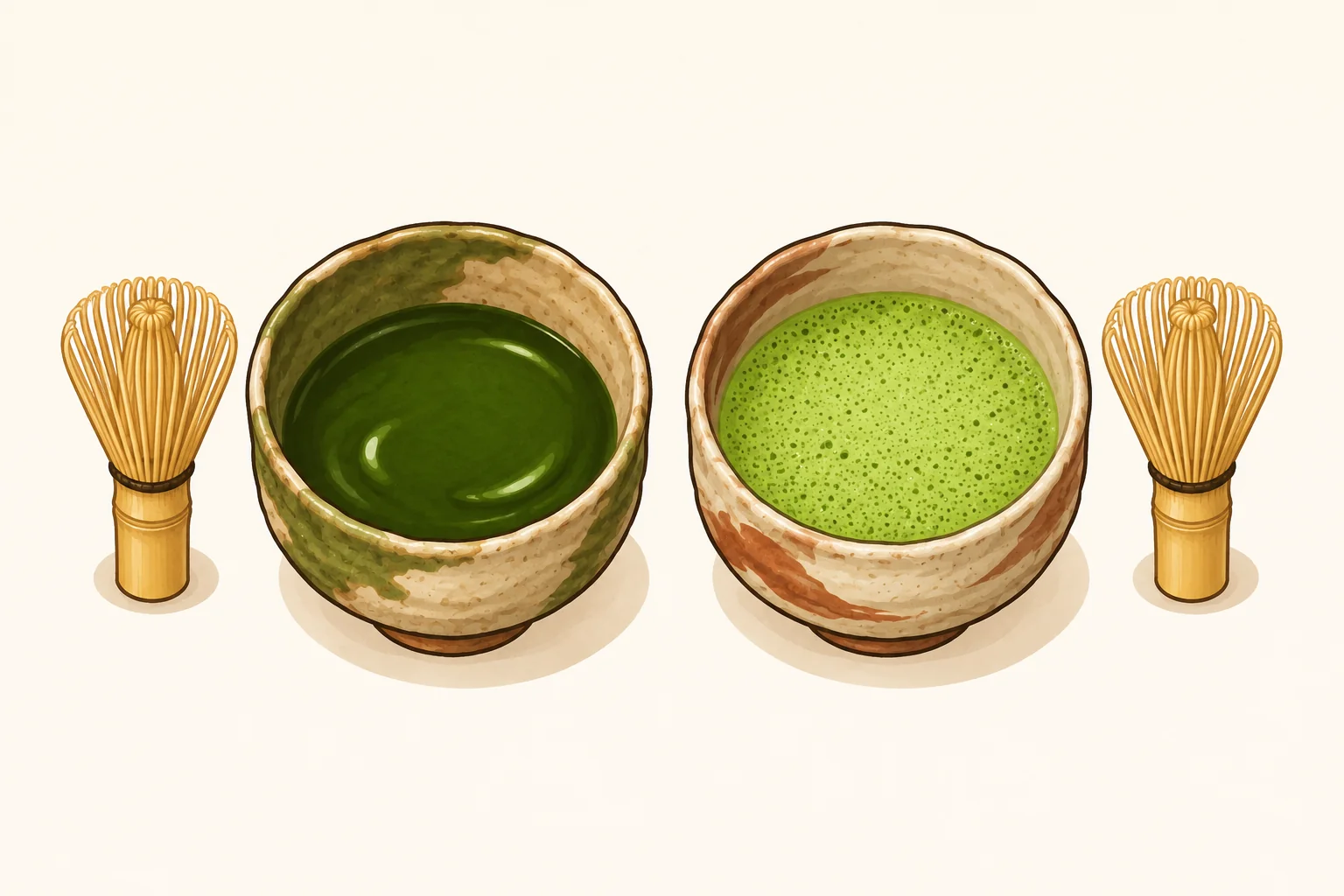
Koicha, glossy and deep green, beside usucha whisked into a fine froth.
Usucha, thin tea, is the bowl most visitors know. About two grams of tea and a little over a quarter cup of hot water are whisked briskly into a fine froth, and each guest receives a separate bowl to drink in three or four sips. When a temple café or garden teahouse serves you matcha and a sweet, it is usucha. Schools differ in their preferences: Urasenke whisks thin tea to a thick, creamy foam, while Omotesenke and Mushakōjisenke prefer less froth, leaving the foam to rise over only part of the surface.
Sweets always come before tea. Moist sweets, omogashi, such as nerikiri shaped into seasonal flowers, accompany thick tea; dry sweets, higashi, such as pressed sugar rakugan, accompany thin tea. The sweetness lingering in the mouth makes the tea taste rounder.
A full formal gathering is called a chaji. The classic form is the noon chaji, which lasts around four hours for no more than five guests. Guests wait in the garden, purify themselves at the basin, and enter through the crawl-in entrance. In the cold months the host first lays the charcoal in the hearth while guests watch, an event in itself (in summer the meal comes first). Then comes kaiseki, a light meal of soup, rice, and a few small dishes with sake, intended to keep guests from drinking strong tea on an empty stomach (kaiseki has its own story; see also: Kaiseki: How a Bowl of Rice and a Bowl of Soup Became Japan’s Most Refined Meal). After moist sweets, guests withdraw to the garden for a break, the nakadachi. The host replaces the scroll with a flower and strikes a gong to call guests back. The second half begins with thick tea, followed by a second laying of charcoal and finally thin tea with dry sweets, when the mood loosens and conversation flows more freely.
A chakai, tea gathering, is the broader and lighter term. It often means a simplified event, sometimes serving only thin tea and sweets, without a meal. Large public gatherings called ōyose chakai may serve dozens or hundreds of guests in successive groups. Temple tea events on festival days, monthly gatherings, and department-store tea fairs all fall in this category, and nearly all tea experiences open to travelers are versions of it.
07The Three Sen Houses
After Rikyū’s death his family was scattered, and his stepson Shōan, who was also his son-in-law, took refuge in Aizu, but through the intercession of Tokugawa Ieyasu and Gamō Ujisato he was later allowed to return to Kyoto. Rikyū’s grandson Sen Sōtan refused official service and lived so frugally that he was nicknamed "Beggar Sōtan," yet he more than anyone preserved the wabi style. Sōtan divided the family’s inheritance among three sons, producing the three houses known together as the san-Senke.
His third son, Kōshin Sōsa, inherited Fushin’an, the hermitage name handed down from Rikyū, and founded Omotesenke, the senior line. His fourth son, Sensō Sōshitsu, inherited Konnichian, the retreat Sōtan had built behind Fushin’an, and founded Urasenke. Omote means front and ura means back; the names describe nothing more than the positions of the two houses on their lot. Sōtan’s second son, Ichiō Sōshu, founded a separate house on Mushanokōji street, with the tea room Kankyūan, which became Mushakōjisenke. Omotesenke and Urasenke still stand next to each other on Ogawa-dōri in Kyoto’s Kamigyō ward, and Mushakōjisenke is a short walk away.
During the Edo period the three houses served as tea masters to powerful daimyo families, such as the Tokugawa of Kii and the Maeda of Kaga. Each house’s head, the iemoto, inherits a fixed name: Sōsa for Omotesenke, Sōshitsu for Urasenke, Sōshu for Mushakōjisenke. The iemoto system centralizes authority over procedures, teaching licenses, and the authentication of utensils. It has kept the practice remarkably consistent over centuries, and it means that learning tea is a long, fee-paying progression through graded permissions.
The Meiji Restoration in 1868 swept away the daimyo and the samurai class, and tea lost its patrons. It recovered through two routes. Industrialists such as Masuda Takashi, known as Don’ō, of the Mitsui trading company, became passionate collectors and hosts. At the same time, tea entered girls’ schools as part of a cultivated young woman’s education. Today the great majority of tea students in Japan are women, though historically almost all tea masters were men.
Urasenke is by far the largest of the three. Its fifteenth grand master, Sen Genshitsu (Hōunsai, 1923–2025), who trained as a naval pilot in a special attack unit during the Second World War, spent decades after the war promoting tea abroad, and Urasenke now has branches around the world. If you first encountered tea ceremony outside Japan, it was very likely Urasenke style. To an outsider, the differences between the houses are small: how the fukusa is folded and handled, which bamboo the whisk is cut from, how much the thin tea is frothed, which foot steps first over the threshold. Beyond the Sen houses there are many other schools, including Yabunouchi, Enshū, Sekishū, and Sōhen. The Enshū school descends from Kobori Enshū, a daimyo and garden designer whose style, called kirei sabi, is lighter and more refined than Rikyū’s.
08Taking Your Seat: A Tea Gathering as a Visitor
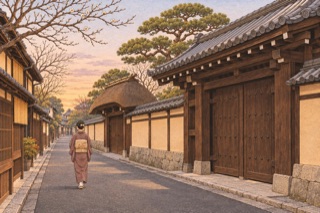
Most travelers experience tea at a short session designed for beginners or international visitors, in Kyoto, Tokyo, Kanazawa, or another historic city. In Kyoto, the Gion and Higashiyama districts have many tea schools offering sessions of about an hour, and some temples have tea rooms open to visitors. Some include kimono rental. Many famous gardens have teahouses where you can sit and drink a bowl of thin tea with a sweet for around a thousand yen (as of 2025), without any formalities: the Nakajima teahouse on its pond island at Hama-rikyū Gardens in Tokyo, for example, or the teahouses at Kenrokuen in Kanazawa. If you want explanation and the chance to whisk your own bowl, choose a hosted experience.
A little preparation helps. Wear socks, since you will remove your shoes, and bare feet on tatami are considered impolite; white socks are ideal. Avoid short or tight skirts, because you will kneel. Remove your watch, rings, and bracelets so they cannot scratch a bowl. Skip the perfume: in a small room it overwhelms the scent of tea, incense, and flowers.
When you enter, your host may invite you to kneel briefly before the alcove, bow, and look at the scroll and flower before taking your place. The formal kneeling posture is seiza, knees together and sitting back on your heels. Few visitors can hold it for long, and at most beginner sessions you may shift your legs when they go numb. No one expects endurance.
The sweet comes first. It is placed before you, and you transfer it onto your kaishi paper with chopsticks or a wooden pick, then cut it into pieces with the pick and eat it. Finish it before the tea arrives.
When the bowl is set before you, its front faces you. Bow to the host and say otemae chōdai itashimasu, roughly "I gratefully receive your tea." If another guest is waiting beside you, place the bowl between you and say osaki ni, "excuse me for going first." Then pick up the bowl with your right hand, place it on your left palm, steady it with your right, and raise it slightly in thanks. Turn the bowl clockwise twice, a quarter turn in all, so that you drink not from the front, its best face, but from the side. This is a gesture of modesty toward the host and the bowl. Drink in three or four sips; the final sip is taken with a soft slurp, which signals that you have finished and is perfectly polite here. Wipe the spot where your lips touched with your thumb and finger, wipe your fingers on your paper, turn the bowl back so its front faces outward again, and set it down.
Then look at the bowl. Set it on the mat and lean down, elbows resting on your knees, to see its glaze and the foot ring beneath. Keep it low; never lift a bowl high in the air, where it could fall. When you are done, return it with its front toward the host. It is entirely appropriate to ask where the bowl was made and whether it has a name. Hosts usually enjoy being asked.
- 1
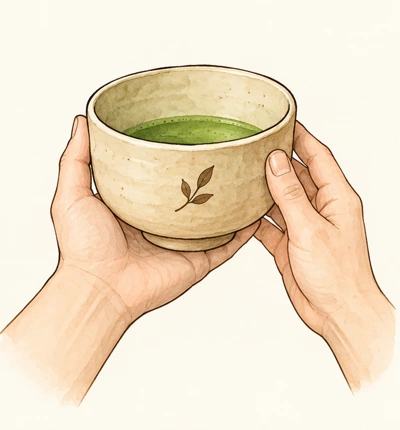 Rest the bowl on the left palm and steady it with the right hand
- 2
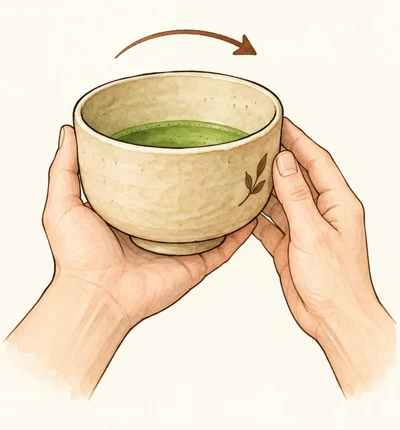 Turn it clockwise twice so you do not drink from the front
- 3
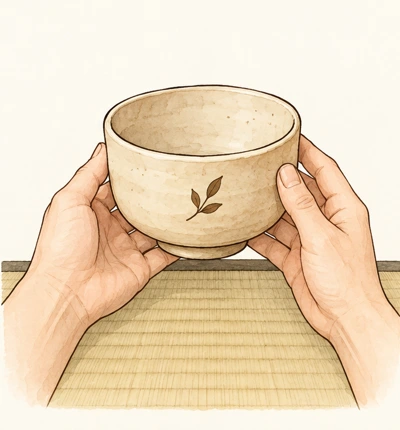 After drinking, turn the front back and examine the bowl low over the mat
Many sessions let you whisk your own bowl. Hold the whisk upright in your right hand and move it rapidly back and forth from the wrist, in a zigzag rather than a circle, keeping your arm relaxed. When a fine foam forms, lift the whisk gently from the center. First attempts usually produce large, uneven bubbles. That is normal.
A beginner’s session leaves out the garden, the charcoal, and the meal, and it compresses the etiquette to what can be learned in an hour. But the bowl you are handed carries the same message as the bowl at the end of a four-hour chaji: someone prepared all of this for you, for this one occasion.
To see more, visit the Chadō Research Center Gallery near Urasenke in Kyoto, which exhibits tea utensils, and the Raku Museum nearby, run by the family that still makes Raku ware. The MOA Museum of Art in Atami has a reconstruction of Hideyoshi’s Golden Tea Room, and the Tokyo National Museum, the Nezu Museum, and the Gotoh Museum hold celebrated tea bowls and utensils. If you visit Kyoto in November, around the opening of the hearth, you will find more tea gatherings at temples and tea societies than at any other time of year.