
At a glance
Geisha sell their arts, not themselves: their Edo origins, Kyoto’s five districts, how a maiko trains and dresses, and what happens at a teahouse banquet.
- Geisha are performers whose trade is dance, shamisen and conversation; in Kyoto they are called geiko, and girls still in training are maiko.
- Female geisha appeared in the mid-18th century; Yoshiwara is generally said to have set up a kenban in 1779 to register and regulate them.
- Kyoto has five surviving hanamachi: Gion Kōbu, Miyagawachō, Pontochō, Kamishichiken and Gion Higashi.
- Maiko enter at about 15, debut after shikomi and minarai training, and around 20 change collars (erikae) to become geiko.
- As of 2026, geiko and maiko in Kyoto’s five hanamachi are generally estimated at two to three hundred.
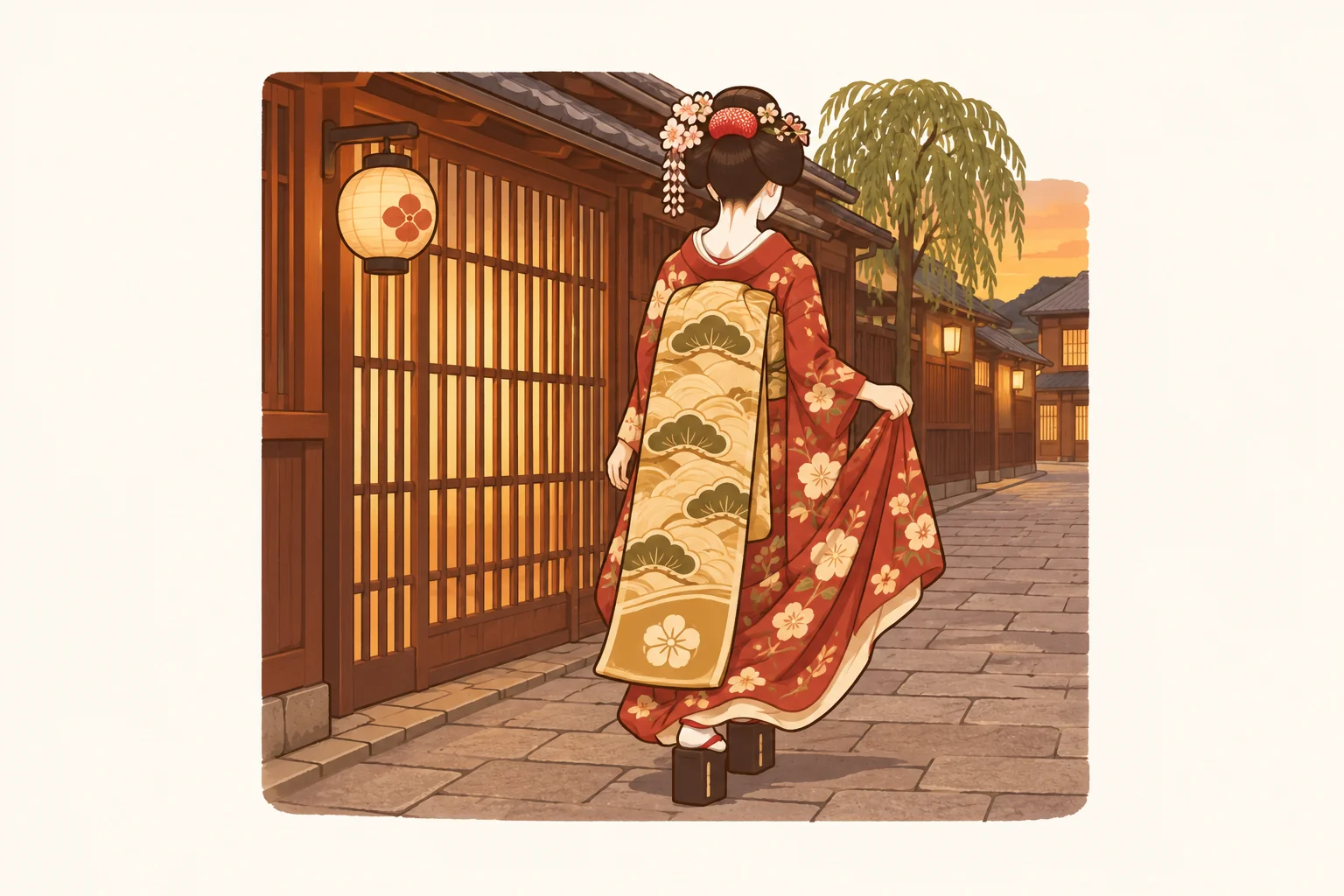
Around six in the evening in Kyoto’s Gion district, a girl in a trailing silk kimono, her face painted white and her hair dressed with silk flowers, steps out of a narrow wooden house and clicks away on tall lacquered clogs. A few minutes later she slides open a lattice door and disappears into a teahouse. That brief sighting is the image of Japan that many visitors most want to see, and it is also one of the most misunderstood. Geisha are professional entertainers, trained for years in dance, music and the art of hosting, and they belong to small, tightly organized communities with rules that go back more than two centuries. This is an introduction to who they are, how a girl becomes one, what actually happens at a geisha banquet, and how a visitor can see them without becoming part of the problem.
01Arts, Not Affection: What a Geisha Is
The word geisha is written with two characters: gei, meaning art or accomplishment, and sha, meaning person. A geisha is, quite literally, a person of the arts. The arts in question are the traditional performing and social arts of Japan: classical dance (nihon buyō), the three-stringed shamisen, several genres of song, drums and flute, and the skilled business of pouring sake, making conversation and running party games. Geisha are hired to attend ozashiki, private banquets held in teahouses or high-end restaurants called ryōtei. Their job is to make a dinner into an occasion.
The vocabulary shifts with geography. In Tokyo and most of Japan the word is geisha. In Kyoto the same profession is called geiko, "child of the arts," and the girls who are still in training are maiko, "dancing children." Tokyo’s apprentices are called hangyoku, "half jewel," reportedly because they were paid half the fee of a full geisha. Kyoto’s maiko are the ones most people picture: the long dangling sash, the elaborate hair ornaments, the red collar, the high clogs. A fully qualified geiko looks far more restrained.
Much of the confusion in the West comes from mixing up geisha and oiran, the top-ranked courtesans of the licensed pleasure quarters of the Edo period (1603–1868). Oiran wore spectacular layered robes with the sash tied in front, crowns of large tortoiseshell pins, and towering three-pronged clogs, and their processions through the Yoshiwara quarter of Edo were famous. They were also prostitutes, however cultivated; the very highest ranks were expected to know poetry, calligraphy and the tea ceremony. Geisha developed alongside that world, and from early on they were explicitly separated from it. Courtesans sold sex. Geisha sold their arts and their company. Oiran survive today only as costumed parades at festivals; geisha are still working.
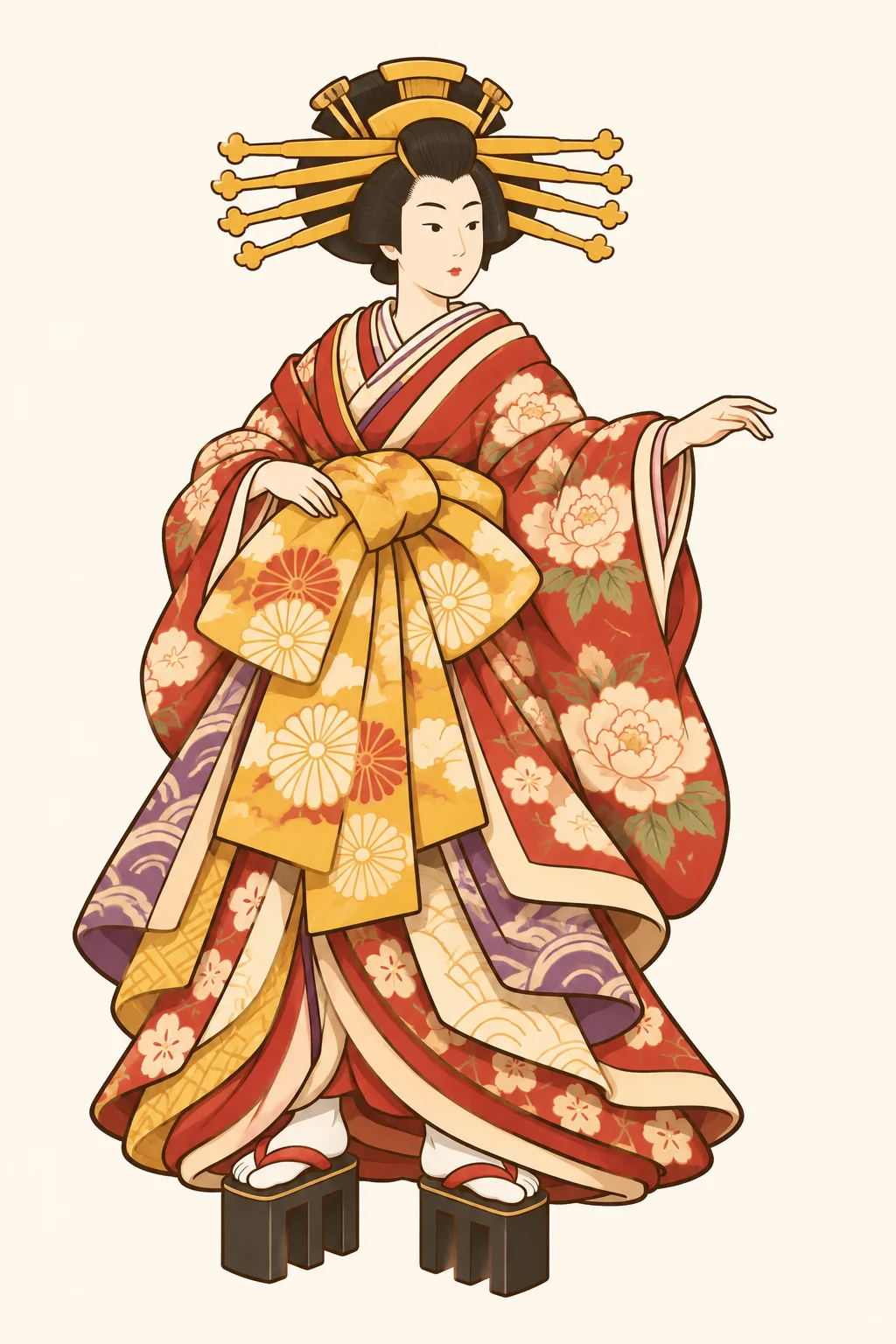
An oiran, not a geisha: the sash tied in front, a crown of large pins and towering three-pronged clogs.
02From Jesters to Artists: Origins in the Edo Period
The first entertainers called geisha were men. In the late seventeenth century the pleasure quarters of Ōsaka and Edo employed male jesters, known as taikomochi ("drum carriers") or hōkan, who told jokes, played instruments and kept the party lively while the courtesans held center stage. A handful of professional taikomochi still work in Tokyo today.
Women entered the trade in the mid-eighteenth century. Accounts usually place the first female geisha in Edo around the 1750s and 1760s, appearing first in teahouse districts and soon afterward in the Yoshiwara. Later accounts name Kasen of the Ōgiya house in the Yoshiwara, around 1761, as the first woman to call herself a geisha. In the Fukagawa district on the eastern side of the city, teahouse women who sang and played the shamisen began to attract a following. These Tatsumi geisha, named for the southeast direction of Fukagawa from Edo Castle, were known for their crisp, slightly masculine style: they went barefoot even in winter, wore men’s haori jackets, and took male-sounding professional names. Their cool, unsentimental elegance became one of the models for iki, the Edo ideal of urbane, understated chic.
Female geisha quickly outnumbered the men, and they began to compete with the courtesans for customers. By most accounts it was in 1779 that the Yoshiwara set up a registry office, the kenban, to control them. Geisha were forbidden to take the courtesans’ clients, could not stay the night, and had to dress more plainly than the women they worked alongside. The kenban system spread to other districts and still exists: geisha register with an office that books their engagements and handles their fees. The visual distinction between the sober geisha and the gorgeous courtesan dates from these rules.
Kyoto’s story is somewhat different. Gion grew up around the gates of Yasaka Shrine, where mizuchaya, tea stalls serving pilgrims, employed young women to pour tea. Over time the women added songs and dances, the teahouses began to serve food and sake, and by the eighteenth century Gion had become the largest entertainment district in the city. Kyoto’s apprentices were girls from the start, and dance was their central art. Edo geisha, by contrast, put more weight on the shamisen and singing. The two traditions still differ in emphasis.
The geisha’s golden age came in the late nineteenth and early twentieth centuries. In the 1860s the samurai activists who brought down the shogunate met and plotted in Kyoto teahouses; the politician Kido Takayoshi married Ikumatsu, a Kyoto geiko (from Sanbongi by one account, from Gion by another) who, by tradition, hid him from shogunate police and stood by him through his years on the run. After the Meiji Restoration of 1868, the men who ran the new state, Itō Hirobumi among them, did much of their business in the restaurants of Tokyo’s Shinbashi and Akasaka districts, so often that the phrase machiai seiji, "teahouse politics," became a standard criticism. In 1872 the government issued an emancipation edict that canceled the indentures of geisha and prostitutes, but in practice the system of debt bondage, in which a family received money in return for a daughter’s years of service, persisted for decades. The profession peaked in the late 1920s: police statistics counted about 80,000 geisha across Japan in 1928.
The long decline began after the Second World War. Business entertaining moved to hostess clubs, bars and golf courses; women had other careers open to them; and the Anti-Prostitution Law, passed in 1956 and fully in force by 1958, closed the red-light districts that had survived the abolition of licensed prostitution in 1946, and removed whatever gray areas remained in the geisha world. As of 2026, estimates of the number working range from several hundred to about a thousand. Kyoto’s five districts are usually said to have two or three hundred geiko and maiko between them, and most maiko now come from outside Kyoto, girls from Hokkaidō or Kyūshū or the Tokyo suburbs who decided, often after seeing maiko on television or online, that this was the life they wanted.
03The Flower and Willow World
The districts where geisha live and work are called hanamachi, "flower towns," and the community as a whole is known as the karyūkai, "the flower and willow world." A hanamachi is not a red-light district. It is a small neighborhood with its own institutions, hierarchy and calendar.
In Kyoto the two basic institutions are the okiya and the ochaya. The okiya is the house where maiko and some geiko live, and it functions as both a family and an agency. Its proprietress is called okāsan, "mother." During her apprenticeship a maiko lives in the okiya, which pays for her lessons, food, kimono and hair ornaments; in return she receives only pocket money until she has become a geiko and repaid the house’s investment. The ochaya, or teahouse, is where the banquets take place. A client books an evening with the teahouse, and the teahouse in turn calls the okiya to request particular geiko and maiko. The food does not come from the teahouse kitchen, which is usually tiny, but is ordered in from a caterer.
Kyoto has five hanamachi, known collectively as the gokagai. Gion Kōbu is the largest and most famous, centered on Hanamikōji Street and the willow-lined Shirakawa canal. Miyagawachō lies just south of it, near the Kamo River; it is reported to have had the fastest growth in maiko numbers in recent years. Pontochō is a single narrow lane running between Sanjō and Shijō streets on the west bank of the river, where in summer the restaurants build wooden dining platforms over the water. Kamishichiken, next to Kitano Tenmangū shrine in the northwest of the city, is generally considered the oldest; by tradition it began in the fifteenth century as seven teahouses built from timber left over from repairs to the shrine. Gion Higashi, north of Shijō Street, split off from Gion in 1881 and is generally described as the smallest of the five. Each district has a crest, printed on the paper lanterns that hang at every teahouse door; Gion Kōbu’s is a ring of eight linked dumplings around the character kō; Pontochō’s is a plover in flight; Miyagawachō’s is three interlocking rings; and Kamishichiken’s is a ring of five dumplings, a reference to the story that the warlord Toyotomi Hideyoshi enjoyed the local dumplings when he held a great tea party at Kitano in 1587. Shimabara, once Kyoto’s licensed pleasure quarter, still preserves the tradition of the high-ranking courtesans known as tayū and a few superb old buildings, but it is no longer counted among the geisha districts.
Tokyo’s geisha world is more dispersed. Its six main districts are Shinbashi, Akasaka, Kagurazaka, Asakusa, Mukōjima and Yoshichō. Shinbashi and Akasaka were the haunts of politicians and industrialists and are still dominated by expensive ryōtei. In Kagurazaka’s stone-paved back lanes you can sometimes hear a shamisen being practiced behind a wall. Asakusa and Mukōjima are more down to earth. Tokyo geisha often enter the profession as adults, have short apprenticeships or none at all, and are more likely to live independently.
The most famous rule of the flower and willow world is ichigensan okotowari: no first-time customers without an introduction. It sounds snobbish, and partly it is, but it also has a practical basis. Teahouses do not take payment on the night. They run a tab, settled monthly or even annually, and in the meantime they pay out of their own pocket for the caterer, the geisha’s fees, the drinks, the taxis home and sometimes gifts. A teahouse can only do this for customers it knows. The person who introduces a new client is, in effect, vouching for him.
04Becoming a Maiko
A girl who wants to become a maiko today usually applies at the age of fifteen, after finishing compulsory education at junior high school. Many find an okiya through the districts’ recruitment websites or through the Kyoto Traditional Musical Art Foundation, known as the Ōkini Zaidan, which introduces applicants to houses, spend a few days visiting during the school holidays, and then come back with their parents for an interview. The arrangement has attracted criticism in recent years, since Japanese law restricts minors from working in late-night drinking establishments, while the hanamachi treat a maiko’s evenings as part of her training.
The first stage is shikomi, roughly a year of live-in apprenticeship. The shikomi girl cleans, runs errands and waits on the senior women of the house, while attending the district’s school every day for lessons in dance, shamisen, drums, tea ceremony and singing, reportedly with further classes in narrative styles such as tokiwazu and kiyomoto; calligraphy is optional. She also has to learn to speak Kyoto dialect, with its soft, drawn-out vowels; a maiko says ōkini for "thank you" and otanomōshimasu for "please," and a girl from Tokyo has to unlearn her own speech. Gion Kōbu’s school, the Yasaka Nyokōba Gakuen, teaches dance in the Inoue school, a style of Kyoto dance (kyōmai) passed down through a line of women each called Inoue Yachiyo. Each district is tied to one dance school: Inoue in Gion Kōbu, Wakayagi in Miyagawachō, Onoe in Pontochō, Hanayagi in Kamishichiken and Fujima in Gion Higashi.
The second stage, minarai, lasts about a month. The girl now dresses as a maiko, with a shorter version of the sash, and accompanies an elder sister to banquets to observe. She speaks little and watches a great deal: how to pour, how to kneel, how to enter and leave a room, when to laugh.
The third stage is the debut, misedashi. Before it, the girl is formally bound to an established geiko who becomes her onēsan, or elder sister, in a ceremony of exchanged sake cups that resembles a wedding. The elder sister chooses her professional name, usually incorporating a character from her own name, and takes responsibility for her: introducing her at banquets, correcting her manners, apologizing with her when she makes a mistake. On the day of her debut, the new maiko, in formal black kimono, makes a round of the teahouses and her teachers’ homes accompanied by an otokoshi, the professional male dresser who ties her heavy sash, and a small crowd usually gathers to watch.
A girl typically remains a maiko for five or six years. Around the age of twenty she goes through erikae, "turning the collar," when the red collar of the maiko is exchanged for the white collar of the geiko. For about two weeks before erikae she wears a hairstyle called sakkō, once worn by newly married women, and, following an old custom, blackens her teeth. One explanation is that, since a geiko may not marry, this gives her a brief taste of being a bride. Afterward she wears a wig rather than her own hair, and her kimono become quieter, with shorter sleeves. Many women leave the profession before or soon after erikae; only a minority stay on as geiko for decades. A geiko who has repaid her debts can become independent (jimae), paying for her own kimono and living costs. In Kyoto a geiko who marries must retire.
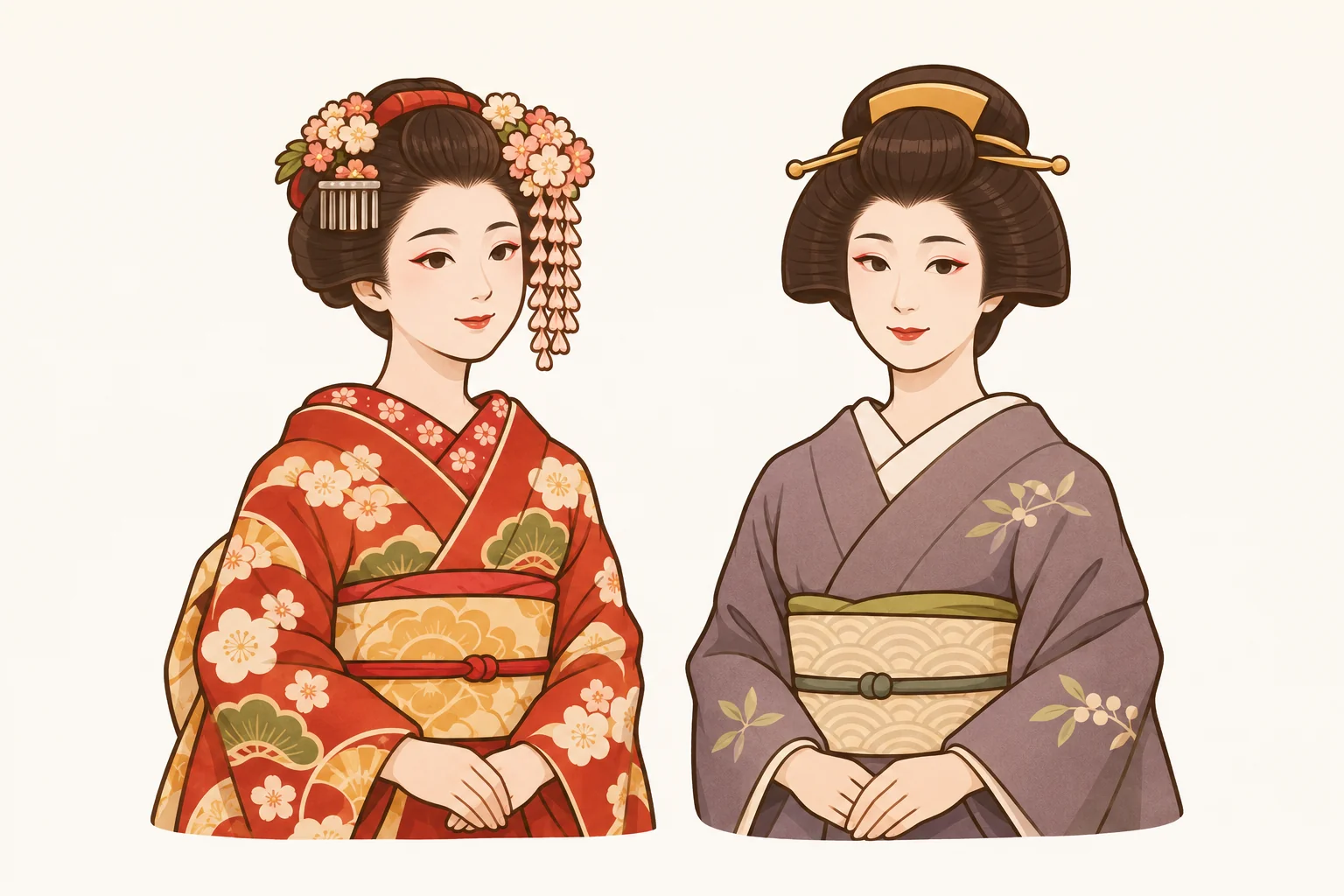
A maiko with red collar and her own hair dressed, beside a geiko with white collar and wig.
- 1Entryat fifteen, after junior high school
- 2Shikomiroughly a year living in, lessons and Kyoto dialect
- 3Minaraiabout a month, observing banquets, shorter sash
- 4Misedashibound to an elder sister, given a name, debut
- 5Maikofive or six years
- 6Erikaearound twenty, red collar to white: a geiko
About a year of shikomi, a month of minarai, five or six years as a maiko, then erikae around the age of twenty.
05Reading the Costume
A maiko’s appearance is not just decoration. Nearly every element signals something: her seniority, her district, the month.
She dresses her own hair, which is styled roughly once a week by a specialist hairdresser; to protect the style she sleeps on a raised wooden pillow, the takamakura, which supports the neck and keeps the head off the bed. A junior maiko wears the wareshinobu style, with red dappled silk showing at the front and back of the bun; after about two years she changes to the ofuku, in which the red shows only at the back. Her hana-kanzashi, the dangling silk-flower ornaments, change monthly: pine, bamboo and plum in January, plum in February, rape blossom or narcissus in March, cherry in April, wisteria or iris in May (sources differ slightly), willow in June, fans in July (replaced by Gion Festival designs during the festival), pampas grass in August, bellflower in September, chrysanthemum in October, maple in November, and in December the maneki, little white name boards copied from the signs that hang outside Minamiza theater for the year-end kabuki season. A knowledgeable Kyotoite can tell the month from a maiko’s head.
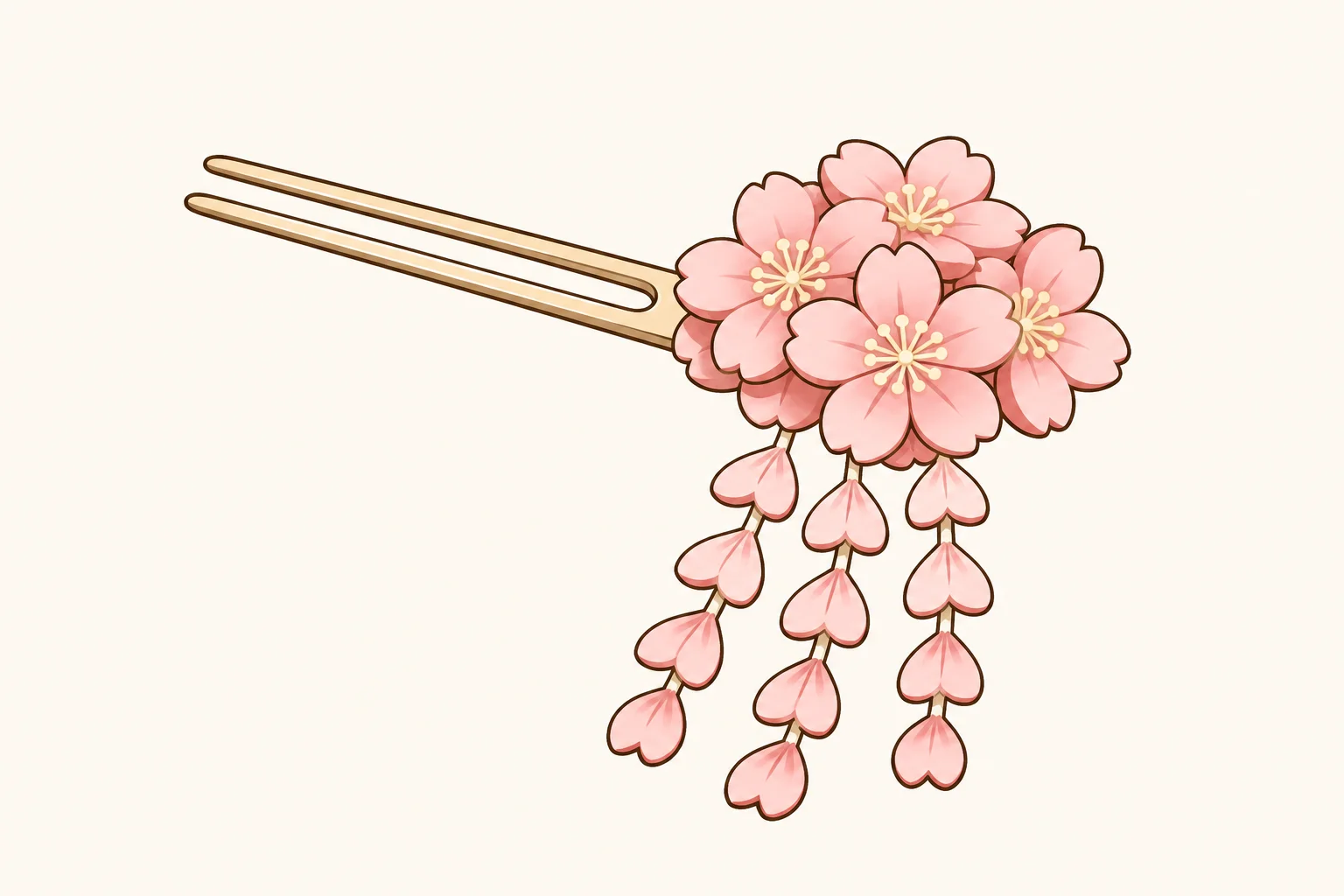
April: cherry blossom.
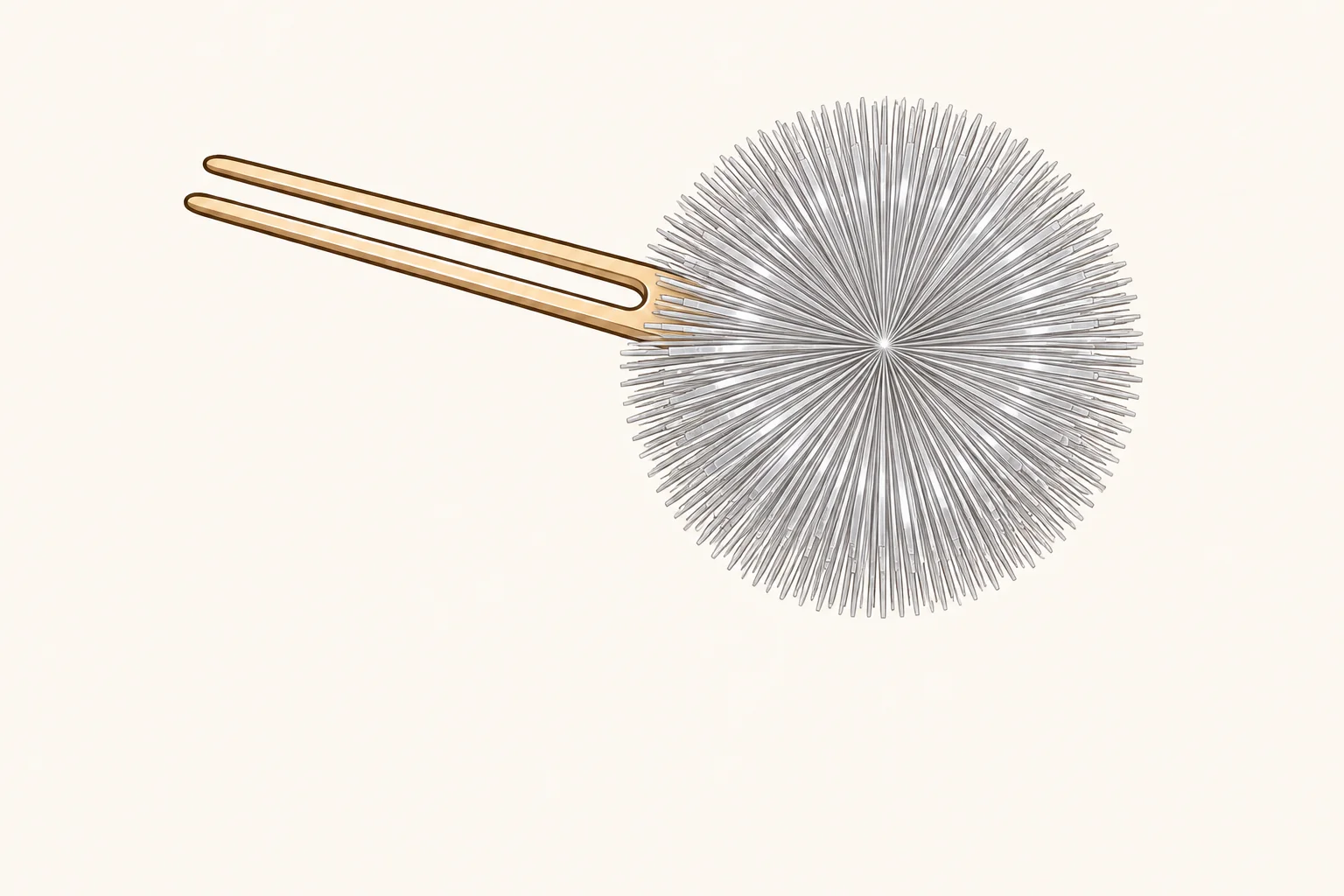
August: pampas grass.
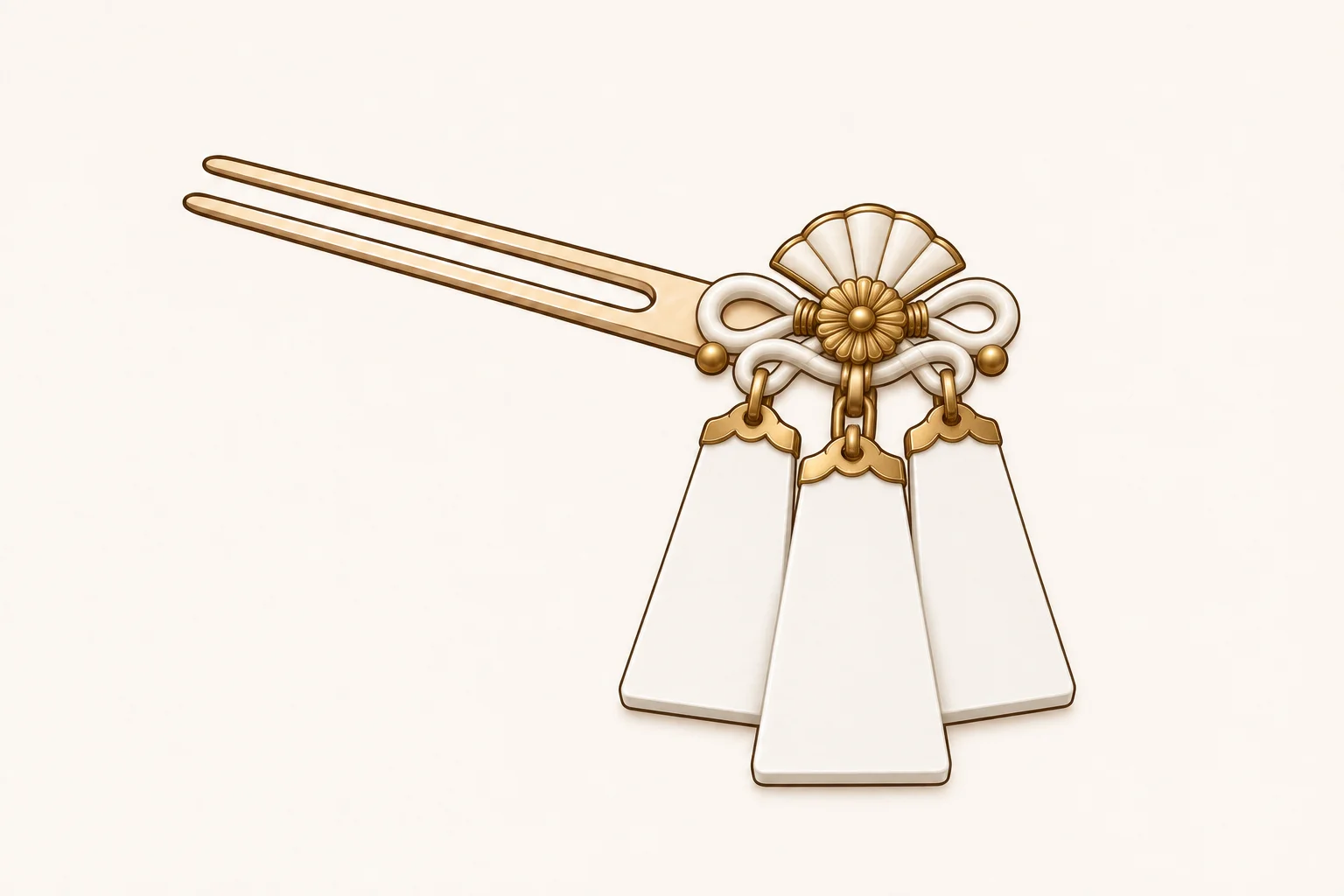
December: the maneki, little white name boards copied from the signs outside Minamiza for the year-end kabuki season.
The white makeup, oshiroi, is mixed with water and applied over the face, throat and upper back. At the nape a patch of bare skin is left in pointed shapes. Two points are usual; three are generally worn for formal occasions. The nape of the neck has long been considered one of the most alluring parts of a woman’s body in Japan, and the kimono collar is worn pulled low at the back to expose it. A new maiko paints only her lower lip red, and adds the upper lip later on, by one account after about a year. Red is also brushed at the corners of the eyes and around the brows.
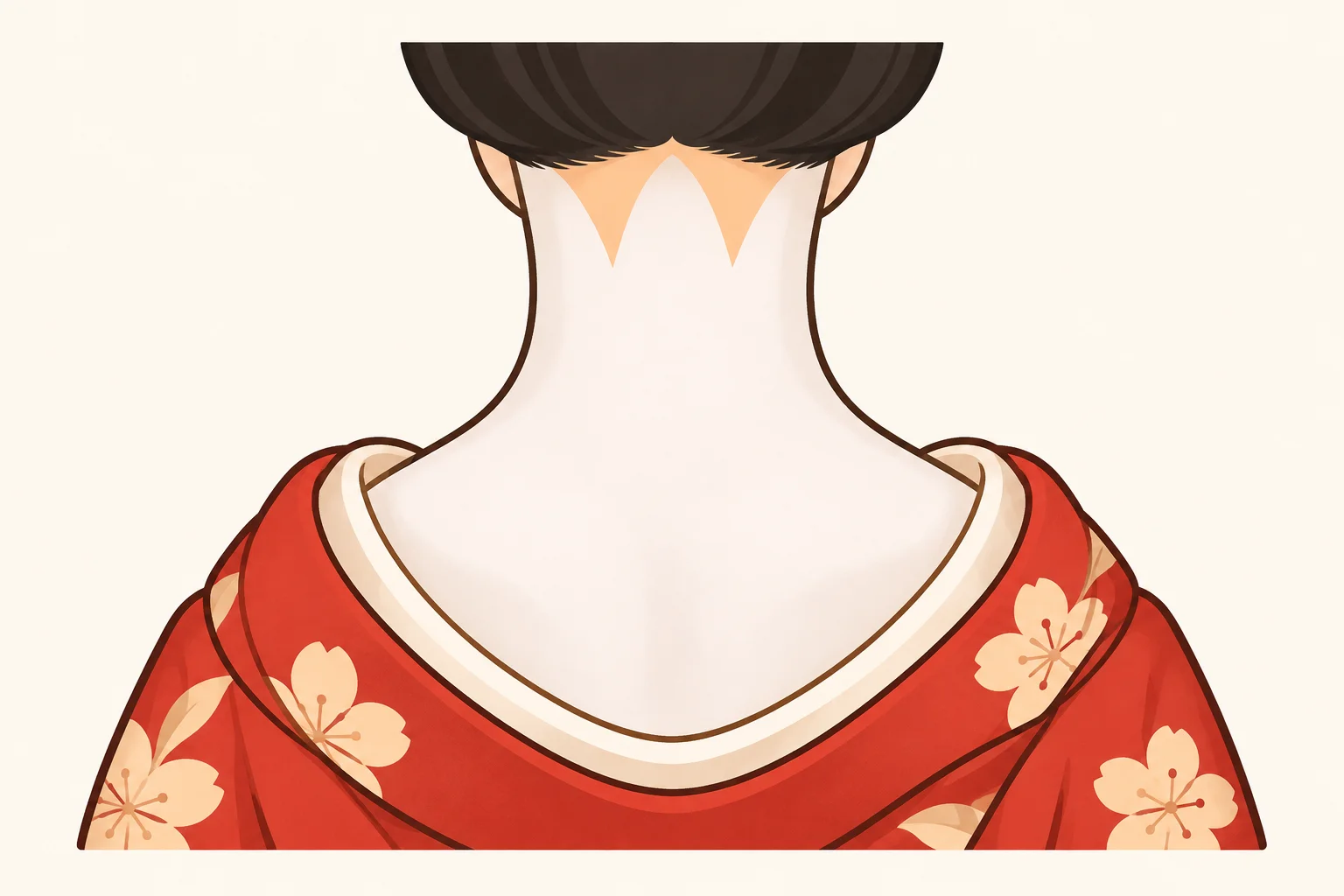
Two points of bare skin are usual.
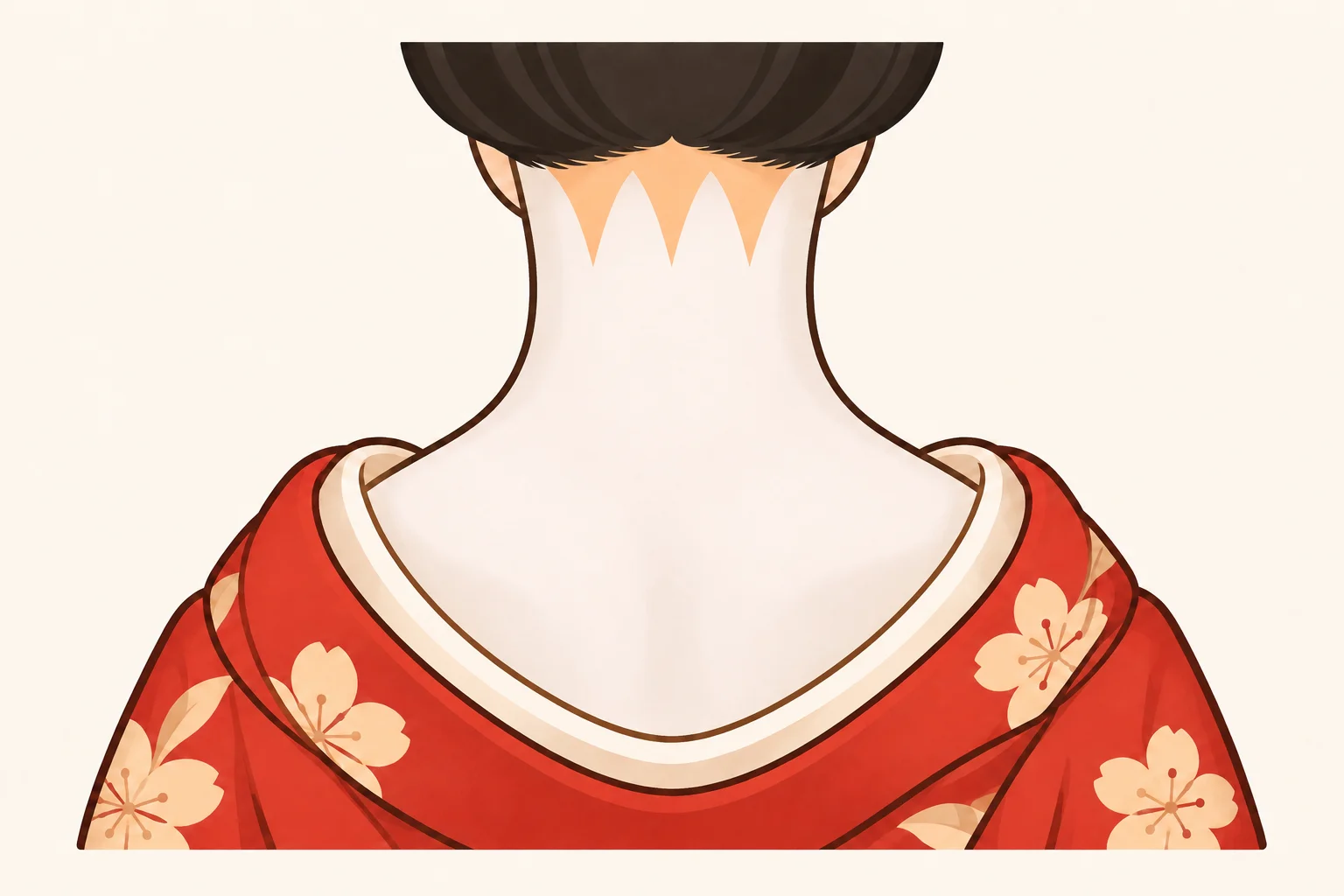
Three points are generally worn for formal occasions.
Her kimono is a long-sleeved furisode with a trailing hem that she lifts with one hand as she walks. The sash, the darari obi, is about five meters long, so heavy that a dresser has to tie it, and hangs almost to the ankles at the back, its end bearing the crest of her okiya. On her feet she wears okobo, tall wooden clogs, said to stand 12 to 15 centimeters high; those of some new maiko have a little bell inside. Between the clogs and the hem, a maiko can only walk in short, quick steps, which is exactly the effect intended.
All of this is very expensive. A single maiko kimono and obi can cost several million yen, and the wardrobe changes with the seasons. The okiya pays, and that investment is the reason maiko earn almost nothing during their apprenticeship.
06Inside an Ozashiki
A typical teahouse banquet runs about two hours. The guests sit down in a tatami room and the food begins to arrive. Then the sliding door opens, and the geiko and maiko kneel at the threshold, bow, introduce themselves and come in to sit among the guests, pouring sake and making conversation. The maiko, being young, talks about her lessons, the district’s festivals and her kimono. The geiko can talk about anything, from baseball to economics, and knows when not to talk at all. What is said at a banquet stays there; discretion is the foundation of the profession’s reputation and the reason powerful men have trusted it for so long.
At some point there is dance. A senior geiko, the jikata or musician, takes up the shamisen and sings, and the maiko performs. Kyoto dance is small in scale and inward in feeling. It was developed for performance in a tatami room, so it works with the angle of a fan, the turn of a wrist, a glance, a slight bend at the knees. Popular pieces include Gion Kouta, a song about the seasons in Gion generally dated to around 1930, with lyrics by the novelist Nagata Mikihiko, and Kyō no Shiki, "The Four Seasons of Kyoto." Tokyo geisha are known more for their music, especially the short, witty Edo-style songs called kouta and hauta.
Then come the party games, ozashiki asobi. The best known is Konpira fune fune, named for the song that accompanies it. Two players face each other across a small table on which sits a sake cup stand or a similar object. In time with the music, each player in turn touches the object with an open hand; if the other has taken it away, you must touch the table with a closed fist instead. The tempo speeds up, someone inevitably gets it wrong, and the loser drinks. Another favorite, tora-tora, is a full-body version of rock-paper-scissors played on either side of a folding screen, with the players acting out a warrior, a tiger and an old woman. These games are deliberately silly, and they work: a table of stiff businessmen can be reduced to helpless laughter in five minutes.
Geisha are paid by time. The fee is called hanadai, "flower money," or gyokudai; in the past it was counted in sticks of incense burned, so it was also known as senkōdai, incense money. Today an evening with a maiko in Kyoto, including food, the teahouse’s charges and the performers’ fees, typically costs, as of 2026, tens of thousands of yen per guest, more with more performers or a longer evening. The bill comes from the teahouse. Money is never discussed with the geisha themselves.
07Geisha on Stage and Through the Year
For most people, the best way to see geisha is not at a banquet but in a theater. Each of Kyoto’s five districts mounts its own public dance performance, normally once a year (they were suspended during the pandemic), and these are open to the general public.
The most famous is Gion Kōbu’s Miyako Odori, first staged in 1872 and now performed at the Gion Kōbu Kaburenjō theater. Kyoto had just lost its status as capital to Tokyo, and the city organized an exhibition to revive its fortunes; the women of Gion devised a group dance as an attraction, and it has been performed every April since, with breaks only for the war years and, in 2020 and 2021, the pandemic. The opening is spectacular: dancers in identical kimono enter simultaneously along both aisles of the theater to the massed cry of "Miyako Odori wa!" "Yōiyasā!" Pontochō’s Kamogawa Odori follows in May. Miyagawachō’s Kyō Odori is in April, Kamishichiken’s Kitano Odori in late March and April, and Gion Higashi’s Gion Odori in November. In Tokyo, the geisha of Shinbashi stage the Azuma Odori in May at the Shinbashi Enbujō theater, a tradition begun in 1925 and still continuing as of 2026.
The rest of the hanamachi year is marked by its own observances. On December 13, kotohajime, geiko and maiko call on their teachers and teahouses to give thanks for the year and to mark the start of New Year preparations. On January 7 (January 9 in Kamishichiken) each district holds an opening ceremony for the year. Around Setsubun in early February, geisha dress up in comic or unexpected costumes, a custom called obake, and visit teahouses to perform skits. On February 25 at the Plum Blossom Festival at Kitano Tenmangū, the geiko and maiko of Kamishichiken serve tea outdoors among the plum trees. On August 1, hassaku, in the worst of the Kyoto summer heat, they go from door to door in formal black kimono to thank their teachers and teahouses. And on summer evenings the garden of the Kamishichiken theater becomes a beer garden where geiko and maiko in cotton yukata chat with customers, perhaps the most relaxed and affordable way to meet them.
08Myths and Real Problems
The idea that geisha are a kind of prostitute was largely an American import of the occupation years after 1945, when many women working in bars and brothels near U.S. bases presented themselves as "geisha girls" to soldiers who did not know the difference. Arthur Golden’s 1997 novel Memoirs of a Geisha, and the 2005 film adapted from it, gave the confusion a global audience. The novel’s plot turns on the auction of the heroine’s virginity, called mizuage, which many readers took to be a standard part of a geisha’s career.
Golden had interviewed Iwasaki Mineko, the most celebrated Gion geiko of the 1960s and 1970s, and she was furious with the result. She had agreed to be interviewed on condition of anonymity, and in 2001 she sued him for breach of contract and defamation; the case was settled out of court in 2003. She then published her own account, written with Rande Brown and titled Geisha: A Life in the United States and Geisha of Gion in Britain. Before the war, the sale of a maiko’s first night to a patron did occur in some districts, but it was not a universal rite, and the Anti-Prostitution Law ended it. By one account, in Kyoto today the word mizuage refers only to the coming-of-age ceremony in which a maiko changes her hairstyle.
That is not to say the hanamachi are untroubled. In June 2022 a former maiko posted on social media that as a sixteen-year-old she had been made to drink heavily with customers and pressured to bathe with them. The claims prompted a national debate about the welfare of minors in the system. The Ōkini Zaidan, the foundation that supports the five districts, denied that any such conduct had occurred, either then or now, but the episode sharpened questions the profession has long faced about how to keep a centuries-old apprenticeship compatible with modern ideas of childhood and consent.
The other pressure comes from tourism. In Gion, maiko on their way to appointments have been mobbed by crowds with cameras, followed, grabbed by the sleeve, even had ornaments pulled from their hair. In October 2019 the local council put up signs on the private lanes around Hanamikōji warning that unauthorized photography would be charged 10,000 yen, and in March 2024 the same council announced that several private alleys would be closed to tourists altogether. Hanamikōji itself is a public street and stays open.
09Seeing Geisha for Yourself
The first thing to know is that almost every "maiko" you see by daylight in the Higashiyama area, on the slopes of Ninenzaka and Sannenzaka or around Kiyomizu Temple, is a tourist. Dozens of studios offer henshin maiko makeovers: you are painted, dressed in a wig and kimono, photographed, and allowed out to stroll for an hour or two. Real maiko spend their days in lessons and are mostly seen at dusk, walking briskly between okiya and teahouse, and they do not stop to pose. A real maiko uses her own hair, walks with assurance and keeps her eyes ahead; a made-over visitor usually wears a wig and travels with a friend holding a phone.
If you simply want to see geisha perform, the spring dances are the best option. Some seats include a bowl of matcha served before the show by maiko, along with a sweet on a small plate printed with the district’s crest that you are allowed to take home. The performances are popular. The Kamishichiken beer garden in summer is another easy way in.
For a real ozashiki without a personal introduction, there are now several routes. Some luxury hotels, travel agencies and ryōtei in Kyoto arrange dinners with a maiko or geiko: you eat a kaiseki meal, a maiko dances a piece or two, talks with the table, plays a round of Konpira fune fune and poses for photographs. In June, after the joint performance of all five districts at Minamiza theater (still held as of 2026), the Ōkini Zaidan organizes an evening called Gokagai no Yūbe, in which geiko and maiko host dinners at several of Kyoto’s grand old ryōtei; no introduction is needed, and it is the most authentic banquet available without an introduction. Gion Corner, a small theater on Hanamikōji, offers an hour-long sampler of traditional arts for visitors: a maiko’s dance, tea ceremony, flower arrangement, koto music, court dance, comic kyōgen theater and, depending on the season, bunraku puppetry or noh, and in some seasons a chance to be photographed with the maiko afterward.
When you do meet a maiko, a few points of courtesy go a long way. Never stop one in the street for a photo, and never touch her kimono or ornaments. At a dinner you can ask about her training, her hairstyle or the flowers in her hair, and she will be glad to explain; questions about boyfriends or money are out of bounds. Even if you understand no Japanese, you will hear the softness of her Kyoto speech. At the end of the evening she will see you to the door, kneel, and watch until you have walked away.
The geisha world survives not only because of foreign curiosity. For Kyoto it is part of the fabric of the city. Geiko and maiko walk in the Hanagasa parade of the Gion Festival, and by some reports maiko line the streets to see off the great floats. The city’s craftsmen, the makers of kimono, hair ornaments, fans, white makeup and clogs, depend heavily on hanamachi orders, and a single maiko’s costume involves the work of dozens of specialist workshops. Every year new teenage girls, by some reports a few dozen, still take the bullet train to Kyoto, move into an okiya, and begin by sweeping the floor and learning to say ōkini.