
At a glance
Real ninja were spies and raiders from the Iga and Kōga hills; this traces how stage, fiction and film built the black-clad hero, and where to see ninja today.
- Real ninja were Warring States-era intelligence agents and raiding parties, mostly from Iga (Mie) and Kōga (Shiga).
- People then usually said shinobi; "ninja" became the standard word only in the mid-20th century, through novels and films.
- In 1676 Fujibayashi Yasutake of Iga compiled the ninjutsu manual Bansenshūkai, centered on intelligence and psychology.
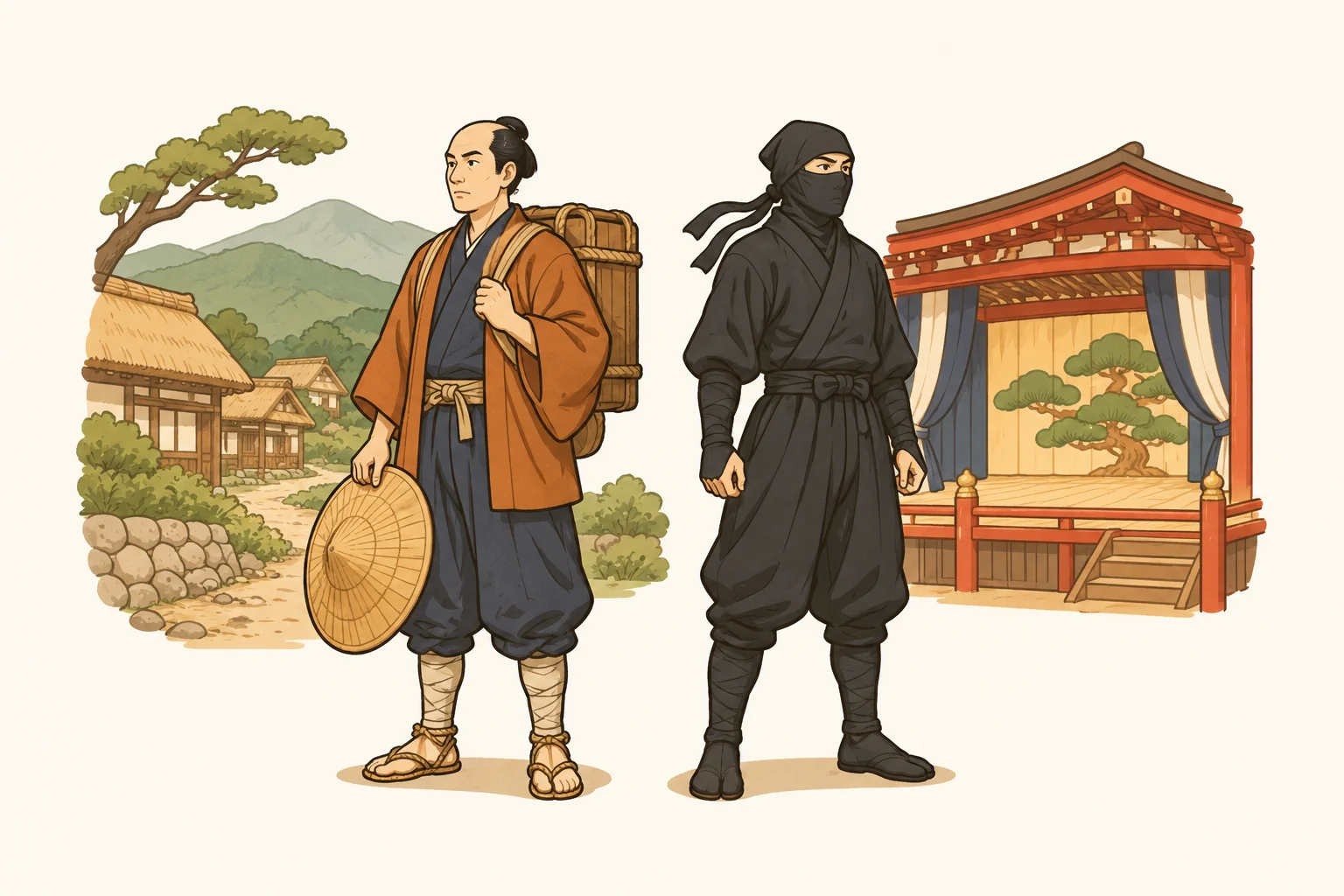
- The black-clad, masked figure comes from Edo-period kabuki and puppet theater; real shinobi wore ordinary colors.
- Today you can see trick walls and hidden stairs at the Iga-ryū Ninja Museum in Iga Ueno and the Kōka-ryū Ninjutsu Yashiki in Kōka.
The ninja is one of the most recognizable figures Japan has ever exported: a masked shadow in black, throwing star in hand, crossing a moonlit roof without a sound. Almost everything in that picture was added later. The historical ninja were spies, scouts and raiders hired by warlords in the fifteenth and sixteenth centuries, and the most famous of them came from two hilly districts east of Kyoto, Iga and Kōga. This introduction explains what they actually did, why those two places produced them, what happened to them when the wars ended, and how kabuki, pulp fiction, film and manga built the ninja the world knows. It ends with where in Japan you can still find them.
01What a Ninja Actually Was
Start with the word. People in the Sengoku period (roughly 1467 to 1590) rarely said "ninja." They said shinobi or shinobi no mono, "one who steals in unseen," and regional words like rappa, suppa and kusa ("grass," for agents who settled quietly in enemy territory and waited). The character 忍 here does not mean endurance; it means secrecy, the same sense as shinobi-ashi, walking on tiptoe. "Ninja," the Sino-Japanese reading of the same characters, became the standard term only in the twentieth century, largely through novels and films after the Second World War.
The core of the job was information. Before a campaign, a warlord (daimyō) needed to know how an enemy castle was laid out, how many men held it, how long its rice would last, which retainers were unhappy with their lord. Shinobi went to find out. They traveled disguised as monks, peddlers, or wandering entertainers, lodged in castle towns, listened, and came back with sketches of roads and a sense of who might switch sides. When they did fight, it was usually at the edges of a battle: slipping into a camp at night to set fires, opening a way into a castle under cover of darkness, spreading false rumors, or guarding their own side against enemy infiltrators. Assassination fills later stories, but it is rare in the records. Think of reconnaissance and sabotage teams rather than hired killers.
That also means ninja were not a separate caste opposed to the samurai. Many were small landholding warriors themselves, farming and running their villages between wars and hiring out their skills when a lord came calling. A samurai on the battlefield announced his name and sought recognition for deeds done in plain sight. A shinobi’s value lay in never being noticed and in coming home alive to report. They were two kinds of work within the same wars.
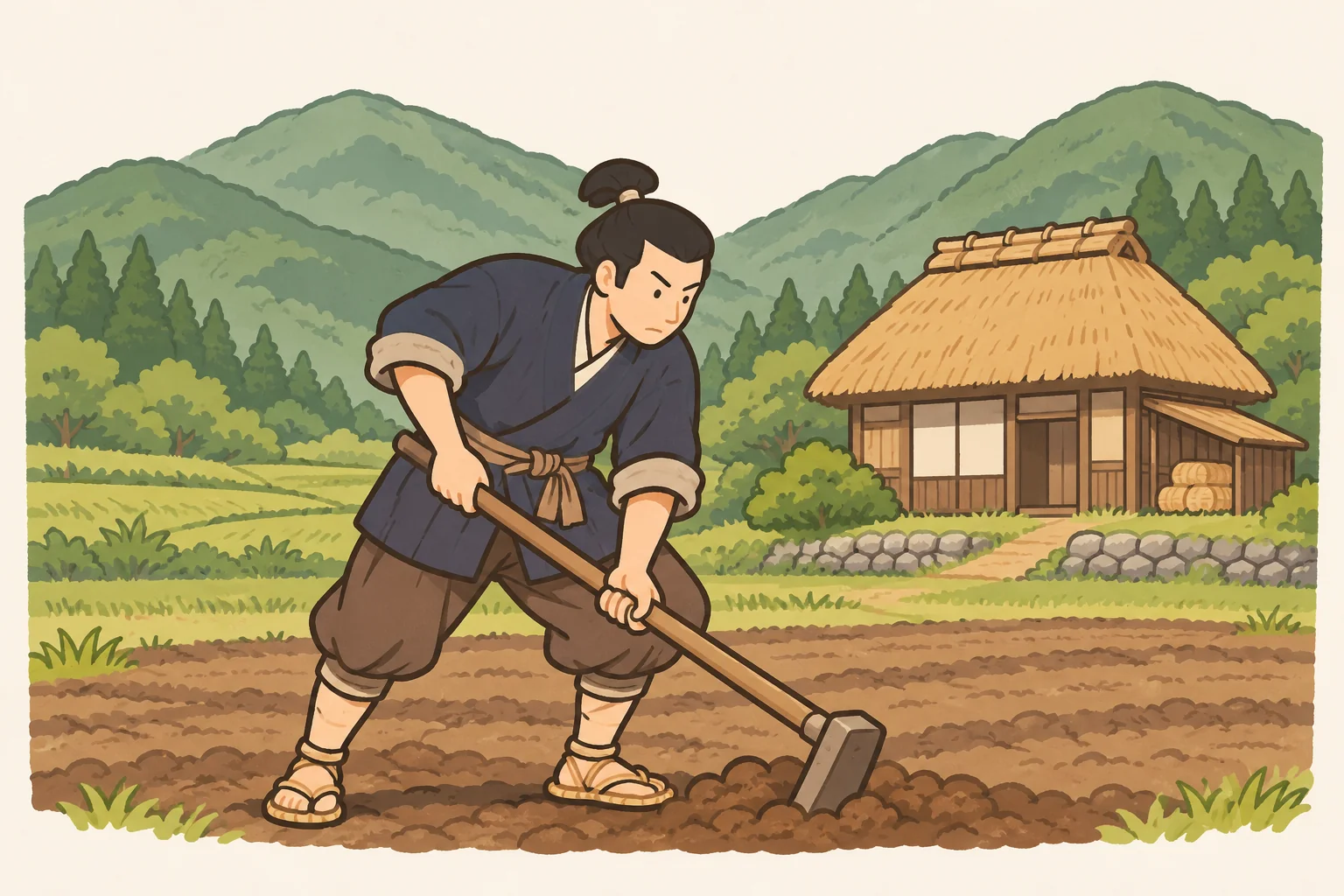
Many ninja were small landholding warriors who farmed and ran their villages between wars.
02Why Iga and Kōga
Iga lies in what is now western Mie Prefecture, and Kōga (also read Kōka) in southern Shiga Prefecture. They sit side by side, separated by a low ridge of mountains, a day’s walk or less from Kyoto and Nara. The land is a patchwork of small basins and valleys, and in the late medieval period no great lord managed to control it firmly. Power rested instead with local gentry-warriors called jizamurai, each holding a few villages, who banded together into self-governing leagues when outsiders threatened. Iga had its provincial league, the Iga sōkoku ikki; Kōga had a council of its own families, the gunchū sō. Generations of small feuds in rough country made these men skilled at ambush, night raids and scouting, and their closeness to the capital meant that rival powers kept hiring them.
Kōga’s reputation is traced to 1487, when the shogun Ashikaga Yoshihisa led an army against Rokkaku Takayori, lord of southern Ōmi. Rokkaku retreated into the Kōga hills and fought a guerrilla war, and tradition says local warriors raided the shogun’s camp again and again by night; the shogun fell ill and died in camp two years later without having won. Later tradition made this campaign, the "Magari no jin," the moment Kōga’s ninja became famous. The details have grown in the retelling, but the image of Kōga men as masters of mountain night-fighting stuck.
Iga’s fate was bound up with Oda Nobunaga. In 1579 his son Oda Nobukatsu invaded Iga on his own initiative and was badly beaten by the jizamurai. Two years later, in 1581, Nobunaga sent a huge army in from several directions at once. Villages and temples were burned, the Iga league was destroyed, and many of its people scattered.
The survivors got a second chance the very next year. In 1582 Nobunaga was killed at Honnō-ji temple in Kyoto by his own general Akechi Mitsuhide. Tokugawa Ieyasu, Nobunaga’s ally, was sightseeing near Sakai with only a small escort and was suddenly in great danger. He chose to cut straight across the mountains of Iga and Kōga to reach his home province of Mikawa. Local warriors from both districts guided and protected him, and he made it home safely. The episode is known as the Shinkun Iga-goe, "the Lord’s crossing of Iga."
- 1487Magari no jin: Kōga night raids on the shogun’s camp
- 1579Oda Nobukatsu invades Iga and is beaten
- 1581Nobunaga’s army destroys the Iga league
- 1582Honnō-ji; Shinkun Iga-goe
The Iga league was destroyed in 1581; the next year Ieyasu escaped across the mountains of Iga and Kōga, and later took many of their men into his service.
The man most associated with that crossing is Hattori Hanzō Masanari, though no record from the time actually shows him at work during the escape. His father came from Iga, but Hanzō himself was a Tokugawa field commander, famous enough for his ferocity to be nicknamed "Devil Hanzō." Popular culture turned him into a ninja grandmaster; historically he was the officer who commanded Iga men on the Tokugawa side. Ieyasu did not forget the help he received, and many Iga and Kōga men later entered Tokugawa service.
03Ninja in an Age of Peace
When the wars ended in the early 1600s, the Tokugawa shogunate organized its Iga and Kōga retainers into units of guards and watchmen. The Iga-mono and Kōga-mono kept the gates of Edo Castle, watched the entrances to the inner women’s quarters (the Ōoku), and did investigative and security work. Hanzōmon, a gate on the western side of the castle, is traditionally said to take its name from Hattori Hanzō’s men, who were quartered nearby. The name survives today on a Tokyo subway line and station.
The eighth shogun, Tokugawa Yoshimune, who came to power in 1716, brought trusted men with him from his home domain of Kii and created the oniwaban, nominally the "garden keepers." In practice they reported directly to the shogun, quietly gathering information on daimyo, officials and conditions in the provinces. They are often described as the ninja of the Edo period, though they came from Kii rather than Iga or Kōga.
Peace also gave the shinobi time to write. In 1676 Fujibayashi Yasutake of Iga compiled the Bansenshūkai, a large compendium of the techniques of Iga and Kōga. It covers the mental discipline of infiltration, reading weather and people, and detailed instructions for making fire-starters, explosives, folding ladders and devices for crossing water. The Shōninki, written in Kii in 1681, and the Shinobi hiden, attributed to the Hattori line, belong to the same genre. What strikes a modern reader is how practical these manuals are. They explain how to strike up a conversation and draw out information, how to judge whether someone is lying, how to memorize terrain, how to make sure you get back. Ninjutsu, as described by people who practiced it, was a handbook for intelligence work, not a set of magic tricks.
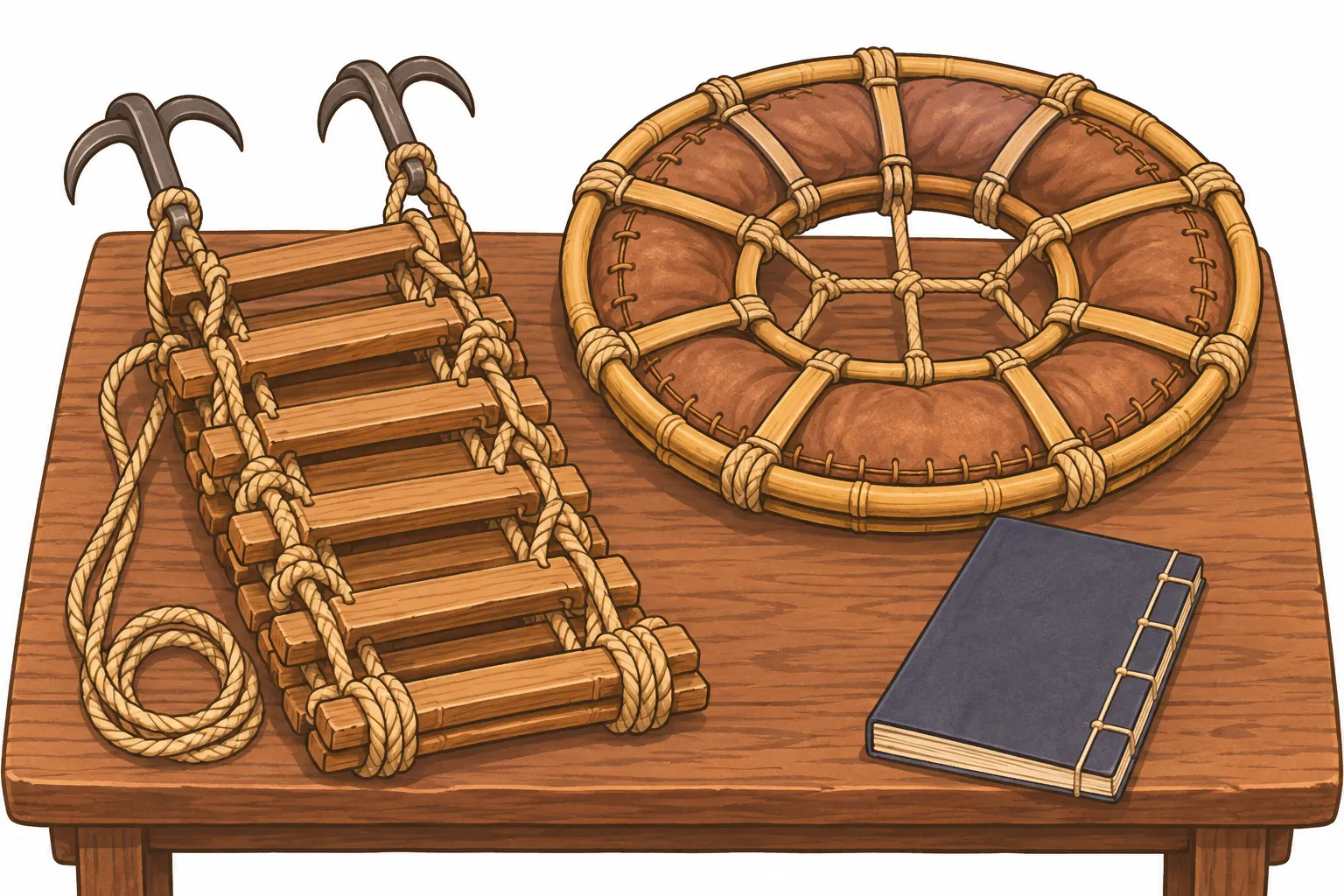
Tools described in Edo-period ninja manuals: a folding ladder and a water-crossing float beside a bound book (illustration).
Iga’s most famous son, the haiku poet Matsuo Bashō, was born in Iga Ueno in 1644. Because he spent his later years walking the length of Japan and writing travel journals such as The Narrow Road to the Deep North, a popular story holds that he was a shogunate spy using poetry as cover. There is no reliable evidence for this, but people in Iga enjoy telling it.
04Black Suits, Throwing Stars and Hand Signs
The all-black outfit with only the eyes showing began on the Edo-period stage, in kabuki and puppet theater, where a costume had to tell the audience at a glance who a character was. A common explanation points to kabuki’s kurogo, stagehands dressed entirely in black who move props and help actors in full view of the audience; by convention, the audience treats them as invisible. Dressing a ninja character the same way told the audience at once that this was someone who could not be seen. Real shinobi on a mission were far more likely to dress like ordinary people. The Shōninki recommends everyday colors such as brown, persimmon, black and dark blue, chosen so as not to draw attention, rather than any special night suit.
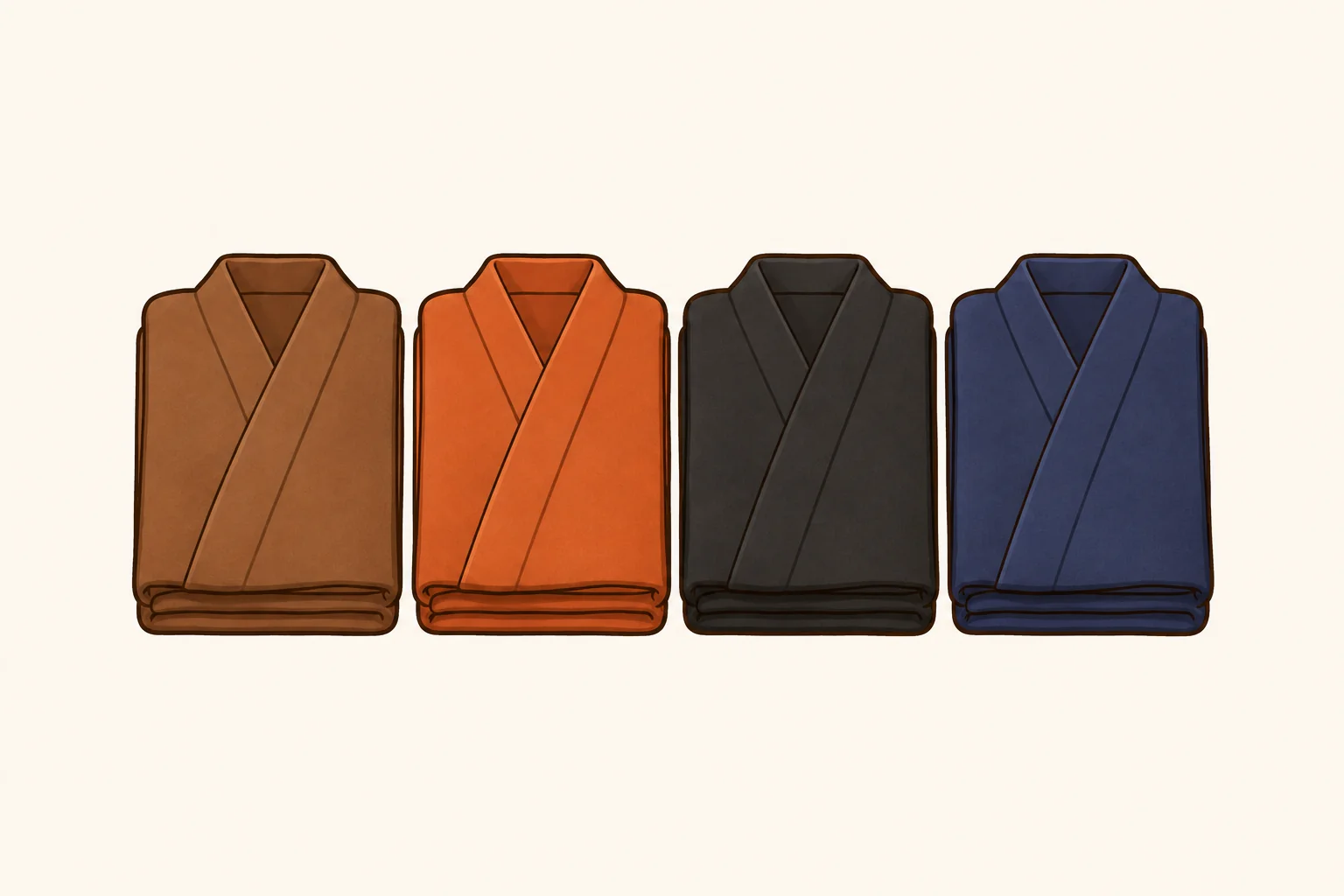
The Shōninki recommends everyday colors such as brown, persimmon, black and dark blue, so as not to draw attention.
By the Edo period, kabuki, puppet theater and popular illustrated books had already given ninja magical powers. They cast spells, vanished in puffs of smoke, and rode giant toads. The hand signs and the nine-syllable chant rin, pyō, tō, sha, kai, jin, retsu, zai, zen came from Chinese Daoism by way of esoteric Buddhism, Onmyōdō and the mountain ascetic tradition of Shugendō, where they were protective formulas; fiction borrowed them as the signature gesture of ninja magic. The legendary thief Ishikawa Goemon was said in these stories to have learned Iga ninjutsu. Throwing blades, shuriken, did exist as small iron plates and spikes taught in martial arts schools, but no surviving ninja manual mentions them and no record shows ninja using them; the link was made by kabuki and other entertainment. Stage shuriken were stick-shaped, and the flat multi-pointed star became the ninja’s trademark only after the Second World War.
In the 1910s, the Ōsaka publisher Tachikawa Bunmeidō issued the Tachikawa Bunko, a series of cheap pocket-sized adventure stories for boys. The hero of its 1914 volume, Sarutobi Sasuke, one of the "Ten Braves" serving the warlord Sanada Yukimura, could leap into treetops and disappear at will, and he became a national idol for schoolchildren. A much bigger wave came in the late 1950s and 1960s. Shiba Ryōtarō won the Naoki Prize for Fukurō no shiro (Owl’s Castle), about Iga ninja in the age of Hideyoshi. Yamada Fūtarō’s Kōga ninpōchō pitted ten Iga ninja against ten Kōga ninja in a fantastical duel of superpowers. Murayama Tomoyoshi’s novel Shinobi no mono became a film series starring Ichikawa Raizō. The manga artist Shirato Sanpei, in Ninja bugeichō and Kamui den, used ninja to tell stories about class, oppression and rebellion. Yokoyama Mitsuteru’s manga Iga no Kagemaru ran for years in a boys’ weekly, and his Kamen no ninja Akakage reached television in 1967. It was this boom that fixed "ninja" as the everyday word.
In the 1980s the ninja went global. American action films beginning with Enter the Ninja (1981), in which the Japanese actor Shō Kosugi played a ninja before becoming the lead of the follow-ups, made the black-clad ninja a stock Hollywood character. In 1984 the American comic Teenage Mutant Ninja Turtles gave four turtles ninja weapons and names borrowed from Renaissance painters. In 1999 Kishimoto Masashi began serializing Naruto, which imagined an entire world of ninja villages, ranks and teacher–student lineages, and it shaped the idea of the ninja for a generation of readers around the world. For many people abroad today, the ninja stands beside sushi and anime as one of the first things that comes to mind when they think of Japan.
05Finding Ninja in Japan Today
The most natural place to start is Iga Ueno, in the city of Iga, Mie Prefecture. In Ueno Park is the Iga-ryū Ninja Museum, built around a farmhouse-style ninja residence moved there from elsewhere in the region. A guide, often a young woman dressed as a kunoichi (female ninja), shows you its tricks: a plain-looking wall panel that pivots so a person can vanish into the next room, a hidden compartment under the floor for a sword, a concealed ladder in a cupboard leading to the attic. Next door are demonstrations with shuriken, the sickle-and-chain kusarigama and the blowgun, and visitors can throw a few shuriken themselves. Iga Ueno Castle stands in the same park, the streets of the old castle town keep their grid, and Bashō’s birthplace and a memorial hall are close by. During the Iga Ueno Ninja Festival in early May, over the Golden Week holidays, the town fills with visitors and children in rented ninja costumes.
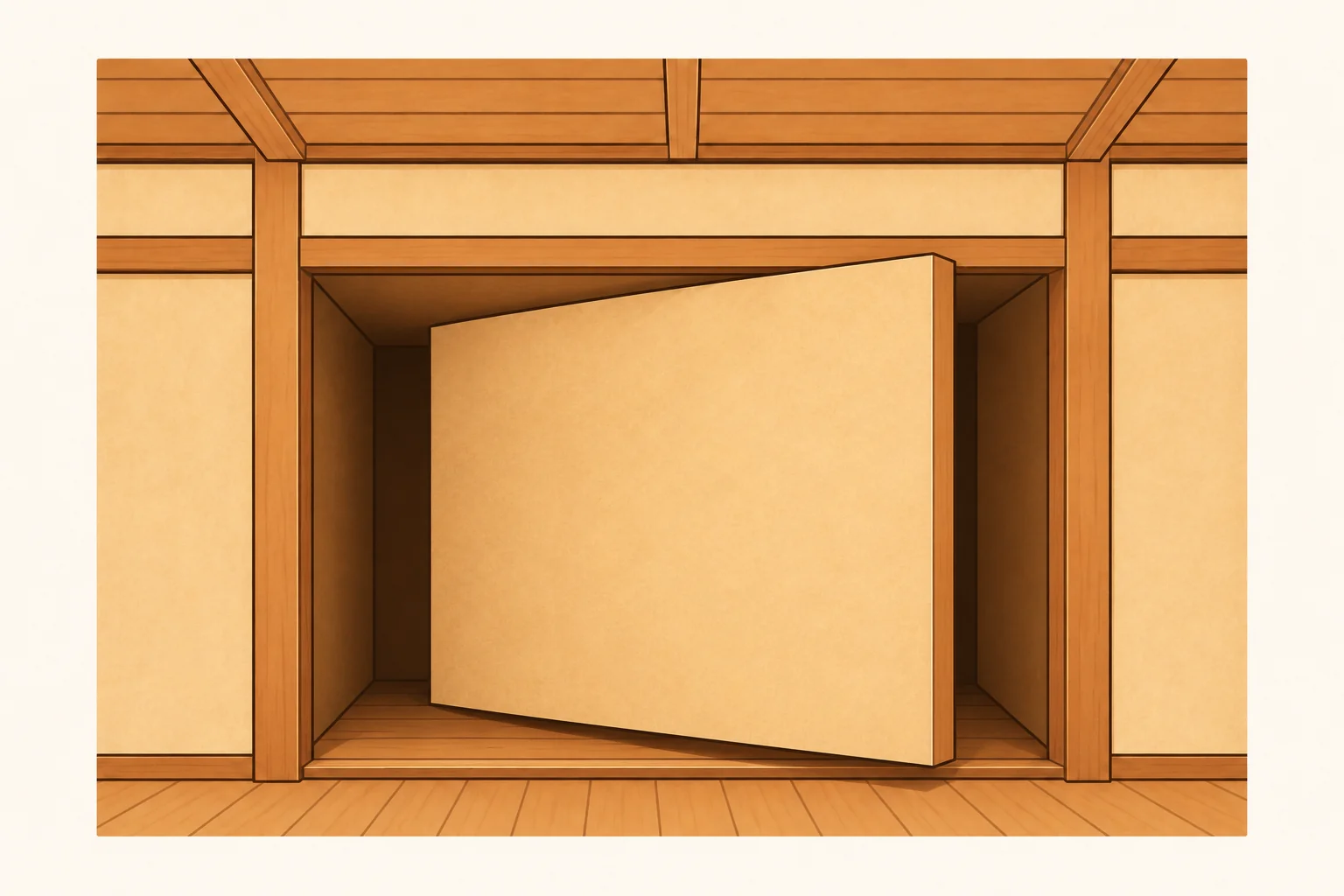
A plain-looking wall panel pivots so a person can vanish into the next room.
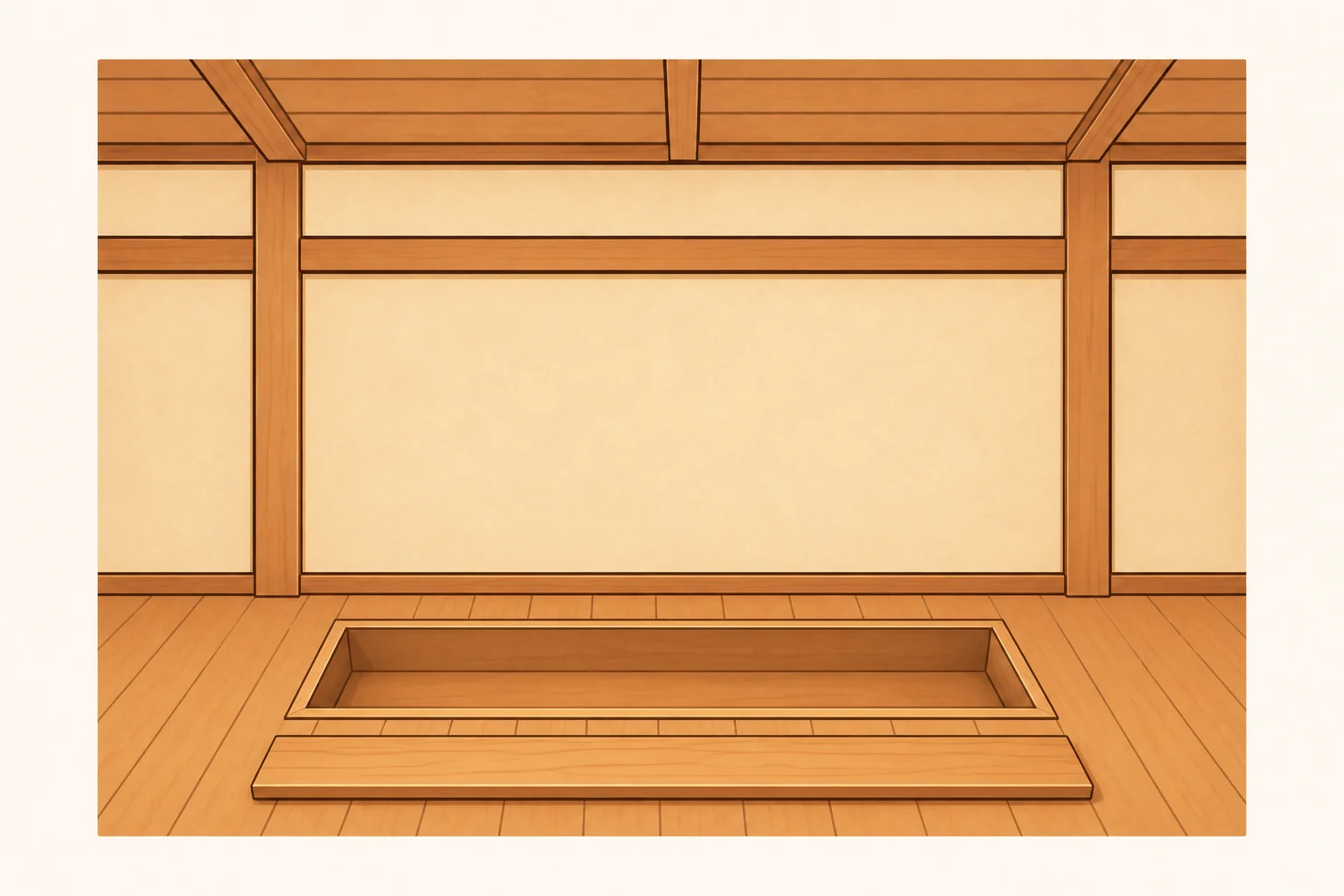
A compartment under the floor hides a sword.
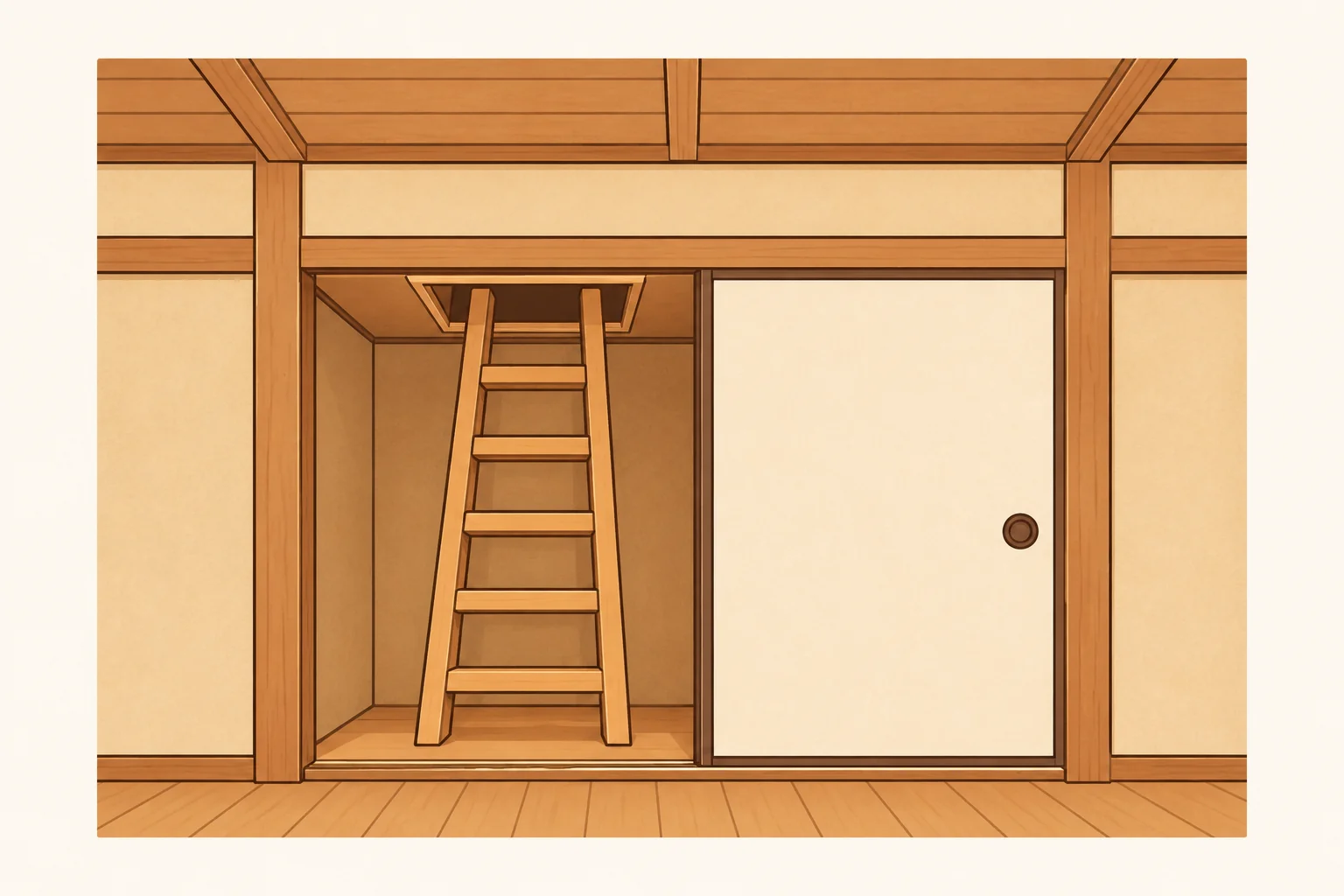
A cupboard conceals a ladder leading to the attic.
On the Kōga side, in Kōka City, Shiga Prefecture, the Kōka-ryū Ninjutsu Yashiki is said to be the former home of the Mochizuki family, one of the fifty-three leading families of Kōga. Built in the Edo period and still standing on its original site, it has trapdoors, hidden doors and secret staircases of its own. In the hills nearby, the Kōka no Sato Ninjutsu Mura is a ninja village theme park where families can spend a full day. Both towns are within about two hours of Kyoto by train and can be visited on one trip.
Other places borrow the name. Myōryū-ji in Kanazawa is nicknamed the "Ninja Temple" for its maze of hidden stairs, secret rooms and traps, but these were defensive features built under the Kaga domain and have nothing to do with ninja. Edo Wonderland in Nikkō and the ninja-themed restaurants and experience halls of Tokyo and Kyoto are entertainment, good for dressing up and taking photos with children.
When you walk through a ninja house, notice what the gadgets are for. Most were designed so that the family could get away and intruders could not find them. That kind of quiet, practical cunning in an ordinary farmhouse is closer to the real shinobi than any leap across a rooftop. Mie University opened an International Ninja Research Center in 2017 to study the old manuals and the local history of Iga, and both districts continue to sort and publish their old documents.
Unlike judo, kendo or kyudo, ninjutsu never became an organized modern martial art with a governing body and competitions, and the lineages that claim to teach it today are difficult to trace. What the shinobi left behind is a handful of manuscripts, a few old houses full of hidden doors, and a figure in black that the rest of the world keeps reinventing.