
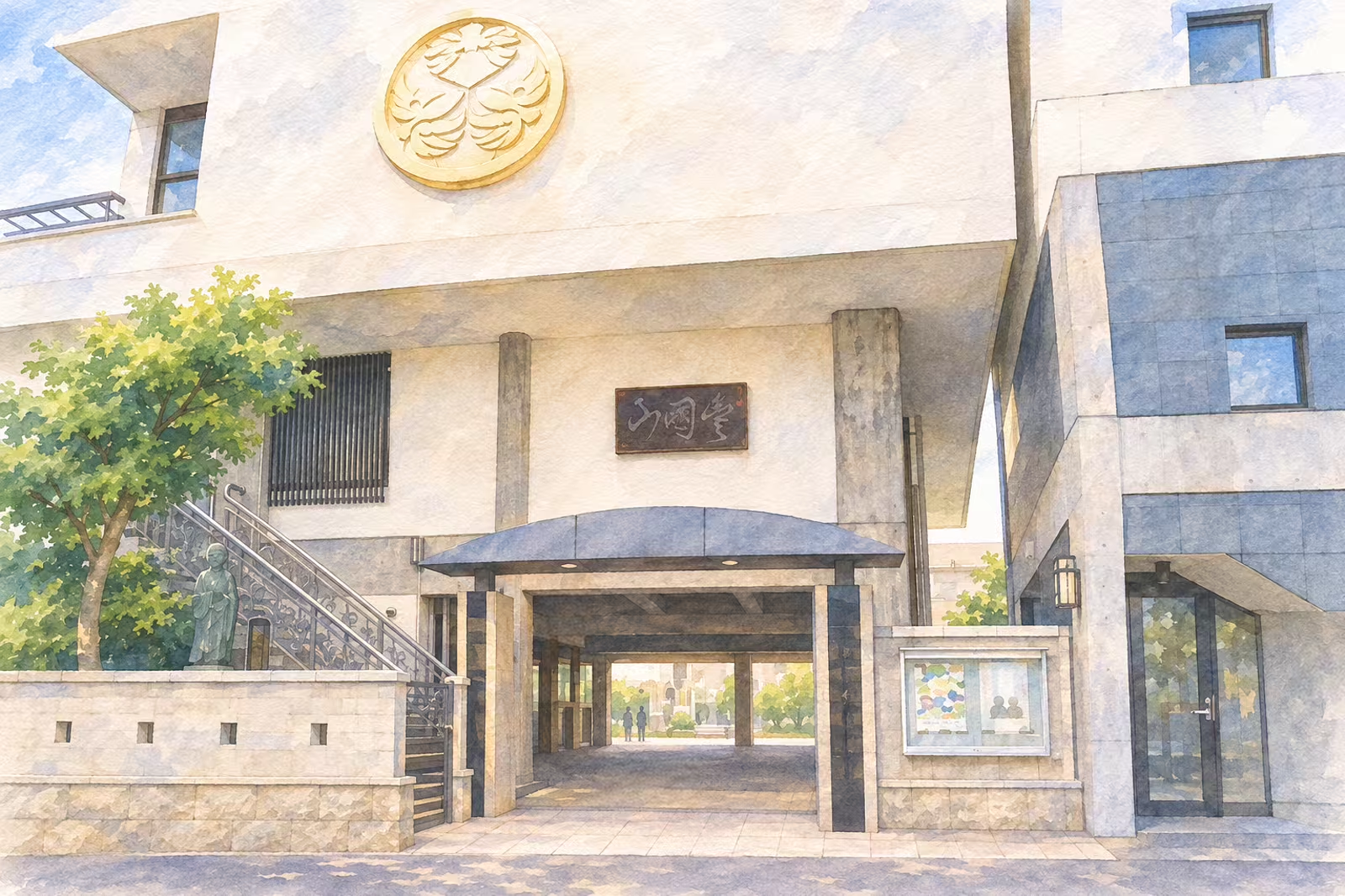
Kozukappara was one of the two great execution grounds of Edo, paired with Suzugamori to the south. Its site is in present-day Minami-Senju, Arakawa Ward, Tokyo, near Senju-juku, the post town where the Nikkō Kaidō highway entered the city. No enclosed remains of the execution ground survive. Its memory is kept mainly by two temples, Ekō-in and Enmei-ji. The place stands both for Tokugawa punishment and for one of the starting points of modern medicine in Japan.
01Execution ground and temples
Kozukappara is generally thought to have been established in the mid-17th century, with 1651 the year most often given. Beheadings, crucifixions and burnings took place here, and bodies and heads were put on public display. A figure of as many as 200,000 executions is often repeated, but it cannot be confirmed. In 1667 Ekō-in of Honjo founded a branch temple beside the grounds to offer prayers for the executed, for prisoners who died in jail and for travelers who died with no one to bury them; this is today’s Kozukappara Ekō-in. In 1741 a seated stone Jizō about 4 meters high was set up near the entrance to the grounds to console the dead. Popularly called the Kubikiri Jizō ("beheading Jizō"), it now stands in the precinct of Enmei-ji. The execution ground was abolished in the early Meiji years.
02Dissection and the Ansei Purge
In 1771 Sugita Genpaku, Maeno Ryōtaku and Nakagawa Jun’an watched the dissection of an executed woman here. Comparing what they saw with the plates of a Dutch anatomy book, they found the illustrations accurate and began translating it together. The result, Kaitai Shinsho, was published in 1774 and launched the wider study of Western learning (rangaku). Ekō-in put up a memorial to the dissection in 1922. During the Ansei Purge of the late 1850s, Yoshida Shōin, Hashimoto Sanai, Rai Mikisaburō and others who were executed were buried at Ekō-in. Shōin’s remains were later moved by his followers to the site of today’s Shōin Shrine in Setagaya, but his grave marker remains at Ekō-in.
03What can be seen today
Railway lines built in the Meiji era, today including the Jōban Line, cut through the former grounds and separate Ekō-in and Enmei-ji on either side of Minami-Senju Station. The Ekō-in cemetery holds the grave markers of Yoshida Shōin, Hashimoto Sanai and other late-Tokugawa activists, along with graves of people remembered in popular fiction for their crimes. The dissection memorial is set into a temple wall; the original plaque was damaged and later replaced with a copy. The Kubikiri Jizō at Enmei-ji was damaged in the 2011 Great East Japan Earthquake and has since been repaired.