
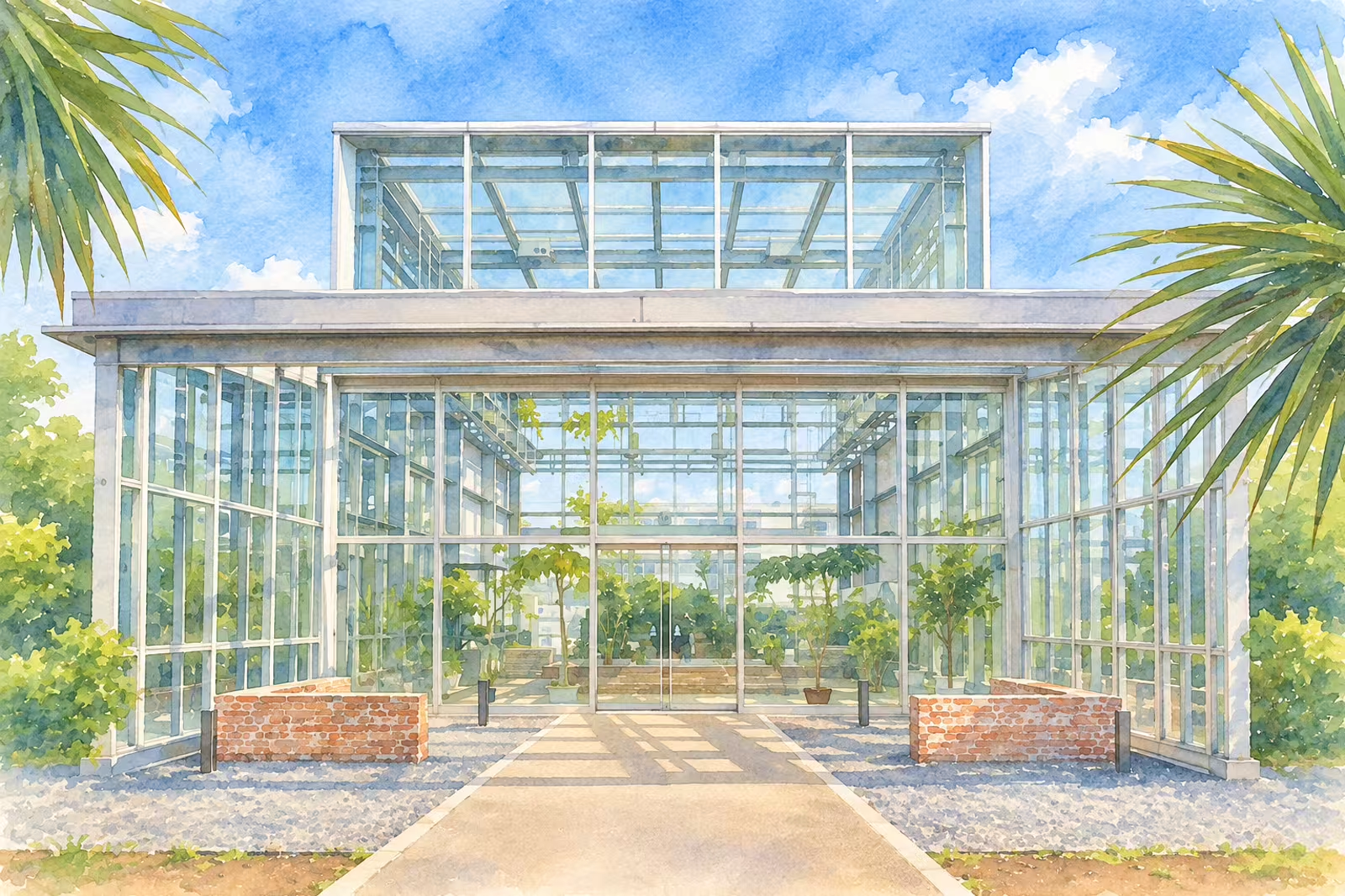
Koishikawa Botanical Garden lies in the Hakusan area of Bunkyō Ward, Tokyo. Formally the Botanical Gardens of the Graduate School of Science at the University of Tokyo, it is the oldest botanical garden in Japan. It began as the Tokugawa shogunate’s Koishikawa medicinal herb garden, and it once housed the Koishikawa Yōjōsho, a clinic that treated poor patients free of charge. For more than three centuries the ground has served public knowledge and relief: medicinal plants, care for the poor, famine crops and, later, modern botany.
01Herb garden and charity clinic
In 1684 the shogunate moved its southern herb garden from Azabu to Koishikawa, onto the site of the Hakusan mansion where Tokugawa Tsunayoshi, the fifth shogun, had lived before taking office. Under the eighth shogun, Tokugawa Yoshimune, the garden was enlarged to roughly its present size. In 1722 the townsman physician Ogawa Shōsen dropped a proposal for a hospital for the poor into the petition box (meyasubako) that Yoshimune had set up. The shogunate opened the Yōjōsho inside the garden that same year, and it treated Edo residents who could not afford care until the end of the Tokugawa period. In 1735 Aoki Kon’yō grew sweet potatoes in the garden; after the trial succeeded, the crop was promoted in the Kantō region as insurance against famine.
02A starting point for modern botany
After the Meiji Restoration the garden passed to the new government, and when the University of Tokyo was founded in 1877 it became the university’s botanical garden. In 1896 Hirase Sakugorō observed sperm cells in a ginkgo tree in the garden, and Ikeno Seiichirō soon made the same discovery in cycads. These were the first demonstrations that some seed plants have swimming sperm, and they are still cited in histories of botany worldwide.
03What can be seen today
The garden keeps the old Yōjōsho well, said to have supplied water to refugees after the 1923 Great Kantō Earthquake, a monument to the sweet potato trials, and the large ginkgo in which Hirase made his discovery. The Japanese garden in the southwest follows Edo-period landforms. The former main building of the Tokyo Medical School, built in 1876, was moved here in 1969; it is an Important Cultural Property and serves as a branch of the university museum. The grounds are generally reported to have been designated a national Historic Site and Place of Scenic Beauty around 2012, under the name "site of the medicinal garden and the Yōjōsho."