
At a glance
Japanese confectionery built around sweet bean paste: its roots in Chinese and Portuguese sweets, its seasonal tea-ceremony forms, street taiyaki, and how to buy and eat it.
- Wagashi are made mainly from rice, wheat, beans, sugar, kudzu and agar, with little or no butter, milk or egg.
- By moisture they are fresh, semi-dry or dry; most fresh sweets must be eaten the same day or the next.
- Bean paste fills most wagashi: tsubuan keeps the skins, koshian is sieved smooth.
- As sugar grew cheaper in the Edo period, Kyoto developed refined seasonal sweets, each given a poetic name.
- Taiyaki began at Naniwaya Sōhonten in 1909; those baked one at a time in long-handled molds are jokingly called “wild”.
Walk into an old confectioner in Kyoto and you will find a glass case holding a dozen small sweets, each about the size of a golf ball: a pale pink petal, a tuft of green threads, a cube of clear jelly with a tiny red goldfish suspended inside. Each has a name, and next month most of them will be gone, replaced by sweets for the next season. Step back onto the street and someone is making taiyaki, fish-shaped cakes filled with red bean paste, in hinged iron molds that hiss as they close. Both belong to the world of wagashi, Japanese traditional confectionery. This essay explains what wagashi are, why nearly all of them come back to sweet bean paste, why the Japanese insist that a sweet should taste of a particular month, how they grew out of fruit, Chinese temple snacks and Portuguese sugar candy, and how to buy and eat them when you are in Japan.
01What Counts as Wagashi
The word wagashi is younger than the sweets it describes. Wa means Japanese and kashi (which becomes -gashi in compounds) means confectionery. The term spread in the Meiji era (1868–1912), when Western cakes, biscuits and chocolate arrived and people needed a way to distinguish yōgashi, Western sweets, from the ones Japan already had. Wagashi are, roughly, sweets built from rice, wheat, beans, sugar, kudzu starch and agar, with little or no butter, milk or eggs. There are exceptions. Castella, the sponge cake of Nagasaki, is full of eggs, but it has been in Japan for four centuries and is treated as wagashi.
Confectioners sort wagashi first by moisture. Namagashi, "fresh sweets," are moist and soft: mochi rice cakes, dumplings, molded bean-paste sweets. They are meant to be eaten the day they are made, or the next. Higashi, "dry sweets," include pressed sugar candies and crackers and keep for weeks or months. Han-namagashi, "half-fresh," sit in between, like monaka, crisp wafer shells sandwiching bean paste. The distinction matters to a visitor: namagashi belong to today, while higashi are what you pack in your suitcase.
The second division is by occasion. At the top are jōgashi, refined sweets for tea ceremonies, festivals and gifts, and above all jō-namagashi, the hand-shaped seasonal sweets of the Kyoto glass case. At the other end are everyday sweets made each morning and sold by afternoon: dumplings on skewers, daifuku, dorayaki, taiyaki. Japan also has dagashi, cheap packaged candy sold to children in corner shops, which is a separate world.
What sets wagashi apart from European pastry is where the pleasure comes from. Fat does very little of the work. Sweetness comes from sugar and beans, and texture from the chew of glutinous rice, the slippery give of kudzu and the clean snap of agar jelly. The result is light but often quite sweet, and that is deliberate. Most wagashi were designed to be eaten with green tea, whose bitterness the sugar is there to balance.
- 1
 Rice flour, the base of dango and mochi, gives the soft, chewy texture.
- 2Dried agar and the jelly it sets: it firms yōkan and clear kingyokukan and gives a cool bite.
02Anko: The Heart of the Matter
If one ingredient defines wagashi it is an, or anko, sweet bean paste. Open almost any wagashi and you will find it.
The standard is red bean paste made from azuki beans. Beans from Tokachi in Hokkaidō supply most of Japan’s azuki and are considered the benchmark; large dainagon azuki from the Tanba region near Kyoto hold their shape when cooked and are prized for sweets where whole beans show. The beans are soaked, simmered, and drained once or twice to remove bitterness, then cooked down with sugar, stirred constantly so the paste does not scorch.
There are two main styles. Tsubuan keeps the skins and some whole beans, giving a rustic, textured paste. Koshian is pressed through a sieve to remove the skins, leaving a smooth, almost silky purée. Japanese people argue about which is better with the seriousness that Americans bring to deep-dish pizza. A third style, ogura-an, mixes smooth paste with whole simmered beans; the name is taken from Mount Ogura in Kyoto, a place long associated with classical poetry; by one account, the beans grown around it were once prized.
White bean paste, shiro-an, is made from white beans such as white kidney beans. It is pale and neutral, which means it can be tinted any color, and it is the clay from which the most elaborate seasonal sweets are sculpted. There are many other pastes: green uguisu-an from green peas, zunda from mashed edamame in Sendai, and pastes flavored with chestnut, sesame, yuzu or white miso.
- 1
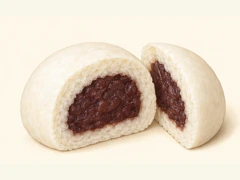 Manjū: bean paste wrapped in soft dough and steamed.
- 2
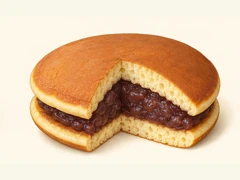 Dorayaki: bean paste between two soft pancakes.
- 3
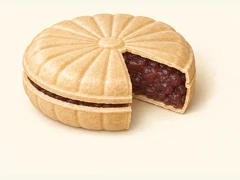 Monaka: bean paste in crisp shells, a semi-dry sweet.
- 4
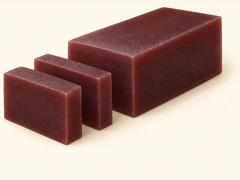 Neri-yōkan: bean paste set with agar and cut into slices.
Bean paste matters because it is malleable. Knead white paste with a little glutinous rice dough and it becomes nerikiri, which can be shaped like clay into flowers, leaves and fruit. Push paste through a fine sieve and it comes out in threads that can be pressed around a ball of filling to make kinton, a fluffy sweet that can suggest chrysanthemums, autumn foliage or snow on a branch. Set bean paste with agar and you have yōkan, a dense, sliceable block; use more water and less agar and it becomes mizu-yōkan, a soft summer version served cold. Apprentice confectioners traditionally spend years learning to cook paste before they are trusted with anything decorative.
Sugar matters too. Most shops use refined white sugar, but the finest dry sweets use wasanbon, a sugar from Tokushima and Kagawa on the island of Shikoku that is refined by kneading and washing it by hand over many days. Its grains are extraordinarily fine. A small wasanbon sweet pressed in a wooden mold dissolves on the tongue in a few seconds, leaving a soft, slightly caramel sweetness.
03From Fruit to Sweets: A Long Inheritance
The ka in kashi originally meant fruit. Before sugar, the Japanese idea of a sweet was a chestnut, a persimmon, a mandarin or a handful of berries. Some old-fashioned restaurants still list fruit at the end of a meal as mizugashi, "water sweets," a fossil of that older meaning.
In the Nara and Heian periods (8th to 12th centuries), embassies to Tang China brought back tōgashi, "Tang sweets": shapes of rice or wheat dough, often fried in oil. They were used mainly as offerings at the imperial court and at shrines and temples, and some survive in ritual use. In Kyoto, the old confectioner Kameya Kiyonaga still makes seijō kankidan, a fried pastry shaped like a little drawstring purse, descended from these Tang sweets.
The bigger change came with Zen Buddhism in the Kamakura and Muromachi periods (13th to 16th centuries). Japanese monks who studied in China brought home the habit of tenshin, light snacks taken between meals. Two of those snacks became pillars of wagashi.
The first was yōkan. In China the characters for yōkan described a soup made with mutton. Zen monks did not eat meat, so they imitated the mutton with azuki and other plant ingredients in a vegetarian version. Over time the solid part was separated from the broth and sweetened, and it became a sweet for tea gatherings. Early yōkan was steamed. The firm, glossy yōkan made with agar, neri-yōkan, became common only in the Edo period.
The second was the manjū, a steamed bun. Two origin stories are told. One credits the monk Enni (Shōichi Kokushi), who returned from China in the 13th century and is said to have taught the people of Hakata to make buns leavened with sake lees. The other credits a Chinese man named Lin Jingyin (Rin Jōin in Japanese), who came to Nara in the 14th century with a returning monk and, since monks could not eat meat, filled his buns with sweet bean paste; his descendants are said to have founded the Shiose confectionery. Both are temple and shop traditions written down long afterward, but the general path is clear: Chinese steamed buns passed through Zen monasteries and came out the other side as sweets filled with bean paste.
Tea culture was taking shape at the same time. Sweets served at early tea gatherings were simple, such as chestnuts, dried persimmons, seaweed, or toasted wheat gluten. Even in the time of Sen no Rikyū in the late 16th century they remained modest. But tea’s insistence on season and on the single, unrepeatable meeting would later shape wagashi profoundly.
The third outside influence came from the Portuguese and Spanish, whom the Japanese called nanban, "southern barbarians." From the mid-16th century their ships brought castella, konpeitō (the knobbly sugar candies called confeito in Portuguese), bōro biscuits and pulled-sugar candy to Nagasaki and Hirado. These sweets used large amounts of sugar and eggs and showed Japan what sugar could do. The Jesuit Luís Fróis is recorded as having presented the warlord Oda Nobunaga with a glass flask of konpeitō. Castella took root in Nagasaki, where the shop Fukusaya traces its founding to 1624.
04The Edo Period: Sugar, Kyoto and Names
Wagashi as we know them took shape in the Edo period (1603–1868), and the reason was sugar.
At the start of the period nearly all sugar was imported on Chinese and Dutch ships through Nagasaki, and it was expensive enough to be a luxury of the court, the daimyo and rich merchants. The eighth shogun, Tokugawa Yoshimune, encouraged domestic sugarcane cultivation in the early 18th century, and by the late Edo period cane was grown and processed in Shikoku, Kyūshū and elsewhere. Wasanbon was developed in this era. As prices fell, sweets reached ordinary townspeople.
Kyoto was the center of refinement. The imperial court, aristocratic households, great temples and the headquarters of the tea schools all needed sweets for rituals and gatherings. These refined sweets, made with white sugar for presentation to the court, temples and tea households, were called jōgashi, and the Kyoto confectioners who made them are generally said to have formed a guild whose membership was restricted, by tradition to a fixed 248 shops. Their style became known as kyōgashi, Kyoto sweets: elegant, restrained, and closely tied to the seasons.
Edo, the shogun’s capital, developed a different taste. The temple towns of Asakusa and Ueno were full of shops selling dumplings, daifuku and cherry-leaf mochi, and street stalls sold griddle cakes. Edo townspeople liked their sweets generous, filling and sweet. Japanese still speak of kyōgashi and Edo-style sweets as two temperaments.
The Edo period also developed the custom of the kamei, a poetic name given to each sweet. A pale pink nerikiri marked with fine lines might be called "First Cherry" or "Raft of Petals," a phrase for fallen blossoms drifting on a river. Names are drawn from classical poetry, literature and the natural calendar. At a tea gathering a guest will ask the name before eating, and the host’s answer tells the guest what season and what mood the host intends. The logic is the same as the seasonal words, kigo, of haiku. A sweet without its name is only half there.
Toraya, perhaps Japan’s most famous confectioner, comes out of this tradition. It was founded in Kyoto in the late Muromachi period, became a purveyor to the imperial court, and followed the emperor to Tokyo after the Meiji Restoration. Its yōkan, especially the one called Yoru no Ume, "Plum Blossoms at Night," is a standard formal gift. When the bar is sliced, the azuki beans in the dark paste are said to look like plum blossoms opening in the night, hence the name.
05A Calendar You Can Eat
Spend a year in Japan and the confectioner’s case will change every few weeks. The seasonality of wagashi is not a marketing theme. It is bound up with the festival calendar, the old twenty-four solar terms and the seasonal rules of tea.
| When | Sweets |
|---|---|
| New Year | Hanabira mochi |
| Spring | Sakura mochi (Chōmeiji, Dōmyōji) |
| March 3 | Hishi mochi |
| May 5 | Kashiwa mochi |
| June 30 | Minazuki |
| Summer | Kuzu manjū, kingyokukan, mizu-yōkan |
| Autumn | Tsukimi dango, kuri kinton, ohagi |
| Day of the boar, old tenth month (now October or November) | Inoko mochi |
| Winter | Snow-themed sweets such as “First Snow” |
From hanabira mochi at New Year to snow-named sweets in winter; by late December the shops are preparing hanabira mochi again.
At New Year, Kyoto shops sell hanabira mochi, "petal mochi": a thin, white disk of soft rice dough folded over a pink diamond of mochi, sweet white-miso bean paste and a stick of candied burdock root, so that a blush of pink shows through. It derives from a New Year food of the imperial court and was adopted in the Meiji era by the Urasenke school of tea for its first tea gathering of the year, the hatsugama. For many people in Kyoto it is the taste of January.
Spring belongs to sakura mochi, and there are two kinds. In the Tokyo area, Chōmeiji style wraps bean paste in a thin pink crepe of wheat flour. In the Kansai region around Ōsaka and Kyoto, Dōmyōji style uses steamed, dried and coarsely ground glutinous rice, which gives a pleasantly grainy surface. Both are wrapped in a salt-pickled cherry leaf, whose scent is half the pleasure. A shop outside Chōmei-ji temple in Mukōjima, Tokyo, traces its sakura mochi to 1717, when its founder, Yamamoto Shinroku, is said to have begun pickling leaves from the cherry trees along the Sumida River embankment and wrapping mochi in them; the shop still sells them. Whether to eat the leaf is a matter of personal taste; many people do.
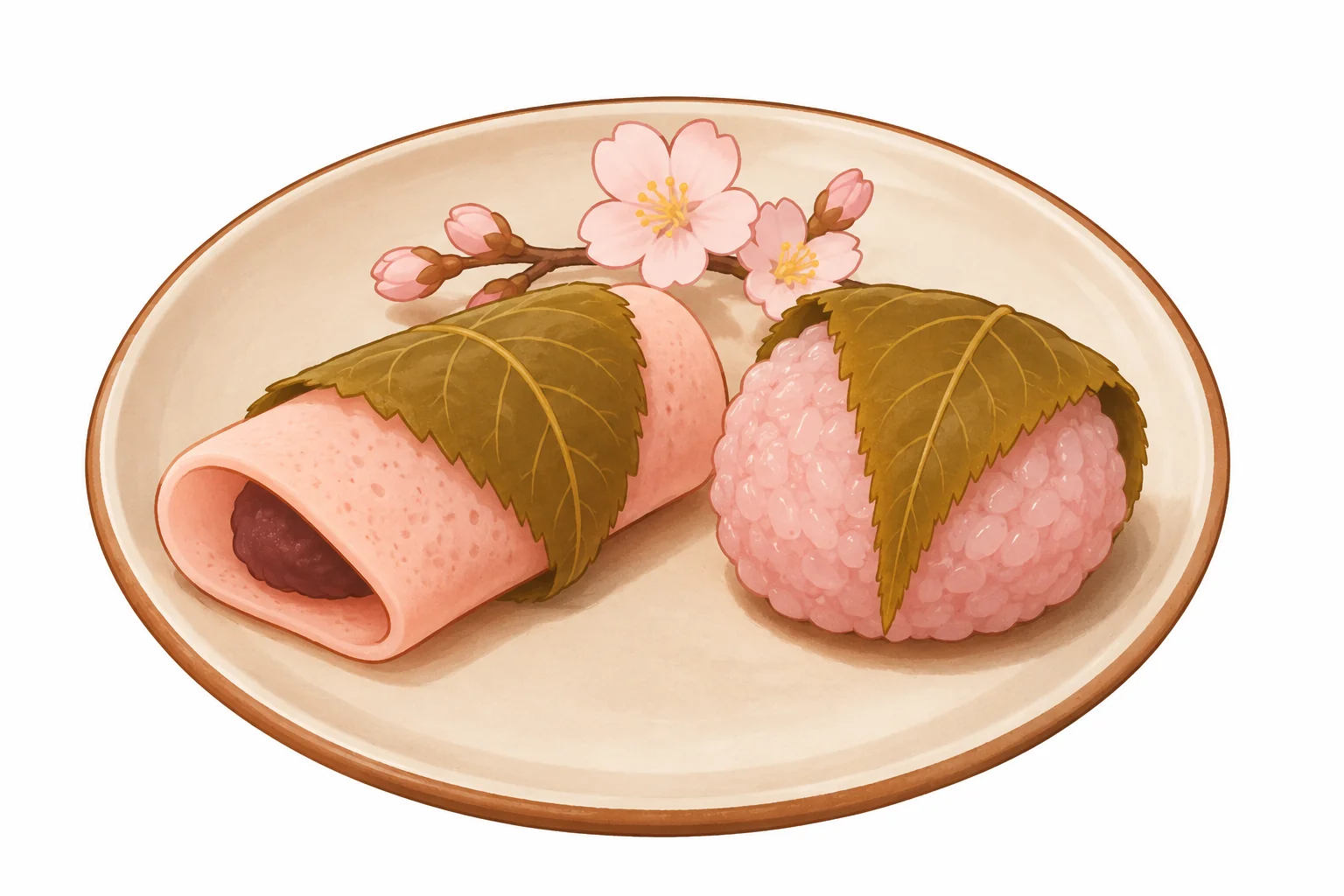
Chōmeiji sakura mochi, rolled flat, beside grainy round Dōmyōji sakura mochi, each in a salted cherry leaf (illustration).
The Doll Festival on March 3 brings diamond-shaped hishi mochi in layers of pink, white and green. The Boys’ Day festival on May 5 brings kashiwa mochi, rice cakes filled with bean paste and wrapped in an oak leaf. Oak trees keep their old leaves until new ones bud, so the leaf is read as a wish for the family line to continue. In parts of western Japan, where that oak is less common, other leaves are used.
On June 30, the day of the nagoshi no harae, a purification rite for the first half of the year, people in Kyoto eat minazuki: triangles of white steamed rice-flour cake topped with azuki beans. The triangle is said to imitate a shard of ice, which in the old days only the court could afford in summer, and the red beans are thought to ward off evil. June 16 is Wagashi Day, set by the Japan Wagashi Association, after an old custom called kajō. According to tradition, when the era name was changed to Kajō in the 9th century, sixteen kinds of sweets were offered to the gods on the sixteenth day of the sixth month to pray for health.
Summer sweets aim to look cool. Kuzu manjū are translucent kudzu dumplings with the bean paste showing through. Kingyokukan are clear agar jellies with goldfish, ripples or green maple leaves set inside. Mizu-yōkan is served chilled. Before refrigerators, these sweets cooled people through their eyes as much as their mouths.
Autumn brings moon-viewing dumplings, tsukimi dango, stacked in a pyramid for the full moon, and kuri kinton, a chestnut sweet that in the town of Nakatsugawa in Gifu is made from little more than steamed chestnut and sugar, twisted in a cloth into the shape of a chestnut. Ohagi are balls of half-pounded rice coated with bean paste. The same sweet is called botamochi at the spring equinox, after the peony, and ohagi at the autumn equinox, after the bush clover that blooms then. In the tenth month of the old calendar, now October or November, comes inoko mochi, eaten on the day of the boar to pray for health and many children.
Winter sweets lean on white and on snow, with names like "First Snow." By late December the shops are preparing hanabira mochi again, and the year comes round.
06The Art of Jō-namagashi
The hand-shaped seasonal sweets are the summit of wagashi craft and usually the thing that first captivates visitors.
The two main forms are nerikiri and kinton. Nerikiri dough, white bean paste bound with a little glutinous rice dough or grated mountain yam, has the feel of fine modeling clay. A confectioner can turn a ball of it into a chrysanthemum, a maple leaf or a persimmon in a minute or two, using fingers, a triangular wooden stick, carved molds and a damp cloth to imprint a pattern. Kinton are built with chopsticks, one cluster of bean-paste threads at a time, around a core of smooth paste. The threads can be graded in color: white above and green below for "Lingering Snow," red over yellow for an autumn mountainside.
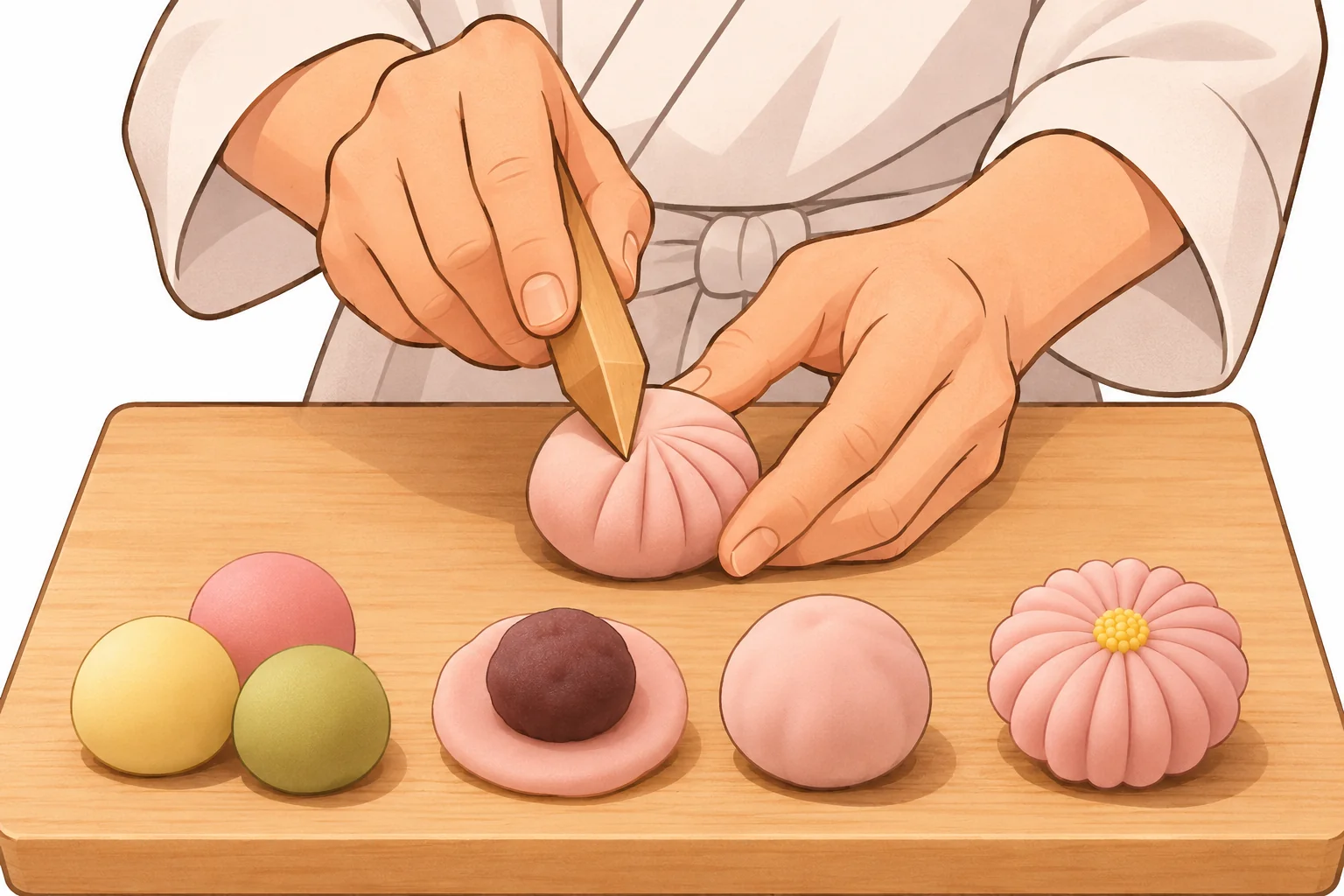
A confectioner presses chrysanthemum petals into nerikiri with a sankaku-bō, the steps from ball to flower laid out (illustration).
The aesthetic is suggestion rather than realism. A pale purple ball with a single diagonal line pressed into it is an iris. A mound of green and white threads is a sprout under snow. Japanese confectioners like to say that wagashi are tasted with all five senses: the eyes take in color and shape, the ears hear the name, the nose catches a faint fragrance, the fingers feel the softness, and only then does the tongue get its turn.
In the tea ceremony, a moist sweet, the omogashi, is served before thick tea, and dry sweets accompany thin tea. Guests place the sweet on folded paper called kaishi and cut it with a pick of kuromoji, a fragrant spicebush wood; many shops include a kuromoji pick with their sweets. The point to remember is that wagashi exist to make tea taste better. The sweetness is there to prepare for the bitterness.
Kyoto and Tokyo have the most shops making these sweets, but Kanazawa and Matsue are also famous for them. Both were castle towns whose lords were devoted to tea: the Maeda lords of Kanazawa and, in Matsue, the daimyo Matsudaira Harusato, better known by his tea name Fumai. Both cities have an unusually dense population of confectioners to this day.
07Street Sweets: Dango, Daifuku, Dorayaki and Taiyaki
The seasonal sweets of the tea room are for special occasions. The sweets most Japanese grow up on are cheaper, warmer and sold from counters and street stalls.
Dango are balls of rice-flour dough, boiled or steamed and threaded on bamboo skewers. Tricolor dango in pink, white and green are a cherry-blossom picnic standard. Mitarashi dango are grilled and coated with a glossy sweet-salty soy glaze thickened with starch. They are said to have originated at Shimogamo Shrine in Kyoto, near a pond called Mitarashi; the shrine-side version has five dumplings per skewer, with the top one set slightly apart.
Daifuku are soft mochi wrapped around bean paste. They descend from an older sweet called harabuto mochi, "fat-belly mochi," a plump cake filled with salted bean paste. In the late Edo period it was made flatter and smaller, the filling was sweetened, and it was renamed with the luckier characters for "great fortune." In Tokyo, Gunrindō near Gokoku-ji temple and Matsushimaya in Takanawa are known for mame daifuku, in which the mochi is studded with salty red peas that set off the sweet filling. Strawberry daifuku, with a whole strawberry inside, appeared only in the 1980s; several shops claim to have invented it.
Dorayaki are two small, honey-sweetened pancakes sandwiching bean paste, named after the dora, a gong, for their shape. The two-pancake form is generally thought to date from around the Taishō era (1912–1926); Usagiya in Ueno, Tokyo, founded in 1913, is among the best-known dorayaki shops. The anime Doraemon, whose robot cat hero is obsessed with them, made dorayaki famous across Asia; by some accounts Chinese speakers even call them "Doraemon cakes."
Then there is taiyaki. Batter is poured into a fish-shaped iron mold, a spoonful of bean paste goes on top, more batter covers it, and the mold is closed and turned over the flame until both sides are golden. Its ancestor is imagawayaki, a round griddle cake filled with bean paste that is said to have first been sold near the Imagawa Bridge in Edo’s Kanda district in the 18th century. That round cake goes by a remarkable number of regional names, including ōbanyaki, kaitenyaki (the usual word in Kyūshū), taikoyaki and, in much of Kansai, gozasōrō, and which name is correct is a reliable source of argument.
In 1909 Kanbe Seijirō, founder of Naniwaya Sōhonten in Tokyo, began making the cake in the shape of a sea bream, or tai. Sea bream is the fish of celebration in Japan, partly because its name echoes medetai, "auspicious," and it was too expensive for ordinary people to eat often. A sweet in its shape offered a little of that luck for a few coins. In 1975 a children’s song, "Oyoge! Taiyaki-kun" ("Swim! Taiyaki"), about a taiyaki who escapes the griddle and swims off into the sea, became the best-selling single in Japanese history, with sales of around 4.5 million copies, a record it still holds. Naniwaya is often said to be the shop that inspired it, and the shop is said to keep mementos of the song on display.
Taiyaki fans distinguish between "wild" and "farmed" fish. The joke refers to method. Ippon-yaki or "single-fish" taiyaki are made one at a time in individual long-handled molds held over a flame, and are called tennen, "wild." Taiyaki baked many at a time in a large plate mold are yōshoku, "farmed." Single-mold taiyaki have a thinner, crisper skin, and often a lacy fringe of crisp batter around the edges. Naniwaya Sōhonten in Azabu-Jūban, Wakaba in Yotsuya and Yanagiya in Ningyōchō are often called Tokyo’s "big three" taiyaki shops, and all make them one fish at a time. Another eternal debate is whether the filling should reach the tip of the tail. Some think the tail should be pure crust, a clean finish; others think a stuffed tail is a sign of honest work. And there is the question of whether to start at the head or the tail.
- 1
 Itchoyaki: a long-handled single mold, one fish at a time, the “wild” kind.
- 2
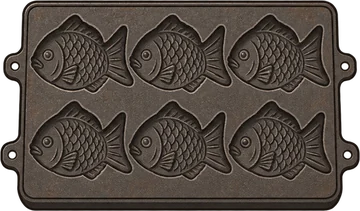 A large multi-cavity plate bakes several at once, the “farmed” kind.
Taiyaki now come with custard, chocolate, sweet potato or matcha cream, but red bean remains the favorite. As of about 2024, a taiyaki at an old Tokyo shop cost around 200 yen. Eat it as soon as it is handed to you, while it is almost too hot to hold.
A close cousin is ningyōyaki, small sponge cakes filled with bean paste and baked in molds shaped like the Seven Lucky Gods, pagodas or the giant lantern of Kaminarimon. They are a specialty of Asakusa and Ningyōchō and a fixture of the Nakamise shopping street leading to Sensō-ji temple.
08Old Shops and Regional Specialties
Japan has many confectioners that have been in business for centuries, and the shop itself is part of what people buy.
Outside the Ise Grand Shrine, Akafuku has sold its sweet since the early 18th century: soft mochi under a layer of smooth bean paste, pressed with three ridges that represent the clear waters of the Isuzu River that flows past the shrine. In Kyoto the most common souvenir is nama yatsuhashi, a thin sheet of cinnamon-scented rice dough folded into a triangle around bean paste; its older baked form, a crisp cinnamon cracker curved like the body of a koto zither, is linked by tradition to the 17th-century koto master Yatsuhashi Kengyō.
Matsue’s tea tradition, traced to Fumai, survives in sweets such as Wakakusa and Yamakawa. Kanazawa’s Chōseiden, a pressed sweet of wasanbon sugar, is counted with Nagaoka’s Koshi no Yuki and Matsue’s Yamakawa as Japan’s three great confections. Elsewhere, look for zunda mochi in Sendai, castella in Nagasaki, and chinsukō shortbread in Okinawa.
What these sweets share is a story: a shrine, a lord, a tea master, a local crop. When Japanese buy one as a gift, they are buying the story as well as the taste.
09Eating Wagashi in Japan
The easiest place to start is the food hall in the basement of a big department store. In Tokyo, Ōsaka and Kyoto these halls typically have counters for several old confectioners, Toraya, Tsuruya Yoshinobu and others, side by side. For the full seasonal range, though, go to a confectioner’s flagship shop. Many have a small tearoom where you can order a seasonal sweet with a bowl of matcha for around 1,000 to 1,500 yen at prices as of about 2024. A single jō-namagashi to take away usually costs a few hundred yen, commonly 400 to 500, more at famous shops.
Remember that fresh sweets are for today. Staff may ask when you plan to eat them. If you are taking them back to your hotel, eat them that evening and do not refrigerate them overnight, since mochi and soft rice dough harden in the cold. For gifts to take home, choose yōkan, monaka, pressed sugar sweets or rice crackers, which travel well. Toraya’s small single-serving yōkan bars are made for exactly this.
When you are served a seasonal sweet, look at it first and ask its name. Most shop staff are happy to explain what the month’s sweets represent. Cut it into three or four pieces with the pick, and drink your tea between bites. It does not have to be matcha; sencha or roasted hōjicha work too. What matters is that the sweet has tea to answer it.
Street sweets are informal. Buy a skewer of dango or a taiyaki and eat it standing by the shop while it is warm. Many shrines and temples have old sweet shops at their gates, places like the stalls outside Imamiya Shrine in Kyoto that have grilled small skewered rice cakes for pilgrims for centuries. Sitting down there after a visit, with a cup of tea and something sweet, while people come and go, is about as close as you can get to wagashi in their natural setting.