
At a glance
Soy sauce and miso both come from kōji fermentation; here are the five soy sauce types, regional miso, how Chōshi and Noda shaped Edo taste, and where to taste them.
- Soy sauce and miso are both fermented from soybeans, salt and kōji: one is pressed into a liquid, the other stays a paste.
- Japanese Agricultural Standards divide soy sauce into five types; koikuchi makes up more than 80% of national output.
- By one estimate, about 98% of the soy sauce shipped into Edo by 1821 came from the Kantō region, with Chōshi and Noda as key producers.
- Miso is first sorted by its kōji—rice, barley or soybean—and rice miso accounts for about 80% of production.
- As of 2026, less than 1% of Japanese soy sauce is brewed in wooden barrels.
Take away soy sauce and miso and most of Japanese cooking quietly collapses. Sushi loses its dip, breakfast loses its soup, and the dipping sauces for soba, tempura and sukiyaki lose their backbone. The two seasonings are siblings: both start as soybeans and salt, both are transformed by the same mold, and both spend months, sometimes years, in a barrel. One ends up as a liquid, the other as a paste. This is an introduction to how they are made, why a bowl of miso soup in Kyoto looks nothing like one in Nagoya, how a medieval temple legend and the shipping lanes of the Edo period shaped what is on the table today, and what to look for when you are in Japan.
01Kōji: The Mold Behind Everything
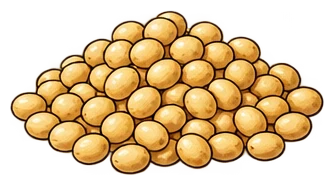
The common ancestor of soy sauce and miso is kōji, a grain or bean that has been deliberately grown over with a mold called Aspergillus oryzae. Steamed rice, barley or soybeans are spread out in a warm, humid room and inoculated with spores. Within two days or so the grains are covered in a fine white fuzz and smell faintly of chestnuts. The mold produces enzymes that break starch into sugar and protein into amino acids, glutamate above all. That free glutamate is a large part of what Japanese cooks call umami.
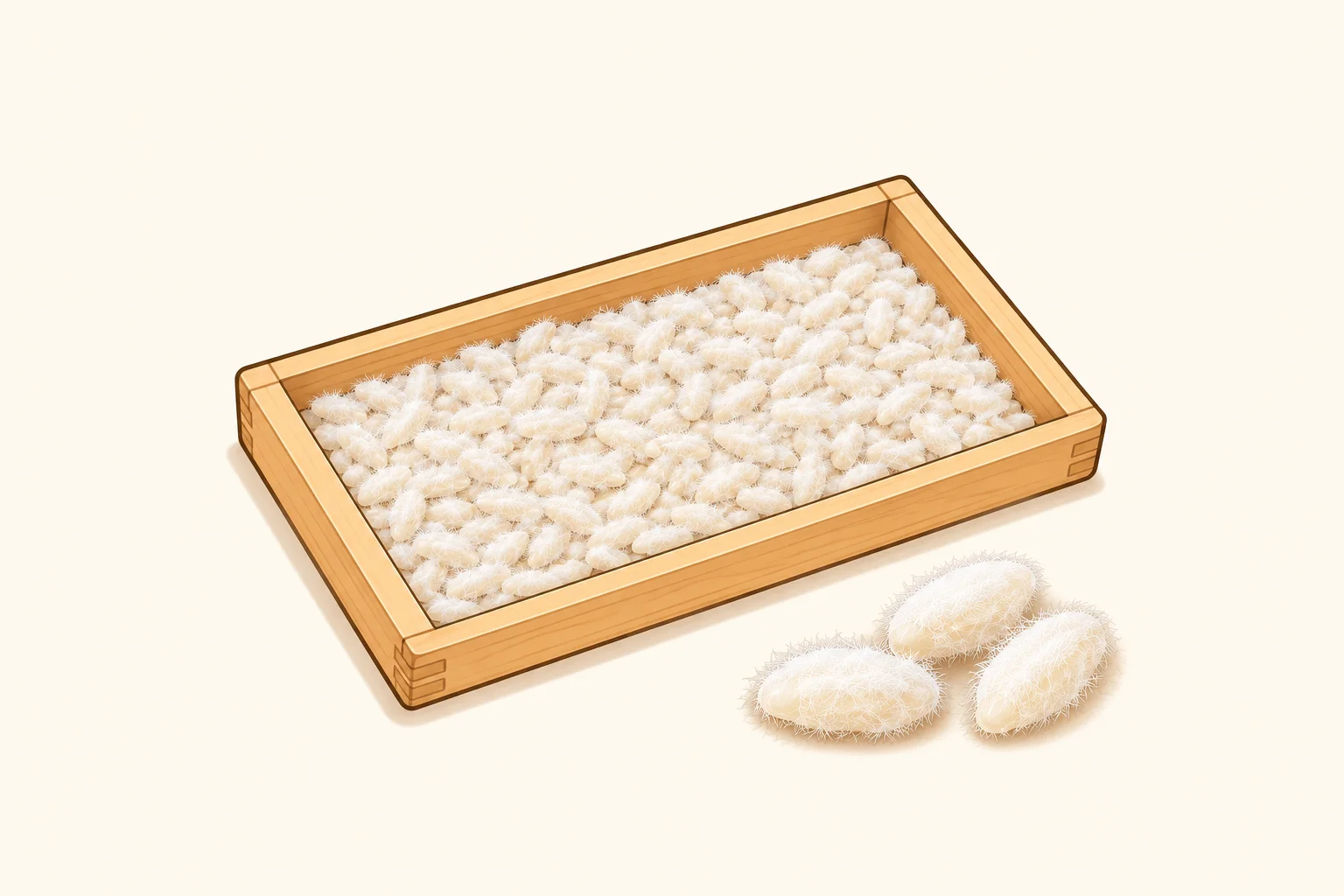
Kōji: steamed rice grains covered in a fine white fuzz of mold.
Kōji is behind sake, rice vinegar, mirin and shochu as well, which is why the Brewing Society of Japan named Aspergillus oryzae the country’s "national mold" in 2006. Soy sauce and miso use it in two different ways. For soy sauce, the kōji is made from steamed soybeans mixed with roasted, cracked wheat, then soaked in a large quantity of brine. The resulting slurry, called moromi, ferments for six months to a year while lactic acid bacteria and salt-tolerant yeasts take turns working on it. It darkens from beige to deep brown and develops its aroma. Finally the moromi is wrapped in cloth, stacked in layers and pressed. The liquid that runs out is raw soy sauce, which is then heated to stop fermentation and fix its color and fragrance.
- 1
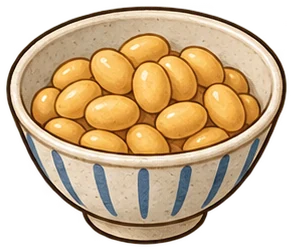 Soybeans are boiled or steamed, then mashed.
- 2
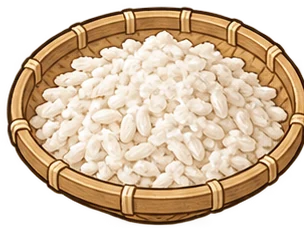 Kōji is added; this is rice kōji.
- 3
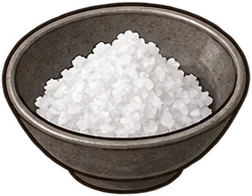 Then salt—without the large amount of brine used for soy sauce.
- 4
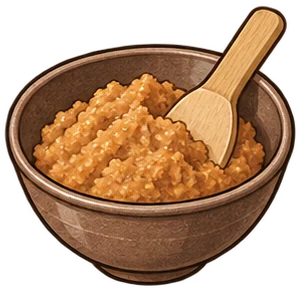 The mixture is packed into a barrel and ferments as a semi-solid paste.
Miso skips most of the water. Cooked, mashed soybeans are mixed with kōji and salt, packed tightly into a vat, weighted with stones, and left to mature as a thick paste. The relationship between the two is visible in the history of the words. Fermented pastes called jiang came to Japan from China and were called hishio. The Taihō Code of 701 set up a bureau within the palace kitchens to make them, and eighth-century documents preserved in the Shōsōin repository mention mishō, written with characters meaning "not yet hishio," a word generally thought to have become miso. Miso, in other words, began as an intermediate stage of hishio, and soy sauce began as the liquid that seeped out of it.
Soy sauce
- Kōji from steamed soybeans and roasted, cracked wheat
- Soaked in a large quantity of brine: moromi
- Ferments six months to a year
- Wrapped in cloth and pressed: raw soy sauce
- Heated to stop fermentation, fix color and fragrance
Miso
- Cooked, mashed soybeans mixed with kōji and salt
- Skips most of the water
- Packed into a vat, weighted with stones
- Left to mature as a thick paste
Both start from kōji; the fork is how much brine goes in: soy sauce is pressed for its liquid, miso matures as a thick paste.
02Five Kinds of Soy Sauce
A supermarket shelf in Japan holds what looks like rows of the same bottle. Japanese Agricultural Standards in fact divide soy sauce into five types, and the differences matter in the kitchen.
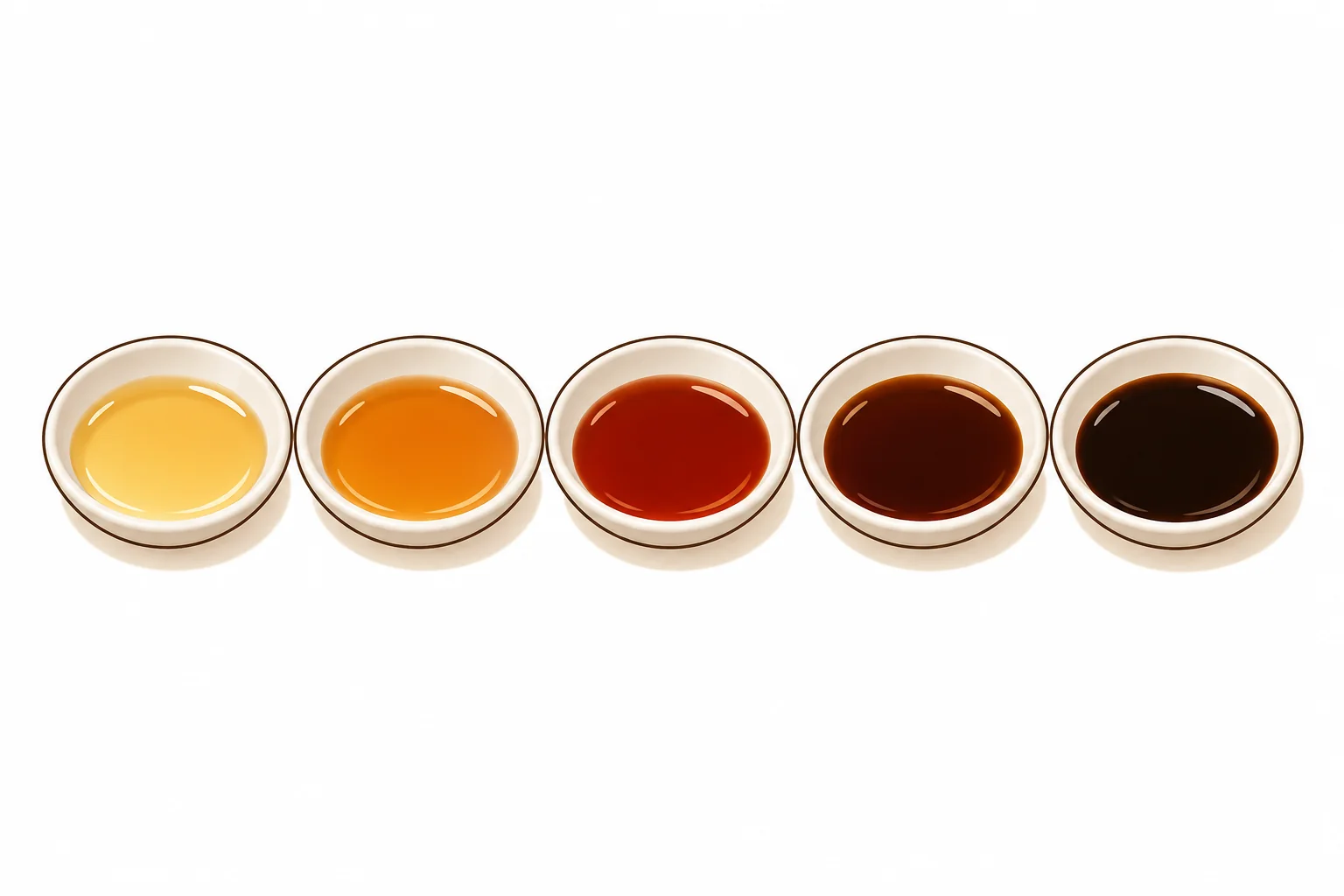
Five soy sauces from light to dark: shiro, usukuchi, koikuchi, tamari and saishikomi (illustration).
Koikuchi, "dark" soy sauce, is the default. It is brewed from roughly equal parts soybeans and wheat, has a reddish-brown color and a full aroma, and makes up more than 80 percent of the soy sauce made in Japan. When a Japanese person says shōyu without qualification, this is what they mean, and it is what goes with sushi, sashimi, chilled tofu and grilled rice cakes.
Usukuchi, "light" soy sauce, is paler in color but saltier, with roughly a tenth more salt than koikuchi, commonly given as about 18 percent against about 16; the stronger brine slows fermentation and keeps the color down. It was developed in Tatsuno in Hyōgo Prefecture, where a brewer named Maruo Magoemon is credited with making it in 1666, and it is the workhorse of Kansai cooking, where cooks want simmered taro or a bowl of udon broth to keep the natural color of its ingredients. Visitors from Tokyo eating udon in Ōsaka for the first time are often surprised by how pale the broth is, and then by how much flavor it has.
Tamari is made mostly or entirely from soybeans, with little or no wheat. It is thick, deep in umami and less perfumed than koikuchi, and it belongs to the Chūbu region around Aichi, Gifu and Mie. It is closely related to the soybean miso of that area; the liquid that pooled at the bottom of a miso vat was, in effect, the first tamari. It shows up as a glaze on rice crackers and teriyaki and as a dip for sashimi.
Saishikomi, "twice-brewed" soy sauce, uses finished soy sauce instead of brine to soak a fresh batch of kōji, producing something darker and denser still. Tradition places its origin in Yanai in Yamaguchi Prefecture. Shiro, "white" soy sauce, goes the other way: it is made mostly from wheat, is nearly as pale as white wine, and is sweet and delicate. The city of Hekinan in Aichi claims it as a local invention, and cooks use it in savory egg custard and clear soups.
Regional tastes cut across these categories. In southern Kyūshū, particularly Kagoshima and Miyazaki, households use a soy sauce sweetened with sugar or other sweeteners, and first-time visitors dipping sashimi in it may find it almost syrupy. As of 2023, Japan still had around a thousand soy sauce makers, more than four in five of them small family operations, which is how such local preferences survive.
03From a Temple Legend to Every Table
The best-known origin story for Japanese soy sauce comes from Yuasa, on the coast of Wakayama Prefecture. In 1254 a Zen monk named Kakushin returned from study in Song China and later became founding abbot of a temple at Yura in the province of Kii, the forerunner of today’s Kōkoku-ji. He is credited with bringing back the method for a chunky miso from the Chinese temple of Jingshan, eaten with pickled melon and eggplant and still sold today as kinzanji miso. According to the legend, people noticed that the liquid collecting at the bottom of the tubs was delicious and began to use it as a seasoning. The story is a later tradition rather than documented fact, but Yuasa did become a major soy sauce center, and its product traveled the coastal shipping routes from Kii. A walk through the old merchant quarter of Yuasa today still takes you past Kadochō, a brewery founded in 1841 that still ferments in wooden barrels.
The written form shōyu appears, with its reading, in a dictionary printed in 1597, the Ekirin-bon edition of the Setsuyōshū. What happened next was driven by Edo, the city that became Tokyo. In the early Edo period the best soy sauce in the capital was shipped from the Kansai region and called kudari shōyu, "soy sauce that has come down" from Kyoto. Local Kantō brews were considered inferior.
That changed in Shimōsa Province, now northern Chiba. The Tone and Edo rivers linked the area directly to the city by boat, the surrounding farmland grew soybeans and wheat, and the port of Chōshi had salt. In 1616 Tanaka Genba, the third of that name, began brewing in Chōshi, the start of what is now Higeta, and in 1645 Hamaguchi Gihei, who came from the village of Hiro in Kii Province, founded the business that became Yamasa. Migrants from Kii, following the sea routes north, brought Yuasa’s techniques with them. Upriver, in Noda, the Mogi and Takanashi families built their own breweries. Kantō tastes ran to strong flavors, and the city’s favorite foods, soba, grilled eel and tempura, wanted a bold, aromatic sauce. Kantō brewers obliged with the koikuchi style, and by the later Edo period locally made jimawari soy sauce had become the city’s mainstream; by one estimate, about 98 percent of the soy sauce shipped into Edo in 1821 was made in the Kantō, almost all of it local. The soba dipping sauce, the sweet glaze on eel and the brushed-on soy of Edo-style nigiri sushi are all built on koikuchi today.
In 1917 eight branches of the Mogi and Takanashi families of Noda merged their businesses into the Noda Shoyu Company, known today as Kikkoman. Kikkoman built its first American plant in Walworth, Wisconsin, in 1973, and soy sauce moved from the shelves of Asian grocery stores into ordinary American kitchens. Japanese soy sauce had gone abroad long before that, though. The Dutch trading post on Dejima in Nagasaki began exporting it in the seventeenth century; the first recorded shipment was ten barrels sent to the Dutch post in Taiwan in 1647, and later cargoes went out in specially made stoneware bottles known as konpura bottles. According to accounts from Nagasaki, these bottles carried soy sauce through Dutch hands as far as Europe, the Netherlands above all.
The little red-capped tabletop bottle found in nearly every Japanese home has its own story. Kikkoman introduced it in 1961, designed by the industrial designer Ekuan Kenji to pour without dripping and to fit neatly in one hand. It is now in the collection of the Museum of Modern Art in New York.
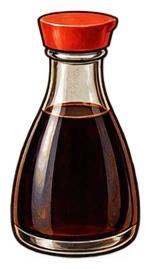
The red-capped dispenser introduced in 1961: drip-free and small enough to hold in one hand.
04Miso: Start With the Kōji, Then Look at the Color
Miso comes in so many varieties that it can seem impossible to keep track. The trick is to ask one question first: what is the kōji made from?
Rice kōji gives kome miso, which accounts for roughly 80 percent of production and dominates from Hokkaidō down through Kansai. Barley kōji gives mugi miso, sometimes called "country miso," found mainly in Kyūshū, western Shikoku and the western Chūgoku region; it smells noticeably of barley and tends toward sweetness. And in the Tōkai region around Aichi, Gifu and Mie, the soybeans themselves are turned into kōji, producing mame miso.
Once you know the kōji, look at the color and taste. Miso ranges from cream to pale yellow to russet to nearly black. The color comes mostly from the Maillard reaction between sugars and amino acids: steamed soybeans give a darker miso than boiled ones, and longer, warmer fermentation darkens it further. The taste depends largely on the ratio of kōji to salt. More kōji and less salt gives amakuchi, a sweet miso; less kōji and more salt gives karakuchi, where kara means salty rather than spicy.
Put those two dimensions together and the famous regional types fall into place. Kyoto’s Saikyō miso is the classic white miso: very high in rice kōji, only about 5 to 7 percent salt, aged for a matter of weeks, and so sweet it is almost a confection. Kyoto households use it in the New Year soup zōni, and it is the marinade for the broiled fish called Saikyō-yaki. Nagano’s Shinshū miso is a pale, salty rice miso with a clean taste; Nagano Prefecture produced about 60 percent of Japan’s miso as of 2025, and the everyday tub in a supermarket most likely came from there. Sendai miso is a red, salty rice miso with a long maturation, traditionally linked to a miso storehouse the warlord Date Masamune set up in his castle town.
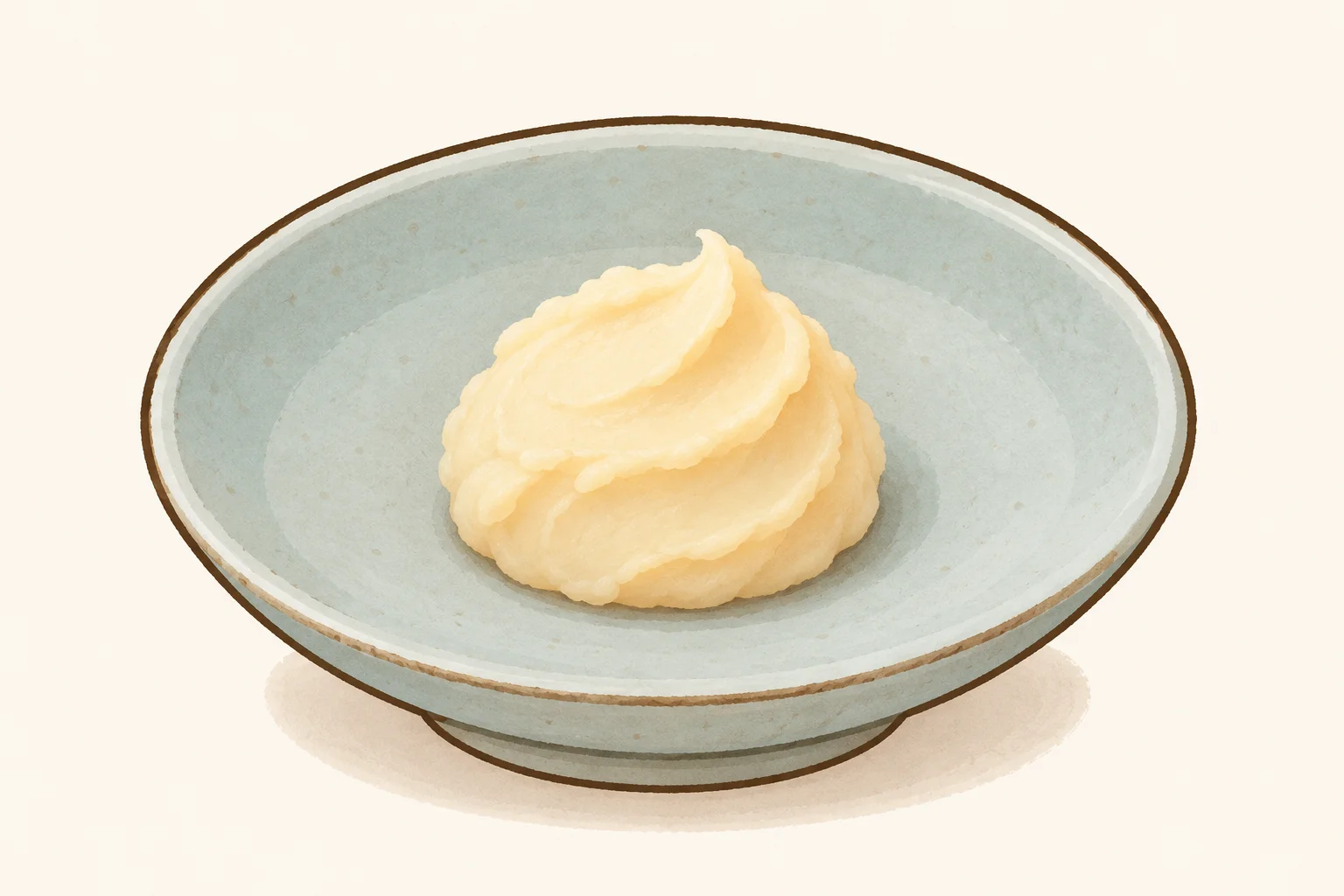
Kyoto’s Saikyō miso is the classic white miso: very high in rice kōji, low in salt, aged only weeks.
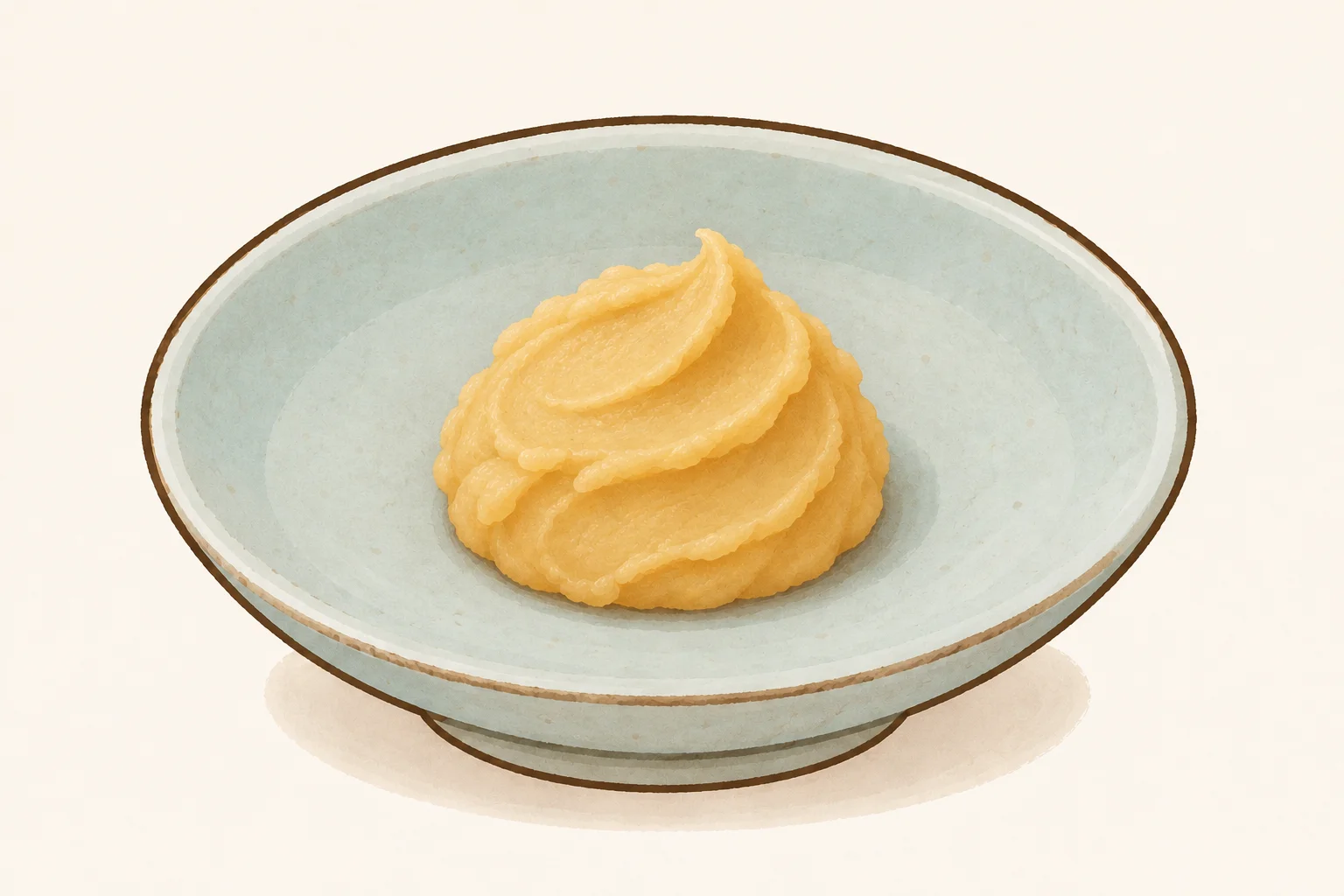
Nagano’s Shinshū miso is a pale yellow, salty rice miso.
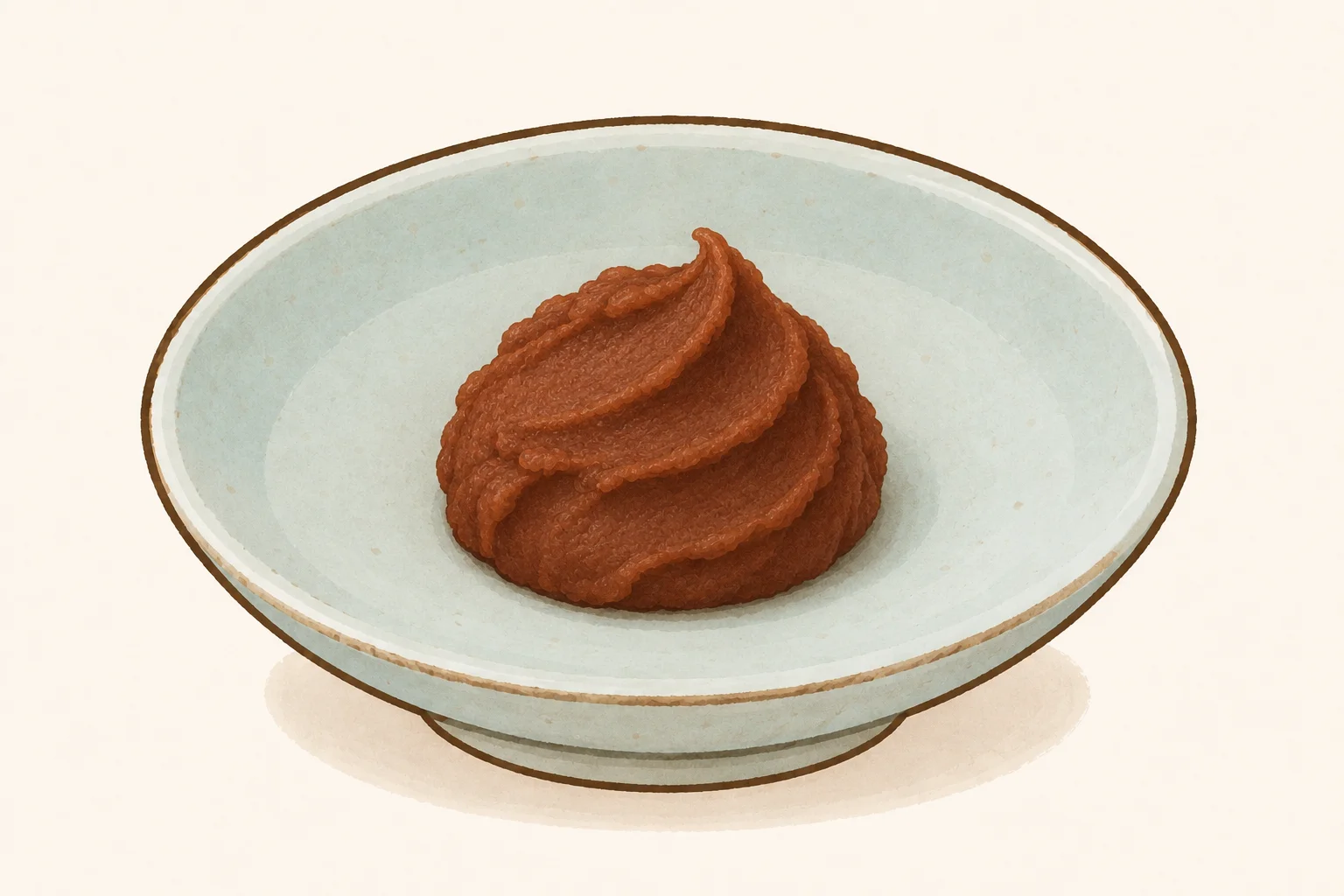
Sendai miso is a red, salty rice miso with a long maturation.
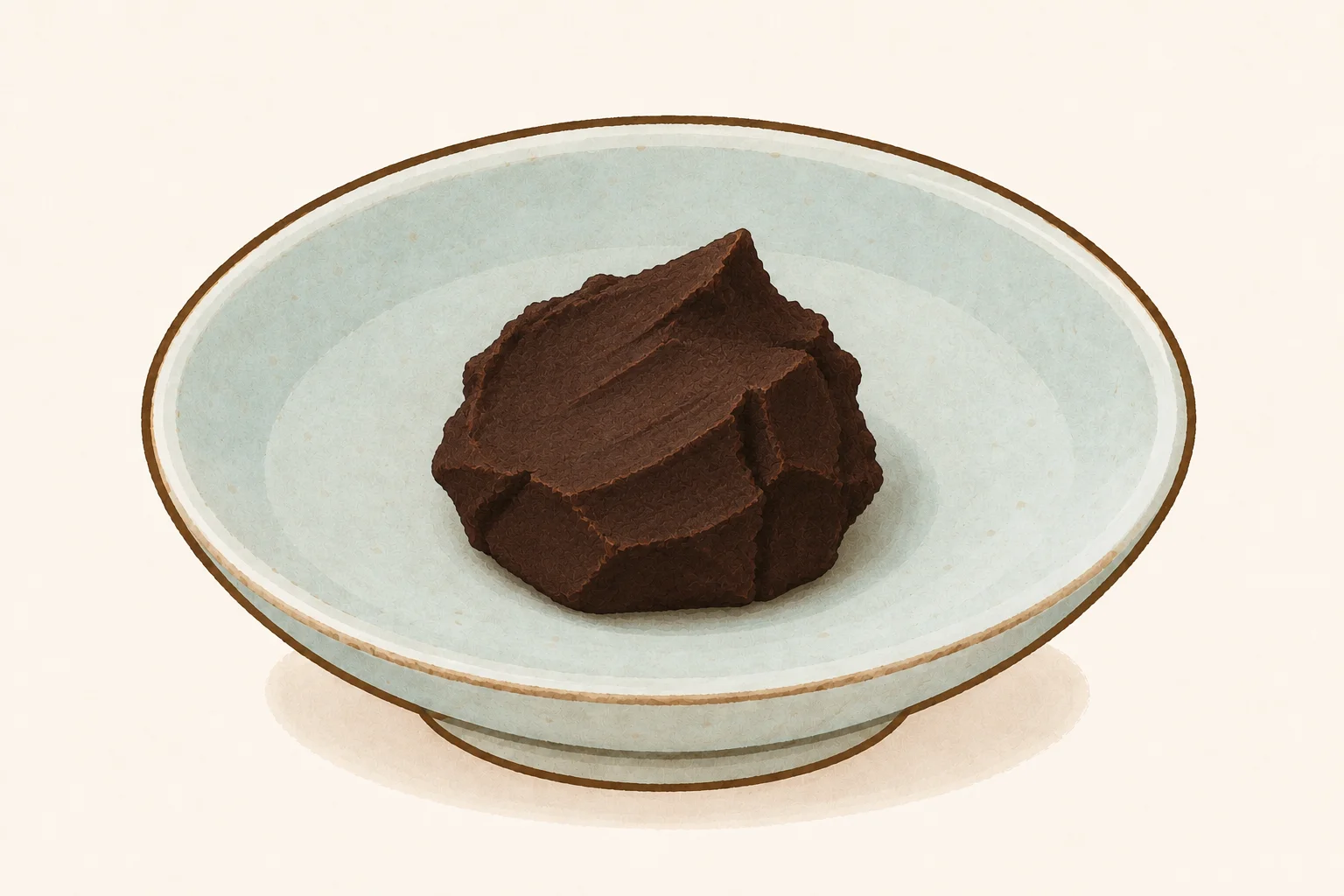
Hatchō miso from Okazaki uses only soybeans and salt, matures for at least two years, and comes out firm and almost black.
Soybean miso is a different world, and its most famous example is Hatchō miso from Okazaki in Aichi Prefecture. The name comes from Hatchō village, eight chō (about 870 meters) west of Okazaki Castle, where two old firms, Kakukyū and Maruya, still stand side by side, facing each other, it is said, across the old Tōkaidō highway. Using only soybeans and salt, they make large balls of soybean kōji, pack them into wooden vats taller than a person, said to be mostly of cedar, pile river stones into a cone on top, and leave the miso for "two summers and two winters," at least two years. The result is firm, almost black, slightly bitter and sour, and enormously savory. It gives Nagoya’s miso katsu and miso nikomi udon their dark, sweet-salty sauces, and visitors from elsewhere often take a while to get used to it.
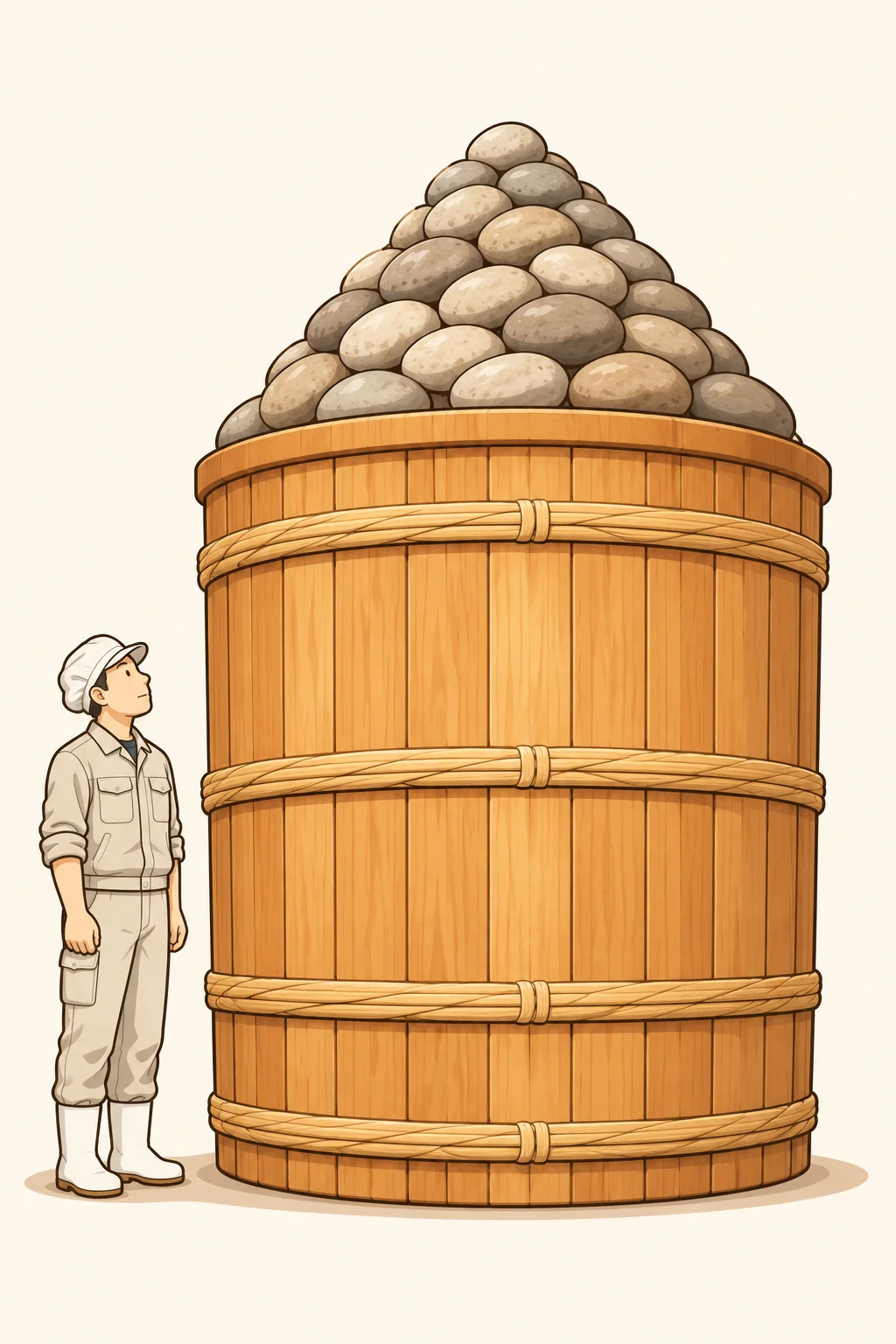
Hatchō miso matures in wooden vats taller than a person, under a cone of piled river stones.
| Miso | Where | Kōji | Color and taste |
|---|---|---|---|
| Saikyō miso | Kyoto | Rice kōji | White, sweet; about 5–7% salt |
| Shinshū miso | Nagano | Rice kōji | Pale, salty |
| Sendai miso | Sendai | Rice kōji | Red, salty |
| Hatchō miso | Okazaki, Aichi | Soybean kōji | Firm, almost black, slightly bitter and sour |
Start with the kōji, then the color and taste: the first three are rice misos, Hatchō miso uses soybean kōji. Karakuchi means salty, not spicy.
How deeply miso runs through Japanese life shows up in a common idiom. Temae miso, "my own miso," means bragging about yourself. When every household made its own, every household was sure its miso was the best.
05Why Miso Soup, Every Day
Miso was first eaten as it was. Essays in Idleness, written by the monk Kenkō in the fourteenth century, includes a memory that Taira no Nobutoki recounted in old age. One evening the Kamakura regent Hōjō Tokiyori summoned him to drink, saying there was sake but nothing to go with it. Nobutoki searched the kitchen shelves by lamplight and came back with a small earthenware dish with a little miso stuck to it. Tokiyori declared that it would do, and the two went through several rounds with that as their snack. Kenkō told it as an example of the plain living of earlier warriors, and it also shows miso as something you could lick off a dish.
Miso dissolved in water and cooked as soup is generally thought to have become common between the Kamakura and Muromachi periods, helped by the spread of the grinding bowl that let cooks smooth out the grainy paste. The "soup" in the classic Japanese meal formula of "one soup, one side" or "one soup, three sides" has been miso soup ever since. Miso kept well and provided salt and protein, so it was carried as army rations in the age of warring states, and stories tie Takeda Shingen to Shinshū miso and Date Masamune to Sendai miso, though these are mostly later embellishments. By the Edo period, rice, miso soup and pickles formed the breakfast of shoguns and townspeople alike.
Miso soup bears daily repetition because it layers two kinds of umami. The stock, dashi, made from kelp and dried bonito, contributes glutamate and inosinate, and the miso adds its own glutamate and fermented aroma. The ingredients follow the seasons: clams and bamboo shoots in spring, eggplant and myōga ginger in summer, daikon and pork in winter, when a hearty version called tonjiru is a meal in itself. Tofu and wakame seaweed appear year-round. Cooks add the miso last and turn off the heat just as the soup is about to boil, a moment called niebana; letting it boil drives off the aroma.
A bowl of miso soup is also a map. Breakfast in Tokyo usually means pale rice miso. In Nagoya it is the dark aka-dashi, made with soybean miso. In Kyoto at New Year it is sweet white miso, and in rural Kyūshū it smells of barley. Many households blend two kinds, called awase miso, to balance color and flavor.
06Tasting and Visiting in Japan
The easiest place to start is at the table. With nigiri sushi, dip the fish side lightly into the soy sauce rather than soaking the rice, which falls apart and turns salty. Many good sushi counters brush the fish with nikiri, a reduced soy sauce, before serving, in which case you do not need to dip at all. At a set-meal restaurant the rice sits on the left and miso soup on the right; you lift the bowl to drink and use chopsticks for the solid pieces. As you travel, pay attention to the color of the breakfast soup in Tokyo, Kyoto, Nagoya and Kyūshū.
Several of the old soy sauce towns welcome visitors. Kikkoman runs a visitor facility, the Monoshiri Shōyu-kan, at its Noda plant, and Yamasa has a factory tour center in Chōshi, both reachable by train from Tokyo. Yuasa’s old brewing quarter was designated a national preservation district for traditional buildings in 2006, and at old breweries such as Kadochō you can see wooden barrels and buy a small bottle. On Shōdoshima in the Seto Inland Sea, a cluster of small breweries, Yamaroku among them, still ferment in barrels over a century old. Inside the dim storehouses the wood is crusted with a thick layer of microbial life and the air smells of soy. The island also sells soy sauce ice cream. As of 2026, barrel-brewed soy sauce is less than 1 percent of Japan’s output, and barrel makers have nearly disappeared. In 2012 Yamamoto Yasuo, the fifth-generation head of Yamaroku, started a project in which brewers, carpenters and others gather on the island every January to build new barrels themselves.
For miso, both Hatchō miso firms in Okazaki give tours, where you can see the stone-topped wooden vats, about 2 meters tall, and eat miso dengaku and miso nikomi udon. Around Zenkō-ji temple in Nagano and in the town of Matsumoto, shops sell miso by weight. In Takayama in the Hida mountains, hōba miso, miso grilled with leeks and mushrooms on a dried magnolia leaf over a small charcoal brazier, often appears at inn breakfasts.
Bringing some home is straightforward. Small bottles of soy sauce are easy to pack, though they fall under airline liquid rules in carry-on bags. For miso, choose vacuum-sealed packs or tubs and refrigerate them once home. On labels, honjōzō means the soy sauce was made by traditional fermentation without added amino acid liquid; tennen jōzō, "natural brewing," is generally understood to mean honjōzō made without fermentation-speeding enzymes or food additives; and nama means unpasteurized, which keeps a fresher aroma but needs refrigeration and should be used quickly.