
At a glance
Where shochu came from, how sweet potato, barley, rice and brown sugar define its regions, how to drink it, and why Japanese families steep umeshu every June.
- Shochu is Japan’s native distilled spirit, made from sweet potato, barley, rice, brown sugar and more; most is sold at 25%.
- Single-distilled shochu that keeps the raw material’s flavor can be “honkaku”; the continuously distilled kind was once called “kōrui”.
- Japan’s earliest record of the word shochu is a carpenter’s 1559 graffiti board at Kōriyama Hachiman Shrine in Kagoshima.
- Roughly: sweet potato in Kagoshima and Miyazaki, barley in Ōita and Iki, rice in Hitoyoshi, brown sugar in Amami, awamori in Okinawa.
- Umeshu is often homemade: in June, green ume, rock sugar and 35% white liquor go into a jar, and it is ready after about six months.
Most visitors to Japan arrive knowing about sake. Fewer know that in large parts of the country, and above all in southern Kyūshū, the drink on the table is shochu, a distilled spirit made from sweet potatoes, barley, rice or brown sugar, poured over ice or stretched with hot water. Fewer still know that every June, Japanese households buy green plums, rock sugar and a big jug of clear spirit, and set a glass jar of umeshu, plum liqueur, to steep in a cupboard for the year ahead. This is an introduction to both: what they are, how they are drunk, where they came from, and how to order them well.
01Brewed versus Distilled
The first thing to untangle is the difference between sake and shochu, because English menus sometimes blur them. Sake is brewed: rice is fermented with kōji (a mold that turns starch into sugar) and yeast, and the result is pressed and filtered, ending up at around 15 percent alcohol. Shochu takes a fermented mash of the same general kind and distills it. The spirit that comes off the still is around 40 percent, and most bottles are cut with water to 25 percent before sale. In Western terms, sake is closer to wine and shochu closer to brandy, but shochu is lighter and gentler than most Western spirits, and it is meant to be diluted further at the table.
The name causes a second confusion. Korean soju is written 燒酒 and Japanese shochu 焼酎, characters that look alike but are not the same; both mean "burnt liquor," an old way of saying distilled. The two drinks share a word and a distant ancestry, but today they are different products made in different ways.
Japanese tax law divides shochu into two families. The first is made in continuous column stills that strip out almost everything but neutral alcohol, then bottled at under 36 percent. It used to be called kōrui, "Class A," and it is the clean, cheap base for canned highballs, lemon sours and homemade umeshu. The second is distilled only once, in a pot still, so the flavor of the raw ingredient survives. It used to be called otsurui, "Class B," and the bottles that meet certain rules about ingredients can carry the label honkaku shochu, "authentic shochu." Since 2006 the official names have been "continuous-distilled" and "single-distilled," but bartenders and liquor shops still use the old terms. When people in Kagoshima talk lovingly about shochu, they mean honkaku.
Continuous-distilled
- Continuous column stills
- Neutral alcohol
- Under 36 percent
- Base for lemon sours and umeshu
- Formerly kōrui, "Class A"
Single-distilled
- Distilled once, in a pot still
- The flavor of the ingredient survives
- Formerly otsurui, "Class B"
- If it meets the rules: honkaku shōchū
Since 2006 the official names have been "continuous-distilled" and "single-distilled"; it is the second that keeps the flavor of the ingredient.
What fans like about honkaku shochu comes down to two things. One is that the ingredient tastes like itself. Sweet potato shochu smells faintly of roasted yam; barley shochu has the toasty note of mugicha, barley tea; rice shochu is clean and soft, closer to fine sake. The other is that shochu is a drink for meals. Because the drinker controls the strength, a bottle can last through a long dinner without wearing out the palate. Kyūshū people will also tell you shochu has no sugar and leaves you without a hangover, a claim that is part chemistry and part regional pride.
02North from Okinawa
Distillation reached the Ryūkyū Kingdom, today’s Okinawa, around the fifteenth century, most likely through trade with Siam. The islanders used it to make awamori. Today’s awamori is made from Thai rice and black kōji, though Thai rice became the standard ingredient only in the early twentieth century. From there the technique moved north along the island chain into southern Kyūshū.
The oldest firm written record of the word shochu in mainland Japan is a piece of graffiti. In 1559, carpenters (usually said to be two men, Sakujirō and Tsuruta Suketarō) repairing the Kōriyama Hachiman Shrine in what is now Isa City, Kagoshima Prefecture, wrote a complaint on a wooden board and left it in the framework of the main hall: the head priest was so stingy, they grumbled, that he never once treated them to shochu. The board was found during repairs in 1954, and it is now cited, with some affection, as the starting point of shochu history.
Early shochu was made from rice and other grains. Sweet potatoes came later. They arrived in Satsuma, the domain that is now Kagoshima, from Ryūkyū in the late seventeenth and early eighteenth centuries; local tradition credits a fisherman named Maeda Riemon with bringing them home around 1705, and he is still honored at a shrine near Ibusuki. Satsuma’s volcanic, ash-covered soil was poor for rice but good for potatoes, which became a staple food and, before long, the base for a local spirit. Sweet potato shochu, in other words, began as a way to drink what the land could grow.
The next turning point was mold. Kyūshū brewers had traditionally used the yellow kōji of sake brewing, but in the southern heat their mash spoiled easily. In the late Meiji period they adopted the black kōji used for awamori, which produces a lot of citric acid and keeps unwanted bacteria in check. Fermentation became far more reliable. In the 1920s a Kagoshima researcher, Kawachi Gen’ichirō, isolated a white mutant of the black mold that gave a smoother, softer spirit, and it spread quickly. Labels today still name the kōji: kuro (black) for a full, earthy shochu, shiro (white) for a lighter one, ki (yellow) for something fruity and close to sake.
In the second half of the twentieth century shochu went national in waves. In the 1970s the Kagoshima habit of drinking it with hot water caught on in Tokyo. In the 1980s a barley shochu from Ōita called iichiko, sold with the slogan "the Napoleon of the working-class district," became a household name, and the chūhai, short for "shochu highball," turned neutral shochu mixed with soda and fruit flavors into the drink of a generation. In the early 2000s a sweet potato boom made cult objects of three Kagoshima brands, Mori Izō, Maō and Murao, nicknamed "the three M’s," whose bottles resold for many times their list price. At the time, some said they could occasionally still be bought at list price at Kagoshima Airport. In 2003 shochu shipments overtook sake for the first time, and they have stayed ahead ever since (as of the fiscal 2024 figures), something no one would have predicted a generation earlier.
03A Map in a Glass
You can almost draw shochu on a map, and the flavors get bolder the further south you go.
| Main ingredient | Where | Protected name |
|---|---|---|
| Sweet potato | Kagoshima, Miyazaki | Satsuma Shochu |
| Barley | Ōita, Iki | Iki shochu |
| Rice | Hitoyoshi Basin, southern Kumamoto | Kuma Shochu |
| Brown sugar | Amami Islands | — |
| Awamori | Okinawa | Ryukyu Awamori |
From the sweet potato of Kagoshima and Miyazaki to awamori at the southern end in Okinawa, these five lines cover almost any menu.
Kagoshima and Miyazaki are sweet potato country. In Kagoshima the word sake, in everyday speech, simply means shochu, and, as of 2026, the prefecture has more than a hundred distilleries producing under the protected geographical indication "Satsuma Shochu." The classic potato is Kogane Sengan, a pale-skinned variety with rich aroma; purple and orange-fleshed potatoes give floral, fruity versions. Miyazaki’s potato shochu tends to be lighter and is often bottled at 20 percent, a strength locals drink straight on ice. Kuro Kirishima, from the Miyazaki city of Miyakonojō, is one of the most widely stocked shochu in the country.
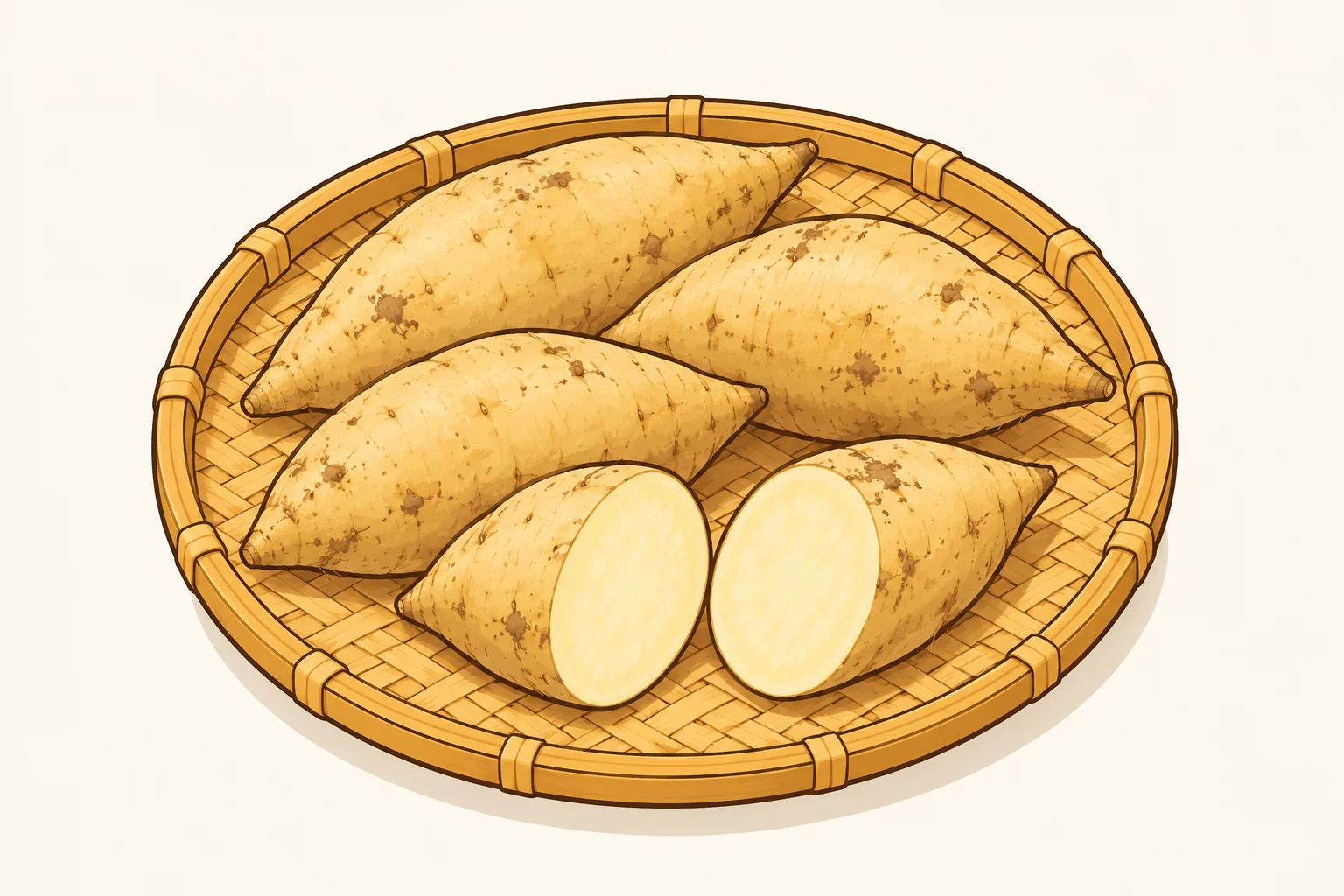
Sweet potato, for the shochu of Kagoshima and Miyazaki; Kagoshima’s classic variety is pale-skinned Kogane Sengan.
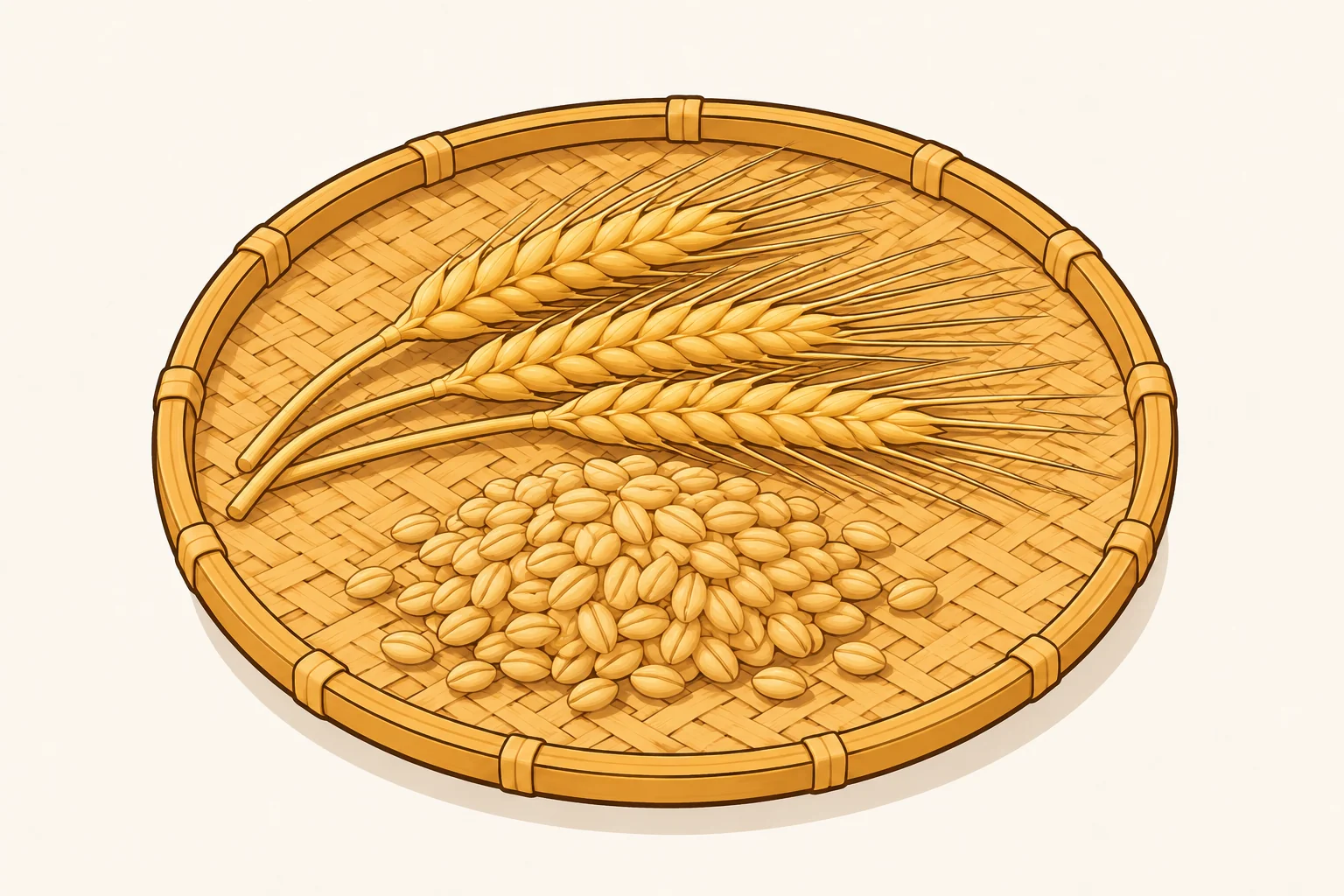
Barley, the base of the shochu made in Ōita and on Iki, an island off Nagasaki.
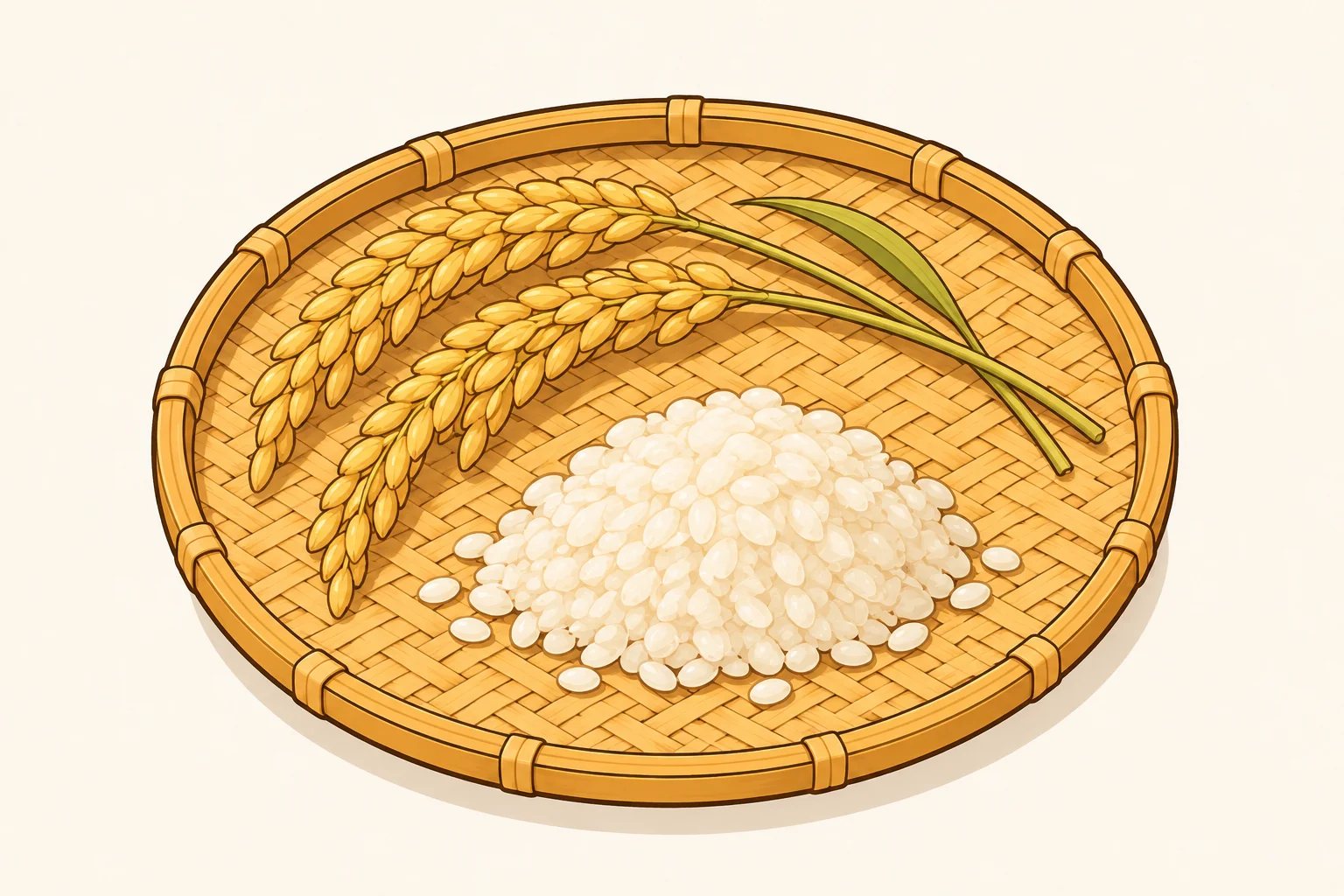
Rice, the required ingredient of Kuma Shochu from the Hitoyoshi Basin in southern Kumamoto.
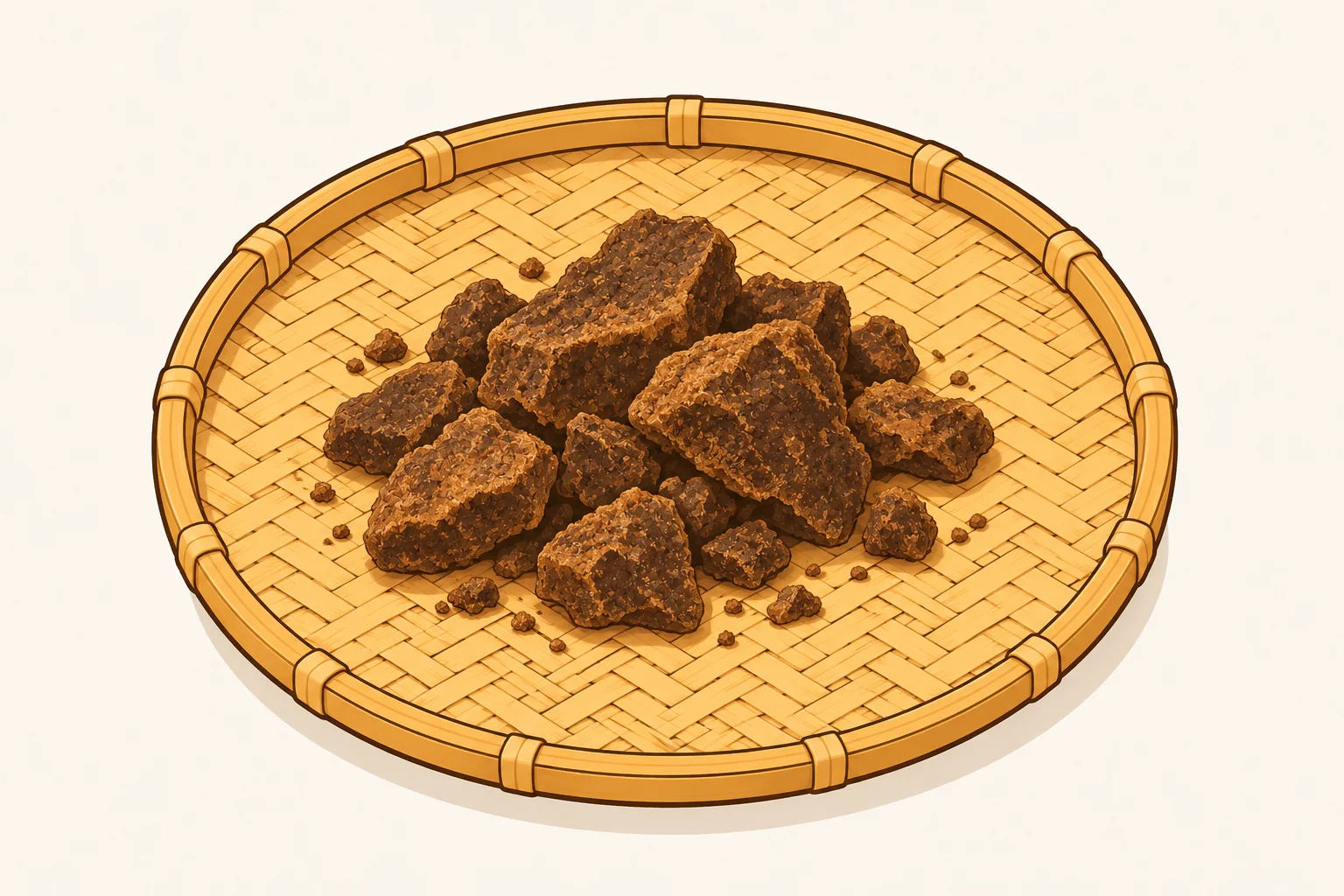
Brown sugar, which with rice kōji makes kokutō shochu, produced only in the Amami Islands.
Barley belongs to Ōita and to Iki, an island off Nagasaki. Iki is thought to be where barley shochu began, and Iki shochu, also a protected name, is made with one part rice kōji to two parts barley, which gives it a gentle sweetness. Ōita took another path, using barley kōji as well as barley for a crisp, easy spirit. Brands such as iichiko and Nikaidō made Ōita-style barley shochu the most widely drunk honkaku shochu in Japan.
Rice shochu is the specialty of the Hitoyoshi Basin in southern Kumamoto, where "Kuma Shochu" must be made from rice and distilled and bottled in the Kuma River watershed. The Sagara clan ruled the area for roughly seven centuries, and the local drinking culture is distinctive: shochu warmed directly over a flame in a flat ceramic pot called a gara and sipped from tiny cups called choku.
Further south, the Amami Islands make kokutō shochu from brown sugar and rice kōji. Under Japanese law a spirit distilled from sugar would normally count as rum, but when Amami was returned to Japan from American administration in 1953, it received a special exemption, so brown sugar shochu is made only there. At the end of the chain is Okinawa, whose awamori, protected as "Ryukyu Awamori," is still made from Thai rice with black kōji. Awamori aged three years or more is called kūsu, "old liquor," and some families seal a jar when a child is born and open it when the child comes of age.
There are also shochu made from buckwheat, shiso, chestnuts, sesame and even milk; Unkai, a buckwheat shochu first made in Gokase in Miyazaki, is the best known of these. But the four main lines, potato, barley, rice and brown sugar, plus awamori, will get you through almost any menu.
04Hot Water, Ice, and Soda
Shochu’s moderate strength leaves room for the drinker, and the way it is diluted is part of the pleasure. The most Kyūshū way is oyuwari, with hot water. Hot water goes into the cup first and shochu second; the warm water rises through the spirit, carrying the aroma up without any stirring. The classic ratio is six parts shochu to four of water, known in Kagoshima simply as "roku-yon," six-four, which lands at around 15 percent, the strength of sake. Sweet potato shochu opens up beautifully this way, especially in winter alongside Kagoshima’s fried fish cakes or a pot of black pork shabu-shabu.
A more patient version is maewari, pre-dilution. Shochu and water are mixed days in advance and left to marry, often in a squat black clay pot called a kurojoka, which is then warmed over a flame before serving. Old bars in Kagoshima take pride in their maewari.
In summer, people switch to mizuwari, with cold water, or rokku, on the rocks. Barley and rice shochu are refreshing with water; potato shochu on ice tightens up and shows its sweetness at the finish. Sōdawari, shochu with soda water, has become popular in recent years.
In Tokyo and other big cities, shochu mostly appears in disguise, as chūhai and sours. A lemon sour is neutral shochu, soda and lemon juice: sharp, cold, low in alcohol and perfect with yakitori or fried chicken. In the old working-class bars of Asakusa and Tsukishima you can still order Hoppy, a low-alcohol beer-flavored drink invented after the war, when beer was expensive, and mixed with shochu at the table. The long row of canned lemon sours in any convenience store fridge belongs to the same family.
05Umeshu, the Season in a Jar
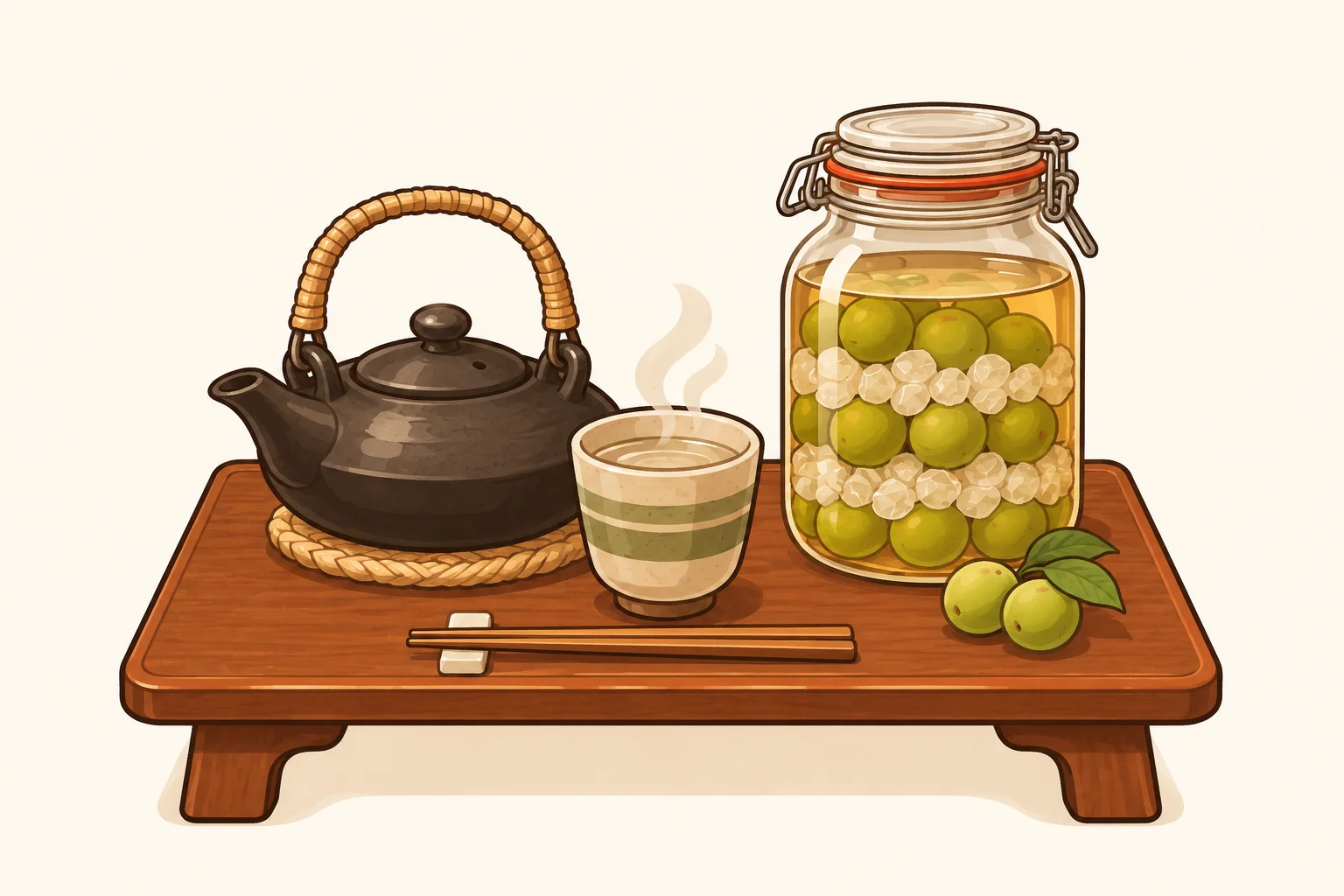
Umeshu is often called plum wine in English, but it is neither wine nor made from what Westerners call plums. Ume is a small, sour stone fruit closer to an apricot, and umeshu is a liqueur: the fruit steeped in spirit with sugar. In Japan it is the most homely of drinks, less a beverage than a way of storing the season.
Green ume come on the market from late May into June, which is also the rainy season; the word for it, tsuyu, is written with the characters for "plum" and "rain." This is when supermarkets set out displays of green fruit, wide-mouthed glass jars, bags of rock sugar and big bottles of "white liquor," neutral shochu at 35 percent, with a printed recipe taped beside them.
The method is almost a ritual. You choose firm, unblemished green fruit, wash and dry each one, and pick out the little stem with a bamboo skewer. You layer fruit and rock sugar in the jar, pour in the spirit, close the lid, and put the jar somewhere cool and dark. The sugar dissolves slowly while the alcohol draws out the fruit’s acidity and its almond-like fragrance. You can taste it after three months, but it is really ready after six, and after a year or two it turns amber and rounds out. The high-proof spirit matters: it has to be strong enough to overwhelm the water in the fruit and stop it fermenting or spoiling.
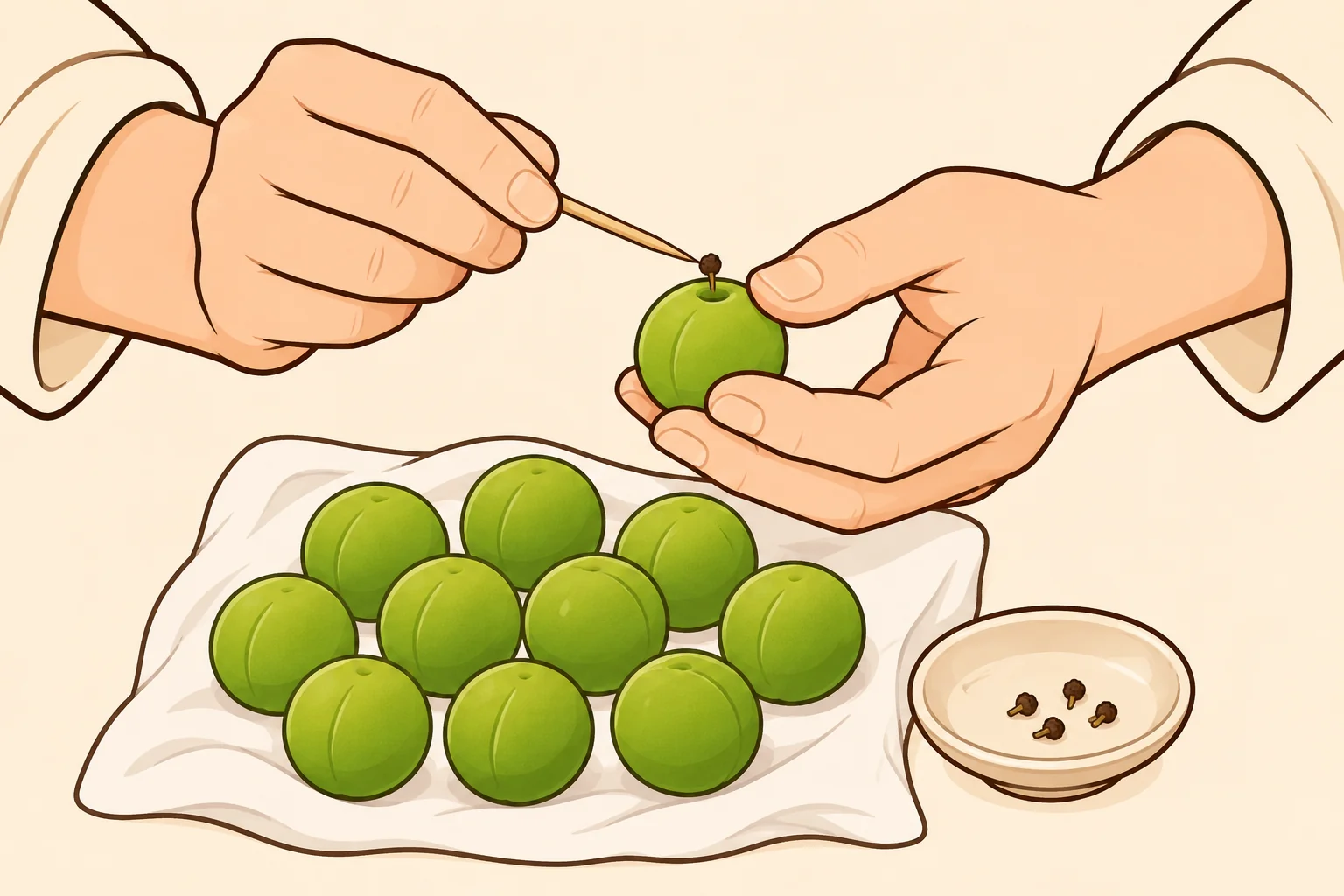
Before steeping umeshu, the little stem is picked out of each green ume with a bamboo skewer.
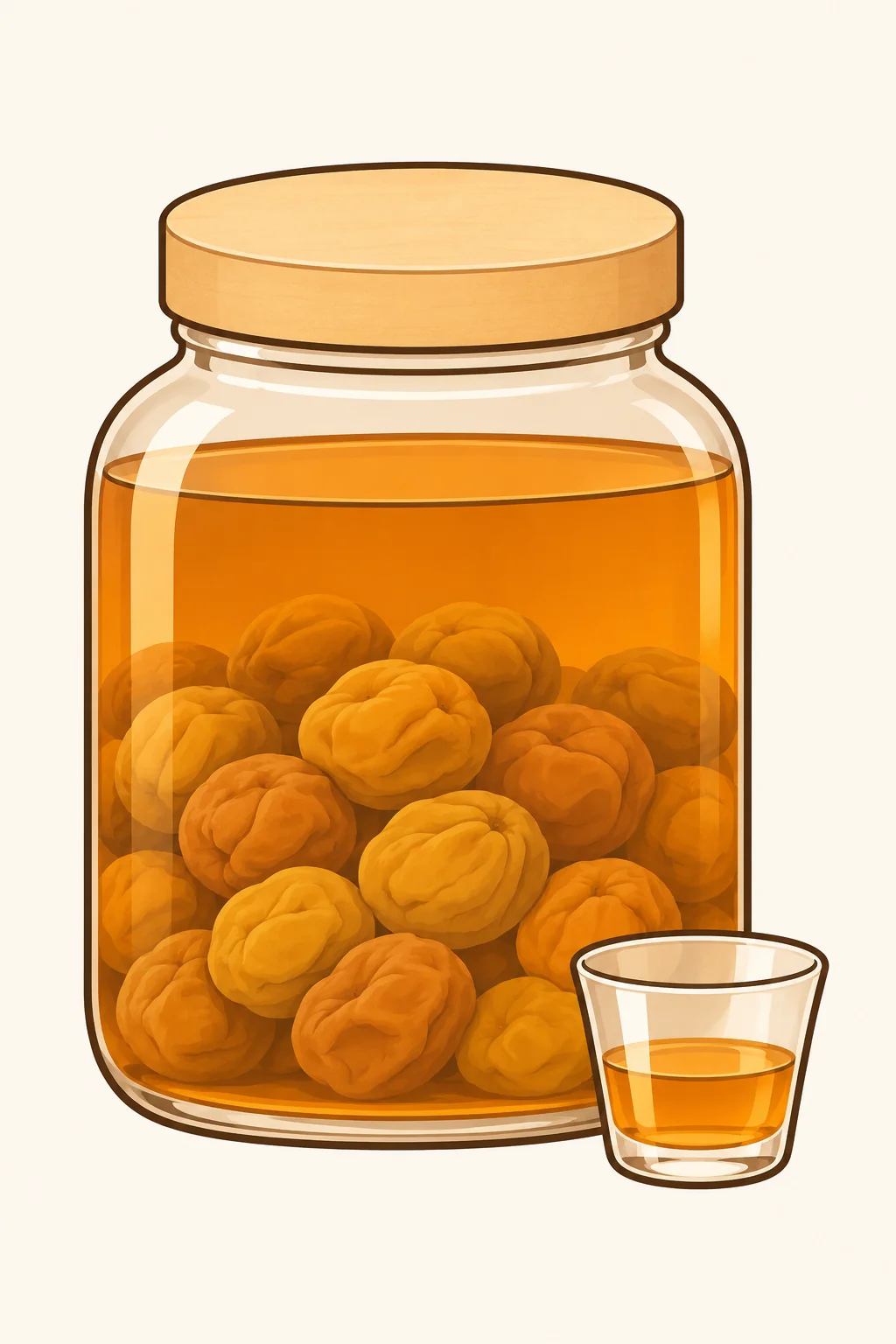
After a year or two in the jar the sugar has dissolved and the umeshu has turned amber and rounded out.
There is a legal wrinkle here. Japanese law generally forbids making alcohol at home, but it makes an exception for steeping fruit in spirits of at least 20 percent for your own household’s use, which is exactly what makes homemade umeshu legal. Grapes, rice and grains are excluded, because steeping them could set off a new fermentation.
Fruit steeped in liquor has a long history in Japan; the 1697 food encyclopedia Honchō shokkan already describes plums steeped in alcohol, valued then as something closer to medicine, a tonic against summer heat and fatigue. What put umeshu in every home was the postwar period, both the household jars and the commercial bottles. Wakayama Prefecture grows more ume than anywhere else in Japan, and its Nankō variety, selected in what is now the town of Minabe, is prized for its thick flesh. Choya, a company from Habikino in Ōsaka Prefecture, began making umeshu in 1959 and became the best-known brand, famous for bottles with whole plums sitting at the bottom.
Today umeshu is made on almost every base. Sake gives a soft version, brandy a rich and perfumed one, and there are umeshu made with potato shochu, awamori and whisky. Many sake breweries and shochu distilleries make their own, and labels may specify the variety of ume, the kind of sugar (rock sugar, brown sugar, honey) and how long it has aged. There are umeshu competitions, and bars devoted to nothing else.
Umeshu is usually drunk on the rocks, sometimes with soda in summer or hot water in winter. At a Japanese table it is the drink that includes everyone: the friend who doesn’t really drink, the grandmother, the colleague who wants one glass. And the plums are not thrown away. Fished out of the jar, they are eaten as they are or turned into jam.
06Ordering a Glass
In a Kyūshū izakaya, a casual pub-restaurant, the shochu list is usually organized by ingredient, with the region and the type of kōji noted for each bottle. If you’re unsure, ask "Osusume wa?" (What do you recommend?) and say whether you want potato or barley, something bold or something light. Then name the style: "oyuwari de" for hot water, "rokku de" on the rocks, "mizuwari de" with cold water. Many bars practice "bottle keep": regulars buy a whole bottle, the staff hang a name tag on it, and it waits on the shelf for the next visit. You will see these shelves of tagged bottles from Kagoshima to Tokyo.
For a night of shochu, the Tenmonkan district in Kagoshima City and Nishitachibana-dōri in Miyazaki City are good places to start. Many distilleries in Kagoshima welcome visitors, who can see mash bubbling in buried clay jars and the squat pot stills. Hitoyoshi in Kumamoto has distilleries with tasting rooms. The JR Hisatsu Line along the Kuma River between Yatsushiro and Hitoyoshi has been closed since floods in 2020; as of 2026, reopening is planned for fiscal 2033, so for now the trip is by bus or car. In Okinawa, the shops around Kokusai-dōri in Naha let you compare kūsu of different ages.
Umeshu is easier still to find. Almost every izakaya has a few on the menu, and convenience stores sell small bottles and cans of umeshu soda. If you visit in June, wander into a supermarket’s ume corner and watch shoppers weighing fruit and jars; it is one of the quieter seasonal sights in Japan. Kyoto and Ōsaka also have umeshu bars where you can taste dozens side by side.
If you want to take some home, airports and liquor shops sell both. The standard Japanese large bottle, the isshōbin, holds 1.8 liters, so check your own country’s duty-free allowance before you buy.