
At a glance
How rice, salt, and nori become Japan’s simplest food, from soldiers’ rations to the convenience-store wrapper, and where to eat a good one.
- Onigiri are hot rice pressed into shape with salted hands, usually wrapped in nori around umeboshi or grilled salmon.
- The main shapes are triangle, round and tawara (a flat cylinder); convenience stores sell almost only triangles.
- A carbonized Yayoi-period rice lump from Ishikawa Prefecture is often called Japan’s oldest onigiri.
- In 1978 7-Eleven introduced a plastic film that keeps nori apart from the rice until you eat it.
- Tuna mayo, introduced by convenience stores in the early 1980s (around 1983), still rivals salmon as the top flavor.
An onigiri is about as simple as food gets: warm rice, a little salt, a pair of hands, often a strip of seaweed and something savory hidden in the middle. Yet this modest rice ball is one of the most eaten things in Japan. Convenience stores sell millions every day, parents still shape them at dawn for school trips, and a handful of old shops in Tokyo draw queues for nothing else. This is an introduction to what an onigiri is, why it is made the way it is, where it came from, and how to eat a good one when you are in Japan.
01What an Onigiri Is
At its most basic, an onigiri is cooked rice pressed by hand into a compact shape that can be held and eaten without chopsticks. The word comes from nigiru, "to grip" or "to squeeze." Many Japanese people prefer another word, omusubi, from musubu, "to tie" or "to bind." You will hear claims that one half of the country says one and the other half the other, but the exceptions are many, and an onigiri promotion group treats the choice as a matter of family and personal habit. Both words describe the same food today, onigiri is the more common nationwide, and convenience stores in different chains use one or the other. Some writers link omusubi to musuhi, an old Shinto idea of creative, life-giving power, and suggest rice balls were once offerings to the gods. That is a later interpretation rather than settled history, but it says something about the warmth people attach to the word.
The rice matters more than anything else. Japanese onigiri use short-grain japonica rice, which turns slightly sticky when cooked, so the grains cling to each other and hold their shape. That is why you cannot make a proper onigiri with long-grain rice: it simply falls apart. The technique sounds easy and takes practice. The rice should be freshly cooked and still hot. The maker wets their palms so the rice will not stick, rubs a pinch of salt over them, scoops up a portion of rice, presses a dent into it for the filling, closes it, and then shapes it with a few firm but gentle squeezes, rotating it between cupped hands. The aim is a ball that holds together in the hand but loosens grain by grain in the mouth. Press too hard and you get a dense brick; too lightly and it crumbles.
- 1
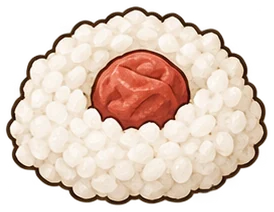 1. Place the filling, such as an umeboshi, in the middle of the rice.
- 2
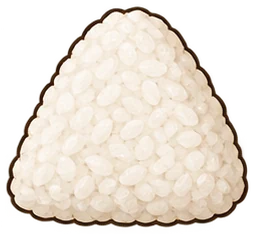 2. Close the rice around the filling and press it into a triangle with palm and bent fingers.
- 3
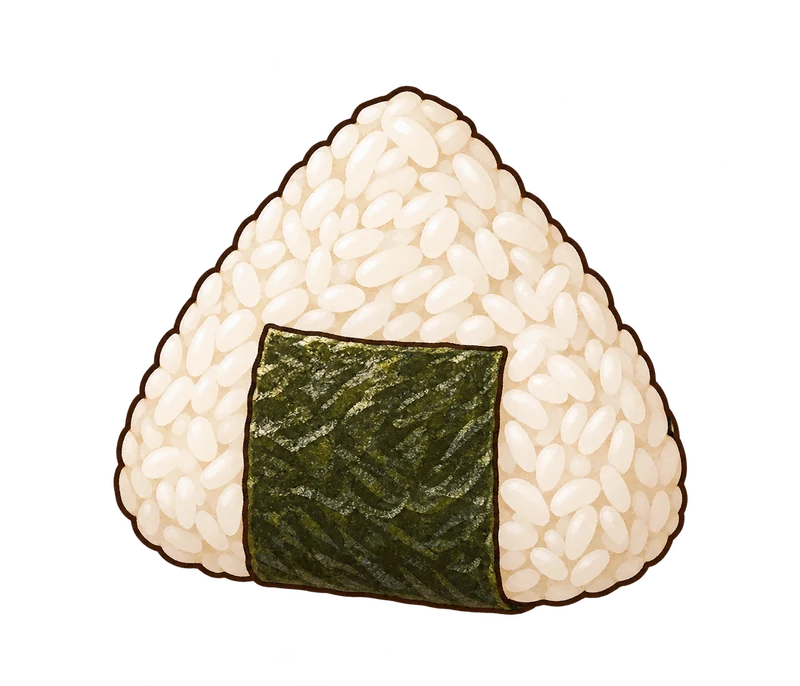 3. Wrap it in nori; left against the rice, the nori absorbs moisture and turns soft.
Salt is not just seasoning. It brings out the sweetness of the rice and, along with a sour filling, helps the rice keep for several hours at room temperature. That practical quality is the whole point of the onigiri: it is food made to travel.
There are three classic shapes. The triangle is now the default, and almost every convenience-store onigiri is triangular. The tawara shape, a short cylinder like a rice bale, is associated with the Kansai region and with the boxed lunches once served at kabuki theaters. Round and flattened discs are common at home. People explain the triangle’s dominance in practical terms: it is easy to form, easy to hold, and the first bite from the corner is just the right size.
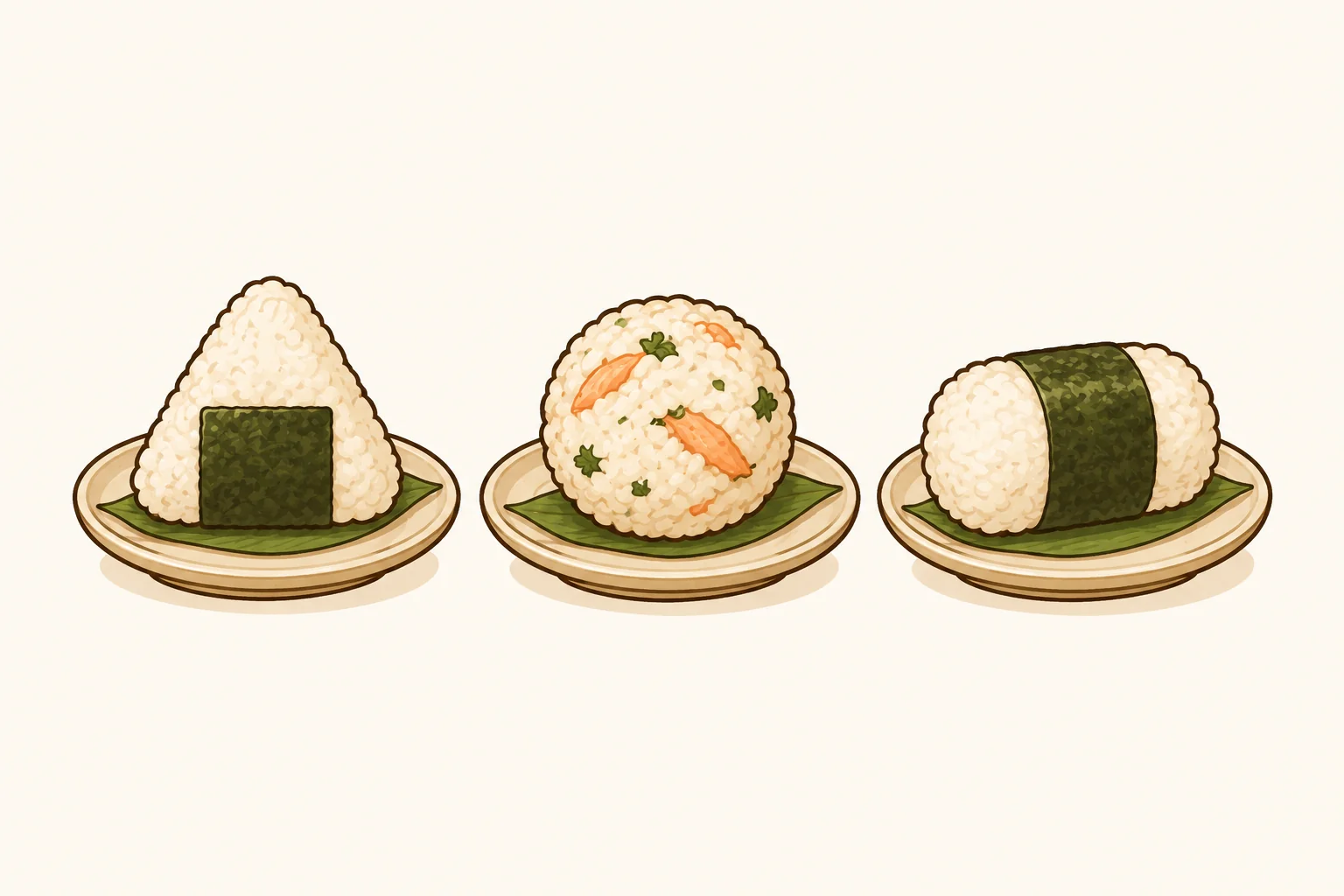
The three classic onigiri shapes: triangle, round, and the tawara, a short cylinder like a rice bale.
Then there is nori, the sheets of dried, pressed seaweed. An onigiri can be fully wrapped, given a single band of nori like a belt, or left bare. Nori changes the texture completely. Freshly wrapped, it is crisp and shatters when you bite. After a few hours against the rice it turns soft and supple, clinging to the ball and lending its sea-like aroma to the rice. Japanese people have strong opinions about which is better, and both camps are well served.
02What Goes Inside
The oldest and most classic filling is umeboshi, a salted, sun-dried Japanese plum (the ume is closer to an apricot). It is intensely sour and salty, and it was valued for helping rice keep. For centuries, a rice ball with an umeboshi in it was what travelers, farmers, and soldiers carried.
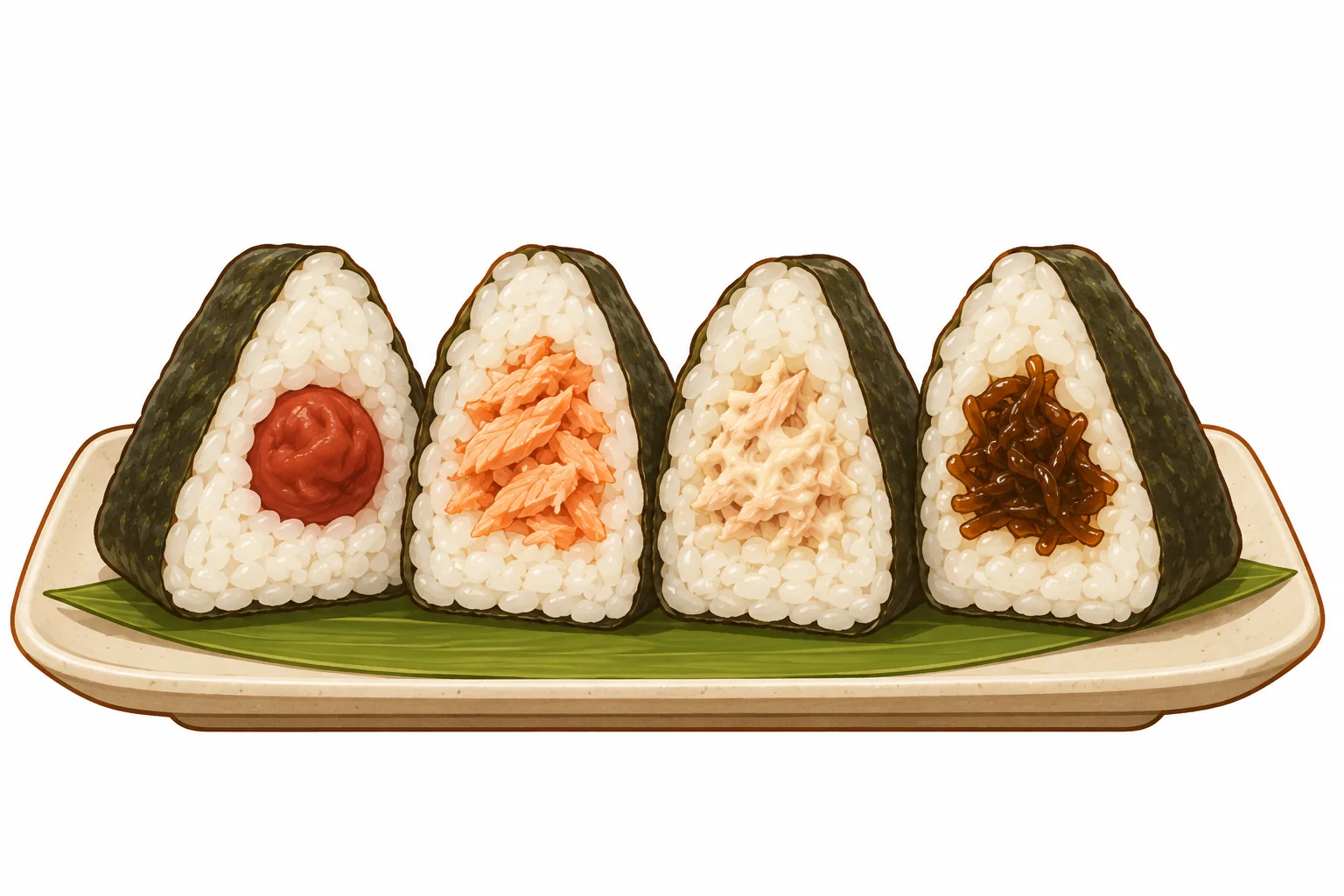
Onigiri cut in half to show fillings at the centre: umeboshi, salmon, tuna mayonnaise and kombu (illustration).
Alongside umeboshi sits a small canon of traditional fillings. There is flaked grilled salmon, salty and pink. There is okaka, dried bonito flakes moistened with soy sauce. There is kombu tsukudani, kelp simmered in soy sauce and sugar until dark and glossy. And there are tarako and mentaiko, salted pollock roe, the latter spiced with chili. Ask a Japanese person for their favorite and the answer will usually come from this list, with one important exception.
That exception is tuna mayo: canned tuna mixed with mayonnaise. Convenience stores introduced it in the early 1980s, and it sounded at first like a strange Western intrusion into a traditional food. Within a few years it was one of the best-selling flavors in the country, and today it trades places with salmon at the top of most popularity rankings. Its success opened the door to almost anything. Fried chicken, grilled beef, curry, omelet rice, cheese, and seasonal specials have all been wrapped in nori and rice.
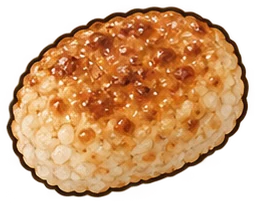
Yaki onigiri: a shaped rice ball brushed with miso or soy sauce and grilled until the surface is crisp.
Not every onigiri has a filling. Some are made from rice mixed with other ingredients before shaping: rice tossed with red shiso powder, with salted kelp, with tiny dried fish, or with takikomi gohan, rice cooked with soy sauce, chicken, burdock, and carrot. There is also yaki onigiri, a rice ball brushed with soy sauce or miso and grilled until the surface is crisp and slightly charred. Izakaya, Japanese pubs, often serve it at the end of an evening, and it is a staple of the frozen-food aisle.
03A Long History in a Small Package
People in Japan have been pressing rice into portable lumps for a very long time. At the Sugitani Chanobatake site in Nakanoto, Ishikawa Prefecture, archaeologists found a carbonized lump of rice dating to the Yayoi period, roughly two thousand years ago. It is often called Japan’s oldest onigiri. Whether it was eaten the way rice balls are eaten today is uncertain, but the town has embraced it as the ancestor of the modern snack.
In the Heian period, the court and aristocratic households served tonjiki, egg-shaped lumps of steamed rice (glutinous rice, by one account) set out in the garden and handed to servants and lower-ranking attendants at banquets. These are usually counted as the forerunners of onigiri. From the Kamakura period through the age of the warring states, rice balls became military rations. Soldiers wrapped them in bamboo sheaths or cloth and tied them at the waist. Like miso and umeboshi, they could be eaten on the march without lighting a fire.
The nori wrapping came much later. During the Edo period, fishermen around Edo Bay began cultivating seaweed and drying it into thin sheets using a method borrowed from papermaking. The resulting product, known as Asakusa nori, became a famous specialty of the city, though it was mostly grown along the shore at Shinagawa and Ōmori, and the reason for the Asakusa name is disputed. Once sheets of nori were widely available, wrapping a rice ball in them became the familiar image. By the modern era, a pair of onigiri with a few pickles, often pickled daikon, was a standard packed lunch for workers and, reportedly, for schoolchildren before school lunches became common.
04The Convenience-Store Revolution
Most onigiri eaten in Japan today come from convenience stores, and the way they are packaged is one of the small engineering triumphs of Japanese everyday life.
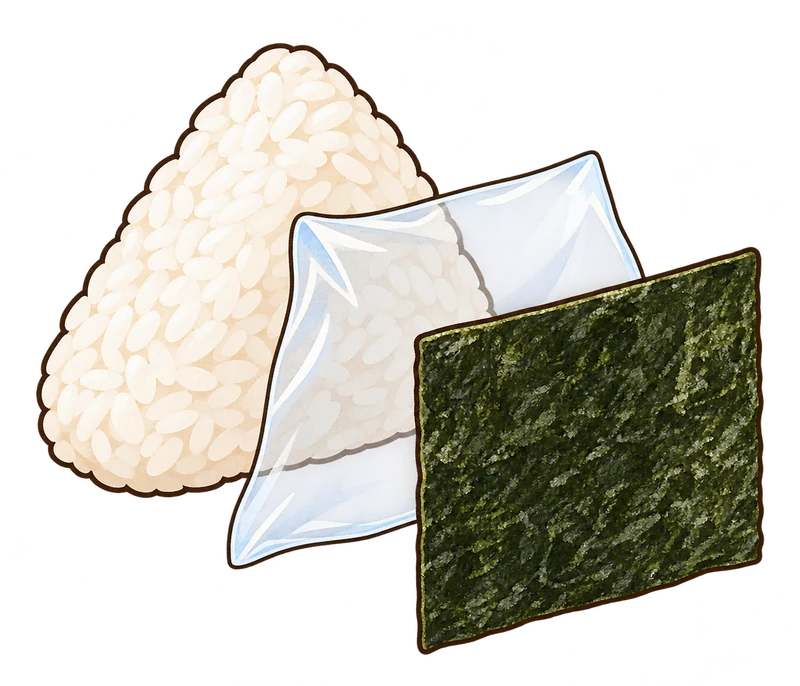
In convenience-store onigiri a plastic film keeps the nori off the rice until the moment of eating.
When convenience stores spread across Japan in the 1970s, they faced a problem. If onigiri were wrapped in nori at the factory, the seaweed would be limp and soggy by the time customers bought them, and many people wanted it crisp. The solution was a thin plastic film separating the nori from the rice until the moment of eating, which 7-Eleven introduced in 1978. Early versions opened differently (one account says they were called the "parachute" type), and the design that replaced them is now familiar to anyone who has spent a day in Japan. You pull a tab down the center of the triangle, tearing the wrapper in two; then you pull each half out from the sides. The plastic slides away, and the nori settles neatly around the rice. Most wrappers print the steps as 1, 2, 3, and once you have done it a couple of times it becomes second nature. Done carelessly, it leaves a corner of nori trapped inside the plastic, which every Japanese child has experienced.
That film turned the onigiri into an industrial product that could be made in huge quantities and still taste fresh. As of 2026, a convenience-store onigiri typically costs around 200 yen, with premium lines costing more. The lineup rotates with the seasons, and the major chains compete hard with new flavors and premium lines made with better rice, looser hand-style shaping, and jikamaki versions that come pre-wrapped in soft nori for people who prefer it that way. A common Japanese breakfast or lunch on the go is simply one or two onigiri and a bottle of green tea.
05Food Made by Hand
For all the success of the convenience store, when Japanese people talk about onigiri with real feeling, they usually mean the ones made at home. Rice balls are bound up with memories of school sports days, field trips, exam mornings, and picnics, of a parent getting up early to shape them while the rice was still too hot to hold comfortably.
Onigiri carry that emotional weight in fiction, too. In Japanese novels, films, and anime, a rice ball often appears at the moment a character most needs comfort. In Miyazaki Hayao’s Spirited Away, Haku gives Chihiro rice balls, and she breaks down in tears as she eats them, one of the film’s most remembered scenes.
The meaning becomes clearest in disaster. After the Great Hanshin-Awaji Earthquake struck Kōbe and the surrounding area in 1995, volunteers made and handed out rice balls to survivors. The date of the earthquake, January 17, was later designated "Omusubi Day" in recognition of that effort. In the decades since, the image of volunteers distributing onigiri at evacuation shelters after earthquakes and floods has become almost a fixture of Japanese life.
Because onigiri are shaped directly by hand, they also raise delicate feelings. Some people are uneasy about eating a rice ball made bare-handed by someone they do not know well, and the question surfaces periodically in Japanese media and online debate. Factories and shops use gloves. At home, most people still shape them with bare hands and will tell you that is what makes them taste right.
06Regional Rice Balls and New Inventions
Every part of Japan has its own variation. In Nagoya, tenmusu are small onigiri with a piece of shrimp tempura tucked into the top, its tail poking out. The dish is said to have started in Tsu, in neighboring Mie Prefecture, before becoming a Nagoya specialty. In the Kumano area straddling Wakayama and Mie, mehari-zushi are large rice balls wrapped in whole leaves of pickled mustard greens; the name is said to come from having to open your eyes wide (me wo haru) to get your mouth around one. In Okinawa, pōku tamago onigiri sandwich a slice of fried canned luncheon meat (locally just called "pork") and egg between layers of rice, a legacy of the postwar American presence. In the north, onigiri stuffed with salmon roe are a point of local pride.
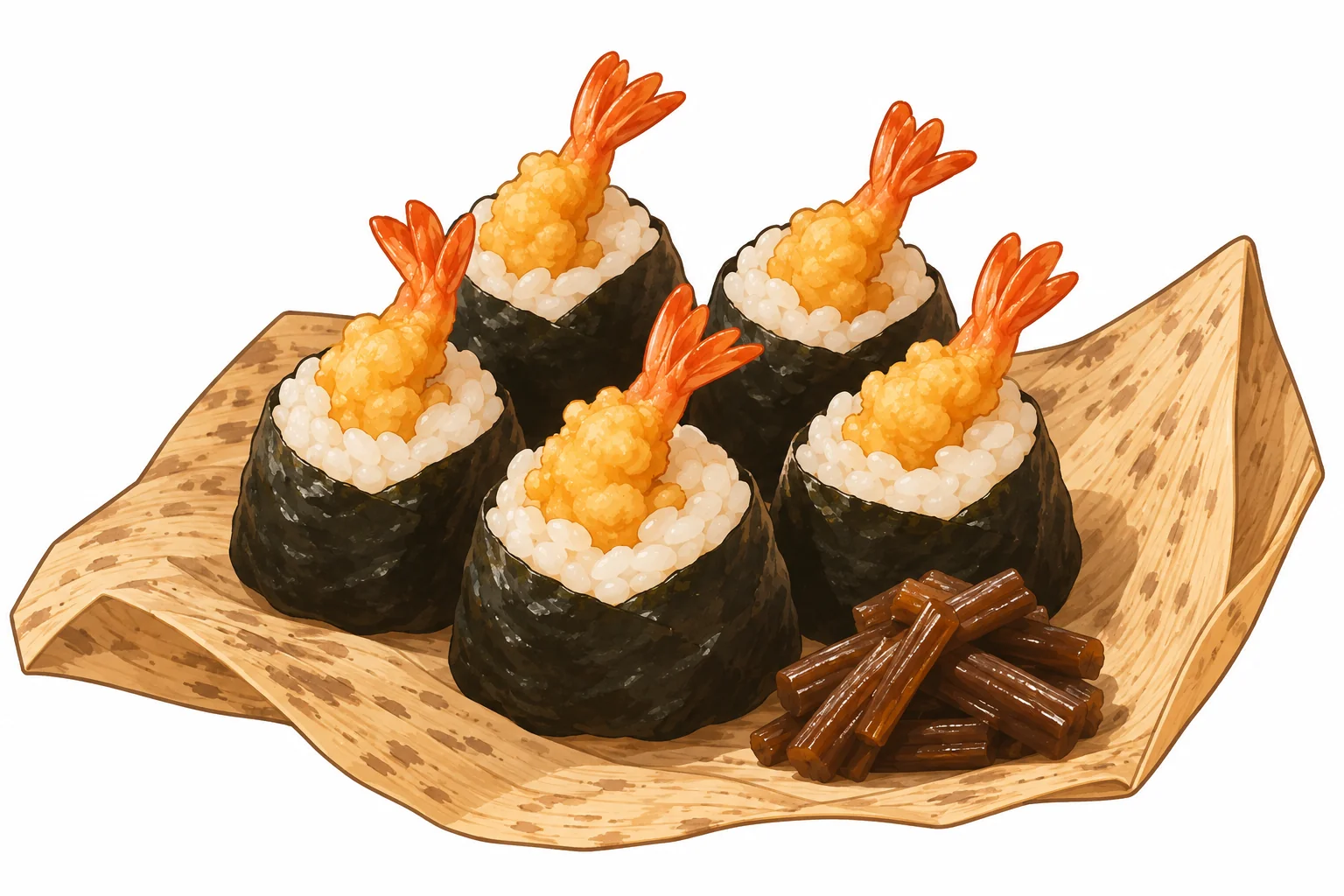
Nagoya tenmusu: small rice balls with a fried prawn tucked in the top, its tail poking out (illustration).
The onigiri keeps changing. In the cooking manga Cooking Papa, a method appeared around 1990 for making a rice "sandwich" by laying rice and fillings on a sheet of nori and folding it, with no squeezing at all. It was called onigirazu, "not-squeezed," and in the 2010s it took off online and became a standard of the lunchbox repertoire. At the other extreme are bakudan ("bomb") onigiri, enormous balls packed with several fillings and entirely wrapped in nori, beloved by students and sports teams.
07Eating Onigiri in Japan
The easiest place to start is any convenience store. 7-Eleven, Lawson, and FamilyMart each have loyal fans who will argue about whose onigiri is best. Salmon, tuna mayo, and mentaiko are safe first choices, and it is worth looking for regional or seasonal limited editions. Follow the numbers on the wrapper and the nori will end up where it belongs. Station kiosks, supermarkets, and department-store food halls also sell good rice balls, and supermarkets often discount them in the evening.
For a different experience, seek out an onigiri specialty shop. In Asakusa, Onigiri Asakusa Yadoroku, founded in 1954, is generally regarded as the oldest onigiri shop in Tokyo. You sit at the counter, choose from the fillings listed on the wall, and the cook shapes each one to order and hands it over, the nori still crackling. In Ōtsuka, Onigiri Bongo, open since 1960, is known for generously overfilled rice balls and the long lines outside its door. As of 2026, an onigiri at places like these costs from about 300 to 800 yen, and two or three with a bowl of miso soup make a full meal.
Onigiri are eaten with the hands; no one cuts them or uses chopsticks. At a specialty shop, eat each one as soon as it reaches you, while the rice is warm and the nori crisp. Set it down for ten minutes and you lose what you came for. And if you find onigiri on the breakfast table at a family-run inn, they were very likely shaped that morning by the people who run it. Ask what is inside.