
At a glance
How the boke and tsukkomi double act gets its laughs, how a New Year blessing became Ōsaka’s signature comedy, and how television and the M-1 Grand Prix made it national.
- Manzai is a two-person comedy of conversation at a single center microphone: one plays the fool (boke), the other the straight man (tsukkomi).
- Its ancestor is the manzai New Year blessing, performed door to door by pairs of entertainers from medieval times through the Edo period.
- Around 1930 Yokoyama Entatsu and Hanabishi Achako, in business suits and relying on talk alone, set the form used today.
- The M-1 Grand Prix began in 2001; it is held every December, and the winners take ¥10 million.
- In 2026 about 12,700 duos entered M-1, the most ever.
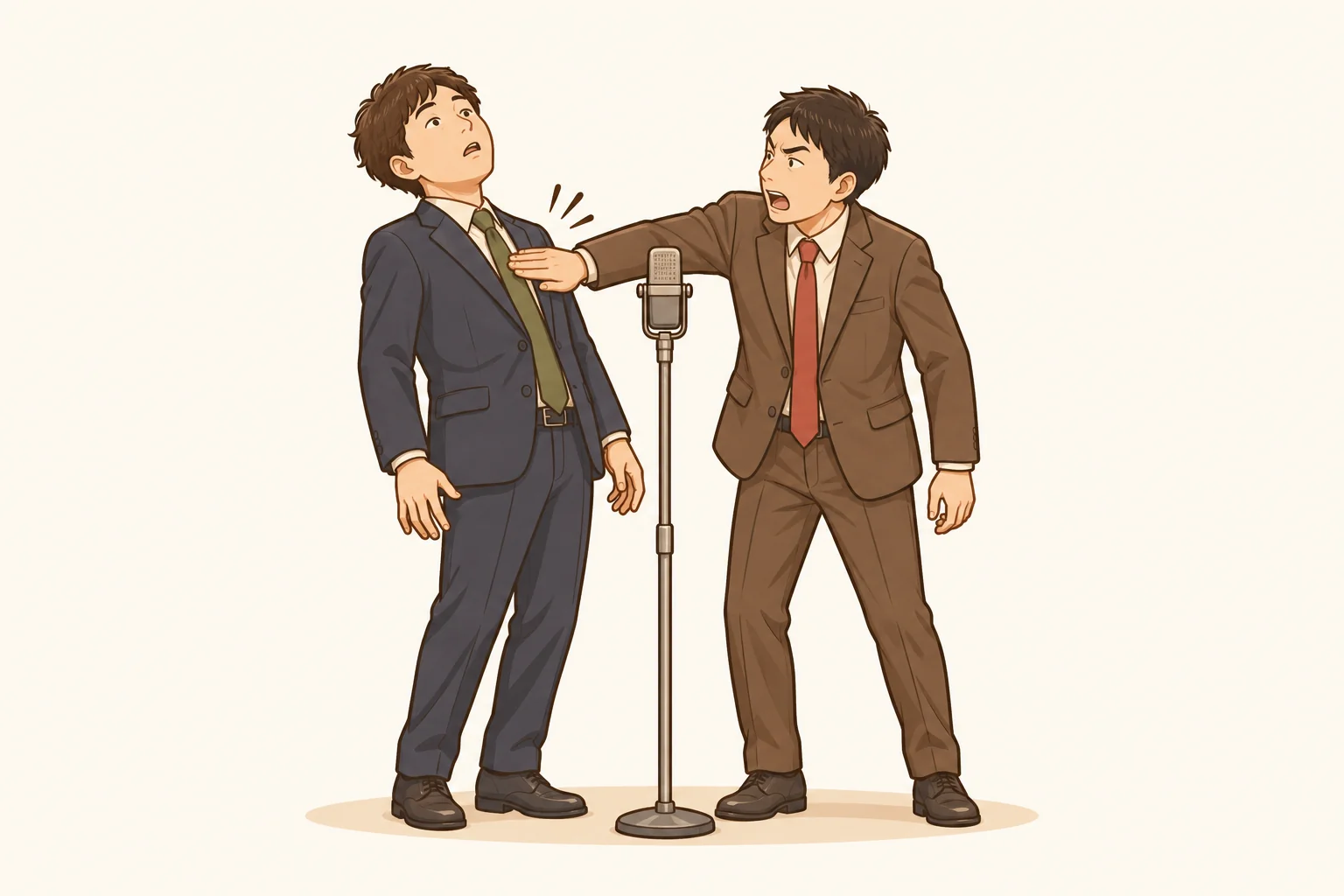
Two performers in matching suits jog onto a bare stage, plant themselves at a single microphone, and start talking. One says something absurd; the other smacks him on the chest and tells him he’s an idiot. Four minutes later the audience is in tears, and the pair bow and run off. This is manzai, the stand-up double act that dominates Japanese comedy and, by extension, a large share of Japanese television. It grew out of an old New Year blessing ritual, found its modern shape in 1930s Ōsaka, and today has a national championship that millions of people watch every December. If you want to understand what makes Japanese people laugh, and why so many of their TV hosts are comedians, manzai is the place to start.
01The Fool and the Straight Man
Every manzai duo, or konbi (from the English "combination"), divides into two roles. The boke is the fool. The word comes from a verb meaning to go senile or to be absent-minded, and the boke’s job is to misunderstand, to say the wrong thing, to follow a logical thread off a cliff. The tsukkomi is the straight man, from a verb meaning to thrust or to butt in. His job is to call out the nonsense the instant it happens, usually with a sharp phrase and a slap.
The classic tsukkomi line, in the Ōsaka dialect that manzai grew up in, is nande ya nen!, roughly "What the hell are you on about?" or "Why would that be?" It is often delivered with the back of the hand to the boke’s chest or a smack to the back of the head. Older acts sometimes used a harisen, a big folded paper fan that makes a loud crack without hurting anyone. The physical hit is less about violence than punctuation; it is the sound of the joke landing.
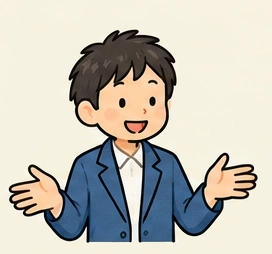
Boke: says the wrong thing and steers the talk somewhere absurd.
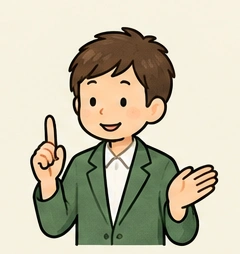
Tsukkomi: points out at once what is wrong, speaking for the audience.
What makes this structure work is that the tsukkomi speaks for the audience. When the boke says something ridiculous, everyone in the room thinks "wait, that’s wrong." The tsukkomi says it out loud, a fraction of a second before they would, and the laugh comes at that moment of release. Timing is everything. A good tsukkomi doesn’t just correct; he reframes the absurdity with an unexpected comparison or an exasperated escalation, and that earns a second laugh on top of the first. Many comedians will tell you that the straight man is the harder role, and that a duo lives or dies on the quality of its tsukkomi.
The terms have escaped the stage. Japanese people use boke and tsukkomi to describe ordinary conversation, and Taiwanese translators are generally credited with rendering tsukkomi as tucao, a near-homophone of a Hokkien word for exposing someone’s faults, which then spread through Chinese internet slang to mean roasting or snarking.
02How a Routine Works
A standard manzai routine, called a neta, follows a recognizable arc. The pair run in from the wings, say "Dōmo!", introduce themselves by their combo name, and exchange a bit of small talk. Then one of them raises a topic: "I’ve been thinking I’d like to work at a convenience store." The other suggests, "Let’s practice, then. I’ll be the customer." From there the boke plays the role badly, over and over, each mistake bigger than the last, while the tsukkomi keeps breaking in. At the end, the tsukkomi delivers the closing line, mō ee wa ("that’s enough"), both say dōmo arigatō gozaimashita, bow, and leave. The formula is so fixed that audiences start applauding the moment they hear mō ee wa.
Two broad styles exist. In shabekuri manzai, "chattering manzai," the pair never step into a scene; they simply stand and argue as themselves, and the comedy is entirely verbal. It is widely considered the purest and most demanding form. In manzai konto, the pair act out a little sketch, but they can drop out of it at any moment to comment on it as themselves. That ability to step in and out is what separates manzai from konto proper, the sketch comedy in which performers wear costumes and stay in character from start to finish.
The stage is almost always empty except for one stand microphone set at center, known as the sentā maiku. The single mic is generally seen as a holdover from the age of radio and early amplification, when two performers had to crowd around one pickup. Wireless microphones have long made it unnecessary, but it survives as a convention. It fixes the distance between the two performers, keeps them half-turned toward each other and half toward the audience, and makes the whole act feel stripped down: no set, no props, just two people and a conversation.
Rhythm matters as much as content. Ōsaka manzai is fast, with short lines bouncing back and forth like a rally in table tennis. The pitch of a voice, the length of a pause, and the crack of the slap all carry jokes. This is one reason manzai translates poorly. A punchline in Kansai dialect loses much of its snap in standard Japanese, let alone in English subtitles.
Manzai is often compared to rakugo, Japan’s other great spoken comic art, but the two are quite different. A rakugo storyteller kneels alone on a cushion and plays every character in a long tale, often set in the Edo period. Manzai performers stand, play themselves, and talk about the present.
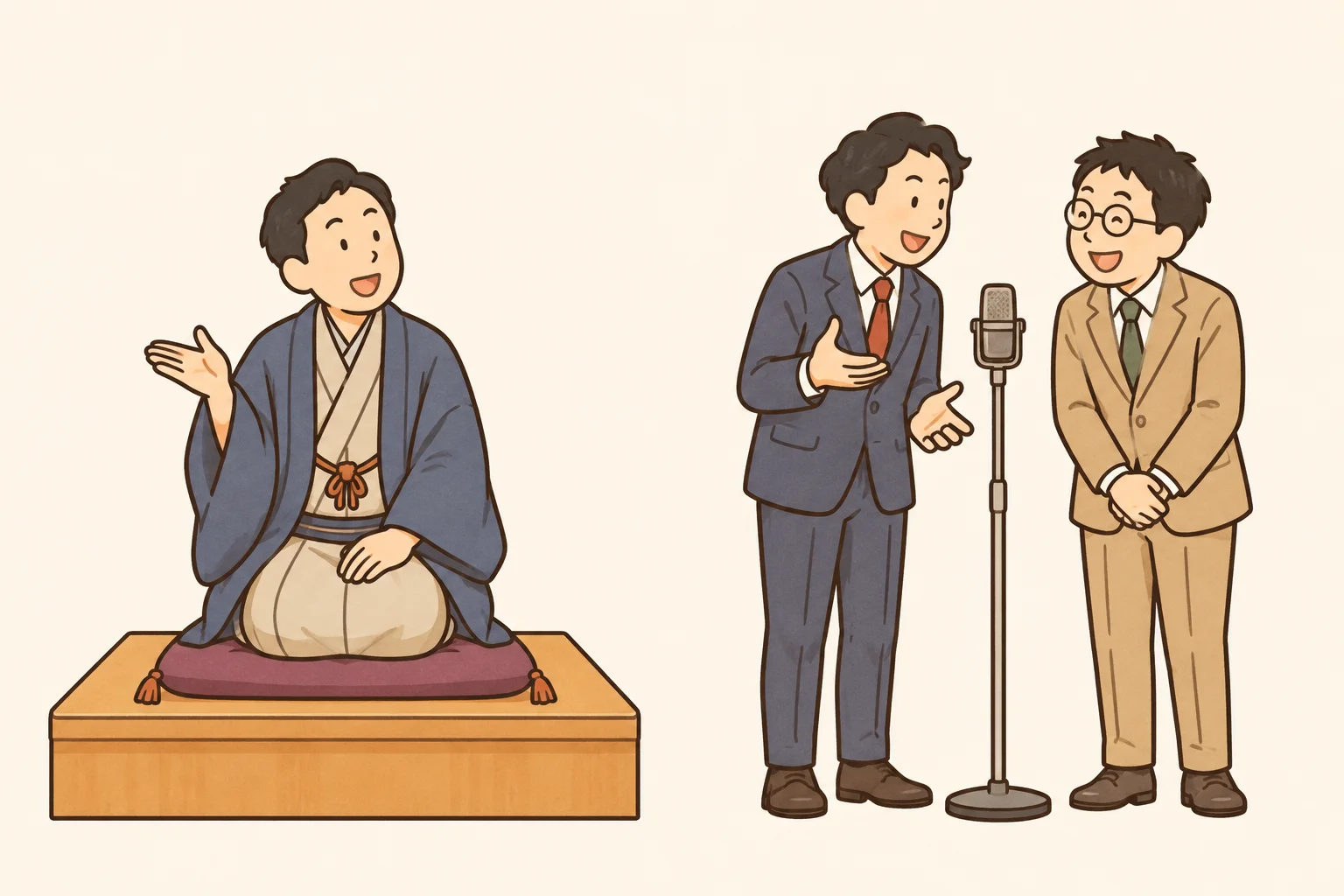
A rakugo storyteller kneels alone on a cushion; manzai performers stand as a pair at a single microphone.
03From New Year Blessings to Business Suits
The word manzai is old, though its current spelling is not. Originally written 万歳, meaning "ten thousand years," it referred to a New Year performance going back at least to the medieval period. Pairs of itinerant entertainers went door to door at the start of the year. One, the tayū, wore a formal court hat and carried a fan, chanting auspicious verses wishing the household long life and prosperity. The other, the saizō, beat a small drum and clowned around, teasing the tayū and making the family laugh. Regional schools such as Mikawa manzai, Owari manzai and Yamato manzai became well known, and the Mikawa troupes enjoyed the special favor of the Tokugawa shoguns, who came from that province, performing at Edo Castle each New Year. The basic pairing of a dignified partner and a joker was already in place.
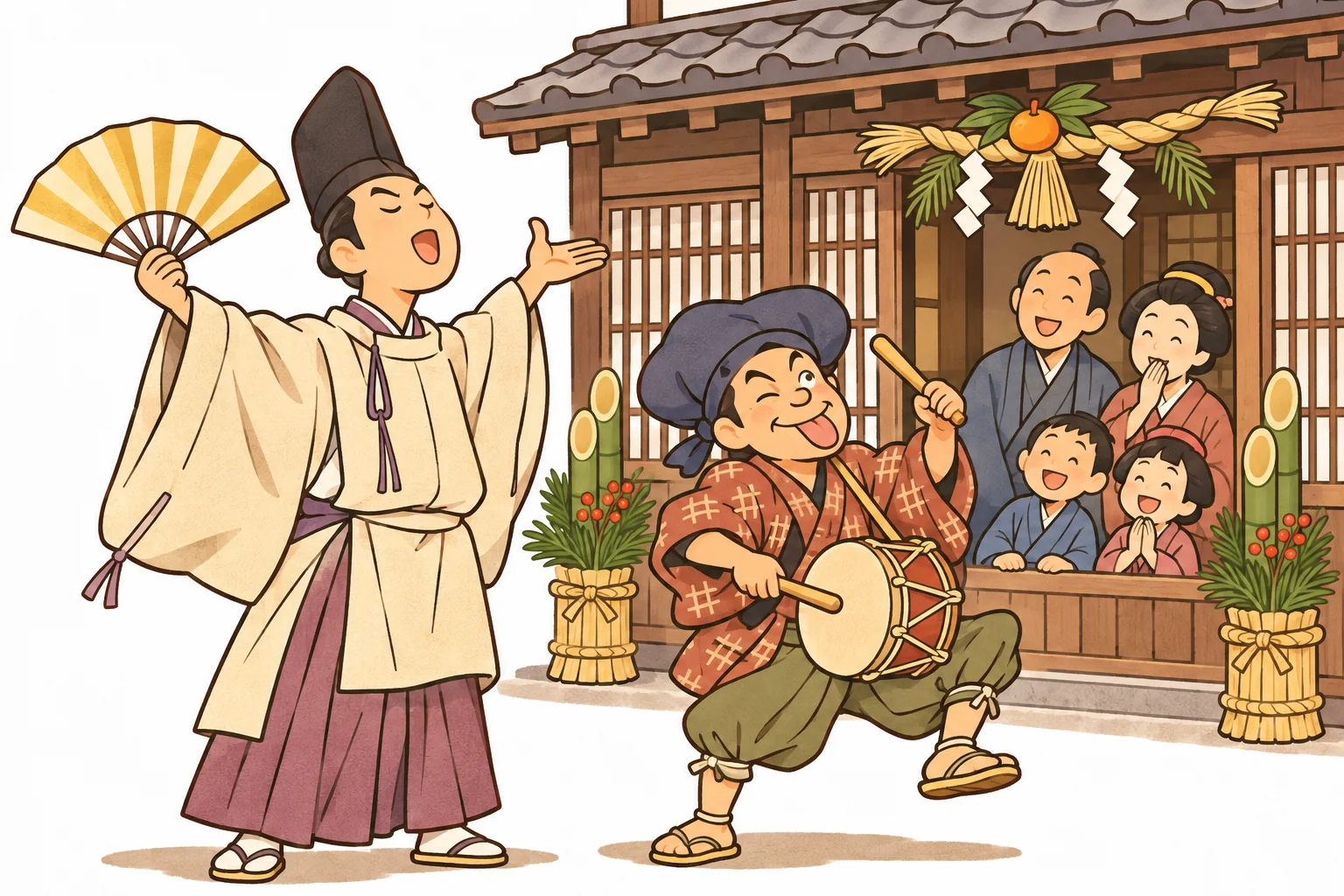
New Year manzai at an Edo townhouse door: the tayū in eboshi with a fan, the saizō beating a drum (illustration).
In the late Meiji period, performers in Ōsaka began bringing manzai onto the stages of yose, the small variety halls. Early stage manzai was a jumble of song, dance, acrobatics and banter. The decisive change came around 1930 with a duo called Yokoyama Entatsu and Hanabishi Achako. They dropped the singing and costumes, wore Western suits, and simply talked, about things everyone was interested in. Their routine about the Sōkeisen, the baseball rivalry between Waseda and Keiō universities, became a hit on radio, by most accounts around 1933, and spread their style across the country. Talk alone was now enough.
In the early 1930s their employer, the Ōsaka entertainment company Yoshimoto Kōgyō, changed the written form of the word, by then usually 万才, to 漫才, using a character that suggests casual, rambling talk. In 1934 Yoshimoto also hired the writer Akita Minoru, who produced an enormous number of scripts and mentored many performers; he is regarded as a key figure in shaping Kansai manzai and is sometimes called the father of modern manzai. With a professional writer, a management company and a chain of theaters behind it, manzai became an industry.
04Radio, Television and the Boom Years
After the Second World War, manzai moved onto radio and then television. In the 1960s and 1970s the reigning Ōsaka duo was Yokoyama Yasushi and Nishikawa Kiyoshi, famous for their breakneck pace and for Yasushi’s volatile personality on and off the stage. Husband-and-wife acts, fūfu manzai, were another popular strand; pairs such as Miyako Chōchō and Nanto Yūji, and later Miyagawa Daisuke and Hanako, turned marital bickering into ready-made material.
Around 1980, a Fuji Television program called THE MANZAI set off a full-blown manzai boom. Young duos such as B&B, Shinsuke & Ryūsuke and Two Beat spoke faster and pushed harder than their elders, and became idols to a teenage audience. One half of Two Beat, Beat Takeshi, would later become internationally known as the film director Kitano Takeshi.
In 1982 Yoshimoto opened a training school, the Yoshimoto New Star Creation, or NSC. Until then, the route into comedy was an apprenticeship: you attached yourself to a senior performer, carried his bags, and learned by watching. NSC replaced that with tuition, classes and auditions. Among its very first students were two school friends from Amagasaki, Matsumoto Hitoshi and Hamada Masatoshi, who formed the duo Downtown. Matsumoto, the boke, slowed everything down. In place of rapid-fire patter he offered mumbled, deadpan, surreal flights of imagination, with long pauses that forced the audience to lean in. Hamada’s tsukkomi, by contrast, was loud and physical. Their style reshaped Japanese comedy, and a generation of comedians grew up imitating them.
- c. 1930Yokoyama Entatsu and Hanabishi Achako: suits, talk only
- 1934Yoshimoto hires the writer Akita Minoru
- c. 1980THE MANZAI sets off a manzai boom
- 1982Yoshimoto opens NSC
- 2001M-1 Grand Prix launched
- 2011–2014M-1 suspended
- 2026Record entries: about 12,700 acts
Talk-only manzai took shape around 1930, boomed around 1980, and the M-1 Grand Prix, launched in 2001, drew a record of about 12,700 entries in 2026.
05The M-1 Grand Prix
The modern centerpiece of manzai is the M-1 Grand Prix, launched in 2001 by the comedian Shimada Shinsuke and organized by Yoshimoto and the Ōsaka broadcaster Asahi Broadcasting. The final airs nationally in December, and it is one of the most-watched entertainment events of the Japanese year, with an audience estimated in the tens of millions.
The rules are simple. Any duo or group that has been together for no more than ten years can enter (the limit was raised to fifteen years in 2015), regardless of agency, and amateurs are welcome. Each act gets about four minutes. The winner takes ten million yen and, more importantly, a near-guarantee of television work for years to come. Entries have grown steadily, reaching a record of about 12,700 acts in 2026, most of them eliminated in preliminary rounds held across the country from late summer through the autumn.
The final has produced a string of stories that fans still argue about. The first champions were the brothers Nakagawa-ke. In 2007 Sandwichman came through the losers’ bracket, the "revival round" held on the day of the final, and went on to win. In 2018 Shimofuri Myōjō became one of the youngest champions ever. In 2019 Milk Boy’s routine about trying to remember the name of a breakfast cereal, built on the tsukkomi insisting it must be corn flakes and then that it can’t be, set what was then the highest score in the contest’s history. In 2020 Majikaru Raburī won with an act in which one member barely spoke and spent much of the routine flailing about the stage, at one point rolling on the floor, triggering a nationwide debate over whether it counted as manzai at all. Reiwa Roman won in both 2023 and 2024, the first duo to take the title twice. The contest was suspended from 2011 to 2014, and its return in 2015 only made it bigger.
What makes M-1 compelling is the stakes. A duo that has been performing for years in tiny theaters to audiences of fifty can become household names overnight. The judges, mostly veteran comedians, give scores on air and explain them, and their verdicts are picked apart on talk shows the following week.
06Why Ōsaka?
Manzai exists all over Japan, but its center of gravity is unmistakably Ōsaka and the wider Kansai region. Tokyo has its own tradition, with the Manzai Kyōkai (Manzai Association) based at the Tōyōkan theater in Asakusa and celebrated pairs such as Utsumi Keiko and Yoshie, whose style was gentler and more urbane. Still, when Japanese people think of manzai, they hear the Kansai accent.
One explanation people like to give is Ōsaka’s history as a merchant city. In the Edo period it was called "the nation’s kitchen," a hub of rice and commodity trading where business depended on quick talk, haggling and humor. Whether or not that is the real root, Osakans today are widely believed to treat conversation as a kind of informal manzai. If someone says something silly, the listener is expected to supply the tsukkomi; letting it hang is almost rude. People from Ōsaka joke that Tokyoites don’t know how to respond to a boke. It is a stereotype, but one that Osakans enjoy.
The other explanation is simply industry. Both of the big comedy agencies, Yoshimoto Kōgyō and Shōchiku Geinō, were founded in Ōsaka, and the theaters, training schools and broadcasters that sustain manzai cluster there. For decades the standard career path has been to move to Ōsaka, enroll at NSC, grind through the small stages, and then, if things go well, move to Tokyo and its television studios.
That path leads to a striking feature of Japanese TV: a huge number of its hosts, panelists and personalities are geinin, professional comedians, most of whom started in manzai. A duo that places well in M-1 will be all over variety shows the following year. In 2015 Matayoshi Naoki, of the duo Peace, won the Akutagawa Prize, Japan’s most prestigious literary award for new writers, for Hibana (Spark), a novel about two struggling manzai comedians. It sold millions of copies and was adapted for Netflix.
07Seeing Manzai Live
The flagship venue is Namba Grand Kagetsu, usually called NGK, Yoshimoto’s main theater in Ōsaka’s Nanba district. A typical show runs a little over two hours. The first half is a parade of manzai acts and the occasional rakugo performer, each with about ten to fifteen minutes, often including veteran duos and current TV favorites. The second half is Yoshimoto Shinkigeki, a long-running slapstick stage comedy with stock characters and catchphrases that local audiences know by heart. Nearby, smaller Yoshimoto theaters showcase younger acts and give you the chance to see future M-1 finalists before anyone has heard of them. In Tokyo, Lumine the Yoshimoto in Shinjuku offers a similar program, while the Tōyōkan in Asakusa has a more old-fashioned feel.
If your Japanese is limited, don’t let that stop you. You will miss most of the wordplay, but the rhythm, the faces and the crack of the tsukkomi’s hand carry a surprising amount. After a few acts you will start to feel the shape of a routine and sense when the mō ee wa is coming. If you have some Japanese, watching a few M-1 finals online beforehand helps you tune your ear to the format and the dialect.
The live experience adds something television can’t: the audience. Ōsaka crowds laugh loudly and generously, and they also go noticeably quiet when a joke falls flat, which is its own kind of entertainment. Photography and recording are not allowed during performances, and it is good manners not to walk in and out mid-act. Afterwards, as you step back into the crowds of Nanba, keep an ear on the conversations around you. Sooner or later, someone will say nande ya nen.