

At a glance
What the ink and red seals on a goshuin page mean, how sutra-offering receipts became a recent collecting craze, and how to ask for one politely.
- A goshuin is ink brushwork plus red seals, written by hand in a special book as proof of a visit to a shrine or temple.
- The large central line names the shrine or the temple’s main Buddha, the date goes lower left, and temples often press a Three Treasures seal in the middle.
- It is usually traced to nōkyō-in, receipts for offered sutras; Shikoku temples still call the counter the nōkyōjo.
- TV, magazines and social media made goshuin a craze from the 2010s, and the 2019 era change brought hours-long queues.
- Worship first, then ask; as of 2026 an offering of ¥500 is common.
At a busy shrine in Tokyo or a hillside temple in Kyoto, you will often see a short line of people at a small window, each holding a folded, cloth-covered booklet open to a blank page. Behind the window a priest or a temple attendant takes up a brush, writes a few bold lines of ink, presses down two or three vermilion stamps, and hands the book back. The result is a goshuin, literally "honorable red seal." It looks like a souvenir stamp, but Japanese visitors treat it as proof of worship, and some temples describe it as a token of the deity or Buddha itself. This piece explains what is on the page, where the custom came from, why it became a national craze in the 2010s, and how to ask for one politely.
01Reading a Page
A goshuin is written on a sheet of Japanese paper roughly the size of a paperback page. In the upper right corner there are usually two characters, hōhai (奉拝), meaning "respectfully worshipped." Down the center runs the largest line of calligraphy. At a Shinto shrine this is usually the shrine’s name, such as Meiji Jingū or Fushimi Inari Taisha. At a Buddhist temple it is more often the name of the principal image of worship, the honzon: "Shaka Nyorai" for the historical Buddha, for example, or "Daihiden," the Hall of Great Compassion, for a temple devoted to Kannon. On the left the writer adds the date of your visit, usually in the Japanese era system, so a visit on May 1, 2024, would read "Reiwa 6, fifth month, first day," followed by the name of the shrine or temple.
Over the ink go the seals. A shrine typically uses a square seal carved with its name, sometimes with its crest, such as the plum blossom of a Tenmangū dedicated to the scholar Sugawara no Michizane; by one account Inari shrines often use the sacred jewel, hōju. Temple pages tend to carry more. A small seal at the top right may give the temple’s "mountain name" or its number on a pilgrimage route. In the middle, stamped right over the name of the honzon, is often the large sanbōin, the seal of the Three Treasures, carved with the four characters for Buddha, Dharma, Sangha, and Treasure. Some temples use a seal bearing the Sanskrit seed syllable of their main Buddha instead. A third seal at the lower left belongs to the temple itself.
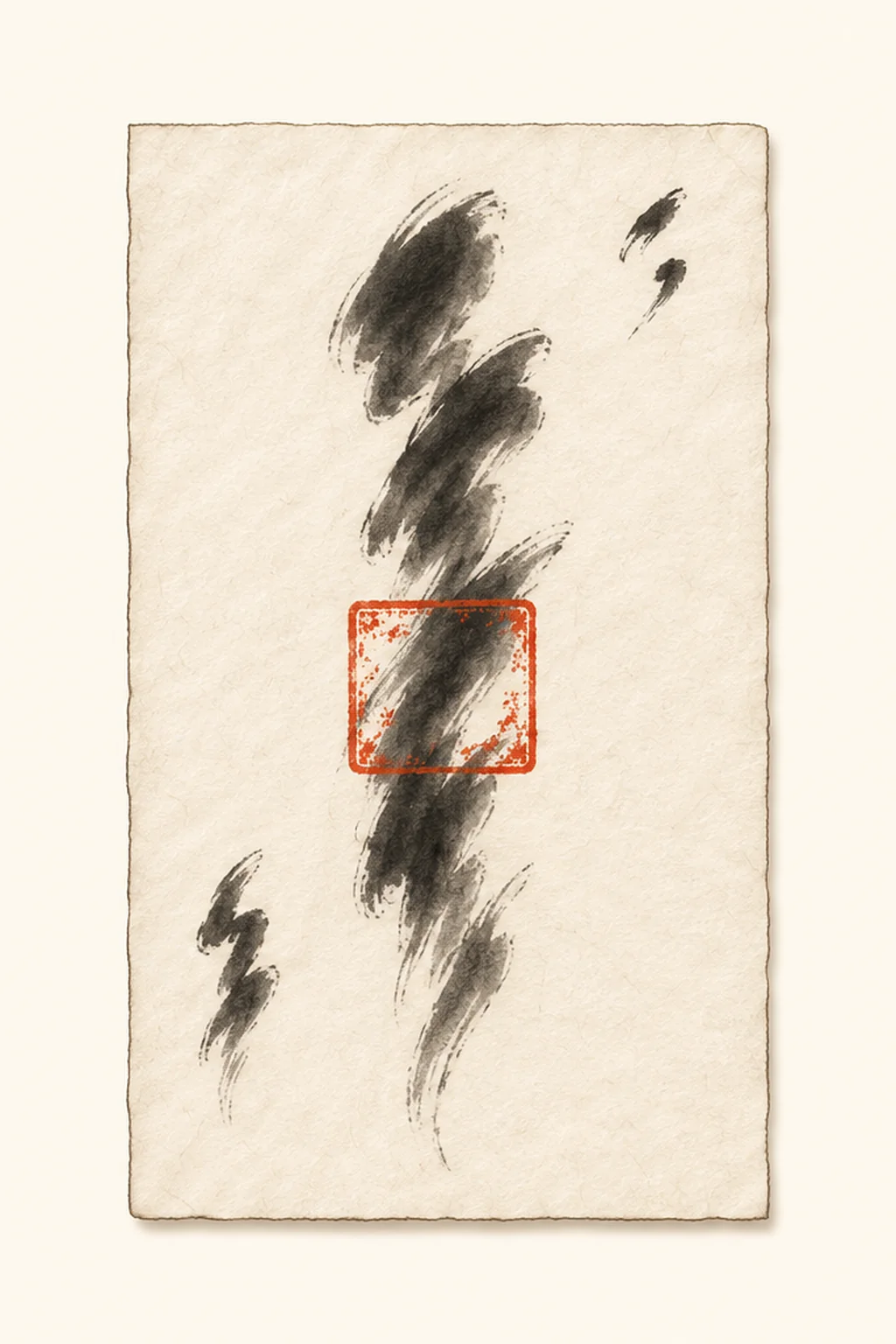
A shrine page: three places of brushwork and, typically, one square seal carved with the shrine’s name.
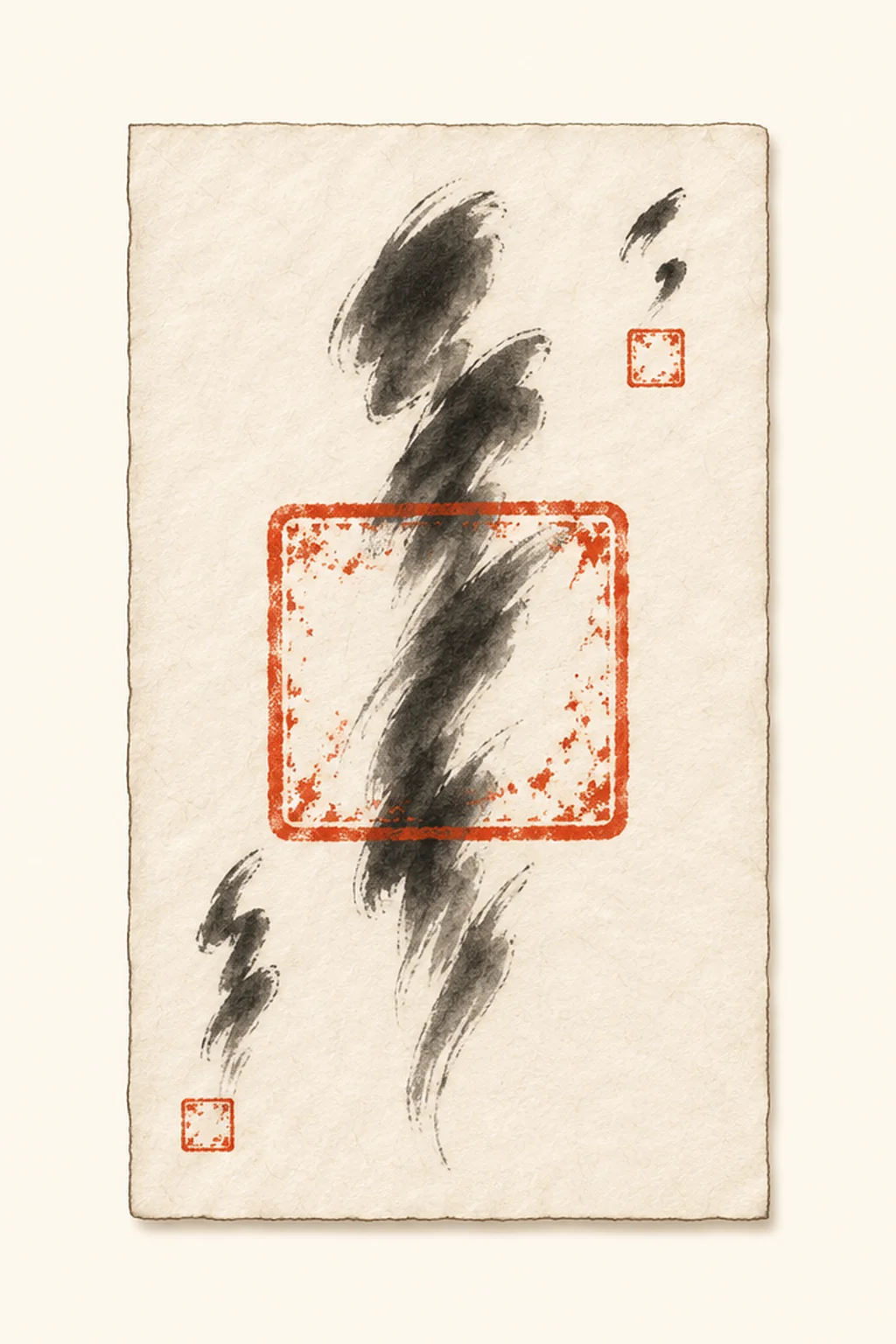
A temple page: the same brushwork, but often three seals, with the large sanbōin stamped over the central line.
| Where | Shrine | Temple |
|---|---|---|
| Upper right | Hōhai | Hōhai; small seal with mountain name or pilgrimage number |
| Center | Shrine name, the largest line | Name of the honzon; Three Treasures or Sanskrit seal |
| Lower left | Date, shrine name | Date, temple name; temple seal |
| Seal | Square seal with its name, sometimes its crest | Often three: top right, center, lower left |
The ink follows the same plan at shrines and temples; temple pages tend to carry more seals.
Everything is done by hand. The same shrine will give you a slightly different page depending on who is on duty and how busy they are, and that is much of the appeal. Collectors trade notes on which temples have the finest calligraphers. A few head priests are accomplished calligraphers in their own right, and their windows draw the longest queues.
The book that holds all this is a goshuinchō. The standard form is accordion-folded: a single long strip of thick paper pleated between two stiff covers, so you can turn it page by page or stretch the whole thing out. Many shrines and temples sell their own books with covers in brocade or printed paper showing their buildings, crests, or seasonal motifs, usually, as of 2026, for somewhere between ¥1,000 and ¥3,500. Stationery shops and bookstores across Japan sell plain ones.

One long strip of paper pleated between two stiff covers: turn it page by page or stretch it out.
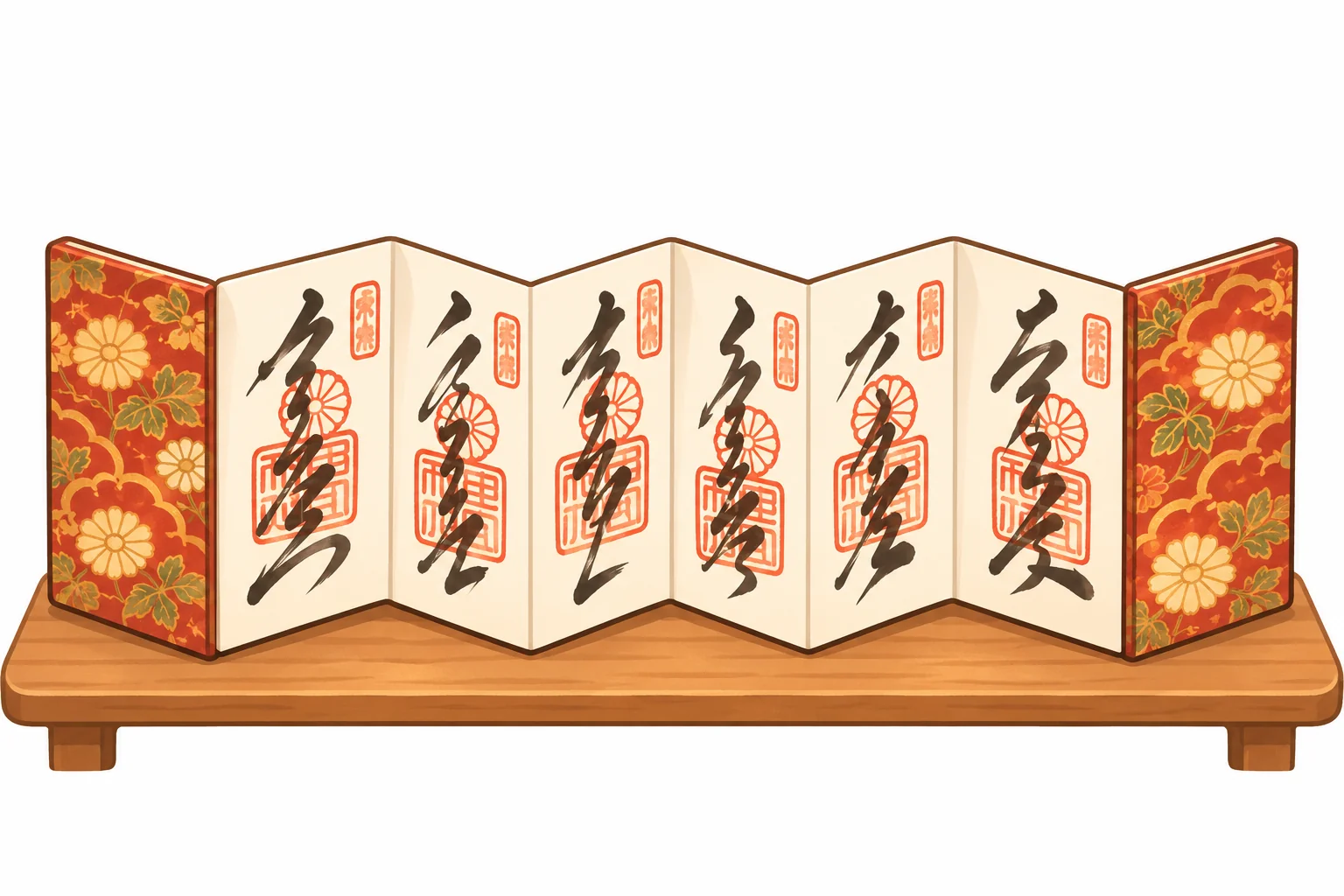
A concertina-style goshuin book pulled open, each page bearing ink calligraphy and red seals (illustration).
02From Sutra Receipts to Pilgrim Books
Goshuin did not start as a souvenir of a visit. The usual explanation is that they grew out of receipts. From the medieval period, devout Buddhists copied sutras by hand and carried them to temples as offerings. The temple gave back a stamped and inscribed slip acknowledging the gift, called a nōkyō-in, a "sutra-offering seal." From the medieval period, and still widely in the Edo period (1603–1868), wandering devotees known as rokujūrokubu, "the sixty-six parts," set out to deposit copies of the Lotus Sutra at a sacred site in each of Japan’s sixty-six provinces, collecting a seal at each one as proof.
Edo-period Japan also saw a boom in pilgrimage as a kind of travel, part devotion and part holiday. Commoners walked the Saigoku circuit of thirty-three Kannon temples across the Kansai region, the Bandō circuit in the Kantō, the Chichibu circuit of thirty-four, and the eighty-eight temples of Shikoku. Pilgrims carried a nōkyōchō, a sutra-offering book, and at each temple they received ink and seals in it. Over time the copied sutra dropped away and was replaced by a small donation, while the inscription itself became the point. On the Shikoku pilgrimage today the counter where you get your book signed is still called the nōkyōjo, the sutra-offering office, a reminder of where the practice came from.
Shrine seals are generally thought to have grown out of the temple practice. Before the Meiji era, shrines and temples were closely intertwined, often sharing grounds and clergy; sutras were offered at shrines too, and roughly half the sacred sites where the rokujūrokubu deposited their copies were shrines. Pilgrims who stopped at both expected a seal at both. After the Meiji government began separating Shinto from Buddhism in 1868, the two are generally said to have developed distinct styles, which is why a practiced eye can tell a shrine page from a temple page at a glance.
03A Modern Craze
For much of the twentieth century goshuin were mainly the business of pilgrims and older worshippers. That changed in the 2010s. Television programs and magazines ran features on goshuin, guidebooks devoted to "goshuin tours" filled bookshop shelves, and young women became the most visible new collectors, enough that phrases like goshuin gāru and goshuin joshi, "goshuin girls," caught on.
Social media made the fashion spread faster. A page of black brushwork under bright red seals photographs beautifully, and shrines and temples responded with limited editions: cherry blossoms printed on spring pages, autumn-colored paper in the maple season, special designs for festivals and anniversaries, some with painted illustrations or cut-paper inserts. At popular spots in Tokyo and Kyoto, a new seasonal design can draw a queue before the gates open.
One high point came with the change of imperial era in 2019. When Heisei gave way to Reiwa on May 1, many people wanted a page dated "Reiwa 1, fifth month, first day." Major shrines such as Meiji Jingū saw waits of several hours. Kanda Myōjin is also reported to have drawn long lines, and some shrines and temples are said to have closed early or switched to pre-written sheets, kakioki. Asakusa Shrine in Tokyo had set a daily limit, but far more people came than expected, and many queued for a long time and went home without one.
The boom has had a downside. Limited-edition goshuin turn up on auction sites at several times their original price. Some visitors skip the prayer and go straight to the window, or argue with staff when a design runs out. A number of shrines and temples have responded by ending limited editions, capping the number per person, or suspending goshuin altogether. The line they repeat is consistent: a goshuin is not a product but evidence of worship, and the money you hand over is an offering, not a price.
04Shrines, Temples, and One Book or Two
A question collectors love to argue about is whether shrine and temple seals belong in the same book. Most places do not mind, and plenty of people keep a single book in the order they visited, like a travel diary. A small number of shrines and temples, however, will decline to write in a book that already holds the other kind of seal, or will give you a separate sheet instead. Some collectors keep one book for shrines and another for temples simply to be safe. Pilgrimage books are their own category: a Shikoku or Saigoku nōkyōchō comes with a page pre-printed for each temple on the route, and it is meant for that route alone.
Some temples do not issue goshuin at all. Most temples of Jōdo Shinshū, the True Pure Land school and one of Japan’s largest Buddhist denominations, decline on doctrinal grounds. The school teaches that rebirth in the Pure Land depends entirely on the vow of Amida Buddha rather than on any merit the believer builds up, so collecting proof of devotional visits sits awkwardly with its teaching. Some of these temples offer a commemorative visitor’s stamp instead, or a hōgoin, a page bearing a short line of Buddhist teaching; by one account some hand out a commemorative page inscribed Namu Amida Butsu. If you are turned away, it is not a snub; it is how that temple understands its faith.
05At the Window
The first rule is to worship before you ask. At a shrine, rinse your hands and mouth at the water basin, then go to the hall of worship, drop a coin in the offering box, and bow twice, clap twice, and bow once more. At a temple, go to the main hall and put your palms together; some visitors recite the short Heart Sutra. Only then head to the office, which may be labeled shamusho or juyosho at a shrine and nōkyōjo at a temple. Many windows post a sign asking visitors to pray first.
Open your book to the next blank page and hand it over with a simple "Goshuin o onegai shimasu." Where several designs are on offer, you will be asked to choose. At busy places you may be given a numbered ticket and asked to come back in a few minutes. Do not ask anyone to write in a notebook, a diary, or on a loose scrap of paper; that is considered disrespectful. If you have no book, you can buy one on the spot, or ask for a kakioki, a pre-written single sheet you can paste in later.
Without a book, ask for a kakioki, a single pre-written sheet you can paste in later.
- 1
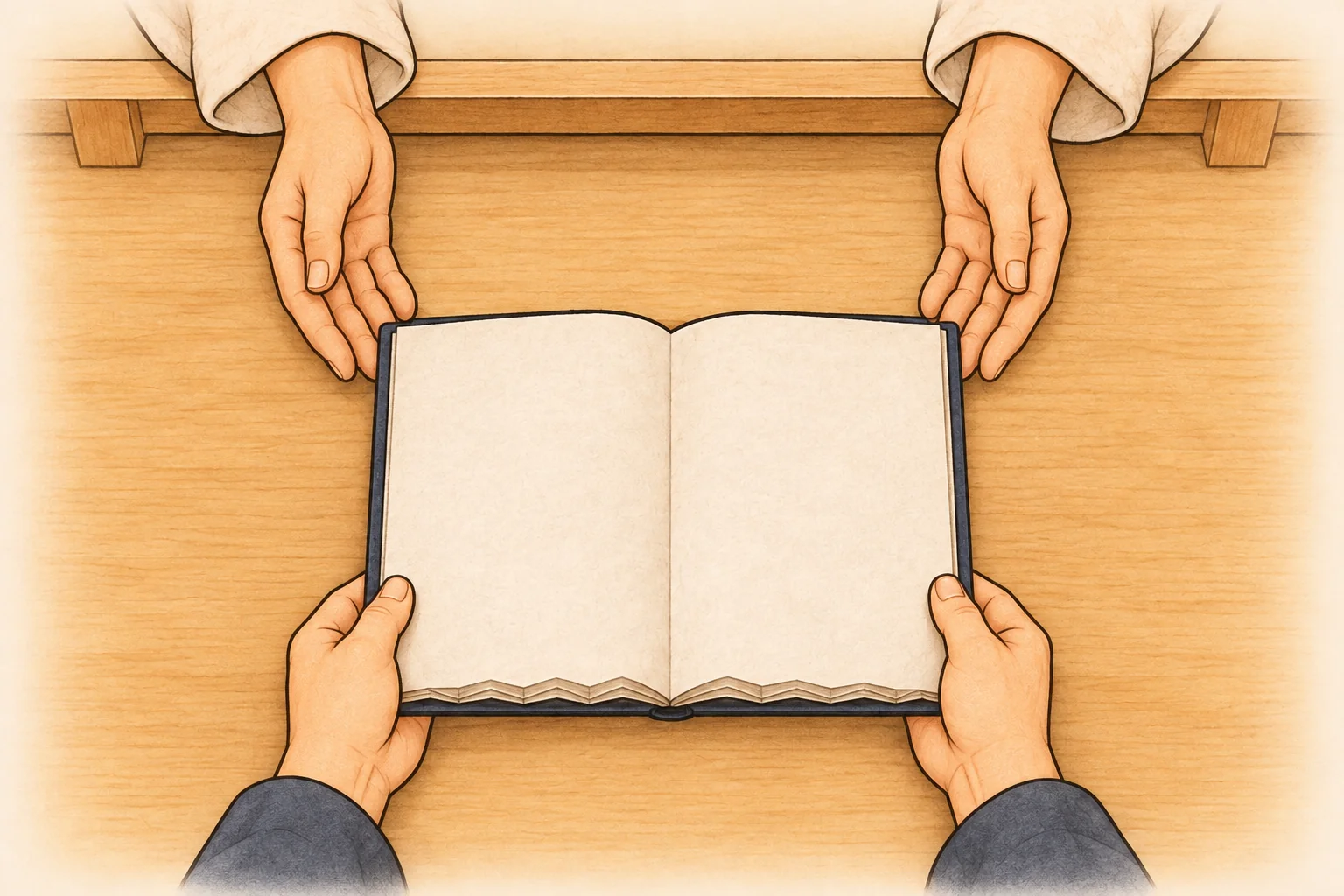 Open the goshuinchō to the next blank page and hand it over.
- 2
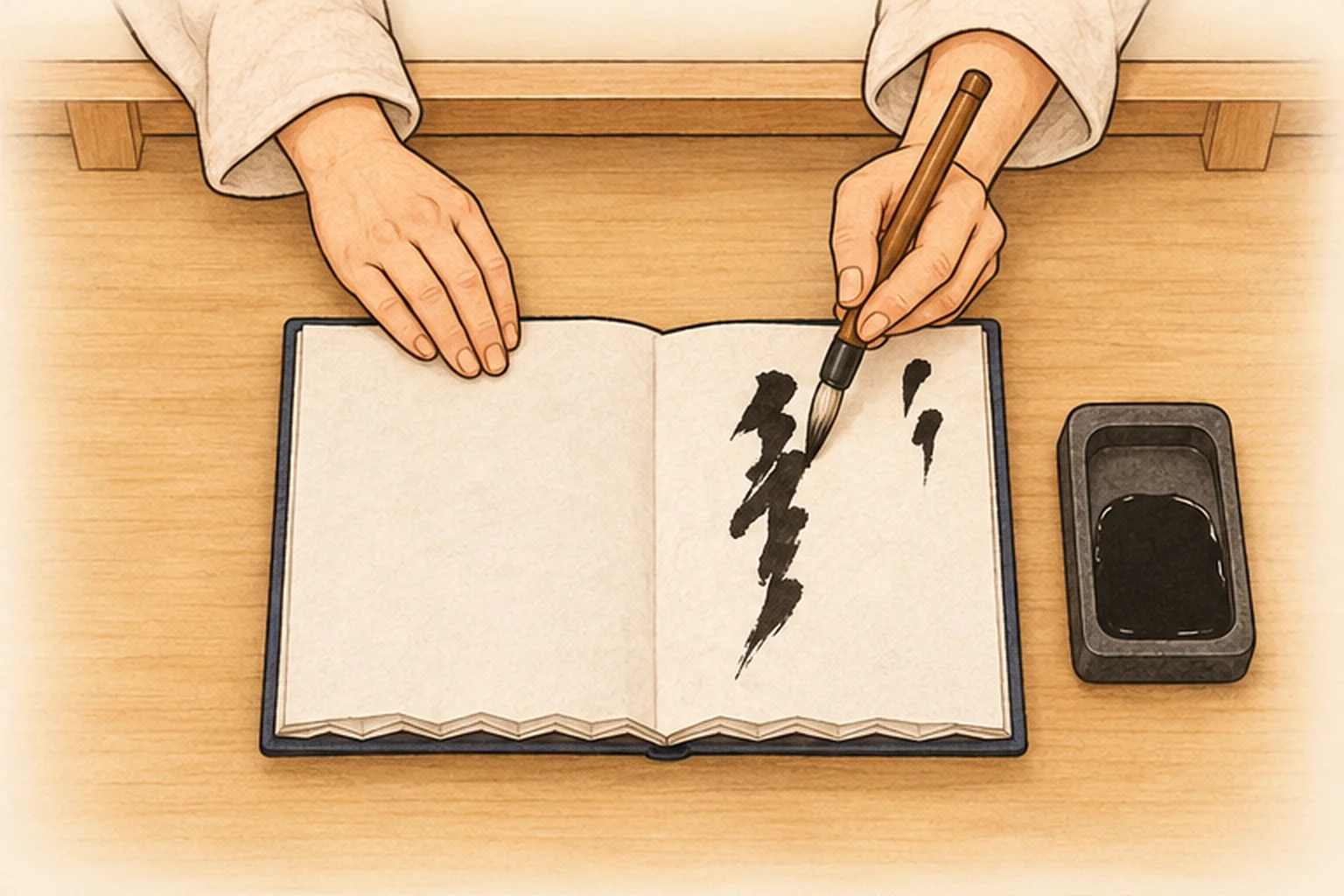 The person behind the window takes up a brush and writes a few lines of ink.
- 3
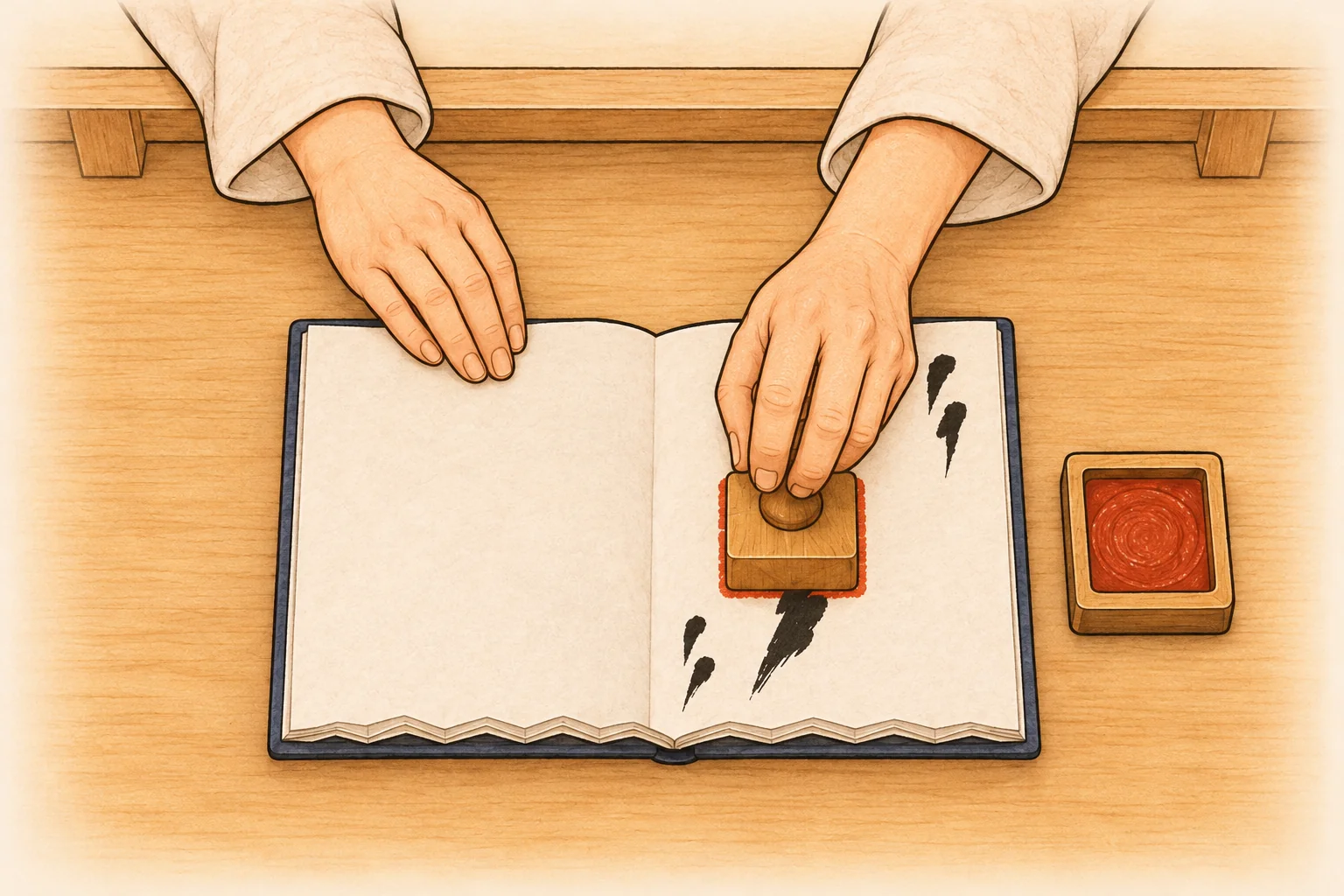 The red seal is then set squarely on the page, over the ink.
- 4
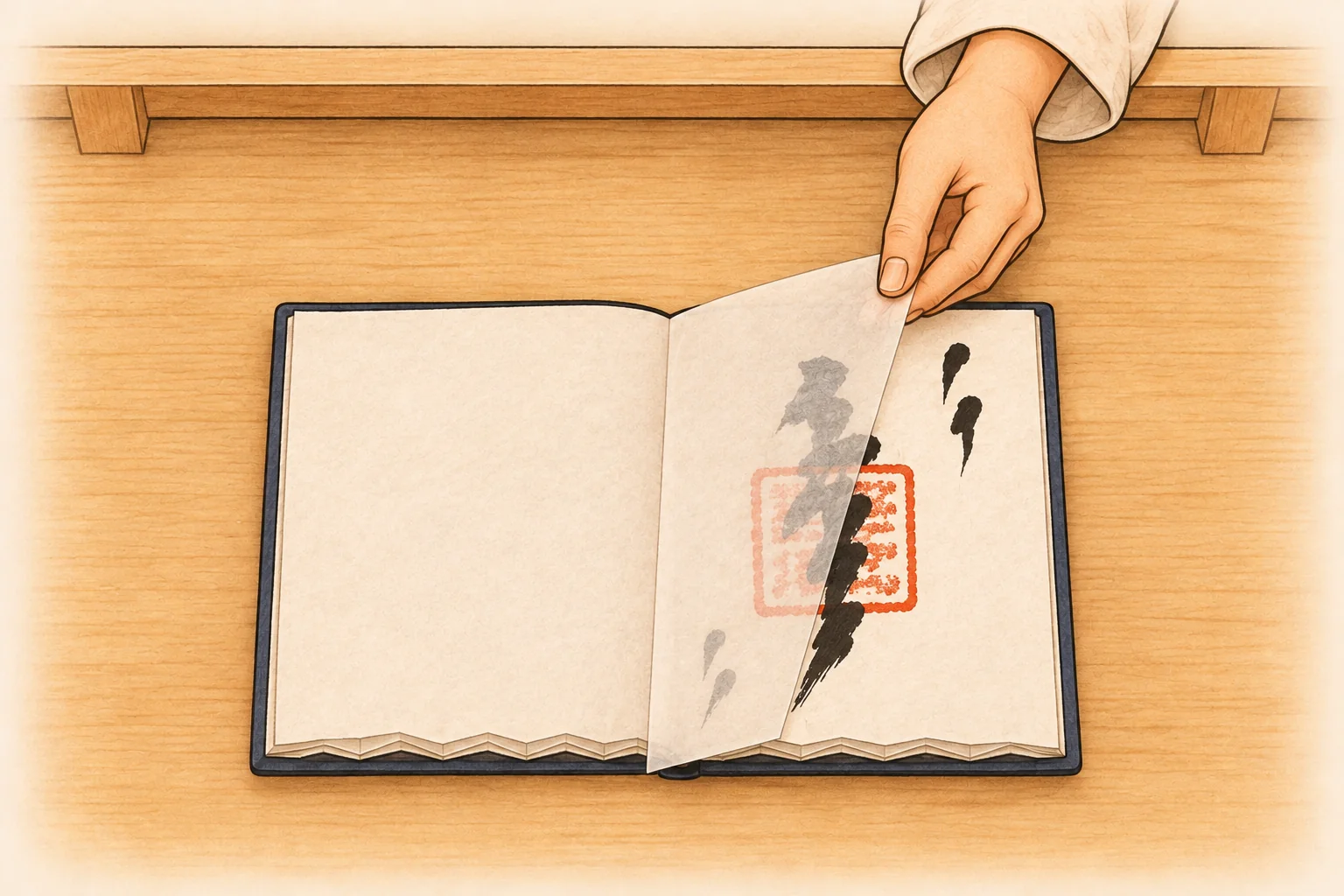 The ink is still wet, so many offices tuck in a sheet of thin paper to blot it.
The fee is called hatsuhoryō at shrines and nōkyōryō at temples. For years ¥300 was standard; as of 2026 ¥500 is common, and illustrated or limited pages can cost ¥1,000 or more. Bring coins, since small offices rarely have much change. Let the ink dry before closing the book; many offices tuck in a sheet of thin paper to blot it.
A few more practical points. Seals are given out during the day, so an evening visit often means no goshuin. Small rural shrines may have no resident priest and offer seals only on festival days or weekends, or leave pre-written sheets beside an honesty box. Do not photograph the person writing without asking, and keep your voice down. And do not resell what you receive. Many Japanese keep their goshuinchō on the household altar as a protective object, and some families are said to place a loved one’s book in the coffin at their funeral.
06Where to Begin
The easiest place to start is whichever shrine or temple you most want to see anyway. Fushimi Inari in Kyoto, Sensō-ji in Tokyo, and Tōdai-ji in Nara all have well-organized offices used to foreign visitors. In temple-dense towns like Kamakura or Nikkō you can collect several pages in a single day and watch the book fill up.
If you like the idea of a route, Japan has many ready-made ones. A Seven Lucky Gods circuit takes you to seven shrines and temples within a single neighborhood or town, each housing one of the gods of good fortune; these are especially lively in the first weeks of the New Year and can be walked in a day or two. The three grand shrines of Kumano on the Kumano Kodō trails each have their own seals, and the three-legged crow Yatagarasu, the emblem of Kumano, appears on charms and other items across the shrines, and is said to appear on the goshuin as well. The great long-distance challenge is Shikoku’s eighty-eight temples, a loop of roughly 1,200 kilometers that takes forty to fifty days on foot. A book with all eighty-eight seals is, to a believer, a treasured thing.
For a traveler, the best thing about a goshuin may be that it makes you stop. You stand at the window and watch someone grind ink, lift the brush, write out the name of the place in a few strokes, and set the seals squarely on the page. It takes a few minutes. Back home, each page carries a date and a name in someone else’s hand, and it brings back that particular day, the weather and the stone steps, better than most photographs.