
At a glance
Explains what makes washi strong and long-lived, how it is made by hand, how Edo life ran on it, and where to see and make it today.
- Washi is paper made by hand from the inner-bark fibers of shrubs such as kōzo, mitsumata and gampi.
- Kōzo fibers reach around a centimeter, against a few millimeters for wood pulp, so washi tears into a feathered edge.
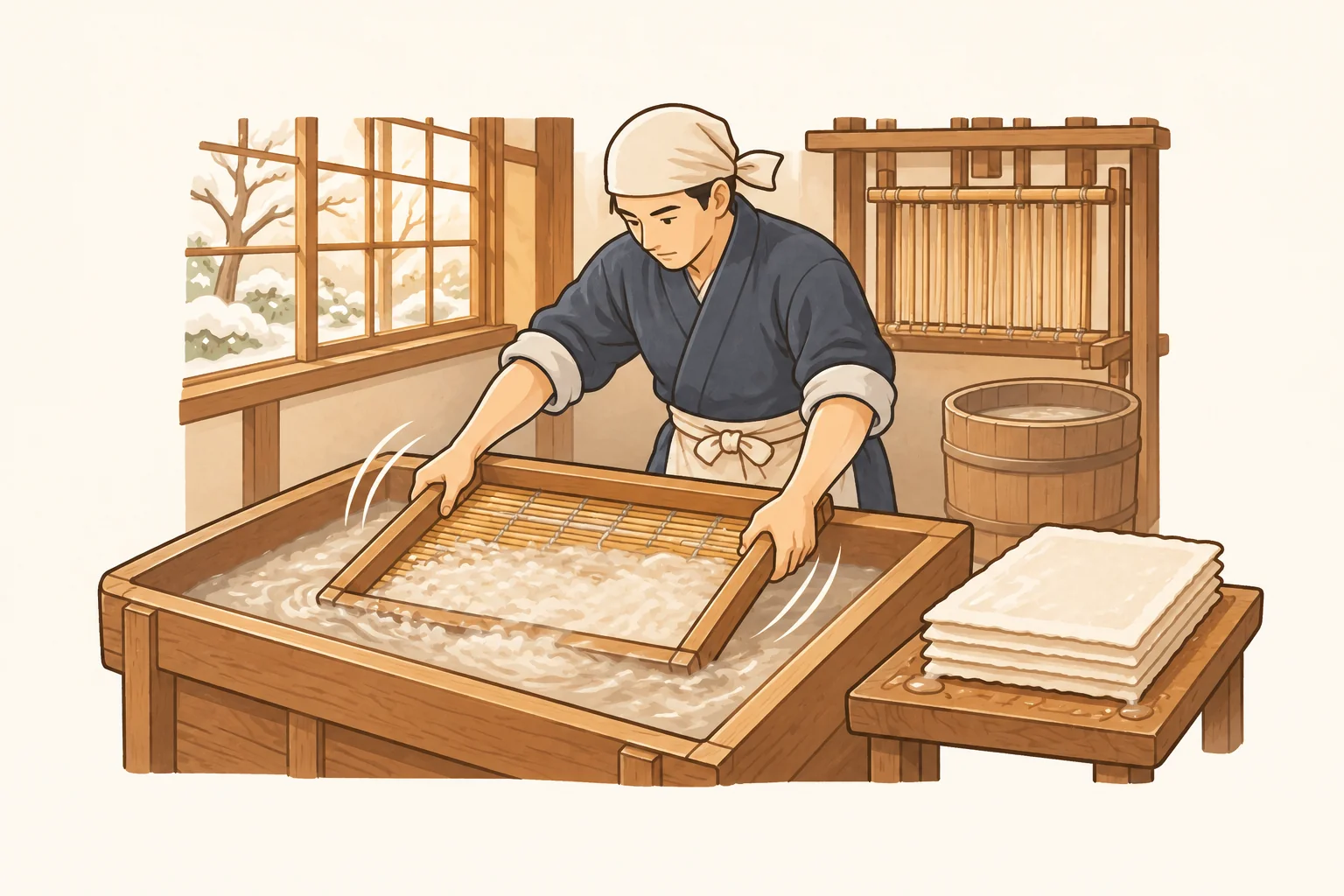
- Japan’s own nagashizuki method uses mucilage from the tororo-aoi root to slow drainage, so fibers build up in layers on a bamboo screen.
- Around 1901 some 70,000 households made paper by hand; by the early 1980s fewer than 600 remained.
- In 2014 UNESCO inscribed three papers, Sekishū-banshi, Hon-minoshi and Hosokawa-shi, as Intangible Cultural Heritage.
Hold a sheet of washi up to a window and you can see what it is made of: long, pale fibers drifting through the sheet like threads in a cloud. Washi is Japanese paper made by hand from the inner bark of a few shrubs, and it behaves unlike the paper most of us know. It can be crumpled and smoothed flat again, folded hundreds of times along the same crease, pasted over a lattice door to soften the daylight, and stored for well over a thousand years. Machine-made paper replaced it in everyday Japanese life more than a century ago, yet washi still turns up in sliding doors, temple stamp books, museum conservation studios and the banknotes in a Japanese wallet. This is an introduction to what washi is, why it lasts, how it shaped Japanese life, and where a visitor can see it made.
01A Paper Made of Long Fibers
Most modern paper is made from wood pulp, whose fibers are only a few millimeters long. Washi is made from bast, the fibrous inner bark of shrubs, and its fibers are many times longer. Those of kōzo, the paper mulberry, commonly reach around a centimeter. Long fibers tangle into a dense, flexible web. Tear a sheet of washi and it does not snap along a clean line; it pulls apart into a soft, feathered edge, with fibers still reaching across the gap.
Three plants supply almost all traditional washi. Kōzo, a relative of the mulberry, is the workhorse. Its coarse, strong fibers make tough, slightly textured sheets used for shoji screens, printmaking and conservation. Mitsumata takes its name from the way its branches fork into three (mitsu, "three"; mata, "fork"). Its fibers are finer and softer, giving a smooth sheet with a quiet sheen, and it is one of the materials used for Japanese banknotes. Gampi grows wild and resists cultivation, so its bark must be gathered from the hills. It yields the finest fibers of all and a thin, dense, almost glossy paper that was prized for sutra copying and fine correspondence. Papermakers often blend these, and the proportions change how a sheet feels, sounds and takes ink.
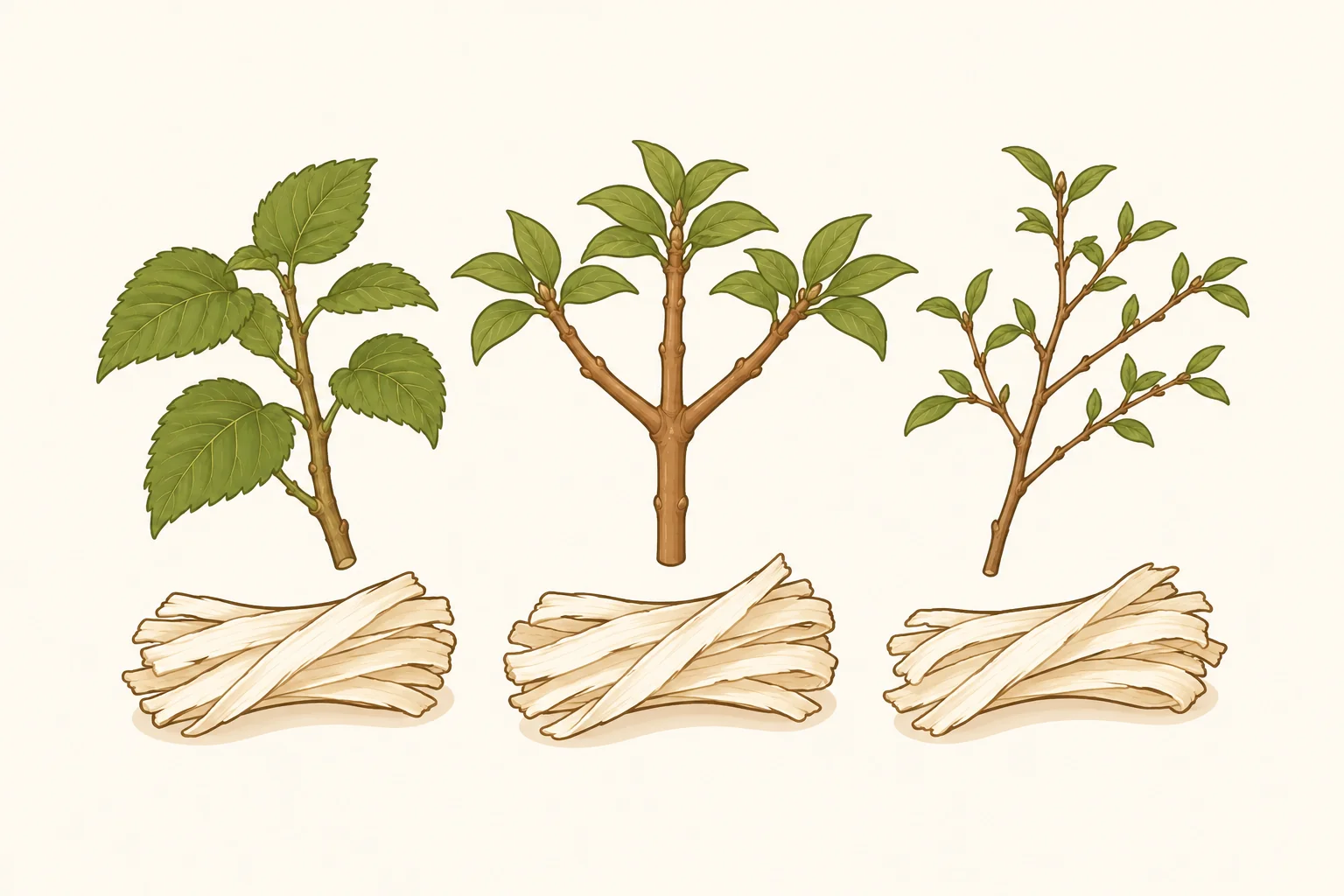
Washi's three plants, kōzo, mitsumata and gampi, each with a bundle of dried inner bark.
Washi also depends on water and cold. Papermaking villages sit beside clear streams, because every stage uses large amounts of clean water. Traditionally the work was done in winter, when farm work stopped, and papermakers still say that paper made in the cold, kanzuki, is the best. There is a practical reason: low temperatures keep bacteria down and keep the fibers and the plant mucilage used in the vat stable.
Washi’s longevity comes from what is left out. The bark is cooked in an alkaline solution, traditionally wood ash lye or soda ash, rinsed, and cleaned by hand, with little or no harsh bleach and no acidic sizing. The result is a paper close to neutral or slightly alkaline. Wood-pulp paper made in the nineteenth century often yellows and crumbles; sheets in the Shōsōin, the eighth-century imperial storehouse in Nara, can still be handled and read.
02From Branch to Sheet: How Washi Is Made
In winter the kōzo branches are cut, bundled and steamed in a large vat until the bark loosens. While still hot, the bark is stripped off in long ribbons. The dark outer layer is scraped away to leave the white inner bark, which is dried and stored. When it is time to make paper, the bark is soaked, then boiled in alkali for several hours to free the fibers from the rest of the plant material, and rinsed in running water.
Then comes the most patient step. Working in cold water, papermakers pick through the softened bark by hand, removing dark specks, knots and bits of outer bark one by one. A careless job shows immediately in the finished sheet. After cleaning, the fibers are beaten with wooden mallets on a stone or wooden block until they separate into a soft, cottony mass.
The fibers go into a vat of water along with neri, a clear, slippery mucilage traditionally made from the root of the tororo-aoi plant, a kind of hibiscus. Neri is not glue, and it leaves almost no trace in the dried sheet. What it does is thicken the water so the fibers stay evenly suspended and drain more slowly through the mold.
Nagashizuki (Japanese)
- Scoop slurry
- Rock back and forth, side to side
- Throw off the excess
- Repeat several times, a layer each pass
- Thin yet strong and even
Tamezuki (from China; also Europe)
- A single scoop
- Let it drain
- The fibers settle into a sheet
Nagashizuki lays down fibers layer by layer for a thin, strong, even sheet; it depends on the neri holding the water back.
That slow drainage makes possible the distinctively Japanese technique called nagashizuki, "flowing" sheet formation. The papermaker holds a wooden frame fitted with a flexible bamboo screen, scoops slurry from the vat, and rocks the frame back and forth and side to side so the liquid sloshes across the screen. Excess slurry is thrown off with a quick flick, and the motion is repeated several times. Each pass lays down another thin layer of fibers, and the movement aligns and interlaces them. The result is a sheet that can be very thin yet strong and even. The method had become common by the late eighth and early ninth centuries. The older method that first came from China, also used in Europe and called tamezuki in Japanese, lets a single scoop of pulp drain and settle; nagashizuki depends on the neri holding the water back.
- 1
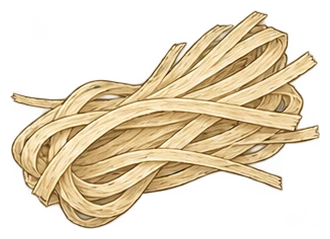 With the dark outer bark scraped off, the white inner bark is dried, then soaked and boiled when needed.
- 2
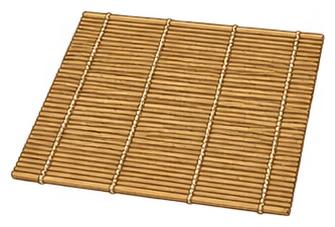 The bamboo screen: slurry flows across it and fibers settle in thin layers.
- 3
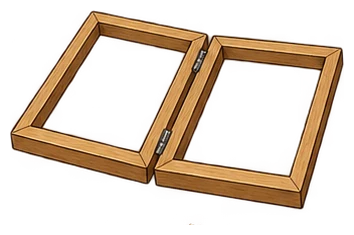 A wooden frame holds the screen; the papermaker rocks it back and forth and side to side, then throws off the excess.
- 4
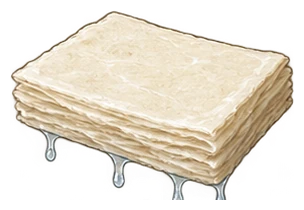 Wet sheets are stacked directly; once pressed, they still peel apart one by one and are brushed onto boards to dry.
Freshly formed sheets are laid directly on top of one another in a damp stack. Thanks to the neri, they do not fuse together, and after the stack is pressed they can be peeled apart one at a time. Each sheet is brushed onto a board to dry. Traditionally these were single planks of horse chestnut (some accounts say ginkgo was used in places) set out in the sun, which also bleached the paper slightly; today heated steel plates are common. The side that dried against the board is smoother, and papermakers treat it as the front of the sheet.
03From Census Registers to Court Poetry
Papermaking reached Japan from China by way of the Korean peninsula. The Nihon shoki, an official chronicle completed in 720, records that in 610 a monk from the Korean kingdom of Goguryeo named Damjing arrived knowing how to make paper and ink. That date is often treated as the starting point, though paper documents had almost certainly arrived earlier, and some papermaking may already have been under way.
The new centralized state of the seventh and eighth centuries ran on paper. It needed household registers for taxation and conscription, administrative records, and enormous quantities of paper for copying Buddhist sutras, which the court sponsored on a vast scale. Among the treasures of the Shōsōin are fragments of household registers dated 702 from the provinces of Mino, Chikuzen and Buzen, written on locally made paper; the Mino sheets are generally regarded as the finest. Once the registers were out of date, their blank backs were reused for other records, and that thrift is a large part of why they survived.
By the Heian period (794–1185), paper had become part of aristocratic taste. The court operated an official paper workshop in Kyoto, the Kamiya-in. Courtiers wrote poems and letters on dyed papers, sheets flecked with gold and silver leaf, and papers printed with mica patterns; choosing the right color and texture for a message was itself a statement. The Tale of Genji is full of letters whose paper, color and accompanying sprig of flowers are described as carefully as the words. The twelfth-century Nishi Honganji-bon Sanjūrokunin kashū, an anthology of thirty-six poets kept at Nishi Hongan-ji in Kyoto, was written on collaged sheets of colored paper decorated with gold and silver, so that the paper is half the artwork.
04Edo: A City Built on Paper
Over the medieval centuries regional papermaking centers grew up, and by the Edo period (1603–1868) paper was cheap enough to be used by everyone. Many domains promoted papermaking as an important industry, and some controlled its sale as a monopoly. Echizen, Mino, Tosa and Iwami each had well-known papers. Echizen’s hōsho, thick, white and soft, was ranked the best in Japan and served for the official documents of samurai government (by one account it was also an official paper of the shogunate), and it became the standard paper for color woodblock prints. A single print could pass through more than a dozen separate printings, each one rubbed hard with a baren pad, and only a sheet as strong as hōsho could take that without pilling or stretching out of register.
Ordinary homes were in large part built of paper. Shoji, lattice frames covered with thin washi, turned harsh daylight into an even glow and showed the shadows of lamplight at night. Fusuma, the opaque sliding panels between rooms, were built up from many layers of paper over a wooden frame and finished with printed karakami or painted surfaces. People lit their rooms with paper-shaded andon lamps, carried paper lanterns, sheltered under oiled paper umbrellas, fanned themselves with paper fans, and wrapped gifts in paper. There were even garments, kamiko, made of paper treated with persimmon tannin. Merchants kept their account books on tough washi; a story is often told that in a fire they would throw the books down a well and dry them out afterward.
Paper also served as money. Domains issued their own paper notes, hansatsu, printed on washi, some of them reportedly with watermarks against forgery; the first were silver notes issued by the Fukui domain in Echizen in 1661. Nothing went to waste: dealers collected used paper, which was repulped into a gray recycled paper known as Asakusa-gami, used for tissues and cheap wrapping. In Edo, paper was everywhere, and it was used until it fell apart.
05Decline and Survival
After the Meiji Restoration of 1868, Western papermaking machinery and wood pulp arrived. Machine-made yōshi, "Western paper," was cheaper, smoother and better suited to printing presses. Newspapers, schools and government offices switched to it, and glass windows and electric lights gradually replaced shoji and andon. At the peak, around 1901, some 70,000 households made paper by hand; by the early 1980s fewer than 600 remained, and the number has kept falling; many villages that once echoed with the sound of beating mallets have gone quiet.
The centers that survive each have their specialties. Mino, in Gifu Prefecture, is known for thin, even paper used for shoji and conservation; the town of Mino preserves a merchant quarter with udatsu firewalls and holds an annual autumn festival of washi lamps. Echizen, in today’s city of Echizen in Fukui Prefecture, claims some fifteen hundred years of papermaking. Its paired Okamoto and Ōtaki Shrines honor Kawakami Gozen, a goddess who, according to local legend, appeared by the river and taught the villagers to make paper. Shrines to a paper deity are rare, and locally Okamoto is often described as the only one in Japan dedicated to the ancestral goddess of paper; she is still celebrated by local papermakers. Tosa, in Kōchi Prefecture, is famous for tengujō, a kōzo tissue so thin it is likened to a mayfly’s wing and used by conservators around the world. Sekishū-banshi from Shimane and Hosokawa-shi from Ogawa and Higashichichibu in Saitama are known for their strength.
In 2014 UNESCO inscribed "Washi, craftsmanship of traditional Japanese hand-made paper" on its list of the Intangible Cultural Heritage of Humanity. The listing covers three papers: Sekishū-banshi, Hon-minoshi and Hosokawa-shi. All three are made from kōzo alone (some reports say it must be domestically grown) by the traditional nagashizuki method. Sekishū-banshi had been inscribed on its own in 2009 and was folded into the expanded listing.
Some of washi’s most important work today happens out of sight. Kōzo paper is strong, chemically stable and can be made extremely thin, so conservators use it to mend tears in prints, books and scrolls and to support fragile paintings, with almost no visible change to the object. "Japanese tissue" is a standard term in conservation studios at major museums in Europe and North America.
06Seeing, Touching and Making Washi in Japan
A visitor to Japan handles washi more often than they realize. Stay in a ryokan with a tatami room and the shoji you slide open are papered with it. Collect goshuin, the ink-and-stamp calligraphy given at temples and shrines, and the brushwork goes into an accordion-folded book, often of thick washi, said by some to be specially treated, so the ink does not bleed through. The envelopes used for New Year gifts and wedding money, and the wrapping paper of a good sweet shop, are often washi too. Japanese banknotes contain mitsumata fiber, which helps explain why they feel crisper and tougher than many other currencies.
For a closer look, Nihonbashi in Tokyo is an easy place to start. Ozu Washi, a paper merchant founded in the seventeenth century, sells papers from producing regions across the country, from inexpensive dyed sheets to conservation tissue, and has a gallery and workshop space. Nearby Haibara, another old Nihonbashi house, is known for patterned chiyogami and stationery. In shops like these, pick up a sheet and hold it to the light to see the fibers, and run your fingers over both sides: the smoother one is the face that dried against the board.
To make paper yourself, go to a producing region. Echizen has a papermaking village with a museum and a hands-on workshop where you can watch craftspeople form large sheets and try a postcard-sized sheet of your own, scattering pressed flowers into the pulp before it dries. Mino and Ogawa offer similar workshops. The first time you rock the frame, the slurry feels heavier than you expect, and a slight tilt leaves one side thick and the other thin. Only then do the craftsperson’s easy-looking movements begin to look like the skill they are.
Washi makes a light, practical souvenir: letter sets, envelopes, card cases, lamp shades, or a blank goshuin book to start your own temple pilgrimage. One thing worth knowing is that much of what is sold as "washi" today is machine-made, or mixes in wood pulp. It is inexpensive and often beautiful, and perfectly good for everyday use. If you want paper made by hand, look for the word tesuki (手漉き, "hand-made") on the label, or buy directly from the producing regions and the old paper houses. It costs more, and holding it to the window will show you why.