
At a glance
How Yamato Transport built next-day home delivery from eleven parcels a day, fought regulators, strained its drivers, and how travelers can use it.
- Takkyūbin is the door-to-door parcel service Yamato Transport launched in 1976; the name is its registered trademark.
- On its first day, January 20, 1976, it received eleven parcels; in fiscal 1983 it handled over 100 million.
- Next-day delivery is an overnight relay: parcels gather at sorting hubs in the evening, travel by truck overnight and go out in the morning.
- Cool Takkyūbin, launched in July 1988 with chilled and frozen tiers, lets fresh produce go straight from producer to home.
- Travelers can send luggage from an airport counter or hotel front desk to their next hotel and travel empty-handed.
Hand a suitcase to the front desk of a Tokyo hotel in the afternoon, and it will usually be waiting at your inn in Kyoto by the next morning. Ship a box of chilled crab from Hokkaidō, and a friend in Ōsaka will open it still cold. Miss the delivery, and the driver comes back in the time slot you choose on your phone. The Japanese often call this whole system takkyūbin, after a service that Yamato Transport launched in 1976 under a trademarked name that has since become close to generic. Its story involves a stubborn executive who bet his company on small parcels, a long public fight with government ministries, and a black cat carrying her kitten in her mouth.
01What Takkyūbin Is
Takkyūbin (宅急便, roughly "home express delivery") is Yamato Transport’s door-to-door parcel service for individuals. The idea is in the name: a driver collects a package from your home or a nearby shop and delivers it to someone else’s door, fast. Between most parts of Honshū, Japan’s main island, a parcel sent in the afternoon arrives the following day; within the same area, it is said, a parcel sometimes arrives the same evening.
Strictly speaking, the generic term is takuhaibin (宅配便), "home delivery parcel," which covers every company in the business. Takkyūbin is Yamato’s registered brand. Sagawa Express calls its service Hikyaku Takuhaibin, after the foot couriers of the Edo period, and Japan Post runs Yū-Pack. In everyday speech, though, many people say "send it by takkyūbin" without much thought for which truck will turn up, the way English speakers say "Xerox" or "FedEx it."
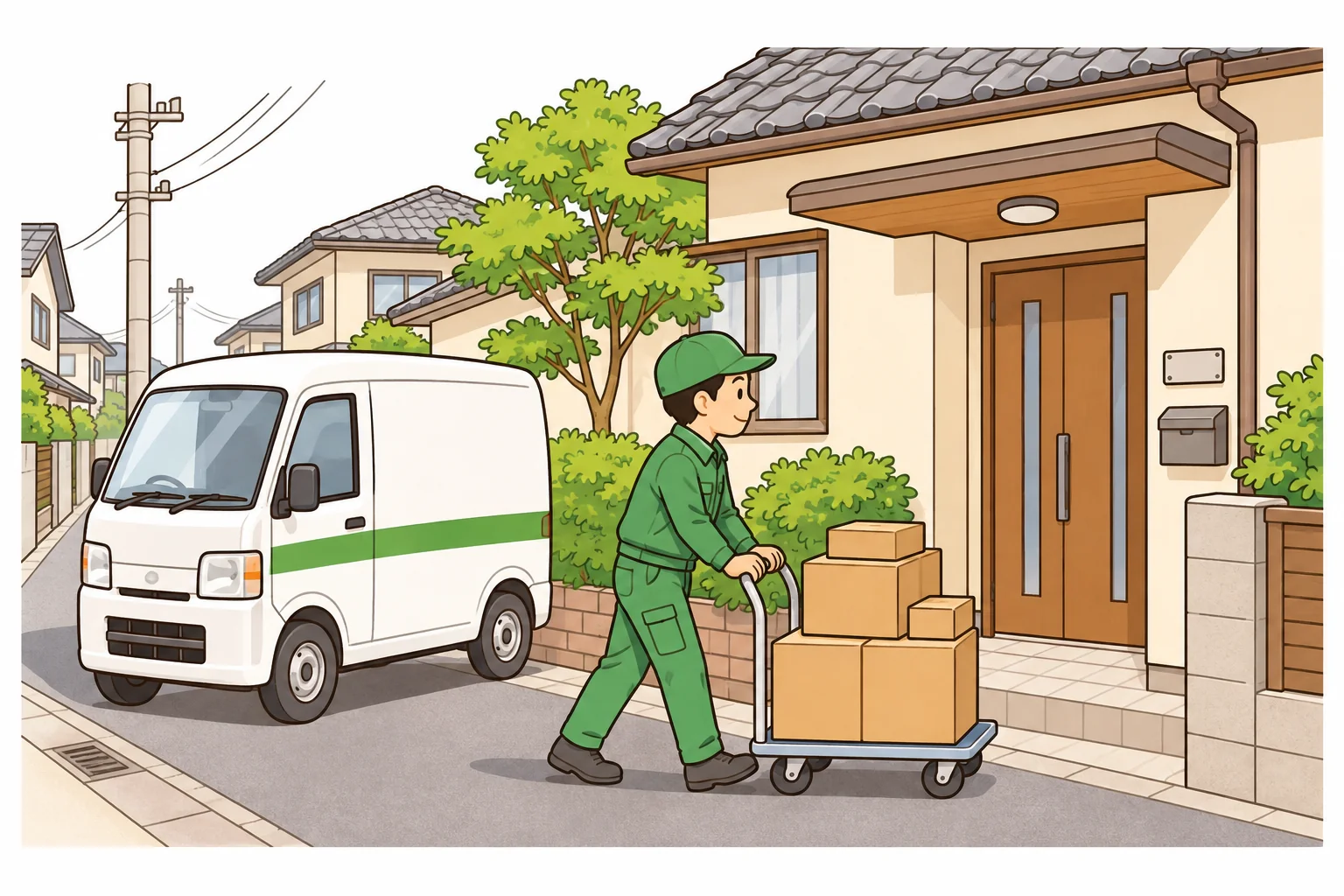
Yamato’s logo, a black mother cat carrying a kitten by the scruff, is so familiar that the company is simply called Kuroneko, "Black Cat," and the service Kuroneko Yamato no Takkyūbin. The logo predates takkyūbin by almost two decades; the company adopted it in 1957, with permission from the American moving company Allied Van Lines, whose own mark showed a mother cat and kitten. Yamato treats the careful grip as a symbol of reliability and care: customers’ goods will be handled the way a mother cat carries her young. White trucks with the cat on the side, and drivers jogging through residential streets behind hand carts stacked with boxes, are part of the ordinary scenery of any Japanese town.
02Before 1976: No Good Way to Send a Box
Until the mid-1970s, a private person in Japan who wanted to send a parcel had two options. One was the post office’s parcel service, which had strict limits on weight and size and was slow. The other was rail freight: you took your package to a train station, it traveled as luggage, and the recipient went to their own station to collect it, days later. Damage and loss were common complaints. The trucking companies dealt almost entirely with businesses. Consumer parcels were small, scattered across thousands of addresses, and unpredictable, and the industry consensus was that no one could make money on them.
Yamato itself was founded in Kyōbashi, Tokyo, in 1919 by Ogura Yasuomi, as one of Japan’s first trucking companies, starting with four trucks. In 1929 it opened a scheduled freight service between Tokyo and Yokohama, regarded as Japan’s first route trucking business, and before the war it built a successful network of such routes around the Kantō region. After the war it was slow to move into long-distance trucking, and competitors that did so early overtook it. By the early 1970s, burdened by low-margin contracts such as deliveries for the Mitsukoshi department store and then hit by the 1973 oil shock, the company was in serious trouble.
03Ogura Masao’s Bet
The founder’s son, Ogura Masao, who took over the company, reasoned against the conventional wisdom. Each consumer parcel was small, but Japan had tens of millions of households. If the collection and delivery network were dense enough and the volume high enough, the cost per parcel would fall, and individual customers would pay a higher price per kilogram than corporate shippers did. He drew ideas from abroad, notably the way United Parcel Service trucks worked city blocks in New York, which he observed on a 1973 visit. By his own later account, he also took a lesson from the restaurant chain Yoshinoya, which had narrowed its menu to beef bowls, and decided to concentrate the company on a single kind of business.
Almost all of the company’s directors were against him, and by one account the labor union, too, was at first worried about the risk. Ogura pushed ahead. Takkyūbin began service in the Kantō area on January 20, 1976. On the first day, the company received eleven parcels. In the first year it handled about 1.7 million, a trivial figure for a freight operator. But volume roughly doubled each year at first, passing 10 million in fiscal 1978 and 100 million in fiscal 1983. To concentrate on the new business, Yamato ended its relationship with Mitsukoshi in 1979 and withdrew from much of its commercial freight, effectively staking the entire company on small parcels. In 1982 it changed the way it wrote its name from the kanji 大和運輸 to katakana ヤマト運輸.
Ogura kept the product simple at the start: one size class, a flat regional price, pickup from home, and next-day delivery. Customers did not need to understand freight tariffs. They needed to know that the box would get there tomorrow.
04Fighting the Ministries
Takkyūbin’s biggest obstacle was regulation rather than competitors. Under the trucking laws of the time, a company needed a license from the Ministry of Transport for each scheduled route, and existing operators could object at hearings. To expand nationwide, Yamato had to apply route by route, and many applications sat unprocessed for years.
Ogura chose confrontation, unusual for a Japanese company dealing with its own regulator. In 1986 Yamato sued the Minister of Transport for unlawfully failing to act on its applications; the license was granted about four months later. The company also ran opinion advertisements in newspapers telling the public that new services were being held up by the ministry; one advertisement, it is said, stated outright that a new service could not be launched because the permit had not been granted. Other licenses followed: by 1991 Yamato’s own network reached every prefecture, and in 1997 an extension to the Ogasawara Islands completed the nationwide network.
The other long-running dispute was with the postal authorities, which held a legal monopoly on letters. When Yamato began delivering catalogs and other printed matter with Kuroneko Mail-bin in 1997, it was challenged over whether these counted as "correspondence" reserved for the post. Arguments over that boundary continued until Yamato withdrew the service in 2015. Ogura became a leading voice in Japan’s debates over deregulation, and his book Ogura Masao Keieigaku (Ogura Masao on Management), published in 1999, became a standard read for Japanese business leaders. In 1993 he put a large part of his personal fortune into the Yamato Welfare Foundation, which supports employment for people with disabilities, and in 1998 he opened the first Swan Bakery in Ginza, now a chain.
05Why It Works: Density and People
The system works because it is dense. Yamato runs thousands of local branches, each covering a small area, and drivers know their streets and apartment blocks closely. Parcels collected during the day flow in the evening to large sorting hubs, travel overnight on long-haul trucks along the expressways, are sorted again at a hub near the destination before dawn, and go out from the local branch in the morning. "Next-day delivery" is that overnight relay.
- 1
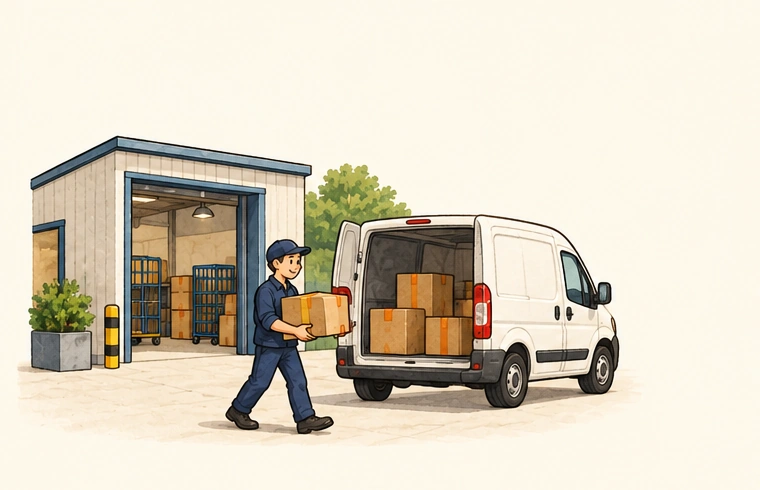 During the day, local branches collect parcels from their area.
- 2
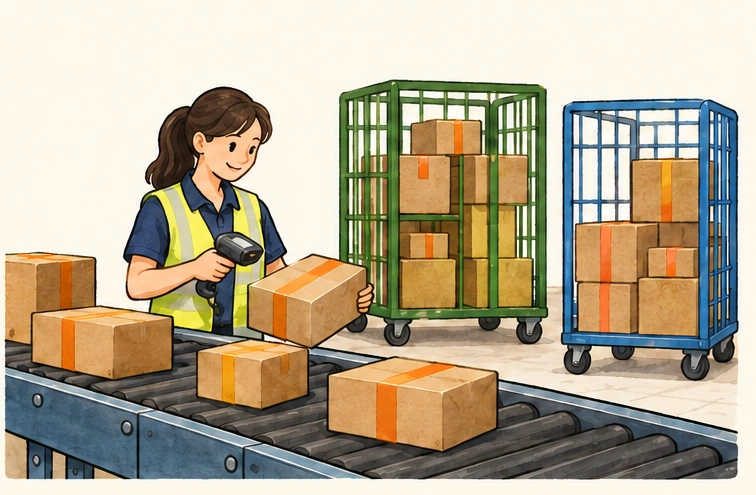 In the evening, parcels gather at a large hub and are sorted by destination.
- 3
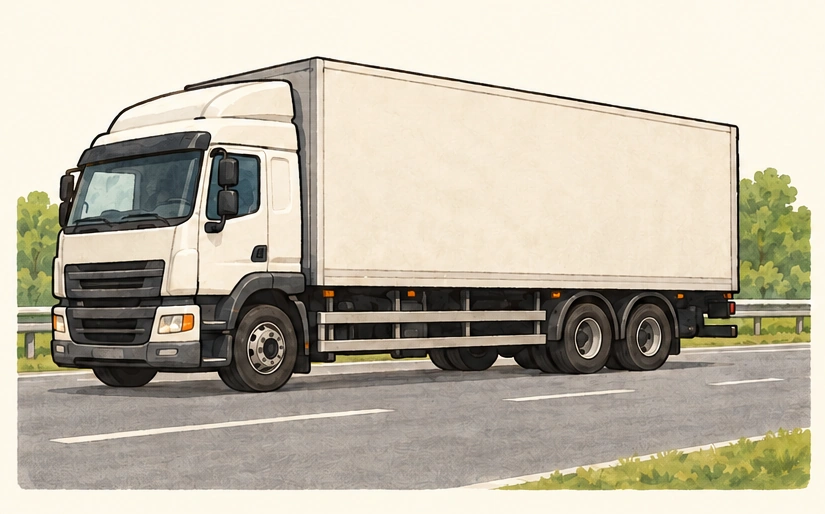 Overnight, long-haul trucks carry them by expressway to a hub near the destination.
- 4
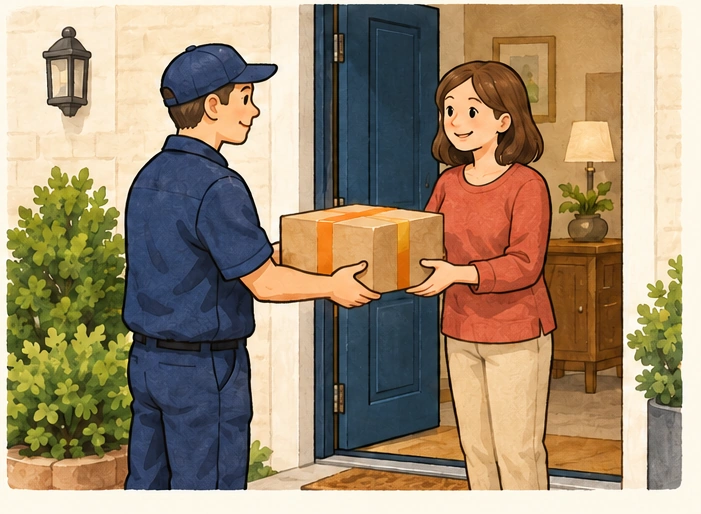 At dawn they go out to local branches, and delivery begins in the morning.
The points where you can hand over a parcel multiplied in the same way. In the early years Yamato signed up neighborhood rice shops and liquor stores as agents, hanging a black-cat sign at the door. When convenience stores spread across Japan, they became the main drop-off points, and today you can send takkyūbin from the counter of chains such as 7-Eleven and FamilyMart, though a few others, Lawson among them, handle Japan Post’s Yū-Pack instead. You fill in a waybill with the recipient’s address, name and phone number, choose a delivery date and time slot, and pay according to the box’s size, measured as the sum of length, width and height, in bands from 60 to 200 centimeters, and the distance. Increasingly the waybill is replaced by a QR code generated on a phone and scanned at the store.
Yamato calls its drivers "sales drivers." They deliver, but they also collect parcels, take payments and answer customers’ questions. Ogura wanted frontline staff to run their patch like small shopkeepers, making decisions on the spot rather than waiting for instructions. The image of the driver running, not walking, from the truck to the door became part of how the Japanese think of the service.
06Skis, Golf Bags and Cold Crab
Many of takkyūbin’s services were added one at a time as Yamato noticed how people actually lived. In December 1983 came Ski Takkyūbin, letting skiers send skis ahead to their lodge and ride the train empty-handed. Golf Takkyūbin followed in 1984, delivering clubs straight to the course.
The most consequential addition was Cool Takkyūbin in July 1988, with separate chilled and frozen services kept cold from pickup to doorstep. It made it practical to ship Hokkaidō seafood, Kyūshū fruit or a regional confectioner’s fresh sweets directly to consumers. Direct-from-the-producer food sales, much later online grocery shopping, and the seasonal custom of sending food gifts in midsummer and at year’s end all came to depend on it.
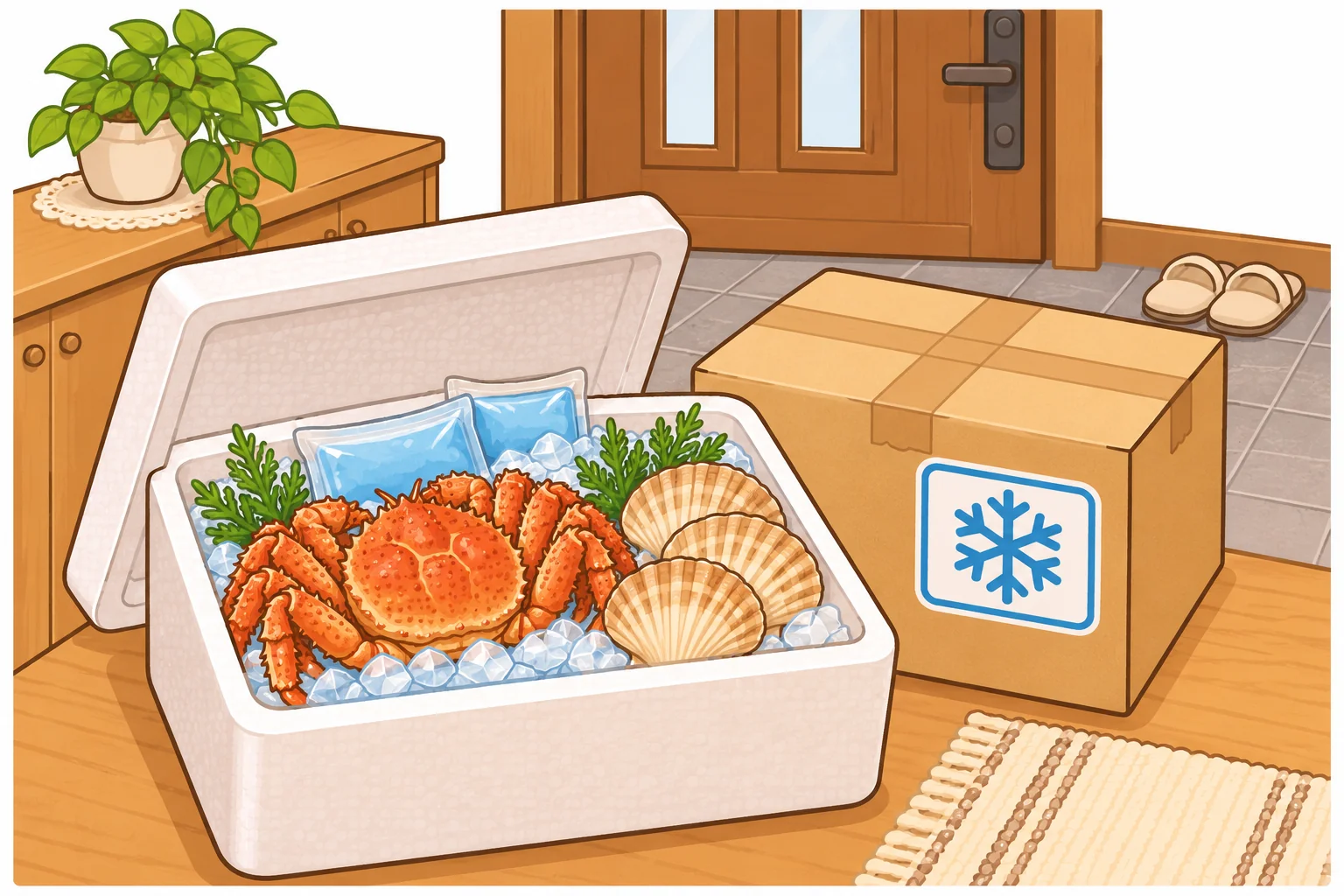
An open foam cooler of iced seafood beside a cardboard parcel with a refrigerated-delivery label (illustration).
Other features followed: cash on delivery (1986), nationwide delivery time slots (1998), round-trip shipping, and redelivery. If no one is home, the driver leaves a missed-delivery slip, and the recipient calls, or now uses an app, to pick a new time or redirect the parcel to a convenience store or a parcel locker.
The name also entered popular culture. In 1985 the children’s author Kadono Eiko published Majo no Takkyūbin, about a thirteen-year-old witch who starts a delivery business on her broomstick. In 1989 Miyazaki Hayao adapted it as the animated film known in English as Kiki’s Delivery Service. The title used Yamato’s registered trademark, and Yamato joined the production as a partner alongside Tokuma Shoten and Nippon Television (one account holds that the trademark was the very reason Yamato became a sponsor); Kiki’s black cat, Jiji, made the match with the company’s logo hard to miss.
07When the Boxes Became Too Many
In the 2010s, the boom in online shopping sent parcel volumes soaring. The industry as a whole was handling more than four billion parcels a year (about 4.25 billion in fiscal 2017), over 40 percent of them Yamato’s, with Amazon among its largest customers. Drivers had to reach more doors each day, and a large share of parcels needed a second or third attempt before anyone was home to receive them.
In 2017 it emerged that Yamato owed its workers large amounts of unpaid overtime, and the strain on drivers became national news. The company dropped its noon-to-2 p.m. delivery window, raised its rates for individual customers by about 15 percent on average from October, and pressed Amazon and other large shippers for higher rates and lower volumes. The episode prompted a public conversation in Japan about what free redelivery and next-day service actually cost in human effort. Government and industry have since pushed parcel lockers, convenience-store pickup and "leave at the door" delivery to cut redelivery rates. New legal caps on truck drivers’ overtime from April 2024, the so-called "2024 problem," led Yamato to switch some long-distance routes, such as Kantō to Shikoku, from next-day to two-day delivery from June 2023.
08Using Takkyūbin as a Traveler
For visitors, the great use of takkyūbin is traveling empty-handed, or tebura. Japan’s intercity travel runs on trains, and hauling a large suitcase through crowded carriages and up station stairs is many travelers’ least favorite part of the trip. Some shinkansen services also require advance reservations for oversized luggage. The easy solution is to send the big case ahead and carry only a day bag.
There are three common patterns. First, from the airport: on arrival at Narita, Haneda or Kansai, look for the delivery counters in the arrivals hall and send your luggage to your first hotel, then take the train into the city unencumbered. On the way home, you can send it from your hotel to the departure airport a day or two ahead and pick it up at the counter before check-in. Second, between hotels: from Tokyo you might send your suitcase straight to the hotel you will reach in Kyoto two days later, spending the night in between at a hot-spring inn in Hakone with just an overnight bag. Third, for shopping: ceramics, kitchen knives or a mountain of souvenirs can be sent to your hotel or the airport instead of carried around.
| Pattern | From | To |
|---|---|---|
| From the airport | Counter at Narita, Haneda or Kansai | Your first hotel |
| On the way home | Hotel, a day or two ahead | Departure airport |
| Between hotels | Hotel in Tokyo | Hotel in Kyoto two days later |
| Shopping | Ceramics, knives, souvenirs | Hotel or airport |
Send the big suitcase and carry a small bag: from Tokyo to Kyoto, say, with just an overnight bag for the night at a Hakone inn.
Sending from a hotel is simple. Take the bag to the front desk and say you want to send it by takkyūbin; staff will produce a waybill and usually help fill it in. When sending to a hotel, write the hotel’s name and address as the destination, and add your full name as it appears on the booking and your check-in date so the staff can match it to you. Japanese hotels and ryokan are used to receiving guests’ luggage this way, and your case will often be waiting in your room or behind the desk when you arrive.
A few practical points. Tokyo to Kyoto or Ōsaka normally takes one day, but Hokkaidō, Kyūshū or Okinawa can take an extra day, so leave some margin. As of 2026, a standard suitcase typically costs around three thousand yen, more for larger bags or longer distances. Flammables and other dangerous goods cannot be sent, items with lithium batteries such as power banks need checking first, and passports and valuables should stay with you. At major airports and some large stations there are counters aimed at foreign visitors where you can arrange same-day delivery in English, dropping a bag in the morning and finding it at your hotel that evening.
Japanese people use the service the same way. They send bags ahead to a ski lodge or an onsen inn, ship boxes of odds and ends when moving house, and send home the food they cannot carry after a New Year visit to their parents. The first time a visitor walks into a Kyoto inn and finds their suitcase has arrived before them, it can feel remarkable. For the person behind the desk, it is a waybill, a few thousand yen and the next morning’s round.