
At a glance
Nearly three in ten Japanese are 65 or older; how the country aged so fast, how it cares for its elderly, and what visitors notice on the street.
- As of September 2026, Japan had 36.24 million people aged 65 or over, 29.6 percent of the population.
- Japan took just 24 years for the share of people 65 and over to climb from 7 to 14 percent.
- In September 2026 Japan counted 107,677 centenarians, passing 100,000 for the first time.
- Long-term care insurance began in 2000; everyone over 40 pays premiums, and users pay 10 to 30 percent of service costs.
- In 2025, 54.5 percent of Japanese aged 65 to 69 were working.
Nearly three in ten people in Japan are 65 or older, a higher share than in any other major country. Visitors notice it without being told: the white-haired taxi driver, the elderly couple running a countryside inn, the security guard in his seventies waving cars into a parking lot, the rural train full of pensioners on their way to the clinic. This piece explains how Japan got so old so quickly, how the country cares for its elderly and how older Japanese people actually live, and what a traveler can see of all this on the street, on the train, and in the villages.
01How Old Is Japan?
Japan commonly uses a simple yardstick. A society where people aged 65 and over make up 7 percent of the population is called "aging"; at 14 percent it is "aged"; past 21 percent it is "super-aged." Japan crossed the first line in 1970, the second in 1994, and the third in 2007. The speed is the striking part. France took more than a century to go from 7 to 14 percent, and Sweden about 85 years. Japan did it in 24. Changes that other countries absorbed over several generations, Japan went through within the working life of a single cohort.
- 19707%“aging”
- 199414%“aged”
- 200721%“super-aged”
- 202629.6%September 2026
Share of the population aged 65 and over. Japan went from 7 to 14 percent in under a third of Sweden’s time.
Every September, around Respect for the Aged Day, the government publishes fresh figures, and they make the front pages. According to the Statistics Bureau’s estimate for September 15, 2026, 36.24 million Japanese are 65 or older, 29.6 percent of the population, and 21.68 million, or 17.7 percent, are 75 or older. The National Institute of Population and Social Security Research projected in 2023 that the over-65 share will reach 34.8 percent by 2040 and 37.1 percent by 2050. One of the most watched figures is the count of centenarians. When the health ministry began keeping track in 1963, Japan had 153 people aged 100 or more. In September 2026 the count passed 100,000 for the first time, reaching 107,677, 87.6 percent of them women.
Two forces produced this. The first is longevity. According to the health ministry’s 2025 abridged life table, life expectancy at birth is 87.33 years for Japanese women and 81.35 for men, among the highest figures in the world. The usual explanations are a diet low in fat and heavy on fish, vegetables and rice; universal health insurance; low obesity; and high standards of public hygiene. Okinawa was long famous as the island of centenarians, and the village of Ōgimi in the north still advertises itself as a village of long life. Since the American occupation and the arrival of fast food, though, Okinawan men have slid down the national life-expectancy rankings, falling from 4th to 26th among the prefectures in 2000, a drop known locally as the "26 shock" and a decline that is often cited as evidence of how much diet matters.
The second force is the shortage of children. Japan had a large baby boom right after the war: in each year from 1947 to 1949 more than 2.6 million babies were born. This generation is known as the dankai sedai, the "lump generation," because it bulges out of the population chart. Their own children produced a smaller second boom in the early 1970s. After that, births fell almost every year. According to the health ministry’s vital statistics, about 671,000 babies were born in 2025 and the total fertility rate was 1.14, both record lows and far below the 2.1 needed to keep a population stable. Japan’s population peaked at around 128 million in 2008 and has been shrinking since. The pyramid of the 1950s has turned into something closer to an urn, narrow at the base and wide near the top.
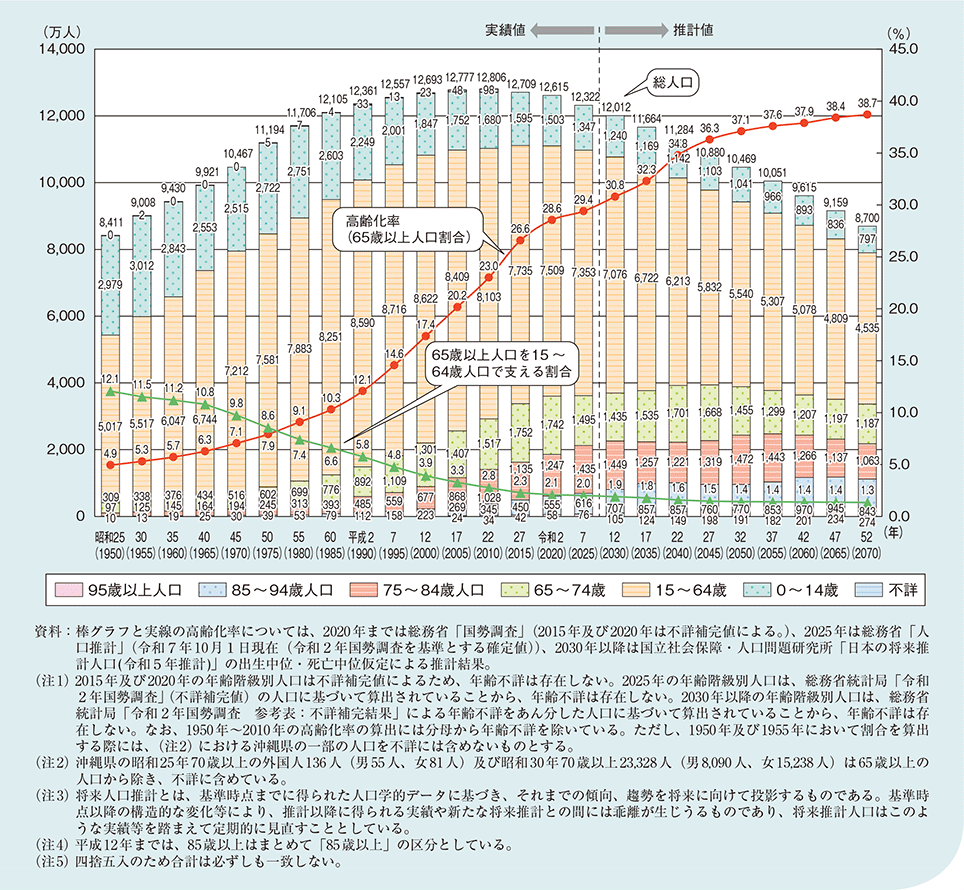
Population by age group and the share aged 65 and over, 1950–2070 (projections after 2025)Cabinet Office, Annual Report on the Ageing Society 2026, Fig. 1-1-2 · Terms of use
02The System That Holds It Up
Japan can support so many older people largely because of a welfare framework laid down during the high-growth decades. In 1961 the country achieved universal health insurance and universal public pensions: every resident was enrolled in some form of each. The Welfare Act for the Elderly of 1963 committed the state to letting older people live in security and with respect, and from that year every citizen who turned 100 received a letter of congratulations from the prime minister and a commemorative silver cup.
In 1973, dubbed "year one of welfare," medical care became free for everyone over 70. Waiting rooms filled with elderly regulars who came as much for company as for treatment, and hospitals began housing old people who had nowhere else to go, a practice that became known as "social hospitalization." The cost proved unsustainable, and from 1983 the elderly again paid part of their medical bills.
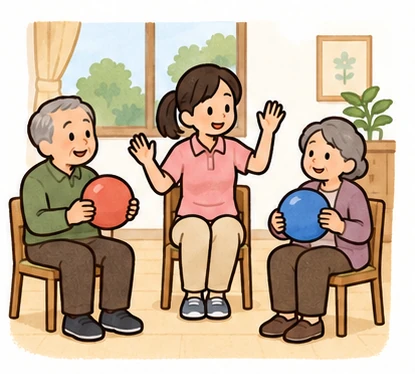
The reform that most changed old age in Japan came in 2000 with long-term care insurance, or kaigo hoken. Kaigo means hands-on care with daily life: eating, bathing, using the toilet, getting around. Before 2000 this work fell mostly on families, and in practice on women, very often the wife of the eldest son caring for her in-laws. Under the new system everyone over 40 pays premiums. When an older person needs help, the local municipality certifies their needs and assigns a care level, which entitles them to home helpers, day-service centers, short stays or a place in a nursing home, with the user paying 10 to 30 percent of the cost. Care moved, at least partly, from the household to society, and care manager and certified care worker became common jobs.
- 1
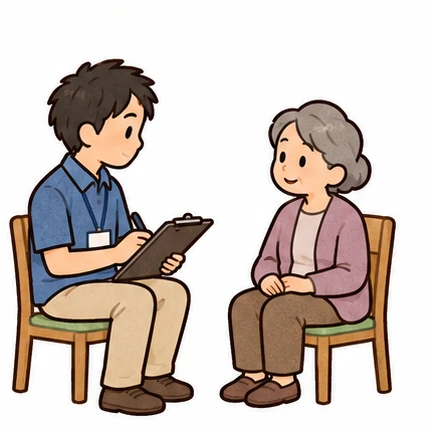 When an older person needs care, the municipality assesses them and assigns a care level
- 2
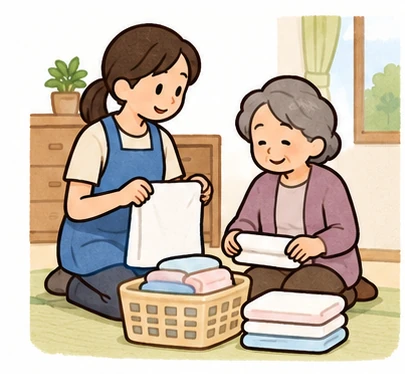 Services by level: care workers visit the home
- 3
 Or a day at a day-care center, returning home the same day
- 4
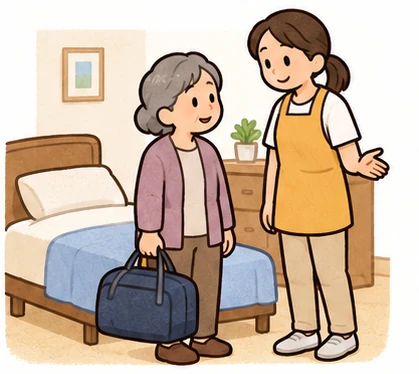 Or a stay in a care facility; users pay 10 to 30 percent
The strain has never gone away. In 2025 the entire baby-boom generation passed 75, a milestone the Japanese press had been calling "the 2025 problem" for years. Medical and care spending climbs every year, and care homes struggle to hire staff. Under economic partnership agreements Japan has admitted nurse and care-worker candidates from Indonesia since 2008, the Philippines since 2009 and Vietnam since 2014, and it has since opened further visa routes for foreign caregivers. Pensions are a constant source of anxiety. In 2019 a working group of the Financial System Council, an advisory body of the Financial Services Agency, issued a report estimating that a retired couple living on the public pension might fall about 20 million yen short over thirty years. The "20-million-yen problem" became a national argument almost overnight.
03Growing Old, Japanese Style
Many older Japanese simply keep working. The law requires employers to offer work until 65, and since 2021 they have been asked to make efforts to keep people on until 70. A common pattern is mandatory retirement at 60 followed by rehiring on a fixed-term contract, often at noticeably lower pay for much the same job. In 2025, 54.5 percent of Japanese people aged 65 to 69 were in work. Local Silver Human Resource Centers match retirees with odd jobs such as pruning gardens, minding bicycle parks, sorting recycling or helping with housework. The older men directing traffic outside construction sites, collecting fees at parking lots and driving taxis are often part of this workforce.
Those who have stopped working have their own rhythms. In parks early in the morning, groups gather for rajio taisō, radio calisthenics, a set of exercises first broadcast in 1928 and still aired every morning at 6:30. Gateball, a croquet-like game invented in Hokkaidō after the war, was once the signature pastime of Japanese retirees; many players have since moved to ground golf, a simplified form of golf played on open fields. Community halls run classes in calligraphy, folk song and crafts, and much of the work of keeping local shrines and temples clean and organizing festivals is done by people in their seventies.
In Tokyo’s Toshima ward, the Sugamo Jizō-dōri shopping street is known as "grannies’ Harajuku," a joke on the youth fashion district a few stations away. The shops sell roomy trousers, comfortable shoes, sweet rice cakes, rice crackers and red underwear, said to bring good health. Halfway down the street stands Kōgan-ji temple, home of the "thorn-pulling" Jizō, where visitors queue to pour water over the Arai Kannon statue and rub the part of it that matches where their own body aches. On fair days, held on the 4th, 14th and 24th of each month, the street is packed with silver hair.
Respect for the Aged Day, Keirō no Hi, falls on the third Monday of September (until 2003 it was fixed on September 15). It grew out of an "elders’ day" begun in a village in Hyōgo prefecture in 1947 and became a national holiday in 1966. Local governments send gifts or small cash payments to their oldest residents, television crews visit the oldest people in the country, and grandchildren phone their grandparents. Traditional birthday milestones are still celebrated: kanreki at 60, when the zodiac cycle comes full circle and the honoree is given a red vest and cap to mark a symbolic return to infancy; koki at 70; kiju at 77; beiju at 88; and hakuju at 99. Kanreki falls at 60 full years (61 by traditional count); the later milestones were traditionally reckoned the same way and are now often celebrated by full years.
04Aging Places: Villages, Housing Estates, Empty Homes
Aging looks very different depending on where you are. Tokyo still draws young people from across the country, while many provincial towns empty out year by year. The young leave for university and jobs in the big cities, and their parents grow old in the family house. Around 1990 the sociologist Ōno Akira coined the term genkai shūraku, "marginal villages," for communities where more than half the residents are 65 or over and the shared work of rural life, from funerals to maintaining irrigation channels, can no longer be sustained. Visit one and you see a shuttered primary school, terraced rice fields gone to weeds, and a bus timetable with a handful of departures a week.
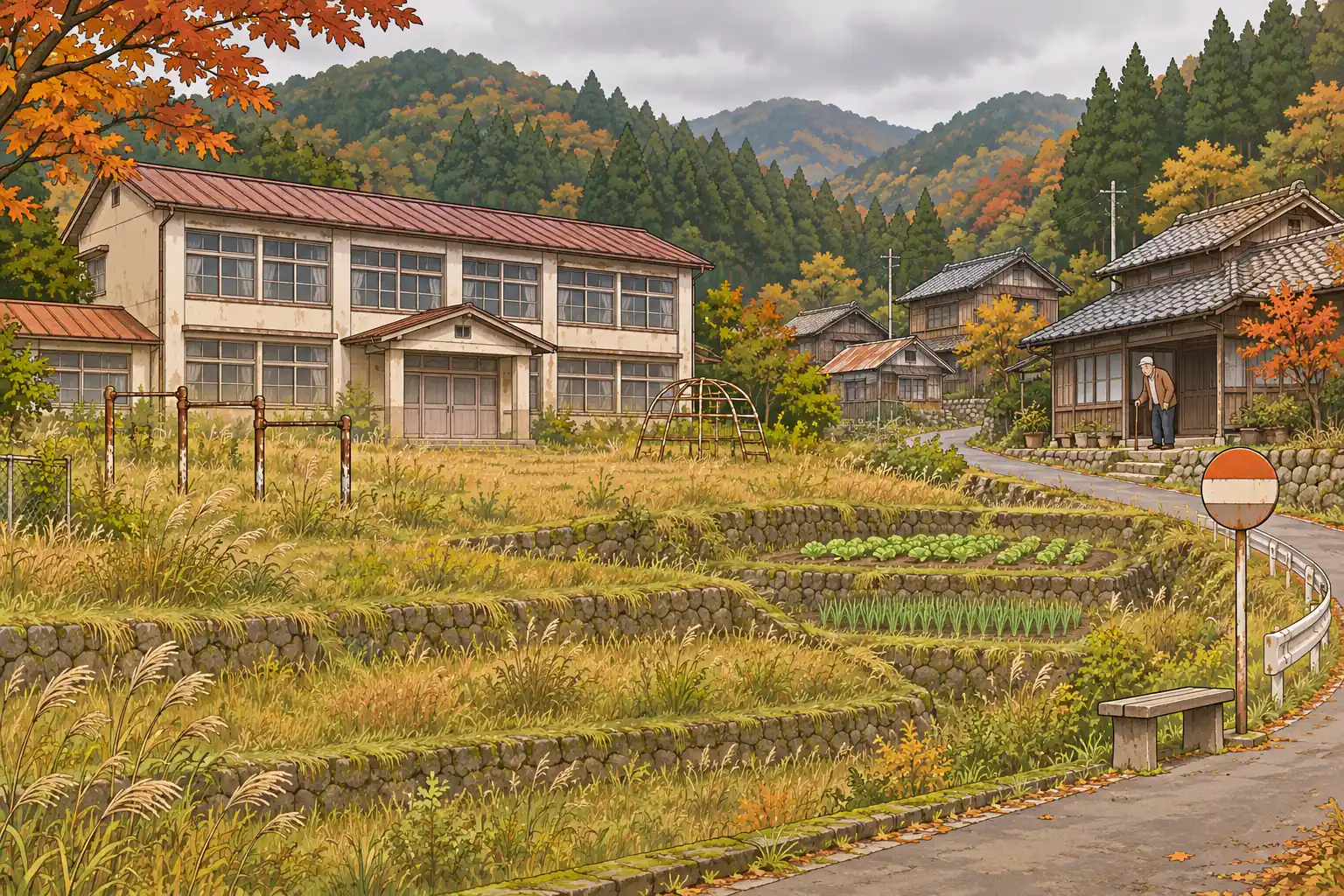
A mountain hamlet: a closed school, overgrown terraced fields and a lone bus-stop sign (illustration).
Empty houses, akiya, are the most visible sign. The government’s 2023 Housing and Land Survey counted about 9 million vacant homes, 13.8 percent of the total. When an elderly owner dies or moves into care, the house often has no heir who wants it. Many municipalities run "akiya banks" that list such properties for sale or rent at low prices to anyone willing to move in, which is where the stories of country houses selling for a few thousand dollars usually come from.
In the cities, aging takes the form of isolation. The large public housing estates called danchi, built from the 1950s to the 1970s for young salaried families, have aged along with their original tenants, and five-story blocks without elevators have become daily obstacles. Elderly people dying alone at home and lying undiscovered for days, kodokushi or "lonely death," became a recognized social problem in the 2000s. Some estates now organize neighbors to keep an eye on one another, and postal workers, newspaper carriers and milk delivery drivers are enlisted to notice when a mailbox goes unemptied.
Families are changing too. The "8050 problem" refers to parents in their eighties supporting reclusive children in their fifties. According to the 2022 Employment Status Survey, about 106,000 people had quit their jobs in the previous year to care for a family member. And "elderly caring for the elderly," a wife in her seventies looking after a husband in his eighties, has become routine.
05What a Visitor Will Notice
Much of Japan’s adaptation to age is built into the infrastructure. The elevators, ramps and yellow tactile paving at stations were mostly installed in a concentrated push in the 2000s under barrier-free legislation. Trains have priority seats, first introduced on Respect for the Aged Day in 1973 on the Chūō Line of the national railways and a few other lines, where they were called "silver seats." Etiquette asks that phones be set to silent and calls avoided throughout the car, and that phones be switched off near priority seats when the train is crowded. Offering your seat to an older passenger is normal; a simple gesture and a nod is enough, without fuss.
On the road you may see a four-colored leaf-shaped sticker on the back of some cars. This is the senior driver mark, which drivers aged 70 and over may display to ask others for patience. Accidents involving elderly drivers are regular news, and older people are encouraged to surrender their licenses voluntarily; in return they receive an ID card that in some areas brings discounts on buses and taxis.
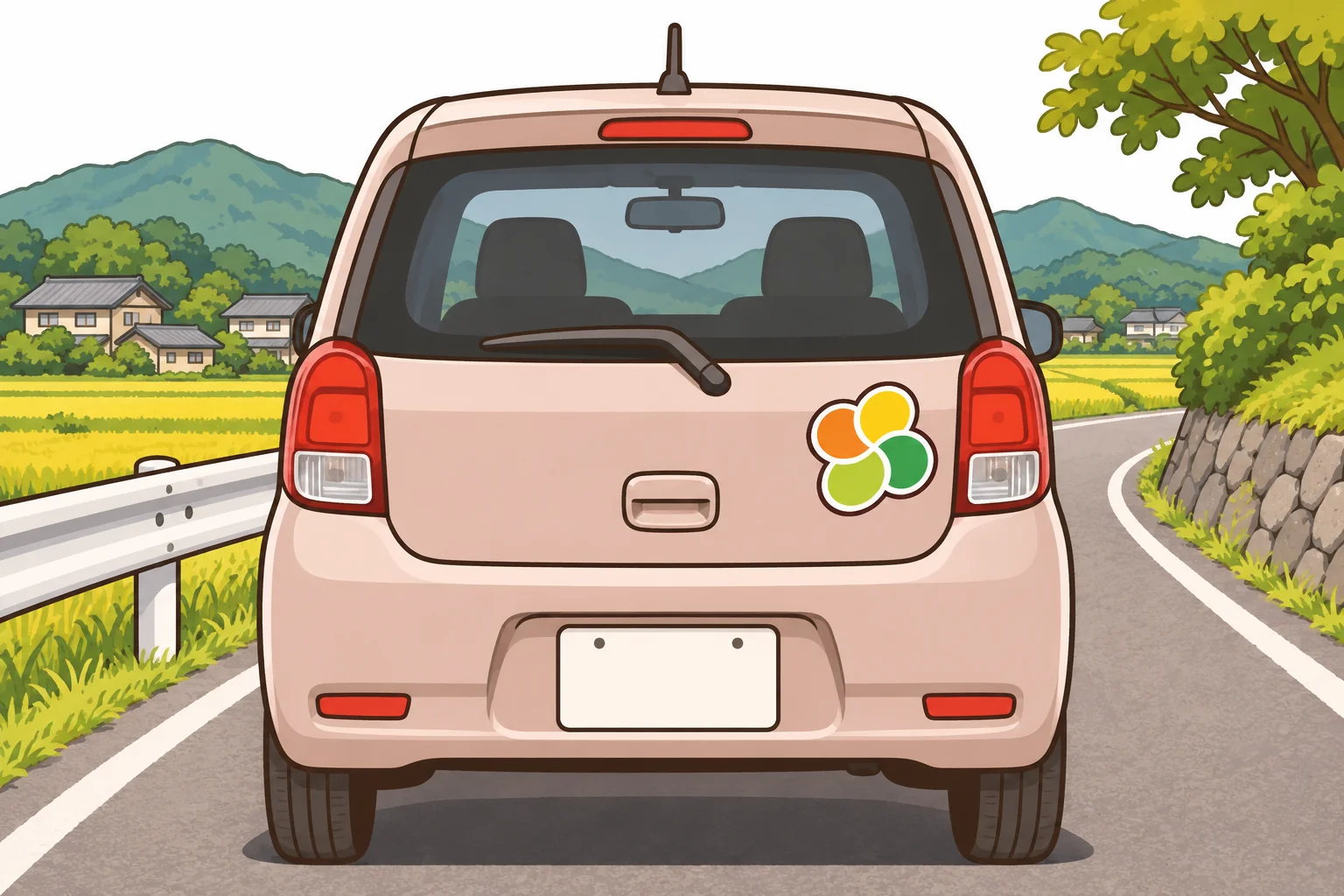
The back of a car bearing the four-colour leaf-shaped elderly driver mark (illustration).
On local trains in the countryside, the carriages are often filled with older passengers heading to hospitals and supermarkets, chatting in dialect with cloth bags on their laps, while the driver waits for anyone unsteady to sit down before pulling away. At roadside stations, michi no eki, and farm cooperative stalls, the vegetables and pickles are often labeled with the grower’s name, and many of those growers are local farmers in their seventies and eighties. The innkeeper at a hot-spring ryokan, the proprietress of a guesthouse, the shopkeeper behind the counter of an old family business are frequently past 70 as well. Speaking a little slower and more clearly helps, and many of them are happy to chat with a visitor who has come a long way.
If you see an older person struggling, say with a heavy bag at the foot of some stairs, it is fine to offer help. Expect a polite refusal the first time; Japanese elders are often reluctant to impose, and there is no need to insist.
06A Preview of Other Countries’ Futures
Japan’s aging is usually described as a crisis, but the country has also become a test bed. Care robots, the seal-shaped therapeutic robot Paro, on-demand buses in depopulated areas, and mobile supermarket trucks that bring groceries to remote hamlets were all tried here early. In 2004 the official term for dementia was changed from chihō, which carried a sense of foolishness, to the more neutral ninchishō, and by March 2026 more than 17 million ordinary people had taken short courses to become "dementia supporters," trained to help a confused customer at a shop counter or a lost elderly person at a station.
Japanese feelings about all this are mixed. The young worry that the pension system will not be there for them, the middle-aged worry about caring for their parents, and the old worry above all about becoming a burden. Meiwaku o kakenai, "not causing trouble for others," is a phrase older Japanese use constantly, and many prepare for death in advance through shūkatsu, "end-of-life activities": writing notebooks that set out their wishes for funerals and graves, sorting their belongings, and settling affairs so their children will not have to. At the same time, many retirees are finding new work and new roles, opening cafés in their hometowns, guiding tourists as volunteers, or turning up every morning in the park for radio exercises.
South Korea, China, Italy, Germany and many other countries are heading down the same road. Japan simply got there first, and its neighbors are watching how it handles pensions, care and the survival of its villages.