
At a glance
How Japan’s entrance exams work, from twelve-year-olds sitting private school tests to the January Common Test, and why cram schools became a second school system.
- Japan’s school year starts in April, so entrance exams cluster between January and March.
- The University Entrance Common Test is held in mid-January, with nearly half a million applicants (as of 2026).
- On the hensachi scale 50 is the average and 10 points one standard deviation; 60 is strong, 70 exceptional.
- As of 2026, more than 50,000 sixth-graders in greater Tokyo sit the junior high exam each year, about 18 percent of their age group.
- In the education ministry’s first national survey in 1976, about 37 percent of third-year junior high students attended juku.
Ask a Japanese adult about their teenage years and there is a good chance the conversation will turn to juken, the season of entrance exams, and to the cram school where they spent their evenings preparing for it. In Japan, getting into a school is a matter of passing that school’s own examination, and the system reaches down from university to high school and, in the big cities, to children of eleven and twelve. Around it has grown an entire private industry of after-school academies, known as juku, that most Japanese children attend at some point. This is an introduction to how the exams work, why they came to matter so much, what a juku actually is, and where a visitor can see all of this in everyday Japan.
01Winter Is Exam Season
The Japanese school year starts in April, so the exams fall in the coldest months. On a weekend in mid-January, students from a pool of nearly half a million applicants (as of 2026) sit the University Entrance Common Test (Daigaku Nyūgaku Kyōtsū Tesuto) at hundreds of sites across the country, all opening the same papers at the same minute. The weekend has a habit of coinciding with a cold snap, and the evening news reliably shows students trudging through snow to the test halls, trains delayed, and start times pushed back for latecomers.
The Common Test is only the first stage. National and public universities then set their own second-round papers, with the main sitting around February 25. Private universities run their own exams from late January through February, and a student applying to five or six of them, traveling from campus to campus on consecutive days, is entirely ordinary. High school entrance exams take place in February and March, and the private junior high schools of Tokyo and Kanagawa all open their doors to applicants on the same day, February 1.
Results come out in March. At the University of Tokyo, successful candidates’ numbers used to be posted on boards on the Hongō campus, and the scene of sports-club members tossing new admits into the air in front of them was a fixture of spring television; since 2020 the university has announced results online only. The old way of telegramming results gave the language two phrases still in use: sakura saku, "the cherry blossoms bloom," for a pass, and sakura chiru, "the cherry blossoms fall," for a fail.
02From Imperial Universities to "Examination Hell"
Japan’s exam culture took shape in the Meiji period (1868–1912), when the new government built a school system to find and train talent for a modernizing state. At the top stood the imperial universities, led by Tokyo, and the narrow gate to them was the old higher schools, whose places were few and whose entrance exams were fiercely competitive. By the 1920s the crush had spread down to the middle schools, and newspapers were writing about the "entrance difficulty" and about "examination hell" (shiken jigoku, later more often juken jigoku), treating the strain on young candidates as a social problem; reportedly the papers also carried occasional stories of candidates taking their own lives.
The postwar reforms replaced this with a simpler 6-3-3-4 ladder of elementary, junior high, high school and university, and many new universities were founded. The gates widened, but demand rose even faster. In the 1960s the baby-boom generation reached exam age just as more families began expecting their children to finish high school and go further, and the press began talking about juken sensō, "the exam war." Students also passed around the slogan yontō goraku, "four hours, pass; five hours, fail," meaning the hours of sleep you could afford each night; by one account the slogan dates from the 1960s.
The measure that came to rule this world is the hensachi, a standardized score. A student’s result on a practice exam is converted to a scale on which 50 is the average and each 10 points is one standard deviation; 60 is strong, 70 is exceptional. A Tokyo junior high teacher began using it for guidance in the late 1950s, and as the large cram schools rolled out national mock exams, it spread until schools themselves were ranked by the hensachi of students they admitted. Parents still talk about schools this way: a "hensachi 65 school" needs no further explanation.
To rein in the idiosyncratic questions set by individual universities, the government introduced a nationwide first-stage exam in 1979, the Joint First-Stage Achievement Test, universally called kyōtsū ichiji. In 1990 it became the National Center Test for University Admissions, which private universities could also use, and in 2021 it was replaced by the current Common Test, with more emphasis on reading passages and data. The names changed, but the structure of a January national exam followed by each university’s own test has held for more than forty years.
- late 1950sHensachi first used for guidance
- 1960sPress talks of “the exam war”
- 1979Kyōtsū ichiji
- 1990National Center Test
- 2021Common Test
The national exam changed its name twice in more than forty years, but the January exam plus each university’s own test held.
03Twelve-Year-Olds and the Junior High Exam
Compulsory education in Japan lasts nine years, and public junior high schools take every child in their district without an exam. In Tokyo, Ōsaka and other large cities, though, a sizable minority of families have their children sit entrance exams for private or national junior high schools at the end of elementary school. This is chūgaku juken. By cram-school and mock-exam estimates, as of 2026 more than 50,000 sixth-graders in the greater Tokyo area take part each year, about 18 percent of their age group, and in some central Tokyo wards the share is far higher.
What draws families is the six-year combined junior and senior high school. Once in, a student skips the high school entrance exam entirely, and many of these schools cover the six-year curriculum in five, leaving the final year for university preparation. The famous names are a roll call that every Tokyo parent knows: Kaisei, Azabu and Musashi for boys, Ōin, Joshi Gakuin and Futaba for girls, and Nada in Kōbe, all of which send large numbers of graduates to the University of Tokyo and to medical schools. Another route is to enter a junior high affiliated with a university such as Keiō or Waseda, from which most students move up into the university itself, an arrangement nicknamed the "escalator."
Public route
- Local public junior high, no exam
- High school exam: score on the day + naishinsho
- Three years of high school
- University exams
Chūgaku juken
- Exam for a private or national junior high
- Six-year combined school
- No high school entrance exam
- University exams
Affiliated school
- Junior high affiliated with a university
- Most move up into the university: the “escalator”
The draw of the junior high exam is six combined years with no high school entrance exam.
The junior high exams go far beyond the elementary curriculum. Arithmetic papers are built from puzzle types with their own names, such as tsurukame-zan, the "cranes and turtles" problems that ask how many of each animal you have from a count of heads and legs. Science and social studies demand extensive memorization and reasoning. None of this is taught at school, so almost every child who sits these exams attends a cram school, typically starting in February of third grade, when the academies’ "new fourth grade" courses begin. Three years of tuition, summer intensives and mock exams commonly add up to two or three million yen.
For most Japanese children, the first real exam comes at the end of junior high, when they apply to high school. Admission to public high schools combines the score on the day with the naishinsho, a report from the junior high on grades and conduct, so even first-year junior high students are aware that every term test counts. High schools are sharply tiered by hensachi, and which one a student enters goes a long way toward determining which universities are realistic three years later.
04Juku: The Second School
Walk past any commuter station in Tokyo at six or seven in the evening and you will see children of ten or eleven wearing backpacks printed with the name of a cram school, some buying rice balls at a convenience store for dinner, some riding the train home alone. At nine or ten at night the lights are still on in the classrooms above the station shops, and banners on the building list last year’s results: so many students into Kaisei, so many into the University of Tokyo. This is the world of juku.
The word juku originally meant a private academy. In the Edo period (1603–1868) it was used for schools run by individual scholars, such as Ogata Kōan’s Tekijuku in Ōsaka, where students studied Dutch medicine, or Yoshida Shōin’s Shōka Sonjuku in Chōshū, which trained several leaders of the Meiji Restoration. Modern juku have little in common with these beyond the name. They multiplied in the 1960s and 1970s alongside the exam war, and by the 1970s juku attendance had become a public issue, and by some accounts people were already talking of a "juku boom" in the late 1970s; the education ministry ran its first national survey in 1976, when about 37 percent of third-year junior high students attended one. In the ministry’s surveys of 1993 and 2008, the figure was about two-thirds.
Juku come in two broad kinds. Shingaku juku exist to get students into a target school. They sort pupils into classes by ability, test them every month, and reshuffle seating and classes after each test; the big chains for the junior high exam, such as SAPIX, Nichinōken, Yotsuya Ōtsuka and Waseda Academy, are of this type. Hoshū juku are remedial, helping children keep up with schoolwork, and are often a single classroom on a neighborhood street, alongside one-on-one tutoring schools and the franchised Kumon classrooms that began in Ōsaka. Schools that prepare students for university exams are usually called yobikō. Kawaijuku, Sundai and Yoyogi Seminar were long known as the "big three," while Tōshin built its name on recorded lectures by star teachers. Some of those teachers became genuine celebrities: Hayashi Osamu, a Tōshin instructor, turned his line "Itsu yaru ka? Ima desho!" ("When are you going to do it? Now!") into one of the most quoted catchphrases in Japan.
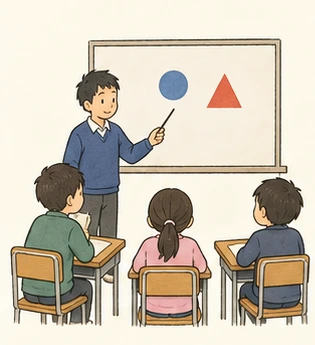
Shingaku juku teach whole classes grouped by ability (illustration)
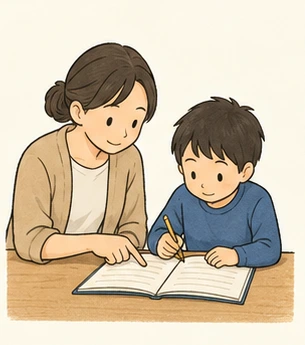
Kobetsu shidō juku tutor one-on-one (illustration)
The yobikō also serve a group of students called rōnin. The word once meant a samurai without a master; today it describes someone who finished high school without getting into the university they wanted and spends a year, sometimes more, studying full time at a yobikō before trying again. Ronin were most numerous in the 1980s and early 1990s, when the number of eighteen-year-olds peaked. Their numbers have fallen sharply since, but among applicants to the University of Tokyo or to medical schools, a year as a ronin remains unremarkable.
Why did cram schools take such deep root? Japanese public schools teach everyone at the same pace, do not stream by ability, and treat exam preparation as outside their job, while the exams themselves reward a great deal of specialized practice. Parents have long believed that educational credentials shape a child’s future and have been willing to pay for them. As more urban households came to have two working parents, juku also became a safe, supervised place for children to spend the evening. And for many students they are a social world in their own right: school friends are assigned by address, but juku friends are the ones you stayed late with and searched the mock-exam rankings beside.
05Recommendations, Fewer Children, and a Credential Society
The image of a single written exam deciding everything is no longer the whole picture. Alongside the general exam route, universities now admit large numbers of students through school recommendations and through "comprehensive selection," formerly called AO admissions, which weighs interviews, essays and high school activities. At private universities, more than half of new students entered by these routes as of 2025.
The main reason is demographics. The number of eighteen-year-olds peaked at about 2.05 million around 1992 and was roughly 1.1 million as of 2026, while the number of universities has grown. Taken as a whole, nearly anyone who wants a university place can find one, a situation the Japanese call the "era of university for all." Small private universities in the regions struggle to fill their seats, and the real competition has concentrated on a handful of elite institutions and on medicine.
The pressure has narrowed rather than vanished. Japanese companies have long hired new graduates in a single annual intake, and a degree from a top university still carries weight in that process, which is why Japan is often described as a gakureki shakai, a credential society. Criticism of exam competition grew from the 1980s on, and the "relaxed education" (yutori kyōiku) reforms of the early 2000s cut school hours, which for some families only increased reliance on juku. Cram schools remain a large industry; what has changed is that they now serve a more self-selected group of families rather than nearly everyone.
06Seeing Exam Season as a Visitor
If you travel in Japan in January or February, exam season is hard to miss. Shrines dedicated to Tenjin, the deified ninth-century scholar Sugawara no Michizane, are the essential stop for students: Dazaifu Tenmangū near Fukuoka, Kitano Tenmangū in Kyoto, and Yushima Tenjin in Tokyo. Their racks of ema, small wooden prayer plaques, fill up with the names of target schools, sometimes with exam numbers added for precision. Plum trees, Michizane’s favorite, bloom in the shrine grounds in February, and students and parents queue beneath them for gōkaku omamori, amulets for passing.
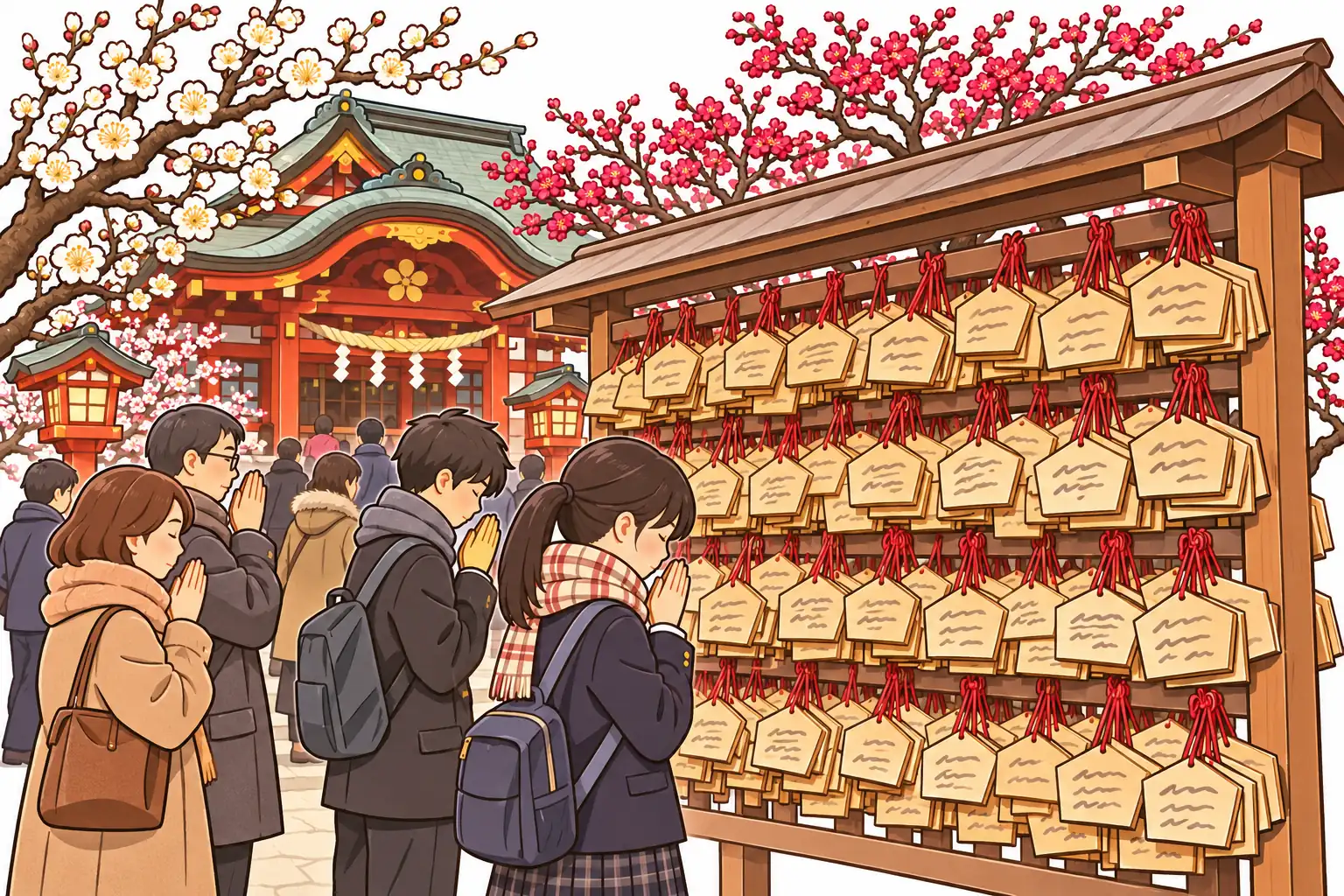
Exam season at a Tenmangū shrine: ema racks full of candidates' wishes amid plum blossoms (illustration).
Shops join in with puns. Nestlé’s KitKat became a good-luck gift for students because its name sounds like kitto katsu, "you’ll surely win," in Kyūshū dialect. You will also find apples sold as "apples that won’t fall" (a nod to apples from Aomori that survived a typhoon), pencils with five sides because gokaku, "pentagonal," sounds like gōkaku, "pass," and snacks labeled "won’t slip," since suberu, to slip, is slang for failing. These are cheap and make a thoughtful small gift if you are visiting a Japanese family with a child in the middle of exams; just never say the words "fall" or "slip" in front of them.
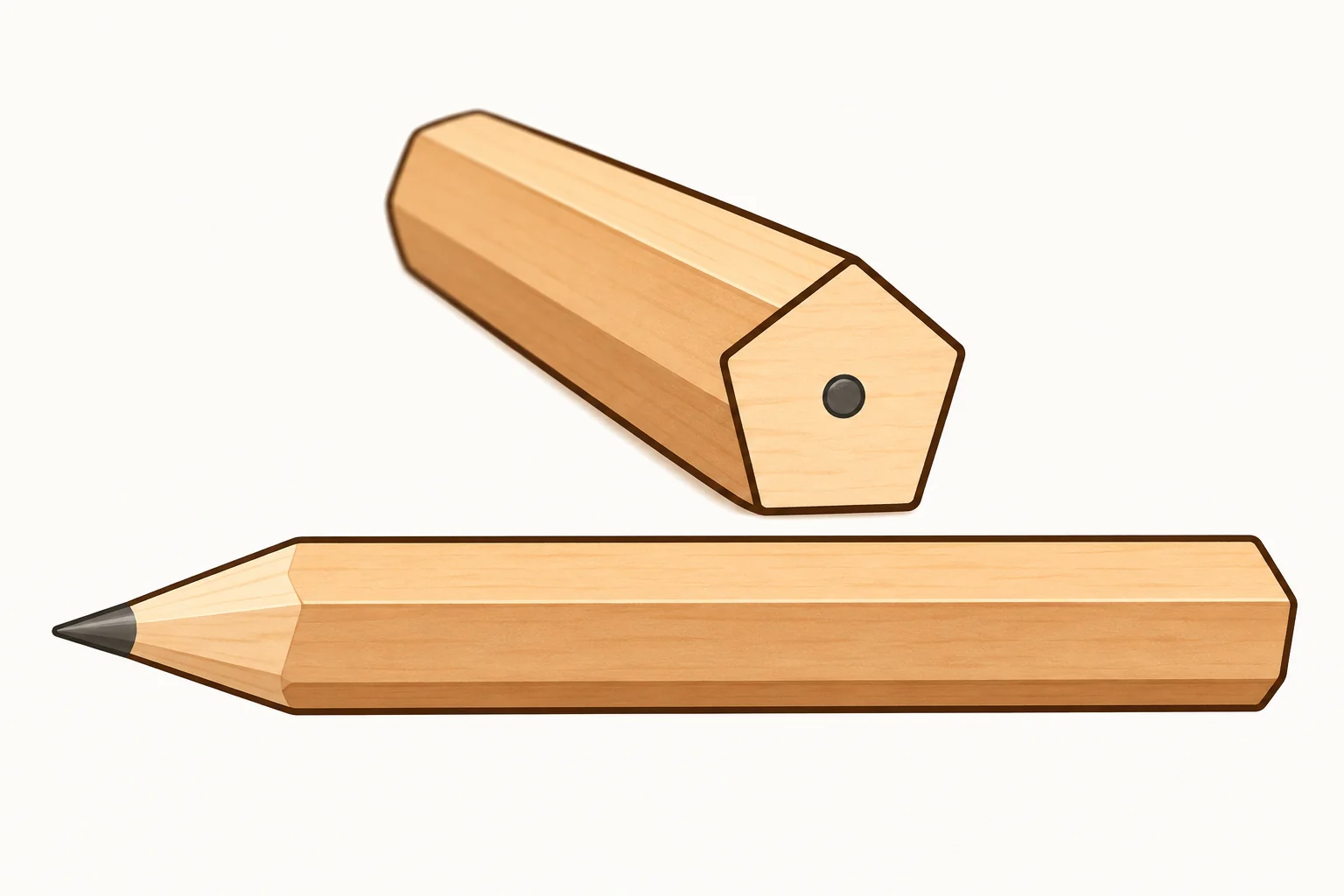
Five-sided pencils are an exam gift because gokaku, "pentagonal," sounds like gōkaku, "pass."
In March, look out for news of university results. And on any weekday evening of the year, a walk around a big-city station, past the brightly lit classrooms and the banners of last year’s successes, shows how much of ordinary life this system still shapes. When Japanese people talk about their own juken years, they tend to do it with a rueful smile, and with a little pride.