
At a glance
Why Japanese schools start in April, why pupils clean classrooms and serve lunch, and how radio exercises, clubs and uniforms came about and are now changing.
- The Japanese school year runs from April 1 to March 31, and entrance ceremonies fall in early April, in cherry blossom season.
- The postwar 6-3-3-4 system makes nine years of elementary and junior high compulsory; as of 2025 close to 99 percent went on to high school.
- Most schools have no janitors: pupils clean the classrooms in groups, and pupils on duty serve the school lunch, kyūshoku, to classmates.
- Radio calisthenics began in 1928, and as of 2026 NHK radio still broadcasts it every morning at 6:30.
- The summer high school baseball championship began in 1915; in 2026, 3,363 teams played prefectural qualifiers for 49 places at Kōshien.
Anyone who rides a Tokyo train at eight in the morning sees Japanese school life before seeing a single school: six-year-olds traveling alone with enormous leather backpacks, teenagers in black high-collared jackets and sailor-collared blouses, a girl with a trombone case, a boy with a baseball bat slung across his shoulders. Japanese schools look familiar from the outside, with classrooms, homework and entrance exams, but much of what happens inside them surprises visitors. The school year starts in April. Children clean their own classrooms. Lunch is served by pupils in white smocks and eaten at desks with the teacher. Almost every teenager stays at school until dusk for a club. In summer, children get up at dawn to do radio exercises in the park. This article walks through the year, the school day, lunch, radio calisthenics, clubs and uniforms, and explains where each comes from and why it matters to people in Japan.
01A Year That Begins in Spring
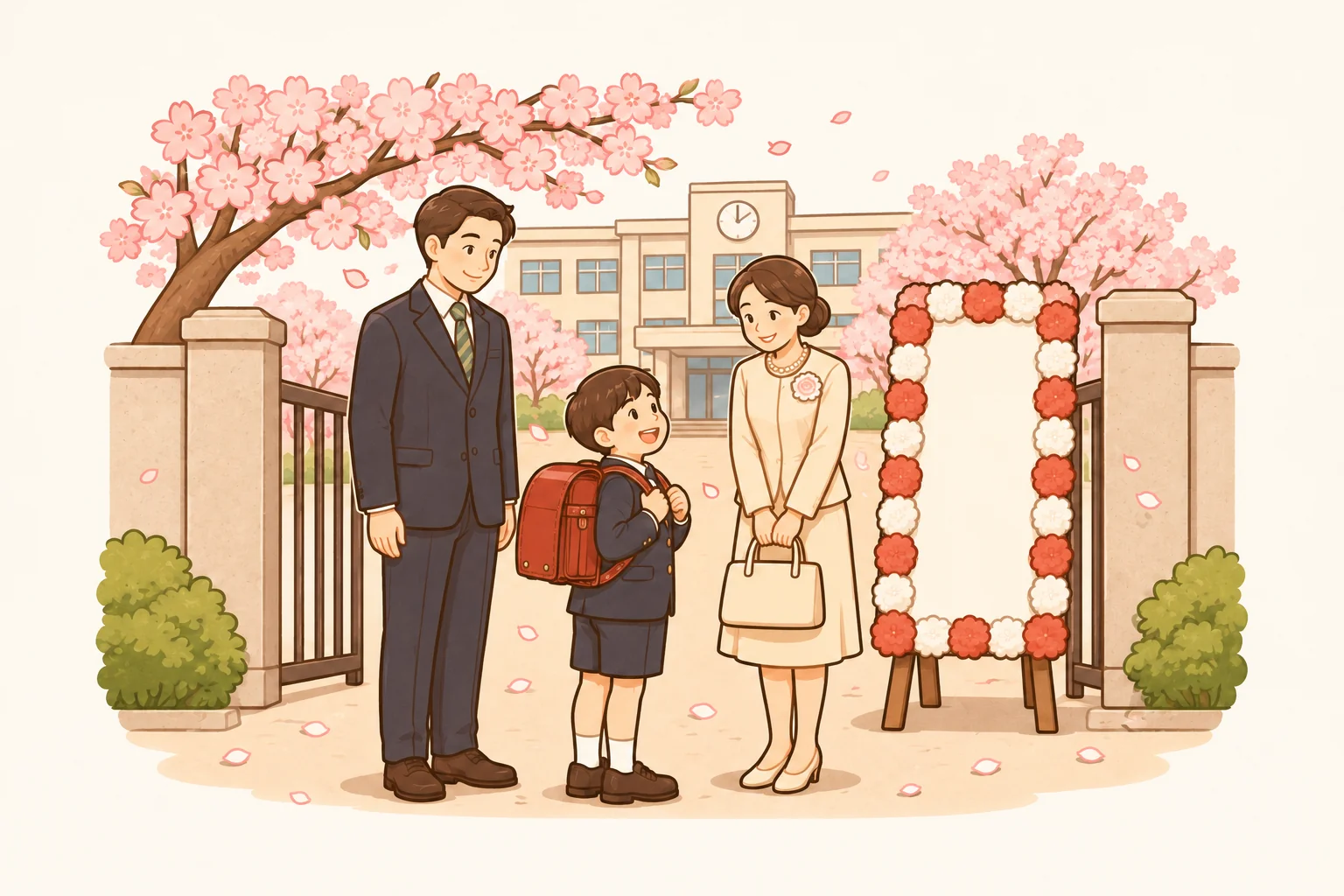
The Japanese school year runs from April 1 to March 31. Entrance ceremonies, nyūgakushiki, are held in the first week or two of April, which in Tokyo and Kyoto usually coincides with the cherry blossoms at or just past their peak. Every family album seems to contain the same photograph: a child in a new uniform, a parent in a dark suit, a signboard reading "entrance ceremony" at the school gate, and pink petals overhead. March, at the other end, is graduation season, with ceremonies in school gymnasiums, speeches, a procession past lines of younger pupils, and a great deal of crying.
The April start is an administrative inheritance. In the early Meiji period, many Japanese schools followed Western practice and began in September. In 1886 the government fixed the national fiscal year to run from April to March, and school funding followed; around the same time, the education ministry moved the Higher Normal School’s intake to April, and teacher-training schools and elementary schools around the country followed suit. One account also links the change to army conscription: schools wanted entry and graduation to fit the deadline for applying for deferment. Higher schools and universities held on to September longer, but they eventually moved too, usually said to be in the Taishō period (1912–1926), and the whole system came to run on a single calendar. Proposals to switch to September come up regularly, most recently in 2020 when the pandemic closed schools nationwide. Each time the idea founders on the same fact: the April school year is tied to the fiscal year and to the custom by which companies hire new graduates en masse every April.
Most public schools divide the year into three terms. The first runs from April to late July and is followed by summer vacation of about forty days. The second runs from September to late December, then comes a short winter break. The third runs from January to March, followed by spring vacation and the next year. Schools in Hokkaidō and the snowy northeast have shorter summer holidays and longer winter ones. Since the 2000s some districts have experimented with a two-semester system split around October, which cuts the number of exam periods and report cards, but the three-term pattern remains the norm.
Children are grouped strictly by school year rather than calendar year. Those born between April 2 and the following April 1 form one cohort and enter elementary school in the April after they turn six. A child born in early spring is the youngest in the class; Japanese call such children hayaumare, "early born," and parents sometimes worry about the gap.
The structure itself dates from the postwar reforms. The School Education Act of 1947 created the "6-3-3-4" system: six years of elementary school, three of junior high, three of senior high and four of university. The first nine years are compulsory. High school is not, but almost every junior high graduate goes on to one; by official counts the rate was close to 99 percent as of 2025. Most children attend the public elementary and junior high school assigned by their home address. Private and national university–affiliated junior highs set entrance exams, and in Tokyo a significant number of children spend their last years of elementary school at evening cram schools preparing for them. Entrance exams and cram schools are a world of their own (see also: Entrance Exams and Juku: How Japan Learned to Study for the Test).
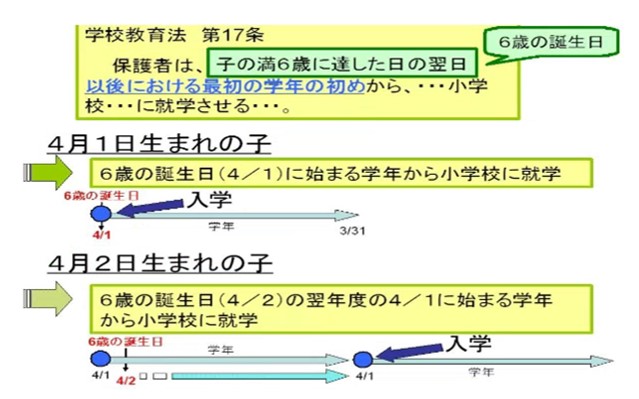
A child born on April 1 enters elementary school a year earlier than one born on April 2.
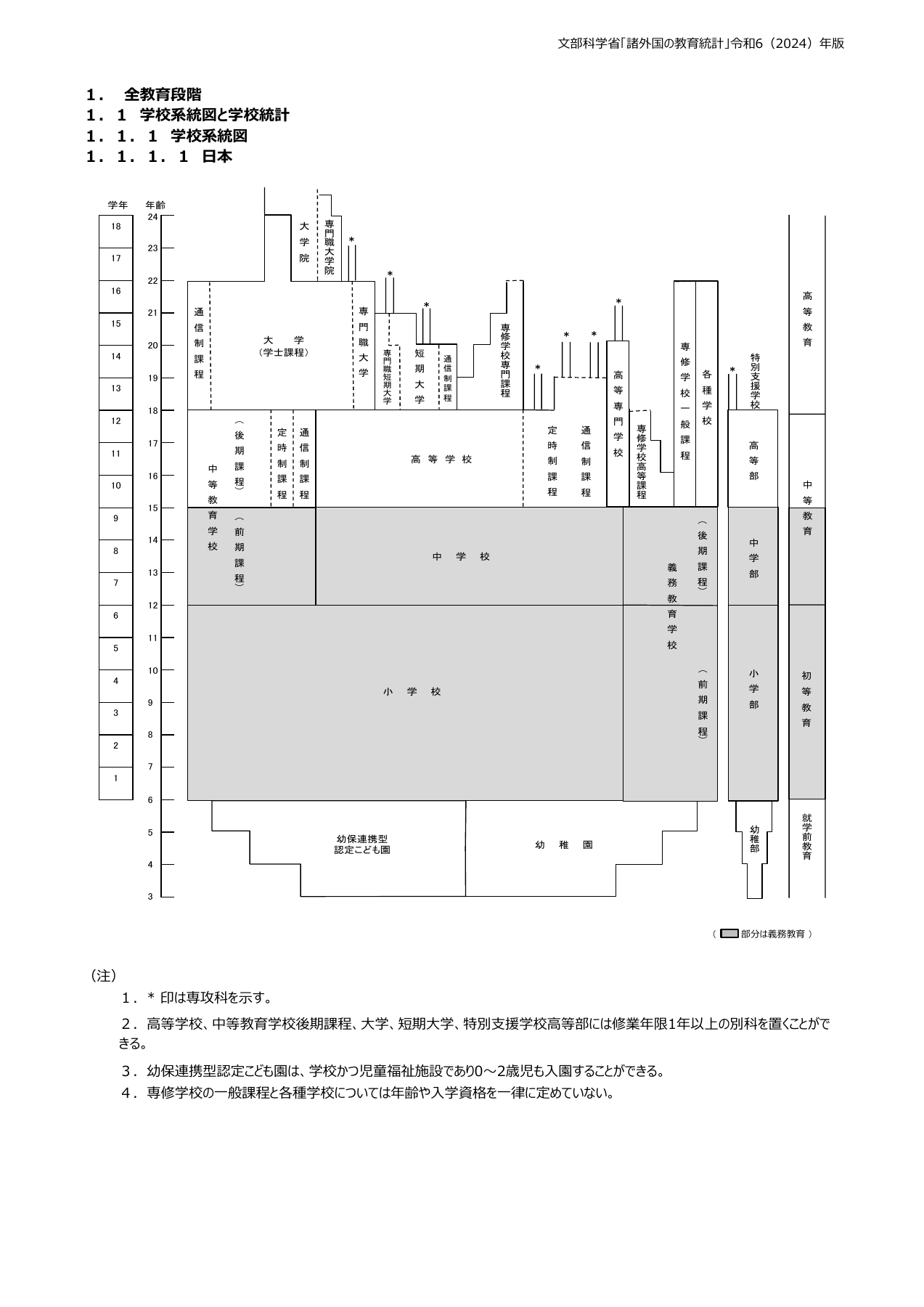
The education ministry’s chart of Japanese schools; the shaded part is compulsory: six years of elementary and three of junior high.
02Through the Gate: A School Day
The first thing a visitor notices about an elementary schoolchild is the randoseru, a stiff, boxy backpack. The word comes from the Dutch ransel, a soldier’s knapsack. In 1885 Gakushūin, the school for the children of the aristocracy, had its pupils carry a backpack modeled on the army knapsack, and over the following decades it spread across the country. A randoseru is meant to last all six years, and it is often a gift from grandparents; as of 2026 the average price was about 62,000 yen. For generations boys carried black ones and girls red, but department stores now offer lavender, sky blue, tan and dozens of other colors. First-graders often wear yellow caps and carry a yellow safety cover on the bag along with a personal alarm. In many neighborhoods children walk to school in a group led by older pupils, a practice called shūdan tōkō, while parent volunteers or retired residents stand at crossings with flags. Being driven to school is rare. Walking, or riding the train alone from the age of seven or eight, is ordinary.
Inside the entrance stand rows of shoe lockers, getabako. Every pupil has a cubby. Outdoor shoes go in, and white indoor slip-ons, uwabaki, come out. The whole building is an indoor-shoe zone, and the gym has its own shoes again. It is the same logic as taking off your shoes at the door of a Japanese home, applied to a whole institution.
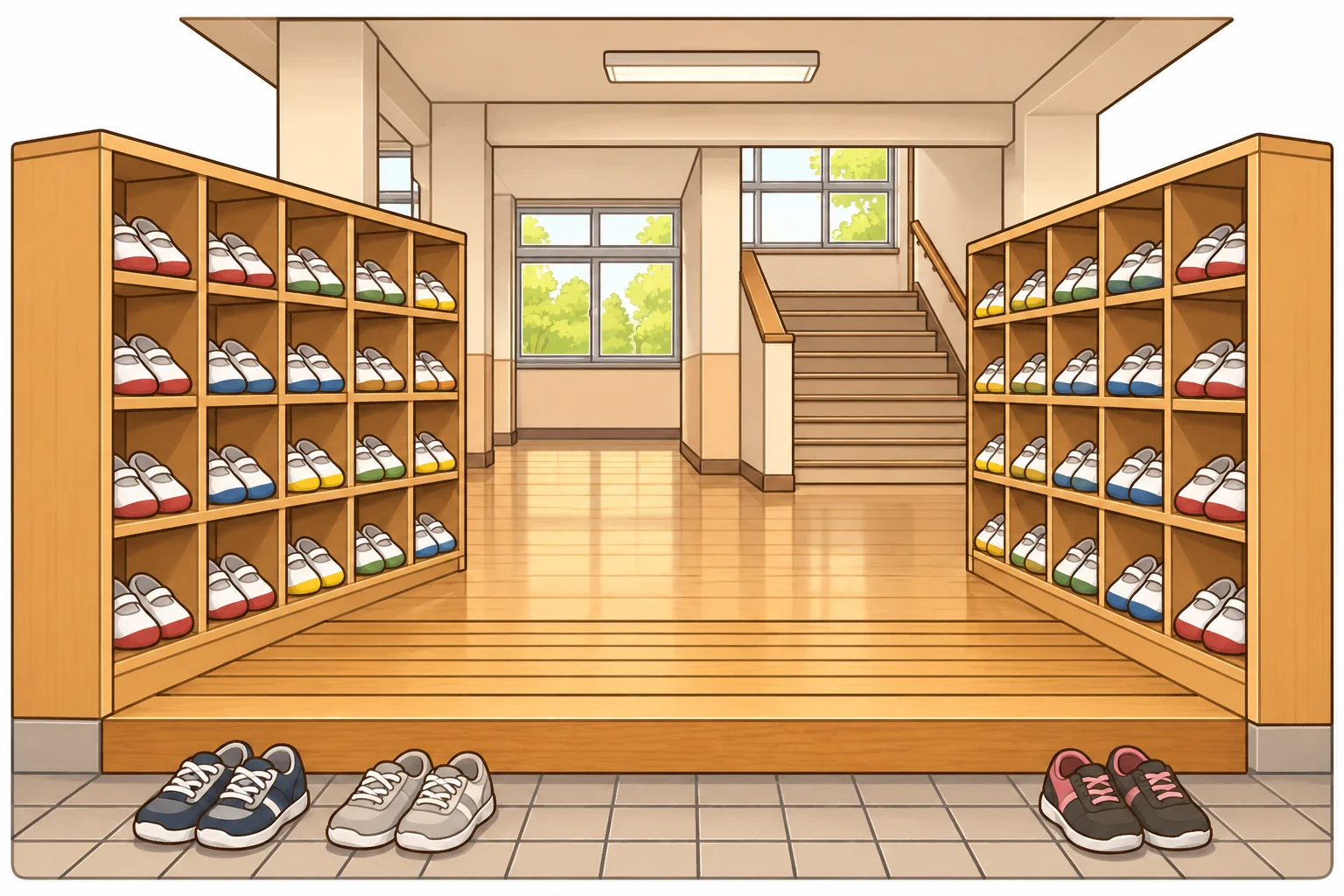
Rows of shoe lockers (getabako) at a school entrance, white indoor shoes in the cubbies (illustration).
The day begins at around 8:30 with a short homeroom. The class, kumi, is the basic unit of a Japanese school. In elementary school one homeroom teacher teaches nearly every subject; in junior high subject teachers rotate, but students mostly stay in their own room and the teachers move. Lessons are 45 minutes in elementary school and 50 in junior high. Each lesson opens and closes with a ritual led by the day’s monitor, the nicchoku: "Stand. Bow. Sit." The whole class rises and bows to the teacher. The monitor role rotates daily and also involves wiping the blackboard and writing the class log.
At some point in the day, usually after lunch, comes sōji, cleaning time. For fifteen or twenty minutes, groups of pupils sweep their classroom, mop the corridor, scrub the stairs and clean the toilets. Desks are pushed to the back, and children kneel to wipe the floor with damp cloths, sometimes racing each other down the length of the room. Most Japanese public schools have no janitors cleaning classrooms. The point is not cost saving. Cleaning is regarded as part of education: you look after the space you use, and you learn to divide work with others. When Japanese fans tidied their stands at the 2018 World Cup in Russia and the national team left its dressing room spotless, many in Japan explained it simply: everyone grew up doing this at school.
03Kyūshoku: Lunch as a Lesson
Public elementary schools, and most public junior highs, serve a standard school lunch called kyūshoku. A nutritionist plans each day’s menu to national nutritional standards, and a monthly menu goes home to families in advance. A typical tray holds rice or bread, a bowl of soup, a main dish, a side dish and a carton of milk. Milk comes almost every day.
What makes kyūshoku distinctive is that the children serve it. The pupils on lunch duty, kyūshoku tōban, put on white smocks, caps and masks, collect the large pots and trays from the school kitchen or the delivery room, and wheel them back to the classroom. They set up at the front and ladle out portions to classmates lined up with trays. When everyone is served, the class says itadakimasu, roughly "I humbly receive," and eats together, often with desks pushed into small groups and the teacher eating the same food among them. Afterwards children flatten their milk cartons, stack the bowls by type, and the duty team returns everything to the kitchen.
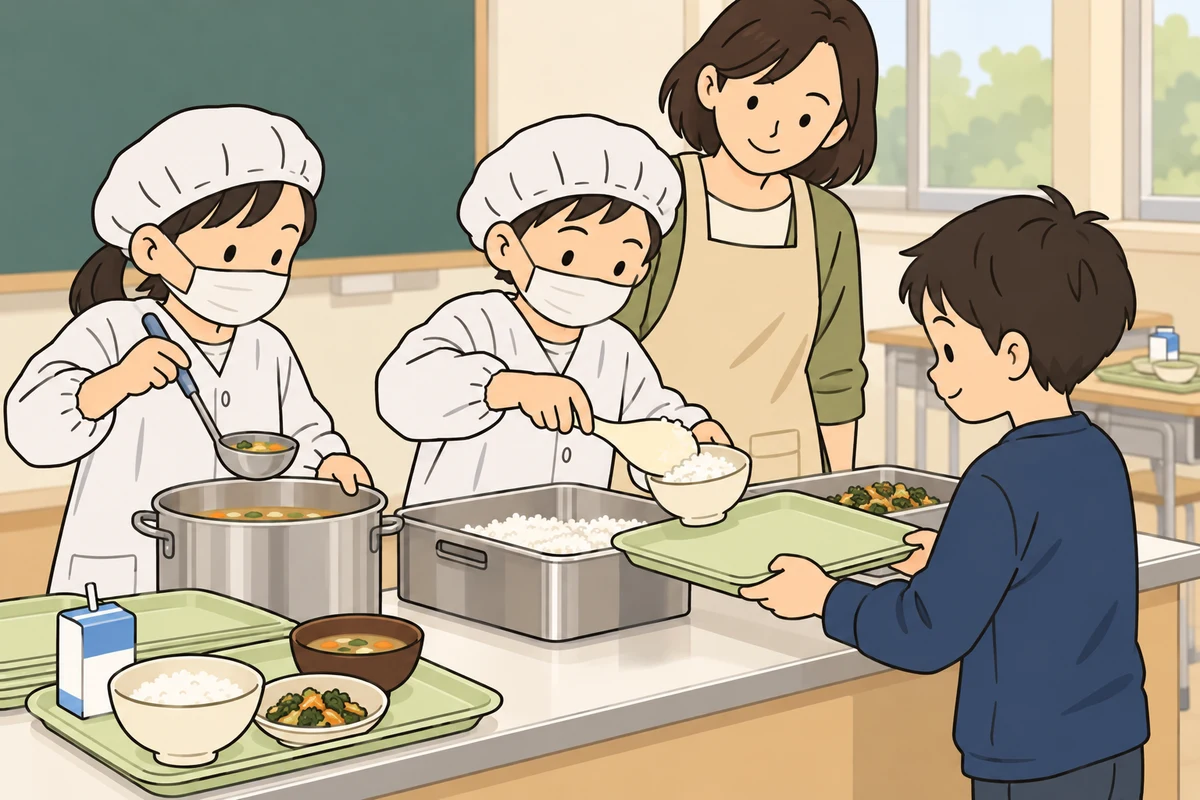
Pupils on lunch duty, in white smocks, caps and masks, ladle out rice and soup to classmates holding trays.
This is why Japanese education law treats lunch as an educational activity rather than a catering service. It is meant to teach nutrition, hygiene, cooperation and gratitude for food. Menus feature local vegetables and regional dishes, and teachers explain them. In 2005 Japan passed the Basic Act on Shokuiku, or food education, and in the same year created the post of nutrition teacher, eiyō kyōyu, giving nutrition specialists a teaching role in schools.
The usual starting point for the history is 1889, at a private elementary school called Chūai Shōgakkō in the town of Tsuruoka, Yamagata Prefecture. The school was run by priests from local Buddhist temples, who used alms collected on their rounds to feed children too poor to bring a lunch box: rice balls, salted salmon and pickled greens, according to the records usually cited. Other schools began feeding poor children in the decades that followed, but lunch was far from universal before the war. The real beginning came amid postwar hunger. From late 1946, supplies sent by LARA (Licensed Agencies for Relief in Asia), an American relief consortium, and later American-donated wheat flour and skim milk powder, allowed city schools to serve lunches to undernourished children. In 1954 the Diet passed the School Lunch Act, which made lunch a permanent part of the school system.
For a generation, then, kyūshoku meant a bread roll and a cup of reconstituted skim milk powder, which people who grew up with it still remember as faintly unpleasant. Fresh milk in bottles and later cartons replaced it from the 1960s on. Rice did not officially enter school lunches until 1976, when a national surplus of rice gave the government a reason to get children eating it again; most schools now serve rice three or four days a week. Every generation has its nostalgic dishes. Agepan, deep-fried bread rolled in sugar or roasted soybean flour, is one; sofuto men, soft noodles in a bag, is another. In the 1960s fried whale meat was a staple, until restrictions on commercial whaling made it disappear. Curry and rice regularly comes out near the top when pupils are asked for their favorite.
Parents have traditionally paid for the ingredients, which averaged about 4,700 yen a month at public elementary schools in 2023 and a little more for junior high, while local governments cover kitchens and staff. With food prices rising, more and more municipalities have made lunch free; by the 2024 school year all of Tokyo’s 23 wards had done so for public elementary and junior high schools. From April 2026 the national government, together with the prefectures, has subsidized lunch ingredients at public elementary schools up to a standard of 5,200 yen per pupil per month, with no income limit. Where lunch costs no more than that, elementary school parents no longer pay; any amount above it can still be charged to families. Schools handle food allergies with great care, preparing separate meals with allergens removed.
Visitors rarely get to eat a real school lunch, but traces are easy to find. Tokyo has restaurants and bars themed on kyūshoku, supermarkets sell retort-pouch "school lunch curry," and some towns have small museums displaying replica trays from each decade.
04Radio Taisō: Calisthenics for a Nation
Play the opening piano bars of rajio taisō, "radio calisthenics," to almost any Japanese adult and they will start moving their arms. The routine takes about three minutes, the announcer calls the moves in a calm, even voice, and the accompaniment is a single piano. People learn it as small children and keep doing it at work and in retirement.
Radio calisthenics began in 1928. The Postal Life Insurance Bureau of the Ministry of Communications, inspired by exercises that an American life insurance company, usually identified as Metropolitan Life, had sponsored on the radio, devised a set of "national health exercises" to mark the enthronement of Emperor Shōwa. Broadcasts began in November 1928, usually dated to November 1, at 7 a.m. from Tokyo Central Broadcasting Station, a forerunner of NHK. An insurer had good reason to want a healthier, longer-lived public. A second routine for younger adults followed in 1932, the year nationwide radio exercise gatherings began, and as radios spread through the 1930s, communities held morning gatherings, especially in summer. A third routine was introduced by the Ministry of Health and Welfare in 1939 under wartime conditions and never caught on.
In 1946 a "new radio calisthenics" replaced the old routines, but it failed to catch on and went off the air in August 1947; the occupation authorities are generally thought to have been uneasy about mass synchronized exercise as well. A newly composed routine went on air in May 1951; this is today’s Rajio Taisō Daiichi, Radio Calisthenics No. 1. Daini, No. 2, designed for workplaces, followed in 1952. The first is gentle enough for anyone; the second is more vigorous. As of 2026, NHK radio still broadcasts the exercises every morning at 6:30, and there are television broadcasts too. In 1999 a seated version, Minna no Taisō, "Exercises for Everyone," was added for older people and those with limited mobility.
Schools use radio calisthenics constantly: to warm up before physical education, and as a mass routine at the start of sports day. Factories and construction sites begin the morning with it. But its most beloved setting is the summer holiday. During the long break, neighborhood associations hold gatherings at 6:30 a.m. in local parks and school playgrounds. Children wear a card on a string around their neck, and an adult stamps it each time they attend. A full card earns a small prize at the end of the summer, such as a snack or a notebook. For many Japanese, the sound of cicadas, the morning cool, the piano coming out of a portable radio and a card full of stamps are what childhood summers felt like. Since 1953 a touring summer event, broadcast live, has moved from town to town around the country, organized today by Japan Post Insurance, the bureau’s successor, together with NHK and others. Today the morning crowd in city parks is mostly retirees, which brings an exercise invented by an insurance bureau back to its original purpose in one of the world’s oldest societies.
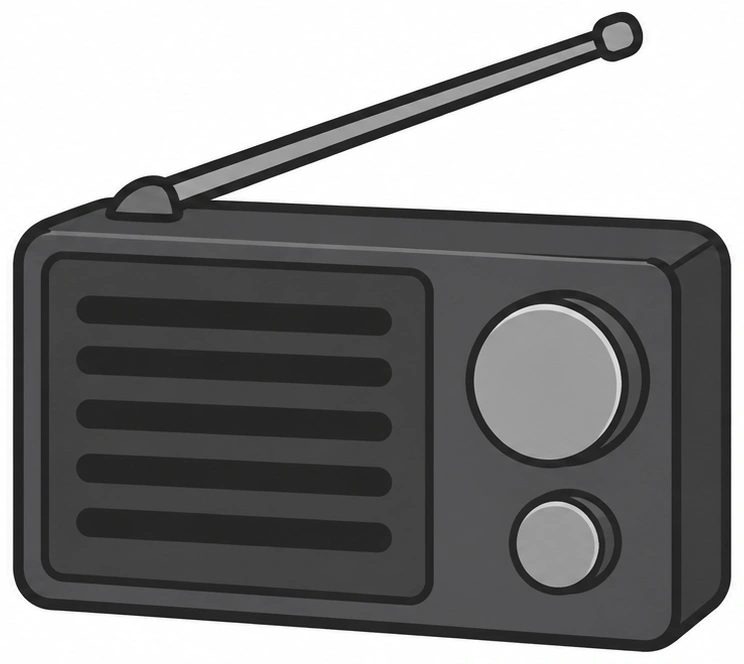
The piano accompaniment comes out of a radio.
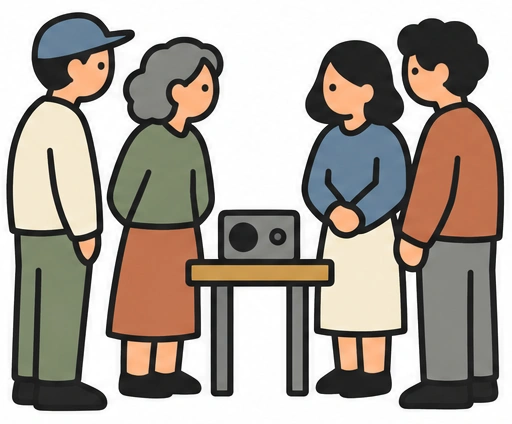
Neighborhood associations gather people in parks and playgrounds at 6:30 a.m.
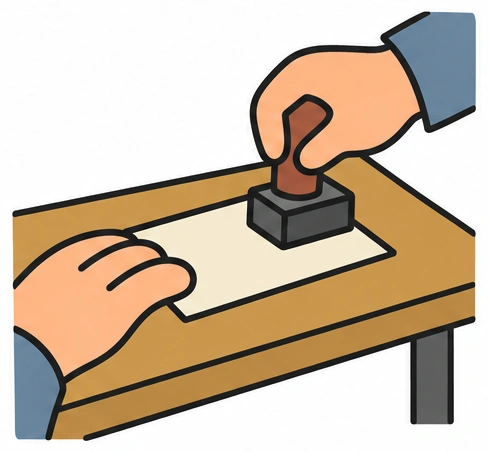
Each visit earns a stamp on the attendance card; a full card earns a small prize.
05Bukatsu: The School After School
Classes end at around three or half past, but junior and senior high schools do not empty. On the field the baseball team drills catches and the track team runs laps. In the gym the volleyball and basketball teams shout in unison. Through the music room windows comes the sound of a full wind band. This is bukatsu, short for bukatsudō, club activities.
Clubs are divided into sports clubs and culture clubs. On the sports side are baseball, soccer, basketball, volleyball, tennis, soft tennis (played with a rubber ball and very popular in junior high), table tennis, badminton, track and field, swimming, kendo and judo. Culture clubs include wind band, chorus, art, calligraphy, tea ceremony, science, computing, broadcasting and literature. For decades, the large majority of junior high students have belonged to a club, and some schools have required every student to join one.
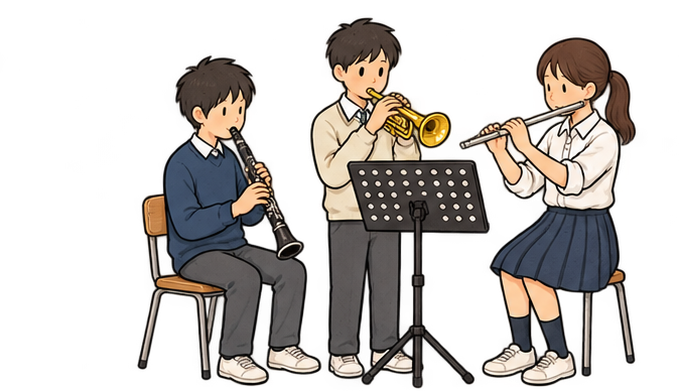
A wind band club rehearsing.
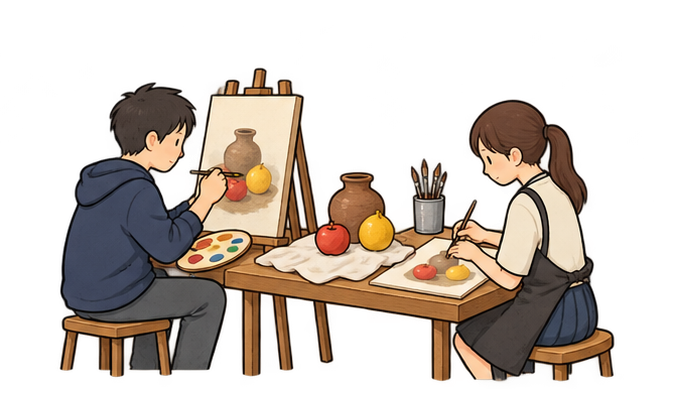
An art club painting a still life.
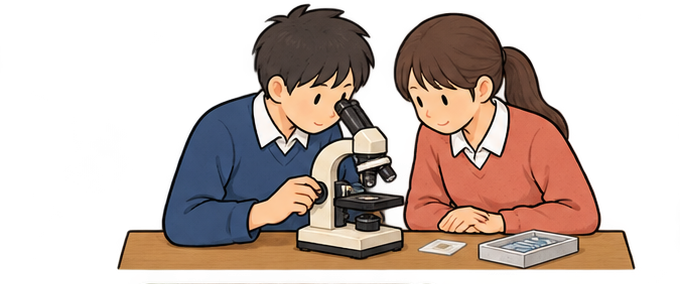
A science club at the microscope.
A club is far more than a hobby. Many practice five or six days a week, with morning practice before class, matches and training camps at weekends, and almost daily practice through the summer. Students learn the hierarchy of senpai and kōhai, seniors and juniors. First-years greet the older students in polite language, carry equipment and chase stray balls; third-years retire in the summer of their final year to prepare for exams and hand leadership to the second-years. Many Japanese adults say their club was where they learned to work in a group, and they see a direct line from that experience to office life.
The most famous stage for club activity is high school baseball. The National High School Baseball Championship began in 1915 at Toyonaka Grounds near Ōsaka and moved to Naruo in 1917. In 1924 it moved to the newly built Hanshin Kōshien Stadium in Nishinomiya, Hyōgo, and "Kōshien" became the name of the tournament itself. A spring invitational, the Senbatsu, began in 1924 at Yamamoto Stadium in Nagoya and moved to Kōshien the following year. In summer, more than 3,300 teams (3,363 in 2026) play prefectural qualifiers for 49 places at Kōshien, and NHK broadcasts every game of the final tournament. The image of the losing team kneeling to scoop the stadium’s dark soil into bags as a keepsake is a fixture of Japanese summer television. Other activities have borrowed the name: the national finals of the All Japan Band Association’s wind band competition are called "the Kōshien of wind bands" and were for many years reportedly held at the Fumonkan hall in Suginami, Tokyo, and there are calligraphy, photography and haiku Kōshiens as well. Manga and anime are full of club stories, from Slam Dunk to Haikyu!! to Sound! Euphonium.
The costs are serious. Clubs are coached mainly by teachers, after hours, for little or no extra pay, and a teacher with no experience of a sport can be assigned as its adviser and spend weekends driving players to tournaments. Club duties are one of the main reasons Japanese teachers work some of the longest hours in the developed world. For students, overtraining, corporal punishment and bullying by seniors have produced repeated scandals; in December 2012 the captain of the basketball team at Sakuranomiya High School in Ōsaka took his own life after repeated slaps from the teacher who coached the team; the teacher was dismissed and convicted, and the case shook the country. In 2018 the Japan Sports Agency issued guidelines asking junior high sports clubs to take at least two days off a week, one on a weekday and one at the weekend, and limit practice to about two hours on weekdays and three on weekends. From the 2023 school year, the national government began shifting weekend club activities at public junior highs to community sports clubs and local organizations. Falling birth rates add pressure: many schools can no longer field a full team on their own.
06Uniforms: Stand Collars, Sailor Suits and Blazers
Nearly every junior and senior high school in Japan has a uniform, and so do many private elementary schools. The classic boy’s uniform is the black, stand-collared tsume-eri, nicknamed gakuran. The classic girl’s uniform is the sērā-fuku, the sailor suit. Both are military in origin, one from the army and one from the navy.
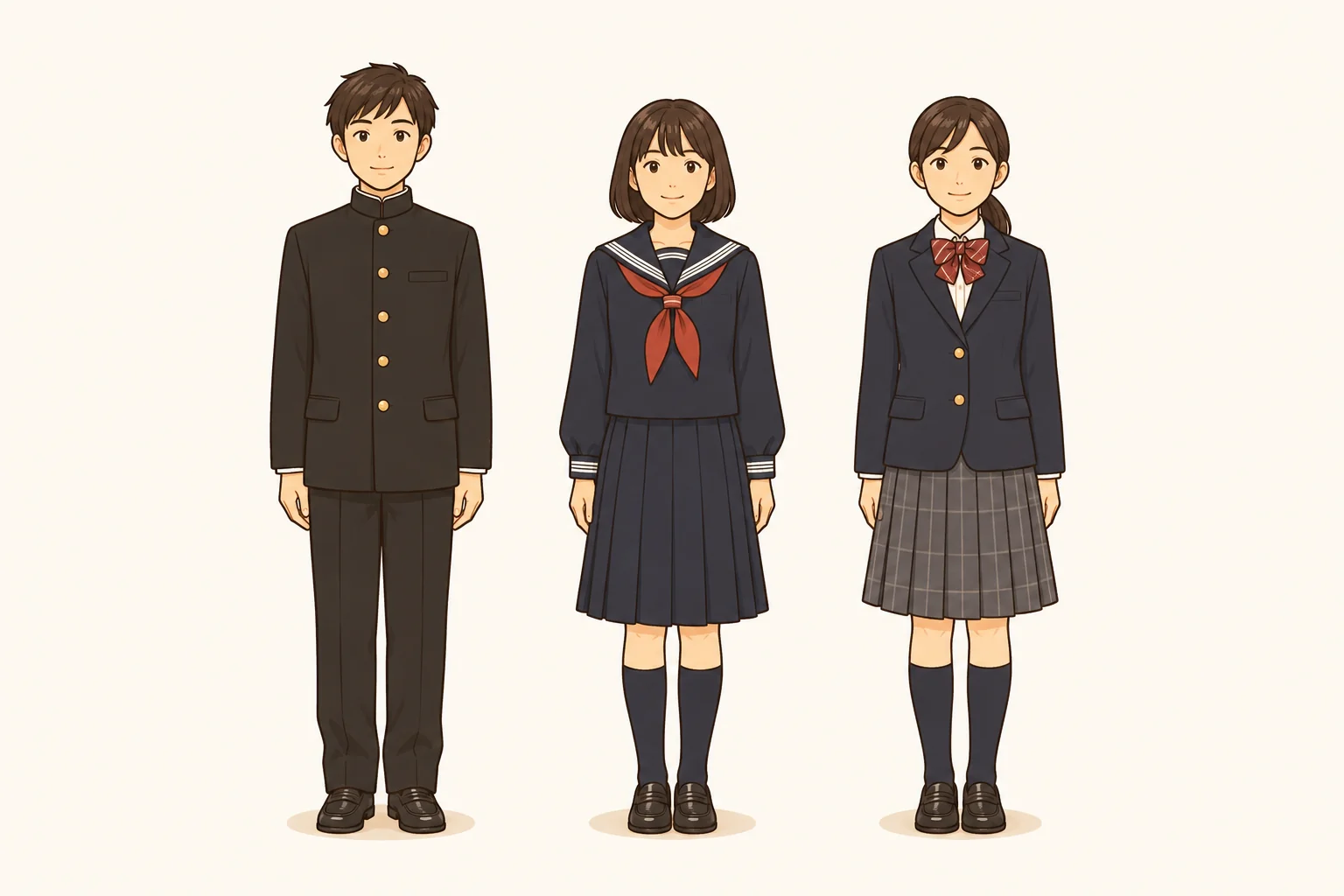
Three school uniforms: the black stand-collared gakuran, the sailor suit and the blazer.
The stand-collar uniform appeared in the Meiji period. In 1879 Gakushūin became the first school to prescribe a student uniform, modeled on naval officers’ dress. In 1886 the Imperial University adopted a stand-collared jacket with brass buttons modeled on army uniforms, and that style spread to middle schools nationwide. The nickname gakuran is usually explained as gaku, "student," plus ran, from Oranda, Holland, the Edo-period shorthand for anything Western. The shape has hardly changed: high collar, five brass buttons, the school badge on the collar. A Shōwa-era custom has a girl ask a boy she likes for the second button from the top of his jacket on graduation day, because it sits closest to the heart.
Girls at the first modern schools wore kimono with hakama, pleated, trouser-like skirts, a look so associated with Meiji schoolgirls that women still wear hakama to university graduations today. In the 1920s girls’ schools moved to Western dress for ease of movement. Heian Jogakuin in Kyoto is generally credited with adopting a sailor-collared one-piece dress in 1920, and in 1921 Elizabeth Lee, the American principal of Fukuoka Jo Gakuin, reportedly drawing on the sailor dress she had worn as a student in Britain, introduced a separate sailor top and pleated skirt that became the template for the sailor suit. Some researchers argue that Kinjō Jogakkō in Nagoya beat Fukuoka by a few months, and the question of who was first is still argued over. By the early Shōwa period the sailor suit was standard at girls’ schools across the country.
From the 1980s many schools replaced the gakuran and sailor suit with blazers, ties and ribbons, some designed by well-known fashion labels. Private schools competing for students found that a stylish uniform could noticeably raise the number of applicants. Today the stand collar and sailor suit are still common in junior highs, while blazers dominate at senior high level.
Uniforms come with rules. Many schools have regulated skirt length, sock color, hair color and length, perms and makeup, with teachers checking at the gate. Students push back within the margins. In the 1970s and '80s delinquent boys wore extra-long, wide-legged gakuran, and delinquent girls lengthened their skirts to the ankle. In the 1990s high school girls went the other way, rolling skirts very short and wearing baggy "loose socks" bunched around the ankles, a look that became a national fashion.
In recent years excessively strict rules have been labeled burakku kōsoku, "black school rules." In 2017 a student at an Ōsaka prefectural high school sued the prefecture, saying she had been repeatedly ordered to dye her naturally brown hair black. In 2021 the court upheld the school’s ban on dyed hair but ruled it unlawful that, after she stopped attending, the school removed her desk and struck her name from the class list. The case set off a national debate, and boards of education began reviewing their rules, dropping requirements such as underwear color and "natural hair certificates." In December 2022 the education ministry revised its guidance handbook for student discipline for the first time in twelve years, asking schools to review their rules continually, make them public and involve students in revising them. Meanwhile, growing numbers of schools let girls choose trousers, for warmth, practicality and the comfort of transgender and gender-nonconforming students, and some offer gender-neutral uniforms.
Uniforms have escaped the classroom. On weekends, groups of high school friends visit Tokyo Disney Resort in matching uniforms, and young adults who have graduated sometimes buy look-alike uniforms to do the same, a trend known as seifuku Disney. Nearly every anime character of school age wears one, and the sailor suit has become one of the most recognizable symbols of Japanese pop culture abroad.
07The School Calendar of Events
Beyond lessons, Japanese school life is punctuated by gakkō gyōji, school events, each of which a class spends weeks preparing.
Sports day, undōkai, is the biggest. Traditionally held in autumn, it has moved to May or June at many schools to avoid typhoons and the pressure of the second term. The school is divided into a red team and a white team, colors said to echo the red banners of the Taira and white banners of the Minamoto in the twelfth-century Genpei War. There are relay races, tug-of-war, kibasen cavalry battles in which teams carry a rider who tries to snatch opponents’ headbands, group dances, and kumi taisō, human pyramids. Parents arrive early with picnic mats and lunch boxes to claim a spot. Human pyramids have been restricted or banned in many areas after a string of injuries.
The school festival, bunkasai, comes in autumn. Classes and clubs transform classrooms into cafés, haunted houses, theaters and exhibitions, and the wind band and the light-music club perform on stage. Many high school festivals open to the public, drawing neighbors and junior high students considering which school to apply to.
The school trip, shūgaku ryokō, is the event people remember longest. In the final year of junior high, or the second year of senior high, a whole grade travels together for three or four days. The classic destination is Kyoto and Nara. Students from Tokyo and elsewhere ride the shinkansen west, visit Kiyomizu-dera, Kinkaku-ji and Tōdai-ji, sleep in big group inns, and whisper in their futons long after lights-out. Okinawa and Hiroshima are also common, with an emphasis on learning about the war. Some private schools now go abroad. Anyone visiting Kyoto in spring or autumn will meet them: clusters of uniformed teenagers with maps and checklists on the slope up to Kiyomizu.
08Strains, Changes, and Seeing It for Yourself
Japan’s schools look orderly, but they face real pressures. The falling birth rate closes hundreds of schools every year through mergers, and many empty rural schools have become inns, cafés and galleries. The number of children who stop attending school, futōkō, has risen year after year; in the 2024 school year it reached about 354,000 in elementary and junior high schools, the twelfth consecutive increase and a record, and alternative "free schools" and online learning have gained official acceptance. Teachers’ working hours are a public concern: a 2022 government survey found that about 36 percent of junior high teachers were working beyond the "death-from-overwork line" of 80 hours of overtime a month, and club reform, outside coaches and cuts to paperwork all stem from this.
Behind the school sits the exam system, which shapes many students’ paths and fills cram schools near train stations late into the evening. For that story, along with the workplace that graduates enter and the aging society around them, see also: Entrance Exams and Juku: How Japan Learned to Study for the Test; The Japanese Workplace: Lifetime Jobs, Seniority Pay, and the Art of the Quiet Consensus; Japan’s Aging Society: Life in the World’s Oldest Country.
There are plenty of chances to glimpse Japanese school life as a visitor. Around eight in the morning in any residential neighborhood you will see lines of children walking to school. At the temples of Kyoto and Nara you will meet school trips. In summer, high school baseball is on television almost everywhere, and the prefectural qualifying games are easy to attend. In autumn, many high schools open their festivals to the public and post the dates on their websites. And if you walk through a park early in the morning and hear a piano and a voice counting "one, two, three, four," step in at the back and follow along. Nobody will mind.