
At a glance
How lifetime employment, seniority pay, graduate hiring, business cards and consensus-building fit together in Japanese companies, and how that system is now loosening.
- New hires at large Japanese firms mostly start together on April 1, then spend weeks to months in group training.
- The term "lifetime employment" comes from James Abegglen’s 1958 book The Japanese Factory; it is a custom, not a legal requirement.
- Non-regular workers rose from about a fifth of employees around 1990 to close to two-fifths as of 2024.
- Job hunting starts in the third year of university; under the 2026 timetable, formal selection begins in June and formal offers come on October 1.
- A 2018 law set the first overtime caps backed by penalties: in principle 45 hours a month and 360 a year.
Japan’s large companies built one of the most distinctive employment systems in the world: graduates hired all at once each spring, trained from scratch, rotated through departments for decades, paid more each year they stay, and rarely fired. Around that system grew rituals that puzzle visitors, from the two-handed exchange of business cards to decisions that seem to arrive out of nowhere after weeks of silence. None of these habits is random. They fit together, and once you see how, a great deal about modern Japan, and about what to expect if you ever work with a Japanese company, starts to make sense.
01April First: A Career Begins
On the morning of April 1, the start of Japan’s fiscal and academic year, the headquarters of banks, trading houses, and electronics makers fill with young people in new dark suits. This is the nyūsha-shiki, the company entrance ceremony. New hires sit in neat rows, the head of personnel reads out names, the president delivers a speech about the company’s mission, and one recruit steps up to give a pledge on behalf of the class. At the biggest firms the hall holds several hundred people, sometimes more than a thousand. Television news covers it every year, usually picking out the most quotable line from some chief executive’s address.
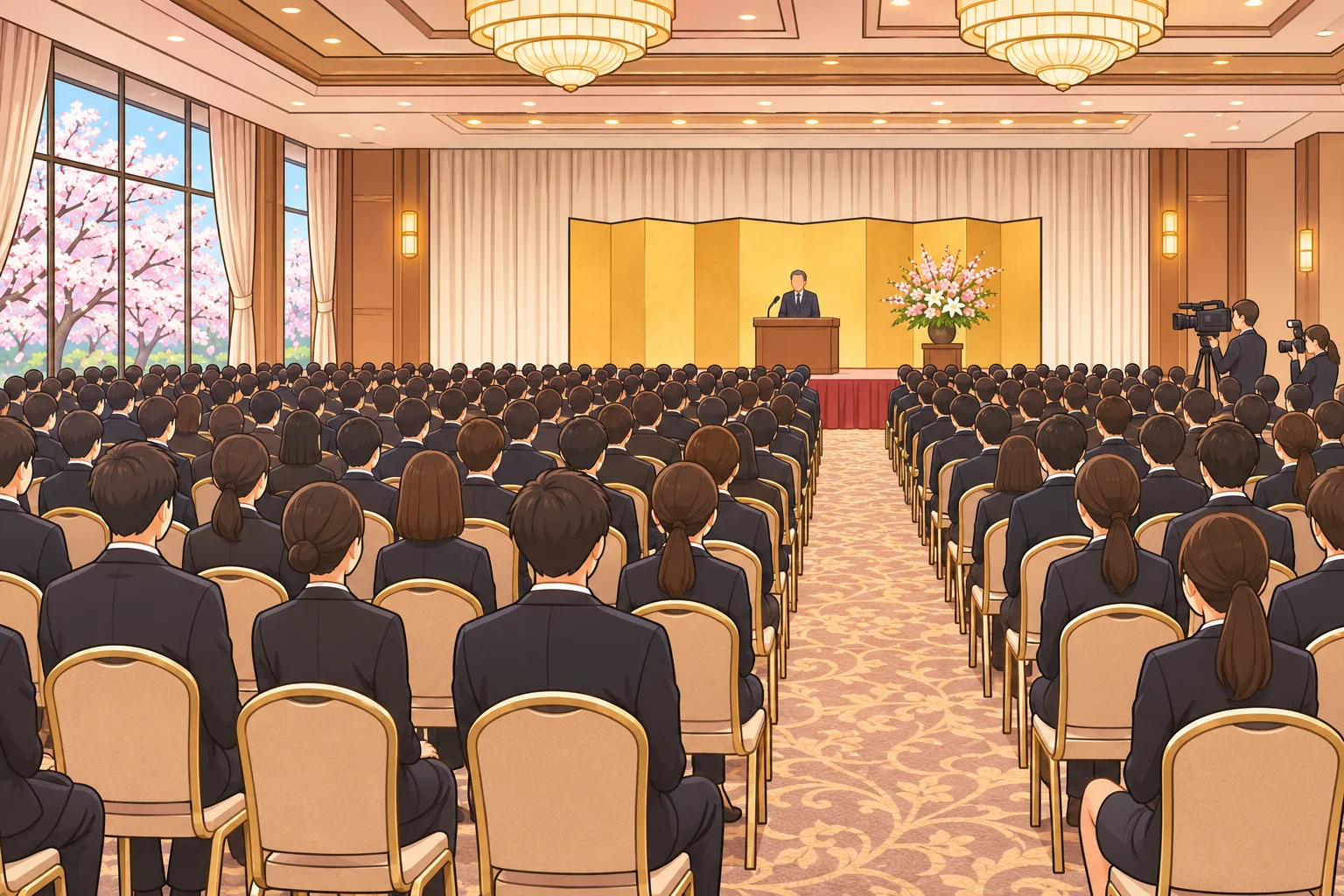
An April 1 entrance ceremony: hundreds of new hires in dark suits seated in rows as the president speaks (illustration).
What follows is training, often weeks of it and sometimes months. New employees study the company’s history and products, practice answering the phone, drill the layers of polite Japanese known as keigo, and rehearse how to hand over a business card. Many spend time on a factory floor or behind a shop counter. Some firms put the whole intake through a residential retreat. The people who join in the same year are called one’s dōki, "same period," and the bond is unusual: they are rivals for promotion, but also lifelong friends and an informal intelligence network. Twenty-five years later, everyone in a cohort will know who made department head and who was sent off to a subsidiary.
At the end of training comes haizoku, assignment to a department. New hires generally have little say. A law graduate might find himself selling to regional clients; a chemistry graduate might start in production planning at a plant. To someone used to applying for a specific job, this sounds bizarre. In the logic of a large Japanese company it is perfectly natural, because the company did not hire an accountant or an engineer. It hired a member, and it will decide over the coming decades what that member does.
The labor scholar Hamaguchi Keiichirō gave this a name that has caught on in Japan: "membership-type" employment, as opposed to the "job-type" employment found in most Western economies. Under the job model, a position exists first and the employer looks for someone to fill it. Under the membership model, a person joins the organization first and is fitted to positions later. Lifetime employment, seniority pay, regular job rotation, and mass graduate hiring all grow out of that single root.
02Lifetime Employment: Why Companies Kept People for Life
The phrase "lifetime employment" entered international vocabulary through James Abegglen, an American researcher whose 1958 book The Japanese Factory described a "lifetime commitment" between large Japanese firms and their workers. In the Japanese translation the idea became shūshin koyō, and the term stuck. In the early 1970s an OECD review of Japanese labor singled out lifetime employment, seniority-based wages, and enterprise unions as the defining features of the Japanese model; in Japan these came to be called the "three sacred treasures" of Japanese management, a playful borrowing of the term for the imperial regalia.
No law has ever required a Japanese company to keep anyone until retirement. Lifetime employment is a custom: the company does not dismiss its regular employees, and the employees do not leave. Two things hold the custom in place, one economic and one legal.
The economic reason is training. Large Japanese firms have traditionally hired very few experienced specialists from outside. Instead they develop people through on-the-job training, with seniors teaching juniors in the course of real work, combined with rotation every three to five years. After fifteen years a typical manager has done sales, planning, perhaps a posting abroad, and has built a deep knowledge of the company’s products, customers, and internal politics. That knowledge is enormously valuable inside the firm and worth much less anywhere else. Having invested so much, the company does not want to lose the employee; having acquired skills that are mostly company-specific, the employee has little reason to go.
The legal reason is that Japanese courts made dismissal very hard. After the war, judges developed what is known as the doctrine of abusive dismissal: a firing is void unless it has objectively reasonable grounds and is socially acceptable. After the oil shocks of the 1970s, case law added four tests for layoffs driven by business conditions, asking whether the cuts were truly necessary, whether the company had tried to avoid them, whether the selection of people was fair, and whether the process was proper. These principles were eventually written into the Labor Contract Act of 2007. In practice, a Japanese firm facing a downturn usually cuts overtime, freezes hiring, and moves people sideways into subsidiaries and affiliates, a practice called shukkō, before it thinks about layoffs.
The system is younger than its reputation. In the Meiji and Taishō eras, factory workers changed employers constantly, and skilled hands went wherever wages were best. From the late Meiji and Taishō years some big companies began trying to cut turnover and hold on to skilled workers with regular raises, retirement allowances, and mutual-aid schemes, though before the war they still laid people off freely when business turned bad. The custom spread widely only after World War II. In the bitter labor disputes of the late 1940s, unions made job security their central demand. Then, during the high-growth decades from the mid-1950s, companies were expanding so fast that finding people was a bigger worry than shedding them, and long-term employment became both feasible and profitable.
It also never covered everyone. Lifetime employment applied mainly to men in regular positions at large companies and in government. Workers at small firms, temporary staff, and most women were outside it from the start. The standard model of the high-growth era was the "corporate warrior" husband and the full-time housewife who quit her job at marriage and ran the home, with the husband’s pay calculated to support a family. After the Equal Employment Opportunity Act took effect in 1986, many firms split their staff into two tracks: sōgō-shoku, the career track with promotion and transfers, and ippan-shoku, the clerical track with neither. For a long time the first was overwhelmingly male and the second overwhelmingly female.
The real shock came with the collapse of the asset bubble in the early 1990s. The English loanword risutora, short for "restructuring," became a daily word in Japanese and narrowed in meaning to "being laid off." Firms stopped hiring regular staff in large numbers and filled gaps with dispatched workers, fixed-term contractors, and part-timers. Non-regular workers rose from about a fifth of employees around 1990 to close to two-fifths as of 2024. In 2019 Toyota’s president, Toyoda Akio, said publicly that it was becoming difficult to keep up lifetime employment, and the chairman of Keidanren, Japan’s main business federation, Nakanishi Hiroaki, said much the same that year. Coming from the head of the country’s largest company and the head of its most powerful business lobby, the remarks made headlines and, by press accounts, stayed in the news for weeks.
03Seniority Pay: How Years Turn into Salary and Rank
The companion to lifetime employment is nenkō joretsu, the seniority system, under which pay and rank rise with age and years of service. A new university graduate starts at a monthly salary somewhere in the low hundreds of thousands of yen and receives a modest raise every April. Many become section chiefs (kachō) around forty and some become department heads (buchō) in their late forties. Plotted on a chart, pay climbs steadily with age and peaks in the fifties.
Two lines of reasoning lie behind it. One is need. In the desperate years right after the war, the electric power workers’ union won a wage structure in 1946 that set most of the base salary according to age and number of dependents. Known as the Densan wage system, after the union’s name, it influenced pay in many other industries. The logic was simple: people need more money as they marry, have children, buy homes, and pay school fees, so pay should rise as their lives do. The other line is incentive. Employees are paid less than they contribute when young and more than they contribute when older, which amounts to leaving part of their wages on deposit with the company until middle age. Anyone who quits early forfeits the deposit, and retirement allowances, calculated on years of service, rise steeply the longer one stays. Seniority pay and lifetime employment hold each other up.
Seniority has never meant pure time-serving. Proposed by the employers’ federation Nikkeiren in 1969 and spreading rapidly through large firms after the 1973 oil shock, the "skill-grade" system ranked employees by assessed ability and paid them by grade. In practice the assessments tracked years of service closely, and differences within a cohort stayed small for the first decade or so before widening in the employees’ thirties. This late sorting kept most people believing for a long time that they still had a shot at the top, which kept them working hard. When the gaps finally opened, those who did not make management were often given titles without subordinates, or sent to subsidiaries.
At the other end is mandatory retirement, teinen. For decades the standard age was 55. It rose gradually, and since 1998 the law has prohibited a retirement age below 60. The government then required employers to secure work up to 65, whether by raising the retirement age, abolishing it, or rehiring retirees, and from 2021 employers have been asked to make efforts to provide work up to 70. The most common arrangement is rehiring: an employee retires at 60, collects a lump-sum allowance, and comes back, sometimes as soon as the following Monday, on a contract doing similar work at a much lower wage.
- 1Join after universitya monthly salary in the low hundreds of thousands of yen
- 2A raise every Aprilmodest, but every year
- 3Around fortymany become section chiefs (kachō)
- 4Late fortiessome become department heads (buchō)
- 5Fiftiespay peaks
- 6Retire at 60lump-sum allowance, rehired on contract at a much lower wage
- 765 and 70employers must secure work to 65; from 2021, efforts to 70
Pay climbs with age and peaks in the fifties; after retiring at 60, a rehired employee does similar work for much lower pay.
From the 1990s many companies tried to replace seniority with seika shugi, pay for performance. Fujitsu was one of the early adopters, and its struggles, with employees setting easy targets and teamwork suffering, became a much-discussed cautionary tale. Around 2020 Hitachi, Fujitsu, KDDI, and other major firms announced moves to "job-type" employment, with pay tied to defined positions. The Japanese business press covered the shift intensively, though in most companies the change has been more cautious than the headlines, often limited to managers and specialists.
04Hiring the Graduating Class: Shūkatsu and the Spring Intake
In Japan, university students line up their jobs before they graduate and start together on April 1. This is shinsotsu ikkatsu saiyō, the simultaneous hiring of new graduates. Ideally, a student receives a diploma in March and sits in the entrance ceremony hall in April without a single day in between. Being a shinsotsu, a fresh graduate, is a status one holds only once, and it matters: miss it, and getting into a large company becomes much harder.
The process of finding that first job is called shūshoku katsudō, "job-hunting activities," almost always shortened to shūkatsu. It begins in the third year of a four-year degree with internships, many of them lasting a day or a few days and serving more as recruitment events than as real work experience. In March of the third year, companies officially open their recruiting season and hold information sessions. Students submit "entry sheets," application forms asking for a self-introduction, the thing they worked hardest at as a student, and their reasons for applying. Then come aptitude tests and rounds of interviews, from group discussions to a final meeting with executives. Under the timetable in force as of 2026, formal selection starts in June of the fourth year, though many companies quietly give "informal informal offers" earlier. On October 1, firms hold ceremonies to hand out formal offers, called naitei.
- 1
 1. Submit an entry sheet online with a self-introduction and reasons for applying.
- 2
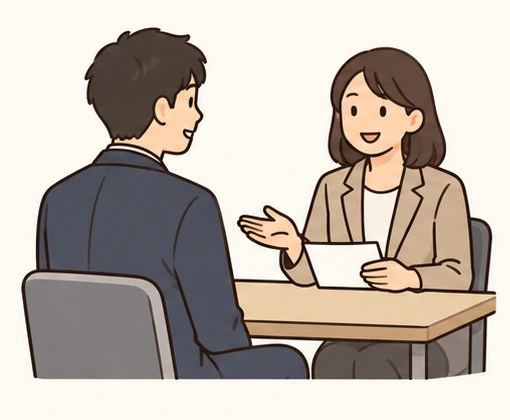 2. After written tests come several rounds of interviews, ending with executives.
- 3
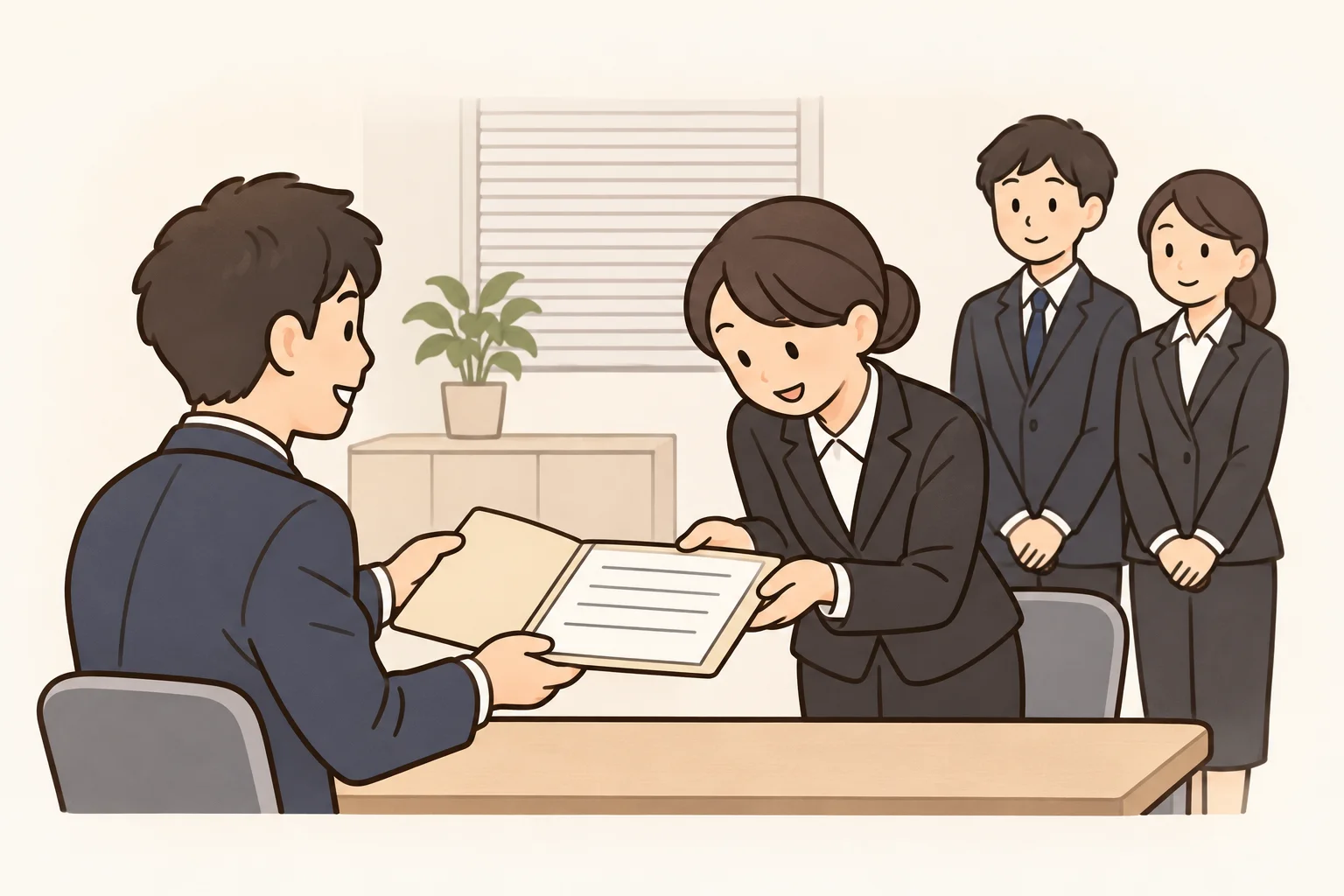 3. On October 1, students receive formal job offers (naitei).
- 4
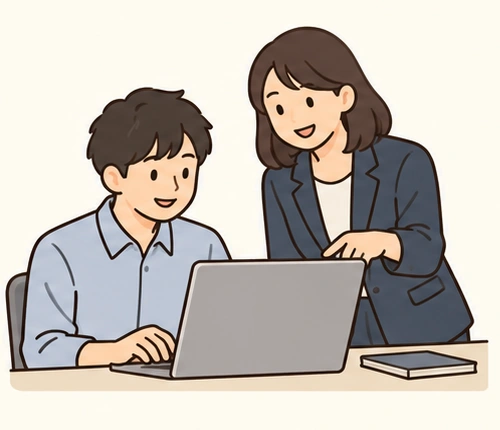 4. The following April they start work and learn from senior colleagues.
Shūkatsu has a uniform look, literally. Students wear the "recruit suit," black or very dark navy, with a white shirt and plain black shoes. Hair is dark and neat; women tie theirs back and wear skin-tone stockings. If you see clusters of identically dressed young people with identical black bags on Tokyo streets in spring, the job-hunting season has begun. Many students also seek out alumni of their own university who work at the companies they are targeting, a custom called "OB visits" (from "old boy"), to learn how things really work and to make a good impression early.
The hiring calendar has long been negotiated between business groups and universities. In 1953 universities, business organizations, and the education and labor ministries drew up a "hiring agreement" fixing when recruiting could start, but it was a gentlemen’s agreement with no penalties, companies kept jumping the gun, and the agreement was scrapped in 1996. The employers’ federation Nikkeiren, later merged into Keidanren, then issued its own charter, which Keidanren later turned into guidelines; the schedule shifted repeatedly: for a while publicity began in December and selection in April, later March and August, then March and June. In 2018 Keidanren announced it would stop setting rules, and from the class graduating in spring 2021 the government took over, asking companies to stick to the schedule.
- 1Third yearinternships
- 2March, third yearrecruiting opens, information sessions, entry sheets
- 3Tests and interviewsfrom group discussions to executives
- 4June, fourth yearformal selection starts (many give informal offers earlier)
- 5October 1ceremonies for formal offers (naitei)
- 6Diploma in March
- 7April 1everyone starts together
Under the timetable in force as of 2026: recruiting opens in March of the third year, selection starts in June of the fourth, offers come on October 1, and work starts on April 1.
The system serves both sides. Companies can take in a cohort of young people with no fixed professional habits and shape them as they please. Students need not learn a trade at university, because the company will teach them. That is why Japanese recruiters often care less about what a student studied than about general qualities: communication, cooperativeness, stamina, adaptability, and the prestige of the university. In interviews, students tend to talk about their club activities and part-time jobs more than their coursework.
The cost is that a person’s starting point depends heavily on the economy in the year they graduate. From the early 1990s to the mid-2000s, after the bubble burst, companies slashed hiring, and the period is remembered as the "employment ice age." Many who graduated then never got regular jobs and have drifted between non-regular positions ever since; they remain a recognized social problem. After the 2008 financial crisis, a wave of companies rescinded offers already made. Recently the situation has reversed. With a shrinking population of young people and steady demand, companies compete for graduates, and nearly all job-seeking students receive offers.
The spring intake connects directly to Japan’s education system. Which university you get into shapes which companies will look at you, one of the reasons entrance exams and cram schools loom so large in Japanese life.
05The Business Card Exchange
A first business meeting in Japan almost always opens with the exchange of meishi, business cards. The card gives the company, the department, the title, and the name. In a membership-based world, a person’s identity at work is largely defined by the organization they belong to and their place in it, so the exchange is a mutual introduction of rank and affiliation. It tells each side what level of politeness to use, where to sit, and how far the conversation can go.
There is a standard choreography. Cards are kept in a dedicated card case, never loose in a wallet or a back pocket. Both people stand. The visitor, or the junior party, offers first, turning the card so the text faces the recipient and holding it out with both hands or the right hand while stating the company and name and saying yoroshiku onegaishimasu, roughly "I look forward to working with you." When both offer at the same moment, each typically gives with the right hand and receives with the left, bringing the right hand up to support the received card at once. Offering one’s own card slightly lower than the other person’s is a gesture of humility, which leads to the small comedy of two people each trying to get their card underneath.
Having received a card, you look at it, take in the name and title, and, if the reading of the name is unclear, ask. Japanese names can be read in many ways, and the question is welcome. Once seated, you lay the cards on the table in front of you, with the card of the most senior person resting on top of your card case, and if there are several people across the table you arrange their cards in the order they are sitting, so you can match names to faces. The cards stay out until the meeting ends, when they go carefully into the case. Writing on someone’s card, stuffing it in a pocket, or fiddling with it while you talk all read as disrespect.
- 1
 1. Hold the card out with both hands, text facing the other person, and give your company and name.
- 2
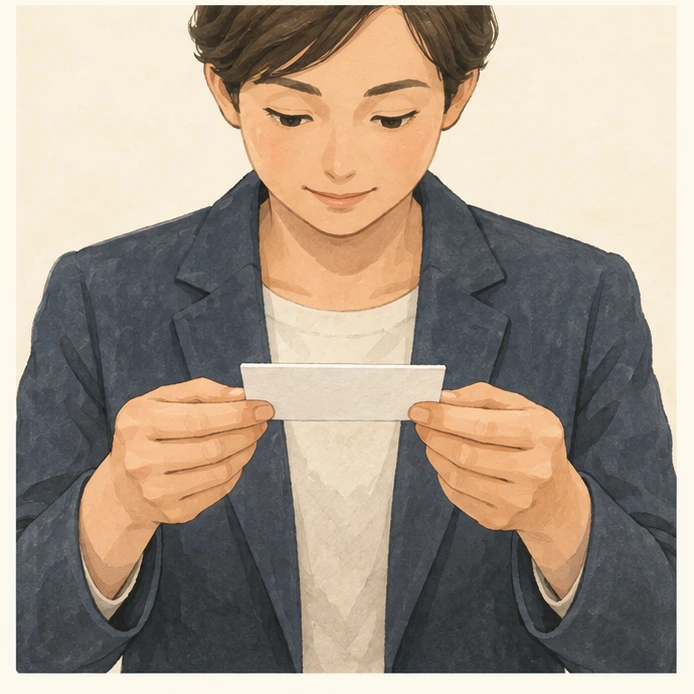 2. Look at the card you receive to check the person’s name and title.
- 3
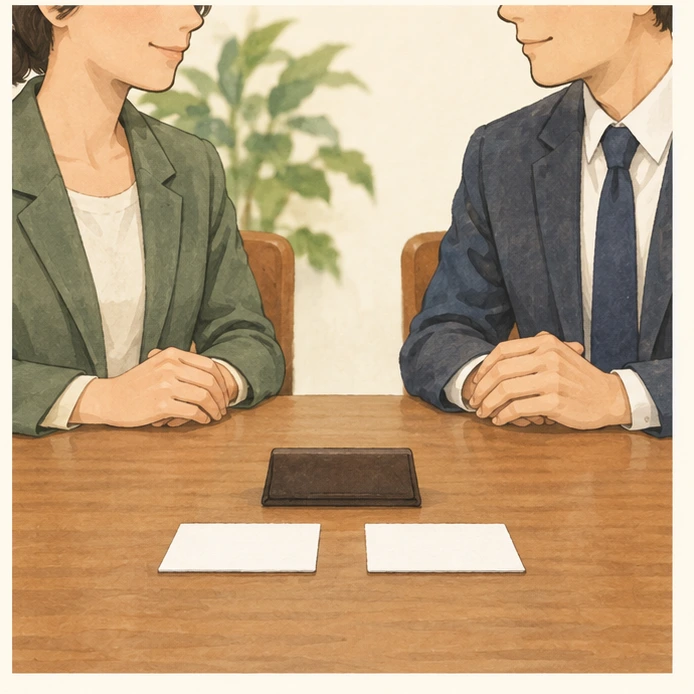 3. Once seated, lay the cards on the table in front of you and leave them there until the meeting ends.
New employees practice this in training, sometimes in pairs over and over. A salesperson might exchange a thousand cards a year, and Japan has a thriving industry of card-scanning services that put every card a company’s staff receives into a shared database.
06Nemawashi and Ringi: How Decisions Get Made
Foreign businesspeople dealing with Japanese firms often describe the same experience. In the meeting everyone is courteous, but no one commits. Then weeks pass without a word. Then, suddenly, an answer arrives, and once it does, things move quickly and smoothly. What happened in between were two processes, nemawashi and ringi.
Nemawashi is a gardening term. Before transplanting a large tree, a gardener digs around its base and cuts some of the thick roots, so the tree grows fine new roots and survives the move. Applied to organizations, it means going around to everyone with a stake in a proposal before the formal meeting, explaining the idea, listening to objections, adjusting the plan, and securing their support or at least their acquiescence. By the time the meeting is held, everyone knows what will be said and what will be decided. The meeting confirms; it does not debate.
The practice makes sense in an organizational culture that places a high value on harmony. Defeating a colleague in open argument or embarrassing a superior in front of others carries real costs. Nemawashi lets objections be raised in private and settled in private, so nobody loses face. It is also a way of sharing information: when every department has heard about a plan in advance, no one feels bypassed when it is carried out. Being good at nemawashi is considered a core professional skill.
Ringi is the formal paperwork that turns agreement into a decision. When something needs approval, whether buying equipment, signing a contract, or hiring someone, the person in charge drafts a ringi-sho, a proposal document stating what is to be done, why, and at what cost. It then circulates in sequence through the relevant section chiefs, department heads, and other affected departments, up to the executive with authority. Each person who reads it stamps it with a personal seal, a hanko, in a designated box. When all the boxes are stamped, the decision is made.
- 1
 1. The person in charge drafts the proposal: what, why and how much.
- 2
 2. It passes in order to section and department heads and other departments, each adding a seal.
- 3
 3. It reaches the executive with authority; once all seals are in place, the decision stands.
The system has been standard in government offices since the Meiji era; some trace its origins to decision-making in the late Tokugawa shogunate, others stress the influence of Prussian bureaucracy. After the war political scientists studied it as a hallmark of decision-making in Japanese government ministries. Companies adopted it widely. Its strengths are transparency, a written record, and broad participation, which means little resistance at the implementation stage. Its weaknesses are just as obvious. It is slow, with a proposal sometimes taking weeks to collect all its stamps, and responsibility is spread across a row of seals, making it hard to say afterward who actually decided. In practice the two processes work together: nemawashi first, to build agreement, then ringi to record it, at which point the stamping is largely a formality.
Those stamps carry a famous refinement. A junior employee placing a seal next to a superior’s is supposed to tilt it slightly to the left, so that it appears to be bowing toward the boss’s seal. This "bowing stamp" is a real custom in parts of banking, government, and old-line manufacturing, though no one can say when it started. It has never been a general rule, and today it is usually cited as the prime example of empty office formality.
Alongside nemawashi, one of the first rules a new Japanese employee learns is hōrensō, formed from the first syllables of hōkoku (report), renraku (inform), and sōdan (consult). The combination happens to be the word for spinach. The phrase is generally credited to Yamazaki Tomiji, president of Yamatane Securities, who popularized it in the 1980s. It asks subordinates to keep their bosses updated, pass on information, and talk things over before acting. The spirit is the same as nemawashi: no one should be surprised.
During the COVID-19 pandemic, the spectacle of employees commuting into the office just to stamp documents became a national talking point, and the government pushed to eliminate seals from administrative procedures. Many companies moved ringi to electronic approval systems. The paper and the hanko are fading. The habit of consulting everyone beforehand and confirming step by step is not.
07The Daily Rhythm: Trains, Overtime, and Drinks After Work
A Japanese office worker’s day usually starts on a crowded commuter train. In greater Tokyo, a one-way commute of about an hour is ordinary, and on the busiest lines at rush hour station staff sometimes help push passengers into the cars. Companies normally pay commuting costs in full, which makes living far out in the suburbs a common choice.
Many offices are open-plan, with each section’s desks pushed together into an island and the section chief seated at the head, often by the window, facing everyone. Some departments begin with a brief morning meeting. Office speech runs on set phrases. Otsukaresama desu, literally "you must be tired," serves as hello, thanks, and goodbye at almost any hour. Someone leaving before their colleagues says osaki ni shitsurei shimasu, "excuse me for leaving ahead of you."
Long hours were for decades the most criticized side of Japanese work. If the boss stayed, subordinates felt they could not go, and "service overtime," unpaid and unrecorded, was an open secret at many firms. The word karōshi, death from overwork, was coined in the late 1970s and became widely known from the late 1980s; English eventually borrowed it. In December 2015, a young woman in her first year at the advertising giant Dentsu took her own life after months of extreme overtime. Her death was officially recognized as work-related the following year and caused a national outcry. In 2018 the Diet passed a package of "work style reform" laws that for the first time set legal caps on overtime backed by penalties: in principle 45 hours a month and 360 a year, and no more than 720 a year even under special arrangements. The same reforms required employers to make sure staff entitled to ten or more days of paid leave actually take at least five of them each year, since many Japanese workers simply did not use theirs.
After-work drinking, the nomikai, was long seen as part of the job. Over beer and skewers in an izakaya, a Japanese pub, people say what cannot be said at the desk. Bosses hear complaints, and juniors learn what their bosses really think. Japanese sometimes joke about "nominication," a blend of nomu, to drink, and "communication." The year-end party (bōnenkai) and the spring welcome party for new hires are the big events of the calendar. Younger workers have grown increasingly resistant to obligatory drinking, and the pandemic interrupted the custom for several years. Today nomikai at many companies are smaller, less frequent, and less likely to end with someone being dragged along until the last train.
Transfers are another fixture of corporate life. Career-track employees can be ordered at any time to move from Tokyo to Ōsaka, Fukuoka, or overseas. When children are in school or a spouse has a job, many go alone, a practice called tanshin funin, leaving the family behind and returning home every few weekends. It has long been accepted as part of the deal at a large company, though more and more people now question it.
08An Old Order Loosening, and What You Can See
The old order is still the frame of Japanese working life, but it is coming loose in many places. Changing jobs no longer marks someone as a failure, especially among younger workers and in tech, consulting, and foreign firms, and ads for job-change sites line the walls of commuter trains. Many companies now actively recruit "second new graduates," people who left their first employer within a few years, and some welcome back former employees. The pandemic spread remote work among white-collar staff in the big cities. Plenty of companies have since called people back to the office, but the assumption that everyone must appear at their desk every day has been broken.
The deeper driver is demographics. Japan’s working-age population keeps shrinking, and companies must rely more on women, older people, and foreign workers. Women’s employment has risen sharply in recent years, though the share of women in management remains far below Western levels. A growing number of older employees also makes the seniority wage curve, under which the most expensive workers are the oldest, harder to afford, which is one of the direct pressures behind pay reform.
For a visitor, the Japanese workplace is not something visible only in documentaries. Stand in Shinjuku or Shinagawa station around eight on a weekday morning to feel the density of the commuting crowd. In the evening, go to Shinbashi, where yakitori stalls and izakaya under the railway arches fill with men and women who have loosened their ties. The plaza outside Shinbashi station, with its old steam locomotive on display, is where television crews go when they want to ask "the ordinary salaryman" what he thinks about the news. In early April, in the Marunouchi business district by Tokyo Station, you can spot new employees in suits that do not quite fit yet, walking a step behind their seniors. In spring, around universities and office districts, you will see students in black recruit suits on their way to interviews.
If you are going to do business with a Japanese company, a few things will carry you a long way. Bring plenty of business cards. Offer and receive them with both hands, look at each one, and lay them on the table. Do not expect an answer at the first meeting; your counterparts need to go back and do their nemawashi and send a ringi document around. And when the answer does come, expect it to be carried out quickly and thoroughly, because by then everyone who matters has already agreed.