
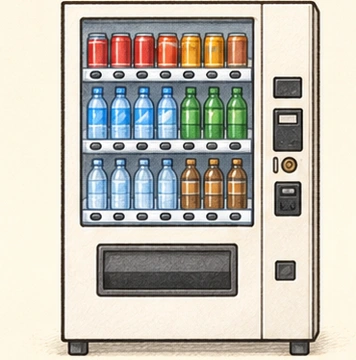
At a glance
Why Japan has nearly four million vending machines, how hot-and-cold cans and disaster-response models came about, and how a visitor can use them well.
- As of the end of 2025, Japan had about 3.9 million vending and automatic service machines, some 2.2 million of them selling drinks.
- The number peaked at about 5.6 million around 2000 and has declined since, as convenience stores spread and energy rules tightened.
- Tawaraya Takashichi designed a cigarette-vending device in 1888 and in 1904 built a stamp and postcard machine that doubled as a mailbox.
- A switchable hot-or-cold machine selling hot canned coffee appeared in 1973; red labels under the buttons mean hot, blue mean cold.
- A 500 ml bottle usually costs around 200 yen (as of 2025); 1-yen and 5-yen coins are almost never accepted.
Walk almost anywhere in Japan and a vending machine will find you. They stand on station platforms and in quiet residential lanes, at rice-field edges and mountain lay-bys, and even on the summit of Mount Fuji, with reports of more along the climbing trails. The Japanese call them jihanki, short for jidō hanbaiki, "automatic selling machine," and the country has nearly four million of them, one of the highest densities in the world. Most sell drinks: a can of coffee too hot to hold in January, barley tea cold enough to hurt in August. Others sell ramen, oden, frozen dumplings, fresh eggs, or soup stock. This is an introduction to why Japan filled itself with these glowing boxes, how they came to work the way they do, and how to use them well when you visit.
01Nearly Four Million Small Shops
The first thing most visitors notice is the sheer number. In a Tokyo neighborhood you pass one every block or two. In the countryside you find a single machine standing alone beside an unstaffed rural station or at the edge of a paddy, lit up white at night while frogs and insects call around it. Industry counts put Japan’s vending and automatic service machines at around 3.9 million as of the end of 2025, about 2.2 million of them selling beverages. The figure peaked at about 5.6 million around 2000 and has slowly declined since, as convenience stores spread and energy rules tightened, but it is still far beyond what you find elsewhere.
Several things had to line up for this to happen. The first is public safety. A machine holding a few hundred cans and a drawer full of change, left unattended outdoors for years, is a tempting target in most countries. In Japan it mostly stands undisturbed, and that single fact makes the whole system possible.
The second is land and labor. Shop space in Japanese cities is expensive and so are staff. A vending machine needs about a square meter. The usual arrangement is simple: a beverage company or its operator installs and stocks the machine, and the owner of the spot, often a household or a small business with a bit of frontage or a corner of a parking lot, pays the electricity and takes a commission on sales. For many elderly homeowners the machine by the front door is a quiet, steady supplement to a pension.
The third is how people drink. Japanese commuters buy a bottle of tea or a can of coffee on the way to work, on the platform, between meetings, and a machine that is always there and always open fits that rhythm better than any shop.
Money mattered too. The 100-yen coin first appeared in 1957 and went into mass circulation in its cupronickel form in 1967, and the 500-yen coin arrived in 1982; larger coins let machines sell more valuable goods without fumbling with paper. Then there is competition. Coca-Cola, Suntory, Kirin, Asahi, Itō En, and DyDo all treat machines as a sales channel on a par with convenience stores; DyDo in particular makes around 80 percent of its domestic drink sales through them. A machine on a good corner captures that corner’s thirst, so companies have spent decades placing them wherever they could.
02From Cigarettes and Stamps to Hot and Cold
Japan usually credits the Meiji-era inventor Tawaraya Takashichi as the pioneer of domestic vending machines. In 1888 he designed a device for selling cigarettes, and in 1904 he built a machine that sold postage stamps and postcards and doubled as a mailbox. That one survives at the Postal Museum in Tokyo: a wooden cabinet into which you dropped a coin (said to have been one of the copper coins of the day) and received your stamp. None of these early machines were made in large numbers. They were clever curiosities rather than part of everyday life.
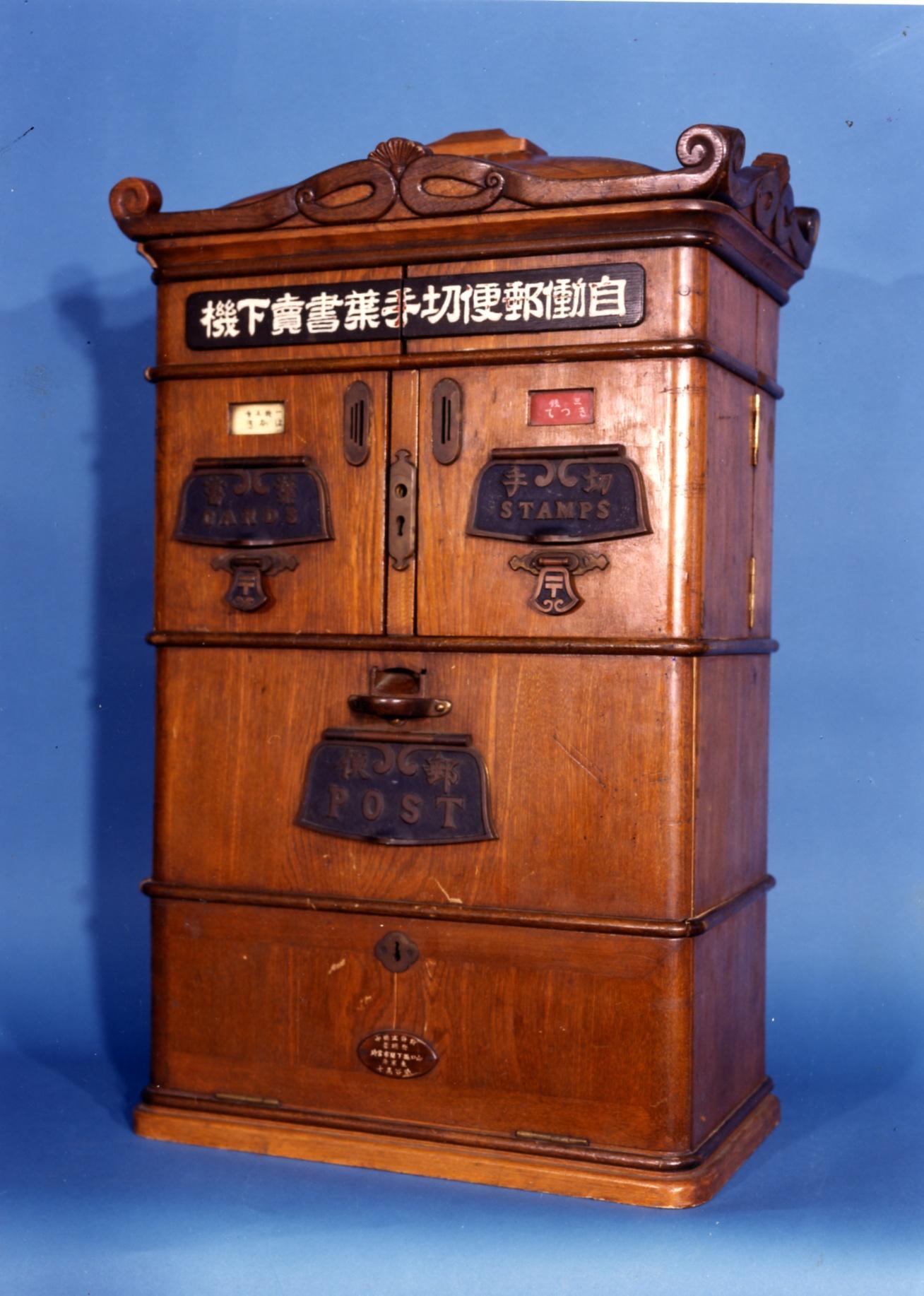
Tawaraya Takashichi’s 1904 stamp-and-postcard vending machine, a wooden cabinet that also served as a mailbox. Postal Museum Japan.
Everyday life arrived with the postwar boom. In 1957 Hoshizaki, then Hoshizaki Electric, brought out Japan’s first domestically made juice vending machine, and "fountain" juice dispensers became popular in department stores and stations, with orange juice churning visibly inside a clear dome; a coin bought you a paper cup of it, about 10 yen a cup as many people remember it. From 1962 Coca-Cola rolled out bottle vending machines across Japan, and their red cabinets became one of the symbols of a new consumer age. Railway stations meanwhile replaced ticket windows with automatic ticket machines, and the whole country learned the sequence of coin, button, and slot.
The innovation that most defines the Japanese machine came in the 1970s, as canned coffee took off. In 1973 the beverage company Pokka worked with the machine maker Sankyo Denki, now Sanden, to produce a switchable hot-or-cold machine that could sell its coffee hot, and by the late 1970s machines that heated some columns and chilled others inside the same cabinet had appeared and spread. Since then, the buttons of Japanese machines have carried colored labels: red for attakai, written with a drawn-out vowel as "atta-ka~i," meaning nice and warm, and blue for tsumetai, "tsume-ta~i," nice and cold. For many Japanese those two stretched-out words are bound up with memories of seasons: buying a hot can outside the station after a late shift and holding it in both hands before drinking it. Canned coffee became a whole category of its own, and a single machine may still offer several kinds, from black to heavily milked and sweetened, each with loyal fans of its can design.
The 1980s and 1990s were the high point. Beyond drinks and cigarettes, machines sold beer and sake, cup noodles, batteries, newspapers, and ice cream. The ease with which minors could buy alcohol and tobacco eventually drew criticism. In 1995 the national liquor retailers’ association voluntarily resolved to remove its old-style outdoor alcohol machines by May 2000, and in 2008 cigarette machines switched to requiring an adult identification card called taspo. Both kinds have grown scarce since. The taspo service ended in March 2026; since then only cigarette machines fitted with another age-verification reader, such as one for driver’s licenses or My Number cards, can keep selling, and as of 2026 such machines are still few.
03The Engineering in a Simple Box
A Japanese vending machine looks plain, but it is a careful piece of engineering. A typical drinks machine holds around thirty products. Some columns are refrigerated, others heated, and the operator switches columns between hot and cold as the seasons turn. The machines check coins and banknotes closely and give change reliably; swallowing someone’s money is rare.
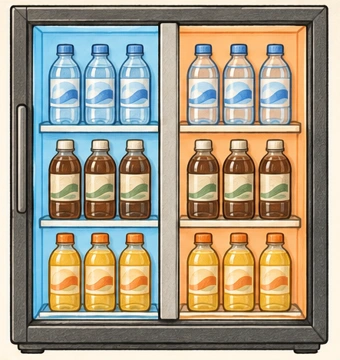
Some columns are chilled and others heated; the operator switches columns between hot and cold as the seasons turn.
How seriously Japan takes that reliability shows in a story from the late 1990s, when people fed machines foreign coins of similar size and weight to the 500-yen coin and collected the change. The problem was one of the reasons the 500-yen coin was redesigned in 2000. Vending machines, in other words, helped shape the national currency.
Energy has been a long-running issue. A machine that heats and cools around the clock uses real power, and after the Great East Japan Earthquake of 2011, when electricity was scarce, vending machines were singled out as symbols of waste. The industry pointed to energy-saving designs it had already been rolling out: machines that stop chilling during the afternoon peak, relying on drinks cooled in advance (a feature that dates back to the mid-1990s), and heat-pump designs that use the warmth removed from the cold side to heat the hot side. LED lighting replaced fluorescent tubes. A new machine today draws a fraction of what one did in the 1990s.
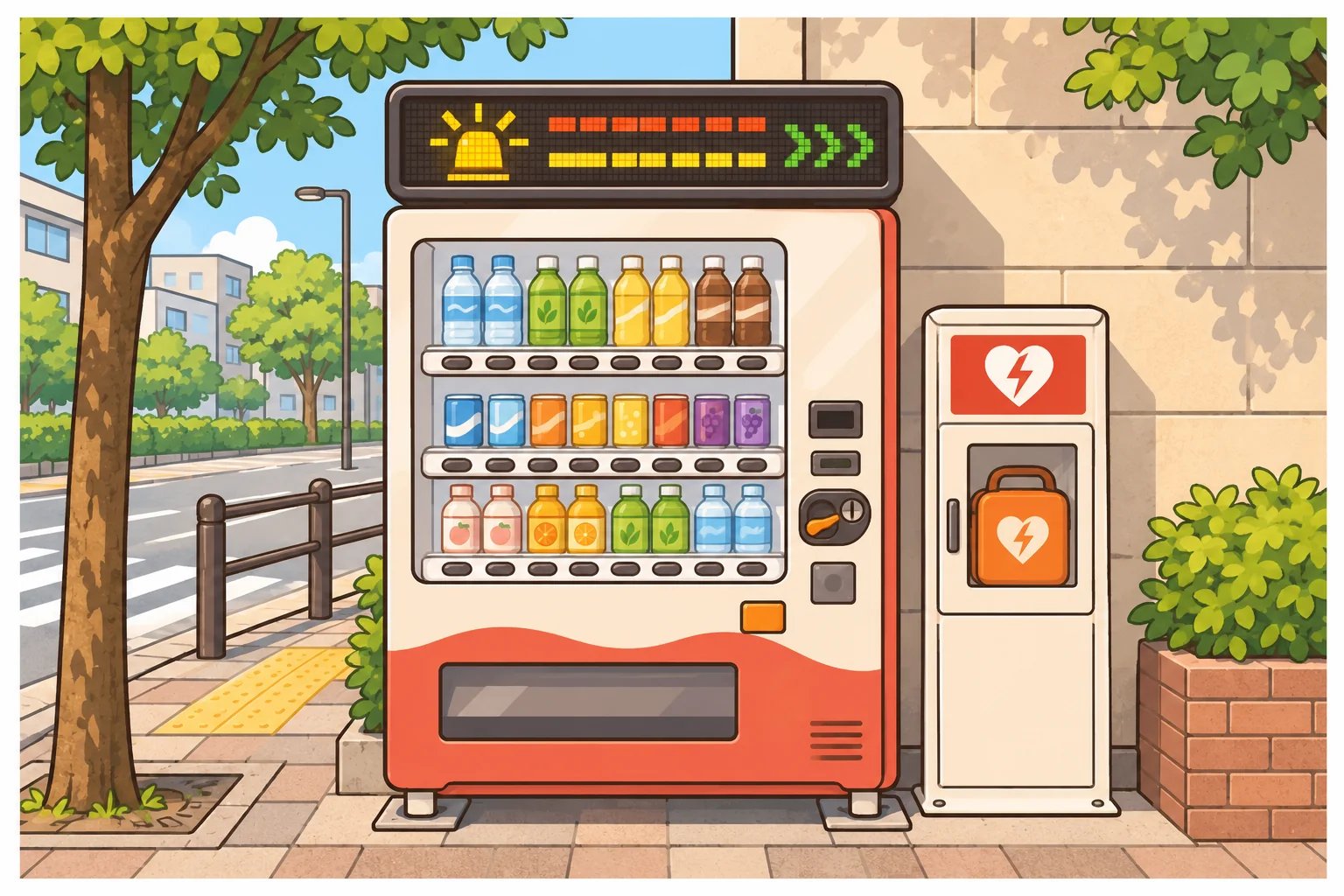
A disaster-ready vending machine on a street corner, with an electronic display on top and an AED cabinet beside it (illustration).
Japan has also turned some machines into small pieces of public infrastructure. "Disaster-response" vending machines sell drinks normally, but after an earthquake or similar emergency the operator can switch them, by key or remote signal, to give out drinks for free to people sheltering nearby. Some carry scrolling displays that show news headlines in ordinary times and evacuation information in emergencies. Some have an AED, an automated external defibrillator, mounted beside them. Some double as free Wi-Fi hotspots.
Payment has modernized as well. Many machines accept transit IC cards such as Suica and PASMO, and many take QR-code smartphone payments. A generation of machines with cameras that suggest drinks based on the apparent age and sex of the person standing in front of them caused a stir in Tokyo stations.
04Oden in a Can and Frozen Gyoza at Midnight
Part of what fascinates visitors is the range of things for sale. One famous example is the canned oden of Akihabara, a can of konnyaku, chikuwa fish cake, quail eggs, and more in warm broth; some versions reportedly added daikon radish and another kind of fish cake, with a small bamboo skewer. Around the country machines sell dashi soup stock, fresh eggs and vegetables from the farm behind them, rice cakes, and fruit. At Aomori, Hirosaki, and other stations, machines sell nothing but Aomori apple juice, and Tottori is said to have machines for pear drinks and Shizuoka machines devoted to tea.
During and after the COVID-19 pandemic, frozen-food machines spread quickly. Manufacturers introduced cabinets that keep food at minus 18 to minus 25 degrees, and gyoza shops, ramen restaurants, and others began selling their own frozen products from them, day and night, without staff. Some small businesses now sell almost entirely through a single machine outside the door.
Then there are the retro machines. In the Shōwa era, machines sold hot udon, hamburgers in foil, and toasted sandwiches, heating them inside and delivering them after half a minute or so. Most were discontinued long ago and spare parts are hard to find, but a handful survive at roadside "vending machine diners" in Gunma and elsewhere, at the roadside station at Akita Port, where udon and soba machines from an old shop in Tsuchizakiminato were moved, and, most famously, at a used-tire shop in Sagamihara, Kanagawa. They draw enthusiasts from all over Japan. The noodles are nothing special. People come for the atmosphere of a late-night highway stop in the 1970s.
A cousin worth knowing is the meal-ticket machine, the shokkenki, found inside ramen shops, beef-bowl chains, and standing soba counters. You buy a ticket for your dish at the machine and hand it to the cook. The staff never touch cash and you never need to place an order out loud. It sells nothing itself, but it comes from the same instinct: whatever a machine can do, let the machine do it.
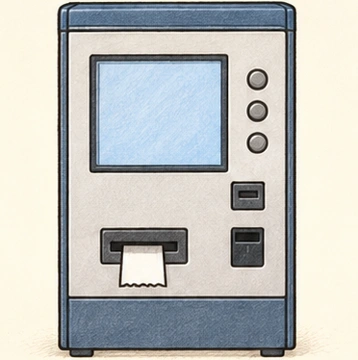
A meal-ticket machine at a ramen or beef-bowl shop: buy a ticket first, then hand it to the staff.
05Using a Vending Machine in Japan
Using one is easy. Since the 2025 price rises, a 500-milliliter bottle usually costs around 200 yen (as of 2025), more at airports, mountain huts, and tourist spots. Machines take 10, 50, 100, and 500-yen coins and 1,000-yen notes; some take larger notes, and almost none take 1-yen or 5-yen coins. After you insert money, the buttons under the drinks you can afford light up. Press one, and the drink drops with a clunk into the slot at the bottom. Bend down to take it out, then press the change lever for your coins. If you see a card-reader symbol, you can simply tap a transit card instead.
- 1
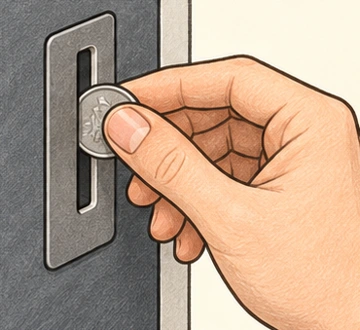 Insert coins or a 1,000-yen note (1-yen and 5-yen coins are almost never accepted).
- 2
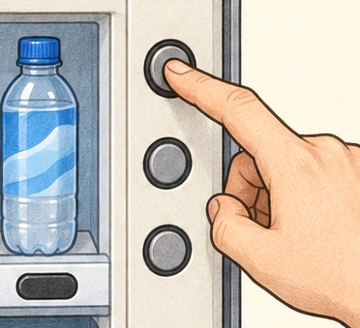 The buttons under drinks you can afford light up; press the one you want.
- 3
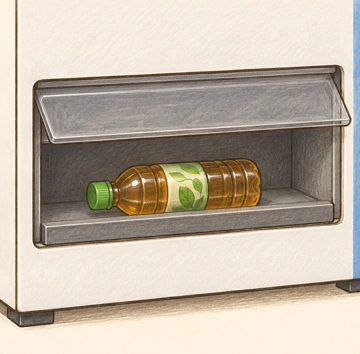 The drink drops into the slot at the bottom; take it out, then press the change lever.
- 4
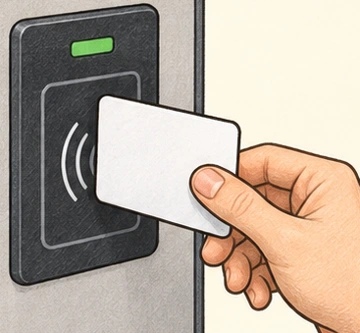 If the machine shows a card-reader symbol, you can simply tap a transit card instead.
In winter, check the label colors: red is hot, blue is cold. Hot cans come out genuinely hot, so it helps to hold them in a sleeve or a handkerchief at first. Public trash bins are rare in Japan, but most vending machines have recycling bins beside them for cans and plastic bottles. Use them for drink containers only, not general trash. Many people stand by the machine and finish their drink before moving on, which is perfectly normal and a little more relaxed than drinking while walking.
Hunting for interesting machines is a pleasure in itself. Look for regional drinks at stations and roadside rest stops, for the machine selling bottled milk outside the bath at a hot-spring inn, and for the small "disaster response" sticker on a machine by a mountain road. And there is a feeling many people who have lived in Japan will recognize: walking at night through an unfamiliar small town, seeing a patch of light far ahead, and finding, when you reach it, a vending machine humming quietly to itself.