
At a glance
How weekly TV deadlines, hand-painted cels and production committees shaped anime’s look, with close readings of Akira and Evangelion and places to see anime in Japan.
- Japanese TV anime is usually animated "on threes," eight drawings per second.
- Astro Boy, first broadcast on January 1, 1963, was Japan’s first domestically produced weekly TV anime series.
- A TV episode runs about 24 minutes, and one season, or cour, is usually 12 or 13 episodes.
- Until around 2000 almost all anime was made on cels; Sazae-san kept using them until 2013.
- Since the 1990s most TV anime has been funded by production committees of several companies.
Anime is simply the Japanese word for animation, but outside Japan it has come to mean something specific: characters with large expressive eyes, long serialized stories, sudden freeze-frames in the middle of a fight, and a willingness to treat cartoons as drama for adults. Much of what makes anime look the way it does comes from economics. Japanese studios had to deliver a new episode every week on television budgets, and the shortcuts they invented hardened into a style. This piece explains how television anime is made, how hand-painted cels produced its classic look, how the home-video boom of the 1980s created a market for more ambitious work, and why two titles in particular, Akira and Neon Genesis Evangelion, changed how the world and Japan itself saw the medium. It ends with where to see anime, and how it is made, when you visit Japan.
01Why anime moves the way it does
For most of the twentieth century the global standard for animation was Disney. A Disney feature ran at 24 frames per second, and the animators drew a new image for every frame or every second frame. Clothing rippled, hair swung, shadows slid across faces. This is known as full animation, and it is enormously expensive.
Japanese animation began by trying to match that standard. When Tōei Dōga (Toei Animation) released The Tale of the White Serpent in 1958, Japan’s first color animated feature, the studio openly aimed to become an Eastern Disney; accounts of how long it took range from just over a year to two and a half years. What pushed Japan in a different direction was television. A weekly series cannot afford twelve or twenty-four drawings per second. So Japanese studios worked out a vocabulary of what is called limited animation. A character speaks and only the mouth changes. A runner cycles through the same few drawings. The camera pans slowly across a single detailed painting to suggest movement. At the climax of a punch or a sword stroke, the image simply stops, with speed lines radiating behind it. Animating "on threes," eight drawings per second, became the norm for Japanese TV.
Film runs at 24 frames per second; Japanese TV animation uses eight drawings per second, animating “on threes.”
These were economies, but they turned into an aesthetic. Because the picture often holds still, anime puts great weight on composition, on character design, and on the impact of a single striking frame. Directors compensate for the lack of continuous motion with editing rhythm, carefully planned storyboards, and voice acting. Japanese fans will complain that an episode’s drawing has "collapsed" when quality slips, and they will pass around a few seconds of especially fluid action and name the individual animator responsible. Fewer drawings meant each drawing was looked at harder.
The audience was different too. American TV cartoons were long treated as children’s programming. Anime grew up alongside manga, Japanese comics, whose readership ran from schoolchildren to salaried workers on commuter trains. So anime could carry war, death, political intrigue and adolescent self-loathing across dozens of episodes without anyone thinking it strange.
02From short films to Astro Boy
Japan’s first animated films appeared in 1917, when three men, Shimokawa Ōten, Kitayama Seitarō and Kōuchi Jun’ichi, each produced short works of a few minutes. Before and during the war, animation mostly meant shorts, and some were propaganda. Momotarō: Sacred Sailors, a feature-length film released in 1945, was made with navy backing.
The postwar story has two turning points. The first was the founding of Tōei Dōga in 1956, a studio system that trained a generation of animators, including Miyazaki Hayao and Takahata Isao, who would later found Studio Ghibli. The second was Tezuka Osamu, the most important manga artist of the postwar era. Tezuka had always wanted to make animation. He set up his own studio, Mushi Production, and on January 1, 1963, Fuji Television began broadcasting his Tetsuwan Atomu, known in English as Astro Boy. It was the first domestically produced weekly television anime series with half-hour episodes.
To win the time slot, Tezuka accepted a fee per episode far below the real cost. He made up the difference through character licensing, Atom’s face on chocolate wrappers and toys, and by selling the series abroad, including to American television, where NBC Enterprises distributed it from September 1963. Critics have long argued that this undercutting set a low price for the whole industry, one that animators still pay for. It also established a model that still runs today: the show itself need not turn a profit, because it is the window through which characters reach the public, and the money comes back through merchandise, records, and later video and games. After Astro Boy, anime spread rapidly across Japanese television. Sazae-san, a gentle family comedy that began in 1969, is still on the air every Sunday evening and holds the record as the longest-running animated TV series in the world.
03How a TV episode gets made
A standard TV anime episode today runs about 24 minutes, which leaves around 20 minutes of story after the opening, ending and commercials. Series are scheduled by the quarter. One season, called a cour in industry slang, borrowed from the French, is usually 12 or 13 episodes. Popular shows run two cours, four, or years on end.
An episode passes through a long chain of hands. Once the script is set, a storyboard, e-konte, lays out every shot as rough sketches with timing, camera moves and dialogue. Layouts then fix the frame, character positions and background perspective of each shot. Key animators, genga, draw the essential poses of each movement. An animation director, sakuga kantoku, corrects their work so that characters look consistent across an episode drawn by many people. In-between animators, dōga, fill in the drawings between the key poses and produce clean lines. Then come color, backgrounds painted by the art department, and finally compositing, still called photography, satsuei, in Japanese, where characters and backgrounds are combined and lighting effects added before editing and voice recording.
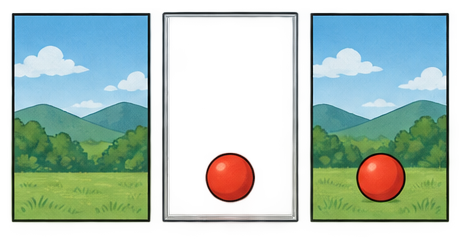
- 1
 Storyboard: every shot sketched, with timing, camera moves and dialogue.
- 2
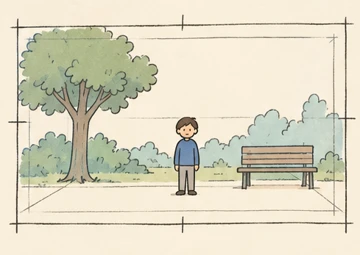 Layout: the frame, character positions and background perspective are fixed.
- 3
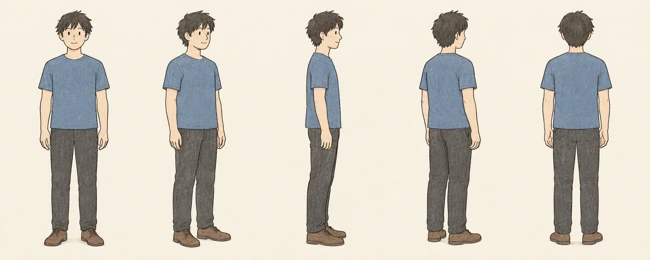 Key animators draw the main poses; in-betweeners fill the drawings between them.
- 4
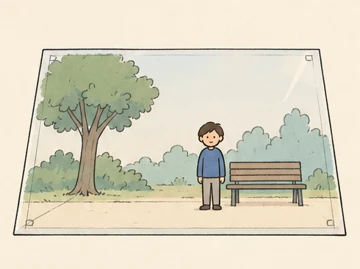 Compositing: characters and background are combined before editing and voice recording.
Rarely does one company do all of this. The lead studio holds the director and core staff, while key animation, in-betweens, color and backgrounds are often subcontracted to other studios, and from there to companies in South Korea, China and Southeast Asia. Twenty or thirty names in the key-animation credits of a single episode is normal. The junior staff known as production assistants, seisaku shinkō, keep the schedule moving, often by driving between studios in western Tokyo to collect drawings. It is a classic entry-level job in the industry, and the work is relentless.
Financing has its own Japanese pattern. From the 1990s onward, most TV anime has been funded by a production committee, seisaku iinkai: a record label, a publisher, a toy maker, a TV station, an advertising agency and a video distributor pool money and share the rights income according to their stakes. The arrangement spreads risk and lets unusual projects get made. Its best-known weakness is that the animation studio itself often has a small share or none, so when a series becomes a hit, the people drawing it see little of the upside. In-between animators are typically paid per drawing, and their low pay is a long-running public concern in Japan.
Production committee (investors)
- A record label
- A publisher
- A toy maker
- A TV station
- An advertising agency
- A video distributor
- Share rights income by stake, spread the risk
Animation studio
- Holds the director and core staff
- Subcontracts key animation, in-betweens, color, backgrounds
- Often a small share or none
- In-between animators paid per drawing
The investors share the rights income by stake; the studio that makes the show often has a small share or none.
The committee model also produced late-night anime. From the late 1990s, a large share of new series began airing after midnight, aimed at adult fans rather than children. Late-night slots are cheap for broadcasters, and the revenue comes chiefly from Blu-ray and DVD sales, music and merchandise. As of 2026, in a typical season Japan premieres dozens of new series, and most of them air late at night.
04Cels: paint on transparent sheets
Until around 2000, almost all Japanese animation was made on cels. The word comes from celluloid, the cellulose nitrate film originally used. Later the sheets were made of the less flammable cellulose acetate, but the name stuck, and Japanese animators still say seru.
The process went like this. An animator drew each image of a character in pencil on paper. The lines were transferred to a transparent sheet, at first traced by hand, and from the 1960s usually by a xerographic machine that printed the pencil lines directly onto the cel. The sheet was then turned over and painted on the back. Seen from the front, the black lines sat on top and the flat color lay underneath, giving clean edges. Animation paint came in numbered colors, and each production kept a color chart: the hero’s hair is this number in daylight and a different number in a night scene.
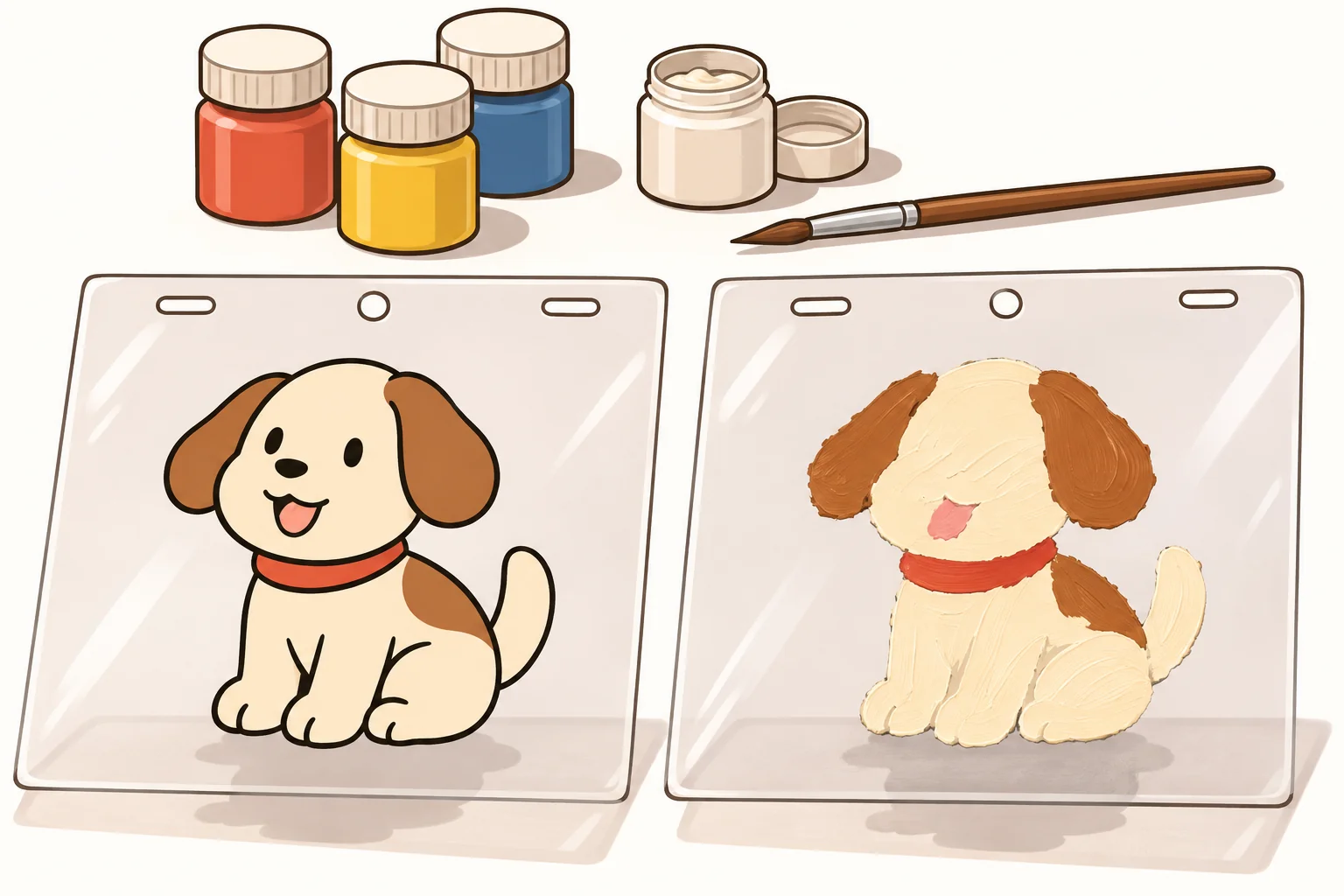
Front and back of a hand-painted cel: black lines over flat colour in front, the paint layer visible behind (illustration).
Backgrounds were painted separately on paper, usually in gouache-like poster paint, with far more texture and detail. At the camera stand, the background went at the bottom, and several cel layers were stacked on top in order: the character’s body on one, the mouth on another, the hair blowing in the wind on a third, a branch in the foreground on a fourth. A camera mounted overhead shot down through the stack, one frame at a time, and between frames the operator swapped only the layers that needed to move. Anything that stayed still did not have to be redrawn. That is the physical basis of limited animation.
- 1
 After the lines go onto the clear sheet, it is turned over and painted on the back.
- 2
 The background is painted separately on paper, with far more detail.
- 3
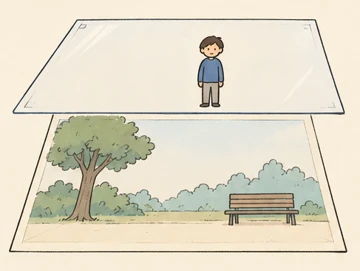 The background goes at the bottom, with the character cels stacked on top.
- 4
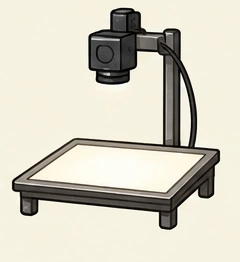 An overhead camera shoots each frame, swapping only the layers that move.
Cels had limits. Each added sheet slightly grays the colors beneath it, so stacks were usually kept to four or five. Every sheet had to be painted by hand, which also limited how many colors could be used. The familiar look of older anime, flat blocks of color for characters laid over soft, painterly backgrounds, two different kinds of picture sharing one frame, comes directly from this technique.
In the second half of the 1990s, ink-and-paint and compositing moved to computers. Pencil drawings were scanned, colored in software and composited digitally. Tōei was among the first studios to switch, around 1997, and by the early 2000s most TV anime had gone digital. Sazae-san was one of the last holdouts and kept using cels until 2013. Today even in-betweening is increasingly drawn directly on tablets. Unlike Hollywood, though, Japanese studios have not moved wholesale to 3D computer animation. Most anime is still built on hand-drawn linework, which is why it keeps its graphic, drawn quality. Original production cels from famous titles are now prized by collectors and can sell for high prices at auction.
05Robots, space battleships and the first adult fans
In the 1970s anime began to find an older audience. The TV series Space Battleship Yamato drew modest ratings when it first aired in 1974, but a theatrical compilation released in 1977 had teenagers and college students queuing outside cinemas, many of them publicly identifying as anime fans for the first time. In 1979 director Tomino Yoshiyuki’s Mobile Suit Gundam recast the giant robot as a mass-produced weapon in a war with armies, politics and sympathetic people on both sides. It underperformed on its first run, then became enormous through reruns and plastic model kits, the famous Gunpla.
This generation of fans came to be called otaku. They made fanzines, went to conventions, studied staff credits in anime magazines, and many of them joined the industry themselves. Otaku culture and Akihabara deserve their own story. The point here is that Japanese studios could take creative risks because there were adults willing to spend money on what they made.
06OVA: anime sold straight to fans
The spread of home video recorders in the 1980s created a new outlet: anime that skipped both television and cinemas and went straight to tape for sale or rental. These came to be called OVA, original video animation. Dallos, released in December 1983 with Oshii Mamoru and Toriumi Hisayuki behind it, is generally regarded as the first.
The appeal of the OVA was freedom from television’s rules. TV had to think about children, sponsors and the weekly deadline. An OVA answered only to the people who bought it. That meant it could be more violent and more explicit, but also more polished, since the budget could be concentrated on two or three episodes and the animation was often far better than anything on TV at the time. Hard science fiction, military drama, horror and fan-service comedy all found a market. Even something as vast as Legend of the Galactic Heroes was released as an OVA series, with 110 main episodes issued between 1988 and 1997.
The standalone OVA market shrank after the early 1990s, but its business logic survived. Late-night TV anime, which earns most of its money from disc sales to core fans, is in effect the OVA model moved back onto broadcast television. The label itself has since stretched to cover episodes bundled with manga volumes and exclusives released online.
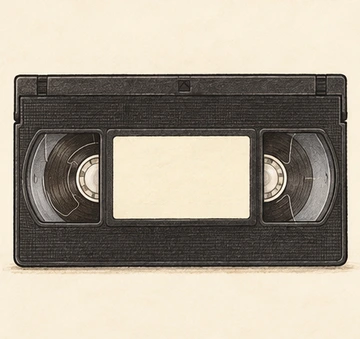
1980s: videotapes for sale or rental.
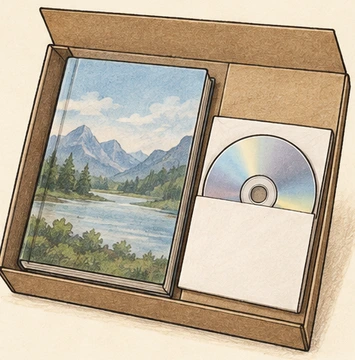
Bundled with manga volumes.

Released exclusively online.
07Akira: the manga and the 1988 film
When people say Akira, they can mean two different things. One is Ōtomo Katsuhiro’s manga, serialized in Kōdansha’s Weekly Young Magazine from 1982 to 1990, with breaks, and collected in six large volumes. The other is the animated feature that Ōtomo himself directed, released by Tōhō in Japan on July 16, 1988, with animation by Tokyo Movie Shinsha.
The film went into production while the manga was still far from finished. It uses the characters and setting of roughly the first half of the comic and supplies its own ending. Both are set in Neo-Tokyo in 2019, a city rebuilt after a mysterious explosion destroyed the old Tokyo and set off World War III. The manga places that blast in 1982; the film moves it to July 16, 1988, the very day the film opened in Japanese cinemas. Kaneda, the teenage leader of a biker gang, races through ruins and neon. His friend Tetsuo is drawn into a secret government program for children with psychic powers, and his power spins out of control. The manga has many more political factions, a religious movement, a detailed picture of reconstruction, and gives Akira himself a full role in the story. The film compresses all of this into two hours and leaves Tetsuo’s disintegrating body and the city’s second destruction at its core. Readers of the manga sometimes call the film a trailer for the real thing. Viewers who never read it are simply overwhelmed by what they see. It makes more sense to treat them as two tellings of one world.
The film’s reputation rests on its images. Several companies, including Kōdansha, Tōhō, Bandai’s video arm and the trading house Sumitomo, formed the Akira Committee to finance it, an early and famous example of the committee model, and it took three years and a budget usually reported at around ¥1 billion, far beyond any Japanese animated film of its day. It was animated close to full-animation standards, with far more drawings per second than television, and is said to have used about 150,000 drawings. Night was a special challenge: neon, tail-lights and reflections on glass had to read clearly against dark tones, and the film is said to have used 327 paint colors, about 50 of them mixed specially for it. The long red trail of tail-lights behind Kaneda’s motorcycle as it skids to a stop has been copied and paid homage to countless times.
The sound was unusual as well. Akira used prescoring: voice actors recorded the dialogue first, and the animators then drew mouth movements to match the recordings, the reverse of usual Japanese practice. The result is lip-sync far tighter than anime audiences were used to. The score was composed by Yamashiro Shōji and performed by his collective Geinoh Yamashirogumi, mixing Indonesian gamelan, the sounds of Noh theater, choral chanting and electronics. The drums and chanting that announce the bikers are hard to forget.
- 1
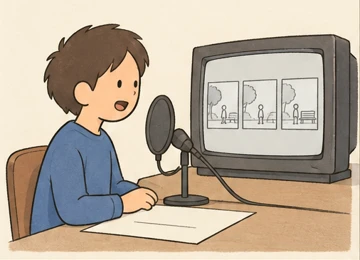 Voice actors record the dialogue first.
- 2
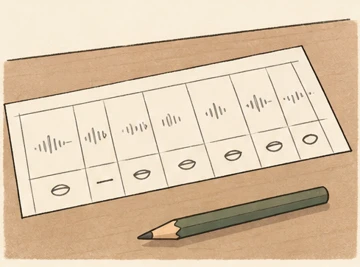 The timing of the recording goes to the animators.
- 3
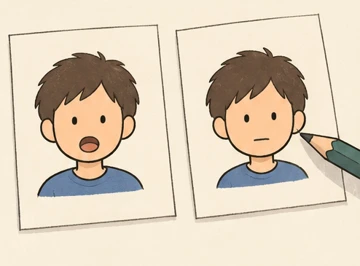 Animators draw mouths to match, so the lip-sync is very tight.
In Japan, Akira did respectable business without being a blockbuster. Its real impact came abroad. Around 1989 it had a limited run in American art-house cinemas through the distributor Streamline Pictures and then circulated widely on VHS, and for many Western viewers it was the first proof that animation could be violent, bleak science fiction made for adults. It exists in several versions. The original English dub was followed in 2001 by a new dub and translation, and a 4K remaster, with the sound remastered as well, was released in Japan in 2020. When fans argue about which translation is more faithful, they are usually comparing these releases.
08Neon Genesis Evangelion: the 1995 TV series
If Akira opened Western eyes to anime, Neon Genesis Evangelion changed anime from the inside. Directed by Anno Hideaki and produced by the studio Gainax together with Tatsunoko Production, it aired on TV Tokyo on Wednesday evenings, usually given as 6:30 p.m., from October 4, 1995, to March 27, 1996, 26 episodes in all.
On the surface it is a giant-robot show. In 2015, humanity defends the fortified city of Tokyo-3 against mysterious beings called Angels. Fourteen-year-old Ikari Shinji is summoned by his estranged father to pilot a humanoid weapon called an Evangelion, or EVA. But Shinji does not want to fight. He is frightened, withdrawn and full of self-dislike. Ayanami Rei, another pilot, seems almost without feeling; Asuka is aggressive and brittle; the adults around them are damaged in their own ways. The show borrows heavily from Christian and Kabbalistic imagery, cross-shaped explosions, the Dead Sea Scrolls, a "Human Instrumentality Project," and rarely explains any of it. Viewers come for the battles and find themselves pulled into the characters’ psychology.
The last two episodes largely abandon the plot. They take place inside Shinji’s mind, told through pencil sketches, title cards, still images and a barrage of repeated questions about whether he can accept himself. Schedule and budget pressure played a part, and so did the director’s intent. The response was fierce. Some fans felt betrayed, others felt seen. To provide another ending, the feature film The End of Evangelion followed in 1997 and showed the apocalypse head-on. Between 2007 and 2021 Anno retold the story in four Rebuild of Evangelion films. The last, Evangelion: 3.0+1.0 Thrice Upon a Time, opened during the pandemic and earned more than ¥10 billion at the Japanese box office.
Evangelion mattered in several ways. It turned the robot show from heroic battle toward psychological drama, and for more than a decade afterward countless series copied its character dynamics and its puzzle-box structure of unexplained mysteries. It sold extraordinarily well on video and in late-night reruns, proving that anime aimed at adult fans could make serious money and directly encouraging the spread of production committees and late-night programming. Its opening theme, "A Cruel Angel’s Thesis," sung by Takahashi Yōko, is still a karaoke favorite in Japan and has repeatedly topped the anime category of the karaoke company JOYSOUND’s annual rankings.
09Anime now
In the twenty-first century anime has moved in two directions at once. One is the ever more specialized world of late-night TV, adapting light novels, manga and games, dozens of new series each season, supported by core fans and merchandise. The other is the national blockbuster. Miyazaki Hayao’s Spirited Away set Japan’s all-time box-office record in 2001. Shinkai Makoto’s Your Name. became a phenomenon in 2016. And in 2020, in the middle of the pandemic, Demon Slayer: Mugen Train took more than ¥40 billion and became the highest-grossing film ever released in Japan. Its 2025 sequel, Infinity Castle – Part One, also passed ¥40 billion, finishing at about ¥40.2 billion in second place. Ghibli and Miyazaki have their own story; it is enough to note that animated films now take many of the top places in Japan’s box-office rankings.
Overseas income matters more every year. Foreign fans once relied on licensed broadcasts, VHS and fan-made subtitles circulated on bootleg tapes and later online. Now streaming services release new episodes with subtitles in many languages within hours of their Japanese broadcast, and viewers worldwide discuss the same episode on the same night. That global audience has changed the calculations of producers, and has also put the industry’s long hours and low pay under a brighter light.
10Seeing anime in Japan
The easiest place to meet anime in Japan is your hotel television. Flip through the channels after 11 p.m. and you will land on a new series within minutes. At 6:30 on Sunday evening, Fuji TV is still showing Sazae-san, which many Japanese families treat as the signal that the weekend is over. Trains, convenience stores and drugstores are full of anime tie-in posters and limited-edition goods.
To see how anime is made, visit the Suginami Animation Museum in Ogikubo, in western Tokyo. Suginami and neighboring Nerima wards are home to a large share of Japan’s animation studios. The museum walks visitors through the history and production process, with hands-on corners where you can try coloring or dubbing a scene. Near Ōizumi-gakuen station in Nerima, the Toei Animation Museum sits inside the studio’s own building. In Takarazuka, Hyōgo, the Osamu Tezuka Manga Museum displays original drawings and animation from the man behind Astro Boy. Mitaka, in western Tokyo, has the Ghibli Museum.
Every March the trade fair AnimeJapan brings studio booths, premieres and stage events together in one place. Since its launch in 2014 it has been held at Tokyo Big Sight in Ariake (it was canceled in 2020 and went online-only in 2021), drawing more than 150,000 visitors in 2026, but the organizers have announced that the 2027 and 2028 editions will move to INTEX Ōsaka, so check the venue before you plan a trip around it. Specialist shops and secondhand stores in Akihabara and Ikebukuro sell old production cels, settei (official model sheets and design books) and VHS-era OVAs. The cinema is worth a visit too. Japanese theaters regularly hold cheering screenings, ōen jōei, where audiences may wave glow sticks and sing along, and popular films hand out bonus gifts at the door, often a different card or booklet each week of the run, which keeps fans coming back. Visiting real places that appear in anime, the practice fans call pilgrimage, and dressing as characters in cosplay each have their own stories.