
At a glance
Where each of Japan’s sixteen public holidays came from, how Golden Week formed, and what travelers should expect when the whole country takes time off.
- As of 2026, Japan has 16 national holidays a year, set by the National Holidays Act of 1948.
- A holiday falling on Sunday moves to the next working day, and a weekday sandwiched between two holidays is also a day off.
- Many holidays are renamed prewar imperial rites; Niinamesai, for example, became Labor Thanksgiving Day.
- The Happy Monday system, begun in 2000, moved Coming of Age Day and others to Mondays to create three-day weekends.
- Golden Week links four holidays from April 29 to May 5; in 2019 it ran to ten days off in a row.
At the end of April, Japan starts to move. Shinkansen platforms fill with families and suitcases, expressways back up for dozens of kilometers, and hot-spring inns that were half empty a month earlier are booked solid at double the price. This is Golden Week, and it is not a festival at all: it is the lucky collision of four national holidays within a single week. As of 2026, Japan has sixteen official public holidays a year, more than most wealthy countries, and each one has a story behind it. Some are prewar imperial rites under new names, some commemorate the postwar constitution, and a few were moved to Mondays by law simply to give people a long weekend. Knowing them explains a great deal about the rhythm of Japanese life, and it can save a traveler from arriving at Kyoto Station on the busiest morning of the year.
01The Calendar of Sixteen
Japan’s public holidays are set by the Act on National Holidays of 1948. Its opening article says the days exist so that the people can celebrate, give thanks, and remember together, in pursuit of a better society and a richer life. The Japanese word is shukujitsu, "celebration day." Older people sometimes still say hatabi, "flag day," from the custom of hanging the Hinomaru flag at the front gate on every holiday. Few households do it now, though you will still see flags outside shrines, some older shops, and public buildings.
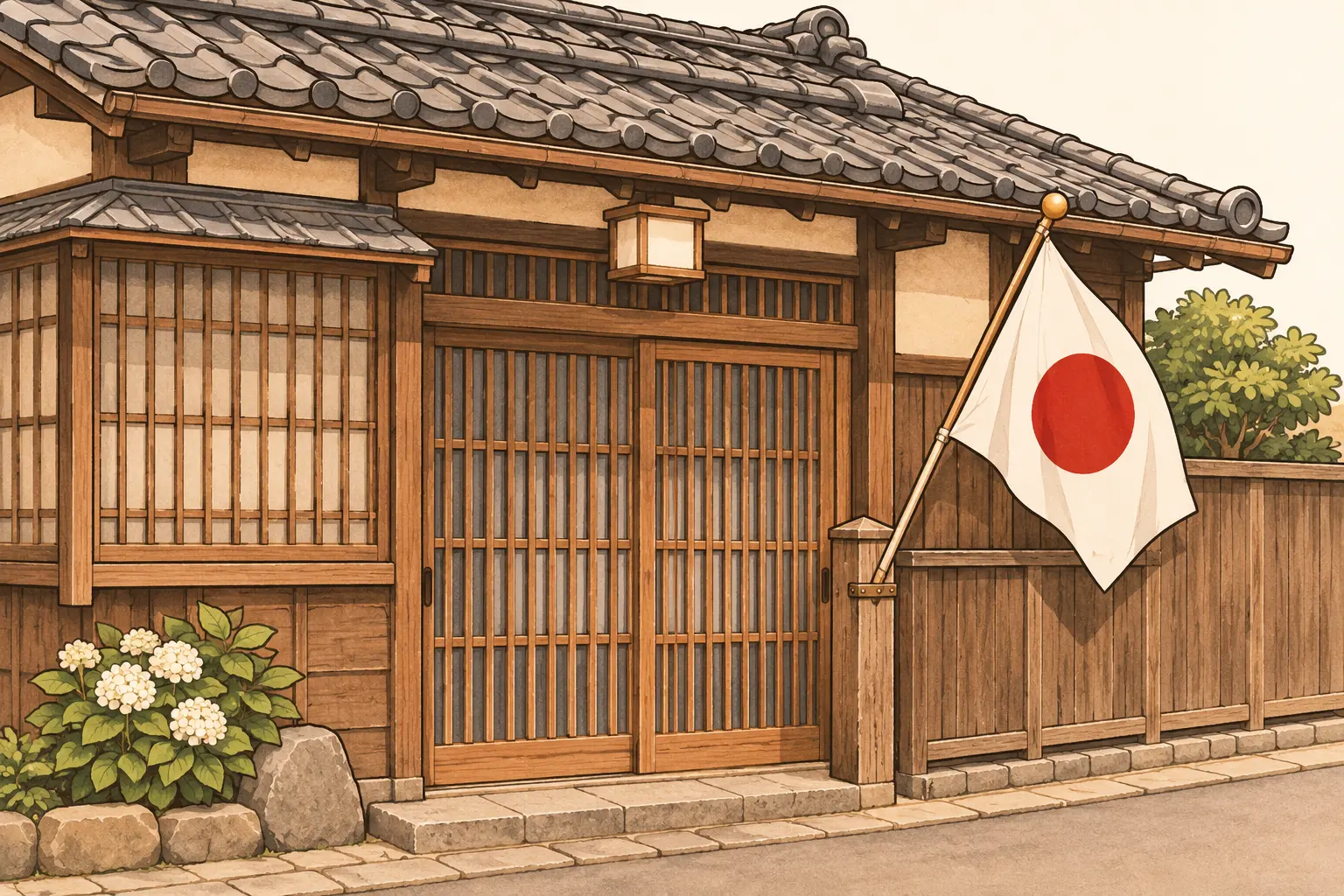
Older people still call holidays hatabi, "flag day," from the custom of hanging the Hinomaru at the front gate.
Going through the year: New Year’s Day (January 1); Coming of Age Day (second Monday of January); National Foundation Day (February 11); the Emperor’s Birthday (February 23); Vernal Equinox Day (around March 20); Shōwa Day (April 29); Constitution Memorial Day (May 3); Greenery Day (May 4); Children’s Day (May 5); Marine Day (third Monday of July); Mountain Day (August 11); Respect for the Aged Day (third Monday of September); Autumnal Equinox Day (around September 23); Sports Day (second Monday of October); Culture Day (November 3); and Labor Thanksgiving Day (November 23).
Fixed date (10)
- Jan 1 New Year’s Day
- Feb 11 National Foundation Day
- Feb 23 Emperor’s Birthday
- Apr 29 Shōwa Day
- May 3 Constitution Memorial Day
- May 4 Greenery Day
- May 5 Children’s Day
- Aug 11 Mountain Day
- Nov 3 Culture Day
- Nov 23 Labor Thanksgiving Day
Set Monday (4)
- 2nd Mon, Jan: Coming of Age Day
- 3rd Mon, Jul: Marine Day
- 3rd Mon, Sep: Respect for the Aged Day
- 2nd Mon, Oct: Sports Day
Calculated (2)
- Around Mar 20: Vernal Equinox Day
- Around Sep 23: Autumnal Equinox Day
Most holidays have fixed dates; four fall on a set Monday, and the two equinox days are calculated each year.
Two rules stretch the list further. When a holiday falls on a Sunday, the next ordinary weekday becomes a substitute holiday, furikae kyūjitsu, a rule in force since 1973. And any single weekday trapped between two holidays automatically becomes a holiday too, called a "citizens’ holiday" (kokumin no kyūjitsu). That second rule, added in 1985, was written with one date in mind: May 4, sitting between Constitution Memorial Day and Children’s Day.
The equinox holidays have no fixed date. They are calculated by the National Astronomical Observatory of Japan and formally announced in the government gazette in February of the previous year, so strictly speaking nobody knows next year’s spring holiday until this year’s winter. In practice it lands on March 20 or 21 and September 22 or 23. Both days are also the midpoint of higan, the Buddhist equinox week, when many families visit ancestral graves and eat sweet rice balls coated in red bean paste, called botamochi in spring and ohagi in autumn.
What is missing from the list is just as revealing. The two seasons Japanese people care about most, the New Year and Obon, the midsummer festival of the dead, are barely there. The law gives only January 1, and Obon not a single day. Yet government offices close from December 29 to January 3 under a separate law on administrative holidays, most companies follow the same schedule, and most businesses give a week off in mid-August. The private breaks are custom and company policy, not law, and together with Golden Week they make up the three great travel seasons of the Japanese year.
02Imperial Rites, Renamed
The modern holiday system goes back to 1873, when the Meiji government abolished the old seasonal festivals of the Edo period and replaced them with a calendar of state holidays built around the emperor and imperial ritual. These included Kigensetsu on February 11, marking the mythical accession of the first emperor, Jinmu, in 660 BCE; Tenchōsetsu, the reigning emperor’s birthday; and Niinamesai, the harvest rite. In 1927 the late Emperor Meiji’s birthday, November 3, was added as Meiji-setsu. On these days schoolchildren assembled for ceremonies, bowed to the emperor’s portrait, and listened to the Imperial Rescript on Education being read aloud.
After defeat in 1945, the American occupation required the separation of state and Shinto, and the 1948 law gave the holidays new names and new meanings while keeping many of the old dates. Niinamesai on November 23, the night when the emperor offers the new rice to the gods and tastes it himself, became Labor Thanksgiving Day, a day to honor work and production and for people to thank one another. The spring and autumn imperial ancestor rites became the equinox holidays. Meiji-setsu on November 3 became Culture Day, justified by the fact that the new Constitution of Japan had been promulgated on that date in 1946. The constitution came into force six months later, on May 3, 1947, and that became Constitution Memorial Day.
Kigensetsu itself was dropped, and whether to bring it back became the most bitter holiday argument of the postwar decades. Supporters said every nation deserves a founding day. Opponents pointed out that Jinmu’s accession is myth, that the February 11 date was computed by Meiji officials from the eighth-century chronicle Nihon shoki, and that reviving it meant reviving the prewar view of the nation. After years of failed bills, the government settled the matter in 1966, and the day returned in 1967 as Kenkoku kinen no hi. The wording was chosen with care: it is the day "for commemorating the founding of the nation," not "the day the nation was founded." Rival rallies, celebratory and protesting, are still held every February 11.
The Emperor’s Birthday moves with each reign. Emperor Shōwa (Hirohito) was born on April 29. After his death in 1989, the date was kept as a holiday under the name Greenery Day, a nod to his lifelong work as a marine biologist and lover of plants. In 2007 it was renamed Shōwa Day, and Greenery Day moved to May 4, replacing the citizens’ holiday there. The Heisei emperor’s birthday, December 23, was a holiday from 1989 until his abdication in 2019. His son Naruhito was born on February 23, which had already passed when he took the throne that May, so 2019 had no Emperor’s Birthday at all. The new date was first observed in 2020.
03Holidays Built for Long Weekends
From the 1960s onward, new holidays kept arriving, and their reasons grew more practical. Three were added in 1966. Respect for the Aged Day grew out of a local idea: in 1947 the head of Nomadani, a village in Hyōgo Prefecture, began holding a "Day for the Elderly" (toshiyori no hi) every September 15, and the custom spread across the prefecture and then the country. Sports Day was set on October 10 to commemorate the opening of the 1964 Tokyo Olympics, held on a clear autumn day; the date is often said to have been chosen because it rarely rains in Tokyo then, though the statistical basis for that claim is thin.
Marine Day arrived in 1996, on July 20, the date in 1876 when Emperor Meiji returned to Yokohama aboard the lighthouse tender Meiji Maru after a tour of northeastern Japan. Shipping interests had lobbied for a sea holiday for decades. Mountain Day followed in 2016 on August 11, a date with no historic event attached; it was placed there because it sits right next to the Obon break. When it was created, June became the only month without a national holiday. Since the removal of December 23 in 2019, December has joined it.
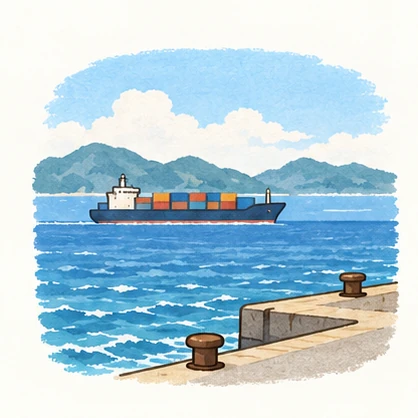
Marine Day, added in 1996 for a country surrounded by sea
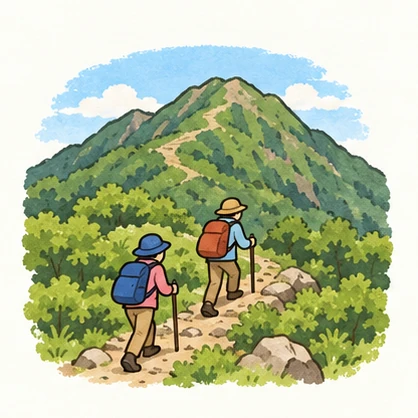
Mountain Day, added in 2016 on August 11, next to Obon
The biggest change came with the "Happy Monday" system, first applied in 2000. To create more three-day weekends and encourage domestic travel and spending, Coming of Age Day moved from January 15 to the second Monday of January, and Sports Day from October 10 to the second Monday of October. Marine Day and Respect for the Aged Day followed in 2003. The price was that these holidays lost their fixed dates and much of their meaning; plenty of older Japanese still say Coming of Age Day "really" belongs on the fifteenth. Sports Day was renamed from Taiiku no hi to Supōtsu no hi in 2020, and for the delayed Tokyo Olympics in 2020 and 2021 Marine Day, Sports Day, and Mountain Day were shifted for one year each to frame the opening and closing ceremonies.
There is a familiar paradox here. Japanese workers are famous for leaving paid vacation unused, yet the country is generous with public holidays. The common explanation is social: asking for personal leave means imposing on colleagues, while a national holiday means everyone stops together and no one has to feel guilty. Adding holidays has been, in effect, the government taking vacation on behalf of the workforce.
04How Golden Week Got Its Name
The heart of Golden Week is four holidays: Shōwa Day on April 29, then Constitution Memorial Day, Greenery Day, and Children’s Day on May 3, 4, and 5. Those last three always fall consecutively, and depending on where the weekends land, many people can take a day or two of leave and string together nine or ten days off. In 2019, May 1 was declared a one-time holiday for the new emperor’s accession, and the citizens'-holiday rule filled in the gaps, producing ten straight days off from April 27 to May 6, still the longest Golden Week as of 2026.
- 1April 27The break begins
- 2April 29Shōwa Day
- 3May 1One-time holiday for the accession; the days either side become citizens’ holidays
- 4May 3–5Constitution Memorial Day, Greenery Day, Children’s Day
- 5May 6The last of ten days
Once May 1 became a one-time holiday, the citizens'-holiday rule filled the gaps: ten straight days from April 27 to May 6.
The name is usually credited to the film industry. Around 1951, studios noticed that ticket sales in this early-May stretch beat even the New Year and Obon, and the Daiei studio borrowed the radio term "golden time," meaning prime time, to promote the period as "Golden Week." Accounts differ on who coined it: some credit Daiei executive director Matsuyama Hideo, others the company president, Nagata Masaichi. The English-sounding phrase, gōruden wīku, stuck. The public broadcaster NHK has long preferred the neutral ōgata renkyū, "the long holiday period," in its news, usually explained by the term’s advertising origins.
A Golden Week invited a Silver one. In some years, Respect for the Aged Day on a Monday and the autumn equinox on a Wednesday leave a single Tuesday between them, which then becomes a citizens’ holiday, and with the weekend the result is five days off in late September. It happened in 2009 and 2015 and again in September 2026, and because the alignment is rare, the press treats it as news each time.
05Being in Japan on a Holiday
For travelers, Golden Week, Obon, and the New Year are the three most crowded and most expensive times to be in Japan. During Golden Week the Tōkaidō Shinkansen adds extra trains, and as of 2026 the Nozomi services drop their unreserved cars altogether, leaving holders of unreserved tickets to stand in the vestibules. Expressways jam worst on the first morning and the last evening, and the television news reports the length of each backup in kilometers. Kyoto, Kamakura, and Nikkō are packed, and hotel rates and airfares rise accordingly. Tokyo, oddly, can feel quieter than usual, since so many residents have left.
If those are the only dates you have, there is still a good deal to see. Early May is the season of fresh green leaves, and in Hokkaidō and the far north the cherry blossoms are only just opening. Fukuoka holds the Hakata Dontaku parade on May 3 and 4, and Hamamatsu its kite-fighting festival. Around Children’s Day, strings of carp streamers, koinobori, are hung across river valleys and swim together in the wind.
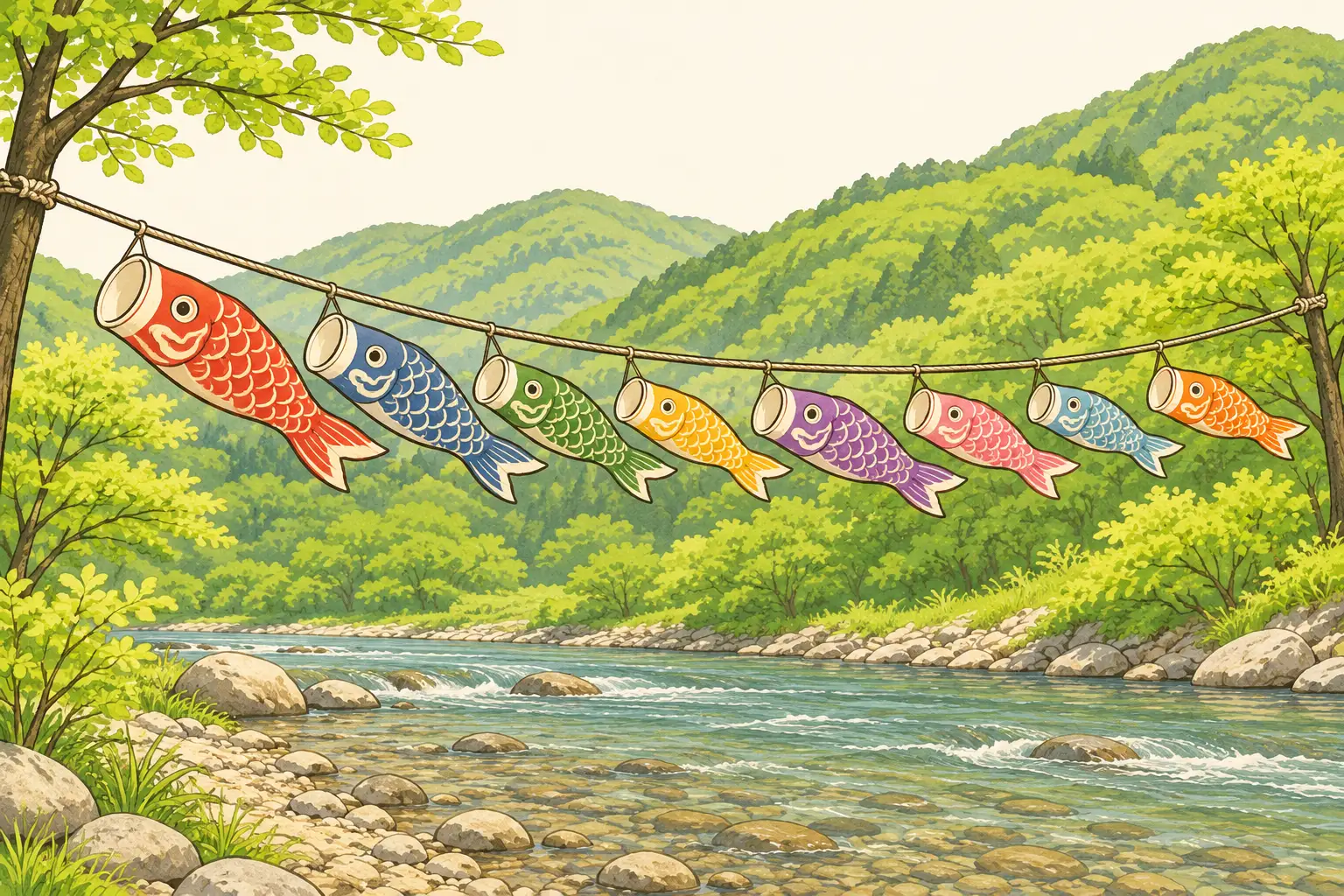
Around Children’s Day, strings of koinobori are hung across river valleys and swim together in the wind.
On an ordinary holiday, a few things are useful to know. Banks, post office counters, and government offices close, while shops, restaurants, and department stores stay open and are often busier than usual. Three-day weekends fill up hot springs, theme parks, and expressway rest areas near the big cities more than an ordinary weekend, so it is worth booking well ahead or traveling on the weekdays around them.
Apart from New Year’s Day, most national holidays have no fixed way of being celebrated; for most people they are simply a day off. A few have visible rituals. On Coming of Age Day, towns hold ceremonies for residents turning twenty, and young women in long-sleeved furisode kimono fill train stations. On Culture Day the Order of Culture is conferred at the Imperial Palace, and many universities hold their autumn campus festivals around that weekend. And on Labor Thanksgiving Day, while the rest of the country sleeps in or goes shopping, the emperor still performs the Niinamesai inside the palace, offering the year’s new rice to the gods as his predecessors did.