
At a glance
How a disagreement between Taketsuru Masataka and Torii Shinjirō shaped Japanese whisky, why it survives dilution, what the label standard requires, and how to drink it.
- Japanese whisky is about a century old: Yamazaki distillery broke ground in 1923 and began distilling in 1924.
- Two founders: Torii Shinjirō (Suntory) adapted to Japanese tastes; Taketsuru Masataka (Nikka) stayed faithful to Scotland.
- Made to taste good with water and ice, Japanese whisky aims for clean, delicate balance; Mizunara oak casks are its signature.
- Under a 2021 industry standard (fully in force from 2024), “Japanese whisky” must be made, aged at least 3 years and bottled in Japan.
- The Kaku highball in izakaya is the most common way to drink it; promoted from 2008, it revived home demand.
Japan has been making whisky for only a century, and for most of that time almost nobody outside the country noticed. It began as a careful imitation of Scotch, was quietly reshaped to suit Japanese food and Japanese drinking habits, nearly faded at home in the 1990s, and then, within a few years, became one of the most sought-after spirits in the world, so much so that some of its best-known bottles simply ran out. This is the story of where Japanese whisky came from, why it tastes the way it does, what the words "Japanese whisky" on a label actually guarantee, and how to drink it well when you are in Japan.
01Two Men and a Disagreement
Almost every history of Japanese whisky starts with two people. The first is Torii Shinjirō, an Ōsaka merchant who made his fortune selling a sweet fortified wine called Akadama Port Wine. His company, Kotobukiya, would later become Suntory. The second is Taketsuru Masataka, the son of a sake-brewing family from Takehara in Hiroshima. In 1918 his employer, Settsu Shuzō, sent him to Scotland to learn how whisky was made. He attended chemistry lectures at the University of Glasgow, apprenticed at distilleries in Speyside and Campbeltown, and filled notebooks with the dimensions of stills, fermentation times, and how casks were treated. He also married a Scottish woman, Jessie Roberta "Rita" Cowan, and brought her back to Japan in 1920.
Settsu Shuzō no longer had the money to start a whisky business, so Torii hired Taketsuru instead. In 1923 they began building a distillery at Yamazaki, on the narrow strip of land between Kyoto and Ōsaka where three rivers meet. Torii chose the site for its water and its misty, humid air; the area had been famous for its springs for centuries, and the tea master Sen no Rikyū had once kept a tea room nearby. Distillation started in 1924, and in 1929 Kotobukiya released Shirofuda ("White Label"), the first genuine whisky made in Japan.
It did not sell. Taketsuru had made it the Scottish way, heavy with peat smoke, and Japanese drinkers found it harsh and "burnt." Torii concluded that whisky would have to be adapted to Japanese tastes. Taketsuru believed that real whisky needed a cold, damp place like Scotland. In 1934 he left Kotobukiya and founded his own company in Yoichi, a fishing town on the coast of Hokkaidō with sea air and hard winters. Because whisky must age for years before it can be sold, the company supported itself at first by making apple juice, and it was called Dai Nippon Kajū, the Great Japan Juice Company. The abbreviation of its name, Nikka, became the brand. Yoichi still heats some of its stills over direct coal fires, a method almost no distillery in the world uses today.
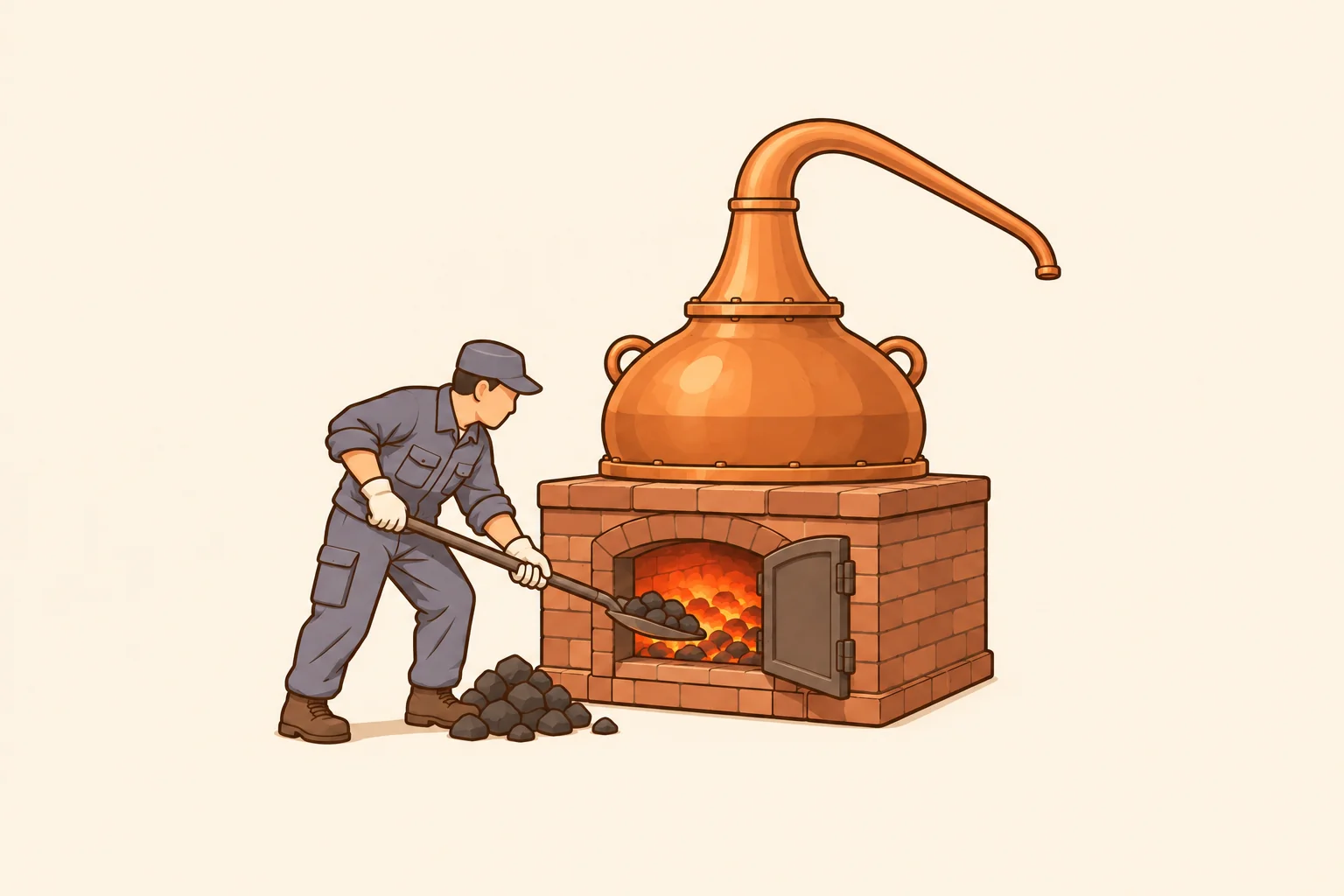
Yoichi still heats some of its stills over direct coal fires, a method almost no distillery uses today.
Those two positions, one adapting whisky to Japan and one staying faithful to Scotland, became the personalities of Suntory and Nikka, the two giants of the industry. Taketsuru and Rita’s life together was turned into the 2014–15 NHK morning drama Massan, which made them household names and sent crowds of visitors to Yoichi.
02Kakubin, Mizuwari, and the Torys Bars
Torii’s adjustment finally worked in 1937 with Kakubin, a lighter, smoother blend in a square bottle embossed with a tortoiseshell pattern. It is still Japan’s best-known everyday whisky. During the war, whisky was classed as a military supply, and both Yamazaki and Yoichi kept distilling, which meant Japan came out of the war with aged stock in its warehouses.
After 1945 whisky became a drink for ordinary working people. In 1946 Kotobukiya launched Torys, a cheap blend, and small "Torys Bars" opened across the country where office workers stood at the counter after work and drank Torys with soda for a few coins. The company’s advertising department was unusually talented: the novelist Kaikō Takeshi and the writer Yamaguchi Hitomi wrote copy there, and the illustrator Yanagihara Ryōhei drew Uncle Torys, a cartoon character who became the brand’s face. The highball, whisky and soda, had its first boom in the late 1950s.
By the 1970s the typical way to drink whisky in Japan was mizuwari: whisky with ice and plenty of water, sipped slowly over dinner, at after-work gatherings, or in the hostess clubs of Ginza. Diluted this way, whisky could accompany a meal the way sake did. Suntory Old, nicknamed "Daruma" for its round black bottle, became the premium whisky of the salaryman era. Bars ran a "bottle keep" system: a regular bought a whole bottle, the bar hung a tag with his name on it, and it waited on the shelf for his next visit.
This habit shaped how Japanese distillers made whisky. A spirit that will be stretched with water and ice has to stay clean and aromatic when diluted. It cannot rely on a blast of smoke or alcohol. The qualities that Western critics later praised in Japanese whisky, balance, delicacy, clarity, have their roots in the mizuwari glass.
03Collapse and Revival
Whisky consumption in Japan peaked around 1983 and then fell for a quarter of a century. Younger drinkers switched to beer, wine, and shochu (a distilled spirit usually made from barley, sweet potato, or rice) mixed with juice or tea. Whisky became something your uncle drank. A 1989 tax reform abolished the old system of taxing whisky by grade, which made imported Scotch suddenly cheap. Distilleries cut production and some closed. Hanyu in Saitama stopped distilling in 2000, and Karuizawa in Nagano wound down in the same period. The casks they left behind later sold at auction for astonishing sums.
Meanwhile Japanese whisky was slowly earning respect abroad. Suntory launched Yamazaki as a single malt in 1984 and the blend Hibiki in 1989. In 2001 a single-cask Yoichi 10-year-old won the top award in a Whisky Magazine tasting, and the trade began to take Japan seriously. Sofia Coppola’s 2003 film Lost in Translation, in which Bill Murray plays a fading actor in Tokyo to shoot a Suntory commercial, introduced many viewers to the idea that Japan made whisky at all. Then, in the 2015 edition of his Whisky Bible, the British writer Jim Murray named Yamazaki Sherry Cask 2013 the best whisky in the world. The headlines went everywhere.
At home the revival came through one drink. From 2008 Suntory pushed the "Kaku-highball" in izakaya, Japan’s casual pubs: a tall glass packed with ice, a measure of Kakubin, topped up with chilled soda, priced about the same as a draft beer and served with fried chicken and grilled skewers. It caught on with young drinkers, the highball became a fixture on every izakaya menu, and canned highballs filled convenience-store fridges. Massan added a wave of nostalgia a few years later.
The problem with whisky is that it takes time. A 12-year-old bottled today was distilled twelve years earlier, and twelve years earlier the industry had been in a slump and making very little. Aged stock ran short. In the mid-2010s Nikka discontinued most of its age-statement Taketsuru, Yoichi, and Miyagikyō bottlings, and in 2018 Suntory stopped selling Hakushu 12 and Hibiki 17. Prices have been raised several times since. Yamazaki 12 is often missing from Japanese shelves, shops limit purchases to one per customer, and resale prices run to several times the list price; as of 2026, retailers still often sell Yamazaki, Hakushu and Hibiki by lottery. All the major producers have been expanding, but the new spirit will take until the late 2020s and beyond to come of age.
04Where the Japanese Character Comes From
The basic method is the same as in Scotland: malted barley is mashed, fermented, distilled twice in copper pot stills, and aged in wooden casks. The differences come from a few concrete conditions.
- 1ClimateHot, humid summers and cold winters; the spirit matures faster
- 2Self-sufficiencyProducers do not trade casks, so each makes many styles itself
- 3MizunaraNative Japanese oak casks; a scent compared to sandalwood and temple incense wood
- 4BlendingSeamlessness: no single note sticks out, and the aroma survives dilution
The method is Scotland’s: malting, mashing, fermentation, two runs through copper pot stills, cask aging. The differences come from these four conditions.
The first is climate. Japanese summers are hot and humid and the winters cold, a much wider swing than in Scotland. As the casks expand and contract, the spirit moves in and out of the wood more vigorously, so it matures faster and picks up more flavor from the cask.
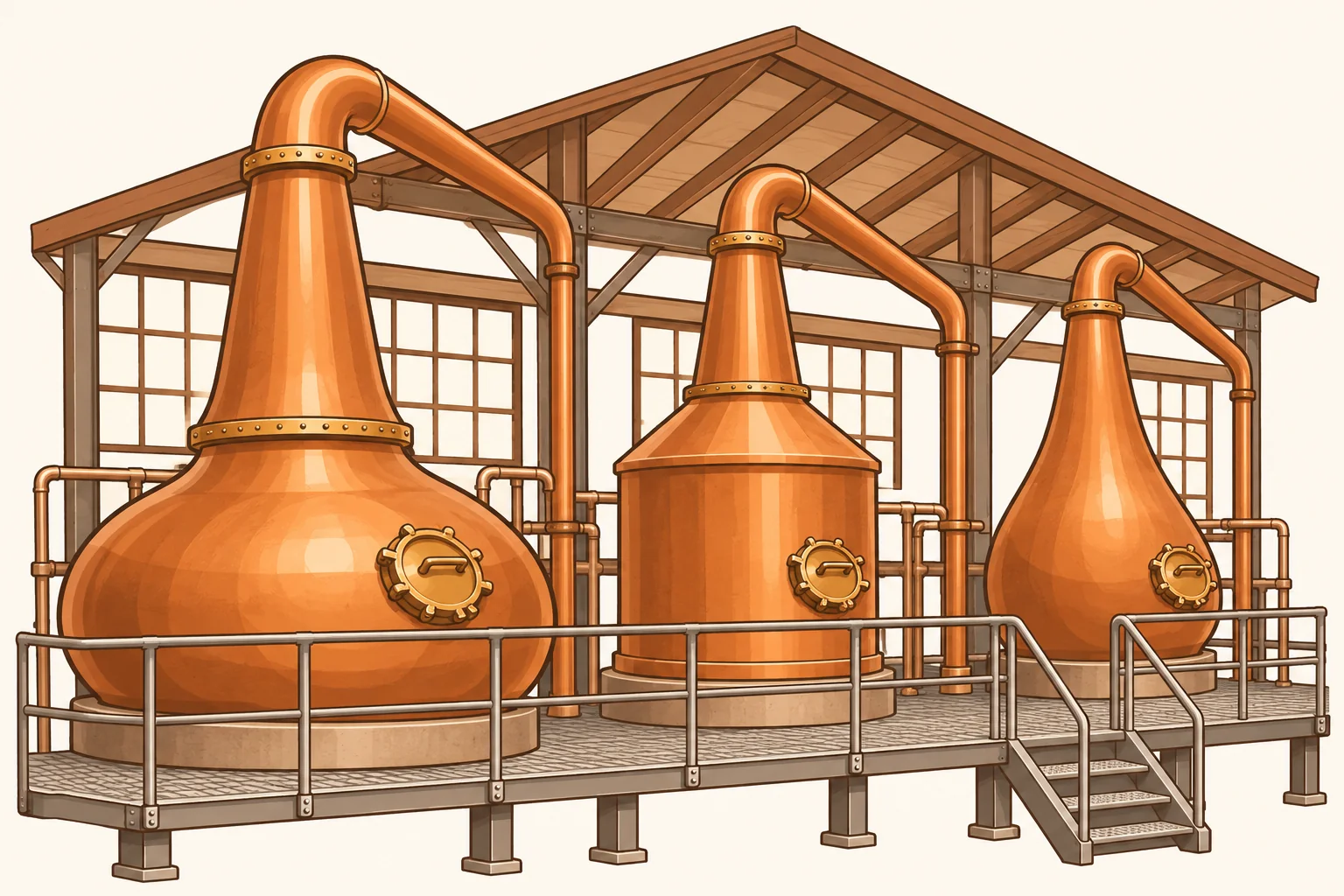
The second is self-sufficiency. Scotch blenders routinely trade casks with rival companies, so a single blender may draw on dozens of distilleries. Japanese producers do not trade with each other. To build a complex blend, each company has to produce a wide range of styles under its own roof, using stills of different shapes and sizes, different yeasts, peated and unpeated malt, and many kinds of casks. Yamazaki is known for its unusual variety of still shapes. Suntory built Hakushu (1973) in the forests of Yamanashi, and Nikka built Miyagikyō (1969) in a river valley outside Sendai, precisely to get spirit with a different character from their first distilleries.
The third is mizunara, the Japanese oak. During and after the war, imported oak casks were hard to come by, so distillers turned to native oak from Hokkaidō and elsewhere. Mizunara is porous and leaks, and the distillers were not fond of it at first. Given long enough, though, it lends the whisky a scent that drinkers compare to sandalwood and the incense wood used in Japanese temples. Abroad it has become the signature of Japanese whisky. The casks are expensive and difficult to make, so mizunara is mostly reserved for premium releases.
The fourth is blending. Hibiki is Suntory’s showcase; its bottle has 24 facets, for the 24 hours of the day and the 24 seasonal divisions of the traditional calendar. Japanese blenders aim for seamlessness: no single note sticks out, and the aroma survives dilution. That ideal fits the food. Sashimi, tempura, and dishes built on dashi broth have delicate flavors, and a whisky that overwhelms them has no place at a Japanese table.
Beyond Suntory and Nikka there are other established names. Hombo Shuzo, a Kagoshima company, runs the Mars Shinshu distillery in Nagano; its adviser Iwai Kiichirō had been Taketsuru’s boss at Settsu Shuzō and received his famous Scotland report. Kirin operates the Fuji Gotemba distillery in Shizuoka. In 2008 Akuto Ichirō, whose family had owned Hanyu, opened a small distillery in Chichibu, Saitama. His Ichiro’s Malt bottlings became collectors’ trophies, and his success helped set off a craft distillery boom in the 2010s. As of the mid-2020s there were more than a hundred whisky distilleries in Japan, from Akkeshi on the eastern tip of Hokkaidō to Kagoshima in the far south.
05What "Japanese Whisky" on the Label Means
For a long time Japan’s liquor law was remarkably loose about whisky. A product could contain imported whisky, and even a share of neutral spirit, and still be called whisky as long as it was bottled in Japan. When the overseas boom arrived, some companies bottled bulk Scotch or Canadian whisky in Japan, gave it a Japanese-sounding name and kanji on the label, and sold it to buyers who assumed they were getting the real thing.
In response, the Japan Spirits & Liqueurs Makers Association introduced a voluntary standard in 2021, with a transition period that ended in 2024. To be labeled "Japanese whisky," a product must use malted grain, be mashed, fermented, and distilled in Japan, be aged in wooden casks in Japan for at least three years, be bottled in Japan, and be at least 40 percent alcohol. Products that don’t qualify cannot use the term or imagery suggesting they are Japanese-made. It is an industry rule rather than a law, but the major producers follow it.
- 1Malted grain
- 2Mashed, fermented and distilled in Japan
- 3Aged in wooden casks in Japan for at least three years
- 4Bottled in Japan
- 5At least 40 percent alcohol
The Japan Spirits & Liqueurs Makers Association’s voluntary standard, introduced in 2021 with a transition that ended in 2024: all five must be met. It is an industry rule, not a law, but the major producers follow it.
One result is that Japanese companies now openly sell "world blended" whiskies that combine domestic and imported spirit and say so. If you are buying a bottle, the back label will tell you which kind you are holding.
06Drinking It in Japan
The easiest place to start is an izakaya. "Haibōru" on the menu means a highball, usually made with Kakubin, generously iced and fizzy, for a few hundred yen (as of the mid-2020s). It goes with karaage fried chicken, yakitori, and edamame better than you might expect. If you want something more considered, order mizuwari, or ask for "twice up," equal parts whisky and room-temperature water with no ice, which opens up the aroma. In winter some people take it oyuwari, with hot water.
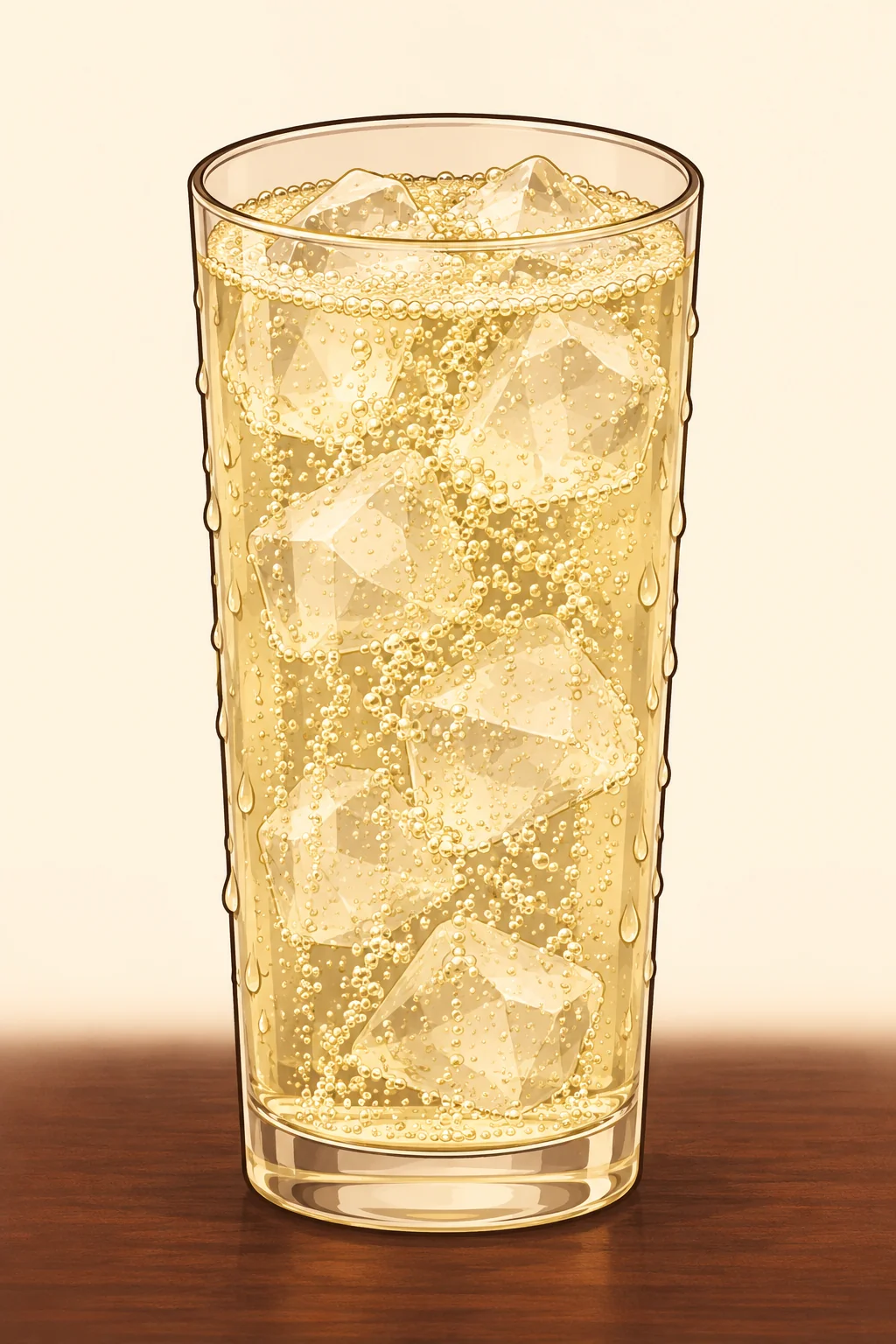
Highball: a tall glass packed with ice, whisky topped up with soda, generously fizzy.
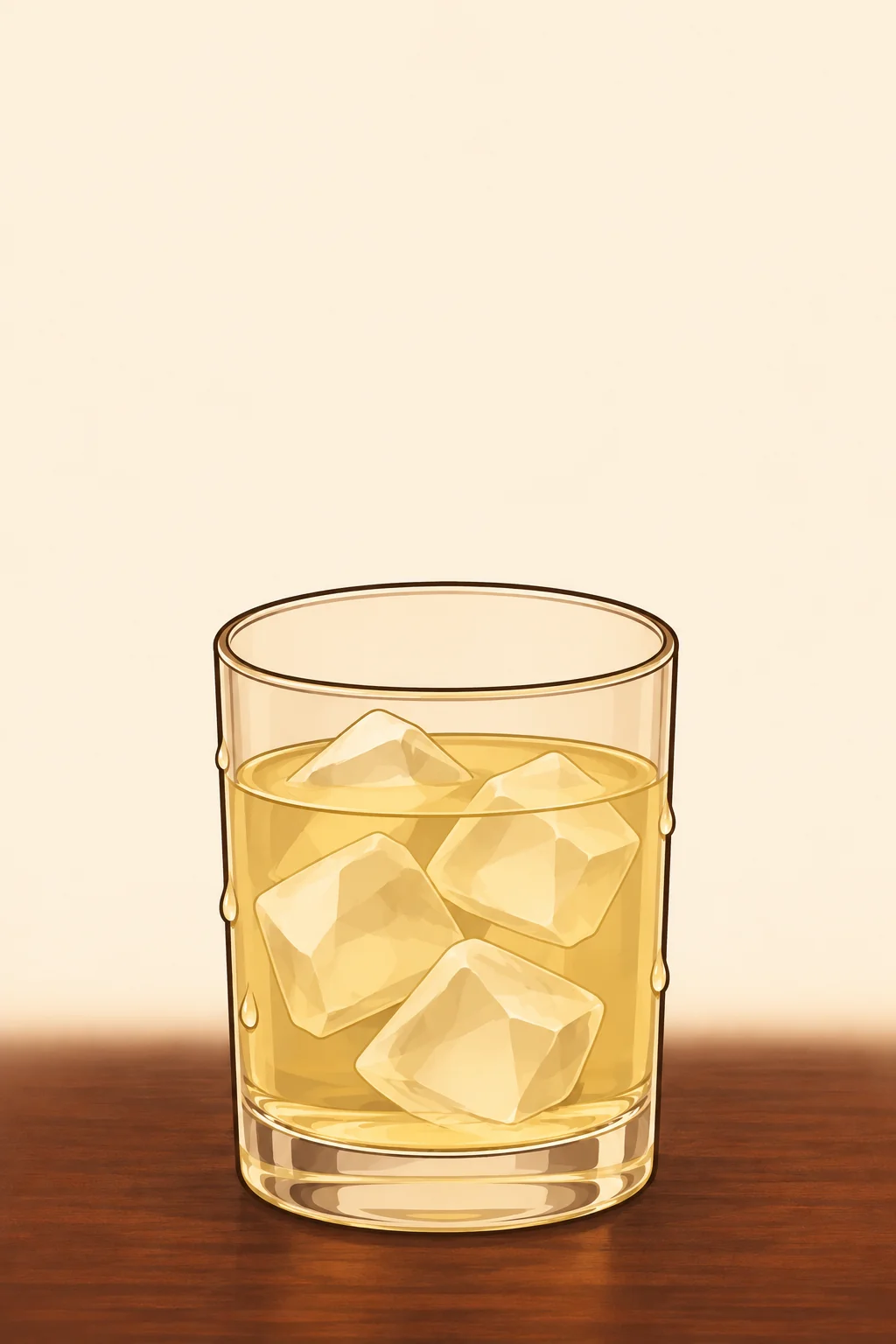
Mizuwari: whisky with ice and water, and no bubbles.
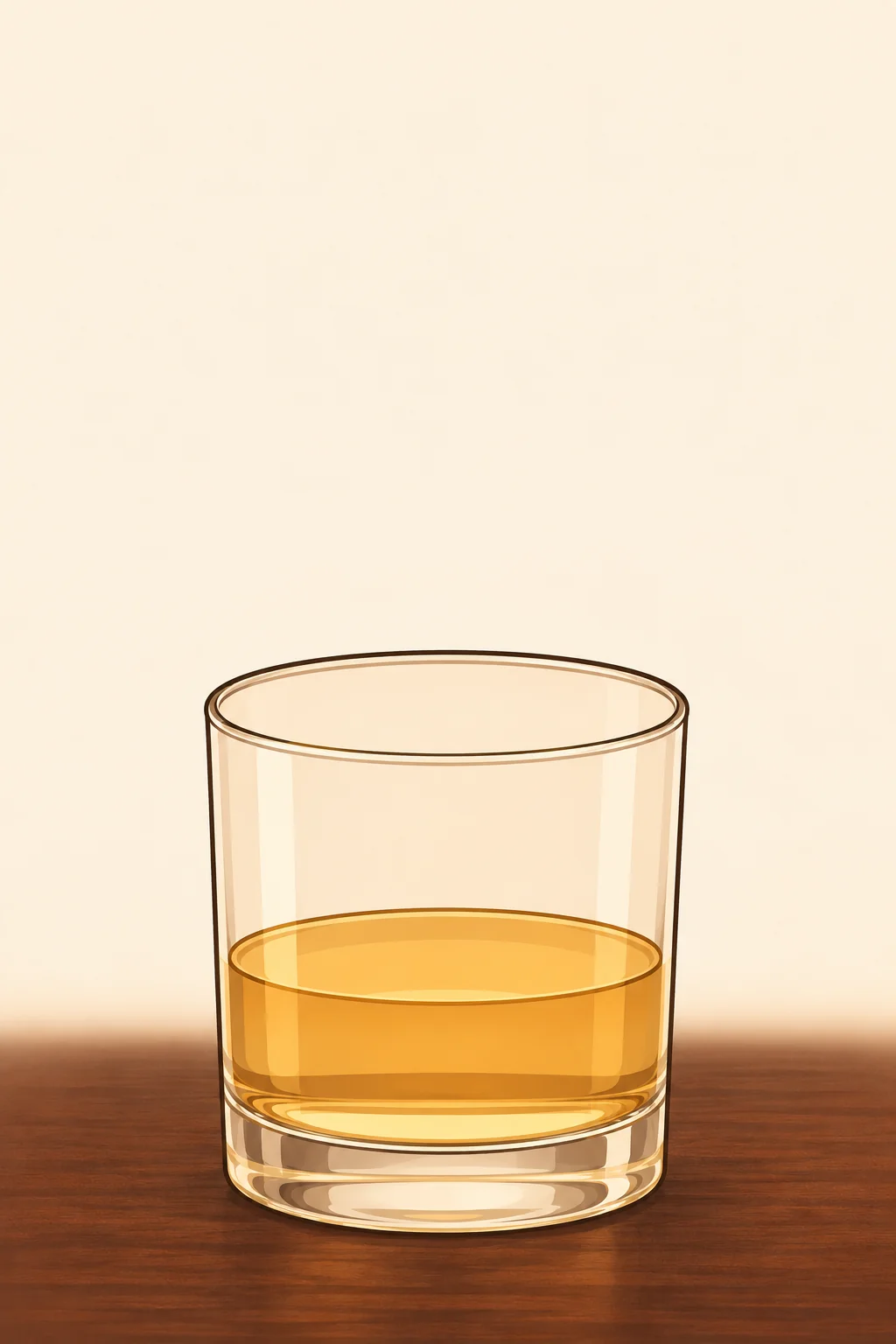
Twice up: equal parts whisky and room-temperature water, no ice, which opens up the aroma.
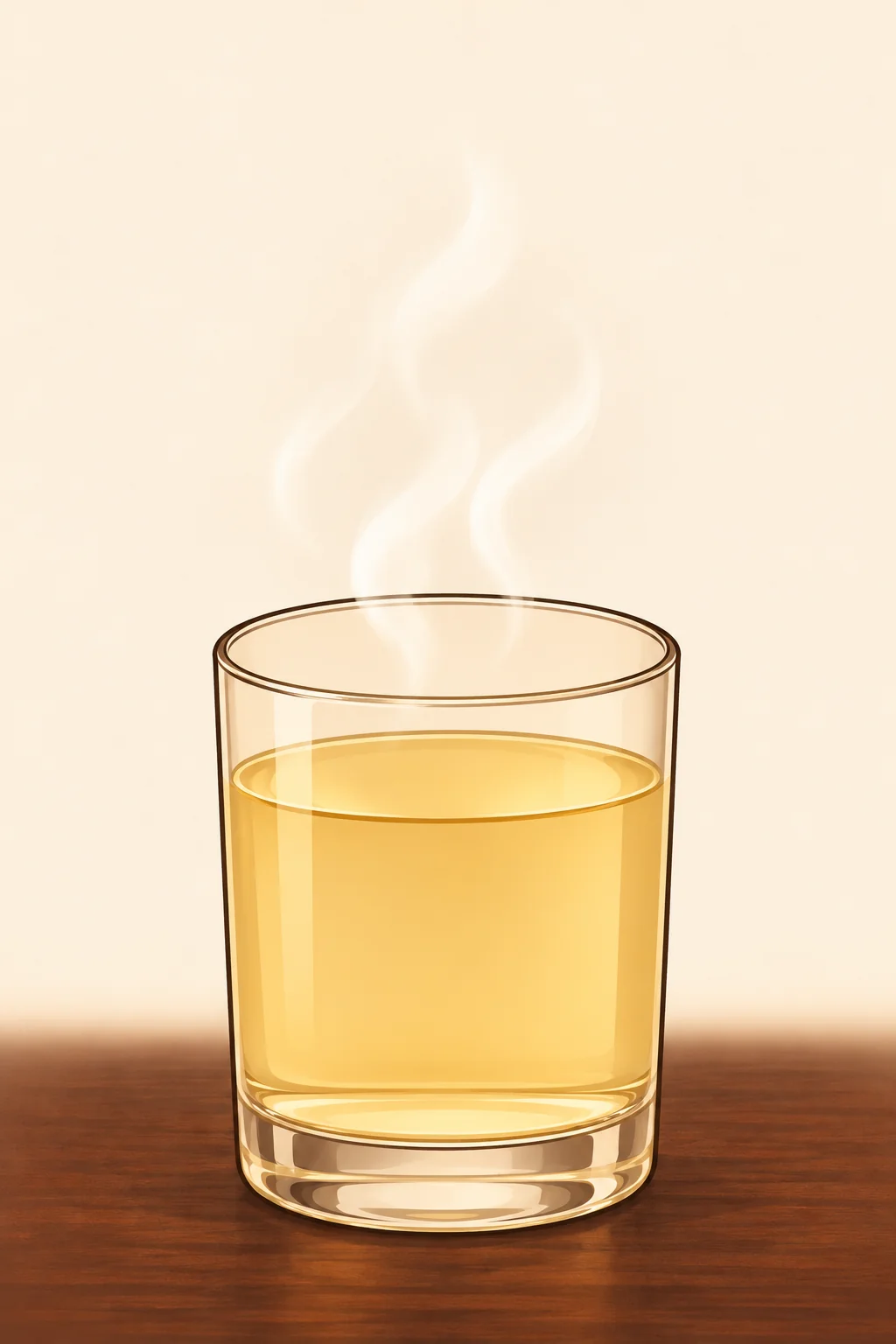
Oyuwari: whisky with hot water, a way some people take it in winter.
Serious whisky bars cluster in Ginza in Tokyo, Kitashinchi in Ōsaka, and Susukino in Sapporo. A good Japanese bar is often tiny, a single counter with eight or ten seats. The bartender, in a white jacket and bow tie, may carve a sphere of ice by hand with an ice pick and stir your drink without a sound. Expect a seat charge and a small dish of snacks. Tell the bartender what you like and let them choose; many bars hold long-discontinued bottles that are far cheaper by the glass than at auction. These bars are quiet places. Keep your voice down, and ask before taking photographs.
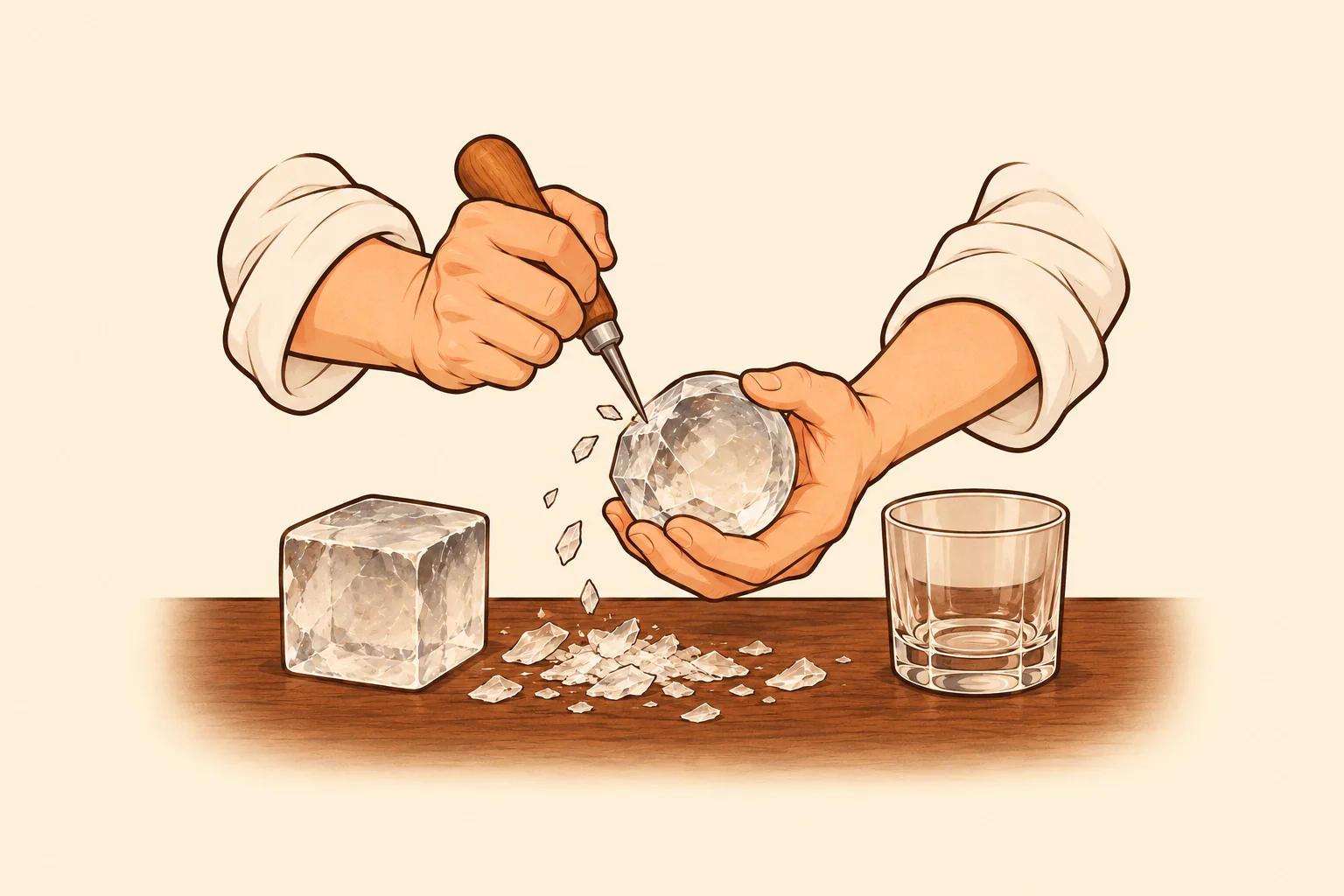
In a Japanese bar the bartender may carve a block of ice into a sphere by hand with an ice pick.
The main distilleries all welcome visitors. Yamazaki is a ten-minute walk from JR Yamazaki Station, between Ōsaka and Kyoto. Hakushu sits in forest at the foot of the Southern Alps in Yamanashi. Yoichi is about half an hour by train from Otaru, its stone buildings looking like a small Scottish village, and the house where Taketsuru and Rita lived stands on the grounds. Miyagikyō is in a valley west of Sendai. The tasting bars sell pours of whiskies you will struggle to find in shops.
If you want to take a bottle home, be aware that the famous names, Yamazaki, Hakushu, and Hibiki, are often scarce even in Japan, and airport duty-free shops and distillery stores ration what they have. You don’t need to chase them. Nikka From the Barrel, Suntory’s Chita grain whisky, and young releases from the craft distilleries are easy to find in supermarkets and liquor shops at sensible prices, and they show what Japanese whisky is about just as well.