
At a glance
Why Japanese fruit is so costly and so often given as a gift, how growers produce flawless melons and grapes, and where travelers can taste them.
- In Japan fruit is everyday food but also one of the most respectable gifts, a staple of the summer and year-end gift seasons.
- Gift fruit must look perfect, uniform in size and color and unblemished, achieved by thinning, bagging and greenhouse growing.
- Shizuoka’s greenhouse muskmelons are grown one per vine; at the 2026 first auction a pair of Yūbari melons fetched 5.8 million yen.
- Fuji, the world’s most widely grown apple, was bred in Japan and named in 1962; Aomori grows over half of Japan’s apples.
- Visitors can try a fruit parfait at a fruit parlor or go fruit picking at orchards in places such as Yamanashi.
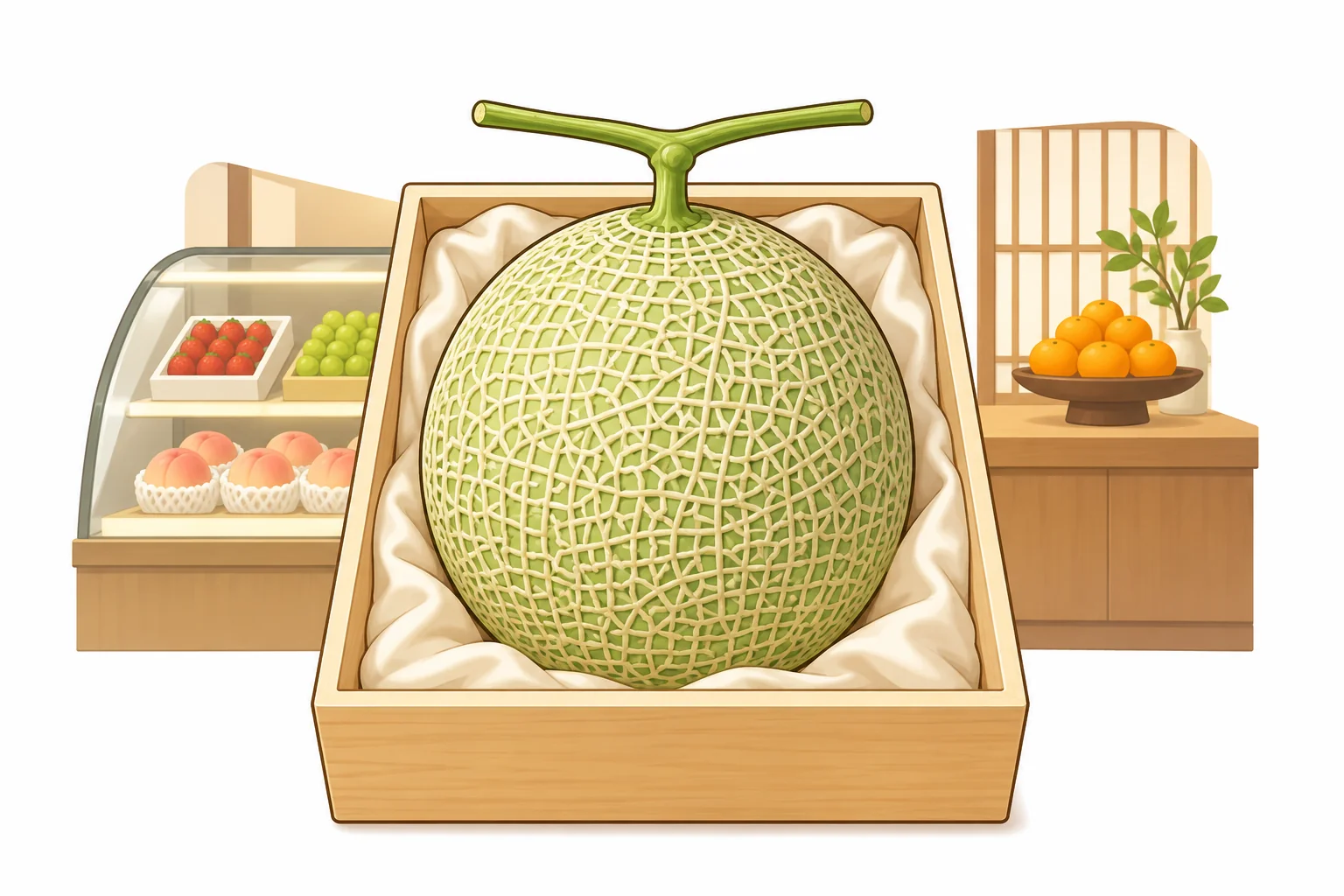
Visitors to Japan tend to meet its fruit in a department store food hall, and the encounter is a small shock. A single muskmelon sits on a cushion in a box with a price tag of 20,000 yen (at mid-2020s prices). Strawberries the size of golf balls are laid out one by one in molded trays. Grapes look as if each berry had been polished. Japan grows some of the most expensive fruit in the world, and also some of the best-tasting. This piece explains why fruit in Japan is so often a gift, what makes the famous varieties special, how growers achieve that flawless look, and how a traveler can eat, buy and even pick it.
01Fruit as a Gift
In Japan, as anywhere, you can buy ordinary apples and bananas in a supermarket. But fruit has a second life as one of the most respectable presents you can give. People bring fruit when they visit someone in hospital, when they call on a family, and above all during the two formal gift seasons: ochūgen in midsummer and oseibo at the end of the year. Department store gift catalogs for these seasons devote page after page to melons, peaches, cherries and grapes, shipped directly to the recipient.
A gift has to be perfect, and that requirement shapes the fruit itself. A box of peaches must contain fruit of identical size and color, with no bruise anywhere. A melon must be perfectly round, its netted rind evenly patterned. The person who opens the box reads that uniformity as a sign of respect. Because buyers will pay for perfection, growers have every reason to spend extraordinary effort on a single piece of fruit.
The flip side is that the Japanese do not actually eat much fresh fruit day to day. Per-person consumption is lower than in many European and North American countries, by some comparisons lower than in most of them, and younger people eat less than their parents. The usual explanations are price, the bother of peeling, and short shelf life. Japanese fruit therefore lives at two extremes: everyday produce on one side, and luxury fruit for giving, or for an occasional indulgence, on the other. The fruit that astonishes visitors belongs to the second group.
An old word hints at how fruit is regarded. Kashi originally meant fruits and nuts. As confectionery gradually took over the word, fresh fruit came to be called mizugashi, literally "water sweets," a usage well established by the Edo period (1603–1868). At the end of a traditional Japanese meal the menu may still list mizugashi, and what arrives is a few slices of seasonal fruit served as dessert.
02The Stars
The melon is the king of gift fruit. The most prestigious is the greenhouse muskmelon of Shizuoka Prefecture, a variety called Earl’s Favourite that originated in England; its seeds were brought to Japan in 1925. Growers follow the rule of "one vine, one fruit": a plant sets many small melons, and all but the best are removed so that the whole vine feeds a single fruit. The T-shaped piece of stem left on top is a trademark of these melons, and is said to help in judging ripeness. Hokkaidō’s Yūbari melon, with its orange flesh and heavy perfume, is the other great name. Its first auction of the season is a national news item; in 2019 a pair sold for five million yen, and in 2026 a pair set a new record at 5.8 million yen.
- 1
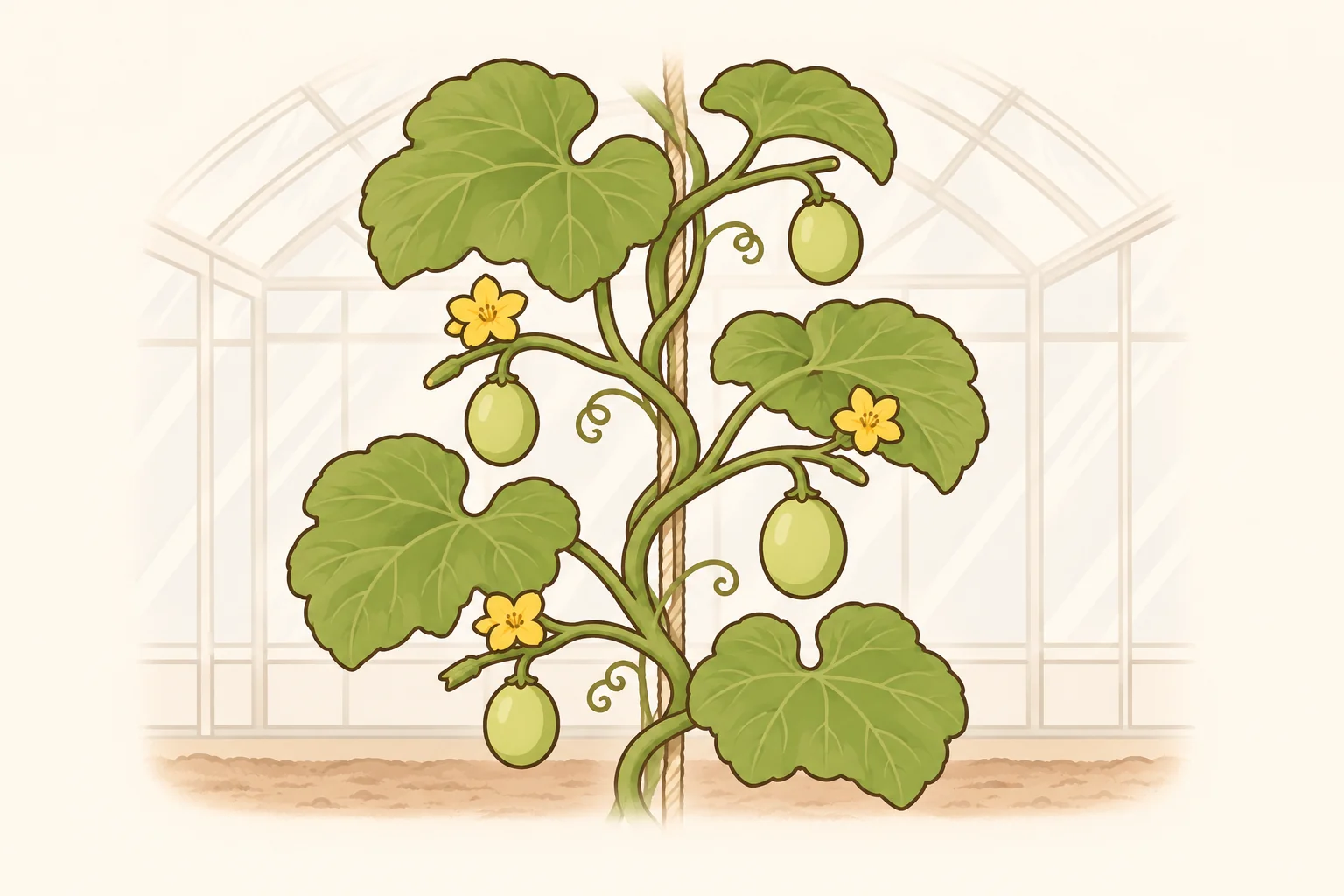 Before thinning, a single melon vine carries several small fruits.
- 2
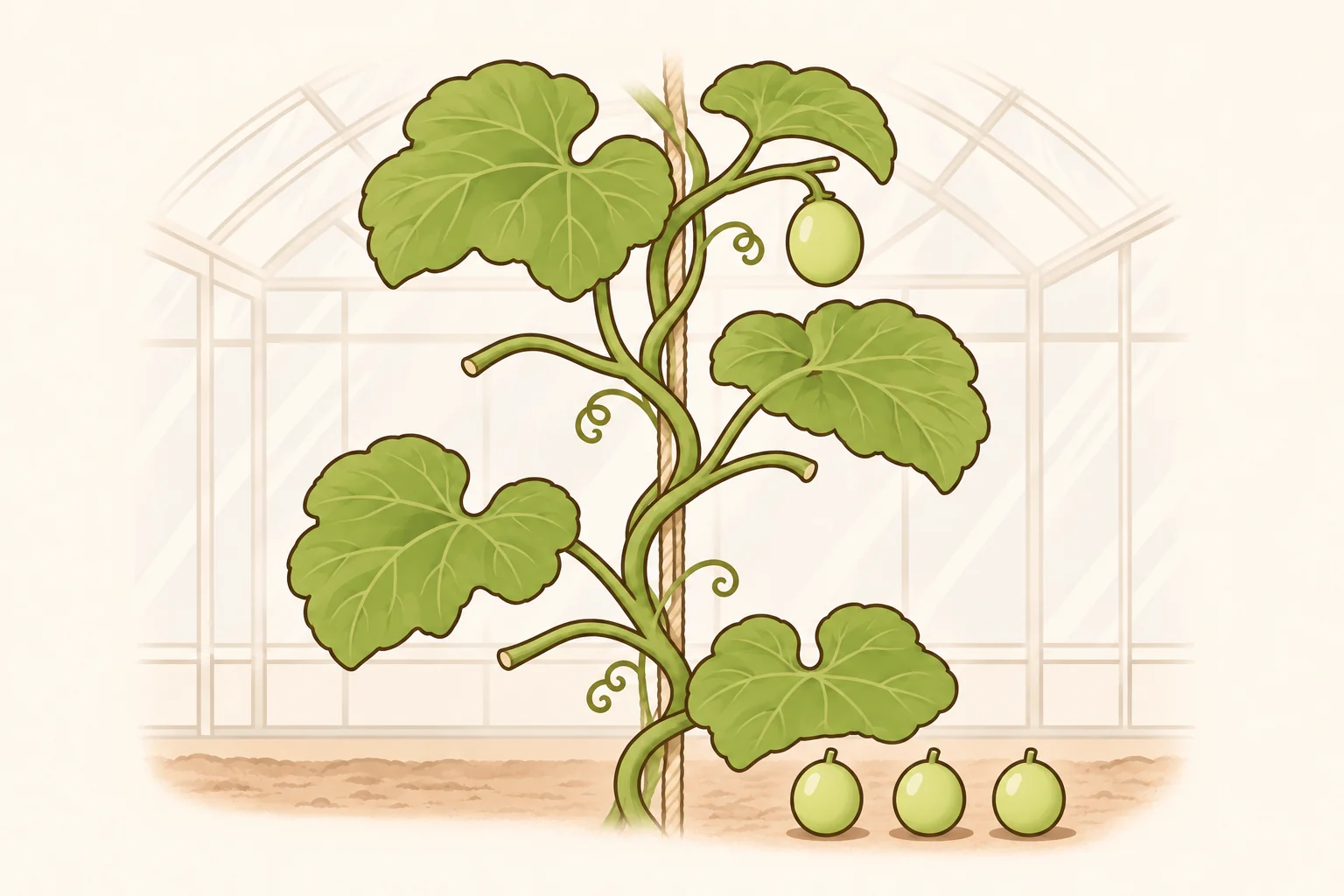 Only the best melon stays, so the whole vine feeds a single fruit.
Strawberries in Japan are a winter and spring fruit, grown mostly in greenhouses and sold from around December to May. The Christmas cake, a sponge with whipped cream and strawberries, makes December the peak of demand. Prefectures compete fiercely with their own varieties. Fukuoka’s Amaou is large and deep red; its name is built from the Japanese words for red, round, big and tasty (akai, marui, ōkii, umai). Tochigi, the country’s leading strawberry prefecture, made its name with Tochiotome and more recently launched Skyberry. White strawberries, pale pink inside, cost far more than ordinary red ones; there are reports, as of the mid-2020s, of a single berry selling for over a thousand yen. Japanese strawberries are bred for sweetness and juiciness with gentle acidity, and they taste noticeably different from the firmer, tarter berries common elsewhere.
Among grapes, the current star is Shine Muscat, a green grape developed by Japan’s national agricultural research organization and registered in 2006. It is large, seedless, has a muscat fragrance and can be eaten skin and all. It became a sensation, and its spread to farms in China and South Korea turned it into Japan’s standard example of why plant varieties need international protection. Older favorites include the dark purple Kyohō and the larger Pione. Yamanashi, Nagano and Okayama are the main grape regions. Ishikawa’s Ruby Roman, a huge red grape, is famous for first-auction prices running to a million yen or more for a single bunch.
Peaches are the fruit of summer. The Japanese white peach is soft, melting and very juicy, closer to a ripe custard than to the crisp peaches some readers may know. Yamanashi produces the most, followed by Fukushima, while Okayama is celebrated for white peaches such as Shimizu Hakutō, each grown inside a paper bag. Peaches bruise at the touch of a fingertip, so in Japan you judge them by eye and by smell, never by squeezing.
Apples belong to Aomori, which grows more than half the national crop. The Fuji apple, now the most widely grown apple variety in the world, was bred at a government research station in Fujisaki, Aomori, and named in 1962. In winter, look for apples sold as mitsu-iri: cut one open and the flesh around the core is glassy and translucent with concentrated sugar, a sign of full ripeness.
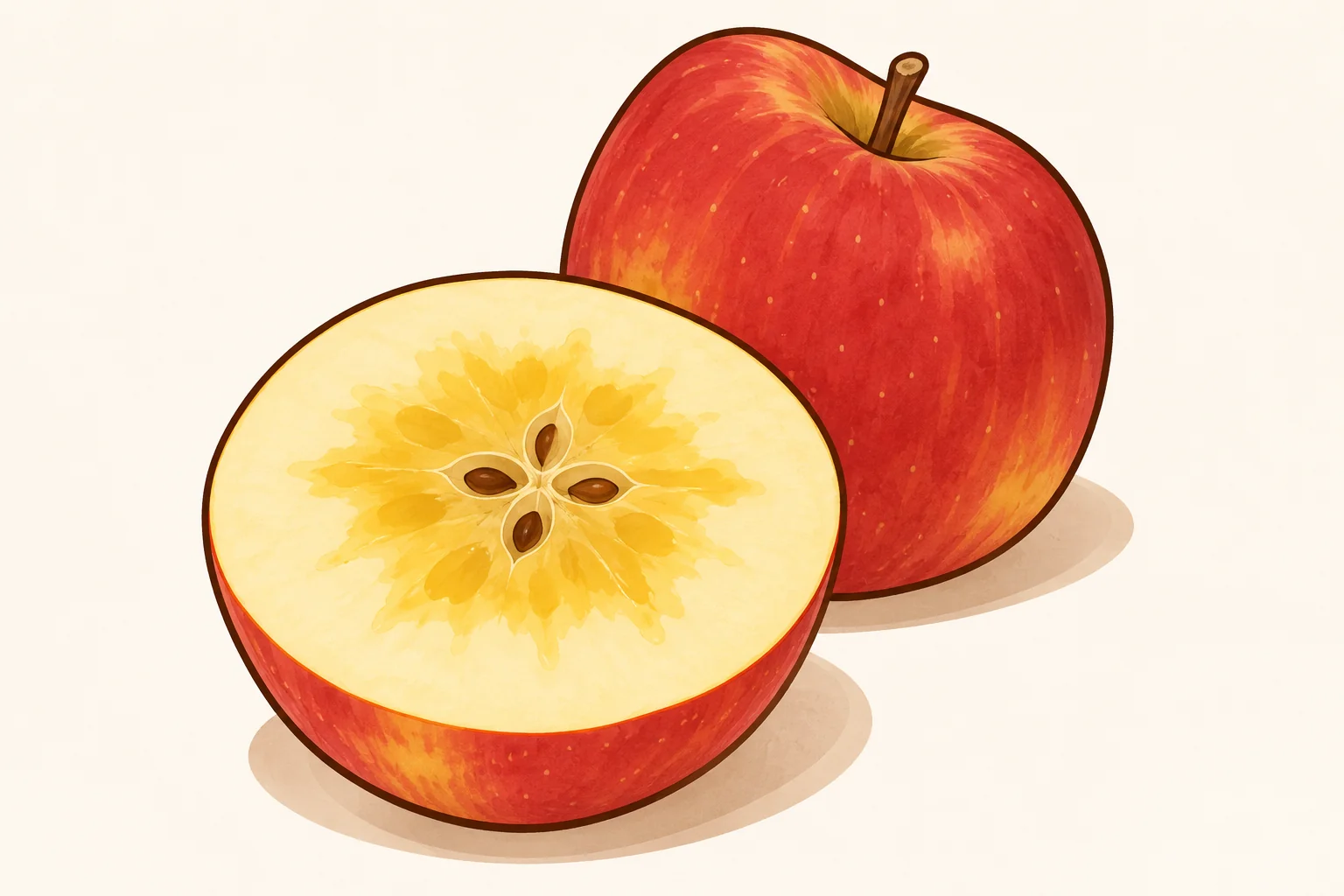
A mitsu-iri apple cut open: the glassy, translucent flesh around the core is a sign of full ripeness.
The list goes on. Yamagata’s Satō Nishiki cherries, red blushed with yellow, are at their best in June. Tottori’s Nijusseiki ("Twentieth Century") pear is a green-skinned Asian pear, crisp and full of water. Miyazaki’s tree-ripened mangoes reach their highest grade as Taiyō no Tamago, "Egg of the Sun," harvested only when the fruit falls of its own accord into a net tied around it. And every winter, bowls of small, easy-peeling mikan (satsuma mandarins) sit on the kotatsu, the heated low table, in homes across the country; the hillsides of Ehime, Wakayama and Shizuoka are covered with mikan groves. Persimmons too are an old Japanese fruit, and strings of them drying under farmhouse eaves are one of the classic sights of late autumn.
03How Perfect Fruit Is Grown
Behind every flawless piece of fruit is labor. The first step is thinning. A peach tree or a grapevine sets far more fruit than it can ripen well, so growers remove most of the blossoms and young fruit, keeping only the best-placed and most even. Grape bunches are trimmed berry by berry so that the remaining grapes sit evenly and swell to the same size.
The second is bagging. In many orchards, peaches, pears and apples grow inside individual paper bags that keep off insects, disease and wind damage and leave the skin clean and evenly colored. Some apple growers remove the bags shortly before harvest and lay reflective sheets on the ground so that sunlight reaches the underside of the fruit. They may even turn each apple by hand so the shaded side colors too.
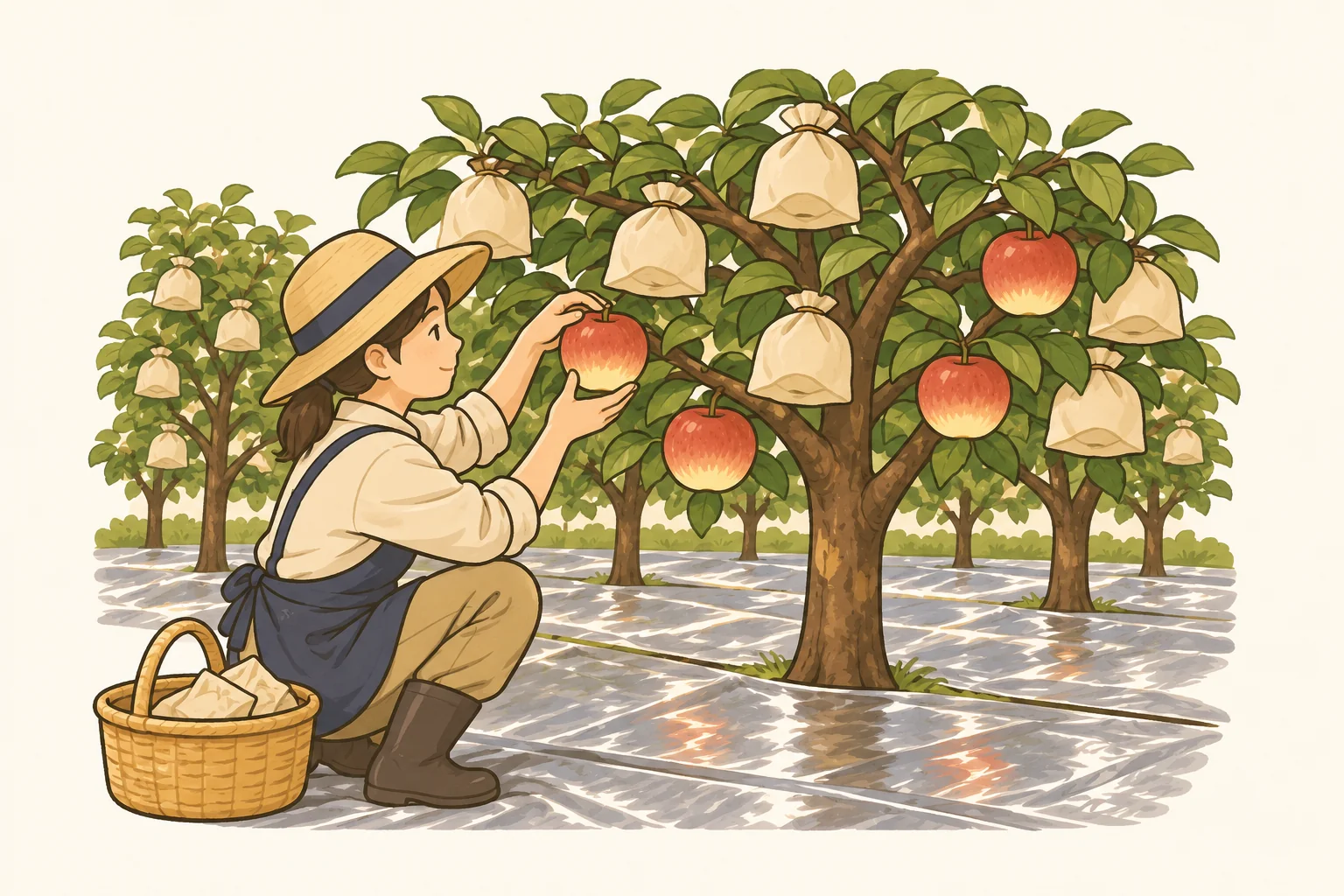
Apples grown in individual paper bags, some unbagged before harvest, above reflective sheets on the ground.
Greenhouses make the seasons negotiable. Melons, strawberries and mangoes are grown under glass or plastic, with temperature, humidity and water carefully controlled. That is why Japan has strawberries in midwinter and mangoes in early summer.
After harvest comes grading. Packing houses run by agricultural cooperatives use optical sensors to measure sugar content and check for internal flaws, then sort fruit by size, shape, color and appearance into grades such as shū, yū and ryō (roughly excellent, superior and good). Only a small top share goes to luxury fruit shops and gift boxes; the rest goes to supermarkets or becomes juice and jam. Fruit from the same farm can therefore differ in price several times over.
- 1Harvest
- 2Cooperative packing houseoptical sensors measure sugar and check for internal flaws
- 3Gradingby size, shape, colour and appearance into shū, yū, ryō and so on
- 4Where it goesa small top share to luxury fruit shops and gift boxes; the rest to supermarkets, juice and jam
Only a small top share reaches luxury shops and gift boxes, so fruit from the same farm can differ in price several times over.
The headline prices come from the season’s first auctions, the hatsuseri. Department stores and supermarkets bid high for the first lot, for luck and publicity. These figures have nothing to do with what fruit normally costs, but they keep regional brands in the news.
04Sembikiya and the Fruit Parlor
Fruit sellers were already doing business in Edo, the city that became Tokyo. The most famous fruit house, Sembikiya, traces its origins to 1834. According to the company’s own story, its founder Ōshima Benzō came from the village of Sembiki in Musashi Province and opened a fruit shop in Fukiyachō in Edo (some accounts say it sold vegetables too), naming it after his home village. From 1867, on the eve of the Meiji Restoration, Sembikiya began handling imported fruit and became the place where the elite bought the best produce, and, it is said, where many foreign residents shopped as well. The business later divided into separate companies, including Nihonbashi Sembikiya, Kyobashi Sembikiya and Ginza Sembikiya.
In the Meiji and Taishō eras, Western fashions brought a new institution to Tokyo: the fruit parlor (furūtsu pārā). Here people ate cut fruit, drank fresh juice and ordered fruit punch and ice cream. Fruit turned from a gift or an offering into an urban pleasure. Shinjuku Takano, another old Tokyo fruit house known for its parlor, also dates from this period.
During the postwar boom, the department store gift trade grew rapidly and luxury fruit grew with it. From the 1980s and 1990s onward, prefectures poured resources into breeding and branding their own varieties, and new names for strawberries, grapes and citrus appeared every few years. Regional brand fruit became a tool of rural revival, and the same reputation for quality now carries Japanese fruit to buyers in Hong Kong, Taiwan and Southeast Asia.
05Eating and Buying Fruit in Japan
The easiest way in is a fruit parlor. Sembikiya, Takano and old fruit houses in other cities run their own, and the signature dish is the fruit parfait: a tall glass layered with seasonal fruit, ice cream and cream. As of the mid-2020s, expect to pay two or three thousand yen, which buys a taste of melon or peach of a quality you would otherwise have to buy whole. Menus change with the seasons: strawberries in winter and spring, peaches and mangoes in summer, grapes and pears in autumn.
The furūtsu sando, or fruit sandwich, has become a hit in recent years. Soft white bread is spread with whipped cream and filled with whole strawberries, kiwi slices and mandarin segments, arranged so that the cut face shows a neat pattern. Specialist shops draw queues. Traditional sweets have joined in too: the strawberry daifuku, a whole berry wrapped in sweet bean paste and soft rice cake, is now a staple.
For a hands-on experience, go fruit picking, known as -gari ("hunting"). There is ichigo-gari for strawberries in winter and spring, cherry picking in early summer, and grape, peach and apple picking from summer into autumn. Visitors are usually given a set time, such as thirty or sixty minutes, to eat as much as they like. Yamanashi, the grape and peach country west of Tokyo, is about ninety minutes from Shinjuku by train, and there are many strawberry farms in Shizuoka and Tochigi.
You do not need a luxury shop to eat well. Department store food halls, station fruit stands and supermarkets all sell cut fruit in small packs, a few hundred yen for melon or pineapple, perfect for a hotel room. Roadside stations (michi no eki) and farm stands in the countryside sell freshly picked local fruit for much less than city prices, sometimes including slightly misshapen "non-standard" fruit that tastes every bit as good.
A few small points of etiquette help. In a high-end fruit shop, do not handle the fruit; ask the staff to choose for you. A melon often needs a few more days at home: wait until the blossom end softens slightly and the scent rises, and the shop may give you a card showing its tabegoro, the date it will be at its best. Finally, most countries restrict travelers from bringing fresh fruit across the border, so the best way to take Japanese fruit home is to eat it before you leave.