Skip to content
Topics

Search History Omakase

Start typing to search.

    Twelve Faces of Japanese History
    Start here

    Big Questions / Japan Essentials

    Twelve Faces of Japanese History

    People, places and the things they changed

    An emperor commissions a great temple. A writer follows the private worries of court life. A school founder makes room for women to study. A name becomes easier to remember when it belongs to something people actually did.

    These twelve encounters move through Japanese history, from ancient Nara to Meiji Tokyo. Each joins a person to a place, an object or a decision.

    The aim is not to find twelve heroes. It is to give the next unfamiliar name somewhere to land.

    12 short chapters26 reading unitsNo prior knowledge needed
    Start reading
    A name becomes clearer when somebody is doing something

    Tsuda Umeko and two anonymous students, circa 1900–1905. Source-informed teaching fragment, not a documented lesson or the whole founding class.

    The teacher
    Directs attention to a specific part of a book.
    The students
    Speaking and reading are different active parts of learning.
    The institution
    A classroom makes an opportunity repeatable beyond one encounter.
    A little at a time.

    Short passages. Room to look.

    See the connections.

    A framework, not a list to memorize.

    Go your own way.

    Read in order, or choose a chapter.

    Twelve Faces of Japanese History

    Chapter 1 / 12

    Emperor Shōmu

    聖武天皇 · Nara · eighth century

    02 / 26

    A ruler turns to the Buddha

    Reigned 724–749

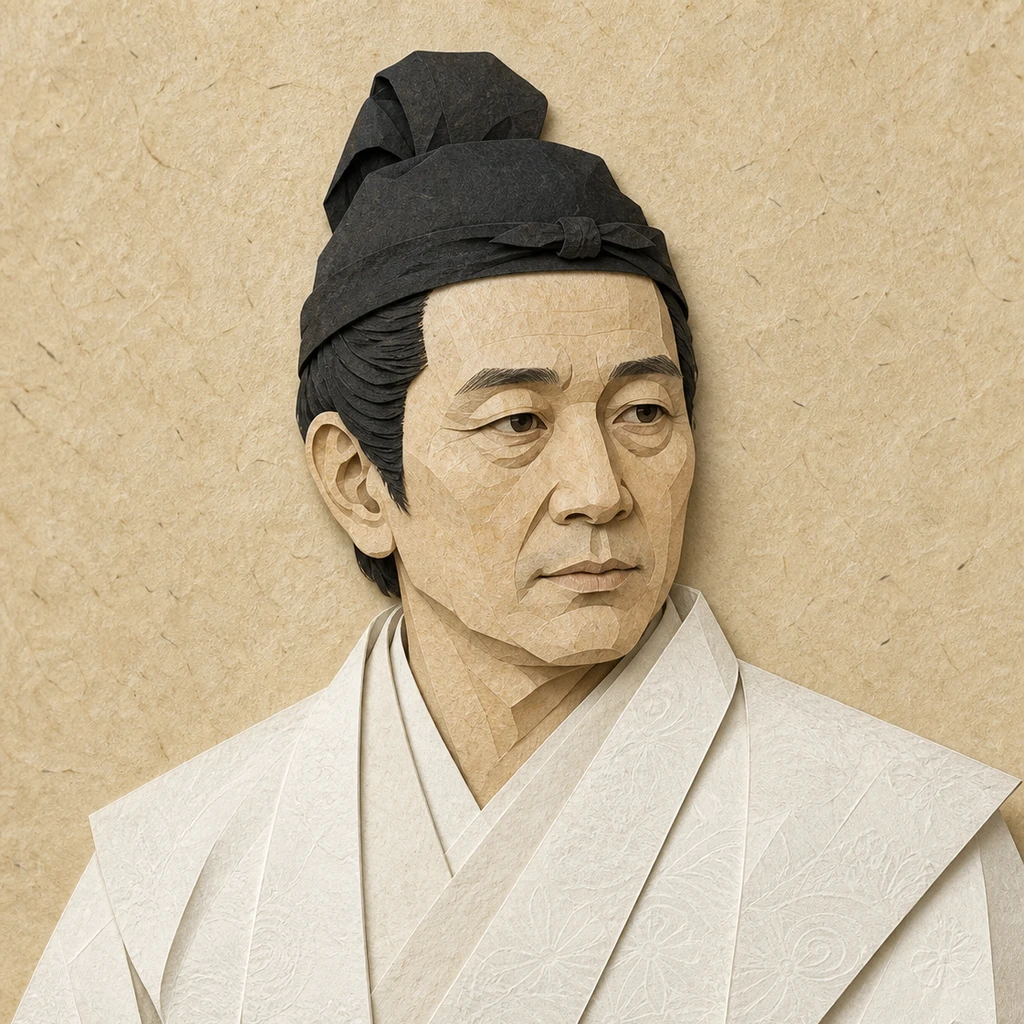
    For Emperor Shōmu, a Buddhist temple could be part of governing. Monks prayed for the country, while the court helped build and support religious institutions.

    In 741 he ordered a network of provincial monasteries. Tōdai-ji in Nara became its leading temple: a place for rituals and the study of Buddhist teachings, connected to a much wider political world.

    The emperor’s support mattered. So did the officials, monks and workers who turned a royal command into buildings and daily activity.

    An imperial decision still needs materials to arrive

    Retained eighth-century resource-delivery study. Anonymous workers, not Shōmu or a particular shipment to Tōdai-ji.

    The command
    741: a provincial monastery network is ordered.
    The carrying
    Resources must be counted, transported and received.
    The institution
    Religious activity depends on continuing practical support.
    03 / 26

    One enormous undertaking

    Tōdai-ji · 743–752

    Shōmu announced his plan for a Great Buddha in 743. The colossal bronze image was completed in Nara in 749 and dedicated in 752, after he had stepped down as emperor.

    The project needed far more than a sculptor. Metal, timber, skilled work and organized supplies had to come together. A construction office oversaw the growing temple complex.

    Think of the Buddha as a meeting point: religious hopes made visible through the resources and labour of a state.

    Separate the project’s dates from what survives

    Study of the present Tōdai-ji Vairocana Buddha. Its repaired and replaced fabric is not the untouched bronze of 752.

    743
    The project is announced.
    749
    The image is completed; Shōmu abdicates that year.
    752
    Dedication follows, after his reign.
    Read the scale
    A monumental object requires coordinated materials and labour, not just one famous patron.

    Twelve Faces of Japanese History

    Chapter 2 / 12

    Kūkai

    空海 · Across the sea · early ninth century

    04 / 26

    A monk goes abroad to learn

    Tang China · 804–806

    Kūkai travelled to Tang China in 804, joining a Japanese mission across the sea. In the capital, Chang’an, he studied Buddhist teachings and ritual practices with the monk Huiguo.

    He returned in 806 with texts and religious objects, as well as training that could not simply be packed into a chest. Back in Japan, he developed the tradition known as Shingon.

    His journey connects Japanese temples to a larger world of teachers, languages and routes of exchange.

    Not everything learned can be packed in a chest
    Kūkai travels on the 804 mission. Study with Huiguo connects texts and objects with embodied training; both contribute to his 806 return.804 · mission to Tang ChinaHuiguo → KūkaiTexts / objectsTraining806 · return to Japan

    Learning relationships, not a sea route or an invented transcript of a teaching session.

    Objects
    Can be transported.
    Practice
    Needs a teacher, attention and repetition.
    After return
    People and institutions must keep the learning usable.
    05 / 26

    Knowledge passes from hand to hand

    Letters between monks · ninth century

    A bundle of letters can show a different side of a famous religious teacher. Three letters from Kūkai to the monk Saichō survive together in a scroll known as the Fūshinjō.

    These are traces of communication between people who sought and shared learning. Books mattered, but so did being able to approach another teacher, arrange a meeting or ask for help.

    The network was human: a sea journey brought knowledge to Japan; relationships helped carry it further.

    Three messages, one surviving physical object
    Three separately represented letters from Kūkai to Saichō are grouped into one surviving scroll. Blank outlines do not reproduce the original handwriting.KūkaiSaichōLetterLetterLetterOne preserved scrollCorrespondence is part of a learning network

    Fūshinjō: structural explanation, not a facsimile, exact mounting arrangement or three identical letters.

    Communication
    Learning can involve requests, access and arrangements.
    Survival
    A later preserved object brings distinct exchanges together.

    Twelve Faces of Japanese History

    Chapter 3 / 12

    Murasaki Shikibu

    紫式部 · The imperial court · early eleventh century

    06 / 26

    Looking closely at court life

    Heian-kyō · around 1000

    Murasaki Shikibu served at the imperial court and wrote The Tale of Genji. Her world included powerful families, carefully managed encounters and women whose literary skills could bring recognition.

    Court life was not only ceremonies and splendid clothing. Who could visit whom, how a letter was written and which relationship had support could change a person’s prospects.

    Murasaki made that enclosed world feel inhabited. Its people worry, misjudge one another and remember things they cannot easily put right.

    Dress identifies a setting—not the person’s thoughts

    Anonymous eleventh–twelfth-century court-attendant study from H01. Not a portrait of Murasaki Shikibu or a scene from her biography.

    Visible
    Layered robes, long loose hair and a folding fan locate a courtly role.
    Not visible
    Access, reputation and private concerns need other kinds of evidence.
    Why writing matters
    Fiction can make those less visible pressures part of the reader’s experience.
    07 / 26

    The story is not a court record

    The Tale of Genji

    Genji, the tale’s central figure, is a fictional prince. Following his relationships—and the lives that continue beyond him—lets readers enter a world shaped by rank, affection and vulnerability.

    The book is not a transcript of Murasaki’s household. It turns experience and observation into a story, with room for voices that an official record might scarcely notice.

    Its words also travelled through pictures. Artists selected encounters, rooms and changing seasons, giving readers other ways to recognize a scene.

    A painter can place several moments on one surface

    Tosa Mitsuyoshi, Butterflies chapter of The Tale of Genji, late 16th–early 17th century. The Met, 2015.300.32 · Public Domain.

    Boats and rooms
    The composition connects a decorated boat outing with courtly interiors.
    Dancers
    Bird-and-butterfly dress and flower offerings belong to the next day’s episode.
    Two distances
    The painting is later than the novel; the novel is fiction, not a household transcript.
    A name to separate
    Murasaki inside this episode is a fictional character, not the author appearing in her own court record.

    Twelve Faces of Japanese History

    Chapter 4 / 12

    Minamoto no Yoritomo

    源頼朝 · Kamakura · late twelfth century

    08 / 26

    A government grows around warriors

    Kamakura · the 1180s

    Yoritomo made Kamakura, in eastern Japan, the base of a new warrior government. He relied on followers who supplied military service and expected their land claims to receive protection.

    That relationship required more than victories. Officials handled disputes and administration; appointments tied local warriors to the leadership at Kamakura.

    The imperial court remained in Kyoto. Rather than imagining an emperor simply replaced by a shogun, picture two centres of authority whose powers had to be negotiated.

    Keep both centres on the map
    Kyoto in central Honshu and Kamakura to its east are separate centres. Neither is drawn as replacing the other.N12

    North-up locator using modern physical coastline; not 1180s jurisdiction boundaries.

    1 · Kyoto
    The imperial court continues.
    2 · Kamakura
    Warrior government develops in the east.
    Between them
    Recognition, appointments and claims require negotiation.
    09 / 26

    A title comes after much of the building

    1180 · 1185 · 1192

    In 1180 Yoritomo established his base at Kamakura. During the following years he developed offices and a network of warrior supporters.

    After the defeat of the Taira in 1185, his authority widened, including the right to appoint military governors and estate stewards. These officials connected his government to places beyond its eastern base.

    Only in 1192 did he receive the title of shogun. The date marks an important recognition, not the instant creation of everything that came before it.

    Three milestones are not three names for one event
    1180Kamakura baseAn organisation begins to take shape
    1185 and afterWider authority and appointmentsScope and implementation are negotiated
    1192Shogun titleRecognition follows years of institutional development

    The 1185 appointment question is debated. Do not read this as uniform nationwide control created on a single date.

    The test
    What had already been built before a formal title arrived?

    Twelve Faces of Japanese History

    Chapter 5 / 12

    Hōjō Masako

    北条政子 · Kamakura · early thirteenth century

    10 / 26

    Inside the ruling household

    After Yoritomo’s death in 1199

    Masako was Yoritomo’s wife and the mother of two shoguns. After his death she became a Buddhist nun, but did not withdraw from the politics of Kamakura.

    The ruling household was also a political institution. Marriages, succession and relations with warrior supporters could decide who governed. Masako’s family, the Hōjō, gained power within this system.

    Her position was not a formal appointment as shogun. It was influence exercised through family ties, standing among supporters and intervention when the government faced danger.

    Kinship helps explain access; it is not a job title
    Masako and Yoritomo are shown as spouses and parents of Yoriie and Sanetomo, both shoguns. Masako herself is explicitly not assigned the title.MasakoYoritomoparentsYoriieSanetomoShogunShogunMasako was not appointed shogun

    Selected family ties only, not all children, a succession timetable or arrows of command.

    Household
    Marriage and motherhood place her inside a political institution.
    Action
    Influence still has to be exercised; a line on a family tree does not act by itself.
    11 / 26

    An appeal in a crisis

    The Jōkyū conflict · 1221

    In 1221 the retired emperor Go-Toba challenged the Kamakura leadership. Warrior supporters had to decide which side to join.

    The later chronicle Azuma kagami describes a message delivered on Masako’s behalf, reminding supporters what they owed Yoritomo. It preserves a political appeal, not a recording of her exact words: their interests were tied to the government he had built.

    Kamakura’s forces defeated the challenge. Masako’s part was to help hold a coalition together, not to command an army on the battlefield.

    An appeal works through other people’s decisions
    Masako’s message reaches warrior supporters through delivery on her behalf. Remembered obligations support a coalition, not a battlefield order from Masako.MasakoA message delivered on her behalfWarrior supportersRemembered obligations → coalition

    1221 as described in the later Azuma kagami. No direct quotation or claim that a recording survives.

    Political language
    Recalls what supporters gained from Yoritomo.
    The decision
    Supporters have interests and must choose a side.
    Her role
    Helping sustain the coalition, not depicted commanding troops.

    Twelve Faces of Japanese History

    Chapter 6 / 12

    Oda Nobunaga

    織田信長 · Central Japan · sixteenth century

    12 / 26

    Getting close to the centre

    Kyoto · 1568

    In the age of competing regional lords, Nobunaga expanded from his base in Owari. Control of roads, alliances and military force helped him reach the political centre.

    In 1568 he entered Kyoto in support of Ashikaga Yoshiaki, who became shogun. Nobunaga had not simply swept the old order away: at first, a shogun’s authority was useful to his rise.

    The partnership also contained a struggle. Yoshiaki had ambitions of his own, and Nobunaga’s growing power left less room for them.

    The old office can help a new military power rise
    In 1568 Nobunaga provides military support to Yoshiaki; Yoshiaki’s shogunal standing provides a different political resource. Their aims remain distinct.NobunagaYoshiakiMilitary supportShogunal standing1568 · shared advantage, different aims

    Functional exchange, not equal power, a written contract or a timeless alliance.

    Nobunaga
    Needs access to the political centre.
    Yoshiaki
    Seeks to act as shogun, not simply as another man’s label.
    13 / 26

    A partnership breaks apart

    1573–1582

    Nobunaga drove Yoshiaki out of Kyoto in 1573. The break ended the Ashikaga shogunate’s position in the capital, but it did not make Nobunaga ruler of a fully unified country.

    Other lords and armed religious powers still stood in his way. His advance involved negotiation and coercion, as well as campaigns that brought destruction to opponents and their communities.

    When he died in 1582, the struggle was unfinished. One of his leading commanders, Hideyoshi, seized the opportunity to carry it further.

    Breakup is not the same as completed unification
    1573Yoshiaki expelled from KyotoAshikaga presence in the capital ends
    Still unresolvedRivals and armed institutionsNegotiation and destructive campaigns continue
    1582Nobunaga diesHideyoshi can advance into an unfinished struggle

    Selected political limits, not a map colouring all Japan under Nobunaga.

    Avoid the shortcut
    The fall of a partnership does not mean that every opponent has disappeared.

    Twelve Faces of Japanese History

    Chapter 7 / 12

    Toyotomi Hideyoshi

    豊臣秀吉 · Unification and war · late sixteenth century

    14 / 26

    Victory changes life in the villages

    Japan · the 1580s–1590s

    Hideyoshi rose from a humble background to become Nobunaga’s commander and then the leading power in Japan. By 1590 he had brought the major regional lords under his authority.

    His government also reached into rural life. Land surveys measured fields and assessed their expected yield, making agricultural resources more legible to those collecting dues.

    The sword hunt of 1588 ordered weapons taken from farmers. Unification was not only a change at the top: it helped draw firmer boundaries around people’s work and status.

    Unification enters the village by more than one route
    Village livelihoods connect separately to assessment of yield and dues and to the 1588 weapons decree. The two contribute to governing resources and status.Village livelihoodsSurveyYield / dues1588 decreeWeaponsResources and status become governable

    Survey and decree are distinct measures. The decree is not proof of instant or complete disarmament.

    Measurement
    Fields and expected produce become objects of official assessment.
    Restriction
    The decree links weapons, unrest and agricultural obligations.
    Everyday effect
    Changes at the top constrain work and claims below.
    15 / 26

    The war beyond Japan

    Invasions of Korea · 1592 and 1597

    Hideyoshi sent armies into Korea in 1592, seeking a route to conquer Ming China. A second invasion followed in 1597. Korean resistance and Ming intervention prevented the conquest he planned.

    The campaigns devastated communities. People were killed, displaced and taken captive; some captives, including skilled potters, were brought to Japan. The consequences cannot be reduced to a commander’s failed ambition.

    Japanese forces withdrew after Hideyoshi’s death in 1598. His career joins political consolidation at home to destructive war abroad.

    Put the invaded country back at the centre
    Joseon Korea lies northwest of Japan and east of Ming China. Korea is the invaded country, not an empty transit corridor.NMing ChinaJoseon KoreaJapan

    Physical locator only; no invented campaigns, front lines or modern Korean division.

    1592 / 1597
    Japanese invasions ordered by Hideyoshi.
    Resistance
    Korean forces and Ming intervention obstruct conquest.
    Civilian consequences
    Death, displacement and forced removal are not explained away by later cultural exchange.
    1598
    Withdrawal follows Hideyoshi’s death.

    Twelve Faces of Japanese History

    Chapter 8 / 12

    Tokugawa Ieyasu

    徳川家康 · Edo · early seventeenth century

    16 / 26

    A new centre in Edo

    1600–1603

    After Hideyoshi’s death, Ieyasu emerged as the strongest leader among competing alliances. Victory at Sekigahara in 1600 allowed him to reshape the balance of power and redistribute lands.

    In 1603 he received the title of shogun and established his government in Edo. Regional lords still governed their own domains, but now had to live within a political order dominated by the Tokugawa.

    Edo became a place where ruling families, officials and resources converged. The new government had a geographical centre as well as a founder.

    A victory and a seat of government are different places
    Sekigahara lies east of Kyoto and far west of Edo. The three points are locators, not an army movement route.N123

    Modern-coastline locator, not 1600 territorial boundaries or a marching route.

    1 · Kyoto
    Imperial appointment gives recognised title.
    2 · Sekigahara
    1600 victory reshapes the balance among alliances.
    3 · Edo
    1603 shogunal government has its eastern centre.
    17 / 26

    The founder is not the whole dynasty

    1605–1635

    Ieyasu passed the title of shogun to his son Hidetada in 1605, while continuing to exercise power. The handover made succession visible before the founder’s death.

    Later rulers developed the system further. In 1635 his grandson Iemitsu formalized alternate attendance for many regional lords: they were required to divide their time between their domains and Edo.

    That arrangement helped bind regional rulers to the shogunate. Remember the distinction: Ieyasu founded a government; maintaining and reshaping it was the work of subsequent generations too.

    A later practice makes the dynasty’s work visible

    Retained S02 study set around 1820, not 1635. Upper and lower scenes are successive outward and return journeys; family remains in Edo.

    1605 · Hidetada
    Receives the title while Ieyasu remains influential.
    1635 · Iemitsu
    Formalises attendance for outside lords; later rules and exceptions differ.
    Around 1820 · this study
    A developed system requires travel, residence and household expenditure.
    Do not collapse the dates
    The founder, early formalisation and later practice are not one event.

    Twelve Faces of Japanese History

    Chapter 9 / 12

    Katsushika Hokusai

    葛飾北斎 · Edo · early nineteenth century

    18 / 26

    An artist in a world of print

    Pictures made to circulate

    Hokusai made images for a city of readers and buyers. Illustrated books and separate prints could carry landscapes, stories and demonstrations of drawing beyond a painter’s immediate circle.

    A woodblock print was a collaborative product. The designer supplied an image; carvers prepared the blocks, printers applied colour and pressure, and a publisher organized production and sale.

    Hokusai’s name identifies the artist, but not every hand at work. To follow one of his pictures is also to follow a small publishing industry.

    The name on the design is not every hand at work

    Retained anonymous Edo monochrome printing study, not a portrait of Hokusai or a complete multicolour-print recipe.

    Designer
    Supplies the image.
    Carver and printer
    Turn a design into repeatable impressions.
    Publisher
    Organises production and sale.
    For colour prints
    Separate colour blocks and registration add work beyond this one-block demonstration.
    19 / 26

    A great wave, a small mountain

    Under the Wave off Kanagawa · about 1830–1832

    In Under the Wave off Kanagawa, boats are dwarfed by a curling wave while Mount Fuji appears small in the distance. The enormous foreground and tiny mountain make scale feel surprisingly unstable.

    The image belongs to Thirty-six Views of Mount Fuji, a series that approaches the mountain from different places and circumstances. Here, the sea almost steals its place as the main subject.

    This is a colour woodblock print, not a single painted original. Repeated printing helped put the same striking design into many hands.

    Find the mountain after the wave catches your eye

    Katsushika Hokusai, Under the Wave off Kanagawa, ca 1830–1832. The Met, JP1847 · Public Domain.

    Foreground
    The curling wave dominates the sheet.
    Middle distance
    Long boats and bent bodies give danger a human scale.
    Beyond
    Small Fuji appears between the water forms.
    The medium
    One surviving impression of a repeatable colour-block design, not a unique painted original.

    Twelve Faces of Japanese History

    Chapter 10 / 12

    Fukuzawa Yukichi

    福沢諭吉 · Education and print · nineteenth century

    20 / 26

    Learning needs places to happen

    Edo and Tokyo · from 1858

    Fukuzawa was a teacher and writer who worked to make unfamiliar knowledge useful in Japan. He studied foreign languages, travelled abroad and explained institutions as well as technologies to readers.

    In 1858 he opened a school for Dutch studies in Edo. Its emphasis later shifted to English, and in 1868 it took the name Keio Gijuku.

    The school gave learning a continuing home. His books carried arguments to a wider audience, connecting the work of a classroom with questions about how people should live.

    A school can change what it teaches while continuing to exist
    1858Dutch studies in EdoA place for sustained study
    LaterEmphasis moves to EnglishCurriculum responds to changing needs
    1868Keio Gijuku nameInstitutional identity continues to develop

    Selected milestones, not a claim that all students immediately gained access or studied the same course.

    School and book
    Teaching sustains a place; print carries an argument beyond its walls.
    21 / 26

    An argument readers could take away

    An Encouragement of Learning · 1872–1876

    Fukuzawa published An Encouragement of Learning in a series of booklets. He urged readers to develop practical knowledge and the capacity to think and act independently.

    Learning, in this argument, was not just polishing a person’s accomplishments. It could help people manage their affairs and participate in a stronger, more independent country.

    These were arguments to persuade readers, not a description of equality already achieved. A printed appeal could travel widely while the chances to obtain an education remained uneven.

    The argument reached readers in instalments
    Seventeen numbered blank booklet outlines arranged in publication order represent the 1872–1876 series, with no facsimile covers or invented text.1872–18761234567891011121314151617Seventeen separately issued bookletsA series of arguments≠ equal access achieved

    Bibliographic sequence, not equal print runs, equally spaced dates or original cover designs. The first booklet was coauthored with Obata Tokujirō.

    Portable argument
    A reader could take the writing away from the classroom.
    Its claim
    Practical knowledge and independent judgment matter.
    Its limit
    An appeal for learning does not prove that everyone could obtain it.

    Twelve Faces of Japanese History

    Chapter 11 / 12

    Higuchi Ichiyō

    樋口一葉 · Tokyo · the 1890s

    22 / 26

    Making a living, making a story

    Meiji Tokyo

    Ichiyō wrote about people whose choices were narrowed by money, family obligations and social position. She knew economic insecurity herself, and writing was part of her effort to support her household.

    For a time she ran a small shop near Tokyo’s Yoshiwara pleasure district. The surrounding streets gave her a close view of an urban world very different from official accounts of national progress.

    Her fiction brings that world into focus without turning its inhabitants into a simple lesson about poverty.

    A historical person is not identical with her fictional characters

    Higuchi Ichiyō, NDL Portraits of Modern Japanese Historical Figures, record 315, image 1 · Public Domain; full supplied image retained.

    This face
    A real writer, not one of the girls in Takekurabe.
    The surrounding evidence
    Biography connects writing with teaching, family finances and a small shop.
    What a portrait omits
    Economic pressure and creative choices require the life and works, not an expression guessed from a photograph.
    23 / 26

    Childhood meets the adult world

    Takekurabe · 1895–1896

    Takekurabe, often translated as Growing Up, follows young people in a neighbourhood beside Yoshiwara. Their friendships and quarrels unfold within a world whose adults already attach expectations to them.

    As childhood gives way to adult roles, family trades and social position press in. The story makes a reader notice how little freedom can lie behind an apparently lively street.

    Published in a literary magazine, it reached readers through the print world of Meiji Japan. Ichiyō made a small neighbourhood carry a much larger question about opportunity.

    Read the pressure between childhood and adult roles
    Young people’s relationships meet family and financial expectations. Adult roles narrow their choices. This is a thematic reading of fiction, not a population model.Young people’s relationshipsFamilyMoneyAdult expectationsChoices become narrower

    Takekurabe, 1895–1896: a literary relationship diagram, not a biography of Ichiyō or a documentary survey of every Yoshiwara household.

    Lively streets
    Friendships and quarrels are visible.
    The hidden constraint
    Expectations about future roles press on those relationships.

    Twelve Faces of Japanese History

    Chapter 12 / 12

    Tsuda Umeko

    津田梅子 · Women’s education · 1871–1912

    24 / 26

    Going away, then building at home

    Japan and the United States

    Tsuda went to the United States in 1871 as a six-year-old member of a group of girls sent to study abroad. She returned to Japan in 1882 and later studied at Bryn Mawr College.

    The contrast between women’s educational opportunities in the two countries helped shape her work. Rather than only calling for better schooling, she set out to create an institution.

    In 1900 she opened Joshi Eigaku Juku in Tokyo. Ten students enrolled when the school opened.

    An overseas childhood and a founded school are separate stages
    1871–1882Childhood study in the United StatesDeparture at six; return to Japan at seventeen
    Later studyBryn Mawr CollegeA further educational encounter, not the first journey continued
    1900School opens in TokyoTen initial students; an institution to maintain

    Dated stages, not a geographic route map or a claim that one journey alone explains a life.

    From comparison to action
    Observing possibilities elsewhere becomes the work of creating places at home.
    25 / 26

    A school opens a route to work

    Joshi Eigaku Juku · 1900–1905

    The new school offered women advanced study with a strong emphasis on English. Tsuda wanted serious teaching and close attention to students, not simply an attractive finishing-school accomplishment.

    In 1905 its graduates gained a route to English teaching qualifications without taking the usual government examination. Education could now lead more directly towards a recognized profession.

    Ten initial places did not remove society’s barriers. They show how change could begin at the scale of a classroom, with an institution built to keep the opportunity open.

    A route to work begins with serious work in the classroom

    Source-informed interpretive teaching fragment, circa 1900–1905. No exact lesson, textbook, room or colours claimed.

    Attention
    The teacher responds to a learner rather than simply posing beside her.
    Different activities
    One student speaks; another follows her own page.
    1905
    A route to English-teaching qualifications without the usual government examination.
    The limit
    Two students here do not represent every woman or the whole founding cohort.

    Twelve Faces of Japanese History / Closing page

    Keep the connections

    Start with the places: Nara’s great temple, a courtly room, Kamakura’s government, Edo’s print shops and Tokyo’s classrooms. Then put the people back into them.

    Some gathered resources or defended political authority. Others shaped what could be read, pictured or learned. Their work depended on followers, craftspeople, readers and students—not only on themselves.

    You do not need twelve complete biographies. A few secure connections are enough to make the next temple, book or historical name less unfamiliar.

    Remember people by the connections they help you see
    A templeShōmu / monks / workersResources make a religious project possible
    A printed imageHokusai / carvers / printers / buyersMaking and circulation extend an artist’s work
    A classroomTsuda / students / recognised qualificationsAn institution sustains new possibilities

    Three return paths, not a ranking of the twelve people or twelve complete biographies.

    The next unfamiliar name
    Ask for a place, an action and the other people who made it matter.

    Sources

    Article chapters

    1. Start here
    2. Emperor Shōmu
    3. Kūkai
    4. Murasaki Shikibu
    5. Minamoto no Yoritomo
    6. Hōjō Masako
    7. Oda Nobunaga
    8. Toyotomi Hideyoshi
    9. Tokugawa Ieyasu
    10. Katsushika Hokusai
    11. Fukuzawa Yukichi
    12. Higuchi Ichiyō
    13. Tsuda Umeko
    14. Keep the connections

    Reading text size

    Your reading position stays on this device.

    A closer look

    Japan Essentials

    All 20 articles

    All 20 illustrated articles are ready to read. Your position is saved separately in each article.

    Essential reading

    1. 01Japan: The Big Picture
    2. 02Put Japan’s History on the Map
    3. 03Emperor, Shogun and Everyone Else
    4. 04Three Shogunates, One Clear Story

    Explore further

    1. 05Japan’s Warring States: A First Look
    2. 06Japan Becomes Modern
    3. 07Japan Across the Seas
    4. 08Twelve Faces of Japanese History
    5. 09Samurai Beyond the Battlefield
    6. 10People of an Edo Town
    7. 11Nara: A First Look
    8. 12Kyoto: A First Look
    9. 13Kamakura: A First Look
    10. 14Osaka: A First Look
    11. 15From Edo to Tokyo
    12. 16Eight Doors into Japanese Culture
    13. 17Shrines and Temples: A First Look
    14. 18Reading a Japanese Castle
    15. 19A Year in Japan
    16. 20Tea, Gardens and Pictures

    Reading preferences

    Text size
    Glossary intensity

    Choose how much explanation appears as you read.

    Saved on this device. All terms remain available in the glossary.

    Browse the glossary →
    History Omakase

    Opening reading…