Skip to content
Topics

Search History Omakase

Start typing to search.

    Emperor, Shogun and Everyone Else
    Start here

    Big Questions / Japan Essentials

    Emperor, Shogun and Everyone Else

    A clear guide to the people, offices and communities that made power work.

    Japanese history does not fit one permanent chain of command. Emperor, shogun, samurai and daimyo named different positions, and the practical weight of each position changed over time.

    Power also depended on people whose titles are less famous: courtiers who handled documents, village heads who organized taxes, merchants who moved goods, religious communities that owned land, and households that arranged succession.

    This book asks a simple question: when someone gave an order, who could make it happen? Following that question reveals a network of offices, obligations and negotiations rather than a row of costumes.

    8 short chapters26 reading unitsNo prior knowledge needed
    Start reading
    Begin at the point where an order changes hands

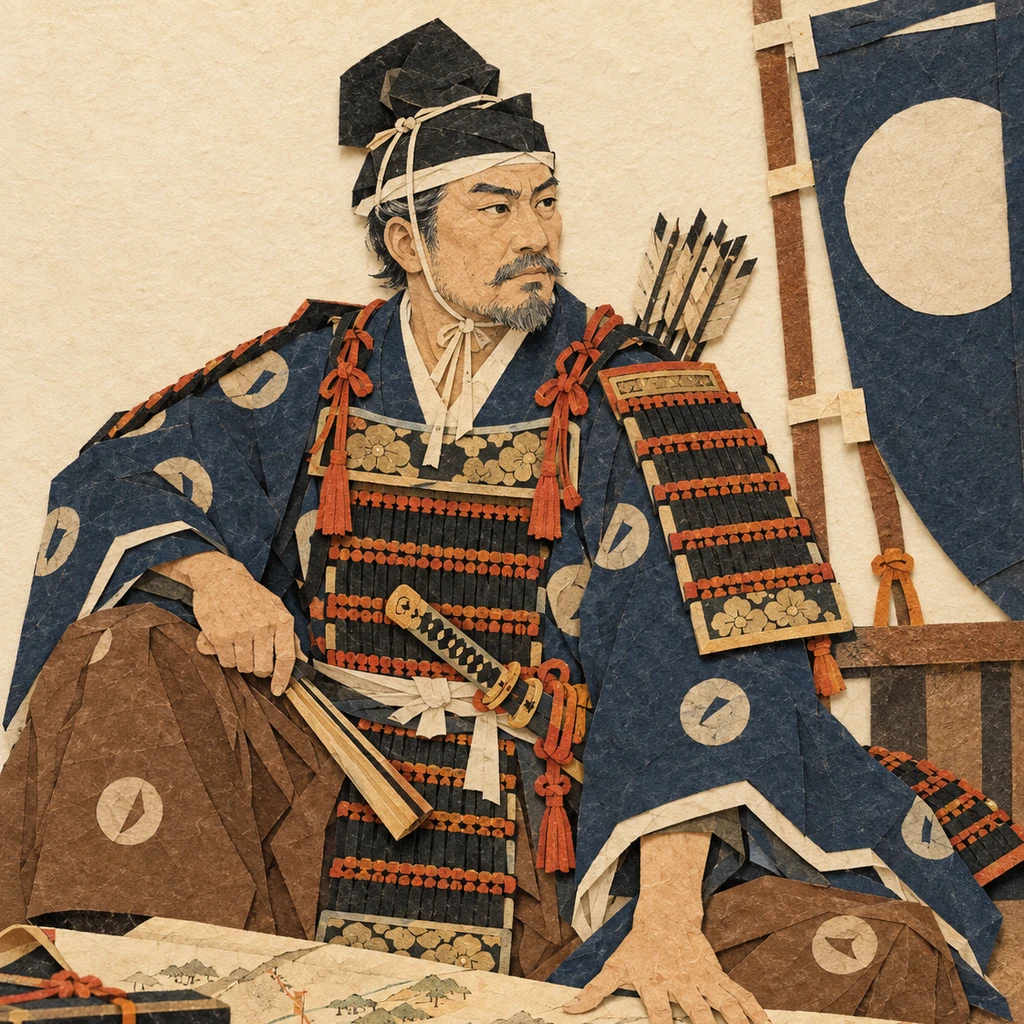
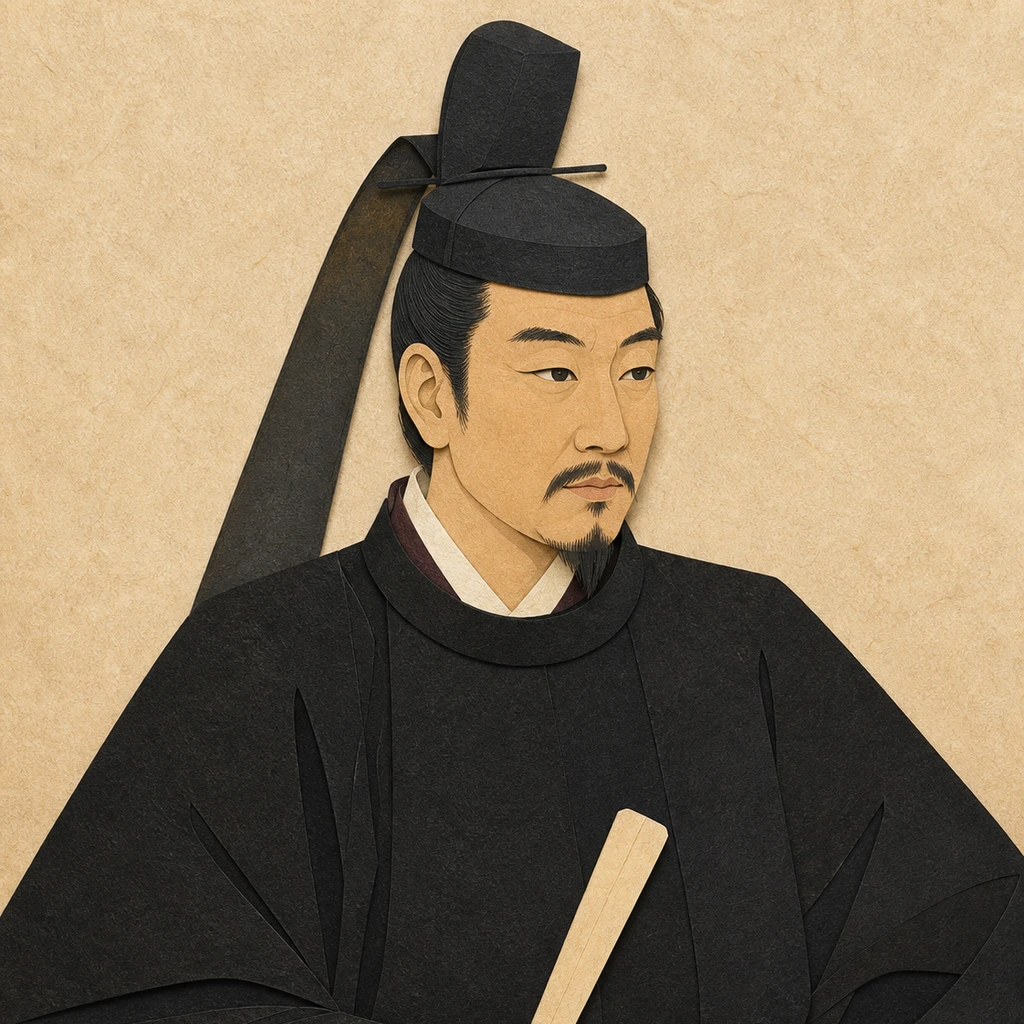
    Anonymous Kamakura document-work study. Not a portrait of Yoritomo, a particular audience or a uniform for all periods.

    One paper
    A decision has to reach someone who can act on it.
    Two roles
    Receiving, checking and carrying out are not the same as issuing.
    Beyond the frame
    People and institutions supply the authority that makes the paper matter.
    A little at a time.

    Short passages. Room to look.

    See the connections.

    A framework, not a list to memorize.

    Go your own way.

    Read in order, or choose a chapter.

    Emperor, Shogun and Everyone Else

    Chapter 1 / 8

    Names that changed

    The same word did not always mean the same power

    02 / 26

    The emperor and the court

    Across many periods

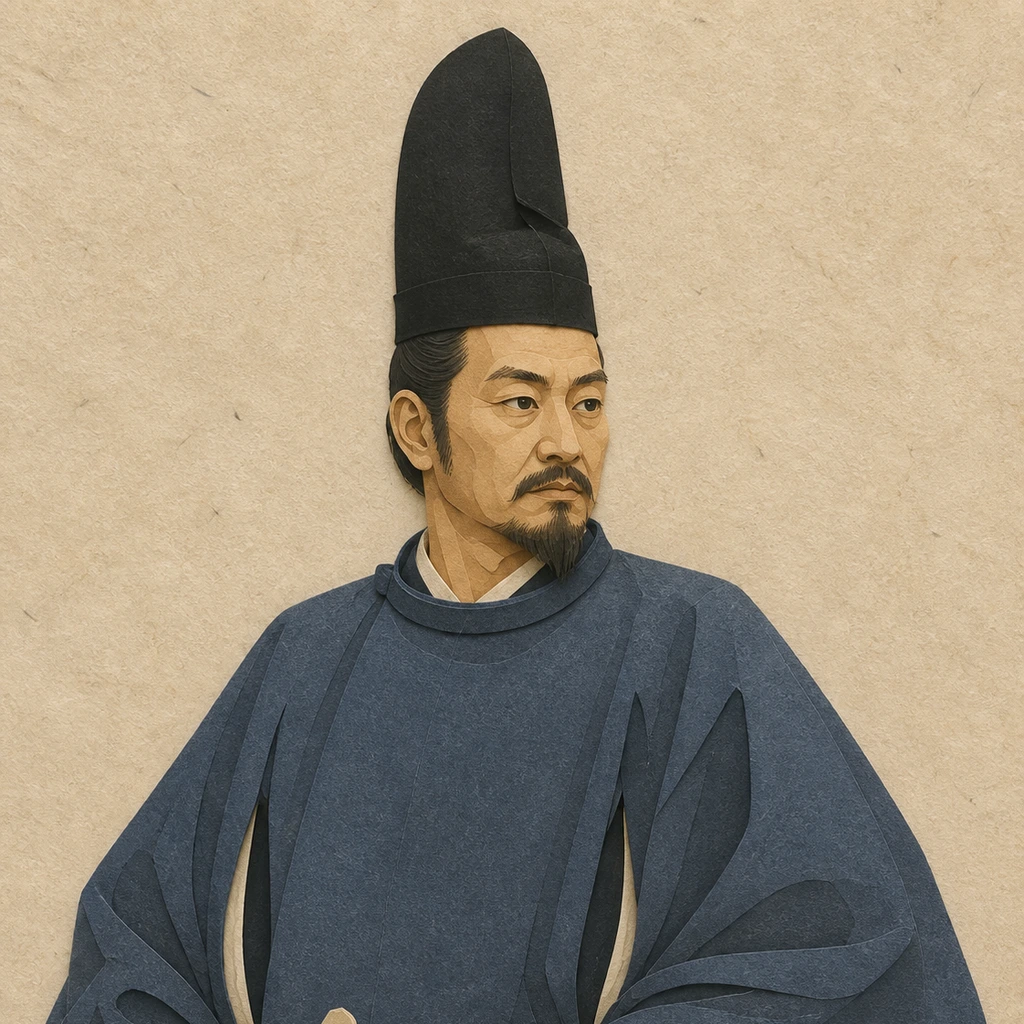
    The court was the emperor's household together with officials who handled government, rank and ceremony. The emperor stood at the center of its claims to rightful rule.

    An emperor might direct policy, work through a regent—an official acting on the ruler's behalf—or face constraints from powerful families. Retired emperors could also keep political influence.

    The position survived the rise of warrior governments. Appointments, succession and ritual still connected the imperial household with other centers of power; the balance changed from one reign to another.

    The court is larger than the person on the throne
    The emperor and household connect with officials and ceremony. These activities together form a working court institution, not a single individual.Emperor and householdOfficialsCeremonyCourt as an institution

    Functional relationships across changing reigns, not a fixed constitutional chart.

    Office
    Rank and documents require specialists.
    Household
    Succession and upbringing require people.
    Variable balance
    A regent or retired ruler can matter without holding the throne.
    03 / 26

    Shogun was an appointment, not a dynasty

    From the late twelfth century

    Shogun was a military title, not a family name. From the late twelfth century, leaders appointed by the emperor to this office headed warrior governments known as shogunates.

    The title did not give every holder the same practical power. Some directed affairs themselves; others depended on a regent, senior officials or leading warrior families.

    An appointment supplied recognized standing, but an order still needed people to carry it out. A shogunate relied on service, records, land rights and decisions that warriors would accept—not simply on one commander's strength.

    Separate recognised title from the means of government
    The emperor appoints the shogun. Officials and retainers are then needed for practical government. Appointment is explicitly not unlimited command.EmperorAppoints to the titleShogunOfficialsRetainersAppointment ≠ unlimited command

    From the late twelfth century; not a family tree, equal-power claim or complete map of imperial–warrior relations.

    Title
    A position someone holds.
    Government
    The continuing work of people who recognise and execute decisions.
    04 / 26

    Samurai was a broad social world

    Medieval to early modern Japan

    Samurai were warriors, but most did not spend every day fighting. They guarded, administered land, served in offices, managed households, kept accounts, studied law and represented superiors.

    Their situations differed sharply. A mounted retainer with an estate, a castle-town clerk, a low-ranking foot soldier and a domain official could all belong to warrior society without sharing the same income or freedom.

    The familiar armored fighter is one moment in a longer career. To understand samurai, look at service, household, paperwork and livelihood as well as weapons.

    A warrior’s service could leave ink, not wounds

    Retained late-Edo writing-action study. Anonymous hands, not a specific officer or universal medieval toolkit.

    Preparation
    Solid ink and water must be worked on the inkstone.
    Execution
    The brush depends on a prepared surface and a steady sheet.
    Social role
    Keeping accounts or records could belong to warrior service; the brush alone does not identify the writer’s status.

    Emperor, Shogun and Everyone Else

    Chapter 2 / 8

    The court was a working institution

    Households, offices and ritual kept authority visible

    05 / 26

    Family connections could reach the throne

    The Heian court · early eleventh century

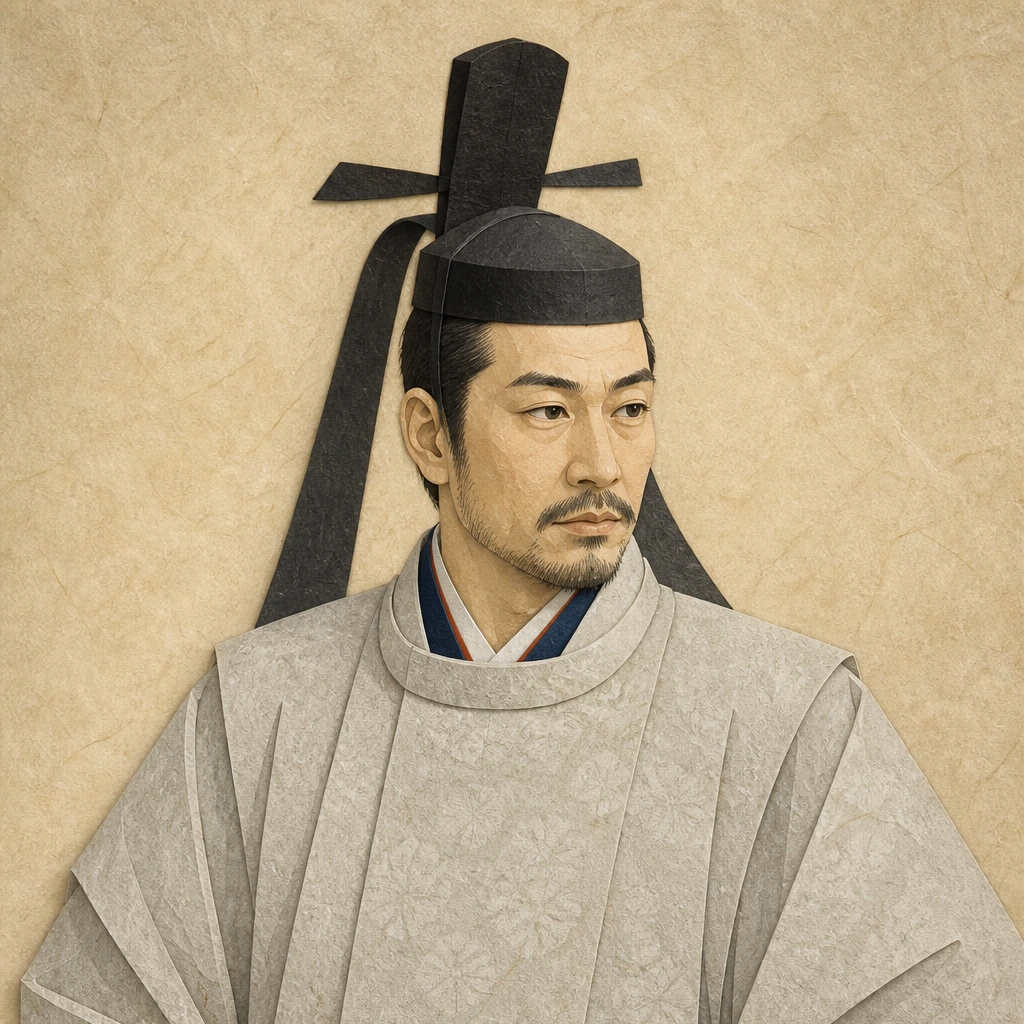
    Fujiwara no Michinaga · 藤原道長
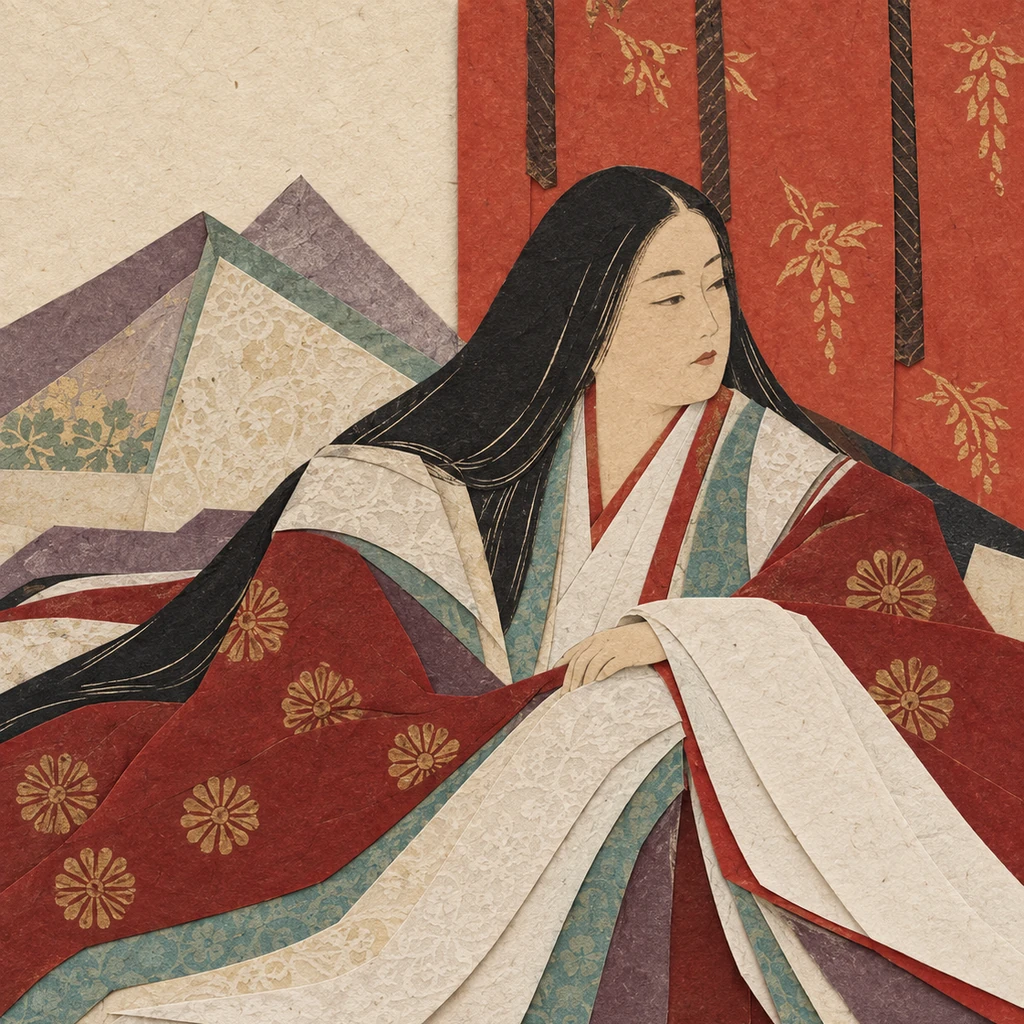
    Shōshi · 彰子

    Court nobles drafted records, managed ceremonies and held offices. Rank shaped their access to the ruler, while family connections could strengthen that position.

    Fujiwara no Michinaga's daughter Shōshi became a consort of Emperor Ichijō. Their son later ruled as Go-Ichijō, making Michinaga the emperor's maternal grandfather.

    This placed a powerful courtier close to a ruler's upbringing and household. Kinship and office could reinforce each other, but neither marriage nor grandparenthood automatically guaranteed control: other relatives, officials and the emperor also had interests.

    Trace the connection through the mother
    Michinaga is Shōshi’s father. Shōshi and Emperor Ichijō are parents of Go-Ichijō. Michinaga is therefore the latter emperor’s maternal grandfather.MichinagafatherShōshiIchijōparentsGo-IchijōMichinaga: maternal grandfather

    Selected parentage only; other relatives and descendants omitted. Lines show kinship, not commands or an automatic transfer of power.

    Shōshi
    An active member of the imperial and Fujiwara households, not merely a connecting token.
    The political opportunity
    Kinship can bring access to upbringing and household life.
    The missing guarantee
    Office, councils and other interests still shape decisions.
    06 / 26

    Retired rulers could build another center

    Late Heian and medieval Japan

    Abdication meant giving up the throne, not necessarily political work. A retired emperor could keep a household, land revenues and attendants. This form of influence is often called cloistered government.

    Go-Toba shows both the reach and the limits of this position. In 1221, the retired emperor challenged the Hōjō-led government at Kamakura. Its warriors defeated his side.

    The conflict was possible because retirement had not removed his influence. Yet imperial standing did not guarantee military obedience: the reigning court, a retired ruler and warrior leaders controlled different resources.

    Abdication changes the office—not necessarily the network
    After abdicationA retired ruler can retain attendants and revenuesPolitical resources can survive leaving the throne
    Go-Toba · 1221Challenges the Kamakura governmentImperial standing makes a challenge possible
    OutcomeHis side is defeatedStanding does not guarantee armed obedience

    A specific limit, not proof that every retired emperor was either powerless or all-powerful.

    Keep the positions separate
    The reigning emperor, a retired ruler and warrior authorities are not interchangeable.
    07 / 26

    Ritual and land supported each other

    Court society

    Ceremonies presented order, but ceremonies required material support. Court households depended on rights to income from estates, offices and provincial arrangements.

    Temples and shrines also held land, protected records, educated specialists and negotiated with rulers. Religious authority was not a decorative layer placed outside politics.

    When control of revenue changed, the ability to host ceremonies, maintain buildings and reward followers changed with it. Symbols remained powerful because institutions and livelihoods sustained them.

    Work backward from the visible ceremony
    Rights to revenue supply materials and labour; these support buildings and ceremonies. Public authority depends on this material work.Rights to revenueMaterialsLabourBuildings and ceremoniesMaterial support sustains public authority

    A dependency diagram, not a uniform tax rate, voluntary donation model or claim that estates had only one rights holder.

    A change of revenue
    Can affect maintenance and hospitality without abolishing the ritual itself.
    Religious institutions
    Can be landholders and negotiators as well as places of worship.

    Emperor, Shogun and Everyone Else

    Chapter 3 / 8

    Warrior government had several hands

    Shoguns rarely governed alone

    08 / 26

    The first shogunate joined leader and retainers

    Kamakura period

    Minamoto Yoritomo gathered warriors who expected protection and rewards for service. These retainers, known as gokenin, were linked to a government that recognized and judged their claims.

    In 1275, the warrior Takezaki Suenaga travelled to Kamakura to seek recognition for fighting an invasion. His later account connects the journey with a grant of land.

    A claim needed official recognition. Local stewards and military governors helped administer this order, alongside older court and religious land rights—not across a country the shogun owned outright.

    Fighting and securing a recognised claim are different acts
    1274Suenaga fights the invasionService does not itself place a grant in his hands
    1275He travels to Kamakura seeking recognitionAn audience and an official decision matter
    AfterwardsRights in Kaitō-gō are grantedStewardship is not ownership of every right in the land

    His later account connects these events. It is not a guaranteed reward formula for all retainers; no exact journey or reconstructed audience is drawn.

    A source with an interest
    The warrior commissioned his own account.
    Overlapping rights
    Court, religious and local claims did not disappear because a steward was appointed.
    09 / 26

    A regent could dominate a shogun

    Thirteenth-century Kamakura

    After Yoritomo's death, the Hōjō family made the regency a center of power. The shogun remained an important office, but leading Hōjō figures and councils directed much of government.

    This did not make the shogun meaningless. Appointment, lineage and the ability to gather loyalties still mattered, while regents had to manage other Hōjō branches and warrior interests.

    The arrangement shows why titles alone are insufficient. A reader must ask who controlled appointments, documents, armed service and access to the decision-making chamber.

    The title and the decision-making centre need not coincide
    Shogun is shown separately above regent and councils. Practical decisions connect onward to officers and retainers; no line treats the shogun as absent.ShogunRegent and councilsPractical decisionsOfficers and retainers

    Thirteenth-century Kamakura framework, not an unchanged chart for every year or a claim that one Hōjō person acted alone.

    Continuing office
    Appointment and lineage remain politically important.
    Practical leverage
    Access, personnel, records and armed service help locate power.
    10 / 26

    Deputies and governors could become powers themselves

    Muromachi period

    Ashikaga shoguns relied on shugo, military governors responsible for provincial affairs. A governor might hold an office in Kyoto while deputies—agents acting for him—worked in the provinces.

    Delegation gave regional leaders opportunities as well as duties. Organizing followers, collecting revenues and arranging military service could strengthen a governor's own house.

    The same family could therefore help the shogun govern and bargain against him. Orders passed through partners who had resources and loyalties of their own, rather than through identical branches of one central office.

    The person carrying an order can also negotiate its terms
    A shugo governor has a two-way relationship with the shogun and connects with provincial deputies and resources. Delegation is not shown as one-way passive obedience.Ashikaga shogunShugo · provincial governorDeputiesResourcesFollowers / revenue / military serviceDelegation creates bargaining power

    Muromachi institutional relationships, not a province map or an automatic path by which every deputy became a daimyo.

    Downward
    Duties and agents.
    Upward
    Resources and the ability to bargain.
    Local attachment
    Followers can owe loyalty to a regional house as well as a distant office.

    Emperor, Shogun and Everyone Else

    Chapter 4 / 8

    Daimyo ruled through domains

    Regional power was organized, not simply owned

    11 / 26

    Daimyo were not all the same kind of lord

    Muromachi through Edo

    The word daimyo covered changing forms of regional power. Muromachi shugo daimyo drew authority from provincial office; Sengoku daimyo built tighter territorial organizations through war and local alliances.

    Under the Tokugawa, domain lords governed within a wider order shaped by the shogunate. Rank, family connection, assessed income and strategic location affected their obligations.

    Treating every daimyo as a miniature king hides those differences. Their power depended on relations with retainers, villages, towns, religious institutions and a larger political center.

    Read the same title against three different arrangements
    MuromachiShugo daimyoProvincial office and a regional following
    SengokuTerritorial consolidationWar, local alliances and tighter organisations
    TokugawaDomain government within a wider orderRank, assessments and obligations to the shogunate

    Selected differences, not three costumes or a claim that every lord followed an identical sequence.

    The question to ask
    Which larger authority, and which local partners, make this lord’s rule possible?
    12 / 26

    A domain was people, records and routes

    Sixteenth to nineteenth centuries

    A domain was not only a colored patch on a map. Officials surveyed production, registered households, maintained roads and warehouses, issued regulations and managed obligations to a lord.

    Castle towns concentrated retainers and offices, while villages produced much of the assessed income. Ports, markets, mines and forests could be just as important as rice land.

    The lord stood at the top of the domain household, but daily government depended on clerks, inspectors, village officers, merchants and transport workers.

    Daily government needs connections between rooms

    Retained early-Edo palace study informed by Himeji records. Not a plan of every domain or a measured reconstruction.

    Low connected ranges
    Receiving people and maintaining a household require more than a tower.
    Doors and passages
    Information and supplies cross thresholds.
    Beyond the enclosure
    Roads, warehouses, villages and ports extend the working institution.
    13 / 26

    Retainers formed a hierarchy inside warrior society

    Castle-town life

    Warrior households differed in stipend, duty and access. Senior retainers might advise a lord or hold branch castles; lower retainers performed guard, messenger, accounting and technical work.

    A stipend was an entitlement tied to service, not the same thing as a modern salary. It could be expressed in rice or converted through domain financial systems.

    Household continuity mattered. Adoption, marriage and succession helped preserve service lines, while dismissal or confiscation could unsettle dependants as well as the named warrior.

    Income expressed in rice still requires a chain of handling

    Retained Edo-period material study; no exact bale capacity or fixed annual stipend is asserted.

    Material
    Straw and rope contain a movable resource.
    Labour
    A hand, floor and store make the entitlement usable.
    Not a modern payslip
    Service, household standing and domain finance shape what a retainer receives.

    Emperor, Shogun and Everyone Else

    Chapter 5 / 8

    Most people were not warriors

    Rule depended on communities with their own knowledge

    14 / 26

    Villages negotiated obligations

    Medieval and early modern countryside

    Farm households produced food and paid dues, but a village was not a silent tax container. Communities managed water, forests, boundaries, festivals and mutual responsibilities.

    Village heads and assemblies communicated assessments, recorded households and organized collective work. They could petition, bargain, delay or resist when demands threatened local survival.

    Officials needed this knowledge to govern. The relationship was unequal, yet it still required negotiation and reliable local intermediaries.

    Collective claims have a physical form

    Niimi petition and oath,1461, selected scan0002,え函23. Kyoto Institute, Library and Archives · Tōji Hyakugo Archives WEB · CC BY2.1JP. Resized only.

    The long lines
    State a request and commitment.
    The groups of shorter marks
    Bring named participants into a collective document.
    Forty-one signatories
    The curator’s count for the document as a whole, not every person necessarily visible in this scan.
    A limit
    A petition proves organised action—not that demands always succeeded.
    15 / 26

    Townspeople made cities function

    Castle towns and ports

    Merchants moved rice, money and goods; artisans made tools, paper, clothing, buildings and weapons. Transport workers connected warehouses, markets and waterways.

    Urban residents often belonged to neighborhood organizations with duties for fire prevention, sanitation, policing and festivals. Shop status and wealth varied widely.

    Official status did not measure economic importance. A merchant might rank below a warrior in formal language while providing credit that a warrior household or domain urgently needed.

    A city’s supply chain has skilled people in it

    Retained late-Edo timber-work study, not a named river, exact quay or domain monopoly.

    Water
    Makes a heavy material movable.
    The worker
    Directs the floating load and its arrival.
    The bank
    Storage connects transport with later construction.
    Social standing
    An official category does not measure how necessary this work is.
    16 / 26

    Religious communities were institutions

    Across the archipelago

    Temples and shrines were places of worship, but many also held land, employed workers, preserved documents, offered education and organized networks of supporters.

    Some religious establishments negotiated with warrior and court authorities; some maintained armed forces or controlled routes and markets. Others depended closely on local patrons.

    There was no single religious block standing outside government. Scale, sect, patronage and local history determined what a community could do.

    An estate relationship can leave an administrative plan

    Niimi compound record,1463,サ函399. Kyoto Institute, Library and Archives · Tōji Hyakugo Archives WEB · CC BY2.1JP. Full selected scan, resized only.

    Two compounds
    A main hall on the right and guest/administrative compound on the left in the curator’s reading.
    A small connection
    Gate and bridge join spaces within the estate’s arrangements.
    Why it survives
    Administration and conflict generated records worth preserving.
    Not a universal temple
    This is not the standard plan of a Buddhist monastery or all Tōji property.

    Emperor, Shogun and Everyone Else

    Chapter 6 / 8

    Households moved power between generations

    Gender and succession shaped public institutions

    17 / 26

    Women managed property and alliances

    Court and warrior society

    Women at court and in warrior families could inherit, manage property, arrange households, commission religious works and preserve family information. Their opportunities varied by period and status.

    Marriage connected houses but did not reduce every woman to a passive token. Mothers, widows and wives sometimes negotiated succession, represented absent relatives or defended a household's claims.

    A title such as wife or widow cannot tell us which rights a woman held. For that, we need the period, her household's position and the particular property or decision involved.

    Preserving a claim is work, not simply a family label

    Two moments with one anonymous early-Kamakura upper-warrior-household woman. Interpretive document-work sequence, not a portrait or a particular Masuda-family event.

    Compare
    A household may need more than one earlier paper to understand a claim.
    Keep together
    A claim must survive changes of generation and personnel.
    Evidence beyond the drawing
    Medieval Masuda records preserve female property and transmission.
    What is not shown
    Blank paper surfaces do not invent signatures, legal wording or a uniform set of rights.
    18 / 26

    Adoption solved political problems

    Elite households

    A household needed an heir who could continue obligations, inherit office and maintain relationships. Adoption was one practical answer when direct succession was impossible or undesirable.

    Shoguns, daimyo, courtiers and ordinary households used adoption in different ways. The decision could stabilize a line, invite outside influence or trigger rivalry among candidates.

    Succession was therefore institutional design carried out through family practice. Genealogy mattered because offices, property and service were attached to households.

    An heir inherits an institutional problem as well as a name
    Direct and adopted heirs are alternative paths toward continuing household service, property and relationships. Recognition is still required.A continuing householdDirect heirAdopted heirService + property+ relationshipsContinuity still needs recognition

    A conceptual comparison, not an actual genealogy, equal eligibility rule or automatic approval of an adoption.

    What continues?
    Obligations and relationships, not only biological descent.
    What can change?
    Alliances and competition among candidates.
    19 / 26

    Dependants made elite life possible

    Household service

    An elite household included far more people than the name at its head. Attendants, guards, clerks, nurses, craft workers and servants carried out daily work.

    Their labor produced the ceremonies, travel, correspondence and hospitality through which status became visible. Dependants could also carry information between households.

    Focusing only on famous officeholders leaves this working institution invisible. The household was a political organization because many kinds of labor sustained it.

    One result rests on several ordinary actions

    One anonymous late-seventeenth-century worker shown at three moments. Not three people or a documented household menu.

    Store
    Vessels must be kept ready.
    Prepare
    Food, heat and skilled attention meet.
    Serve
    The result moves to someone else.
    Look past the host
    Hospitality makes a household visible because someone performs this labour.

    Emperor, Shogun and Everyone Else

    Chapter 7 / 8

    Edo order looked neat on paper

    Status categories met a complicated society

    20 / 26

    The shogunate classified households

    Edo period

    Tokugawa authorities distinguished warrior, peasant, townsman and other statuses through different obligations. A four-part ladder is too simple: clergy, court nobles and occupational groups had arrangements it cannot explain.

    Geography matters too. Ainu communities and the Ryukyu Kingdom had distinct political relationships with Japanese authorities; they were not simply extra rungs in a universal Tokugawa social ladder.

    Status shaped law, residence, dress and occupation, but wealth did not follow rank exactly. Ask which authority governed a particular person and what obligations that relationship imposed.

    Try the questions that a four-rung ladder cannot answer
    Warrior householdWhich lord or office receives service?Rank does not give every retainer the same income
    Temple or shrineWhich property, patrons and authority?Not a fifth rung that solves the model
    Ainu / RyūkyūWhat distinct political relationship applies?Not extra rungs in a universal Tokugawa ladder

    Selected counterexamples, not a complete set of statuses or an equation of Ainu and Ryūkyū histories.

    Place matters
    A label has to be connected to a jurisdiction and an obligation.
    21 / 26

    Discrimination was built into governance

    Edo communities

    Some communities were assigned stigmatized statuses and occupations and faced restrictions that outlasted the shogunate. Their labor could include leatherwork, sanitation, execution-related duties and performance.

    It is wrong to describe these people only through labels imposed on them. They formed households, neighborhoods, trades and cultural lives while confronting structural exclusion.

    A beginner's framework must therefore show that order was maintained partly by unequal legal classification, not only by cooperation among offices.

    Separate a person’s life from the restrictions imposed on it
    Households, work, family and culture appear above an imposed boundary of discriminatory classification; unequal access and obligations follow below. No human group is drawn as a lower rung.Households and neighboursWork / family / cultureDiscriminatory classificationsUnequal access and obligationsThe imposed label is not the whole life

    Structural explanation, not an illustration identifying an individual as a member of a discriminated community.

    Governance
    Restrictions are produced and enforced; they are not natural traits.
    People
    A stigmatizing official label cannot substitute for a household’s history.
    22 / 26

    People moved within and around categories

    Edo period

    Households changed occupation, residence and fortune. Warriors took scholarly or administrative work; merchants lent money to elites; farmers entered seasonal trades; performers crossed urban networks.

    Movement did not make status irrelevant. Permission, household registration and local authority could constrain choices, and mobility was not equally available.

    The useful picture is a structured society with negotiated edges. Formal categories mattered precisely because people continually worked within, around and against them.

    A new livelihood does not automatically remove an old constraint
    Seasonal tradeA household adds another source of incomePermission and local conditions still matter
    Warrior scholarshipSkills enter teaching or administrative workService and household position still shape choices
    Merchant creditA lender can become indispensable to an eliteEconomic leverage is not the same as legal status

    Illustrative relationships, not invented biographies or a claim of equal mobility.

    Read two things at once
    What a person does, and which institutions can constrain them.

    Emperor, Shogun and Everyone Else

    Chapter 8 / 8

    Meiji government rewrote the labels

    Old roles were transformed rather than instantly erased

    23 / 26

    Domains became prefectures

    1868–1871

    The new government first worked through former domain structures, then replaced domains with prefectures in 1871. Lords were removed from territorial government and officials were appointed through the new state.

    This was a major institutional change, but records, personnel and local practices did not vanish overnight. The center still needed people who knew how to collect information and administer communities.

    A map changed because offices, revenue and command were reorganized. Renaming alone would not have been enough.

    Change the chain of appointment, not just the map colour
    An1871change from domains and lords to prefectures and appointed officials sits above a continuing line of records, local knowledge and daily work.DomainsPrefectures1871DomainlordsAppointedofficialsRecords / knowledge / daily workContinuities beneath a major change

    Institutional contrast, not a prefecture-boundary map or a claim that every employee stayed in post.

    Discontinuity
    Former lords leave territorial government.
    Continuity
    The new state still needs information and local administration.
    24 / 26

    Samurai status lost its old foundation

    1870s

    Hereditary status categories were reorganized, and former samurai stipends were eventually converted into government bonds. Wearing swords and serving a lord no longer defined a governing class.

    Some former warriors entered the army, police, education, business or civil service; others faced debt, unemployment and loss of standing. Outcomes differed by resources and connections.

    The change was not a single ceremony in which every samurai became ordinary. It was a difficult transfer of income, occupation and identity.

    A new kind of paper replaced an old kind of entitlement

    Stipend-bond specimen,1873,附A00017100,image001. National Archives of Japan · credited reproduction; full scan resized/compressed only.

    What is visible
    Decorative fifty-yen face, smaller coupons and a red specimen mark.
    1873
    A voluntary-surrender scheme for a subset of recipients; this specimen belongs here.
    1876
    The wider commutation ends the old stipend system. Do not relabel this1873image as a1876certificate.
    Different futures
    Possessing a bond did not guarantee a successful new livelihood.
    25 / 26

    The emperor became central to a new state

    Meiji era to 1912

    The Meiji government acted in the emperor's name and built new national institutions, conscription, schools and ceremonies around imperial sovereignty.

    Under the 1889 Constitution, ministers and state organs operated within a constitutional order headed by the emperor. This arrangement was different from both an ancient court and a restored personal government.

    By 1912, familiar titles carried new meanings. The shogunate was gone, former status groups had been legally reorganized, and national institutions reached communities in new ways.

    An emperor-centred state is still an institutional order
    Emperor connects with ministers and state organs. The1889constitutional order places imperial sovereignty alongside a warning against equating it with personal handling of every decision.EmperorMinistersState organs1889 constitutional orderImperial sovereignty≠ every decision made personally

    Basic orientation only, not the full Constitution, a post1947model or parliamentary-majority cabinet rule.

    Do not move the old ladder
    These offices and rules belong to a new state.
    Practical question
    Which institution makes, transmits and executes a decision?

    Emperor, Shogun and Everyone Else / Closing page

    Ask who could make it happen

    Titles tell you where to start, not where to stop. An emperor, shogun or daimyo mattered through institutions, households and relationships that changed over time.

    Look next for the people who carried documents, managed land, supplied towns, organized villages and preserved succession. Their work turns a famous name into an operating government.

    When two titles seem to overlap, do not force them onto one ladder. Ask what each controlled, whom each depended on, and which communities bore the cost.

    Return to the paper between two people

    The same Kamakura study returns unchanged. It is not counted as another new image.

    Ask about the sender
    What gives the decision recognised standing?
    Ask about the receiver
    What local resources and obligations can make it effective?
    Ask about others
    Whose work, property or choices bear its consequences?

    Sources

    Article chapters

    1. Start here
    2. Names that changed
    3. The court was a working institution
    4. Warrior government had several hands
    5. Daimyo ruled through domains
    6. Most people were not warriors
    7. Households moved power between generations
    8. Edo order looked neat on paper
    9. Meiji government rewrote the labels
    10. Ask who could make it happen

    Reading text size

    Your reading position stays on this device.

    A closer look

    Japan Essentials

    All 20 articles

    All 20 illustrated articles are ready to read. Your position is saved separately in each article.

    Essential reading

    1. 01Japan: The Big Picture
    2. 02Put Japan’s History on the Map
    3. 03Emperor, Shogun and Everyone Else
    4. 04Three Shogunates, One Clear Story

    Explore further

    1. 05Japan’s Warring States: A First Look
    2. 06Japan Becomes Modern
    3. 07Japan Across the Seas
    4. 08Twelve Faces of Japanese History
    5. 09Samurai Beyond the Battlefield
    6. 10People of an Edo Town
    7. 11Nara: A First Look
    8. 12Kyoto: A First Look
    9. 13Kamakura: A First Look
    10. 14Osaka: A First Look
    11. 15From Edo to Tokyo
    12. 16Eight Doors into Japanese Culture
    13. 17Shrines and Temples: A First Look
    14. 18Reading a Japanese Castle
    15. 19A Year in Japan
    16. 20Tea, Gardens and Pictures

    Reading preferences

    Text size
    Glossary intensity

    Choose how much explanation appears as you read.

    Saved on this device. All terms remain available in the glossary.

    Browse the glossary →
    History Omakase

    Opening reading…