
Skip to content
Topics

Search History Omakase

Start typing to search.

    Samurai Beyond the Battlefield
    Start here

    Big Questions / Japan Essentials

    Samurai Beyond the Battlefield

    Households, livelihoods, and the work of service

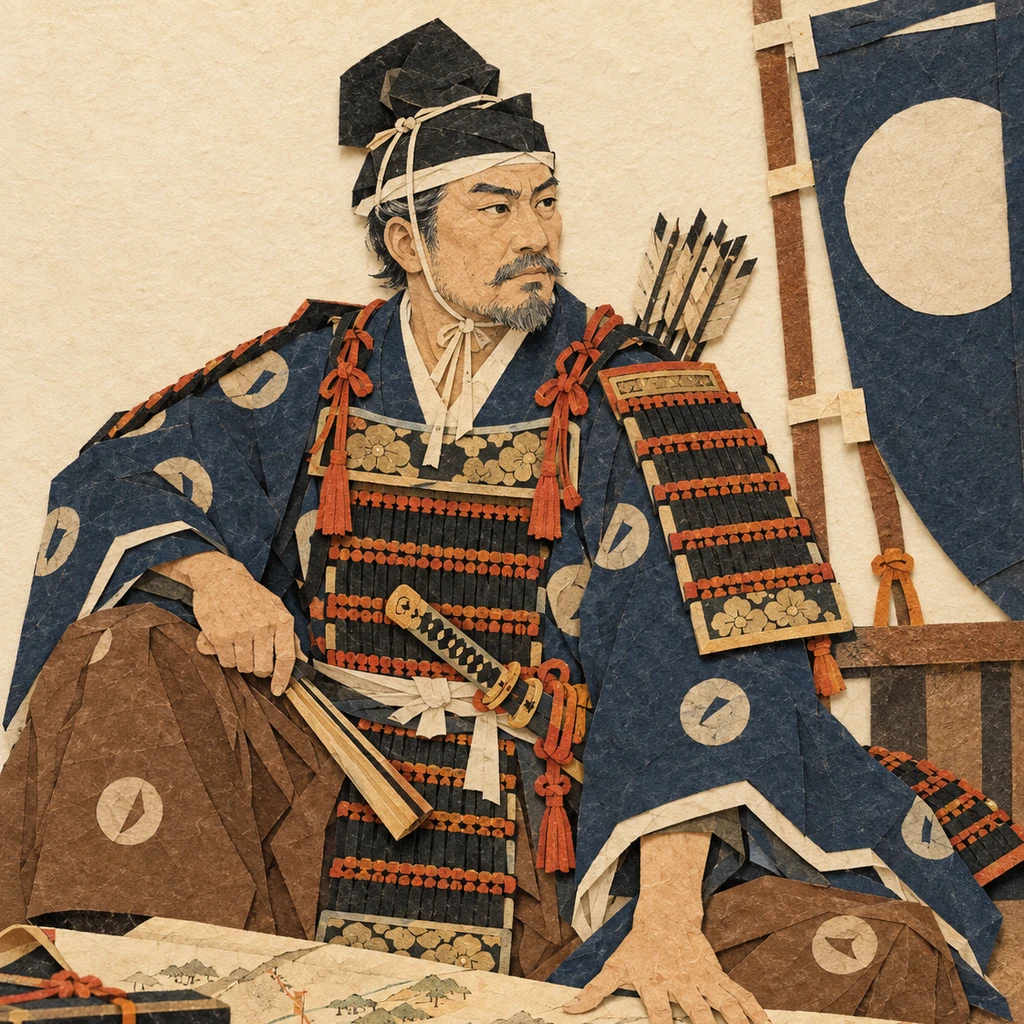
    A samurai could ride into battle, calculate a payment, or worry about feeding a household. These were not separate worlds. Military service depended on resources, relationships, and work that rarely appears in a duel.

    Begin with a desk in a nineteenth-century castle town. Then step back to medieval warriors before following samurai families into the Meiji changes.

    The question throughout is simple: who supported this person, what did service require, and how did that arrangement change?

    8 short chapters26 reading unitsNo prior knowledge needed
    Start reading
    Before a rider can ride, other people work

    Interpretive late-thirteenth-century Kyushu preparation scene. Anonymous people; an unsaddled horse is being fed before tack is fitted.

    The animal
    Food and handling come before the visible charge.
    The bundle
    Equipment and supplies must be made transportable.
    The warrior
    Readiness depends on a group, not just one individual.
    A little at a time.

    Short passages. Room to look.

    See the connections.

    A framework, not a list to memorize.

    Go your own way.

    Read in order, or choose a chapter.

    Samurai Beyond the Battlefield

    Chapter 1 / 8

    A samurai in a particular time

    Begin at a desk, not in a duel.

    02 / 26

    The warrior at a desk

    Kanazawa · 1840s

    Kanazawa · 金沢
    Inoyama family · 猪山家

    In Kanazawa, the castle town of Kaga domain, a samurai’s useful tool might be an abacus: a wooden frame of sliding counting beads.

    The Inoyama family served the domain as accounting specialists. Their surviving household accounts begin in 1842, opening a remarkably ordinary window onto an extraordinary period.

    A domain was a territory governed by a lord. Keeping its finances in order was service too. A man could belong to a warrior household without spending his working day in armor.

    A counting tool makes an otherwise invisible job visible

    Three-rod detail of a historical two-upper / five-lower bead arrangement. Not the Inoyama family’s actual instrument or a worked calculation.

    Above the bar
    Two beads on each visible rod.
    Below the bar
    Five beads on each rod; the middle set separates one from four.
    Beyond the frame
    Calculation serves records, payments and obligations—not swordsmanship.
    03 / 26

    A position, not just a possession

    Kaga domain · Edo period

    During the Edo period (1603–1868), a sword might announce status, but a samurai’s place also depended on recognized rank and service. Retainers served a lord; they were not all lords themselves.

    The differences within this world were large. In Kaga, even ashigaru—foot soldiers near the bottom of the hierarchy—counted within the samurai order.

    Elsewhere, their standing could differ. A fine title, a small income, and a demanding job could belong to the same person.

    Rank, job and income are three different questions
    Recognised placeLord / retainer / low-ranking ashigaruNot everyone called samurai was a lord
    AssignmentAccounts / assistance / guard dutyUseful work differs within the same order
    ResourcesIncome minus obligationsStatus does not reveal disposable money

    The inclusion of ashigaru within the samurai order is the Kaga example, not a rule silently applied to every domain.

    Read the person precisely
    Ask whose service, doing which work, with what support.
    04 / 26

    Keep the century in view

    Three stops · 1274 / 1842 / 1876

    Our medieval stop is Kyushu in 1274, when warriors faced an invasion sent by the Mongol-led Yuan empire. Horses, followers, and recognition for service will matter there.

    Our main domestic stop is nineteenth-century Kanazawa, under the Tokugawa military government. Here, the office and household help explain a hereditary warrior society.

    By 1876, a new government was dismantling old privileges. Keep these dates apart: the same word, samurai, can describe lives organized very differently.

    Three dated settings, not one warrior’s lifetime
    1274 · KyushuInvasion and mounted serviceFollowers, horses and recognition
    1842 onward · KanazawaInoyama household accountsSpecialist service and domestic expenses
    1876 · JapanNew government measuresSword-wearing restrictions and stipend commutation

    The dates separate institutions as well as clothes. No continuous individual biography is implied.

    Samurai Beyond the Battlefield

    Chapter 2 / 8

    The household behind the retainer

    Family, work, and a place to receive visitors.

    05 / 26

    A household had a future to protect

    Kanazawa · Edo period

    A household hoped to carry its place in society into the next generation. Parents had reasons to invest in a child’s education and connections.

    Among Kaga ashigaru, succession was not simply automatic inheritance. Children commonly followed their parents, but a vacancy and a recommendation were needed.

    Adoption could also bring an outsider into a household and its position. Family and employment overlapped: keeping the household going meant more than keeping the building in repair.

    A family connection is not an automatic appointment
    A household may continue through a child or an adoptee, but succession among Kaga ashigaru also requires a vacancy and recommendation.Household positionChildAdopteeVacancy + recommendationA recognised succession

    Local Kaga conditions, not a complete legal flowchart for all warrior houses.

    Two kinds of continuity
    The family and its service position have to be maintained together.
    06 / 26

    A small house with two kinds of space

    Kanazawa · Late Edo period

    A Kaga ashigaru family could live in a compact detached house with a garden. Many counterparts elsewhere lived in shared rows of housing instead.

    Inside, reception rooms were separated from the family’s cooking, sleeping, and working spaces. Even a modest home had to receive visitors properly.

    Outside, vegetables and fruit trees made the plot useful. The household was a place of production as well as rest, while its rooms preserved the distinction between private life and official relationships.

    A small home can keep public and private functions apart

    Interpretive cutaway based on Kaga ashigaru house descriptions and surviving examples. Compressed functional model, not a measured plan of a named family’s house.

    Reception side
    Tatami rooms receive visitors.
    Domestic side
    Cooking, stored bedding and everyday work need other surfaces.
    Roof and plot
    Stones hold wooden shingles; vegetables and a fruit tree make the garden productive.
    07 / 26

    Work did not stop at the doorway

    Kanazawa and Wakayama · 1800s

    For many Kaga ashigaru families, a small stipend needed supplementing. Home piecework included lanterns, toys, and festival decorations.

    Women were not simply waiting in the background. Managing food, clothing, visitors, and expenses helped make official service possible.

    In another castle town, Wakayama, Kawai Koume combined household management with painting and poetry. We will return to her diary: women’s work becomes much easier to see when the record includes the home.

    Work at home also supports work elsewhere
    Kaga pieceworkLanterns, toys, festival decorationsAdds income to a stipend
    Household managementFood, clothing, visitors, expensesKeeps daily service possible
    Wakayama · KoumePainting, poetry and household workA different town and a particular recorded life

    Examples are not assigned to one imaginary family. Koume is not portrayed by an invented face.

    The boundary to notice
    The doorway does not divide productive work from inactivity.

    Samurai Beyond the Battlefield

    Chapter 3 / 8

    What paid for service?

    Follow the resources that made a livelihood.

    08 / 26

    Land could support a claim to serve

    Kyushu · 1200s

    Takezaki Suenaga · 竹崎季長

    For a medieval warrior, land could be the foundation of a livelihood. Its produce helped support a household, followers, and the costs of military service.

    That did not make every warrior the sole owner of everything he used. What mattered was a recognized claim to resources and income.

    Takezaki Suenaga, a warrior from Higo in Kyushu, held family lands. His story links fighting with the effort to secure recognition—and further resources—from the military government.

    Resources make a claim to service practical
    Recognised land-related claims give access to income that supports a household and followers, making military service possible.Recognised claimsAccess to produce / incomeHouseholdFollowersCapacity to serve

    Functional relationship, not exclusive ownership, a map of Suenaga’s estate or a fixed share of harvest.

    The distinction
    A claim to particular resources is not ownership of everything in a territory.
    09 / 26

    Payment could arrive without a field

    Kaga domain · Edo period

    An ashigaru’s income in Kaga worked differently. Rather than drawing it from an assigned estate, he received payments at set times through the year.

    These could take the form of vouchers exchangeable for rice or money. A promise of support had to become something the household could actually use.

    This put the family into a chain of payment and exchange. Food, clothes, and other necessities did not all arrive together simply because a retainer had a recognized position.

    A payment still has to become usable support

    Retained Edo rice-bale handling study. Not a Kaga office, an original payment voucher or a specified quantity of stipend.

    First
    A payment or voucher is received at the appointed time.
    Then
    Exchange can turn a voucher into rice or money.
    Finally
    Food, clothing and other needs still have to be obtained.
    10 / 26

    Two routes to a livelihood

    Kyushu, 1275 · Kaga, late Edo period

    In 1275, Suenaga traveled to Kamakura, the military government’s seat, to seek recognition for his fighting. His account connects that journey with receiving land: service could support a claim to resources.

    Centuries later, Kaga ashigaru relied on regular stipends rather than income from land assigned to them. Their immediate problem was making those payments cover expenses.

    Both arrangements connected service with support. But a landholding warrior and a stipend-dependent retainer faced different practical problems. “Samurai” alone does not tell you how a family ate.

    The same question has different institutional answers
    Suenaga · 1275Travel to Kamakura seeking recognitionService and claims to land-related resources
    Kaga ashigaru · late EdoStipend paid at set timesPayments and exchange cover ongoing expenses

    Different centuries and statuses. Not a universal transition from all medieval landholders to all Edo stipendiaries.

    How did the family eat?
    The answer requires the payment arrangement, not just the word samurai.

    Samurai Beyond the Battlefield

    Chapter 4 / 8

    Learning to be useful

    Preparation had more than one form.

    11 / 26

    The first exercise is a line of writing

    Japan · 1615 and the Edo period

    Put down the weapon for a moment. A pupil copies a line while a teacher checks the brushwork. Study belonged inside the warrior ideal.

    The Tokugawa government’s Laws of Military Households, issued in 1615, called for both literary study and military skills. Peace was not supposed to mean forgetting preparation.

    This was an expectation, not proof that every samurai became a scholar. Still, reading, writing, and disciplined practice could serve a household as effectively as physical strength.

    Writing requires preparation before a mark appears

    Retained Edo writing study: preparing ink and using a brush. Anonymous hands, not a named pupil or a facsimile of the 1615 laws.

    Inkstone
    A solid inkstick is ground with water.
    Brush and sheet
    One hand writes; the other steadies the paper.
    The law’s language
    Study and military practice were prescribed together; prescription is not evidence that everyone excelled.
    12 / 26

    Different jobs called for different practice

    Kyushu, 1200s · Kanazawa, 1800s

    A mounted warrior needed access to a trained horse, suitable equipment, and people who could help keep both ready. Riding was not simply another skill available without cost.

    An accounting household in nineteenth-century Kanazawa had a different specialty. Careful calculation and the ability to keep records made its members useful to their lord.

    These are different settings, not successive lessons in one person’s life. Rank, resources, and assignment shaped which skills a warrior household could cultivate.

    Skills require different supporting resources
    Mounted service · 1200sHorse, equipment, attendantsCare and supply keep riding possible
    Accounting · 1800sCalculation, writing, recordsPractice makes reliable administration possible

    Parallel comparison, not two stages in one pupil’s education.

    Ask what lies behind a skill
    Time, tools, people and an assignment make practice useful.
    13 / 26

    Readiness was somebody’s work

    Kyushu · Late 1200s

    A horse had to be fed and tended before it could carry an armored rider. Equipment needed care, and a warrior depended on more hands than his own.

    Think of the attendant leading the animal, the person handling a bundle, and the rider checking that the group could move together.

    None is performing a heroic charge. Yet this practical work is part of military readiness. The impressive figure on horseback rests on an ordinary structure of labor and resources.

    Three simultaneous jobs create one capacity to move

    Anonymous late-thirteenth-century Kyushu support scene; source-informed hitatare and folded eboshi. The unsaddled horse is shown before fitting the riding equipment.

    Holding and feeding
    A slack lead and fodder connect attendant and animal.
    Packing
    Another person secures a cloth bundle.
    Coordinating
    The warrior watches the preparations; the group has not begun a charge.

    Samurai Beyond the Battlefield

    Chapter 5 / 8

    The work and costs of war

    Groups, equipment, and the people beyond the charge.

    14 / 26

    A warrior arrived with other people

    Hakata Bay, Kyushu · 1274

    The fighting at Hakata Bay was not a series of private duels. Suenaga’s account places him among relatives, mounted followers, and a bannerman.

    Companions offered support, but recognition also mattered. Someone who saw a warrior’s actions could help establish what he had done when rewards were considered.

    That gave the group several kinds of importance. It helped a man fight and survive, and it could help his service become an acknowledged claim rather than an unsupported story.

    A companion can help in battle and in a later claim
    Relatives and followers form a fighting group. Shared action can provide practical support and witnesses for later recognition.Fighting groupRelativesFollowersShared actionSupportWitness

    Selected functions of companions in Suenaga’s account, not exact troop strength or a diagram of guaranteed rewards.

    During fighting
    Other people affect survival and coordination.
    After fighting
    A witnessed action can be more persuasive than an unsupported claim.
    15 / 26

    Start with the equipment of this campaign

    Kyushu · Late 1200s

    Look at the bow, horse, and layered armor rather than imagining a swordsman dressed for every century. Medieval mounted warriors used equipment suited to their own circumstances.

    The invasion scrolls preserve a world of riders and followers, although parts were rearranged or altered later. They are valuable evidence, not an untouched photograph.

    No equipment made a group self-sufficient. Men and animals needed food, and carrying what was required was part of making military action possible.

    Read the equipment—and the age of the evidence

    Kano Seisen-in Osanobu, nineteenth-century copy of the Mongol invasion scroll. Tokyo National Museum A-1637, image E0175378 · ColBase; resized, not cropped by History Omakase.

    Through the pines
    Mounted warriors and a walking attendant occupy the same fragment.
    Equipment
    Bows, quivers and layered armour place the subject far from an Edo desk.
    Evidence in layers
    This is a later copy of a thirteenth-century subject. The original scrolls themselves were rearranged or altered; neither is an untouched photograph.
    16 / 26

    The costs spread beyond the fighters

    Hakata Bay · 1274–1276

    Suenaga’s account records wounded men and horses killed in battle. Surviving was not the same as returning home with everything needed to serve again.

    The burden also reached people outside the fighting group. In 1276, orders called for laborers to build coastal defenses at Hakata.

    Stone had to be moved and time taken from other work. An invasion’s consequences extended into ordinary livelihoods, even where the record concentrates on named warriors and the recognition they sought.

    The defensive response also consumed ordinary working time

    Retained interpretive Imazu wall section, after the 1276 order: stone facing, fill and lower sandy ground. Cutaway is explanatory, not damage from a pictured battle.

    1274
    Suenaga’s account records losses of men and horses.
    1276 and after
    Building defences requires labour and transported material.
    Wider cost
    Those workers are not all the mounted men most visible in the scroll.

    Samurai Beyond the Battlefield

    Chapter 6 / 8

    The working life of peace

    Appointments still arrived. So did expenses.

    17 / 26

    Peace still required a working day

    Kaga domain and Edo · Edo period

    Back in the Edo period, an ashigaru might assist higher-ranking retainers with routine administration. The accounting specialist and the low-ranking assistant occupied different places in the same working order.

    Service could also take a man away from home. Kaga retainers sent to Edo might guard their lord’s residence there.

    The setting had changed, not the need to be useful. A military household could spend its working time on records, attendance, and the steady business of maintaining authority.

    A working assignment could take a retainer away from home
    Kanazawa and Edo are separate locations. The figure marks the home domain and a place of residence guard service, without inventing a route.N12

    Modern-coastline locator. No exact journey, domain borders or compulsory schedule is drawn.

    1 · Kanazawa
    Domain and household work.
    2 · Edo
    Guard service at the lord’s residence could be another assignment.
    18 / 26

    A stipend had several jobs to do

    Kanazawa · Late Edo period

    A household needed food first, but food was not its only expense. Clothing, education, family occasions, and obligations to other people also made claims on the budget.

    The Inoyama records reveal borrowing and efforts to put debts in order. Even financial specialists could face difficult household choices.

    Rank did not measure the money left after necessities. Keeping up a recognized place in society could itself be expensive, especially when the household had little room for an unexpected demand.

    Income and status do not reveal the balance left over
    NeedsFood / clothes / household goodsRepeated claims on income
    ObligationsEducation / family occasions / relationshipsMaintaining a recognised position costs money
    DebtBorrowing and repaymentPast choices make further claims on future income

    Categories supported by the Inoyama account study; no invented household amounts or proportional pie chart.

    The missing number
    What remains after obligations cannot be inferred from rank alone.
    19 / 26

    Food before everything else

    Kaga ashigaru households · Edo period

    For Kaga ashigaru families, basic food could take roughly half, or more, of the annual stipend. That is a local example, not a budget for every samurai.

    Picture the remaining income facing clothing, household needs, and social duties. Piecework at home begins to look less like a hobby.

    Peace could spare a family the immediate dangers of battle while leaving it under financial pressure. Security of status and comfort of living were not the same thing.

    A rough threshold, not a universal samurai budget
    Half of a stipend bar is shaded for food, with a dashed halfway threshold and an arrow indicating that food could take more. No precise survey percentage is claimed.Annual stipend · local Kaga exampleFoodRoughly half—or moreNot a fixed 50% measurementRemaining stipend faces other needs

    Qualitative reading of the Kaga ashigaru museum account. Household piecework can add income; this is not total household income.

    Do not generalise
    Neither every samurai nor every year shared this budget.
    Why piecework matters
    Food leaves the remaining stipend under several competing demands.

    Samurai Beyond the Battlefield

    Chapter 7 / 8

    What clothes and brushes could say

    Objects make sense in the lives of their users.

    20 / 26

    Dress was part of the relationship

    Japan · Edo period

    A warrior did not wear armor to every appointment. Formal dress could include a stiff-shouldered sleeveless jacket and hakama, the divided lower garment shown here.

    Clothes communicated rank and occasion. The 1615 laws restricted materials, while Kaga’s rules distinguished the length of an ashigaru’s hakama from those worn above him.

    At physical work, long fabric became an obstacle rather than an advantage. Clothing helped people read social relationships, but it also had to meet the demands of an actual task.

    Two garments communicate a formal occasion

    Upper-status Edo formal kataginu and naga-hakama study, based on Costume Museum record 120. Garments are separated for reading, not a tailoring pattern or ashigaru uniform.

    Above
    Sleeveless kataginu has stiff projecting shoulders.
    Below
    Divided naga-hakama has exceptionally long legs for formal indoor wear.
    Rank is essential
    Kaga ashigaru’s shorter hakama must not be confused with this higher-status example.
    Work changes the problem
    Trailing cloth is unsuitable for physical tasks.
    21 / 26

    A diary lets the household speak

    Wakayama · Mid-1800s

    Kawai Koume · 川合小梅

    Kawai Koume was a poet, painter, and manager of a lower-ranking samurai household. Her diary makes a different kind of activity visible from a battle report.

    She recorded meals and expenses, visitors and weather, alongside news of upheaval. Such details show how a family met the world day by day.

    A brush could produce art, correspondence, or a record of ordinary life. Cultural work was not simply decoration added after the serious business of being a samurai was over.

    A diary lets several kinds of life share one record
    Meals and expensesDomestic decisionsMaterial limits become visible
    Visitors and newsConnections beyond the homeInformation enters everyday life
    Painting and poetryKoume’s creative workHousehold management is not her whole identity

    Kawai Koume of Wakayama, 1804–1889. The categories are a reading guide, not invented diary entries or quotations.

    A different window
    A record kept within a household reveals work omitted from a battle scene.
    22 / 26

    The brush did not mean only one thing

    1615 · 1842 · Mid-1800s

    The government’s 1615 demand for study was a rule about warrior conduct. The Inoyama accounts made writing useful for managing money. Koume’s diary turned a household’s days into a record.

    These objects belonged to particular people, needs, and times. They were not three copies of a single, timeless code.

    Learning could express duty, provide a livelihood, or give someone a personal voice. To understand the object, ask who used it—and what work it was doing in that person’s life.

    Ask what each document was made to do
    1615 lawPrescribe behaviourAn ideal or restriction, not a census of actual conduct
    1842 onward accountsTrack household financesPayments and choices, not every unrecorded activity
    Koume’s diaryRecord a particular lifeA situated perspective, not every woman’s experience

    Evidence comparison. No facsimile writing or fictional quotations stand in for original documents.

    Samurai Beyond the Battlefield

    Chapter 8 / 8

    Making a life through Meiji change

    The old position ended; the household still needed to live.

    23 / 26

    The terms of service were rewritten

    Japan · 1868–1876

    The Meiji Restoration of 1868 ended Tokugawa rule. In 1871, the domains were abolished: the old territorial employers no longer stood in the same relationship to their retainers.

    In 1876, hereditary stipends were replaced by government bonds—financial claims instead of continuing payments on the old basis.

    That year also brought a ban on wearing swords, with specified official and ceremonial exceptions. These were changes to income, government, and public status, not merely a new fashion.

    Old support arrangements did not disappear in one stroke
    1868RestorationA new political setting
    1871Domains abolishedThe territorial framework changes
    28 March 1876Sword-wearing restrictedExceptions include specified uniformed service and ceremonies
    5 August 1876Stipends commuted into bondsAn income arrangement changes, not a job guarantee

    The sword measure concerns wearing, not a blanket ban on possession. Distinct 1876 measures are not combined into one edict.

    24 / 26

    People had to make the next living

    Japan · 1870s–1880s

    Ending an old position did not instantly supply a new occupation. Former samurai entered businesses and professions, but a recognized background was no guarantee of a secure livelihood.

    Other kinds of work crossed the political divide. Koume continued her life as an artist and diarist, while the Inoyama household accounts run on to 1879.

    The people did not disappear when the institutions changed. Existing skills and relationships remained useful, but families had to live under different rules for income and opportunity.

    Skills can continue after the framework changes
    Inoyama accounts to 1879The record crosses the political breakUseful skills and family decisions continue
    Koume into the Meiji yearsDomestic life and observation continueA national turning point is not the end of a household
    New occupationsArmy / government / teaching and other workPossible routes, not guaranteed outcomes for all former samurai

    Examples of continuity and uneven adjustment, not a success rate or an inevitable career path.

    25 / 26

    Follow the support, not only the sword

    From medieval service to Meiji change

    Suenaga’s pursuit of recognition links military action with resources. Kaga households show how service depended on family labor and the careful use of income.

    The Meiji changes broke up old arrangements without erasing the people who had lived through them. Office skills, cultural work, and family responsibilities still belonged to their lives.

    That is why the sword alone is an incomplete guide. To understand a samurai, put the person back into a household, a source of support, and a particular time.

    The warrior’s visible role rests on less visible connections
    ResourcesLand claims / stipends / exchangeSupport has to be made usable
    PeopleFamily / attendants / colleaguesCare, preparation and coordination
    RecognitionRules / witnesses / appointmentsService must be acknowledged within a changing order

    A synthesis across the article’s distinct cases, not three universal institutions unchanged across six centuries.

    Return to the opening question
    Who supported this person—and what did the arrangement require?

    Samurai Beyond the Battlefield / Closing page

    A fuller view of a warrior life

    Keep the horse, the desk, and the small house in view together. None replaces the others; each reveals something the image of a lone swordsman leaves out.

    Households sustained service. Service could bring resources, but also costs. Skills gave people ways to work, create, and adapt.

    Now put a date beside the picture. A medieval rider, an Edo accountant, and a family living through Meiji change belong to a connected history—not to one unchanging way of life.

    At the desk

    Counting detail, not the Inoyama family’s original instrument.

    1840s Kanazawa
    Specialist service and household pressure.
    At home

    Kaga functional house study, not a measured family plan.

    Late Edo Kaga
    Domestic production and official relationships share a plot.

    Sources

    Article chapters

    1. Start here
    2. A samurai in a particular time
    3. The household behind the retainer
    4. What paid for service?
    5. Learning to be useful
    6. The work and costs of war
    7. The working life of peace
    8. What clothes and brushes could say
    9. Making a life through Meiji change
    10. A fuller view of a warrior life

    Reading text size

    Your reading position stays on this device.

    A closer look

    Japan Essentials

    All 20 articles

    All 20 illustrated articles are ready to read. Your position is saved separately in each article.

    Essential reading

    1. 01Japan: The Big Picture
    2. 02Put Japan’s History on the Map
    3. 03Emperor, Shogun and Everyone Else
    4. 04Three Shogunates, One Clear Story

    Explore further

    1. 05Japan’s Warring States: A First Look
    2. 06Japan Becomes Modern
    3. 07Japan Across the Seas
    4. 08Twelve Faces of Japanese History
    5. 09Samurai Beyond the Battlefield
    6. 10People of an Edo Town
    7. 11Nara: A First Look
    8. 12Kyoto: A First Look
    9. 13Kamakura: A First Look
    10. 14Osaka: A First Look
    11. 15From Edo to Tokyo
    12. 16Eight Doors into Japanese Culture
    13. 17Shrines and Temples: A First Look
    14. 18Reading a Japanese Castle
    15. 19A Year in Japan
    16. 20Tea, Gardens and Pictures

    Reading preferences

    Text size
    Glossary intensity

    Choose how much explanation appears as you read.

    Saved on this device. All terms remain available in the glossary.

    Browse the glossary →
    History Omakase

    Opening reading…