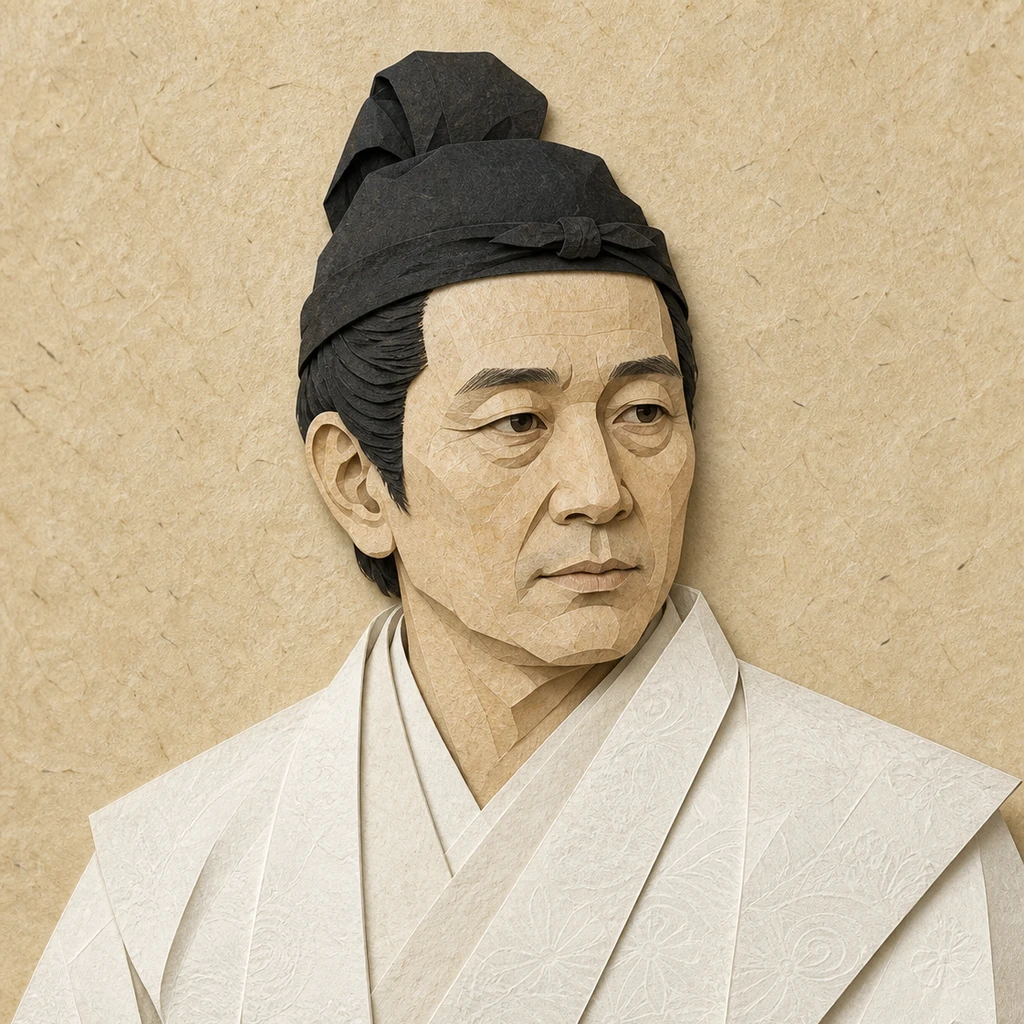
A capital, a great Buddha, and a city that kept changing.
Nara lies inland, among the hills of central Japan. Its most famous sights belong to a story that began with a capital—but did not end when the court moved away.
A palace ground, a huge bronze Buddha, and deer beneath the trees can seem like separate attractions. Put them together, and the city becomes easier to read.
The connections run through government, worship, skilled work, and the choices later generations made about what to keep.
8 short chapters26 reading unitsNo prior knowledge needed
First the region. Then the capital. Then the places inside the story.
02 / 26
An inland center
Geographical bearings
Nara · 奈良
Yamato · 大和
Find Honshū, Japan’s largest main island, then look inland from Osaka Bay. Nara stands near the northern end of a basin surrounded by hills.
This is part of Yamato, a historical region closely associated with the early Japanese court. Yamato is a wider setting, not another name for one palace.
The sea is out of sight, but not out of the story. Routes through the surrounding country connected this inland center to ports and distant communities.
The coast is connected, not adjacent
Relative locator only. The bay outline, hill arc and arrow are not surveyed boundaries or a reconstructed transport route.
Water
Overland connections linked the basin to ports.
Region
Yamato cannot be reduced to the outline of Heijō Palace.
03 / 26
A capital was more than a palace
694–710
Heijō-kyō · 平城京
Heijō Palace · 平城宮
Before Nara became the court’s seat, there were earlier centers farther south in Yamato. The court moved to Fujiwara in 694, then to Nara in 710.
The new capital, Heijō-kyō, was an extensive planned city. Its streets enclosed residential blocks and temple grounds as well as places of government.
Heijō Palace was only one part of it: a compound toward the north where the ruler lived and officials worked. Palace and capital are different scales.
The palace fits inside the capital
Selected relative positions, not a measured plan, walking route, exact city boundary or modern address map.
Two scales
The palace is a compound within the larger capital.
Different paths
The eastern temples and the government district did not share one later history.
The palace stood well west of Tōdai-ji, the temple that houses the Great Buddha. Kōfuku-ji occupied the capital’s eastern extension, closer to the wooded hills.
These positions matter. Nara’s later temple-centered life did not simply preserve the whole government city in place; different parts of the landscape followed different paths.
Modern Nara City and the much larger Nara Prefecture are useful address labels. Neither boundary is the outline of ancient Heijō-kyō.
Follow the city toward its eastern edge
Selected relative positions, not a measured plan, walking route, exact city boundary or modern address map.
Two scales
The palace is a compound within the larger capital.
Different paths
The eastern temples and the government district did not share one later history.
An orderly plan still needed a great deal of everyday work.
05 / 26
The road led to government
Eighth century
Suzaku Avenue · 朱雀大路
Suzaku Avenue ran north through the capital toward the palace’s main southern gate. Its impressive width made the approach to government hard to miss.
Inside the palace, ceremonial spaces, offices, residences, and gardens had different purposes. An audience before the ruler was not the same activity as checking a delivery.
The layout separated kinds of work and access. Running the state meant moving people through gates—and moving instructions, supplies, and records between them.
A threshold is not the whole institution
Interpretive study based on the modern reconstruction of Suzaku Gate. Not surviving eighth-century fabric; fine brackets and roof ornaments are simplified or omitted.
Approach
Suzaku Avenue led north toward this southern entrance.
Passages
The three central openings make entry a controlled crossing.
Beyond
Ceremony, administration, residence and gardens occupied different settings inside; this is not their floor plan.
06 / 26
A delivery with a wooden label
Eighth century
Mokkan · 木簡
A city full of officials could not feed itself from paperwork. Supplies arrived from the provinces, including goods sent as taxes.
Some traveled with small wooden labels called mokkan. One excavated label records bonito, a fish, from Izu. A scrap of wood preserves a connection that the food itself cannot.
The label turned a bundle into an accountable delivery: something with an origin and a description. Government depended on these small, practical acts of writing.
The cord connects goods to a record
Interpretive eighth-century receiving scene, not a recorded transaction or exact official uniform. The label is deliberately blank; it is not a forged transcription.
Bundle
Perishable contents may disappear while a wooden record survives.
Label
The excavated example records bonito from Izu: a description and an origin.
People
Checking a delivery makes state supply a practical task, not only an imperial command.
Limit
The generic wrapping and cord are illustrative; the actual label is shown in the archaeology source.
An orderly street plan makes the capital easier to understand. It does not mean every block held identical houses, or that every building stayed put.
Even the palace changed. Its principal audience hall occupied different positions before and after the court’s absence from Nara in the early 740s.
Postholes, drains, tiles, and discarded objects help recover these differences. Think of the grid as an address system; the evidence supplies the changing lives within it.
The audience hall changes position
Position comparison before and after the early-740s absence. Frames are reference areas, not exact palace outlines, building footprints or distances.
Stable reference
Keep the southern gate in view to see the change.
Not a whole-city move
A changed audience hall is not the relocation of every palace activity.
Evidence
Excavations allow a plan to contain more than one moment.
Worship, political hopes, and the work behind religious life.
08 / 26
Protection was a public concern
741 onward
Emperor Shōmu · 聖武天皇
For the court, Buddhist worship was more than a private matter. Prayers and ceremonies could be offered for the peace and protection of the realm.
In 741, Emperor Shōmu ordered provincial monasteries and nunneries. Religious institutions belonged within his vision of governing a country that had suffered serious upheaval and disease.
State support gave large temples resources and responsibilities. These were places for worship and learning, but also organizations that needed buildings, supplies, and people.
A programme needs local institutions
A relationship diagram, not a complete list, identical local budgets or a claim that every institution was built at once.
09 / 26
One temple, a much larger ambition
743–752
Vairocana · 盧舎那仏
Tōdai-ji brings that ambition into focus. Its Great Buddha was conceived on an extraordinary scale, and the statue’s eye-opening ceremony took place in 752.
The image represents Vairocana, a Buddha whose wisdom and compassion extend throughout the universe. Its size gave a powerful physical form to that expansive religious idea.
Yet the temple was never just the statue. Halls, living quarters, teaching, and ritual made it a working religious community, connected to institutions beyond Nara.
A ceremony marks a moment, not every task
743Great Buddha projectA religious and political ambition takes material form
752Eye-opening ceremonyA key ritual moment in the image’s history
ContinuingCommunity, teaching, worship and repairThe temple’s work extends beyond the ceremony
Vairocana’s universal wisdom and compassion explain the religious ambition; dates do not turn the temple into a single construction event.
Not just height
The monument represents an idea as well as an engineering effort.
10 / 26
Behind the prayers, a writing room
Mid-eighth century
Sutra · a Buddhist scripture
A Buddhist scripture, or sutra, had to exist as a usable text. Producing one involved more than asking a monk to write beautifully.
A copying office attached to Tōdai-ji’s construction administration employed scribes, proofreaders, and people who assembled the finished scrolls. Paper and ink were materials to organize, not invisible accessories.
This is one way a great temple reached into surrounding society: it coordinated skilled work. Worship depended on hands that copied, checked, and joined.
Writing is only one stage
Interpretive paper-joining study. Blank paper demonstrates assembly, not an authentic sutra page, exact adhesive recipe or complete eighth-century workroom.
Copy
Scribes put a text onto prepared material.
Check
Proofreaders made comparison part of production.
Join
Scroll finishers assembled a usable object; the visible seam makes this extra work tangible.
Coordinate
Materials and different skills had to be organized together.
Nara’s inland setting opened onto a much wider world.
11 / 26
A crossing could bring a practice
754–759
Ganjin · 鑑真
Tōshōdai-ji · 唐招提寺
People carried skills as well as luggage across the sea. Monks brought texts and training; the movement of craftspeople and objects helped circulate ways of making things.
Ganjin, a monk from Tang China, reached Nara in 754 after repeated failed attempts. He taught the rules and ceremonies through which people formally entered Buddhist monastic life.
In 759 he established Tōshōdai-ji. The lasting result of his journey was a community and its practices, not simply an imported possession.
From a person’s arrival to a community’s practice
BeforeRepeated failed crossingsA journey could require persistence and support
754Ganjin reaches NaraThis is arrival in the city, not the first landing date in Japan
759Tōshōdai-ji foundedTraining and ordination practice gain an enduring community
No speculative voyage map, ship, named portrait or invented speech is used.
A different kind of exchange
Teaching can continue in people’s practice after a traveller’s arrival.
Among the treasures preserved in the Shōsō-in collection is a five-stringed biwa, a plucked instrument made in Tang China.
Its pear-shaped wooden body and mother-of-pearl decoration reward a close look. The number of strings is not incidental: four-stringed biwa also existed, with a different history.
This particular object makes exchange tangible. Materials, musical knowledge, and ornament traveled together, then entered the setting of Nara’s court and temple life.
Five strings are a clue to identity
Interpretive front study of the eighth-century Tang five-string biwa, Shōsō-in North Store 29. Ornament is simplified; not a photographic facsimile or diagram of its present string tension.
Count
Five strings and five pegs distinguish it from a generic four-string biwa.
Shape
The long straight neck leads into a narrow pear-shaped body.
Material
Dark wood, a lighter soundboard and pale inlay have different visual jobs.
Exchange
The camel ornament is not a map proving one particular journey.
Now set the imported instrument beside a sutra made in Japan. A major imperial copying project is associated with a dedication dated 740.
Scriptures brought from Tang China helped that project grow. But the resulting scrolls required local organization: preparing materials, copying characters, checking the text, and finishing the manuscript.
Exchange did not always mean shipping a completed object. It could mean taking knowledge received from elsewhere and giving it a new material life in Nara.
Look at what local making leaves behind
Burned Sutra of the Nigatsudō, ca. 744. The Met, 1981.75 · Public Domain. A separate sixty-scroll set donated to Tōdai-ji, NOT identified as a copy from the 740 dedication project.
Materials
Silver writing appears on indigo-dyed paper.
Work
Repeated columns make ordered hand-copying visible.
Different dates
740 dates the other project’s dedication; ca. 744 dates this comparative object.
Later history
The scorched lower edge and later mounting show that making was not the end of its history.
Separate the image, its building, and the labor that sustained both.
14 / 26
A giant made by many hands
Eighth-century project; later repairs
The seated Great Buddha rises about fifteen meters. Even without its enormous hall, it belongs to a scale far beyond an individual craftsperson’s workshop.
Its bronze body required metal, molds, heat, and skilled coordination. A timber building around it demanded a different set of materials and skills.
An imperial decision could begin the project, but it could not do the work. The monument joins religious purpose to the effort of workers, suppliers, and organizers.
First identify the object being made
Partial study of Nara’s surviving bronze Vairocana, head to lap. Halo, altar and base omitted; not a measured elevation or the pristine gilded appearance of 752.
Nara, not Kamakura
The right palm is raised; the left is held upward below.
Scale
The seated image is about fifteen metres high; this cropped study is not a scale drawing.
Material
The bronze image and its timber shelter require different kinds of work.
The gap becomes the metal wall
Casting principle only, not measured statue thickness, full foundry layout or casting-day reconstruction.
Stages
The large image was cast progressively; a small section explains only the material relationship.
Fires in 1180 and 1567 destroyed the Great Buddha Hall and damaged the image. Each recovery required another effort to gather resources and rebuild.
The statue’s head was recast in the late seventeenth century. Its rededication in 1692 preceded completion of the new hall in 1709.
So an ancient foundation does not give every visible part the same age. The Buddha’s long history includes replaced material, while continuing worship connects those different moments.
The face is not the date of the foundation
The same interpretive image returns to focus attention on later replacement. Its reuse is not counted as another illustration.
1180 / 1567
Fires destroyed the hall and damaged the image.
Late 1600s
The head was recast; the image was rededicated in 1692.
1709
Completion of the new hall followed the statue’s rededication.
Layered age
Continuing identity and worship do not mean unchanged metal or timber.
Losing a capital did not make the place disappear.
17 / 26
Government moved; the temples did not all follow
784–794
Heian-kyō · 平安京
The court left Nara for Nagaoka in 784. Ten years later it moved again, to Heian-kyō, the capital associated with Kyoto.
Nara lost its central role in government, and parts of the old capital eventually became farmland. But its great religious institutions had reasons to remain.
Buildings, sacred images, communities, and established practices could not simply be packed into a new address. The city’s future increasingly grew around those continuing centers.
The court can move without taking the whole city
Northward sequence, not a route or precise relative longitude. Continuing institutions do not imply an unchanged population or intact buildings.
Old capital
Some former city land eventually became farmland.
New future
Other parts developed around enduring religious centres.
18 / 26
A town grew over temple ground
Late sixteenth–seventeenth centuries
Gangō-ji · 元興寺
Naramachi · ならまち
Gangō-ji had occupied a large precinct in the ancient city. Its later history included damaged buildings, religious renewal, and the gradual spread of houses.
In the late sixteenth and early seventeenth centuries, town development advanced across parts of the former temple grounds. This helped form the area known as Naramachi.
The old town is therefore not an untouched eighth-century neighborhood. Its houses tell another chapter: people making a living where a much larger temple had once stood.
Follow the land, not an imagined unchanged street
Conceptual land-use comparison for the Gangō-ji/Naramachi story, not a measured precinct map or reconstruction of specific houses.
Late 1500s–early 1600s
Town growth advanced across parts of the former temple grounds.
Read the age
An old neighbourhood need not be eighth-century housing.
19 / 26
A ceremony outlasted its building
752; rebuilding in 1669
Shuni-e · 修二会
Nigatsu-dō · 二月堂
At Tōdai-ji, the Shuni-e observance began in 752. Its prayers of repentance were offered before Kannon, a Buddhist figure associated with compassion.
The ceremony belonged to the religious life that continued long after the court’s departure. Its hall, Nigatsu-dō, burned in 1667 and was rebuilt in 1669.
Here continuity means people returning to a practice, even when the setting needs replacement. A city can preserve an activity more persistently than a particular set of timbers.
The damaged edge records a break
Return to the same ca. 744 sutra fragment, damaged in Nigatsu-dō’s 1667 fire. The Met, 1981.75 · Public Domain. Not an illustration of the Shuni-e ceremony itself.
752
Shuni-e began as a practice of repentance before Kannon.
1667
Fire damaged the hall and this surviving manuscript.
1669
The hall was rebuilt; people continued the observance.
Two continuities
Keeping a practice and preserving every original material are different things.
Belief helped shape the landscape—but the landscape also changed.
20 / 26
The wooded hills were part of sacred space
768 onward
Kasuga Shrine · 春日大社
East of the capital, Kasuga’s shrine stood beside wooded hills. Established in 768, it linked the court’s world to the worship of kami, the deities of Japanese shrine traditions.
The forest was not merely a pleasant background. Its sacred associations helped sustain restrictions on hunting and tree cutting.
Buildings and woodland belonged to a shared religious setting. To understand Nara’s eastern edge, look beyond the roofs to the landscape around them.
A sacred place extends beyond its roofs
Kasuga Shrine mandala, early fourteenth century. The Met, 2015.300.12 · Public Domain. Reused unchanged from the shrines-and-temples article; a later sacred representation, not an eighth-century forest survey.
Above and below
Buddhist figures, wooded mountain and shrine compound form one represented sacred landscape.
Beyond the buildings
Religious associations mattered to how land and animals were treated.
Limit
This painting does not map modern park boundaries or prove unchanged vegetation.
Kasuga’s origin story tells of a deity arriving from Kashima on a white deer. In that tradition, deer became messengers of the gods.
The story helps explain the respect attached to these animals. It is evidence of religious meaning, not a witnessed account of how Nara’s deer population began.
Keeping that distinction does not make the story unimportant. Beliefs can influence real choices about animals and land without being literal records of their arrival.
A messenger made visible through religious imagery
Kasuga Deer Mandala, late fourteenth century. The Met, 2015.300.11 · Public Domain. Later religious art, not a witnessed arrival in 768.
Below
The saddled deer stands on clouds, already outside ordinary documentary space.
Above
A sacred tree and a gold mirror bearing five Buddhist figures connect religious forms.
What it supports
The deer’s sacred meaning, not the biological origin of Nara’s deer population.
Different claims
The white-deer arrival belongs to shrine tradition; this surviving painting belongs to a later date.
The wooded setting and its sacred associations were old. Nara Park, however, was established in 1880—more than a millennium after the court made Nara its capital.
This was a new way of organizing a landscape already shaped by temples, shrines, residents, and deer. Ancient religious space and a public park are not the same institution.
Nara’s familiar combination of buildings, trees, and animals was made across time. It owes something to preservation—and something to changes in how land was managed.
An ancient association can acquire a modern institution
768Kasuga’s establishmentShrine, court connections and sacred landscape
Over timeBuildings, woodland, animals and residentsA landscape already shaped by use and care
1880Nara Park establishedA new public framework, not the birth of every older association
No unchanged boundary or identical management regime is implied.
Two questions
How old is the sacred association? When was the park established? They have different answers.
Nara: A First Look
Chapter 8 / 8
Nara in Japan’s History
A few connections to carry into the next story.
23 / 26
Look for the work behind the monument
An eighth-century connection
The palace and the Great Buddha reveal different ambitions, but both depended on resources gathered from beyond their immediate surroundings.
A wooden delivery label belongs beside the monumental story. So does a copied sutra: together they show that government and worship required organized, everyday work.
Nara makes this relationship unusually vivid. Large institutions leave impressive places, while small objects help recover the people and practical arrangements that made those places function.
Small actions connect distant resources to big purposes
Selected dependencies, not two mutually exclusive economies or an exact office flowchart.
People
Both paths require decisions and skilled handling.
Objects
Small surviving materials reveal work that monumental views can hide.
24 / 26
Place and time belong on the same page
710–1880
Begin at the palace, then move your attention east toward Tōdai-ji and the wooded shrine landscape. Those places did not all begin or change together.
The court’s departure marks a political shift, not the end of every activity. The later hall, the growth of Naramachi, and the creation of a park belong to subsequent chapters.
The map keeps the places in view. The timeline keeps us from mistaking their accumulated history for one surviving ancient moment.
Hold the places steady while the dates change
Selected relative positions, not a measured plan, walking route, exact city boundary or modern address map.
Two scales
The palace is a compound within the larger capital.
Different paths
The eastern temples and the government district did not share one later history.
710Capital establishedA government centre with an eastern temple landscape
784–794Court moves awayInstitutions and land uses do not all move with it
1709 / 1880Rebuilt hall / new parkLater construction and management remain part of the same place’s story
A paired map and timeline, not one frozen eighth-century scene.
25 / 26
Choose the thread that interests you
Three ways to continue
The palace offers a way into government: follow the road from an impressive gate to the less spectacular work of managing supplies.
The temple offers another route: move from the Buddha to the people who built, copied, taught, and rebuilt around it.
Or begin with the woodland. Ask how a sacred story influenced a place, and how later decisions changed its care. Each thread leads deeper without requiring a longer list of sights.
Three threads, three useful questions
GovernmentGate → deliveries → recordsHow did decisions reach material supplies?
TempleImage → work → rebuildingHow did a project become a continuing community?
WoodlandSacred meaning → restrictions → parkHow did beliefs and later institutions shape care?
Ways to continue reading, not a sightseeing itinerary or additional unfinished article links.
Nara: A First Look / Closing page
An ancient city, still being made
The court left Nara, but temples, residents and later institutions continued to reshape it. A wooden label, a rebuilt hall and a park entrance belong to different layers of that history.
Keep the layers distinct. Ask not only how old a place is, but which part of its story you are looking at.
Ask what has continued
MaterialMetal, timber, paperSome survives; some is damaged, repaired or replaced
PracticeWorship, copying, teachingPeople can sustain it in altered buildings
PlaceOld capital, later town, parkA location accumulates uses instead of keeping one age
A final comparison: ancient foundations, newer fabric and continuing activity can coexist.
The reader’s question
Which part of the history am I looking at—not only how old is this place?