Skip to content
Topics

Search History Omakase

Start typing to search.

    From Edo to Tokyo
    Start here

    Big Questions / Japan Essentials

    From Edo to Tokyo

    How one city changed its name, government, streets and everyday life.

    Tokyo did not appear on empty ground in 1868. It grew from Edo, the enormous castle city built around Tokugawa government, waterways, neighborhoods, temples, markets and the labor of its residents.

    The change of name mattered because the city's political role changed. A shogun's headquarters became the seat of a new imperial government, while former domain lands, offices and streets were reassigned.

    Some changes were fast: institutions closed, troops entered and signs of new rule appeared. Others took decades. This book follows both rupture and continuity through the spaces people used every day.

    9 short chapters29 reading unitsNo prior knowledge needed
    Start reading
    An older gate opens into a new institution

    Akamon: an interpretive study of surviving architecture, not a complete 1827 reconstruction.

    1827
    A gate for the Maeda household’s connection to the shogunal family.
    1876 onward
    An entrance used by a medical school, soon part of a university.
    The question
    What changed if the gate did not disappear?
    A little at a time.

    Short passages. Room to look.

    See the connections.

    A framework, not a list to memorize.

    Go your own way.

    Read in order, or choose a chapter.

    From Edo to Tokyo

    Chapter 1 / 9

    Why Edo was here

    Water, routes and a castle shaped the city

    02 / 29

    A small settlement became a political center

    1590–early 1600s

    Tokugawa Ieyasu entered Edo in 1590 and made it the center of his eastern power. The site's bay, rivers and overland routes offered transport as well as difficult wet ground.

    After Ieyasu became shogun in 1603, large construction projects expanded Edo Castle, redirected waterways and required materials and labor from many domains.

    The city grew because government concentrated people and resources there. Geography offered possibilities, but political decisions turned them into an urban system.

    Geography offered access; power created demand
    Political concentration draws resources and workers into construction and supply. 1590 marks a base;1603 adds the shogunal role.1590 · a new basePolitical concentrationNew demandResourcesWorkersConstruction and supply

    A causal relationship, not a population chart, exact building programme or proof that Edo was empty before 1590.

    Water and routes
    The bay and rivers made movement possible.
    Wet ground
    Access also required engineering.
    1603
    The shogunal government enlarged the concentration of need.
    03 / 29

    The castle organized more than defense

    Tokugawa Edo

    Edo Castle housed the shogun's government and formed the city's central reference point. Gates, moats and roads structured movement around it.

    Daimyo received large estates in strategic locations, while retainers and service households occupied other districts. The arrangement displayed political rank and kept major lords close to the shogunate.

    The castle was therefore an administrative and ceremonial machine as well as a fortification. Its demands shaped housing, supply and traffic far beyond the inner walls.

    The castle governs flows as well as ground
    Ceremony, offices, retinues and suppliers connect to castle government, with gates controlling access.CastlegovernmentCeremonyOfficesRetinuesSuppliersGates organise access

    Functional relationships, not an administrative hierarchy or castle floor plan.

    Defence
    Moats and gates can restrict entry.
    Daily government
    The same centre must admit people, messages and supplies.
    Beyond the walls
    Those demands shape surrounding estates and streets.
    04 / 29

    Water connected the city to its supplies

    Seventeenth-century expansion

    Canals and rivers brought rice, timber, fuel and other goods toward warehouses and markets. Coastal shipping linked Edo with production regions around the archipelago.

    Waterways also drained low ground and divided neighborhoods. Bridges became busy points where transport, commerce and official control met.

    A road-only map misses how Edo functioned. The city was supplied through a combined network of sea lanes, rivers, canals and streets.

    Land movement begins where water movement ends
    Water routes deliver to warehouses and markets, which connect through streets and onward deliveries.Sea lanes · rivers · canalsWarehousesMarketsStreets and deliveries

    A transfer network, not a surveyed canal map or one compulsory route for every commodity.

    Change of carrier
    A waterside arrival still needs unloading and local handling.
    Bridges
    A crossing joins roads while water continues underneath.
    Two networks
    Removing either the streets or the waterways makes the city harder to explain.

    From Edo to Tokyo

    Chapter 2 / 9

    A city of unequal districts

    Rank and occupation shaped where people lived

    05 / 29

    Daimyo estates occupied enormous areas

    Edo period

    Lords maintained multiple Edo residences for attendance, family life and emergency use. Their compounds included formal rooms, service quarters, gardens, storehouses and gates.

    These estates housed large retinues and consumed food, fuel, clothing and craft work. They made warrior government visible while creating demand for urban businesses.

    After 1868, many estate sites became government offices, military grounds, schools, foreign facilities or commercial districts. The old parcels helped shape modern Tokyo.

    Land can outlast the household that organised it
    A bounded compound combines formal rooms, garden, service and storage. Its land parcel can be reassigned after the household loses its previous political role.FormalroomsGardenServiceStorageA large inherited parcel

    Generic functional estate diagram, not a plan of a named residence, fixed room count or land-use percentage.

    Within
    A residence includes working space, not only a lord’s reception rooms.
    Outside
    Food, fuel and craft demand link the compound to businesses.
    After 1868
    The parcel becomes a resource for new institutions; buildings need not all survive.
    06 / 29

    Commoner districts were dense working places

    Chōnin neighborhoods

    Merchants and artisans lived and worked in compact neighborhoods. Shops faced streets while narrow lanes and shared facilities extended behind them.

    Neighborhood organizations handled tasks such as notices, fire response, sanitation and local responsibility. Wealthy wholesalers and precarious laborers could live within the same commercial city.

    Calling all residents chōnin should not flatten those differences. Edo's commoner life ranged from major business houses to rented rooms and day labor.

    A shared facility also creates shared work

    Interpretive early-nineteenth-century Edo lane, informed by museum reconstruction and checked working-dress references. Not a measured plot or a complete social sample.

    At the well
    The bucket and lifting pole make access to water a physical task.
    Along the lane
    Cleaning and movement have to share a narrow space.
    Beyond one doorway
    A rented room depends on facilities and responsibilities outside it.
    Not all chōnin alike
    These anonymous workers do not stand for wealthy wholesalers or every household.
    07 / 29

    Temples and shrines formed another urban network

    Edo period

    Religious precincts provided worship, burial, festivals, education and open spaces. Some temple districts were positioned as part of the city's defenses and fire planning.

    Approach streets drew shops, food sellers and entertainment. Pilgrimage and seasonal visits moved people across social boundaries while remaining subject to official regulation.

    These places survived the political transition unevenly. Anti-Buddhist policies, land changes, fires and later rebuilding altered their urban roles.

    A precinct connects different kinds of urban life
    Burial and worship connect with a religious precinct, while learning and approach-street markets extend its urban role.ReligiousprecinctBurialWorshipLearningMarketsRoutes · patrons · regulation

    Selected functions, not a claim that every temple and shrine provided all services identically.

    Sacred and practical
    Ritual obligations bring people into recurring relationships.
    Changes of land
    A surviving name does not guarantee an unchanged property or institution.

    From Edo to Tokyo

    Chapter 3 / 9

    How Edo kept going

    Water, fire and neighborhood work

    08 / 29

    Water supply was engineered

    Seventeenth to nineteenth centuries

    Aqueduct systems such as Kanda and Tamagawa brought water toward the growing city. Channels and wooden pipes distributed it to wells used by neighborhoods.

    Access was not identical everywhere, and maintenance required continuous labor. Rivers and canals used for transport could not simply serve as clean drinking sources.

    Water infrastructure made dense urban life possible while revealing differences among districts and users.

    A covered channel beneath the street

    Generic construction principle informed by excavated Edo wooden conduits. Not an exact replica of the Marunouchi inverted-siphon installation.

    Cover
    Wood encloses the channel; the opening is for this explanation.
    Inside
    Side planks and a floor contain the water.
    Maintenance
    Leaks, joints and distribution points require attention.
    Not a sewer
    This study does not connect waste disposal to the drinking-water system.
    Do not confuse a supply well with an underground spring
    UpstreamKanda / Tamagawa supply systemsWater is brought toward the city
    DistributionChannels and wooden conduitsAn engineered network carries it onward
    NeighbourhoodSupply wellsResidents draw water at shared access points

    A simplified supply sequence; local arrangements and access varied.

    09 / 29

    Fire was an urban system, not a surprise

    Repeated Edo fires

    Wooden buildings, wind and dense settlement made fire a recurring danger. The 1657 Meireki fire was especially destructive and prompted major changes in urban planning.

    Authorities widened some spaces, relocated estates and religious sites, and developed firefighting organizations. Town fire brigades became a prominent part of urban life.

    Residents still bore losses and rebuilt repeatedly. Fire policy combined prevention, rapid response, demolition and the difficult movement of people and goods.

    Fire policy changes the arrangement of the city
    Closely spaced blocks form a continuous built edge. A second arrangement leaves an open gap, interrupting one path of spread.Dense frontageFire can travel across close buildingsA break in the built edgeSpace interrupts one route

    Mechanism only: not a fire simulation, exact 1657 plan, guaranteed barrier or measured street width.

    Space
    Widening and relocation can change exposure.
    Response
    Warning, demolition and moving possessions still require people.
    Limits
    Wind and other routes mean an open space is not a promise of safety.
    10 / 29

    Waste became material and fertilizer

    Everyday Edo

    Households and businesses produced ash, paper, metal scraps and human waste that could be collected and reused. Farmers near the city purchased night soil as fertilizer.

    This circulation was organized through work and markets, not an effortless ecological ideal. Collection could be unpleasant, unequal and contested.

    The system linked city consumption with surrounding agriculture. Modern readers should notice both resource recovery and the labor that made it function.

    A useful material is not free labour
    Night soil moves from urban households to nearby farms through purchase and collection; farm food supplies the city in a separate trade flow.CityhouseholdsNearbyfarmsPurchased night soil →← Food for the cityCollection · transport · bargaining

    Material and market relationships, not a perfectly closed ecological loop, a payment diagram or sanitary instructions.

    Value
    Farmers paid for a useful input.
    Effort
    Collection and transport joined city and countryside.
    Conflict
    Prices and access could be contested; recovery did not make the work effortless.

    From Edo to Tokyo

    Chapter 4 / 9

    Work, pleasure and information

    A capital city was also a place to earn and spend

    11 / 29

    Markets supplied a vast city

    Eighteenth-century Edo

    Rice warehouses, fish markets, wholesalers, street sellers and neighborhood shops formed overlapping supply systems. Nihonbashi became a major commercial reference point.

    Prices and shortages affected ordinary meals as well as domain finance. Merchants used credit and information to connect distant production with urban demand.

    The city's scale depended on countless deliveries before dawn, records in shops and physical movement through crowded streets and waterways.

    The street has more than one job

    Hiroshige, Shimbashi no Zu, ca. 1837. The Met, JP599 · Public Domain. A printed interpretation, not a street photograph.

    Shopfront
    Goods, signs and customers occupy the edge.
    Cart and ox
    Material deliveries need space to move.
    Procession
    Formal traffic shares the same setting.
    What the image cannot measure
    It does not establish a population, traffic count or the price of goods.
    12 / 29

    Print made the city imaginable

    Edo publishing culture

    Publishers, writers, artists, block cutters and printers produced books, maps, guides and single-sheet prints for a broad urban market.

    Images of actors, famous places and current fashions helped residents imagine parts of the city beyond their own routes. Official censorship and commercial risk shaped what appeared.

    A print was the result of coordinated skilled labor. Treating it only as the vision of one famous artist hides the workshop and distribution network.

    Making the image is distributed work

    A monochrome printing demonstration. Three actions are separated for clarity; the same figure does not mean one person performed every trade.

    Cut
    Carving makes a surface that can print.
    Rub
    The baren transfers the prepared impression to paper.
    Repeat
    The block supports multiple copies.
    Around these actions
    Publisher, designer, writer, sellers and buyers belong to the larger network; colour adds separate alignment work.
    13 / 29

    Entertainment districts were regulated spaces

    Edo period

    Kabuki theaters and licensed pleasure quarters drew audiences, workers, food sellers, publishers and fashion interest. Authorities repeatedly relocated or regulated them.

    Performance created celebrity and satire, but labor inside these districts was unequal and could be coercive. Glamorous prints do not show every working condition.

    These places belonged to the city's economy and social geography. They should be understood as workplaces as well as destinations.

    What the glamorous image leaves outside its frame
    Visible poseActor, role or fashionable figureA carefully selected public identity
    Behind itTraining, contracts and workUnequal freedom and sometimes coercion
    Around itLicensed places and official restrictionsEntertainment is organised urban space

    A reading comparison, not an invented private scene or a claim that all entertainment workers shared one condition.

    Two questions
    What does the image sell—and whose working experience does it omit?

    From Edo to Tokyo

    Chapter 5 / 9

    The shogun's city faces crisis

    Foreign pressure and civil war reached Edo

    14 / 29

    Treaty ports redirected movement

    1850s–1860s

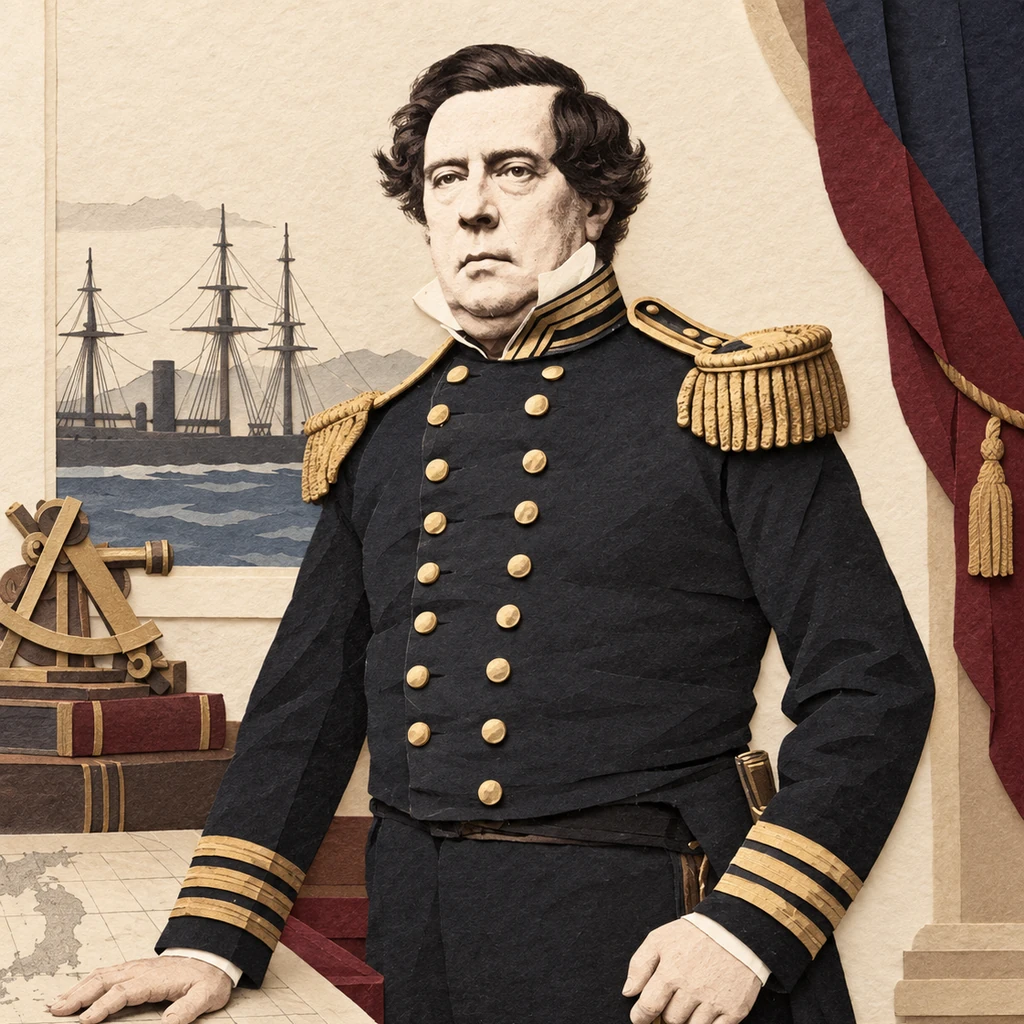
    Commodore Perry's arrival in 1853 pressured the shogunate to negotiate, but Edo itself did not immediately become the main foreign settlement. Nearby Yokohama opened to international trade in 1859.

    Goods, currencies, information and disease moved between the port and Edo. New opportunities and price disruptions affected merchants, officials and households.

    The relationship between Edo and Yokohama is essential. The capital's transformation was connected to a new port network, not confined within castle moats.

    The port and the political centre are not the same place
    Two-way flows of goods, money and news link Edo with Yokohama, which opens as a treaty port in 1859.EdoYokohamaGoodsMoneyNews1859 · an opened treaty port

    Topological connection, not a coast, road alignment, border or claim that trade began everywhere at once.

    1853
    Perry’s arrival increases pressure on shogunal diplomacy.
    1859
    Yokohama becomes a new trade node.
    Urban consequences
    The corridor transmits opportunity and disruption, not only imported objects.
    15 / 29

    Political violence entered the streets

    Bakumatsu Edo

    Debate over treaties, imperial authority and shogunal reform brought surveillance, arrests and attacks. Domain residences became political headquarters as well as homes.

    Residents encountered rumors, price changes, armed patrols and processions whose intentions were not always clear. Urban insecurity grew before formal regime change.

    The crisis should not be reduced to a few famous assassinations. It altered work, movement and expectations across the city.

    A political crisis is also a problem of ordinary movement
    Political insecurity branches into working conditions and movement through the city, including prices, credit, patrols and rumours.Political insecurityWorkMovementPricesPatrolsCreditRumoursDaily choices become harder

    Selected consequences, not a chart of measured prices or a claim that one assassination caused every disruption.

    Beyond famous names
    Households and businesses must act with uncertain information.
    Before 1868
    Formal regime change is not the beginning of insecurity.
    16 / 29

    Edo Castle was surrendered, but fighting continued

    Spring–summer 1868

    Negotiations between Katsu Kaishū and Saigō Takamori helped avoid a planned large assault on Edo Castle. The castle was surrendered to the new government in May 1868.

    Conflict did not vanish. In July, new-government forces defeated the Shōgitai at Ueno, making part of the city a battlefield.

    The transition combined negotiated continuity with violence. Former shogunate staff, local officials and residents had to navigate a government that was changing while war continued elsewhere.

    A negotiated handover did not mean a city without war
    May 1868Edo Castle surrenderedNegotiations avert the planned large assault
    July 1868Fighting at UenoNew-government forces defeat the Shōgitai
    TogetherContinuity and violenceNeither episode cancels the other

    Gregorian months. Not the old-calendar fourth/fifth months, and not a full campaign chronology.

    Different places
    Castle and Ueno must not collapse into one scene.
    Different experiences
    Avoiding one assault did not protect every resident from conflict.

    From Edo to Tokyo

    Chapter 6 / 9

    Edo becomes Tokyo

    A name change reorganized authority

    17 / 29

    Tokyo Prefecture replaced shogunal city offices

    1868

    After taking control of Edo, the new government abolished the town magistrates and created transitional city administration. In September 1868 it established Tokyo Prefecture as the city received its new name.

    Officials still needed records, buildings and people who understood local work. Some former personnel continued tasks under altered authority.

    Institutional change was therefore both a break and a handover. The seal at the top changed faster than every routine below it.

    The seal changes faster than every routine
    A changed governing authority stands above continuing needs for records, buildings and local knowledge.New authorityRecordsBuildingsLocal knowledgeA handover still needs working routines

    Institutional relationship, not a facsimile seal, office chart or claim that every old official retained a post.

    1868
    Transitional offices precede Tokyo Prefecture.
    September
    The prefectural institution belongs to the city’s renaming in Gregorian dating.
    Continuity has limits
    Useful expertise could persist under fundamentally changed authority.
    18 / 29

    The emperor's residence changed the city's status

    1868–1869

    The emperor travelled to Tokyo in 1868 and returned in 1869. Edo Castle became the imperial palace, while central government institutions increasingly operated in the city.

    There was no single modern capital-transfer statute that made every detail simple. Political institutions and the imperial residence made Tokyo the effective national center.

    Kyoto did not become historically irrelevant. The move changed the balance between two cities with long and different political meanings.

    Three changes reinforce one another
    ResidenceEmperor visits in 1868 and returns in 1869The former castle gains an imperial role
    InstitutionsCentral government works in TokyoAdministrative concentration makes the move effective
    KyotoIts political position changesIts institutions and historical meaning do not vanish

    No invented single capital-transfer statute or claim that Kyoto simply ceased to matter.

    Effective centre
    Follow where residence and governing work come together.
    19 / 29

    Names and addresses had to be remade

    Early Meiji Tokyo

    Former warrior estates and neighborhood names were reorganized as the new government mapped, taxed and administered the city. Many residents still used older landmarks and local identities.

    A new name on official documents did not instantly produce a new street. Gates, moats, canals, temples and property boundaries continued to guide movement.

    Urban change became visible through layers: an old compound with a new institutional use, or an inherited route carrying unfamiliar traffic.

    A new address can sit on inherited ground
    The same schematic parcel boundary and internal route appear twice, labelled household and institution to distinguish changed use from complete physical replacement.Old parcelNew useHouseholdInstitutionBoundary persists; purpose changes

    Conceptual comparison, not a particular estate plan or a claim that every wall survived.

    Names
    Official labels help a new administration classify places.
    Routes
    Old access points can keep influencing movement.
    Evidence
    A map must be dated; 1876 and 1912 are not interchangeable snapshots.

    From Edo to Tokyo

    Chapter 7 / 9

    New infrastructure enters an old plan

    Modernization reused and disrupted Edo

    20 / 29

    A fire opened space for brick Ginza

    1872 onward

    After a major 1872 fire, the government rebuilt part of Ginza with wider streets and brick buildings intended to resist fire and display a modern city.

    The project did not simply replace all wooden Tokyo. Costs, climate and everyday use required adjustments, while most residents continued to live in other kinds of buildings.

    Bricktown mattered as a statement and experiment. It should not stand in for the whole city.

    Modernity was also a view to be sold

    Kuniteru II, Shimbashi brick town and steam railway, April 1874. Tokyo Metropolitan Library, 4300518062 · Public Domain. Full library scan retained.

    Frontage
    The conspicuous brick buildings present a new urban ideal.
    Street
    Horse vehicles, rickshaws and pedestrians still mix.
    Distance
    The station joins architecture and transport in one attractive view.
    Do not generalise
    An artist’s assembled scene cannot prove that all Tokyo became brick.
    21 / 29

    Rail and telegraph compressed distance

    1869–1872

    Work on a Tokyo–Yokohama telegraph line began in 1869; public telegram service followed in January 1870. In 1872, Japan's first railway opened between Shimbashi and Yokohama.

    These systems depended on stations, wires, schedules, maintenance and trained workers. They changed how quickly officials, merchants and news could move.

    The railway strengthened the Edo–Yokohama corridor already important in the treaty-port era, while introducing new rhythms into the older road and water network.

    Two faster connections; different kinds of movement
    Old Shimbashi and original Yokohama are linked by the 1872 railway. A separate dashed connection represents the telegraph, whose public service begins in 1870.TokyoYokohamaOldShimbashiOriginalYokohamaRailway · 1872Telegraph · public service 1870People and messages use different systems

    Corridor diagram, not literal station spacing, track alignment, travel time or telegraph-office locations.

    Tokyo terminus
    Old Shimbashi at Shiodome is not today’s station.
    Yokohama terminus
    The original site is at today’s Sakuragicho.
    1869/1870
    Construction began first; public telegram service followed in January 1870.
    22 / 29

    A lord's estate became a place of study

    Hongo · 1876 onward

    At Hongo, land formerly occupied by the Kaga domain's Maeda household became a site for medical education. Tokyo Medical School moved there in 1876.

    The school joined the new University of Tokyo in 1877. Other faculties followed later. The old Red Gate became an entrance to the medical school, while part of the estate's garden survived.

    This was not one palace simply renamed a university. New buildings and uses entered an inherited property. The gate, garden and spacious grounds show how Meiji institutions could grow within Edo's land pattern.

    Keep the building and the institution on separate clocks

    Architectural study informed by the surviving Akamon. Modern buildings omitted; not every surface shown is asserted to be original 1827 fabric.

    Central passage
    A controlled entrance survives a change of governing order.
    Two guardhouses
    The side structures help explain the gate as an organised threshold.
    Changed users
    A former household gateway becomes part of a medical school’s entrance.
    Not one palace simply renamed a university
    1827Akamon builtMaeda household and a shogun’s daughter
    1876Tokyo Medical School moves to HongoThe gate serves a different institution
    1877University of Tokyo formedOther faculties move to Hongo later

    Selected dates; most of the later campus came from Maeda holdings, not every parcel of today’s campus.

    From Edo to Tokyo

    Chapter 8 / 9

    Who paid for the new city?

    Modern services created new inequalities and opportunities

    23 / 29

    Former samurai households faced uncertain futures

    1870s–1880s

    The abolition of domains and conversion of stipends disrupted warrior livelihoods. Some former samurai entered government, police, education or business; others struggled with debt and lost income.

    Moving, selling possessions and retraining changed neighborhoods as well as individual households. The end of hereditary service did not distribute new opportunities equally.

    Tokyo's modern workforce included people carrying old skills into new offices and people excluded from those paths.

    One lost status does not produce one shared outcome
    Disrupted hereditary service branches into possible new posts and business, or debt and lost income, with retraining and unequal opportunity shaping outcomes.Hereditary serviceand stipends disruptedNew postsInsecurityRetrainingDebtBusinessLost incomeUnequal access to new opportunities

    Possible paths, not a percentage split or a claim that every former samurai fit only one side.

    Existing skills
    Literacy and administrative experience could help, but did not guarantee a position.
    Household costs
    Moves, sales and retraining affected more than one worker.
    24 / 29

    Industry drew workers and changed districts

    Late nineteenth century

    Government workshops and private factories expanded production, while transport and construction created new jobs. Women and young migrants formed important parts of industrial labor.

    Working hours, housing and safety could be harsh. New machines did not remove manual labor; they reorganized it around schedules and capital.

    Industrial Tokyo grew unevenly, with smoke, noise and crowded housing concentrated in particular areas while elite districts displayed different forms of modernization.

    A machine reorganises work; it does not erase the worker
    Capital and workers enter organised production, where machines combine with manual labour and supervision. Output is accompanied by costs to daily life.CapitalWorkersProductionMachines + manual workSchedules + supervisionOutputDaily costs

    Labour relationship, not an invented factory interior, machine design, wage statistic or uniform workforce.

    Who works?
    Women and young migrants are part of the workforce, not background spectators.
    Beyond the shift
    Housing and health shape what employment means.
    Uneven city
    Industrial burdens and elite improvements occupy different settings.
    25 / 29

    Municipal government had to catch up

    Tokyo City from 1889

    Tokyo City was established in 1889 within Tokyo Prefecture, but the national government retained unusual influence over the capital's administration.

    Water, roads, sanitation, transport and public health demanded larger systems as population grew. Service did not reach every district equally or immediately.

    The modern capital was not finished by decree. It required repeated investment, taxation, planning and neighborhood negotiation.

    The capital’s city government sits inside a larger system
    Tokyo City from 1889 is nested within Tokyo Prefecture and a national institutional framework.National frameworkTokyo PrefectureTokyo Cityfrom 1889City ≠ prefecture

    Institutional nesting, not geographic area ratios. The special governor-as-mayor arrangement ended in 1898.

    1889–1898
    The prefectural governor also performs the mayor’s role under the special arrangement.
    After 1898
    Do not carry that arrangement unchanged to 1912.
    Services
    A legal institution still needs revenue, staff and negotiated projects.

    From Edo to Tokyo

    Chapter 9 / 9

    By 1912, both cities were visible

    Meiji Tokyo still carried Edo beneath it

    26 / 29

    Electric light and streetcars changed movement

    Late Meiji Tokyo

    Electric lighting extended activity after dark in selected districts, while streetcar lines carried growing numbers of passengers along major routes.

    The new systems shared streets with pedestrians, handcarts, rickshaws and horse vehicles. Modern transport arrived as mixture, not instant replacement.

    Access depended on route and fare. A bright commercial avenue did not represent every neighborhood's experience.

    Lines enter a city that is already there

    Tokyo city map and electric-line guide, catalogued January 1905; Ishikawa Mantarō. Tokyo Metropolitan Library, 1128055295 · Public Domain. Not a 1912 complete-network map.

    Middle-left
    The palace area interrupts the surrounding dense city fabric.
    Water
    Rivers, canals and bay edges remain legible among new connections.
    Routes
    Transport lines occupy selected corridors; a line is not service at every doorstep.
    Reading limit
    This overview does not transcribe every small stop name or establish every household’s access.
    27 / 29

    Public culture used new and old forms

    Meiji era

    Newspapers, schools, exhibitions and department-style retail expanded public information and consumption. Woodblock printing continued alongside imported presses and photography.

    Theater, festivals and religious visits also persisted, adapted and sometimes moved. Residents did not choose between a complete Edo culture and a complete Western one.

    Tokyo culture emerged through selection, translation and commercial experiment. Old skills often produced new media.

    A new way of travelling creates a new thing to read

    Tokyo Yuran Densha Annai, Yasuda Shoten, 1912, scanned spread 0002. Tokyo Metropolitan Library, 7103363150 · Public Domain.

    Left page
    A narrow route drawing helps a reader organise movement.
    Right page
    An advertisement shares the small printed object.
    A commercial audience
    Navigation, print and selling meet in one portable guide.
    Source caution
    The advertisement records a sales claim; it is not proof of efficacy or an endorsement.
    28 / 29

    A layered map is the honest ending

    Tokyo in 1912

    By the end of the Meiji era, Tokyo was the imperial capital, a municipal city and a growing industrial and transport center. Its political role differed fundamentally from shogunal Edo.

    Yet the former castle, moats, roads, religious sites, neighborhood names and large estate parcels still shaped the city. Residents lived with several historical layers at once.

    The change from Edo to Tokyo was real, but it was not a clean erasure. Modernization worked through inherited ground.

    Return to the map: look underneath the new lines

    The same 1905 evidence map revisited, not redated to 1912. It supports the argument about inherited ground; it is not an inventory of every later project.

    Palace and moats
    New political authority occupies a recognisable older centre.
    Water and streets
    Existing routes continue to organise new connections.
    What is not visible here
    A network map cannot show wages, rent, exclusion or every cost of rebuilding.

    From Edo to Tokyo / Closing page

    Look for the old city inside the new one

    Edo supplied the castle, waterways, parcels, neighborhoods and labor systems from which Tokyo grew. The new government changed who ruled the city and what national work the city performed.

    Railways, telegraph, factories and municipal services altered daily movement, yet they entered an inherited landscape. Continuity did not make the political transformation superficial.

    When a Tokyo map seems modern, ask which Edo routes and boundaries still organize it—and which people paid to remake them.

    Read the city in three layers at once
    GroundGate, moat, waterway, parcelWhat has been inherited?
    AuthorityHousehold, government, school, municipalityWho now gives it purpose?
    ExperienceWork, mobility, housing and paymentWho benefits—and who bears the cost?

    An interpretive framework drawn from the cases in this article, not three separable cities.

    Keep both truths
    The transformation was real, and it worked through existing ground.

    Sources

    Article chapters

    1. Start here
    2. Why Edo was here
    3. A city of unequal districts
    4. How Edo kept going
    5. Work, pleasure and information
    6. The shogun's city faces crisis
    7. Edo becomes Tokyo
    8. New infrastructure enters an old plan
    9. Who paid for the new city?
    10. By 1912, both cities were visible
    11. Look for the old city inside the new one

    Reading text size

    Your reading position stays on this device.

    A closer look

    Japan Essentials

    All 20 articles

    All 20 illustrated articles are ready to read. Your position is saved separately in each article.

    Essential reading

    1. 01Japan: The Big Picture
    2. 02Put Japan’s History on the Map
    3. 03Emperor, Shogun and Everyone Else
    4. 04Three Shogunates, One Clear Story

    Explore further

    1. 05Japan’s Warring States: A First Look
    2. 06Japan Becomes Modern
    3. 07Japan Across the Seas
    4. 08Twelve Faces of Japanese History
    5. 09Samurai Beyond the Battlefield
    6. 10People of an Edo Town
    7. 11Nara: A First Look
    8. 12Kyoto: A First Look
    9. 13Kamakura: A First Look
    10. 14Osaka: A First Look
    11. 15From Edo to Tokyo
    12. 16Eight Doors into Japanese Culture
    13. 17Shrines and Temples: A First Look
    14. 18Reading a Japanese Castle
    15. 19A Year in Japan
    16. 20Tea, Gardens and Pictures

    Reading preferences

    Text size
    Glossary intensity

    Choose how much explanation appears as you read.

    Saved on this device. All terms remain available in the glossary.

    Browse the glossary →
    History Omakase

    Opening reading…