
Skip to content
Topics

Search History Omakase

Start typing to search.

    Kamakura: A First Look
    Start here

    Big Questions / Japan Essentials

    Kamakura: A First Look

    How a coastal base became a city—and outlasted its government.

    Kamakura lies in eastern Japan, with hills behind it and Sagami Bay in front. Here, a warrior leader established a base that grew into a government.

    But a government could not live on victories. Its people needed food, roads, houses, places to worship, and someone to mend what broke.

    Follow those connections through the city. Its story will take us from a leader’s residence to a roadside drain, and from a bronze Buddha to the people who kept it standing.

    8 short chapters26 reading unitsNo prior knowledge needed
    Start reading
    Follow what makes a city possible
    Hills and shore connect through passages and landing works to supplies and skilled work, supporting government and sacred places. Those institutions in turn attract support.Hills and shorePassages and landing worksSupplies and skilled workGovernmentSacred placesInstitutions also attract support

    A chain of dependencies, not a chronological sequence or a scale map.

    Access
    A sheltered place still needs routes into it.
    Work
    Supplying, making and repairing make institutions usable.
    Return
    Patrons and communities support the work again.
    A little at a time.

    Short passages. Room to look.

    See the connections.

    A framework, not a list to memorize.

    Go your own way.

    Read in order, or choose a chapter.

    Kamakura: A First Look

    Chapter 1 / 8

    Between hills and sea

    A sheltered place had to stay connected.

    02 / 26

    East of the imperial capital

    Honshū · Kantō · Sagami

    Find Honshū, Japan’s largest island. Kamakura stands on its Pacific side, in the southern part of the Kantō region. In medieval terms, this was Sagami Province.

    Kyoto lay far to the west. It remained the home of the imperial court: the emperor and the officials and households around him.

    Building a powerful base at Kamakura did not make Kyoto disappear. It gave eastern warriors another place to bring their service, ambitions, and disputes.

    One island, more than one centre
    WestKyoto · imperial courtCourt, officials and households remain important
    EastKamakura · southern KantōAn eastern base for warriors and their claims
    CoastPacific side of Honshū · SagamiLand access and sea connections must both be maintained

    A location and function comparison, not a transfer of every kind of authority from Kyoto to Kamakura.

    Coexistence
    A new warrior centre did not abolish the older court.
    Distance
    People and decisions could connect separated centres; they did not all gather in one capital.
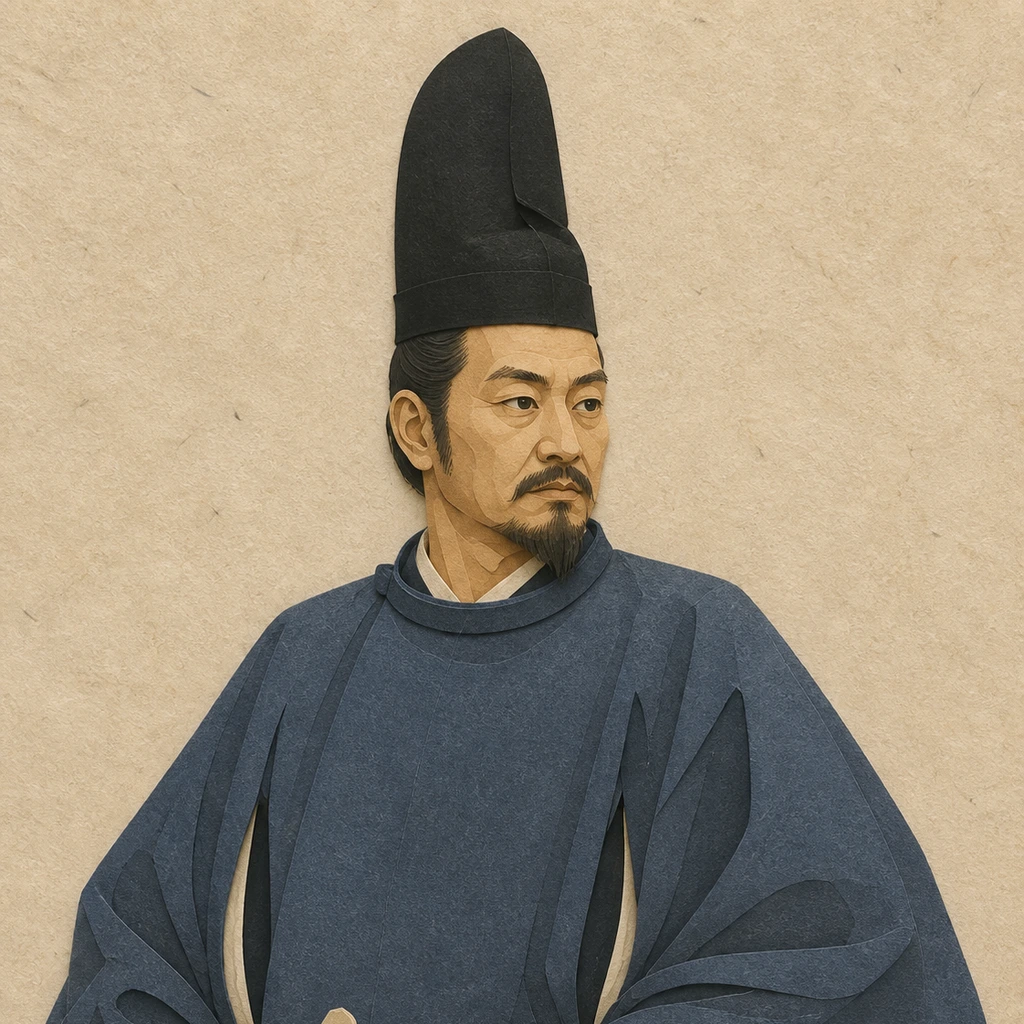
    03 / 26

    Shelter was only half the story

    The shape of the place

    Hills border Kamakura to the north, east, and west. Narrow valleys open toward a coastal plain and the sandy shore of Sagami Bay to the south.

    This enclosure helped protect a headquarters, but it also restricted movement. People had to pass through or around the hills to reach the settlements within.

    The useful place was not an isolated fortress. It was a sheltered center that still had to remain connected to fields, neighboring communities, and the sea.

    Shelter creates an access problem
    North is up. Hills border the city to the north, west and east; Sagami Bay is south. Arrows show the need for land access through the surrounding hills, not specific historical routes.Sagami Bay · southNNorthern hillsCoastal plainand narrow valleysWestEastOpenings matter

    Relative-position schematic, not a measured map, medieval coastline reconstruction or walking route.

    Orientation
    North is up; the bay is on the southern side.
    Scope
    Positions are selected relationships, not every valley, road or building.
    04 / 26

    A road had to be made

    1241 · The Asaina passage

    Asaina passage · 朝夷奈切通

    The hills did not conveniently provide every road a growing city needed. Workers cut passages through the ridges, making routes for people and goods.

    Construction of the Asaina passage began in 1241. It linked Kamakura with Mutsuura to the east, another coastal trading place, across the intervening hills.

    That work helps explain the landscape. Protection and access had to be managed together. A city could benefit from difficult approaches without wishing to make all entry impossible.

    A passage changes the ridge

    Interpretive landform study inspired by the function of the Asaina passage. Not a measured reconstruction of its 1241 profile or present rock faces.

    Above
    The route remains open to the sky; it is not a tunnel.
    Beside
    Cut ground makes a lower passage through the ridge.
    Beyond
    The point is a connection: Kamakura and Mutsuura, not complete isolation.

    Kamakura: A First Look

    Chapter 2 / 8

    Yoritomo’s new base

    An alliance becomes somewhere people return to.

    05 / 26

    A famous name needed allies

    1180 · Minamoto no Yoritomo

    Minamoto no Yoritomo · 源頼朝

    Minamoto no Yoritomo came to Kamakura in 1180 during a struggle for power. He had a prestigious family name, but no army that would obey it automatically.

    He needed local samurai: members of warrior households with their own land, relatives, and interests. Family ties and the promise of protection helped draw supporters together.

    Those men expected something in return for service. Recognizing their claims to land helped turn a temporary alliance into a relationship they had reasons to maintain.

    Support runs in both directions
    Yoritomo’s coalition offers recognition and protection of claims to warrior households; their service returns to the coalition. Their own land, kin and interests remain important.Yoritomo’s coalitionneeds local warrior householdsProtectionof claimsServiceWarrior householdsland · kin · interests

    A reciprocal relationship, not an equal bargain for everyone or automatic obedience to a surname.

    06 / 26

    Giving an alliance an address

    The 1180s · A government takes shape

    Yoritomo established a residence at Ōkura and a place to organize his warriors. Followers could assemble, receive instructions, and present their claims there.

    Over the following years, clerks, administrative offices, and arrangements for hearing disputes made the headquarters useful between campaigns. Decisions needed records, not just a commander’s memory.

    The change was gradual: people began returning to Kamakura for answers. A base became a government when its work continued after the immediate emergency had passed.

    A headquarters has to be made usable

    Interpretive 1180s work scene. Ordinary men’s clothing follows a twelfth-century reference; the threshold is not an exact reconstruction of Ōkura.

    Shared load
    Each worker holds one end. Coordination makes the boards movable.
    Destination
    Materials have to reach a usable building before work can happen inside.
    Political scale
    A leader’s residence depended on people whose names rarely survive.
    07 / 26

    More than one founding date

    1180 · 1185 · 1192

    In 1192, the court appointed Yoritomo shogun, a title for a military commander. By then he had already spent years building authority in the east.

    His base dated from 1180. In 1185, court authorization widened his scope to appoint military officers and land stewards, although control remained uneven.

    The shogunate—the warrior government led in the shogun’s name—therefore had more than one beginning. The title matters, but it is not a date when an entire system suddenly appeared.

    Three dates answer three different questions
    1180Where is the base?Kamakura becomes a durable gathering place
    1185What is authorized?Broader appointments, with uneven practical control
    1192What title is conferred?Shogun: a court appointment after years of institution-building

    Place, authorization and title are not interchangeable definitions of a beginning.

    No instant state
    A date can mark a major change without creating every office and relationship at once.

    Kamakura: A First Look

    Chapter 3 / 8

    How government worked

    Households, records, and the work behind authority.

    08 / 26

    A brush could settle a claim

    Around 1200 · Inside government work

    A warrior arriving at the headquarters might carry a land claim rather than news of battle. Who had held the property? What service had been performed? Who challenged the claim?

    Clerks helped turn such questions into written business. A decision could be recorded, carried elsewhere, and produced again when someone disputed it.

    Writing did not remove the threat of force. It helped organize that force, connecting a household’s local interests to decisions made in Kamakura.

    Writing lets a decision travel and return
    A household claim raises questions about earlier holding and rivals. A written decision can be carried away, kept and produced in a later challenge.A household brings a claimEarlier holding? Rival claim?A written decisionCarry itKeep itProduce it when challenged again

    An explanatory document lifecycle, not a transcription, exact office procedure or promise that writing ended violence.

    Beyond the room
    A decision can matter where the ruler is not physically present.
    Across time
    Keeping a record makes a past decision available to a later dispute.
    09 / 26

    Keeping the headquarters alive

    Early thirteenth century · Shared work

    A guard could watch a gate, but guarding did not cook dinner, carry supplies, or copy an order. The headquarters depended on many kinds of work.

    Warriors and administrators needed servants, messengers, craftspeople, and the people who produced their food. A residence was also a place of storage, preparation, and repair.

    These activities rarely receive equal space in stories about rulers. Yet without them, a political decision would remain a message that nobody could deliver or enforce.

    Remove one kind of work and another stalls
    StoreFood and materials arriveSuppliers and carriers are needed before storage
    PrepareMeals, rooms and equipment become usableServants and makers support residents
    DeliverMessages reach people elsewhereA written decision needs a messenger
    RepairBuildings and equipment remain usableMaintenance continues after construction

    A dependency comparison, not an exact staff list or a reconstructed daily schedule at Ōkura.

    Guarding
    Security is important, but it cannot substitute for all four tasks.
    Repetition
    These needs return after the headline political event is over.
    10 / 26

    An address for power

    1180 onwards · Ōkura

    Ōkura · 大倉

    Yoritomo’s first governing residence stood in the Ōkura area, east of the shrine that became Tsurugaoka Hachiman-gū. Its position put household, government, and worship close together.

    That relationship is clearer than a complete picture of every room, gate, or roof. The early headquarters also changed as government grew.

    Think of a working residence with people coming and going, not a finished castle dominating the skyline. Kamakura’s political center was made through repeated use as well as construction.

    An address is not a floor plan
    Okura residence lies east of Hachiman shrine. The shrine approach extends south toward the shore. No rooms or gates are reconstructed.Selected relationship · north upHachimanshrineŌkuraresidenceEast of the shrineApproachtoward shore

    Relative positions only; no complete early headquarters plan is implied.

    Known relationship
    Household, government and worship were close enough to shape a common urban centre.
    Unknown detail
    That does not identify every roof, room or entrance.

    Kamakura: A First Look

    Chapter 4 / 8

    Other people in the streets

    A city of needs, skills, and daily exchanges.

    11 / 26

    The city outside the gate

    Thirteenth century · Living and making

    Beyond the governing residence, people bought, carried, made, and repaired the things that kept the settlement working. Not everyone in a warrior capital was a warrior.

    A household needed vessels, clothing, fuel, and food. A maker needed materials and customers. A carrier linked one person’s work to another’s need.

    Living and earning a living could occupy the same small space. To understand the city, look past its best-known patrons toward the repeated transactions around their households.

    A household is also someone’s customer
    Materials pass through makers and carriers to households. Household needs create customers and sustain makers’ work.MaterialsMakersCarriersHouseholdsNeeds and customers sustain work

    A selected exchange loop, not a claim that all goods followed one route or that all households specialized in the same occupation.

    Close together
    Making and dwelling could share space.
    Not just warriors
    A political centre also concentrates everyday demand.
    12 / 26

    The shore needed work too

    1232 · Wakaejima

    Wakaejima · 和賀江嶋

    Kamakura’s needs reached beyond its valleys. Supplies came from the countryside, while sea connections brought goods to its shore and nearby landing places.

    At Wakaejima, stone-built harbor works were created in 1232 to make landing safer. The project altered the coastal edge; it did not reveal a ready-made, deep natural harbor.

    As with the hill passages, access required labor. The city’s position beside the water created an opportunity, but people had to make that opportunity usable.

    The shoreline needed an intervention
    A conceptual cross-section shows stone-built works extending a shallow shore into the water. It explains changing a landing place, not a deep natural harbour.A shallow shoreStone-built landing worksSeaAccess was made, not simply found

    Wakaejima, 1232: a functional cross-section, not measured depth, exact stone arrangement or a navigational chart.

    Shallow edge
    Being beside the sea did not guarantee a safe landing.
    Built access
    Stone work changed what people could do at the coastal edge.
    13 / 26

    What a drain can tell us

    Late 1200s–early 1300s · Komemachi

    Komemachi · 米町

    At Komemachi, excavations uncovered board-walled buildings, wells, and a roadside drain lined with timber. These remains belong to a neighborhood used by people, not just a line on a political map.

    Unfinished wooden sandals and sword scabbards, along with a lacquer brush, point toward craft work. Making and dwelling were close companions here.

    The drain adds something a grand monument cannot: a glimpse of how a street was kept usable beside the buildings where everyday work took place.

    Small infrastructure, durable evidence

    Interpretive drain study informed by Komemachi excavation evidence, late thirteenth–early fourteenth century. Dimensions, water level and board-wall fragment are not a surveyed reconstruction.

    Boards
    Horizontal timbers keep an earthen channel open.
    Stakes
    Posts help retain the lining against the soil.
    Beside it
    The dry path connects drainage to the practical use of a street.
    Below ground
    The front edge is an explanatory cutaway, not an ancient dam.

    Kamakura: A First Look

    Chapter 5 / 8

    Sacred places in the city

    Foundations made at different moments.

    14 / 26

    Two foundations, different moments

    1180 and 1253 · Sacred places

    Tsurugaoka Hachiman-gū · 鶴岡八幡宮
    Kenchō-ji · 建長寺

    Yoritomo moved Hachiman worship to the site of Tsurugaoka Hachiman-gū in 1180. The shrine and its approach, Wakamiya Ōji, became an important axis through the developing city.

    Kenchō-ji followed in 1253 under Hōjō Tokiyori, a regent who governed on behalf of the shogun. Its founding abbot came from China.

    The shrine and the Zen Buddhist monastery entered Kamakura at different stages. Their patrons belonged to changing arrangements of power, not one unchanging warrior establishment.

    Same city, different foundations
    1180Yoritomo → Hachiman shrineA sacred centre helps organize a developing political base
    1253Hōjō Tokiyori → Kenchō-jiA regent supports a Zen monastic community
    BetweenGovernment leadership changesDo not give both institutions one founder or one founding moment

    Selected patronage links, not a complete religious or political family tree.

    15 / 26

    A monastery was a community

    Later thirteenth century · Kenchō-ji

    At Kenchō-ji, a powerful patron helped support a community devoted to Buddhist practice. Zen training involved meditation, disciplined daily life, and study, not merely a warrior’s preference for a quiet garden.

    Teachers brought knowledge as well as religious authority. A monk arriving from China connected this eastern Japanese city to learning across the sea.

    Buildings made that community visible, but people sustained it: those who taught and practiced, and those whose gifts and work made religious life possible.

    Learning and support meet in a community
    A teacher from China brings learning to Kenchoji. Patronage and everyday work support the community’s training, study and discipline.Teacher from ChinaKenchō-ji communitytraining · study · daily disciplinePatronageDaily work

    Institutional relationships, not a voyage route, invented lesson or original monastery plan.

    Knowledge
    People carried teachings, not only objects.
    Maintenance
    Buildings alone could not perform the community’s work.
    16 / 26

    Patronage did not make them identical

    Shrine and monastery

    Yoritomo’s support for Hachiman worship joined devotion to the public life of his new base. The shrine gave his followers a shared place for ceremony.

    Tokiyori’s support for Kenchō-ji helped establish a Buddhist training community under a teacher from China. This was another use of resources and another kind of institution.

    Both connected religion with political support. That common link does not erase their differences—or mean that the religious lives of everyone in Kamakura followed the same pattern.

    Compare the relationship, preserve the difference
    HachimanKami worship · Yoritomo’s patronageCeremony and shared public presence in the base
    Kenchō-jiZen training · Tokiyori’s patronageA teacher and monastic community
    SharedSupport from powerful patronsNot proof that all residents followed one religious pattern

    Two institutions with a point of comparison, not two identical warrior religions.

    Kamakura: A First Look

    Chapter 6 / 8

    The Buddha and its changing world

    A large object with more than one history.

    17 / 26

    Meet the bronze Buddha

    1252 onwards · Amida at Kōtoku-in

    Great Buddha · 鎌倉大仏
    Kōtoku-in · 高徳院

    The Great Buddha is an image of Amida, the Buddha associated with the Pure Land, a realm of hoped-for rebirth. The seated bronze figure rises more than eleven meters high.

    Work on it began in 1252, long after Yoritomo had established his base. It is not a monument from his founding moment.

    The statue is hollow, cast in sections. Its size required organized skill and resources, although the sculptor’s identity and the full story of its original sponsorship remain uncertain.

    Recognize the object before explaining its making

    Interpretive study of Kamakura’s surviving weathered bronze Amida, begun 1252. Simplified base; not original gilding, an exact measured elevation or the Buddha at Nara.

    Identity
    Both hands rest low in the lap, not one raised palm or a medicine jar.
    Material
    The large bronze form is hollow, not a solid mass of metal.
    Measurement
    Statue: 11.312 m. Including platform: 13.35 m. The two numbers measure different things.
    A hollow casting needs two boundaries
    A generic section separates the outer mould, a narrow bronze-filled space, and the inner core. After the mould material is removed the metal forms a hollow wall.OutermouldInnercoreBronze fills the space between

    Casting principle only; not the statue’s measured wall thickness, joint profile or full casting sequence.

    Stages
    The large statue was cast in sections; this small section only explains the space that takes the metal.
    18 / 26

    The roof disappeared; care continued

    Fourteenth to eighteenth centuries

    The bronze Buddha originally stood inside a hall. Accounts describe damage in 1334 and 1369, followed by the hall’s final loss in the late fifteenth century.

    A record mentions tsunami damage in 1495; the hall’s final collapse is often placed in 1498. Its familiar open-air setting belongs to this later history.

    Centuries later, priests secured a merchant’s funding for repairs and renewed temple life. Survival meant more than resisting weather; it depended on people choosing to care for the statue.

    The statue and its shelter have different histories
    1252 onwardBronze image inside a hallAn open-air monument was not the initial arrangement
    1334 / 1369Accounts of hall damageRepeated loss makes rebuilding part of the story
    Late 1400s1495 tsunami record; final loss often placed in 1498Do not force the two statements into one certain date
    Mid-EdoPriests obtain merchant supportRepair and renewed temple life require people and resources

    Selected recorded episodes. The hall is not reconstructed from an assumed roof shape.

    Care
    Survival is an activity, not only a property of bronze.
    Evidence
    A recorded disaster and a commonly assigned final collapse date are different claims.
    19 / 26

    The same place, different encounters

    1242 · 1252 · 1809

    A travel account from around 1242 describes a wooden Great Buddha being made. The bronze figure begun in 1252 belongs to a subsequent project, not that earlier account.

    By 1809, a comic travel book by Jippensha Ikku included a visit inside the bronze statue. An object made for worship had also become a place of curiosity and experience.

    These dated glimpses change the picture: wooden image, bronze image in a hall, and later visitors exploring a hollow monument beneath the sky.

    Three encounters are not one unchanged monument
    c.1242Travel account: wooden Buddha in progressDo not illustrate this with the later bronze as if identical
    1252Bronze project beginsDifferent material, construction and object history
    1809Ikku’s comic travellers enter the bronze imageLiterary encounter, not an eyewitness photograph

    Object material, account date and genre all affect what a source can tell us.

    Kamakura: A First Look

    Chapter 7 / 8

    The government ends; the city continues

    Look for changed uses, not an empty landscape.

    20 / 26

    1333 ended a government

    1333 · The shogunate falls

    In 1333, forces opposing the Kamakura government broke into the city. The Hōjō family’s leadership was destroyed, and the shogunate came to an end.

    This was a violent break in political power, not an instruction for every inhabitant to vanish. Houses, religious communities, roads, and livelihoods had histories that extended beyond the defeated rulers.

    The distinction matters. A political timeline can close its chapter in 1333; a history of the place must ask what people did there afterward.

    End of regime ≠ end of every local history
    BeforeKamakura shogunate and Hōjō leadershipA political system centred on the city
    1333Violent destruction of that leadershipA decisive break, not a peaceful administrative rename
    AfterHouseholds, religious communities and livelihoods changeContinuing use does not mean nothing was damaged or displaced

    No invented troop route, battle scene, casualty count or claim of an unchanged population.

    Two scales
    A regime can end while the place remains inhabited and reused.
    21 / 26

    New rulers, renewed buildings

    1349 and 1828 · Different kinds of continuity

    Kamakura became a regional seat of a new warrior government, led by the Ashikaga family, in 1349. It was still a place from which power could be exercised, though no longer the same government.

    Much later, the upper shrine buildings at Tsurugaoka Hachiman-gū were rebuilt in 1828. The institution was old; its timber had a more recent history.

    These are different kinds of continuity: a new administration using the city, and worship sustained through rebuilding. Neither requires imagining that medieval Kamakura stayed unchanged.

    Two ways a place can continue
    1349Ashikaga regional seatA new administration reuses a city for government
    1828Hachiman upper shrine rebuiltAn old institution receives newer building fabric
    CompareReuse of place ≠ survival of original fabricNeither requires freezing the city in 1333

    These distant dates illustrate different mechanisms, not uninterrupted rule by one institution.

    22 / 26

    A valley changes its work

    Thirteenth–fourteenth centuries · Sasukegayatsu

    Sasukegayatsu · 佐助ヶ谷

    At Sasukegayatsu, excavators found buildings interpreted as part of a warrior residence, repeatedly rebuilt from the middle of the thirteenth into the early fourteenth century.

    From the middle of the fourteenth century onward, other remains included large animal bones, including whale bones, cut into sections. They suggest a workshop for processing bone.

    The evidence does not name every worker or explain every change. It does show a place being used differently after the shogunate’s fall: continuity through new work, not through stillness.

    Keep the find separate from the interpretation
    EarlierRepeated building traces and postholesInterpreted as a warrior residence, mid-1200s–early 1300s
    LaterCut large-animal bones, including whaleSuggest bone processing from the mid-1300s
    LimitNo named worker in these remainsChanging use is supported; a complete workshop story is not

    Sasukegayatsu: evidence and inference from the city archaeology report. No fabricated excavation photo or exact bone specimen.

    Change
    A valley’s work can change after a regime falls.
    Caution
    An interpretation is stronger when the actual basis is visible in the explanation.

    Kamakura: A First Look

    Chapter 8 / 8

    Looking at Kamakura again

    Connect the places rather than collect the names.

    23 / 26

    Put the connections back together

    Place · Power · Work · Worship

    The hills helped shelter a political base. Roads and landing works connected it to the supplies that made a city possible. Records linked local claims to decisions at the headquarters.

    Streets supported makers and households; religious foundations brought patrons, teachers, workers, and worshippers together. None of these activities existed entirely on its own.

    This is why Kamakura becomes easier to understand when a ruler’s residence, a wooden drain, and a great bronze image belong to the same story.

    Put the work between the landmarks
    Hills and shore connect through passages and landing works to supplies and skilled work, supporting government and sacred places. Those institutions in turn attract support.Hills and shorePassages and landing worksSupplies and skilled workGovernmentSacred placesInstitutions also attract support

    A chain of dependencies, not a chronological sequence or a scale map.

    Access
    A sheltered place still needs routes into it.
    Work
    Supplying, making and repairing make institutions usable.
    Return
    Patrons and communities support the work again.
    24 / 26

    Read the familiar places again

    A few landmarks, many layers

    Place Tsurugaoka Hachiman-gū toward the northern end of the central approach, with Ōkura to its east. Kenchō-ji lies farther north; the Great Buddha is to the southwest.

    Now add what each place means. A shrine helped shape the city’s axis. A residence gathered government work. A monastery housed training. The Buddha outlived its enclosing hall.

    The names no longer form a list of sights. They mark different relationships between the landscape, its inhabitants, and the passing centuries.

    Four places in relation
    North is up. Hills border the city to the north, west and east; Sagami Bay is south. Kenchoji lies north of Hachiman shrine, Okura to its east, and the Great Buddha to the southwest. The central approach extends south from the shrine.Sagami Bay · southNKenchō-jiHachiman shrineŌkuraGreat BuddhaMainaxis

    Relative-position schematic, not a measured map, medieval coastline reconstruction or walking route.

    Orientation
    North is up; the bay is on the southern side.
    Scope
    Positions are selected relationships, not every valley, road or building.
    25 / 26

    Two questions to carry onward

    Beyond this first look

    One direction follows government: how did warriors turn service, landholding, and written decisions into lasting authority? Kamakura offers a starting point, not a model that stayed identical everywhere.

    The other follows religious places: how did shrines and Buddhist temples differ, connect, and attract support? The institutions encountered here make that question concrete.

    Choose either thread without losing the city behind it. Its roads, workers, and households will help keep an account of power or belief grounded in everyday needs.

    Follow a thread without losing its support
    GovernmentService · land claims · written decisionsAsk how authority reaches local households
    ReligionPatrons · teachers · communitiesAsk how institutions differ and attract support
    Beneath bothRoads · supplies · workers · repairsThe shared material conditions keep each story grounded

    Two questions for further reading, not extra articles or unimplemented links.

    Kamakura: A First Look / Closing page

    A city outlasts a title

    Yoritomo gave his coalition a center. Countless other people helped make it a city.

    The government fell, buildings changed, and work continued in new forms. Even the great bronze Buddha survived through care, not simply endurance.

    Remember the connections: hills and passages, decisions and labor, worship and repair. Together they explain why Kamakura’s history is larger than the lifespan of its shogunate.

    A later viewer finds a living place

    John La Farge, The Great Statue of Amida Buddha at Kamakura, 1887. The Met, 66.143 · Public Domain. A later American painting, not a medieval view.

    Behind
    The bronze image rises into open sky.
    In front
    A reed shelter, lantern and greenery make a particular later encounter visible.
    Across time
    The image’s continuing presence made later uses and representations possible.
    Evidence boundary
    The painting extends beyond this book’s main chronology; it does not prove the exact setting in 1252 or 1809.

    Sources

    Article chapters

    1. Start here
    2. Between hills and sea
    3. Yoritomo’s new base
    4. How government worked
    5. Other people in the streets
    6. Sacred places in the city
    7. The Buddha and its changing world
    8. The government ends; the city continues
    9. Looking at Kamakura again
    10. A city outlasts a title

    Reading text size

    Your reading position stays on this device.

    A closer look

    Japan Essentials

    All 20 articles

    All 20 illustrated articles are ready to read. Your position is saved separately in each article.

    Essential reading

    1. 01Japan: The Big Picture
    2. 02Put Japan’s History on the Map
    3. 03Emperor, Shogun and Everyone Else
    4. 04Three Shogunates, One Clear Story

    Explore further

    1. 05Japan’s Warring States: A First Look
    2. 06Japan Becomes Modern
    3. 07Japan Across the Seas
    4. 08Twelve Faces of Japanese History
    5. 09Samurai Beyond the Battlefield
    6. 10People of an Edo Town
    7. 11Nara: A First Look
    8. 12Kyoto: A First Look
    9. 13Kamakura: A First Look
    10. 14Osaka: A First Look
    11. 15From Edo to Tokyo
    12. 16Eight Doors into Japanese Culture
    13. 17Shrines and Temples: A First Look
    14. 18Reading a Japanese Castle
    15. 19A Year in Japan
    16. 20Tea, Gardens and Pictures

    Reading preferences

    Text size
    Glossary intensity

    Choose how much explanation appears as you read.

    Saved on this device. All terms remain available in the glossary.

    Browse the glossary →
    History Omakase

    Opening reading…