
This period in brief
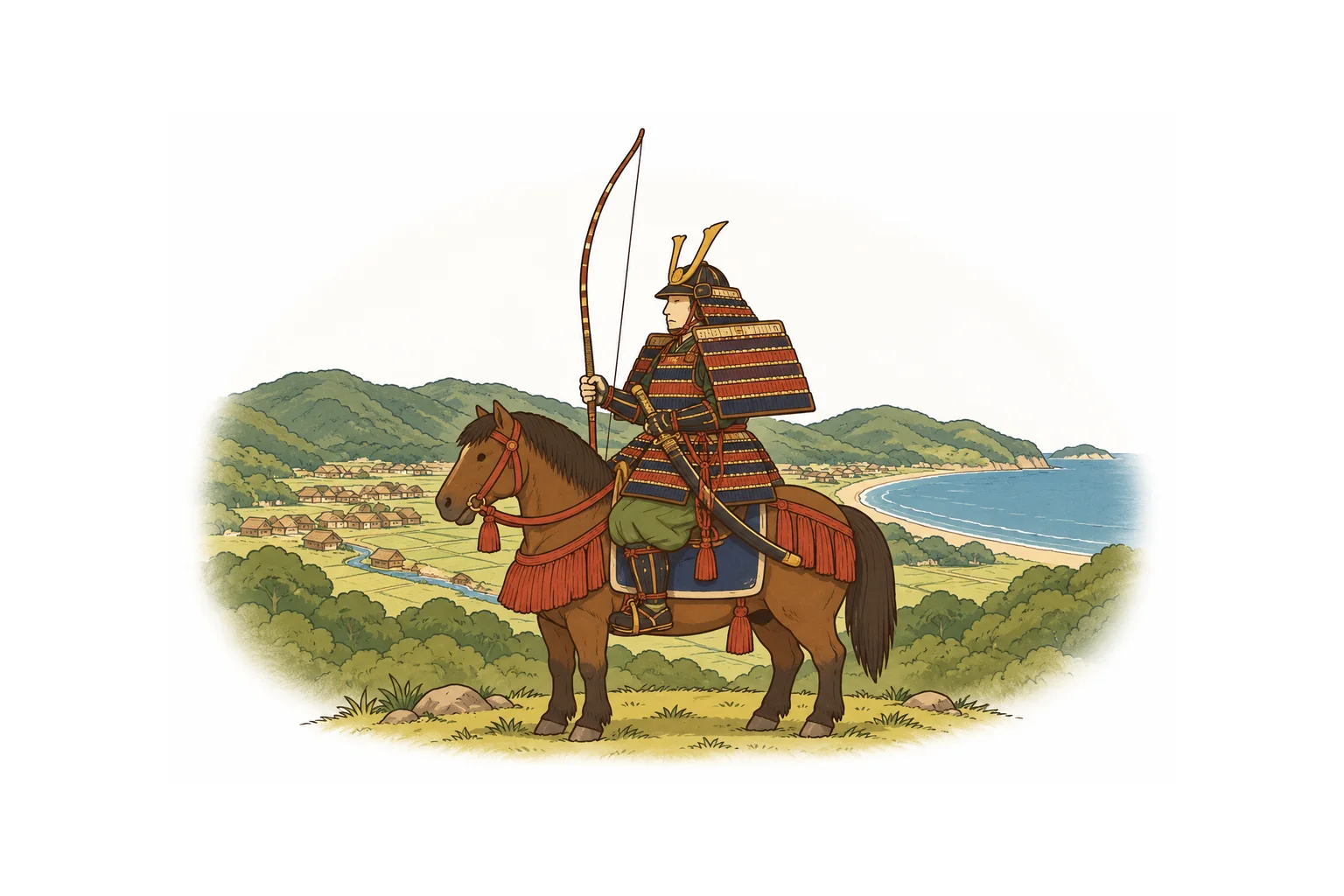
For about a century and a half Japan was run from two towns three hundred miles apart. The emperor, the court nobility and the great temples remained in Kyoto, as they had for four hundred years. But the men who commanded the country's fighting men sat in Kamakura, a small seaside town in eastern Japan, hemmed in by wooded hills on three sides and open to the sea on the fourth. The government they built there is known as the Kamakura shogunate, or in Japanese the bakufu, a word that originally meant a general's field headquarters.
Read the introductionabout 3,900 words · 10 chaptersYasumori was one of the few men outside the Hōjō family to reach the top of the Kamakura bakufu.
Hiki Yoshikazu比企能員Yoshikazu’s power rested on two personal bonds: the Hiki no Ama’s loyalty to the exiled Yoritomo and his family’s role in raising Yoriie.
Hōjō Masako北条政子Masako matters because, at several of the Kamakura shogunate’s most dangerous moments, she held the housemen behind the Hōjō and the regime.
Hōjō Sadatoki北条貞時Sadatoki was the tokusō under whom "tokusō autocracy" took its full shape.
Hōjō Takatoki北条高時Takatoki matters less for anything he did than for where he sat.
Hōjō Tokimasa北条時政Tokimasa founded Hōjō power.
Hōjō Tokimune北条時宗Tokimune was the regent who led the Kamakura bakufu through both Mongol invasions.
Hōjō Tokiyori北条時頼In a few years in his early twenties Tokiyori removed both factions that could challenge the main Hōjō line, the Nagoe and the Miura, broke the Kujō connection…
Hōjō Yasutoki北条泰時Yasutoki’s importance lies in institutions.
Hōjō Yoshitoki北条義時Yoshitoki founded the Hōjō regency that governed the Kamakura bakufu.
Kakusan-ni覚山尼Kakusan-ni matters above all because of where she stood.
Kujō Yoritsune九条頼経Yoritsune mattered because of the seat he filled.
Maki no Kata牧の方Maki no Kata matters because she stood where several of the power struggles of early Kamakura met.
Minamoto no Sanetomo源実朝Sanetomo matters because of where he stood.
Minamoto no Yoriie源頼家Yoriie was the first to inherit Yoritomo’s position, and his fate showed how fragile that position was.
Minamoto no Yoritomo源頼朝Yoritomo was not a great field commander; his gifts lay in reading situations, managing men and negotiating with the court.
Nichiren日蓮Nichiren matters because he turned devotion to the Lotus Sutra into a simple, intense practice open to everyone: not elaborate doctrine or ritual, but chanting…
Prince Munetaka宗尊親王As a political actor Munetaka barely existed: he came to Kamakura and left it by the decision of others.
Qubilai Khanフビライ・ハンQubilai ruled two worlds at once, as a Mongol khan and a Chinese emperor.
Retired Emperor Go-Shirakawa後白河院Go-Shirakawa reigned for only three years, but as retired emperor and then cloistered emperor he was a dominant presence at court for more than three decades, …
Retired Emperor Go-Toba後鳥羽上皇Go-Toba matters first as the real maker of the Shin kokin wakashū.
Shōni Kagesuke少弐景資Kagesuke matters because his few documented scenes connect three things that are often told separately: the unprecedented mobilization of Kyūshū against the Mo…
Taira no Kiyomori平清盛Kiyomori matters because he turned warriors from instruments of the retired emperors into political actors in their own right.
Taira no Yoritsuna平頼綱Yoritsuna matters as the first of the tokusō’s household retainers to rule openly.
Takezaki Suenaga竹崎季長In political terms Suenaga was a minor figure who held no bakufu office and changed the course of no battle.
Hōnen法然Hōnen moved the ground of salvation from the practitioner to Amida’s vow: people who could not keep the precepts, meditate or read could be reborn in the Pure …
Shinran親鸞Shinran is honored as the founder of Jōdo Shinshū, which grew into one of Japan’s largest Buddhist denominations.
Dōgen道元Dōgen brought the Caodong (Sōtō) lineage and the monastic routines of Song China to Japan.
Eisai栄西Eisai brought a recognized Song Rinzai lineage to Japan, founded the first institutional Zen temples, and in Kōzen gokokuron made a sustained case that Zen was…
Unkei運慶Unkei matters because he carried a provincial Nara workshop to the top of the profession during the Genpei War and the rise of the Kamakura regime, and turned …
Kamo no Chōmei鴨長明Chōmei matters above all as the author of the Hōjōki, a short work whose precise, undramatic account of fire, wind, famine and earthquake in late twelfth-centu…
Fujiwara no Teika藤原定家Teika was one of the central poets and critics of the Shin kokinshū age.