
This period in brief
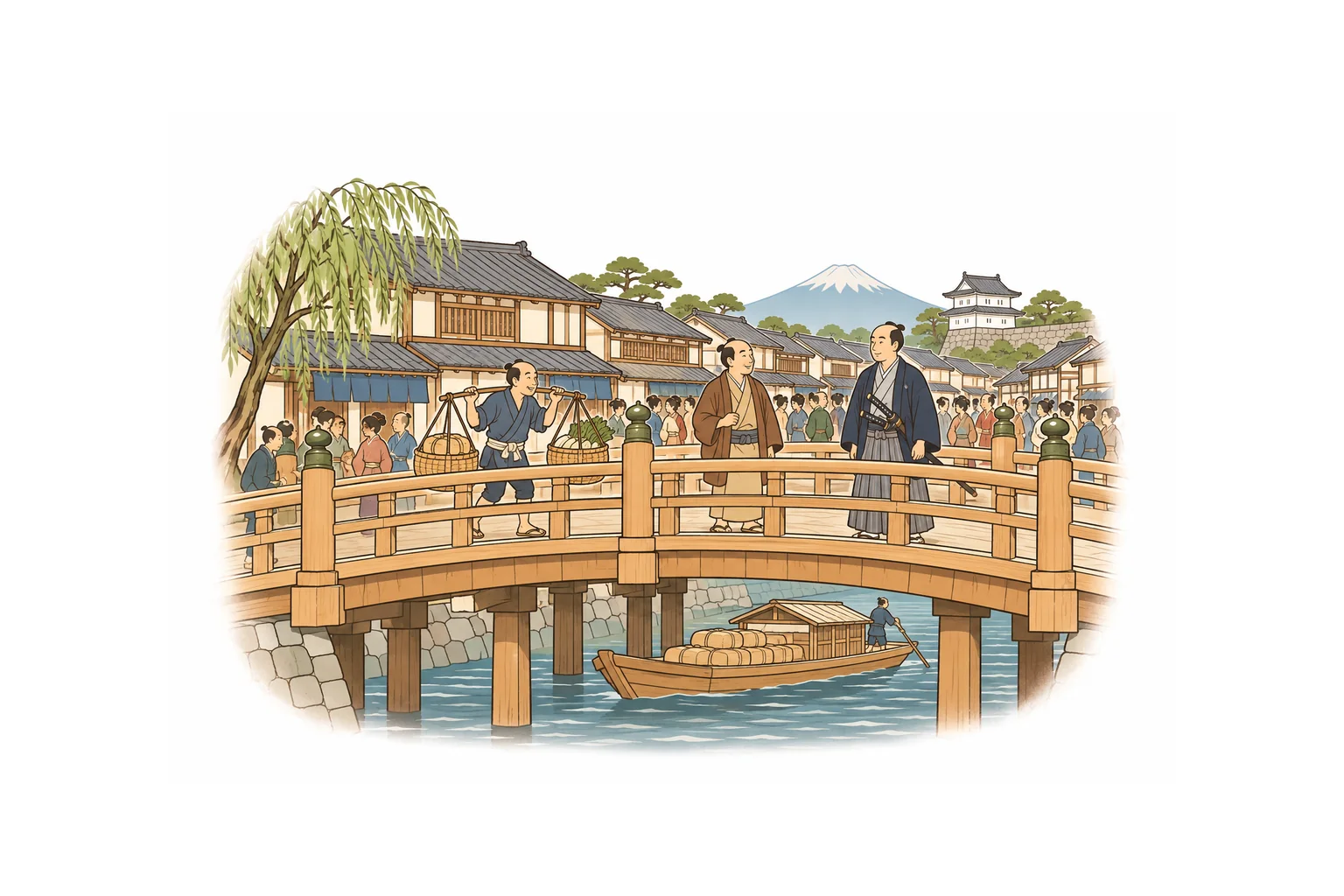
In 1603 the imperial court in Kyoto gave the warlord Tokugawa Ieyasu the title of shogun, the old office of supreme military commander. He set up his government in Edo, a castle town on a marshy bay in eastern Japan that would one day be renamed Tokyo. Fifteen men of his family held the title in turn, and the last of them gave it up in 1867; the new Meiji government took over in 1868. The 265 years in between are called the Edo period after the city, or the Tokugawa period after the family.
Read the introductionabout 3,900 words · 10 chaptersAmakusa Shirō is the emblem of the Shimabara Rebellion, the largest armed uprising of the Edo period, which grew out of the heavy taxation of the Matsukura and…
Amenomori Hōshū雨森芳洲Hōshū matters because he put a Confucian scholar’s learning to work in the practical business between Tsushima and Busan.
Arai Hakuseki新井白石Hakuseki was one of the very few Confucian scholars of the Tokugawa period to reach the center of government.
Chikamatsu Monzaemon近松門左衛門Chikamatsu matters because he moved jōruri away from strings of adventures and miracles toward drama centerd on character and conflict.
Emperor Kōkaku光格天皇Kōkaku came to the throne from a side branch, yet at a time when shogunal rule seemed secure he won back for the court a measure of ceremonial and symbolic spa…
Hayashi Razan林羅山Razan was the first man to serve the Tokugawa shogunate for decades in the role of a Confucian scholar, attending four shoguns from Ieyasu to Ietsuna.
Ikeda Tsunamasa池田綱政Tsunamasa matters as a consolidator who worked within the institutions his father left and kept funding practical projects.
Inō Tadataka伊能忠敬Tadataka’s ten surveys produced the first map of Japan’s coasts and main highways, from Ezo to Kyūshū, drawn to a consistent scale from actual measurement.
Kasuga no Tsubone春日局Kasuga no Tsubone was one of the few women of the early Edo period who acted directly in political affairs.
Katsushika Hokusai葛飾北斎Hokusai matters because he worked at a high level in nearly every format open to an Edo artist: actor prints, pictures of beauties, surimono, book illustration…
Keishōin桂昌院Keishōin held no office and left no documents showing her directing policy; her weight came from being the shogun’s mother.
King Shō Nei尚寧王Shō Nei reigned at a moment of upheaval in East Asia, and under him the Ryūkyū Kingdom suffered the heaviest blow in its history.
Konchiin Sūden金地院崇伝Sūden mattered because he carried the literary Chinese and the command of legal form he had learned in the Zen monasteries into the center of the Tokugawa gove…
Mamiya Rinzō間宮林蔵Rinzō’s achievement is concentrated in 1808 and 1809.
Matsudaira Nobutsuna松平信綱Matsudaira Nobutsuna was a leading executor of the transition in which the Tokugawa shogunate turned from a military conquest into a durable system of governme…
Matsudaira Sadanobu松平定信Sadanobu matters chiefly as the leader of the Kansei Reforms, one of the three great reform efforts of the Edo period.
Matsuo Bashō松尾芭蕉Bashō held no office and fought in no battle; his importance is entirely literary.
Mizuno Tadakuni水野忠邦Mizuno Tadakuni matters as the architect of the Tenpō Reforms, grouped with the Kyōhō and Kansei reforms as the three great reforms of the Edo period.
Oeyo江Oeyo matters chiefly because of where she stood among the great houses of her age.
Ogyū Sorai荻生徂徠Sorai changed how the Confucian classics were read and what Confucianism was taken to be.
Sugita Genpaku杉田玄白Genpaku mattered less as a linguist than as an organizer.
Tanuma Okitsugu田沼意次Tanuma Okitsugu matters because he was among the first Tokugawa statesmen to confront the fact that a rice-based fiscal system could no longer pay the shogunat…
Tenkai天海Tenkai mattered as one of the architects of the religious order of the Tokugawa state.
Tōfukumon’in Masako東福門院和子Tōfukumon’in matters first as the vehicle of the Tokugawa plan to become maternal kin of the emperor.
Tokugawa Hidetada徳川秀忠Hidetada’s task was not to conquer but to turn his father’s conquest into a regime that could outlive its founder.
Tokugawa Iemitsu徳川家光Iemitsu was the first Tokugawa ruler destined for the office from the cradle.
Tokugawa Ienari徳川家斉Ienari held the office of shogun for fifty years, longer than any other member of his family, and kept real power for four more years in retirement.
Tokugawa Ienobu徳川家宣Ienobu’s short reign marked a turning point in Tokugawa politics.
Tokugawa Tsunayoshi徳川綱吉Tsunayoshi was a ruler who seriously tried to remake warrior society according to Confucian ideals.
Tokugawa Yoshimune徳川吉宗Yoshimune led the Kyōhō reforms, the model that Matsudaira Sadanobu and Mizuno Tadakuni later invoked for their own.
Tsugaru Nobuhira津軽信枚Nobuhira was one of the main builders of the Hirosaki domain as an early modern state.
Yanagisawa Yoshiyasu柳沢吉保Yanagisawa Yoshiyasu is the leading example of government through the shogun’s chamberlains.
Hasekura Tsunenaga支倉常長Hasekura was a middle-ranking retainer who completed an extraordinary circuit: across the Pacific to Mexico, across the Atlantic to Spain, on to Rome, and home…
Tokugawa Mitsukuni徳川光圀Mitsukuni matters above all as the founder of the Mito history project.
Ōishi Kuranosuke大石良雄(内蔵助)Ōishi’s distinctive achievement lies less in the night attack than in the twenty-one months before it.
Ihara Saikaku井原西鶴Saikaku matters because he put the townspeople of Ōsaka, Kyoto and Edo, with their appetites, calculations, successes and bankruptcies, straight into fiction.
Utagawa Hiroshige歌川広重Hiroshige became one of the best-selling artists of late Edo by turning familiar famous places into scenes of weather, season and hour, often seen through smal…
Motoori Norinaga本居宣長Norinaga turned kokugaku, or National Learning, from scattered antiquarian study into a systematic discipline.
Miyamoto Musashi宮本武蔵Musashi matters as a swordsman with real combat experience who, late in life, set down his method as a systematic treatise.
Ōshio Heihachirō大塩平八郎Ōshio matters because a former shogunal official and respected Wang Yangming scholar took up arms in the commercial heart of the country and publicly accused o…
William Adams (Miura Anjin)三浦按針(ウィリアム・アダムス)Adams was the first Englishman to settle in Japan and serve the Tokugawa regime.
Ōoka Tadasuke大岡忠相Ōoka Tadasuke was the official who carried Yoshimune’s Kyōhō Reforms into the daily life of Edo.