
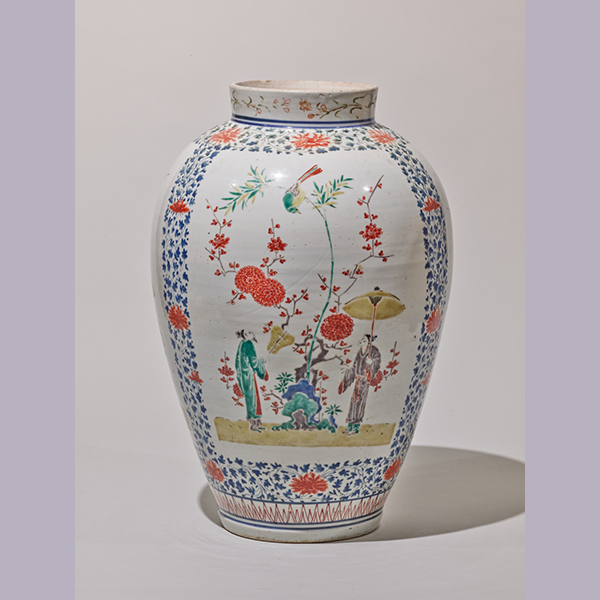
At a glance
Why Japan prizes lopsided, kiln-marked pots: Raku, Bizen and Arita traditions explained, plus how to look at, choose and use a bowl.
- Japan still has several hundred pottery centers; almost every prefecture from Hokkaidō to Okinawa has its own kilns.
- Plain sherds from the Ōdai Yamamoto I site in Aomori date to about 16,000 years ago, among the world’s oldest pottery.
- Pottery has a slightly porous, warm body; porcelain is made from crushed stone fired near 1,300°C, dense and translucent.
- Raku bowls are hand-pinched and carved, not thrown; unglazed Bizen is fired with pine for seven to ten days.
- Tradition holds that Yi Sam-pyeong found porcelain stone at Izumiyama in Arita in 1616, the start of Japanese porcelain.
Japan may be the only country where a lopsided, cracked tea bowl can be a national treasure and a mass-produced rice bowl can still be chosen with as much care as a pair of shoes. Pottery, or yakimono ("fired things"), runs through Japanese life at every level, from the convenience-store bento eaten off a factory plate to the four-hundred-year-old bowl brought out once a year at a tea gathering. This introduction explains why Japanese potters and their customers came to prize asymmetry, rough surfaces and the marks of the kiln; how three of the best-known traditions, Arita porcelain, unglazed Bizen stoneware and hand-built Raku tea bowls, are actually made; and how a visitor can look at, buy and live with Japanese ceramics.
01A Table Where Nothing Matches
Sit down to a home-cooked meal in Japan and you will notice that the dishes do not form a set. Rice comes in one bowl, miso soup in a lacquered wooden one, pickles on a small blue-and-white porcelain plate, grilled fish on a rectangular stoneware dish with a streak of green glaze. Choosing vessels that suit the food and the season, and that differ from one another, is part of serving a meal well. A dinner service of twelve identical plates, the European ideal, looks a little dull to Japanese eyes.
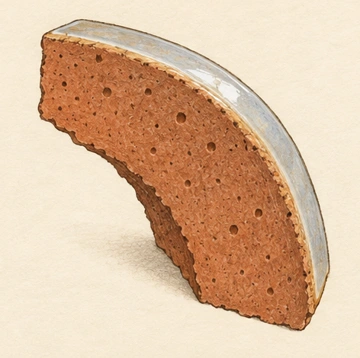
Pottery: a clay body, open and slightly porous, under a glaze
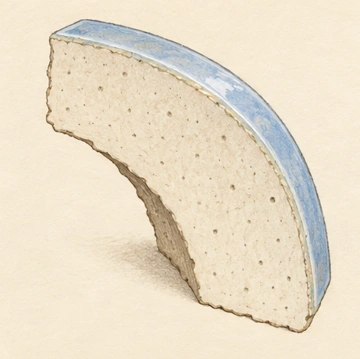
Porcelain: a dense, pale body made from crushed stone
Two habits explain a great deal. First, Japanese people lift their bowls. Rice and soup are brought up to the mouth in the left hand rather than left on the table, so a bowl has to sit comfortably in the palm. The foot ring underneath, called the kōdai, must be easy to hold; the walls must carry warmth without burning the fingers; the rim must feel right against the lips. A bowl is judged by touch as much as by sight.
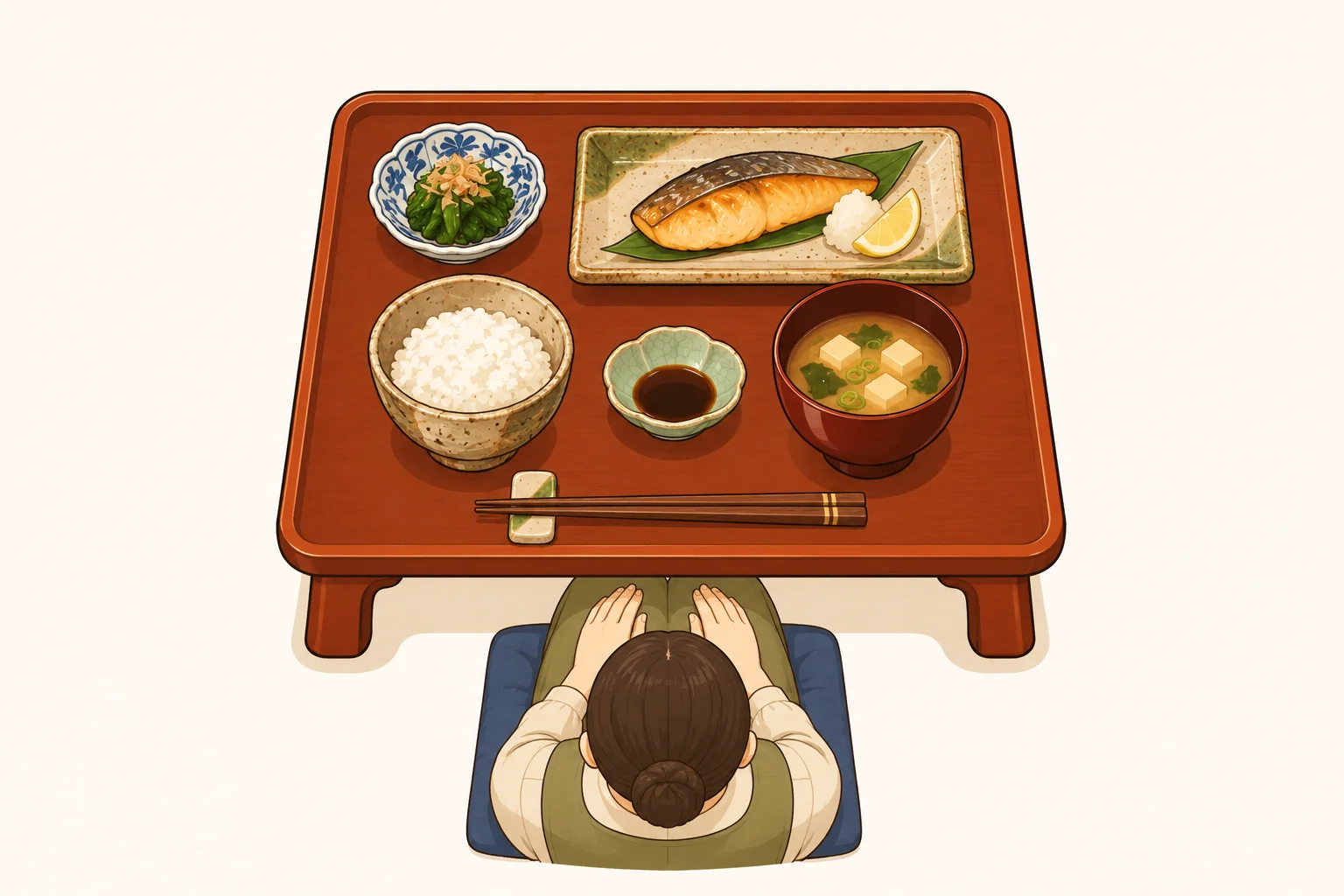
A home meal where nothing matches: stoneware rice bowl, lacquered soup bowl, blue-and-white porcelain plate.
Second, many households give each person their own rice bowl and chopsticks. Father’s bowl is a little bigger, the children’s smaller, and guests get a separate set. These personal bowls are chosen individually and used for years, which gives ordinary people a reason to care about the particular object rather than the pattern.
Japanese speakers also draw a basic line between two kinds of ware. Tōki is pottery made from clay: fired at lower temperatures, slightly porous, thick and soft to the touch, with a dull sound when tapped. Collectors call it tsuchimono, "earth things." Jiki is porcelain made from crushed stone, fired to around 1,300°C until it is dense, white and ringing, and thin enough to glow when held to the light: ishimono, "stone things." In between sits high-fired, unglazed stoneware such as Bizen. Earthy pottery is favored for rice bowls and teacups because it insulates and changes color with use, a process people describe as "raising" a pot. Porcelain is preferred for sashimi plates and small side dishes, where a clean white ground shows off the food.
02Sixteen Thousand Years of Clay
Japan’s ceramic history begins astonishingly early. Plain pottery fragments from the Ōdai Yamamoto I site in Aomori Prefecture have been dated to roughly 16,000 years ago, among the oldest known anywhere. The hunter-gatherers of the long Jōmon period (the name means "cord-marked") decorated their pots by rolling twisted cords across the wet clay. Around 5,000 years ago they produced the extravagant "flame" vessels of central Japan, whose rims erupt in coils and crests of clay. A group from the Sasayama site in Niigata is designated a National Treasure, and it is a little startling to learn that these were cooking pots.
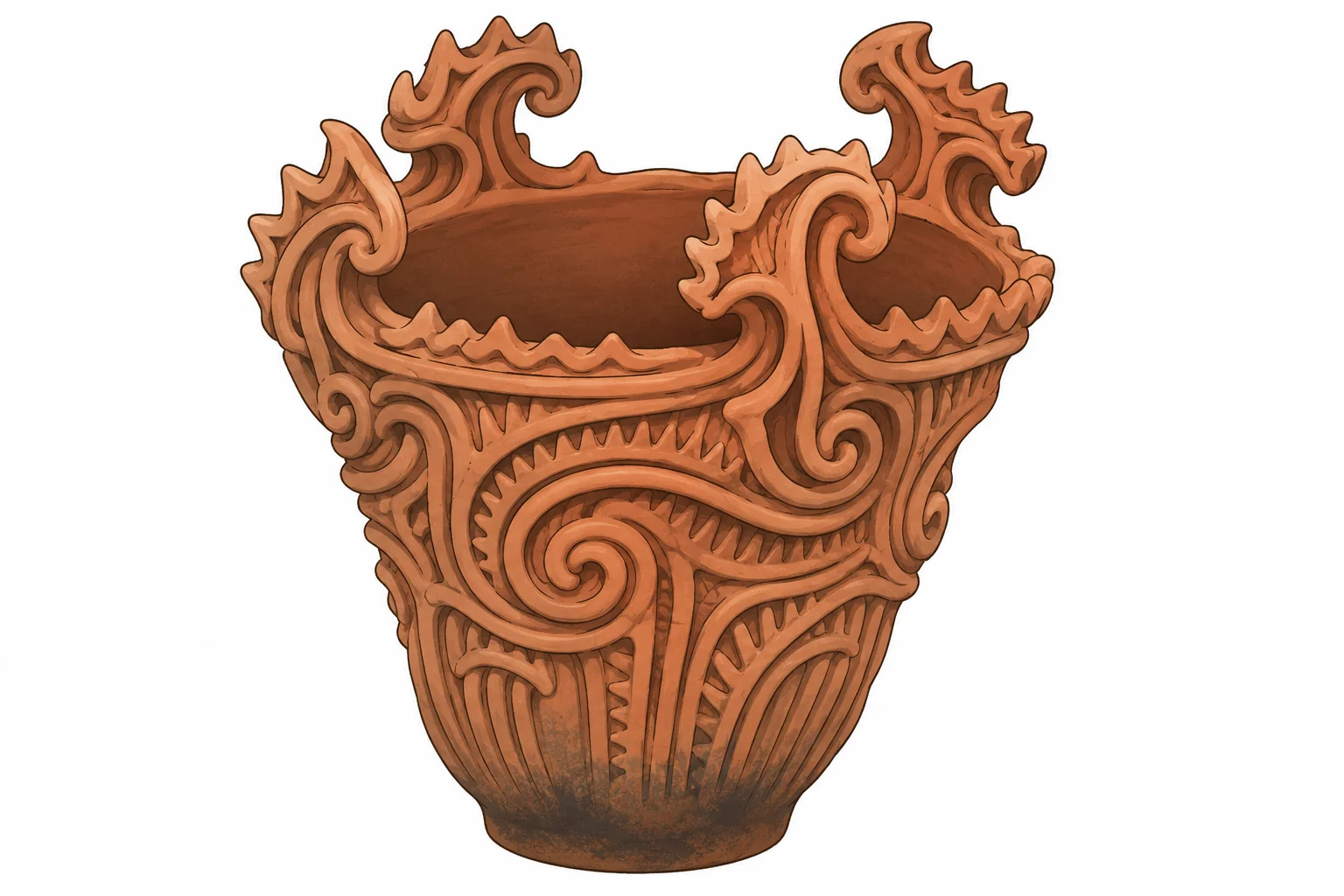
A Middle Jōmon flame-style pot: a deep cooking vessel whose rim swirls up in flame-like ornament (illustration).
Rice farming brought the simpler, more practical Yayoi pottery, named after the Tokyo neighborhood where an example was found in 1884. The real technological leap came in the early fifth century, when immigrants from the Korean peninsula introduced the potter’s wheel and the anagama, a tunnel kiln dug into a hillside. In it they fired gray, hard sueki stoneware at over 1,000°C. The Suemura kiln complex in southern Ōsaka alone contained hundreds of kilns.
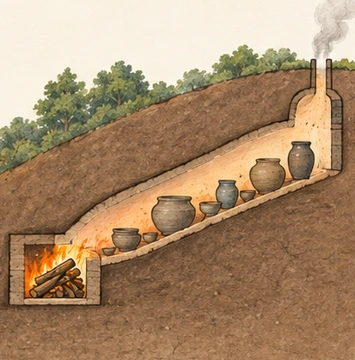
An anagama: one long chamber running up a slope, with the firebox at the bottom
By the medieval period, regional kilns across Japan were turning out sturdy storage jars, water vessels and the ridged mortars called suribachi that every kitchen needed. Six of these centers have operated continuously into the present: Seto, Tokoname, Echizen, Shigaraki, Tanba and Bizen. The ceramic historian Koyama Fujio grouped them as the "Six Ancient Kilns," and in 2017 they were jointly recognized as Japan Heritage. Seto is generally regarded as the only one to have glazed its wares systematically in the Middle Ages, imitating Chinese celadon and the dark tea bowls the Japanese called tenmoku. It did this so successfully that setomono, "Seto things," still means pottery in general in much of eastern Japan; in parts of western Japan, it is said, people traditionally used karatsumono, "Karatsu things," the same way.
None of this was art in the modern sense. These were farmers’ jars and kitchen tools. But their rough, fire-scarred surfaces were exactly what the tea masters of the sixteenth century would come to admire.
03How Tea Changed Everything
For the warrior and court elite of the fourteenth and fifteenth centuries, the finest ceramics came from China. Tea was drunk from Song-dynasty tenmoku bowls and celadons, displayed and appraised as treasures. The three yōhen tenmoku bowls, whose black glaze is spotted with iridescent blue halos, are held by the Seikadō Bunko in Tokyo, the Fujita Museum in Ōsaka and the subtemple Ryūkō-in at Daitoku-ji in Kyoto. All three are National Treasures, and they are generally said to be the only complete examples surviving anywhere; almost none have come down intact in China itself.
From the late fifteenth century, a new style of tea called wabi-cha turned taste around. Tea men such as Murata Jukō and Takeno Jōō began to value modest, even rustic things. Sixteenth-century tea men found what they wanted in plain Korean bowls, generally thought to have been made as everyday rice bowls, which the Japanese called Kōrai bowls. The most admired type, the Ido bowl, has a loquat-colored glaze, a tall foot, and glaze around the foot that has crawled into lumpy beads during firing. Tea people called that texture kairagi, after the pebbly skin of a ray used on sword hilts. The Ido bowl known as Kizaemon, kept at Kohō-an in Daitoku-ji, is a National Treasure. What had been a cheap utilitarian object became, in Japanese hands, a work to be contemplated, its flaws read as "scenery."
Sen no Rikyū (1522–1591), the tea master who served the warlords Oda Nobunaga and Toyotomi Hideyoshi, went a step further. Rather than selecting from existing wares, he and his followers commissioned new ones. The last decades of the sixteenth century, the Momoyama period, became the most inventive moment in Japanese ceramics: warped bowls, deliberately cracked vases, water jars with lumpy ash glaze, all made to be used in the tea room.
At the same time, war remade the map. Hideyoshi’s invasions of Korea in 1592 and 1597 ended in failure, but the western Japanese lords who fought in them brought home Korean potters, sometimes whole villages of them. Hagi, Karatsu, Satsuma, Takatori and Agano wares all trace their beginnings partly to these craftsmen, and so does Japanese porcelain. The invasions are sometimes called "the pottery wars." In Kagoshima, the Chin Jukan family, descended from potters taken to Satsuma, still runs its kiln.
Tea people have a saying that ranks the best tea bowls: "First Raku, second Hagi, third Karatsu." An older version runs "First Ido, second Raku, third Karatsu." Raku is a good place to look closely.
04Raku: A Bowl Shaped by Hand
Raku ware began with a tile maker named Chōjirō, whose father, according to old family documents, was Chinese. His earliest surviving work is a glazed lion figure dated 1574. Around 1579, working under Rikyū’s direction in Kyoto, Chōjirō began to make tea bowls of a kind no one had seen before. They are black or red, undecorated, roughly cylindrical, with walls that rise straight and curve slightly inward at the rim. They have almost no ornament and no obvious beauty, and that was the point. A later story says Hideyoshi disliked black and that Rikyū insisted on black bowls anyway; it is probably legend, but it captures how austere these objects seemed.
The essential feature of Raku is that the bowl is not thrown on a wheel. The potter flattens a disc of clay for the base, pinches and pushes the walls upward by hand, and then, once the clay has stiffened, carves the form with a spatula, shaving the walls thin and cutting the foot. This carving, called hera-kezuri, gives each bowl its character: a slightly squared shoulder, a sudden facet, a rim that rises and dips.
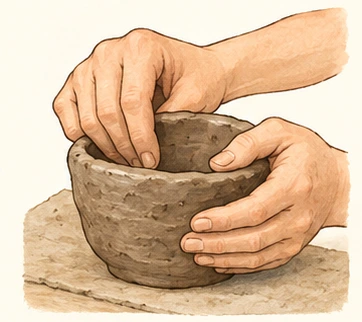
No wheel: the walls are pinched upward by hand
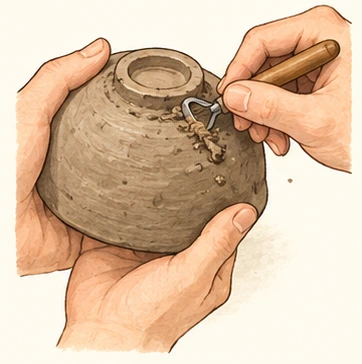
Once stiff, the walls are shaved thin and the foot is carved
The firing is just as particular. A black Raku bowl is coated in many layers of a glaze made from a black stone from the Kamo River, then placed in a small kiln that holds a single bowl. Charcoal is driven to over 1,000°C with bellows. When the potter judges that the glaze has melted, he reaches in with long iron tongs, pulls the glowing bowl out and lets it cool in the open air. The sudden cooling gives the glaze its deep, slightly matte black, and the tongs leave small marks on the side that are left as they are. Red Raku is fired at a lower temperature and has a softer, more mellow color. Because the clay body is open and lightly fired, a Raku bowl is light for its size and holds heat gently. Filled with hot tea, it feels warm rather than hot in the hands, which is exactly what a tea bowl should do.
The name is generally traced to Jurakudai, the palace Hideyoshi built in Kyoto. The ware was first called "Juraku-yaki" and then simply Raku; one account places Chōjirō’s family kiln close to the palace. According to family tradition, Hideyoshi gave Chōjirō’s successor, Jōkei, a seal reading raku, meaning "enjoyment," and the family took it as their name. The Raku family has passed the craft down a single line ever since; each head takes the name Raku Kichizaemon. The current head, the sixteenth, succeeded in 2019, and his father, the fifteenth, now uses the name Jikinyū. The family home in Kyoto stands beside the Raku Museum, which rotates exhibitions of bowls by every generation and, by its own account, occasionally holds viewings at which visitors may hold the bowls in their hands.
Raku also produced one of the great amateur potters. Hon’ami Kōetsu (1558–1637), calligrapher, lacquer designer and all-round aesthete, learned bowl-making from the Raku family. His white Raku bowl named Fujisan, with a dark lower half like the mountain under snow, is a National Treasure, one of only two tea bowls made in Japan to hold that status; the other is the Shino bowl Unohanagaki.
The word "raku" traveled abroad, but with a twist. The British potter Bernard Leach attended a raku party in Japan around 1911 (in Tokyo, by one account) where guests decorated pots that were fired on the spot, and the experience sent him into a lifetime of ceramics. What Western studios now call raku, a low-fired piece pulled hot from the kiln and smothered in sawdust to blacken it, grew out of Leach’s writings and was reshaped in the 1960s by American potters such as Paul Soldner, and it has drifted a long way from the tea bowls made by the Raku family in Kyoto.
05Bizen: Only Clay and Fire
If Raku is about the hand, Bizen is about the kiln. This stoneware comes from the town of Inbe in Bizen City, Okayama Prefecture, and it descends from the ancient sueki tradition. Among the Six Ancient Kilns, Bizen is the one that has never adopted glaze. Everything you see on its surface was put there by fire.
The clay, called hiyose, is dug from beneath rice paddies. It is rich in iron and sticky, and it is left outdoors to weather for a year or two (some say for several years) before it is refined and used. Potters shape it, let it dry and then load it, unglazed, into wood-fired climbing kilns or tunnel kilns. The firing lasts seven to ten days and nights (by some accounts up to two weeks), with red pine fed in around the clock, and the temperature climbs well above 1,000°C, by one account past 1,200°C. This long, slow firing vitrifies the clay into something hard as stone, in tones ranging from brick red to deep brown and near black.
The surface effects have names, and learning them is half the pleasure of looking at Bizen. Where pine ash lands on the pot and melts, it forms yellowish speckles called goma, "sesame." Where a pot is buried in ash and starved of oxygen, it turns gray-blue or charcoal, a zone called sangiri. Where pieces were wrapped in rice straw to stop them fusing together, the straw burns away and leaves scarlet streaks known as hidasuki, "fire cords"; what began as a practical trick became Bizen’s most loved pattern. Small clay pads set on a plate shield the spots beneath them from flame, leaving pale round patches named botamochi, after the sweet rice cakes. The potter controls where each piece sits in the kiln and what touches it. The rest belongs to the fire, and no two pieces come out alike.
- 1
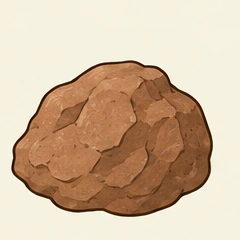 Iron-rich hiyose clay from under rice paddies is weathered and refined
- 2
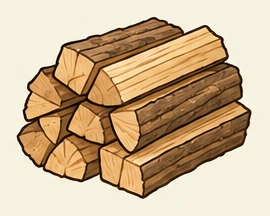 Unglazed pots are fired around the clock with red pine
- 3
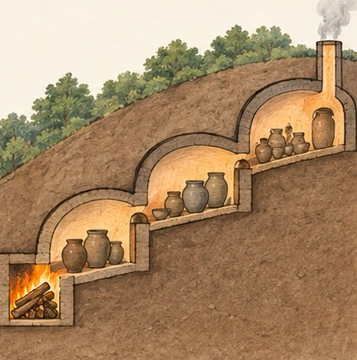 The firing in a climbing or tunnel kiln lasts seven to ten days
- 4
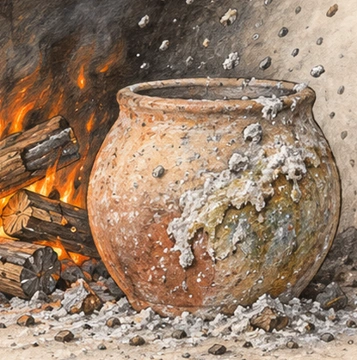 Pine ash lands on the pots and melts into goma speckles
- 5
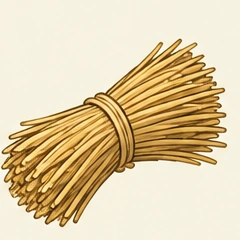 Straw used to separate pieces burns away, leaving red hidasuki streaks
Bizen was famous in the Middle Ages for mortars and water jars so tough that people joked they could not be broken by throwing. Momoyama tea masters took to its flower vases and water jars, and in the Edo period, under the control of the Okayama domain, small kilns were merged into three great communal kilns run by six potting families: Kimura, Mori, Tonomiya, Terami, Ōae and Kaneshige. After a long decline in the modern era, Kaneshige Tōyō revived Momoyama-style Bizen in the twentieth century and in 1956 became the first Bizen potter named a Living National Treasure. Several others have followed.
Bizen enthusiasts make practical claims too: beer poured into a Bizen cup forms a finer, longer-lasting head, and flowers last longer in a Bizen vase. The usual explanation is the microscopic roughness and porosity of the surface. Whatever the science, it keeps Bizen in everyday kitchens. The best time to visit is the Bizen Ware Festival on the third weekend of October (still held as of 2026), when the town fills with stalls around Inbe Station and much of the work is sold at a discount.
06Arita: Japan’s First Porcelain
China had been making porcelain for many centuries before Japan learned how. The breakthrough came in Arita, in what is now Saga Prefecture in Kyūshū. According to tradition, in 1616 a Korean potter known as Yi Sam-pyeong (in Japanese, Ri Sanpei) discovered a deposit of porcelain stone at Izumiyama in Arita and began firing true porcelain at Tengudani. Arita celebrated its 400th anniversary in 2016 on the strength of this date. In fact, Korean and Japanese potters in western Arita were already firing small amounts of porcelain alongside stoneware in the 1610s; the Izumiyama deposit is what made large-scale production possible, and in 1637 the domain concentrated porcelain making near it. The story of a single founder is a simplification. Even so, Yi Sam-pyeong is honored as the "founder of pottery" at Arita’s Tōzan Shrine, alongside the lord Nabeshima Naoshige.
Arita porcelain begins as rock. Stone from the Izumiyama quarry was crushed by water-powered hammers, mixed with water so the finest particles settled, and then kneaded into a workable body. After shaping, a piece is bisque-fired at about 900°C, painted with cobalt pigment (gosu), dipped in clear glaze and fired at about 1,300°C. The result is blue-and-white, called sometsuke. For color, painters add enamels in red, green, yellow and blue over the glaze and fire again at a lower temperature, around 800°C. In the Edo period only a dozen or so licensed enameling workshops were allowed, gathered on a single street in Arita, Akae-machi ("red-painting town"), to keep their techniques secret.
- 1
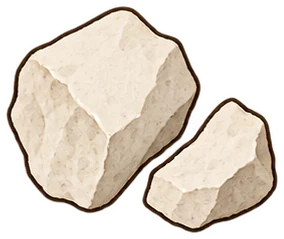 Porcelain stone is quarried at Izumiyama
- 2
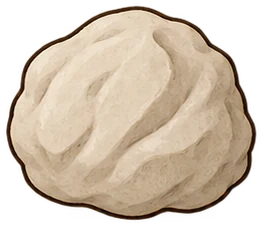 It is crushed, washed and kneaded into a workable body
- 3
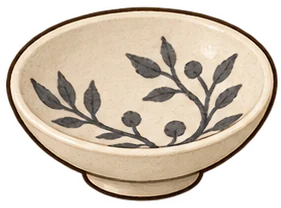 After a bisque firing near 900°C, the design is painted in cobalt
- 4
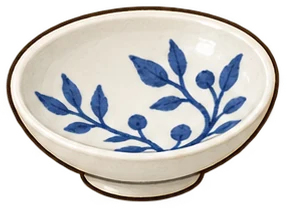 Clear glaze, then a firing near 1,300°C, gives blue-and-white
- 5
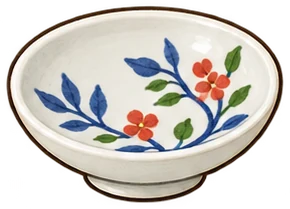 Overglaze enamels are added and fired again near 800°C
In the 1640s, a potter named Sakaida Kakiemon succeeded in producing overglaze red enamel. The Kakiemon style places a few delicate sprays of flowers, a bird or a tiger on a milky white body, leaving most of the surface empty, and its red is bright but restrained. The special white body, nigoshide, was lost for a long time and revived in the twentieth century by the twelfth and thirteenth Kakiemon. A different style, later known abroad as Imari, covers the surface densely in underglaze blue, iron red and gold. It is the opulent look many Westerners picture when they hear "Japanese porcelain."
The Imari name comes from the port a few miles away, through which Arita wares were shipped. Around 1644, the fall of the Ming dynasty and the wars that followed all but stopped Chinese porcelain exports. The Dutch East India Company, trading from the tiny island of Dejima in Nagasaki, turned to Arita instead and from 1659 shipped porcelain to Europe in large quantities, a trade that formally ended in 1757. European courts collected it avidly, and in the eighteenth century the Meissen factory in Saxony copied Kakiemon designs. You can still see garnitures of huge Arita jars in palaces and museums in Dresden and London.
Arita had a third face. From 1675 the Nabeshima lords of Saga ran an official kiln at Ōkawachiyama, in today’s Imari City, that produced porcelain solely as gifts for the shogun and other lords. Nabeshima ware was never sold. Its designs are precise and formal, its blue lines hair-thin, and its plates stand on tall feet painted with an exact comb-tooth pattern. As of 2026, Ōkawachiyama is still a small valley of about thirty kilns, nicknamed the "village of secret kilns."
After the Meiji Restoration, Arita adopted Western techniques. The German chemist Gottfried Wagener, invited in 1870, taught potters to use cobalt oxide instead of costly natural pigment and to fire with coal, and companies such as Kōransha and Fukagawa Seiji industrialized production. As of 2025 the town had fewer than 20,000 residents, but its Arita Ceramic Fair, held from April 29 to May 5 (canceled in 2020 and 2021 because of the pandemic, and still held as of 2026), fills about four kilometers of streets with stalls and usually draws over a million visitors. Even the torii gate and guardian lion-dogs of Tōzan Shrine are made of porcelain.
07Kyoto, Mino and the Regional Kilns
Kyoto had poor clay but the most demanding customers in Japan. In the seventeenth century Nonomura Ninsei opened a kiln near Ninna-ji temple and produced tea wares painted with enamels, gold and silver, as refined as screen painting. His pupil Ogata Kenzan, younger brother of the painter Ogata Kōrin, made square dishes on which Kōrin painted and Kenzan added poems in his own calligraphy. Kyoto’s kilns later gathered on the slopes below Kiyomizu-dera, and their output became known as Kyō-yaki or Kiyomizu-yaki. Its defining skill is versatility: Kyoto potters can imitate almost anything and make it exquisite. The Gojōzaka pottery festival, held August 7 to 10 and now called the Gojō Wakamiya Pottery Festival, began in the Taishō era; it was suspended from 2020 during the pandemic, later revived, and as of 2026 still takes over the street each summer.
In eastern Gifu Prefecture, the Mino area was the other great center of Momoyama tea ware. Shino ware, the first Japanese pottery with a white glaze, is covered in a thick feldspar glaze like melting snow, flushed with orange where it thins. Oribe ware, named after Rikyū’s pupil, the warrior and tea master Furuta Oribe, pairs splashes of copper-green glaze with bold, almost modern geometric designs. For centuries Shino was assumed to come from Seto, until the potter Arakawa Toyozō found Shino shards at an old kiln site at Ōgaya in 1930, proving it was made in Mino. Mino, around the cities of Tajimi, Toki and Mizunami, is today Japan’s largest producer of ceramic tableware; a large share of the everyday dishes in Japanese homes comes from here, about half by a figure often quoted in the trade.
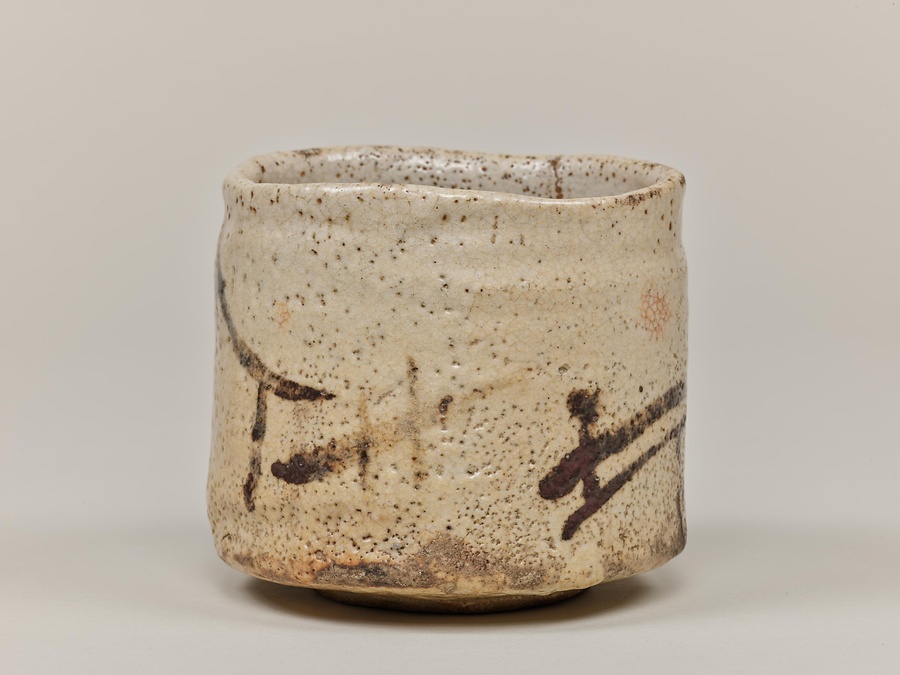
Shino tea bowl Hashihime: thick feldspar glaze like snow, flushed where it thinsTokyo National Museum, Shino tea bowl named Hashihime (Mino, 16th–17th century)
Elsewhere, Kutani ware from Ishikawa Prefecture is known for dense overglaze enamels in green, yellow, purple, blue and red. The bold seventeenth-century pieces called Ko-Kutani ("old Kutani") are the subject of a long-running argument: were they made in Kaga, or made in Arita and decorated or sold under the Kutani name? Excavations have tilted opinion toward Arita, though not everyone in Ishikawa accepts this. Hagi ware from Yamaguchi has a soft, porous body that slowly absorbs tea through its fine crackle, so a bowl changes color over years of use, a quality tea people call the "seven transformations of Hagi." Karatsu ware from Saga is sturdy and unpretentious, and its painted variety carries quick, sketchy iron-brown drawings of grasses.
Some places are known for a single object. Shigaraki in Shiga Prefecture makes the ceramic tanuki, raccoon dogs with straw hats and sake flasks, that stand outside restaurants; they became a national fad after Emperor Shōwa’s visit in 1951. Tokoname in Aichi has mass-produced ceramic beckoning cats since the years after the Second World War and remains their leading source. In the mountains of Ōita, Onta ware is still made by a handful of families who crush their clay with water-powered pestles and decorate pots with tobi-kanna, a chattering pattern made by a flexible blade bouncing against the spinning pot. In Okinawa, yachimun pottery has a bright, southern palette all its own.
08Mingei: The Beauty of Everyday Things
In the early twentieth century, industrial production was driving small kilns out of business. The thinker Yanagi Sōetsu, together with the potters Kawai Kanjirō and Hamada Shōji, coined the word mingei, "folk craft," in 1925. Their argument was that objects made anonymously, in quantity, for daily use, possess a healthy beauty precisely because their makers were not trying to be artists. Yanagi found this beauty in Korean ceramics and in the humble wares of rural Japan, and in 1936 he opened the Japan Folk Crafts Museum in Komaba, Tokyo.
Hamada gave the idea a practical home. After working with Bernard Leach in St Ives, Cornwall, in the early 1920s, he settled in Mashiko in Tochigi Prefecture, a town of kitchenware potters, and made plates, jars and bowls with local clay and glazes. In 1955 he was among the first people designated Living National Treasures. Mashiko became a magnet for potters and now has hundreds of studios and kilns, with large pottery fairs in spring and autumn. Kawai’s house and workshop on Gojōzaka in Kyoto is preserved as a museum, complete with his climbing kiln.
The mingei movement still shapes how Japanese people think about pots. Alongside famous names sold in department-store galleries, there is a large and lively market for handmade everyday ware, sold at craft fairs and in small shops, valued because it is pleasant to use every day. A good rice bowl by an unknown potter in Mashiko or a printed porcelain dish from Arita may cost only one or two thousand yen (as of 2026).
09Looking, Buying and Living With Pots
In most Japanese shops you are welcome to pick things up. Use both hands, hold the piece low over the table, and take off rings and watches that might knock against it. Feel the weight first: a well-made bowl is no heavier than its size suggests. Run your thumb along the rim, the part that will touch your mouth. Then turn it over. Japanese buyers pay close attention to the foot ring, which is usually left unglazed so that the bare clay shows. Its color and grain, and the confidence of the cut that formed it, say a great deal about the potter. Marks and seals are often stamped nearby.
In a tea room the ritual is more formal. After drinking, a guest sets the bowl down, rests both hands on it, and leans forward to admire the front, the sides and the foot, never lifting it far above the tatami mat in case it slips. The care is part of the experience.
The best places to buy are the pottery fairs and the kilns’ own shops. The Arita fair in Golden Week, the Mashiko fairs, the Bizen festival and Kyoto’s Gojōzaka festival all offer good prices and discounted seconds with minor flaws. In Tokyo, Kappabashi, the street of restaurant suppliers, stocks wares from every region. Department stores such as Takashimaya and Mitsukoshi have galleries where established potters show work, with tea bowls ranging from tens of thousands to hundreds of thousands of yen (as of 2026). Work by Living National Treasures is in another price league altogether.
Earthenware benefits from a little preparation. Many Japanese cooks simmer a new porous bowl in the cloudy water left from rinsing rice, a treatment called medome, so that the starch seals the pores and the pot resists oil and stains. Soaking a pottery dish briefly in water before serving also keeps sauces from soaking in. After washing, let it dry completely before putting it away, or it may mold. Porcelain needs no special care, although pieces with gold or silver decoration should stay out of the microwave. And if a favorite bowl breaks, there is kintsugi, the craft of mending with lacquer and dusting the seam with gold, which makes the repair part of the bowl’s story.
A good Japanese bowl tends to outlive its owners. Tea families keep bowls that are four centuries old, and an ordinary rice bowl may be used every day for twenty years until a pale ring wears into its rim. If you take one thing home from Japan, a rice bowl that fits your hand is a good choice, and the right way to use it is to pick it up.