Skip to content
Topics

Search History Omakase

Start typing to search.

    Top 10

    Temple landscapes often conceal long sequences of authorization, teaching, donations, construction and rebuilding. This selection introduces ten foundations and related decisions behind major Buddhist sites. A court grant might supply land, an ordination teacher might need housing for students, and a memorial foundation might require income to keep its community alive. The guides explain those institutional beginnings without treating every building visible today as original. They also distinguish founders, religious leaders and patrons, whose roles could be different. The linked articles connect familiar halls and images to the labor, political support and later changes that sustained the sites.

    1. 01 · 741

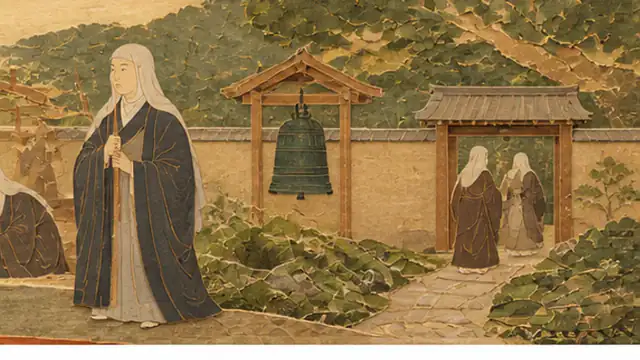
      The Edict for Provincial Monasteries and Nunneries

      • Historical contextEpidemic, poor harvests and unrest challenged Shōmu’s government. Buddhist protection became part of its response to threats affecting court and provinces.
      • Key playersEmperor Shōmu issued the order; provincial governors organized construction and support. Monks and nuns were to maintain the religious life of separate institutions.
      • What happenedThe 741 edict required a monastery and a nunnery in every province, with land, income and ritual obligations. Building proceeded unevenly and required further court intervention.
      • Why it matteredThe program established a durable framework for state-sponsored provincial Buddhism. Its operation depended on local labor, funding and continuing observance rather than the decree alone.
      • What to noticeKeep the paired provincial institutions distinct from the later Great Buddha project, and compare announced requirements with the evidence of construction.
      Read the event article →
    2. 02 · 743

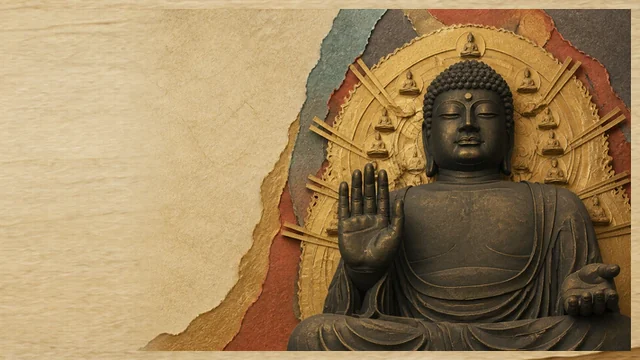
      The Edict to Create the Vairocana Great Buddha

      • Historical contextProvincial temple policy preceded a distinct vow to build an immense image. Shōmu’s shifting court locations complicated how that undertaking would become a permanent institution.
      • Key playersShōmu sponsored the project; Gyōki gathered supporters and Rōben helped develop its religious community. Craftspeople and officials organized casting and construction.
      • What happenedThe 743 vow began at Shigaraki before work moved to Nara. Successive casting stages completed the bronze body in 749, followed by consecration in 752.
      • Why it matteredThe project joined worship, learning, donations and state resources around a major temple. Later destruction and reconstruction shaped the surviving image and buildings.
      • What to noticeKeep vow, casting and ceremony distinct. Gyōki’s death before completion and later repairs also show why one founding date cannot explain the whole monument.
      Read the event article →
    3. 03 · 759

      Ganjin Establishes Tōshōdai-ji

      • Historical contextGanjin’s teaching required more than recognized expertise: students needed food, support and a place to remain. His years at Tōdai-ji preceded a separate community.
      • Key playersGanjin and his followers received a former princely estate from the court. His successors sustained instruction in vinaya, the rules of ordination and monastic life.
      • What happenedTōshōdai-ji was founded in 759 using adapted buildings and early facilities. Further construction continued after Ganjin’s death in 763.
      • Why it matteredLand and residence made sustained teaching and succession possible. The institution’s survival depended on disciples as well as its founder’s reputation.
      • What to noticeDistinguish establishment of a community from completion of its famous hall. Buildings visible today need not belong to the founder’s lifetime.
      Read the event article →
    4. 04 · 816

      Kūkai Receives Permission to Establish Kōyasan

      • Historical contextKūkai sought a mountain center for the esoteric teaching he had brought from China. A religious program needed land and continuing material support.
      • Key playersKūkai petitioned Emperor Saga. Monks, workers and supporters would turn court permission into an inhabited place of practice.
      • What happenedAuthorization came in 816, followed by ascent and building activity in later years. Access, provisions, timber and labor were necessary for the community’s development.
      • Why it matteredThe grant established an institutional base that successors maintained after Kūkai’s death. Permission enabled a project without delivering a finished complex.
      • What to noticeRead the petition and chronology separately from sacred origin stories about guides and deities. Those traditions explain meaning without replacing dated construction evidence.
      Read the event article →
    5. 05 · 823

      Saga Entrusts Tō-ji to Kūkai

      • Historical contextTō-ji already stood by the capital’s southern gateway. Kūkai’s community needed a supported urban setting for esoteric Buddhist teaching and ritual.
      • Key playersEmperor Saga entrusted the temple to Kūkai. Court patrons, monks and skilled workers sustained the religious and building program.
      • What happenedThe 823 grant changed the use of an existing institution. Images and mandala arrangements organized worship, while construction of the lecture hall continued beyond Kūkai’s death.
      • Why it matteredAn established capital temple became a major home for his teaching. Community, objects and repeated rebuilding sustained continuity across buildings of different dates.
      • What to noticeDo not read the grant as a new foundation or completed precinct. The current lecture hall belongs to a much later reconstruction.
      Read the event article →
    6. 06 · 1052-1053

      Yorimichi Converts the Uji Villa into Byōdōin

      • Historical contextPure Land devotion offered hope of rebirth amid beliefs about the decline of effective Buddhist practice. Aristocratic estates could provide both resources and settings for worship.
      • Key playersFujiwara no Yorimichi converted a villa inherited from Michinaga. Sculptor Jōchō made the central Amida image for the new hall.
      • What happenedByōdōin was established in 1052, followed by dedication of the Amida Hall in 1053. Architecture, sculpture and a pond presented a vision of the Pure Land.
      • Why it matteredHousehold property became a religious institution whose surviving art shaped later understanding of elite devotion. Fires and repairs subsequently altered the wider complex.
      • What to noticeSeparate inherited ownership, conversion and hall dedication. Belief in a declining age was a religious framework, not a measurable historical condition.
      Read the event article →
    7. 07 · 1105-1124

      Kiyohira Builds the Chūsonji Temple Complex

      • Historical contextRegional war and an existing sacred-site tradition formed the setting for Kiyohira’s building program. Temple patronage could join political resources to prayers for the dead.
      • Key playersFujiwara no Kiyohira sponsored Chūsonji’s expansion. Craftspeople and religious communities created buildings, images and scriptures across successive stages.
      • What happenedConstruction began in 1105, with the Golden Hall dated to 1124. A wider dedication in 1126 expressed prayers for those killed on both sides of earlier wars.
      • Why it matteredThe complex linked regional lordship to Pure Land imagery and memorial practice. Later fires left the Golden Hall as exceptional evidence within an altered site.
      • What to noticeDistinguish a stated intention to relieve suffering from proof that conflict ended. The principal construction span also does not include every later ceremony.
      Read the event article →
    8. 08 · 1282

      Engakuji’s Foundation under Hōjō Tokimune

      • Historical contextThe second Mongol invasion left death to commemorate as well as continuing defense obligations. Religious patronage offered a lasting setting for remembrance and practice.
      • Key playersHōjō Tokimune supplied political and material support. Chinese monk Wuxue Zuyuan, known in Japan as Mugaku Sogen, established the religious community.
      • What happenedEngakuji was founded in 1282 with donated holdings supporting teaching and worship. Temple tradition connects its mourning to the dead on both sides of the invasions.
      • Why it matteredCommemoration became an institution requiring continuing income and care. Images, plans and rebuilding record different stages of its subsequent development.
      • What to noticeCompare the foundation tradition with surviving objects and later architecture. A thirteenth-century image does not make the entire precinct an unchanged foundation-era site.
      Read the event article →
    9. 09 · 1285

      The Founding of Tōkeiji

      • Historical contextAfter Tokimune’s death, his widow took religious vows within Kamakura’s network of Zen patronage. A community of women needed recognized leadership and material support.
      • Key playersKakusan-ni became the founding abbess, while her son Hōjō Sadatoki served as patron. Their distinct roles connected family, memorial and religious authority.
      • What happenedTōkeiji opened in 1285 as an institutional home for women’s religious practice. Its later fame for helping women obtain release from marriage developed over time.
      • Why it matteredThe foundation supported a lasting female-led community within the warrior capital. Later legal practices added to its significance without defining every purpose at opening.
      • What to noticeDistinguish abbess from patron, and foundation from the later divorce-temple function. A familiar reputation should not be projected backward as an already complete legal rule.
      Read the event article →
    10. 10 · 1625

      Tenkai Establishes Kan’eiji at Ueno

      • Historical contextTokugawa patronage could establish a prayer institution modeled on older capital traditions. Land assignment made possible a new Tendai center northeast of Edo Castle.
      • Key playersHidetada assigned estates, and the monk Tenkai directed the foundation. Later princely abbots and shogunal patrons extended its connections to court and dynasty.
      • What happenedKan’eiji’s establishment is dated to completion of its abbot’s residence in 1625. The surrounding complex grew afterward, adding burial precincts and other functions.
      • Why it matteredThe temple supplied a protective religious counterpart to the political headquarters. Its name and mountain designation linked Edo to the model of Mount Hiei.
      • What to noticeSeparate initial prayer foundation from later funerary uses. The familiar developed precinct represents decades of additional patronage rather than one finished project in 1625.
      Read the event article →

    Reading preferences

    Text size
    Glossary intensity

    Choose how much explanation appears as you read.

    Saved on this device. All terms remain available in the glossary.

    Browse the glossary →
    History Omakase

    Opening reading…