Skip to content
Topics

Search History Omakase

Start typing to search.

    Top 10

    These wars changed political order through more than victory on a battlefield. Intervention in Korea, struggles over imperial succession, coastal defense, civil war and modern imperial rivalry demanded different kinds of mobilization. Some defeats destroyed a governing coalition; others left negotiations, land settlements or continuing defense obligations. The ten entries below follow those differences without suggesting that military success alone explains the state that followed. Each guide identifies the conflict’s setting and participants, then separates the campaign from its consequences. Read the linked articles for the evidence behind the fighting, the limits of later heroic accounts and the people who bore its costs.

    1. 01 · 661–663

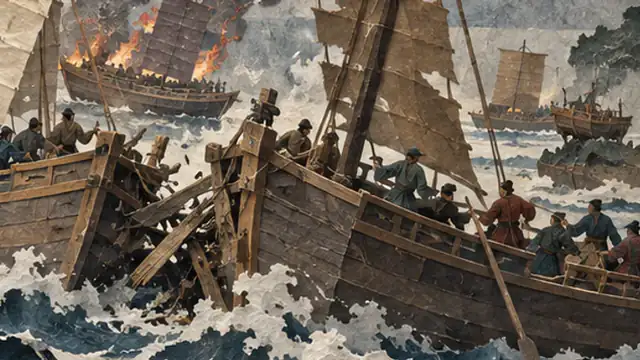
      The Baekje Restoration and Defeat at Baekgang

      • Historical contextTang and Silla conquered Baekje in 660, but supporters sought to restore its monarchy. Longstanding ties across the Korean peninsula drew the Yamato court into their appeal.
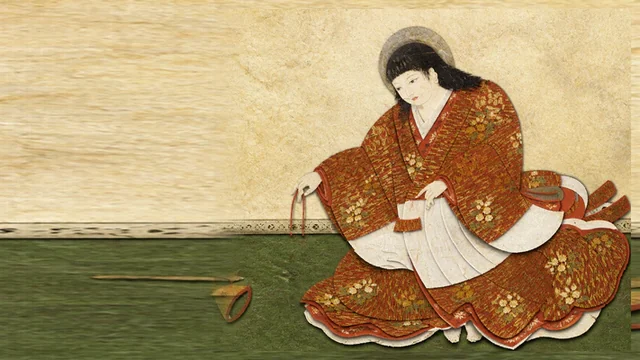
      • Key playersEmpress Saimei supported the expedition; Prince Naka no Ōe continued government after her death. Baekje prince Buyeo Pung became the restoration’s dynastic center.
      • What happenedWa sent forces to aid a divided restoration coalition. Its fleet suffered a crushing defeat against Tang forces at Baekgang in 663, and the restoration collapsed.
      • Why it matteredRefugees reached the archipelago, while fear of another attack encouraged western defenses. Defeat changed the court’s security environment without explaining every subsequent reform.
      • What to noticeWatch how conflict within Baekje and the limits of sea supply shaped an intervention often remembered chiefly as a naval defeat.
      Read the event article →
    2. 02 · 672

      The Jinshin War: From Yoshino to the Defeat of the Ōmi Court

      • Historical contextEmperor Tenji’s death left competing royal claims. His son controlled the court at Ōtsu, while his brother had withdrawn to Yoshino; succession lacked an automatic settlement.
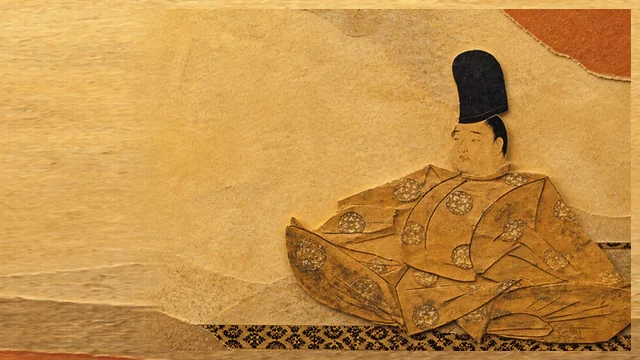
      • Key playersPrince Ōama, later Emperor Tenmu, challenged Prince Ōtomo and the Ōmi court. Provincial officials and followers supplied the armies that made their claims effective.
      • What happenedIn 672, Ōama secured eastern recruitment routes and sent forces toward Yamato and Ōmi. The court’s defeat was followed by his accession in 673.
      • Why it matteredVictory established a new governing coalition, rewarding supporters and removing opponents. Later changes to law and rank required further decisions.
      • What to noticeFollow the roads and mobilization, and remember that the principal chronicle was compiled under the victorious dynasty.
      Read the event article →
    3. 03 · 1185

      Dan-no-ura: The Destruction of the Taira Fleet and Western Court

      • Historical contextThe Taira had left Kyoto with Emperor Antoku and the imperial regalia. Successive defeats reduced the western court’s bases until it depended heavily on its fleet.
      • Key playersMinamoto no Yoshitsune assembled maritime allies. Taira commanders defended Antoku’s court, while Yoshitsune’s brother Yoritomo directed the wider warrior coalition from Kamakura.
      • What happenedThe Taira fleet was defeated at Dan-no-ura in 1185. Antoku died, leading survivors were captured, and the imperial sword was lost at sea.
      • Why it matteredThe defeat destroyed the western court’s military position. Yoritomo still had to negotiate authority with Kyoto and resolve conflict within his own coalition.
      • What to noticeCompare the battle evidence with later tales of impermanence; a famous change-of-tide explanation is less secure than the fact of the defeat.
      Read the event article →
    4. 04 · 1221

      The Jōkyū War and Kamakura’s Victory over Go-Toba

      • Historical contextKamakura’s founder and his male successors had died, leaving disputes over leadership and estate appointments. Retired emperor Go-Toba sought to remove its leading official.
      • Key playersGo-Toba issued the pursuit order against Hōjō Yoshitoki. Yoritomo’s widow Masako rallied followers; Hōjō Yasutoki and Tokifusa led armies toward Kyoto.
      • What happenedKamakura defeated the court’s forces in 1221 and entered Kyoto. Go-Toba and other sovereigns were exiled or displaced, and Kamakura officials established themselves at Rokuhara.
      • Why it matteredConfiscations and new estate appointments expanded warrior power in western Japan. Court and temple authorities continued, although their relationship with Kamakura had changed sharply.
      • What to noticeFollow the movement from military victory to disputed land rights, rather than treating every proprietor as immediately subject to unlimited warrior control.
      Read the event article →
    5. 05 · 1281

      The Second Mongol Invasion and the Failure of the 1281 Campaign

      • Historical contextThe Yuan empire prepared a second invasion after the failed campaign of 1274. Kamakura had meanwhile strengthened coastal defenses around Hakata Bay.
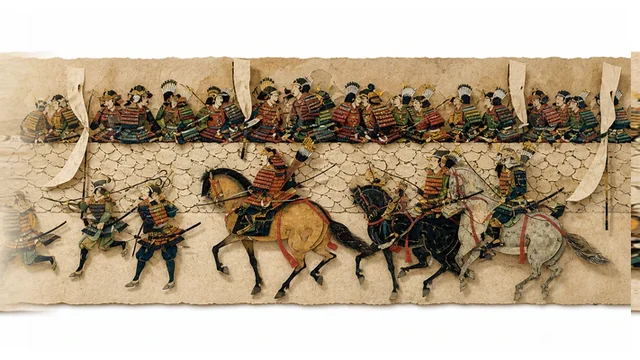
      • Key playersKublai Khan’s forces sailed from Goryeo and the Chinese coast. Hōjō Tokimune’s government mobilized defenders whose service depended on later recognition and rewards.
      • What happenedSeparate fleets struggled to establish a secure mainland base in 1281. A storm destroyed or scattered ships; defenders then attacked stranded survivors.
      • Why it matteredThe expedition failed, but coastal duties continued. The campaign exposed the costs of sustained defense and left ship remains as evidence alongside written and illustrated accounts.
      • What to noticeGive resistance, supply problems and the storm distinct roles. Exact army totals and the fate of every group cannot be reconstructed with equal confidence.
      Read the event article →
    6. 06 · 1467

      The Ōnin War: Rival Armies Occupy Kyoto

      • Historical contextSuccession disputes in powerful military houses intersected with uncertainty over the shogun’s heir. Decisions at Kyoto could not compel armed claimants to accept their losses.
      • Key playersHosokawa Katsumoto and Yamana Sōzen organized rival alliances. Shogun Ashikaga Yoshimasa headed the warrior government, but participating houses pursued their own provincial interests.
      • What happenedFighting in 1467 grew into fortified occupation of Kyoto and campaigns beyond it. The main western leaders withdrew in 1477; provincial struggles continued.
      • Why it matteredThe war weakened the government’s capacity to settle its governors’ disputes and displaced urban communities. The shogunate survived, even as regional power became harder to restrain.
      • What to noticeAsk what authority could actually enforce. Neither one family quarrel nor a single moment of total institutional collapse explains the war.
      Read the event article →
    7. 07 · 1600

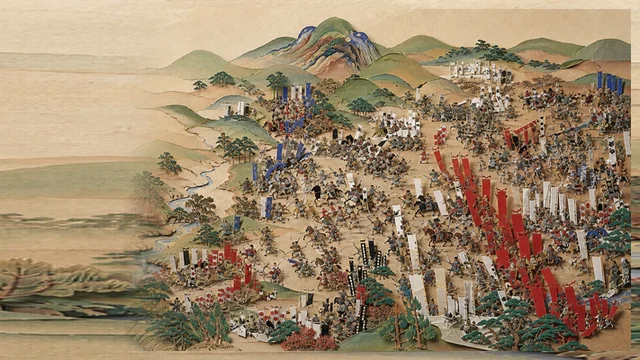
      Sekigahara: Campaign, Victory and Territorial Settlement

      • Historical contextToyotomi Hideyoshi’s death left a child heir and divided senior leadership. Lords who had served the same government formed competing coalitions with regional interests.
      • Key playersTokugawa Ieyasu led the victorious coalition. Ishida Mitsunari and allied lords opposed it; Toyotomi heir Hideyori remained at Osaka.
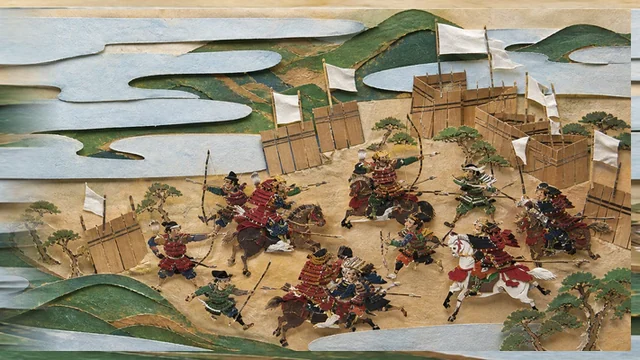
      • What happenedCampaigns across several regions culminated in the 1600 battle at Sekigahara. Defeat, changing allegiances and subsequent confiscations redistributed territorial power.
      • Why it matteredIeyasu gained supremacy and rewarded supporters with domains—territories governed by military lords. Shogunal appointment followed in 1603, while the Toyotomi survived until further war in 1615.
      • What to noticeDistinguish battlefield victory from the work of governing its settlement, and documented service from later dramatic stories about betrayal.
      Read the event article →
    8. 08 · 1592-1598

      Hideyoshi’s Invasions of Korea, 1592–1598

      • Historical contextHideyoshi demanded passage through Korea toward Ming China. Joseon’s government refused, and Korea became the target of invasion in 1592.
      • Key playersHideyoshi dispatched Japanese armies; King Seonjo’s government, local resistance forces and Yi Sun-sin’s navy resisted. Ming troops intervened in support of Korea.
      • What happenedJapanese forces advanced far inland, then fought around southern strongholds. Negotiations failed, invasion resumed in 1597, and Hideyoshi’s death brought withdrawal in 1598.
      • Why it matteredKorea retained its government after immense destruction, displacement and captivity. Repatriation and the rebuilding of diplomatic relations continued long after Japanese armies departed.
      • What to noticeRead land campaigns, naval supply and negotiations together. The war’s human costs extend beyond the success or failure of Hideyoshi’s ambitions.
      Read the event article →
    9. 09 · 1868-1869

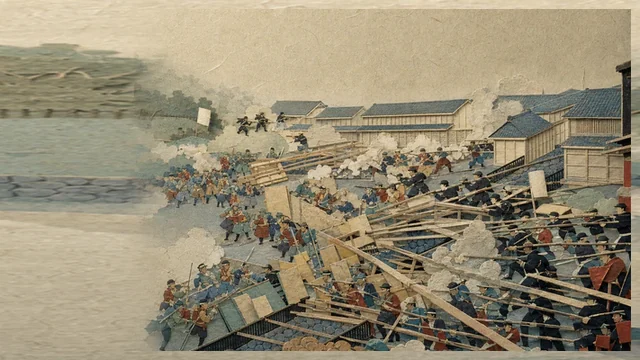
      The Boshin War: From Kyoto to Hakodate

      • Historical contextThe restoration coup left Tokugawa lands, forces and political participation unresolved. Fighting near Kyoto turned the dispute over government into civil war.
      • Key playersThe new government’s domain-backed armies faced former shogunal and regional forces. Katsu Kaishū and Saigō Takamori negotiated Edo’s surrender; other commanders continued resistance.
      • What happenedWar moved from Toba and Fushimi through Edo and the northeast to Hakodate. Enomoto Takeaki’s northern force surrendered in 1869.
      • Why it matteredVictory enabled the new government to impose authority across additional regions. Relief, revenues and the livelihoods of defeated retainers still required decisions after the fighting.
      • What to noticeNotice why surrendering Edo Castle did not end the war. Regional interests and separate military commands made the conflict more than one negotiation between two leaders.
      Read the event article →
    10. 10 · 1904-1905

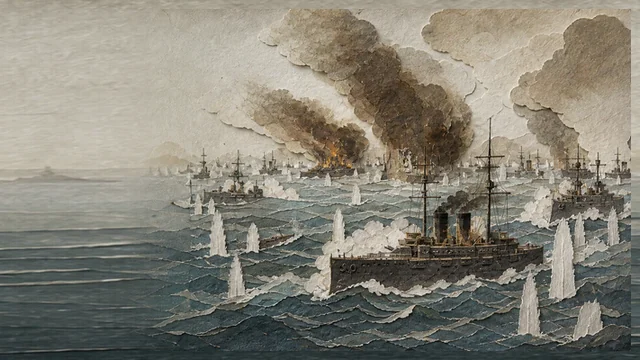
      The Russo-Japanese War and the Portsmouth Settlement

      • Historical contextNegotiations over Korea and Manchuria failed as Russia maintained forces and interests in the region. Japan went to war seeking a stronger imperial position.
      • Key playersJapanese and Russian armies fought across Manchuria, while their fleets contested sea access. Theodore Roosevelt mediated the eventual negotiations at Portsmouth.
      • What happenedJapan won major battles in 1904–1905, including Tsushima. The peace transferred specific territorial and railway rights and recognized Japanese predominance in Korea, but provided no war indemnity.
      • Why it matteredJapan enlarged its imperial reach while retaining debts and suffering heavy losses. Koreans and Chinese inhabitants had not negotiated the concessions affecting them.
      • What to noticeCompare battlefield victory with the precise treaty terms. Railway rights and leased territory did not amount to sovereignty over all Manchuria.
      Read the event article →

    Reading preferences

    Text size
    Glossary intensity

    Choose how much explanation appears as you read.

    Saved on this device. All terms remain available in the glossary.

    Browse the glossary →
    History Omakase

    Opening reading…