Skip to content
Topics

Search History Omakase

Start typing to search.

    Top 10

    Connections beyond the archipelago were made through embassies, voyages, religious learning, invasion and unequal treaties. These ten episodes follow changing access to people, goods, knowledge and political authority across borders. Contact did not always mean cooperation, and a successful journey did not necessarily achieve its diplomatic aims. The notes explain the circumstances of each encounter and whose choices or sovereignty were constrained by it. Together they offer several ways into Japan’s external relations without claiming a complete history of them. The linked articles retain the negotiation, violence, intermediaries and source disagreements that a short guide can only introduce.

    1. 01 · 607

      Missions to Sui and Competing Records of Wa

      • Historical contextSui’s reunification of much of China offered the Yamato court new diplomatic and Buddhist connections. Its rulers sought recognition beyond established exchanges with the peninsula.
      • Key playersSuiko’s court dispatched Ono no Imoko with an interpreter. Emperor Yang received the mission, and a Sui envoy traveled to the archipelago in return.
      • What happenedA 607 embassy and the exchanges of 608 combined contentious letters with formal receptions and overseas study. Displeasure over royal titles did not end communication.
      • Why it matteredDiplomacy conveyed claims to status as well as access to learning. Procedures, escorts and documents made the ruler’s position visible to visitors.
      • What to noticeCompare the Chinese and Japanese chronicles’ different framings. The sustained exchange is clearer than a single agreed account of its letters and participants.
      Read the event article →
    2. 02 · 661–663

      The Baekje Restoration and Defeat at Baekgang

      • Historical contextTang and Silla conquered Baekje in 660, but supporters sought to restore its monarchy. Longstanding ties across the Korean peninsula drew the Yamato court into their appeal.
      • Key playersEmpress Saimei supported the expedition; Prince Naka no Ōe continued government after her death. Baekje prince Buyeo Pung became the restoration’s dynastic center.
      • What happenedWa sent forces to aid a divided restoration coalition. Its fleet suffered a crushing defeat against Tang forces at Baekgang in 663, and the restoration collapsed.
      • Why it matteredRefugees reached the archipelago, while fear of another attack encouraged western defenses. Defeat changed the court’s security environment without explaining every subsequent reform.
      • What to noticeWatch how conflict within Baekje and the limits of sea supply shaped an intervention often remembered chiefly as a naval defeat.
      Read the event article →
    3. 03 · 804-806

      Kūkai Studies in Tang China and Returns to Japan

      • Historical contextJapan’s embassy to Tang China carried several religious learning projects. Participation gave monks access to teachers, books and ritual materials abroad.
      • Key playersKūkai traveled under Kanmu’s government and trained with Huiguo in Chang’an. Saichō joined the same embassy on another ship with a different study assignment.
      • What happenedKūkai departed in 804, received esoteric Buddhist training and returned in 806. His catalogue recorded the texts and objects he brought back.
      • Why it matteredThe teaching and materials supported later Buddhist institutions in Japan. Court patronage, Kōyasan and Tō-ji developed afterward, under changing political circumstances.
      • What to noticeFollow the separate journeys and later institutional stages. A shared embassy does not mean the monks received the same training or returned with an already completed program.
      Read the event article →
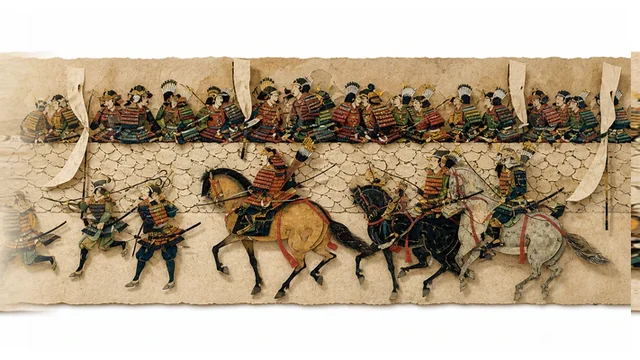
    4. 04 · 1281

      The Second Mongol Invasion and the Failure of the 1281 Campaign

      • Historical contextThe Yuan empire prepared a second invasion after the failed campaign of 1274. Kamakura had meanwhile strengthened coastal defenses around Hakata Bay.
      • Key playersKublai Khan’s forces sailed from Goryeo and the Chinese coast. Hōjō Tokimune’s government mobilized defenders whose service depended on later recognition and rewards.
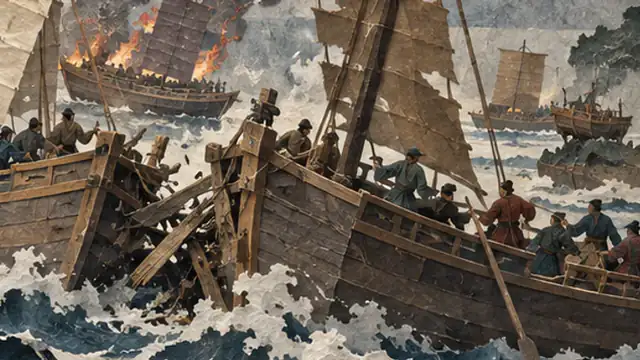
      • What happenedSeparate fleets struggled to establish a secure mainland base in 1281. A storm destroyed or scattered ships; defenders then attacked stranded survivors.
      • Why it matteredThe expedition failed, but coastal duties continued. The campaign exposed the costs of sustained defense and left ship remains as evidence alongside written and illustrated accounts.
      • What to noticeGive resistance, supply problems and the storm distinct roles. Exact army totals and the fate of every group cannot be reconstructed with equal confidence.
      Read the event article →
    5. 05 · 1401-1404

      Yoshimitsu Opens Ming Relations and Tally Trade

      • Historical contextMing restrictions on private overseas trade made official diplomatic access valuable. Yoshimitsu continued directing policy after passing on the shogunal office.
      • Key playersYoshimitsu sent a monk and a Hakata merchant to China. Ming emperors recognized him as the King of Japan within their diplomatic order.
      • What happenedExchanges beginning in 1401 led to official tally trade in 1404. Matching credentials helped authenticate authorized missions carrying gifts and commercial goods.
      • Why it matteredThe arrangement connected political recognition to regulated maritime commerce. Acceptance of Ming diplomatic language did not replace the emperor’s domestic title in Japan.
      • What to noticeNotice the different authority claimed in foreign documents and at home. Tallies established an authorized channel without eliminating every unofficial voyage.
      Read the event article →
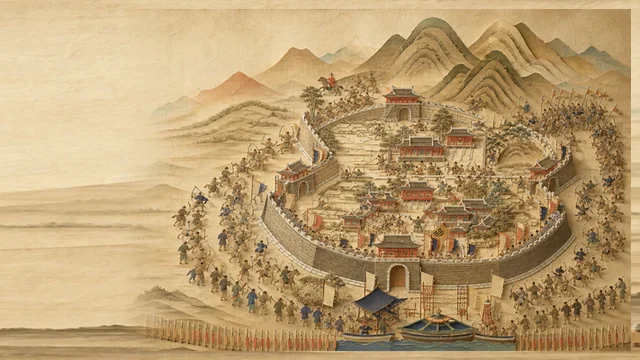
    6. 06 · 1592-1598

      Hideyoshi’s Invasions of Korea, 1592–1598

      • Historical contextHideyoshi demanded passage through Korea toward Ming China. Joseon’s government refused, and Korea became the target of invasion in 1592.
      • Key playersHideyoshi dispatched Japanese armies; King Seonjo’s government, local resistance forces and Yi Sun-sin’s navy resisted. Ming troops intervened in support of Korea.
      • What happenedJapanese forces advanced far inland, then fought around southern strongholds. Negotiations failed, invasion resumed in 1597, and Hideyoshi’s death brought withdrawal in 1598.
      • Why it matteredKorea retained its government after immense destruction, displacement and captivity. Repatriation and the rebuilding of diplomatic relations continued long after Japanese armies departed.
      • What to noticeRead land campaigns, naval supply and negotiations together. The war’s human costs extend beyond the success or failure of Hideyoshi’s ambitions.
      Read the event article →
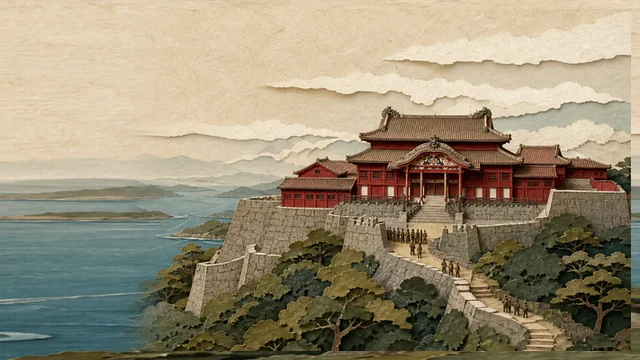
    7. 07 · 1609

      Satsuma Invades Ryūkyū and Captures Shō Nei

      • Historical contextThe Shimazu sought access to Ryūkyū’s China trade and recognition within the Tokugawa order. Unmet diplomatic demands preceded authorization for an invasion.
      • Key playersShimazu Iehisa dispatched commanders against King Shō Nei’s government. Tokugawa leaders later received the captive king and recognized Shimazu service.
      • What happenedThe 1609 expedition fought through the northern islands and captured Shuri. Shō Nei was taken to Satsuma and returned in 1611 under imposed obligations.
      • Why it matteredRyūkyū’s royal government survived with reduced freedom, while northern islands were separated from its retained territory. Its China relations continued within this unequal arrangement.
      • What to noticeRead preserved royal institutions together with coercion and payments. Survival of the kingdom’s offices did not mean survival of its previous independence.
      Read the event article →
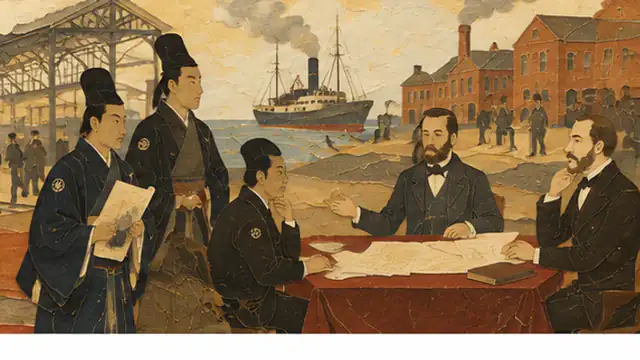
    8. 08 · 1858

      The United States–Japan Treaty of Amity and Commerce

      • Historical contextThe 1854 agreement had allowed limited supply ports and consular residence. Townsend Harris sought broader commercial access while the shogunate faced domestic disputes over authority.
      • Key playersHarris negotiated with Inoue Kiyonao and Iwase Tadanari. Ii Naosuke’s government proceeded after Hotta Masayoshi failed to obtain prior imperial approval.
      • What happenedThe 1858 treaty provided commercial ports, foreign residence, direct trade and American consular jurisdiction. Attached tariffs and administrative duties defined its practical terms.
      • Why it matteredThe agreement restricted Japanese legal and tariff autonomy and intensified domestic conflict. Revision became a prolonged political objective rather than an immediate remedy.
      • What to noticeRead the clauses alongside the political dispute over signing. Scheduled openings, actual implementation and later revision belong to different stages.
      Read the event article →
    9. 09 · 1871–1873

      The Iwakura Mission Negotiates and Investigates Abroad

      • Historical contextThe new government wanted treaty revision and knowledge of foreign institutions. A major delegation left while leaders at home continued shaping the state.
      • Key playersIwakura Tomomi headed officials including Kido, Ōkubo and Itō. Students traveled too, including five girls whose education followed a separate schedule.
      • What happenedThe mission visited the United States and Europe in 1871–1873. Treaty negotiations failed, while inspections and recorded observations became a substantial part of its work.
      • Why it matteredReports supplied examples for policy and public understanding. Travel did not produce revised treaties or agreement among returning leaders about Japan’s next decisions.
      • What to noticeCompare diplomatic aims with investigative results. The officials’ tour, students’ longer stays and changes made by the caretaker government should not be collapsed together.
      Read the event article →
    10. 10 · 1910-1919

      Colonial Administration and Resistance in Korea, 1910–1919

      • Historical contextJapan’s protectorate had already restricted Korea’s diplomacy and administration. Annexation in 1910 replaced that arrangement with direct colonial rule.
      • Key playersJapanese governor-general Terauchi Masatake and Korean minister Yi Wan-yong signed the treaty. Colonial offices and military-police institutions administered the new regime.
      • What happenedSovereignty was transferred to Japan, and the Government-General extended fiscal, legal and land-registration authority. Korean resistance culminated in mass independence demands in 1919.
      • Why it matteredColonial procedures reached farms and households while suppressing political autonomy. Later administrative changes did not restore Korean sovereignty or establish an independent government.
      • What to noticeSeparate the treaty’s claims of agreement from free consent. Land surveys also need examination by particular holdings, rather than assuming identical consequences for every cultivator.
      Read the event article →

    Reading preferences

    Text size
    Glossary intensity

    Choose how much explanation appears as you read.

    Saved on this device. All terms remain available in the glossary.

    Browse the glossary →
    History Omakase

    Opening reading…