Skip to content
Topics

Search History Omakase

Start typing to search.

    Top 10

    Religion shaped institutions, political arguments and collective responses to danger, as well as belief. This selection moves from court patronage and recognized ordination to petitions, armed religious communities, rebellion and the worship of a dynasty’s founder. It does not trace one inevitable replacement of older practices by newer ones. The guides distinguish the roles of rulers, clerics and communities, and explain what a decree, ritual or confrontation changed. They also keep religious interpretations separate from independently established causes of disasters or victories. Use the linked articles to explore the sources, material support and contested authority sustaining each episode.

    1. 01 · 587

      Soga, Mononobe, Buddhism, and Succession

      • Historical contextEmperor Yōmei’s death left succession unsettled. Rival court houses combined religious patronage with armed support and competition over the next ruler.
      • Key playersSoga no Umako backed Buddhist worship; Mononobe no Moriya resisted that patronage. Royal princes and other leaders joined competing coalitions.
      • What happenedUmako’s allies defeated and killed Moriya in Kawachi in 587. Their victory helped determine the next enthronement and opened further room for Buddhist foundations.
      • Why it matteredThe defeated coalition lost power, but succession remained vulnerable to ministerial intervention. Building temples still required clergy, specialists and material resources from several communities.
      • What to noticeAvoid reducing the conflict to believers against unbelievers. Later Buddhist vows and heroic scenes must be distinguished from the clearer political outcome.
      Read the event article →
    2. 02 · 741

      The Edict for Provincial Monasteries and Nunneries

      • Historical contextEpidemic, poor harvests and unrest challenged Shōmu’s government. Buddhist protection became part of its response to threats affecting court and provinces.
      • Key playersEmperor Shōmu issued the order; provincial governors organized construction and support. Monks and nuns were to maintain the religious life of separate institutions.
      • What happenedThe 741 edict required a monastery and a nunnery in every province, with land, income and ritual obligations. Building proceeded unevenly and required further court intervention.
      • Why it matteredThe program established a durable framework for state-sponsored provincial Buddhism. Its operation depended on local labor, funding and continuing observance rather than the decree alone.
      • What to noticeKeep the paired provincial institutions distinct from the later Great Buddha project, and compare announced requirements with the evidence of construction.
      Read the event article →
    3. 03 · 752

      The Eye-Opening of Tōdai-ji’s Great Buddha

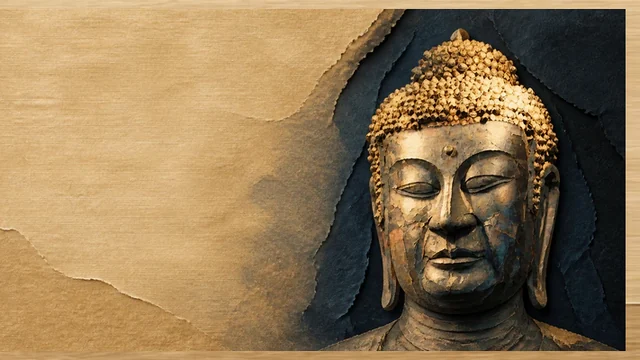
      • Historical contextYears of casting, construction and fundraising preceded Tōdai-ji’s ceremony. Shōmu’s Great Buddha project had become a major undertaking involving court and religious communities.
      • Key playersThe Indian monk Bodhisena performed the eye-opening. Reigning Empress Kōken attended with retired Shōmu and Kōmyō, alongside clergy and other participants.
      • What happenedIn 752 the image’s pupils were painted in a consecration rite. Surviving ceremonial objects preserve traces of participation and performances.
      • Why it matteredThe rite made the image a focus of worship and gave the project a public culmination. Work on the statue and temple complex nevertheless continued.
      • What to noticeSeparate religious consecration from construction completion. The Buddha and hall visible today also embody centuries of repair and rebuilding.
      Read the event article →
    4. 04 · 753

      Ganjin Reaches Japan with the Returning Mission

      • Historical contextThe Japanese court sought qualified teachers of Buddhist monastic discipline. Earlier attempts to bring Ganjin from Tang China had failed through interrupted departures and dangerous crossings.
      • Key playersGanjin taught in Yangzhou; Japanese monks invited him. Deputy envoy Ōtomo no Komaro helped him board a returning mission despite its leaders’ fears of punishment.
      • What happenedThe successful voyage reached Satsuma in 753. Ganjin continued to Nara in 754 with companions, texts and religious objects, then received authority to teach and confer precepts.
      • Why it matteredHis arrival supplied recognized expertise for subsequent ordinations. It also revealed how religious transmission depended on diplomatic transport and individual intervention.
      • What to noticeDistinguish the landing, arrival at court and later founding of Tōshōdai-ji. They were connected steps, rather than one event completed in 753.
      Read the event article →
    5. 05 · 804-806

      Kūkai Studies in Tang China and Returns to Japan

      • Historical contextJapan’s embassy to Tang China carried several religious learning projects. Participation gave monks access to teachers, books and ritual materials abroad.
      • Key playersKūkai traveled under Kanmu’s government and trained with Huiguo in Chang’an. Saichō joined the same embassy on another ship with a different study assignment.
      • What happenedKūkai departed in 804, received esoteric Buddhist training and returned in 806. His catalogue recorded the texts and objects he brought back.
      • Why it matteredThe teaching and materials supported later Buddhist institutions in Japan. Court patronage, Kōyasan and Tō-ji developed afterward, under changing political circumstances.
      • What to noticeFollow the separate journeys and later institutional stages. A shared embassy does not mean the monks received the same training or returned with an already completed program.
      Read the event article →
    6. 06 · 822

      Saichō Dies and Mount Hiei Receives Ordination Approval

      • Historical contextMount Hiei’s students needed recognized ordination through institutions centered in Nara. Saichō sought a different system based on Mahayana bodhisattva precepts.
      • Key playersSaichō petitioned the court; Nara clerical institutions opposed his proposal. Emperor Saga’s government decided whether the new community could conduct accepted ordinations.
      • What happenedSaichō died in 822 before permission arrived. Approval followed seven days later, and his disciples carried the authorized system forward.
      • Why it matteredMount Hiei gained a changed institutional position within Japanese Buddhism. The decision concerned both religious practice and control over admission to the recognized clergy.
      • What to noticeAsk what approval enabled and what still needed to be built or organized. Saichō’s campaign should not be confused with his disciples’ later implementation.
      Read the event article →
    7. 07 · 1260

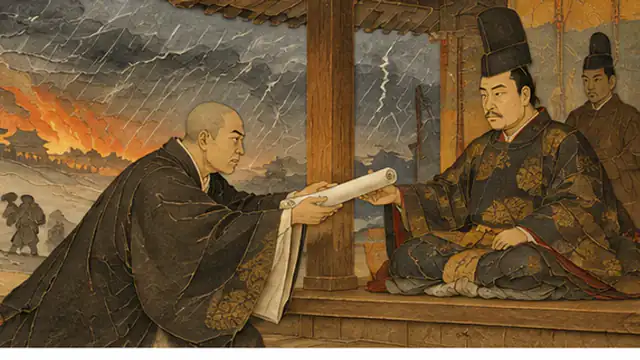
      Nichiren Submits the Risshō Ankoku Ron

      • Historical contextDisasters and insecurity prompted debate about rulers’ religious responsibilities. Nichiren argued that mistaken Buddhist patronage endangered the country.
      • Key playersNichiren submitted his treatise through an intermediary to Hōjō Tokiyori, a former regent who retained influence. He challenged teachings associated with Hōnen’s exclusive nenbutsu practice.
      • What happenedThe 1260 text used a fictional dialogue to urge acceptance of the Lotus Sutra. It warned of internal conflict and foreign invasion if religious error continued.
      • Why it matteredThe petition brought doctrine into a direct argument about public authority. It did not become government policy, and later followers interpreted subsequent events through its warnings.
      • What to noticeTreat the work’s explanation of disaster as a religious argument. Its surviving later copy also records transmission and reinterpretation, rather than an untouched original submission.
      Read the event article →
    8. 08 · 1570-1580

      The Ishiyama War Ends with Honganji’s Withdrawal

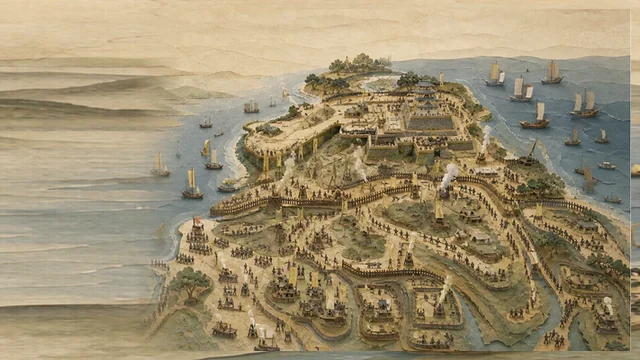
      • Historical contextHonganji’s Osaka headquarters linked temples and lay communities to strategic waterways. Nobunaga’s expansion threatened its resources and independence.
      • Key playersKennyo led Honganji’s resistance. Oda forces faced aid from Saika and Mōri allies, while imperial envoys eventually mediated an evacuation agreement.
      • What happenedFighting from 1570 included supply battles and an increasingly effective blockade. Kennyo and then the remaining defenders withdrew in 1580; the complex burned during the transition.
      • Why it matteredNobunaga’s coalition gained control of a strategic site. Honganji’s leadership, sacred image and communities survived, rebuilding from other bases.
      • What to noticeFollow blockade and negotiation alongside combat. The cause of the final fire and extensive iron plating on Oda vessels remain less certain than the withdrawal itself.
      Read the event article →
    9. 09 · 1637-1638

      The Shimabara–Amakusa Uprising and the Siege of Hara

      • Historical contextFamine aggravated heavy taxation and Christian persecution in Shimabara and Amakusa. Local pressures helped rebellion spread across communities with longstanding Christian ties.
      • Key playersVillagers and other occupants gathered at Hara Castle, with Amakusa Shirō as a leader and religious symbol. Matsudaira Nobutsuna directed the shogunate’s siege.
      • What happenedAfter failed attacks, a blockade depleted the defenders’ supplies. Hara fell in 1638, and most occupants, including noncombatants, were killed.
      • Why it matteredThe revolt brought mass killing, changes in local lordship and intensified religious investigation. Maritime restrictions developed further, but Dutch trade continued.
      • What to noticeDistinguish the armed rebels from the entire enclosed population. The survivors’ uneven record and archaeology complicate accounts chiefly preserved by the besieging side.
      Read the event article →
    10. 10 · 1616–1617

      Ieyasu Receives the Divine Title and Is Enshrined at Nikkō

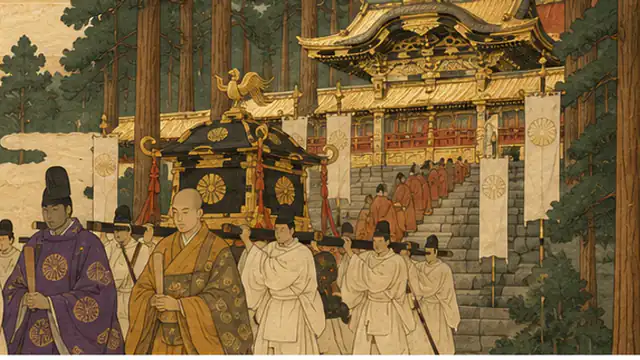
      • Historical contextIeyasu’s death left his successors decisions about burial, divine designation and dynastic worship. Existing religious traditions offered competing ritual forms.
      • Key playersHidetada ruled on the proposal; clerics Tenkai and Sūden advised different titles. The imperial court authorized the designation Tōshō Daigongen.
      • What happenedIeyasu was first buried at Kunōzan in 1616 and enshrined at Nikkō in 1617. Patronage and ceremonies established enduring sites for honoring the founder.
      • Why it matteredThe Tokugawa dynasty linked political succession to sacred commemoration. Shogunal judgment, clerical expertise and imperial procedures each contributed to the outcome.
      • What to noticeKeep the original enshrinement separate from Iemitsu’s much larger rebuilding in the 1630s. Today’s elaborate complex does not reproduce the first shrine unchanged.
      Read the event article →

    Reading preferences

    Text size
    Glossary intensity

    Choose how much explanation appears as you read.

    Saved on this device. All terms remain available in the glossary.

    Browse the glossary →
    History Omakase

    Opening reading…