Skip to content
Topics

Search History Omakase

Start typing to search.

    Top 10

    Removal from political or cultural life could take the form of dismissal, confinement, exile, execution or restrictions on publication. These ten episodes show how authorities imposed different penalties and how households, followers and artistic work were affected. The guides distinguish accusations from demonstrated acts and identify where surviving evidence leaves motives or legal procedures uncertain. Later rehabilitation, worship and famous stories are part of each event’s history, but do not automatically explain the original decision. The linked articles follow both the mechanisms of exclusion and the connections that sometimes persisted beyond the capital, a lost office or a prohibited genre.

    1. 01 · 729

      The Nagaya no Ō Incident

      • Historical contextPrince Nagaya held senior authority at Shōmu’s court while Fujiwara influence grew. His household joined royal connections to extensive property and administration.
      • Key playersNagaya and his wife Kibi faced accusations brought to the court. Officials and guards surrounded their residence and implemented the order for their deaths.
      • What happenedIn 729 Nagaya, Kibi and four sons died by suicide under court pressure. The chronicle later declared Kibi innocent and described one accusation as false.
      • Why it matteredThe incident removed a powerful household from court politics. Earlier wooden documents also reveal the organization and provisioning behind the destroyed residence.
      • What to noticeSeparate allegation from proof and political advantage from demonstrated responsibility. Household records from earlier years are not a dossier of the prosecution itself.
      Read the event article →
    2. 02 · 770-772

      The Death of Shōtoku and Dōkyō's Fall from Power

      • Historical contextShōtoku’s illness restricted access to the sovereign whose patronage sustained Dōkyō’s exceptional rank. Her death reopened decisions about the throne and senior appointments.
      • Key playersMinisters selected Prince Shirakabe, later Emperor Kōnin. Dōkyō and his relatives lost central positions, while earlier exiles could return.
      • What happenedAfter Shōtoku died in 770, Dōkyō was sent to a provincial temple post and his relatives were exiled. He died in 772.
      • Why it matteredLoss of sovereign support allowed the new administration to reorganize authority. Appointment, removal and rehabilitation were separate decisions within the transition.
      • What to noticeRead the disposition precisely: Dōkyō’s provincial assignment was not the same as a criminal sentence. Accusations also require distinction from independently established acts.
      Read the event article →
    3. 03 · 785

      Tanetsugu Is Assassinated and Crown Prince Sawara Is Removed

      • Historical contextNagaoka-kyō remained an unfinished capital when its leading construction official was attacked. A murder investigation became inseparable from court relationships and succession.
      • Key playersFujiwara no Tanetsugu was killed in 785. Crown Prince Sawara and members of the Ōtomo family were implicated under Kanmu’s government.
      • What happenedSawara lost his position and was confined, then died on the way toward exile according to later accounts. Kanmu designated his own son as heir.
      • Why it matteredPunishment changed the succession and disrupted a major court project. Later appeasement of Sawara’s spirit supplied another religious interpretation of the crisis.
      • What to noticeDistinguish whom the court punished from securely established guilt. Later explanations of disasters through a resentful spirit belong to the history of memory and belief.
      Read the event article →
    4. 04 · 901

      Michizane Is Removed from Office and Sent to Dazaifu

      • Historical contextMichizane’s rise under retired Emperor Uda placed a scholar near the center of government. Daigo’s reign brought a different balance among senior ministers and imperial relatives.
      • Key playersSugawara no Michizane served as minister of the right; Fujiwara no Tokihira held the left ministry. Accusations concerning succession supplied grounds for removal.
      • What happenedIn 901 Michizane lost his office and was sent to Dazaifu under a nominal appointment functioning as punishment. He died there in 903.
      • Why it matteredThe removal excluded him from central authority. Subsequent rehabilitation and Tenjin worship transformed the meaning of his memory without reversing his experience during life.
      • What to noticeRead the stated accusation separately from proof of conspiracy. The later sacred reputation explains reception, not every decision made in 901.
      Read the event article →
    5. 05 · 1271

      Nichiren’s Arrest, Tatsunokuchi Tradition and Sado Exile

      • Historical contextNichiren’s criticism of religious patronage and government policy brought conflict with authorities. Policing and exile could remove him from Kamakura’s support networks.
      • Key playersNichiren was arrested with official Taira Yoritsuna involved. Followers sustained connections during his time on Sado, where he composed major doctrinal works.
      • What happenedArrest in 1271 was followed by exile. Religious narratives describe an interrupted execution at Tatsunokuchi; the legal sequence and key text’s authenticity remain disputed.
      • Why it matteredExile became a productive period of writing and a central episode in later religious identity. Pardon in 1274 preceded the Mongol invasion that year.
      • What to noticeSeparate the better-established exile and writings from the miraculous survival account. Neither an astronomical explanation nor sole command by Yoritsuna is securely established.
      Read the event article →
    6. 06 · 1434

      Zeami Is Exiled to Sado

      • Historical contextZeami’s access to elite performance narrowed under a shogun favoring another performer. The death of his intended artistic heir further disrupted his household and succession plans.
      • Key playersAshikaga Yoshinori exiled Zeami in 1434. Konparu Zenchiku, Zeami’s son-in-law and a performer, helped maintain family support and exchanges of theatrical knowledge.
      • What happenedZeami lived on Sado and produced writings about that experience. Surviving correspondence also records practical help and continuing artistic discussion.
      • Why it matteredExile separated a performer from capital patrons without ending transmission of the art. Household ties sustained work across a politically imposed distance.
      • What to noticeDo not turn uncertain circumstances into a precise offense or guaranteed pardon. The surviving texts show continued activity more securely than the conditions of return.
      Read the event article →
    7. 07 · 1723

      Restrictions on Love-Suicide Stories

      • Historical contextCommercial theater had found audiences for stories drawn from paired suicides. Tokugawa authorities treated those representations as a danger to public morals.
      • Key playersOfficials regulated the acts and their depiction. Playwrights, managers, performers and publishers faced changes to an established successful genre.
      • What happenedRules tightened in 1722–1723, with restrictions on theatrical and literary circulation. Chikamatsu’s last contemporary-life play belongs to this transition, while later writing continued in other forms.
      • Why it matteredRegulation altered the relationship between recent incidents, entertainment and public authority. It constrained a genre without ending the theater or all work by its authors.
      • What to noticeDistinguish the rules about deaths from rules about representing them. The regulatory sequence unfolded across two years rather than one complete ban on a single day.
      Read the event article →
    8. 08 · 1828–1829

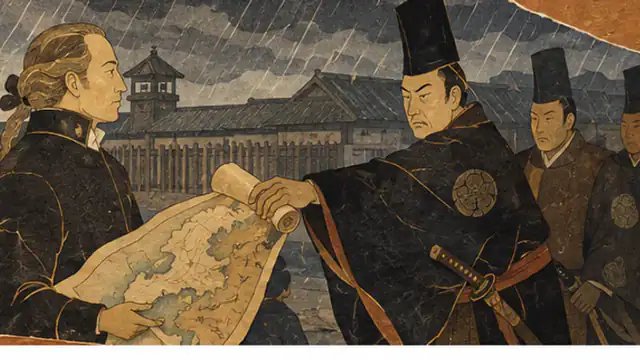
      The Siebold Incident: Maps, Expulsion, and a Family Left in Nagasaki

      • Historical contextForeign study at Dejima depended on Japanese collaborators within a regulated trading system. Geographic materials could cross the boundary between useful exchange and prohibited export.
      • Key playersSiebold collected information and taught; astronomer Takahashi Kageyasu supplied maps. Investigators pursued the network, while Siebold’s partner Taki and daughter Ine faced separation.
      • What happenedMaps discovered in 1828 led to punishments and Siebold’s expulsion in 1829. Takahashi died in custody, and the family remained divided until much later contact.
      • Why it matteredThe incident exposed legal limits to scientific exchange and imposed costs on collaborators and households. Treaty-port opening later changed the conditions of foreign residence.
      • What to noticeFollow the Japanese knowledge network as well as the foreign collector. Ine was an affected child, not a participant responsible for the map transaction.
      Read the event article →
    9. 09 · 1858-1859

      The Ansei Purge

      • Historical contextTreaty signing and shogunal succession divided political leaders in 1858. Direct communication from the court to Mito added a dispute over authorized channels.
      • Key playersIi Naosuke’s administration pursued opponents among lords, courtiers, retainers and activists. Those punished did not all share the same position on foreign policy.
      • What happenedArrests and judgments in 1858–1859 brought confinement, dismissal, imprisonment and executions. Some prisoners died before final sentences could be carried out.
      • Why it matteredRepression removed individuals without resolving the treaty or court conflicts. Ii’s assassination in 1860 carried the struggle into violence outside Edo Castle.
      • What to noticeIdentify each person’s position and punishment rather than grouping all victims as identical anti-foreign opponents. Death in custody and execution are different outcomes.
      Read the event article →
    10. 10 · 1863

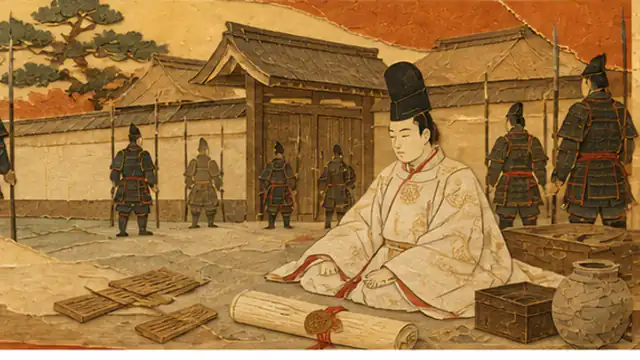
      A Palace Coup Expels Chōshū and Seven Courtiers

      • Historical contextChōshū and allied courtiers promoted forceful expulsion and gained influence near the emperor. Their rivals could challenge that position by controlling palace access.
      • Key playersAizu and Satsuma supported court-shogunate cooperation. Matsudaira Katamori supplied armed protection; Sanjō Sanetomi and six fellow courtiers were among those excluded.
      • What happenedIn 1863 guarded palace gates and notices removed Chōshū’s access. Its troops and allied courtiers left Kyoto for refuge in the domain.
      • Why it matteredThe coup altered who could act close to the emperor. Chōshū’s effort to recover standing contributed to renewed fighting the following year.
      • What to noticeCompare an observer’s sudden experience of mobilization with later accounts of planning. A contemporary diary need not reveal every secret negotiation behind the operation.
      Read the event article →

    Reading preferences

    Text size
    Glossary intensity

    Choose how much explanation appears as you read.

    Saved on this device. All terms remain available in the glossary.

    Browse the glossary →
    History Omakase

    Opening reading…