Skip to content
Topics

Search History Omakase

Start typing to search.

    Top 10

    New knowledge became useful through changes in access, observation, language, measurement and institutions. These ten episodes follow scientific books admitted through inspection, anatomy compared with a body, surveys compiled into maps, and schools and newspapers organized for continuing work. Legal permission or a striking discovery was seldom enough by itself. The guides show the additional labor needed to turn information into something other people could study or use. They also keep memoirs and later publications distinct from the events remembered. The linked articles provide the records and collaborators behind these steps without making them a single inevitable march toward modern science.

    1. 01 · 1720

      Yoshimune Relaxes Restrictions on Scientific Books

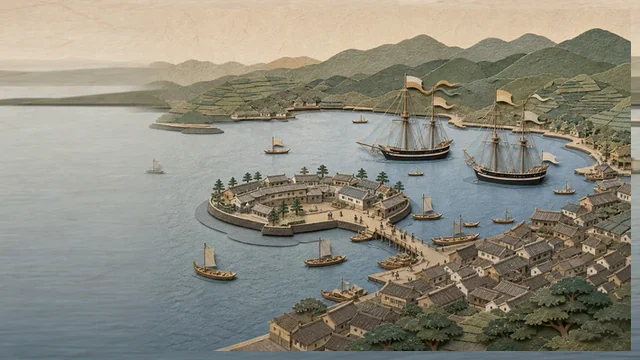
      • Historical contextChristian restrictions could exclude scientific books written by missionaries. Scholars interested in astronomy and calendars wanted access to knowledge caught within that prohibition.
      • Key playersYoshimune authorized an exception, while Nagasaki’s inspectors continued deciding admissibility. Interpreters and later learners worked to make imported texts usable.
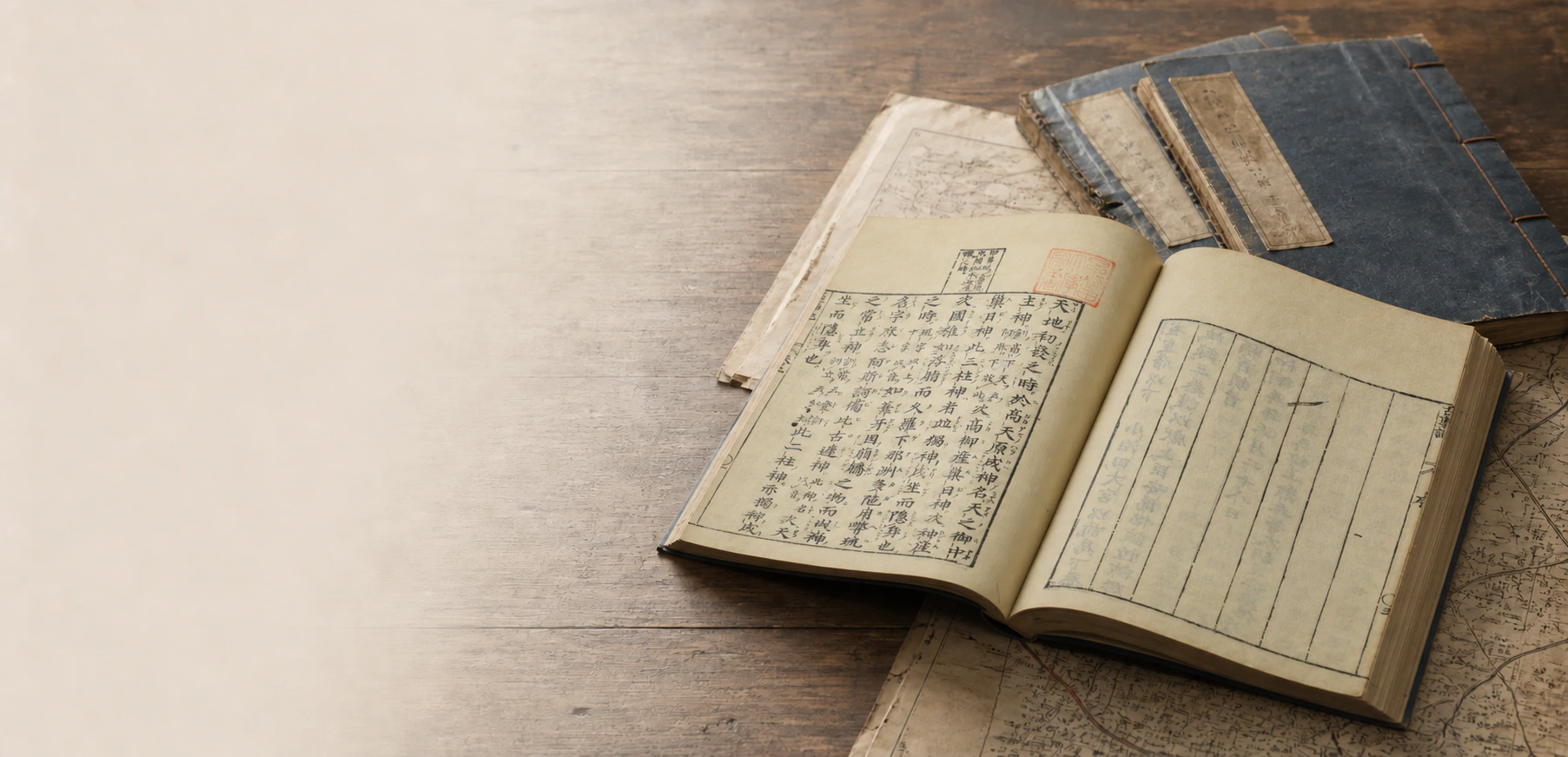
      • What happenedThe 1720 relaxation allowed works unrelated to Christian teaching despite missionary authorship. Inspection, book selection and language learning continued afterward.
      • Why it matteredA legal barrier weakened without Christianity becoming permitted or all books becoming freely available. Later medical translation depended on decades of procurement and study.
      • What to noticeSeparate permission to import from ability to understand. Genpaku belonged to the later history of learning, not to the decision made before his birth.
      Read the event article →
    2. 02 · 1771

      Dutch Anatomy at the Kozukappara Autopsy

      • Historical contextPhysicians had obtained Dutch anatomical books but struggled with their language. A dissection offered an opportunity to compare illustrated knowledge with a body.
      • Key playersSugita Genpaku, Maeno Ryōtaku and Nakagawa Jun’an attended. An experienced dissector opened the body of an executed woman, enabling their comparison.
      • What happenedAt Kozukappara in 1771, observed organs corresponded with illustrations. The physicians agreed to collaborate on a translation and began repeated working sessions.
      • Why it matteredObservation encouraged a publishing project that would bring European anatomical descriptions to new readers. Terminology and translation remained difficult after the initial comparison.
      • What to noticeConsider whose work and body made the encounter possible. Genpaku’s detailed account is a memoir written decades later, not a contemporary transcript.
      Read the event article →
    3. 03 · 1774

      Publishing Kaitai Shinsho

      • Historical contextA 1771 dissection encouraged physicians to compare European anatomical illustrations with observation. Understanding the accompanying Dutch prose proved a separate challenge.
      • Key playersSugita Genpaku and Maeno Ryōtaku led a collaborative translation. Publisher Suharaya Ichibee and illustrator Odano Naotake helped bring the fuller work to readers.
      • What happenedKaitai Shinsho appeared in 1774 after a distinct illustrated preview in 1773. Translators rendered anatomical descriptions into literary Chinese and developed terms for medical readers.
      • Why it matteredPrinting carried the results beyond the original working group. The translation remained imperfect, and later revision continued rather than treating publication as complete mastery.
      • What to noticeFollow the separate work of observation, translation, illustration and publishing. Genpaku’s famous memoir was written decades after the events it describes.
      Read the event article →
    4. 04 · 1800

      Inō Tadataka’s First Survey in Ezo

      • Historical contextAstronomical measurement and northern mapping interests overlapped. Inō sought a better measure of latitude while the government wanted information about Ezo, already inhabited by Ainu communities.
      • Key playersInō Tadataka led a six-person party trained through Takahashi Yoshitoki’s teaching. The journey connected individual research to government-supported surveying.
      • What happenedThe 1800 expedition measured a selected southern and eastern coastal route in Ezo. Approaching winter shaped its return after roughly half a year.
      • Why it matteredDistance, direction and astronomical observations supplied a foundation for later coastal surveys. The first journey did not map the whole island or complete the national map.
      • What to noticeFollow the measured route and its limits. Later compilation and government expansion must not be projected onto every achievement of this first expedition.
      Read the event article →
    5. 05 · 1821

      The Completed Inō Map Reaches the Shogunate

      • Historical contextYears of coastal surveys produced observations that still needed compilation. Inō Tadataka died before the final national map set reached the shogunate.
      • Key playersInō’s survey teams collected measurements; the shogunate’s astronomical office completed the work. Compilers and copyists extended the project beyond its most famous participant.
      • What happenedThe completed maps were submitted in 1821 in large, medium and small-scale sets. Each scale organized the accumulated information for a different geographical extent.
      • Why it matteredThe compilation became a resource for subsequent mapping. Destruction of the palace originals in 1873 made copies and related versions crucial to its preservation.
      • What to noticeDistinguish fieldwork from compilation and an original map from a later copy. A surviving sheet records transmission as well as geographical measurement.
      Read the event article →
    6. 06 · 1815

      Genpaku Writes Rangaku kotohajime

      • Historical contextDecades after the anatomy translation, participants’ memories could help later learners understand how Dutch knowledge had been acquired. Preserving that history became a separate project.
      • Key playersSugita Genpaku sent his memoir to Ōtsuki Gentaku for correction and preservation. Later editors, including supporters associated with Fukuzawa, helped bring it into print.
      • What happenedGenpaku wrote Rangaku kotohajime in 1815. Its wider publication followed in 1869 through a manuscript transmitted after his death.
      • Why it matteredThe work gave concrete roles to interpreters, patrons and collaborators in the history of learning. Its influence depended on both remembered experience and later editorial transmission.
      • What to noticeDistinguish writing from publication, and recollection from contemporary documentation. The memoir is valuable without reproducing every conversation exactly.
      Read the event article →
    7. 07 · 1872–1876

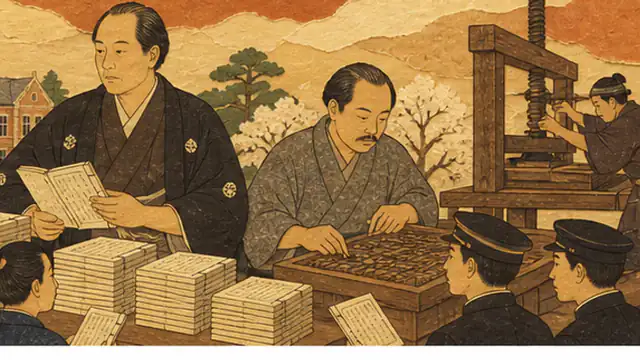
      Publishing Gakumon no Susume

      • Historical contextEarly Meiji change raised questions about inherited status, education and independence. Inexpensive print offered a means of addressing readers beyond a small scholarly circle.
      • Key playersFukuzawa Yukichi and Obata Tokujirō coauthored the first pamphlet. Fukuzawa continued the series, supported by educational and publishing networks.
      • What happenedSeventeen parts of Gakumon no Susume appeared between 1872 and 1876. Essays urged practical learning and linked individual independence to national independence.
      • Why it matteredThe series made education and self-cultivation subjects of broad public debate. Its circulation did not itself make society equal or remove barriers to participation.
      • What to noticeRead the successive pamphlets as an evolving argument. The later collected book can obscure changes of emphasis and the collaborative beginning.
      Read the event article →
    8. 08 · 1876

      Sapporo Agricultural College Opens a Program of Scientific and Practical Training

      • Historical contextThe Kaitakushi, the government agency directing northern development, needed trained personnel. Scientific instruction served a settlement project in a region already inhabited by Ainu communities.
      • Key playersClark, Wheeler and Penhallow taught the initial program. Brooks joined later, while Japanese students and administrators sustained the school beyond its first head’s stay.
      • What happenedSapporo Agricultural College opened specialist and preparatory courses in 1876. Botany, surveying, chemistry and practical agriculture connected classroom learning with fieldwork.
      • Why it matteredImported expertise became a continuing educational institution rather than a single teacher’s visit. Its work supported land management and Japanese state expansion.
      • What to noticeLook beyond Clark’s brief tenure to the subjects, facilities and people keeping instruction running. Practical education also had a political setting and consequences.
      Read the event article →
    9. 09 · 1882

      Ōkuma and Ono Build a Political Party and Tokyo Senmon Gakkō

      • Historical contextŌkuma’s removal from government in 1881 redirected political work toward independent organizations. A future elected assembly made parties and advanced education newly consequential.
      • Key playersŌkuma Shigenobu and Ono Azusa organized the Constitutional Progressive Party. Their associates also established Tokyo Senmon Gakkō, with Hidemaro as its first principal.
      • What happenedThe party organized in April 1882; the school obtained authorization and opened that October. Premises, examinations and teaching gave the educational venture practical form.
      • Why it matteredThe two institutions supplied different routes into public life before the Diet opened. Shared founders did not make a school’s obligations identical to a party’s aims.
      • What to noticeFollow the associates doing organizational work as well as the famous patron. Founding a school required more than announcing an educational ideal.
      Read the event article →
    10. 10 · 1882

      Jiji Shimpō Opens a Daily Newspaper and Commercial Newsroom

      • Historical contextThe 1881 political crisis disrupted plans for a government-connected newspaper. Prepared resources could instead support a daily publication claiming independence from parties.
      • Key playersFukuzawa Yukichi supervised editorial work; Nakamikawa Hikojirō developed circulation and advertising. Writers, printers and dispatch staff sustained the recurring operation.
      • What happenedJiji Shimpō launched in March 1882 with news, official notices, foreign reports and advertisements. Unsigned editorials could develop arguments across successive issues.
      • Why it matteredA commercial newsroom linked public argument to dependable production and revenue. Editorial independence was a political claim, rather than a guarantee of neutrality.
      • What to noticeDistinguish supervision from personal authorship. Unsigned articles could involve several writers and revisers, so not every text should automatically be attributed to Fukuzawa.
      Read the event article →

    Reading preferences

    Text size
    Glossary intensity

    Choose how much explanation appears as you read.

    Saved on this device. All terms remain available in the glossary.

    Browse the glossary →
    History Omakase

    Opening reading…