Skip to content
Topics

Search History Omakase

Start typing to search.

    Top 10

    A diplomatic relationship depended on more than the meeting of rulers. Ships, interpreters, credentials, gifts, repairs and reception protocols made journeys possible, while negotiation could fail despite impressive ceremonies. These ten entries follow missions across East Asia, the Pacific and Europe, alongside settlements involving trade, territory and war. The guides explain what travelers sought and what their journeys or agreements actually achieved. They also identify consequences for people who were not represented at the negotiating table. Read the linked articles for the practical work of crossing borders and for the gap between a delegation’s stated aims and its eventual results.

    1. 01 · 607

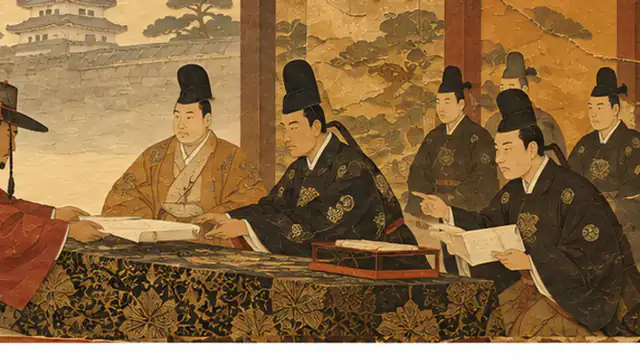
      Missions to Sui and Competing Records of Wa

      • Historical contextSui’s reunification of much of China offered the Yamato court new diplomatic and Buddhist connections. Its rulers sought recognition beyond established exchanges with the peninsula.
      • Key playersSuiko’s court dispatched Ono no Imoko with an interpreter. Emperor Yang received the mission, and a Sui envoy traveled to the archipelago in return.
      • What happenedA 607 embassy and the exchanges of 608 combined contentious letters with formal receptions and overseas study. Displeasure over royal titles did not end communication.
      • Why it matteredDiplomacy conveyed claims to status as well as access to learning. Procedures, escorts and documents made the ruler’s position visible to visitors.
      • What to noticeCompare the Chinese and Japanese chronicles’ different framings. The sustained exchange is clearer than a single agreed account of its letters and participants.

      Read the event article →
    2. 02 · 804-806

      Kūkai Studies in Tang China and Returns to Japan

      • Historical contextJapan’s embassy to Tang China carried several religious learning projects. Participation gave monks access to teachers, books and ritual materials abroad.
      • Key playersKūkai traveled under Kanmu’s government and trained with Huiguo in Chang’an. Saichō joined the same embassy on another ship with a different study assignment.
      • What happenedKūkai departed in 804, received esoteric Buddhist training and returned in 806. His catalogue recorded the texts and objects he brought back.
      • Why it matteredThe teaching and materials supported later Buddhist institutions in Japan. Court patronage, Kōyasan and Tō-ji developed afterward, under changing political circumstances.
      • What to noticeFollow the separate journeys and later institutional stages. A shared embassy does not mean the monks received the same training or returned with an already completed program.
      Read the event article →
    3. 03 · 1401-1404

      Yoshimitsu Opens Ming Relations and Tally Trade

      • Historical contextMing restrictions on private overseas trade made official diplomatic access valuable. Yoshimitsu continued directing policy after passing on the shogunal office.
      • Key playersYoshimitsu sent a monk and a Hakata merchant to China. Ming emperors recognized him as the King of Japan within their diplomatic order.
      • What happenedExchanges beginning in 1401 led to official tally trade in 1404. Matching credentials helped authenticate authorized missions carrying gifts and commercial goods.
      • Why it matteredThe arrangement connected political recognition to regulated maritime commerce. Acceptance of Ming diplomatic language did not replace the emperor’s domestic title in Japan.
      • What to noticeNotice the different authority claimed in foreign documents and at home. Tallies established an authorized channel without eliminating every unofficial voyage.
      Read the event article →
    4. 04 · 1613-1620

      Masamune’s Embassy Travels to Mexico, Spain and Rome

      • Historical contextDate Masamune sought direct trade with Spanish Mexico and the dispatch of missionaries. A Western-style vessel made a diplomatic venture across two oceans possible.
      • Key playersMasamune entrusted Hasekura Tsunenaga and the Franciscan Luis Sotelo with the requests. Merchants joined the outward voyage, while a smaller delegation continued to Europe.
      • What happenedThe embassy departed in 1613, reached Mexico, Spain and Rome, and returned in 1620. Audiences and baptism became prominent parts of its surviving record.
      • Why it matteredThe journey left letters, portraits and other objects documenting wide connections. Increasing restrictions on Christianity undermined the intended trade and missionary agreement.
      • What to noticeSeparate successful travel and ceremonial reception from successful negotiation. Most original passengers did not accompany the small delegation through its entire European route.
      Read the event article →
    5. 05 · 1711

      The 1711 Korean Embassy and the Diplomatic Title Dispute

      • Historical contextA new shogun’s accession prompted a Korean diplomatic mission. Its journey depended on documents, gifts, interpreters and institutions coordinating travel through Japan.
      • Key playersIenobu’s adviser Arai Hakuseki sought revised diplomatic formulas. Tsushima officials, including the mediating structure associated with Amenomori Hōshū, worked between the governments.
      • What happenedThe 1711 embassy completed its mission while disputed titles and reception changes exposed different understandings of hierarchy and precedent.
      • Why it matteredWords in official correspondence affected a relationship sustained by material exchange and institutional cooperation. Later missions adjusted the formulas again.
      • What to noticeRead the title dispute within the work of organizing an embassy. It was more than a personal argument between scholars over the best expression.
      Read the event article →
    6. 06 · 1858

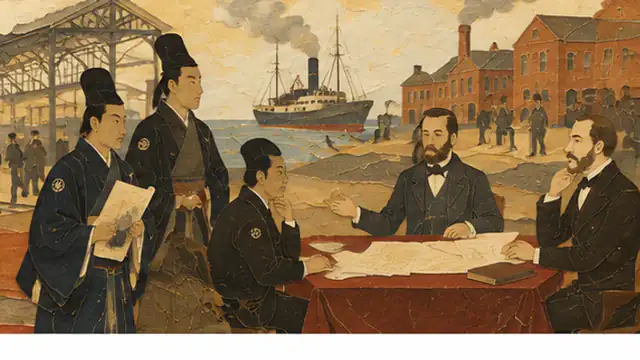
      The United States–Japan Treaty of Amity and Commerce

      • Historical contextThe 1854 agreement had allowed limited supply ports and consular residence. Townsend Harris sought broader commercial access while the shogunate faced domestic disputes over authority.
      • Key playersHarris negotiated with Inoue Kiyonao and Iwase Tadanari. Ii Naosuke’s government proceeded after Hotta Masayoshi failed to obtain prior imperial approval.
      • What happenedThe 1858 treaty provided commercial ports, foreign residence, direct trade and American consular jurisdiction. Attached tariffs and administrative duties defined its practical terms.
      • Why it matteredThe agreement restricted Japanese legal and tariff autonomy and intensified domestic conflict. Revision became a prolonged political objective rather than an immediate remedy.
      • What to noticeRead the clauses alongside the political dispute over signing. Scheduled openings, actual implementation and later revision belong to different stages.
      Read the event article →
    7. 07 · 1860

      Kanrin Maru Crosses the Pacific

      • Historical contextTreaty ratification required travel across the Pacific, while Japanese crews were developing navigation skills through recent training. The shogunate arranged a separate supporting voyage.
      • Key playersKimura Yoshitake held expedition responsibility and Katsu Kaishū commanded Kanrin Maru. American officer John Mercer Brooke assisted; the principal envoys traveled on Powhatan.
      • What happenedKanrin Maru crossed in 1860, reached San Francisco and underwent repairs before returning. Heavy seas and pumping forced adjustments to duties during the passage.
      • Why it matteredThe voyage tested training, command and overseas support in practice. Successful arrival combined Japanese effort, American assistance and shore facilities.
      • What to noticeCompare commemorative achievement with diary evidence of operational difficulties. The ship carrying the main diplomatic delegation was not Kanrin Maru.
      Read the event article →
    8. 08 · 1871–1873

      The Iwakura Mission Negotiates and Investigates Abroad

      • Historical contextThe new government wanted treaty revision and knowledge of foreign institutions. A major delegation left while leaders at home continued shaping the state.
      • Key playersIwakura Tomomi headed officials including Kido, Ōkubo and Itō. Students traveled too, including five girls whose education followed a separate schedule.
      • What happenedThe mission visited the United States and Europe in 1871–1873. Treaty negotiations failed, while inspections and recorded observations became a substantial part of its work.
      • Why it matteredReports supplied examples for policy and public understanding. Travel did not produce revised treaties or agreement among returning leaders about Japan’s next decisions.
      • What to noticeCompare diplomatic aims with investigative results. The officials’ tour, students’ longer stays and changes made by the caretaker government should not be collapsed together.
      Read the event article →
    9. 09 · 1875

      Japan and Russia Exchange Sakhalin Claims for Eighteen Kuril Islands

      • Historical contextThe 1855 treaty had left Sakhalin without a dividing boundary. Competing Japanese policy proposals sought either continued possession or withdrawal of claims.
      • Key playersKuroda Kiyotaka’s position prevailed, and Enomoto Takeaki negotiated with Russian officials. Alexander Gorchakov signed for Russia in 1875.
      • What happenedJapan relinquished Sakhalin claims in exchange for eighteen Russian-held Kuril islands. Ratification completed the agreement, while Ainu residents faced subsequent forced relocations.
      • Why it matteredThe settlement resolved competing state claims at the cost of displacement for inhabitants. The transferred chain did not include southern islands already assigned to Japan in 1855.
      • What to noticeRead the named islands and residents’ consequences together. Territorial agreement between states did not protect the homes and livelihoods of the people moved afterward.
      Read the event article →
    10. 10 · 1904-1905

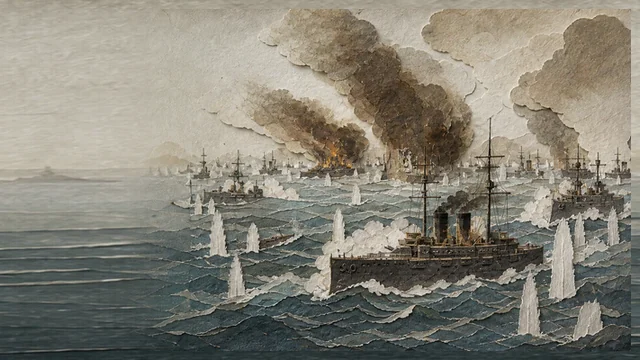
      The Russo-Japanese War and the Portsmouth Settlement

      • Historical contextNegotiations over Korea and Manchuria failed as Russia maintained forces and interests in the region. Japan went to war seeking a stronger imperial position.
      • Key playersJapanese and Russian armies fought across Manchuria, while their fleets contested sea access. Theodore Roosevelt mediated the eventual negotiations at Portsmouth.
      • What happenedJapan won major battles in 1904–1905, including Tsushima. The peace transferred specific territorial and railway rights and recognized Japanese predominance in Korea, but provided no war indemnity.
      • Why it matteredJapan enlarged its imperial reach while retaining debts and suffering heavy losses. Koreans and Chinese inhabitants had not negotiated the concessions affecting them.
      • What to noticeCompare battlefield victory with the precise treaty terms. Railway rights and leased territory did not amount to sovereignty over all Manchuria.
      Read the event article →

    Reading preferences

    Text size
    Glossary intensity

    Choose how much explanation appears as you read.

    Saved on this device. All terms remain available in the glossary.

    Browse the glossary →
    History Omakase

    Opening reading…