Skip to content
Topics

Search History Omakase

Start typing to search.

    Top 10

    Succession placed government under pressure because a title did not automatically transfer every resource supporting it. Death, illness, childhood and retirement could leave several people exercising authority around one officeholder. These ten episodes follow choices within imperial and warrior households, including managed transfers and violent removals. The guides explain the available heirs, the influential relatives and the decisions that made one succession effective. They avoid reading later outcomes as evidence of an inevitable family plan. The linked articles show how administrative work, court recognition, armed support and living predecessors shaped government after the formal transfer.

    1. 01 · 690

      Jitō’s Formal Accession after the Death of Prince Kusakabe

      • Historical contextTenmu’s death left government and succession unresolved. His widow exercised authority, but their designated heir Kusakabe died before taking the throne.
      • Key playersUno no Sarara became Empress Jitō. Kusakabe’s young son Karu remained a future heir, while officials continued administrative work during the succession crisis.
      • What happenedJitō formally acceded in 690 after governing since 686. Administrative codes and household registration developed alongside mourning and royal rites.
      • Why it matteredThe accession recognized existing authority and sustained Tenmu’s family line through an adult sovereign. Later transfer to her grandson required a further decision.
      • What to noticeSeparate the beginning of practical rule from formal enthronement. Jitō’s authority did not suddenly start on the day of the ceremony.
      Read the event article →
    2. 02 · 697

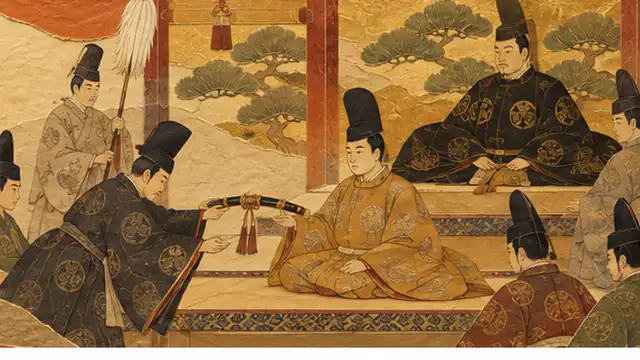
      Jitō Abdicates to Her Grandson Monmu

      • Historical contextDeaths within Tenmu’s family had repeatedly changed succession options. Jitō’s grandson Karu became the designated heir before her voluntary transfer of the throne.
      • Key playersJitō abdicated to Karu, who became Emperor Monmu. Her standing as the former sovereign remained a resource for his government.
      • What happenedThe 697 transfer took place during Jitō’s lifetime. She continued assisting the new reign, with Fujiwara-kyō remaining the capital and legal compilation proceeding.
      • Why it matteredAbdication combined a young ruler’s title with experienced support. It preserved dynastic continuity without making Monmu’s reign simply an extension of his grandmother’s actions.
      • What to noticeNotice how surviving relatives and earlier deaths shaped the available choice. A managed transfer could stabilize succession without creating an automatic rule for every future reign.
      Read the event article →
    3. 03 · 749

      Shōmu Abdicates and Kōken Accedes

      • Historical contextShōmu’s daughter had long been designated crown princess. His religious construction projects were still under way when he relinquished the reigning title.
      • Key playersPrincess Abe became Empress Kōken. Retired Shōmu and her mother Kōmyō remained influential within the imperial household.
      • What happenedShōmu transferred the throne in 749. Kōken subsequently attended the Great Buddha’s 752 consecration with both parents, linking the new reign to the continuing undertaking.
      • Why it matteredThe transfer changed the sovereign without ending the retired emperor’s involvement. Household authority and religious patronage crossed the boundary between reigns.
      • What to noticeKeep abdication distinct from casting and consecrating the statue. The three events show connected stages, rather than one complete transition in 749.
      Read the event article →
    4. 04 · 1086

      Shirakawa Abdicates to Horikawa and Develops Retired Rule

      • Historical contextA crown prince’s death reopened the succession question. Shirakawa chose to place his own young son on the throne rather than follow an earlier intended line.
      • Key playersShirakawa abdicated to Horikawa in 1086. Fujiwara no Morozane served as regent, while attendants and household officials supported the retired sovereign’s continuing influence.
      • What happenedShirakawa developed authority through property, advisers, correspondence and support for later successions. Retired rule acquired practical force over time, rather than appearing fully formed at abdication.
      • Why it matteredA sovereign could relinquish the reigning title while retaining substantial political resources. Regents, temples and reigning emperors nevertheless continued to exercise authority of their own.
      • What to noticeTrace the channels making a retired ruler’s command effective. The date marking insei’s beginning is not a blueprint for every later conflict.
      Read the event article →
    5. 05 · 1199

      Yoriie Succeeds Yoritomo and Senior Officials Mediate Government

      • Historical contextYoritomo’s death left followers, offices and landholding relationships to his young successor. Governing required experienced intermediaries as well as inheritance within the founder’s household.
      • Key playersYoriie became lord of Kamakura in 1199. His mother Masako and senior Hōjō, Hiki and other officials retained influence around him.
      • What happenedA recorded arrangement named thirteen senior figures to regulate the handling of disputes. Yoriie remained ruler while established officials mediated access to his decisions.
      • Why it matteredThe government survived its founder, but rival households still competed over authority. The arrangement did not create an enduring unified cabinet above a powerless successor.
      • What to noticeDistinguish documented mediation from the older picture of regular meetings by all thirteen. Yoritomo’s precise cause of death is also less secure than popular accounts suggest.
      Read the event article →
    6. 06 · 1203

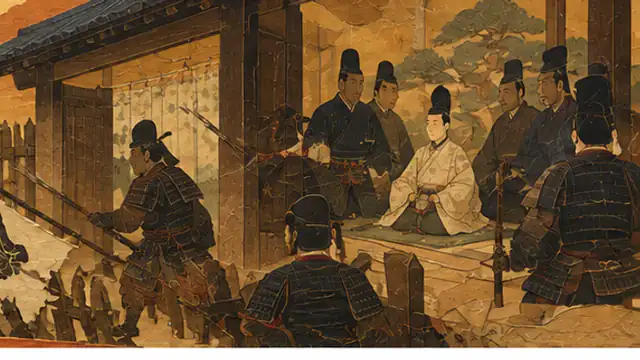
      The Hiki Defeat, Yoriie’s Deposition and Sanetomo’s Succession

      • Historical contextYoriie’s serious illness made succession urgent. His son’s maternal Hiki relatives and his younger brother’s Hōjō connections linked possible heirs to competing armed households.
      • Key playersHiki Yoshikazu supported his grandson Ichiman. Hōjō Tokimasa controlled another succession network through Masako and her younger son, the future Sanetomo.
      • What happenedIn 1203 Yoshikazu was killed and the Hiki position destroyed. Yoriie lost office, was sent to Izu and died the following year; Sanetomo succeeded.
      • Why it matteredViolence and forced removal changed control around the shogunal household. Descent alone could not protect an heir whose relatives lost the armed contest.
      • What to noticeTreat the victors’ account of secret plots cautiously. The removal and deaths are clearer than reconstructed private motives or every detail of Ichiman’s fate.
      Read the event article →
    7. 07 · 1219

      Sanetomo’s Assassination and a New Shogunal Succession

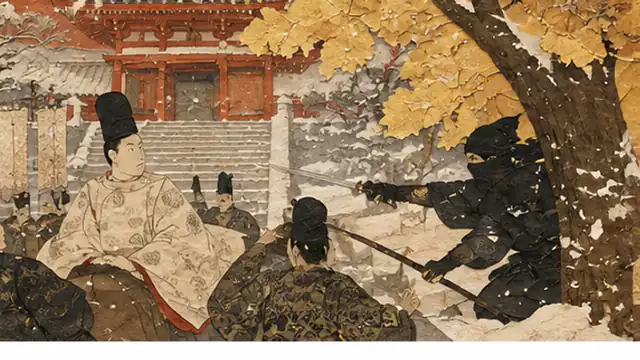
      • Historical contextSanetomo had no child, while Yoritomo’s government still required a recognized head. A ceremony displaying Sanetomo’s court rank brought officials and warriors to Kamakura’s principal shrine.
      • Key playersSanetomo was killed by his nephew Kugyō, Yoriie’s son and a shrine cleric. Masako and the existing leadership managed the resulting succession emergency.
      • What happenedThe assassination in 1219 ended the direct male line’s succession. A Fujiwara child arrived that year and later received formal appointment as shogun in 1226.
      • Why it matteredGovernment continued while its headship moved outside the founder’s male descendants. Established officials could sustain offices and followers around a ruler from another prestigious family.
      • What to noticeDistinguish Kugyō’s documented act from theories of a wider conspiracy. Later memorials and legends do not independently settle who may have directed him.
      Read the event article →
    8. 08 · 1473

      Yoshihisa Inherits the Shogunal Office

      • Historical contextThe Ōnin War continued after rival coalition leaders died. Earlier uncertainty over Yoshimasa’s heir had become part of a conflict not ended by appointing a successor.
      • Key playersAshikaga Yoshimasa transferred the office to his son Yoshihisa. Hino Tomiko remained influential within the household, while the child depended on older authorities.
      • What happenedYoshihisa became shogun in the Japanese chronology’s 1473, corresponding to January 1474 in the Gregorian calendar. His independent role expanded through later ceremonial and military stages.
      • Why it matteredThe title settled direct father-to-son succession without immediately creating an autonomous government. Living predecessors and wartime coalitions still controlled important resources.
      • What to noticeKeep the catalog date and its calendar conversion distinct. Later adult leadership should not be projected back onto the child at appointment.
      Read the event article →
    9. 09 · 1623

      Iemitsu Succeeds Hidetada as the Third Shogun

      • Historical contextTokugawa succession already linked family inheritance to court appointment. Hidetada’s retirement offered another transfer during a predecessor’s lifetime.
      • Key playersIemitsu traveled to Kyoto with Hidetada and received appointment as the third shogun. The retired father remained an active source of authorization.
      • What happenedThe office passed in 1623, but later land grants still bore Hidetada’s seal. His death in 1632 ended this period of overlapping authority.
      • Why it matteredThe dynasty continued through a third generation without requiring an immediate withdrawal of the previous ruler. Title and effective powers moved on different schedules.
      • What to noticeLook for acts showing who could make binding decisions after retirement. Iemitsu’s later government should not be treated as fully in place at accession.
      Read the event article →
    10. 10 · 1867-1868

      Mutsuhito Succeeds and Is Formally Enthroned

      • Historical contextKōmei’s death required imperial succession while Yoshinobu still held the shogunate. The later restoration government was not yet established at the new emperor’s accession.
      • Key playersMutsuhito succeeded in 1867. Courtiers and domain leaders subsequently acted in his name as the emerging government fought to consolidate authority.
      • What happenedFormal enthronement took place in Kyoto in October 1868. Ceremonial proclamation and homage proceeded while warfare continued elsewhere.
      • Why it matteredImperial presence supported the new regime’s public claim to sovereignty. Accession, ceremony and military consolidation nevertheless remained separate processes.
      • What to noticeNotice the practical constraints behind the solemn occasion, including limited funds and reused furnishings. A ceremony can proclaim authority without proving its complete territorial reach.
      Read the event article →

    Reading preferences

    Text size
    Glossary intensity

    Choose how much explanation appears as you read.

    Saved on this device. All terms remain available in the glossary.

    Browse the glossary →
    History Omakase

    Opening reading…