Skip to content
Topics

Search History Omakase

Start typing to search.

    Top 10

    Rules could define an office, allocate estate income, regulate movement or create new obligations for households and employers. This selection follows ten attempts to make authority work through law and institutions. The important distinction is between announcing a standard and implementing it: judges needed evidence, journeys needed labor, recruitment needed records, and protection could be weakened by exclusions. Each guide sets out the problem addressed and the practical change attempted. The linked articles show how those arrangements operated alongside older rights, competing jurisdictions and resistance. They explain changes in governing capacity without treating every new rule as an immediately effective national system.

    1. 01 · 700–702

      The Taihō Code Enters Government

      • Historical contextDecades of reform had changed ranks, taxes and local administration. The court at Fujiwara-kyō needed a connected legal framework rather than another isolated command.
      • Key playersEmperor Monmu authorized the project. Prince Osakabe, Fujiwara no Fuhito and other learned officials compiled it collectively, adapting continental models.
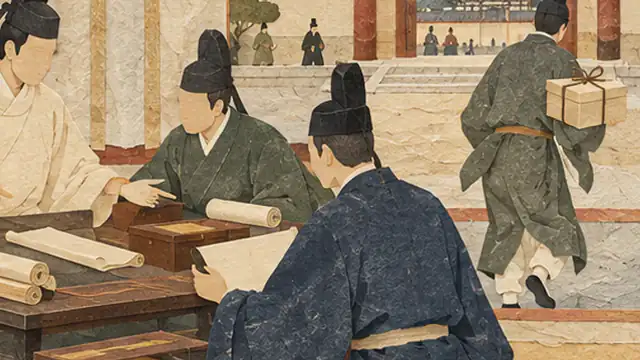
      • What happenedAcross 700–702, compilation, promulgation and instruction brought penal and administrative rules into government. These organized offices, registration, taxation and labor obligations.
      • Why it matteredThe code supplied a shared language for governing through written law—the ritsuryō order. Distribution and local practice remained uneven, and later revision continued.
      • What to noticeSeparate writing a rule from making it operate. The original complete text is lost, so later law and commentary mediate what survives.
      Read the event article →
    2. 02 · 1068

      Go-Sanjō’s Accession and the Review of Estate Claims

      • Historical contextRegent-house influence often depended on close maternal ties to young emperors. Go-Sanjō’s background altered that relationship and opened room for administrative action.
      • Key playersGo-Sanjō acceded in 1068 without a maternal grandfather from the contemporary regent house. Court advisers and document examiners worked on disputed estate claims.
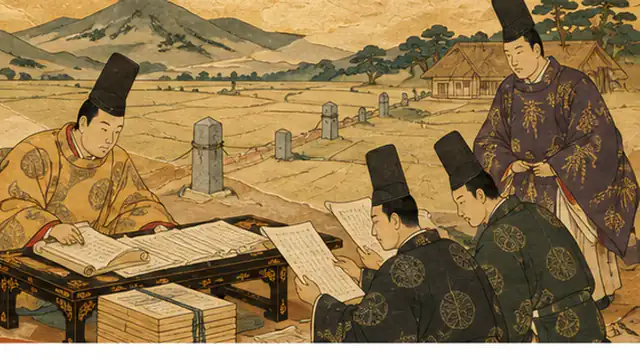
      • What happenedThe reign issued estate regulations in 1069 and subjected rights and exemptions to documentary review. Evidence of the reviewing office’s work follows in 1070.
      • Why it matteredThe inquiry connected a changed court relationship to questions of revenue and local administration. It restrained particular claims rather than abolishing all estates or Fujiwara property.
      • What to noticeFollow the documents and contested exemptions. The office’s precise foundation date remains debated, and a review order is not proof of uniform enforcement.
      Read the event article →
    3. 03 · 1232

      The Goseibai Shikimoku Defines Rules for Warrior Government

      • Historical contextExpanded warrior authority after the Jōkyū War brought recurring disputes over offices, dues and landholding. Judges needed shared standards for decisions within Kamakura’s jurisdiction.
      • Key playersHōjō Yasutoki, Tokifusa and eleven councillors adopted the code. Their oath committed them to judging without favoring relatives or fellow officials.
      • What happenedThe fifty-one articles of 1232 addressed military duties, estate stewards, possession, inheritance and procedure. They offered tests for resolving concrete conflicts.
      • Why it matteredWarrior government gained a written basis for its judgments, while court and temple jurisdictions continued. Later additions and annotated copies extended its use.
      • What to noticeCompare stated rules with the disputes they targeted. The code’s protection of particular rights coexisted with penalties and authority differentiated by social status.
      Read the event article →
    4. 04 · 1352-1368

      Hanzei: Wartime Revenue Shares Become Land Rights

      • Historical contextCivil war created demand for army provisions on estates supporting court and temple proprietors. The Ashikaga government authorized partial revenue allocations to military recipients.
      • Key playersProvincial commanders assigned income to serving warriors. Estate proprietors and their agents tried to preserve dues and challenge excessive collection.
      • What happenedHanzei began with wartime half-shares in 1352. Repeated assignments and disputes led toward more durable divisions of land, reflected in the rules of 1368.
      • Why it matteredA temporary claim on one harvest could become a lasting right to cultivation income. Provincial military power expanded through particular settlements and enforcement.
      • What to noticeTrack the shift from splitting revenue to dividing land. Exemptions, appeals and local outcomes prevent treating every governor’s authority as identical.
      Read the event article →
    5. 05 · 1635

      Sankin-kōtai and the Regulation of Daimyō Movement

      • Historical contextLordly attendance and family guarantees predated Iemitsu’s reign. The shogunate sought an explicit framework regulating daimyo, the military lords governing separate domains.
      • Key playersIemitsu’s government prescribed alternating residence. Lords, their families, road officials and transport communities carried the arrangement into practice.
      • What happenedThe 1635 laws specified attendance in Edo and regulated retinues and routes. Principal wives and heirs remained in Edo while lords traveled between headquarters and domains.
      • Why it matteredRecurring attendance brought lords within shogunal supervision and generated large transport demands. Inns and suppliers gained business while communities supplied unevenly distributed labor.
      • What to noticeExamine both political guarantees and travel logistics. Schedules varied, and the familiar checkpoint slogan does not describe every checkpoint’s actual inspections.
      Read the event article →
    6. 06 · 1639

      The Portuguese Ban and Tokugawa Maritime Controls

      • Historical contextChristian prohibition and trade regulation developed through several orders in the 1630s. Officials wanted to restrict movement while preserving authorized channels of commerce and information.
      • Key playersTokugawa authorities regulated Nagasaki, foreign merchants and Japanese travelers. Dutch and Chinese traders continued through supervised arrangements after Portuguese exclusion.
      • What happenedPortuguese ships were banned in 1639. The Dutch moved to Dejima in 1641, while contacts through Korea, Ryūkyū and Ainu territories followed other institutions.
      • Why it matteredThe measures sharply limited travel and residence without ending external contact. Goods and news still moved through channels with different controls and unequal relationships.
      • What to noticeReplace the idea of complete isolation with specific routes, prohibitions and intermediaries. The later term sakoku was not the original name of one comprehensive 1639 decree.
      Read the event article →
    7. 07 · 1869-1871

      Returning Registers and Abolishing Domains

      • Historical contextAfter restoration, domains still collected taxes and maintained troops. Central authority coexisted with administrations headed by former hereditary lords.
      • Key playersLeading domains offered lands and population registers to the emperor. National leaders then organized an imperial guard; local officials had to carry out the change.
      • What happenedIn 1869 former lords became appointed domain governors. In 1871 their offices were abolished and centrally appointed prefectural authorities replaced them, with staff temporarily continuing routine work.
      • Why it matteredThe center could reassign territory, officials and revenues. Consolidation, debt settlement, military reform and stipend changes required later measures rather than following automatically.
      • What to noticeNotice the difference between ending hereditary territorial office and resolving the livelihoods and financial obligations attached to it.
      Read the event article →
    8. 08 · 1873

      Conscription and Land-Tax Reform Create New Obligations

      • Historical contextCentralization required dependable recruitment and revenue beyond former domain arrangements. New claims on people and land had to be organized through local offices.
      • Key playersThe Meiji government issued conscription and land-tax rules. Local officers compiled military lists and examined recruits, while surveyors identified liable landholders.
      • What happenedThe 1873 reforms established selected military service and cash taxes based on land value. Exemptions and payment options limited the reach of early conscription.
      • Why it matteredService could remove workers from households, and fixed cash assessments created burdens despite poor harvests. Implementation continued over years, followed by adjustments including a lower tax rate.
      • What to noticeCompare the two systems’ local procedures and unequal obligations. Proclamation neither completed the surveys nor made military service immediately universal.
      Read the event article →
    9. 09 · 1885–1890

      Cabinet, Constitution, Diet and Imperial Morality

      • Historical contextDemands for elected representation and disputes within government preceded the promise of a national assembly. Officials studied constitutional models while popular movements proposed alternatives.
      • Key playersItō Hirobumi and other officials drafted the framework under Emperor Meiji. The Diet was a two-house legislature, with an elected lower chamber and a differently constituted upper house.
      • What happenedA Cabinet was created in 1885, the constitution promulgated in 1889, and the first Diet opened in 1890 after a restricted male election. An education rescript prescribed imperial loyalty.
      • Why it matteredLegislation and budgets now involved parliamentary consent, while major powers remained with the emperor. Most subjects lacked a vote; rights were bounded by law.
      • What to noticeCompare the legislature’s practical leverage with reserved imperial powers, and distinguish constitutional institutions from moral instruction in schools.
      Read the event article →
    10. 10 · 1890-1916

      Factory Investigation Leads to a Limited Worker-Protection Law

      • Historical contextFactory expansion drew rural women into work marked by long hours and poor living conditions. Investigations made these arrangements a matter of proposed public regulation.
      • Key playersMinistry investigators and social observers documented labor conditions. Legislators and industrial opponents shaped the eventual law, while employers became subject to specific duties.
      • What happenedThe Factory Act was promulgated in 1911 and implemented in 1916. It set limited age, hours, rest and safety protections with substantial exceptions.
      • Why it matteredThe law established enforceable obligations beyond voluntary employer promises. Coverage thresholds and long transition periods left many workers and practices outside immediate protection.
      • What to noticeRead exclusions as closely as headline protections. Night-work restrictions did not immediately end textile shifts, and adult men lacked a general hours limit.
      Read the event article →

    Reading preferences

    Text size
    Glossary intensity

    Choose how much explanation appears as you read.

    Saved on this device. All terms remain available in the glossary.

    Browse the glossary →
    History Omakase

    Opening reading…