
The Shimonoseki Chōshū War Historic Area is not a single attraction but a group of late-Edo sites strung along the Kanmon Strait in Shimonoseki, Yamaguchi Prefecture. Between 1863 and 1866 the Chōshū domain fired on foreign ships here, was defeated by a fleet from Britain, France, the Netherlands and the United States, and then used the town as a base for an internal coup and a war against the shogunate. The Maeda battery site, the replica cannons at Mimosusogawa Park, the site of Shiraishi Shōichirō’s house and Kōzan-ji temple in Chōfu each mark a different stage of those years.
01The Shimonoseki bombardments
In the fifth month of 1863, on the deadline the imperial court had set for expelling foreigners, Chōshū batteries along the strait fired on an American merchant ship, and later on French and Dutch vessels. American and French warships retaliated within weeks, sinking Chōshū ships and damaging batteries. In the eighth month of 1864 a combined fleet of 17 ships from the four powers bombarded Shimonoseki; landing parties occupied the batteries around Maeda and carried off the guns. Takasugi Shinsaku negotiated the peace for Chōshū, and the shogunate was made to pay the indemnity. The defeat turned the domain’s leaders from expelling foreigners toward adopting Western arms.
02The Kiheitai and the domain coup
After the 1863 clashes, Takasugi founded the Kiheitai militia at the house of the Shimonoseki merchant Shiraishi Shōichirō, enlisting farmers and townsmen as well as samurai. After the first shogunal expedition in 1864, conservatives took control of the domain. In the twelfth month of that year Takasugi raised troops at Kōzan-ji, and by early 1865 his side had seized the domain government. When the shogunate launched its second expedition in 1866, Chōshū forces crossed the strait toward Kokura, and the Kokura side set fire to its own castle and withdrew.
03What can be seen today
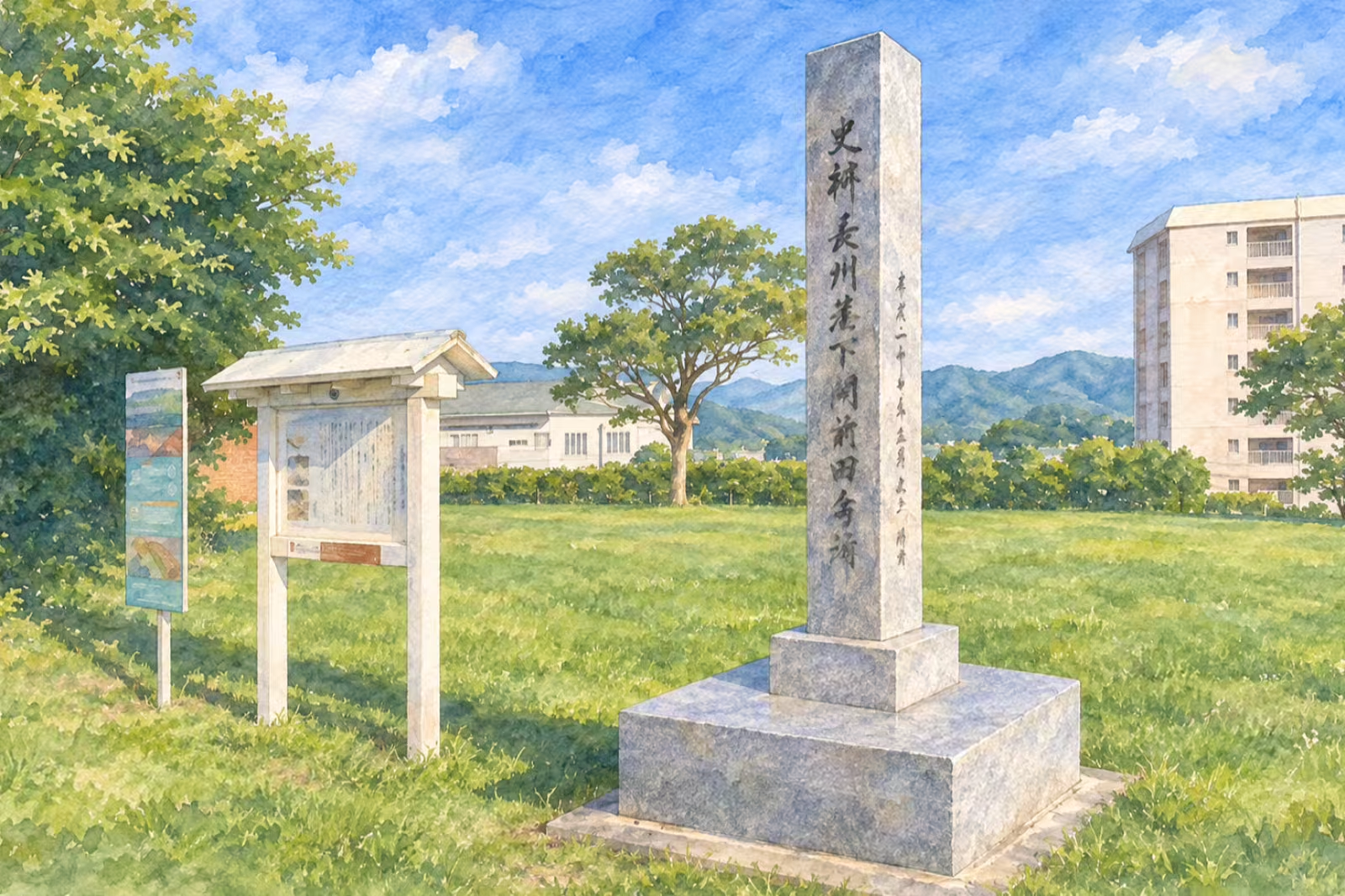
Excavation at the Maeda battery site has confirmed gun emplacements and cannonballs, and as of the 2010s it is a National Historic Site, though little stands above ground. Mimosusogawa Park displays full-size replicas of Chōshū cannons; one of the original guns is said to have been taken to France and was later lent back for display. Shiraishi’s house is gone, and a monument marks the spot. Kōzan-ji’s Buddha hall, built in the late Kamakura period, is a National Treasure, and an equestrian statue of Takasugi stands in the grounds. Sakurayama Shrine, dedicated to the Kiheitai dead, and the Shimonoseki City History Museum, which focuses on the Bakumatsu and Restoration years, are in the same area.