
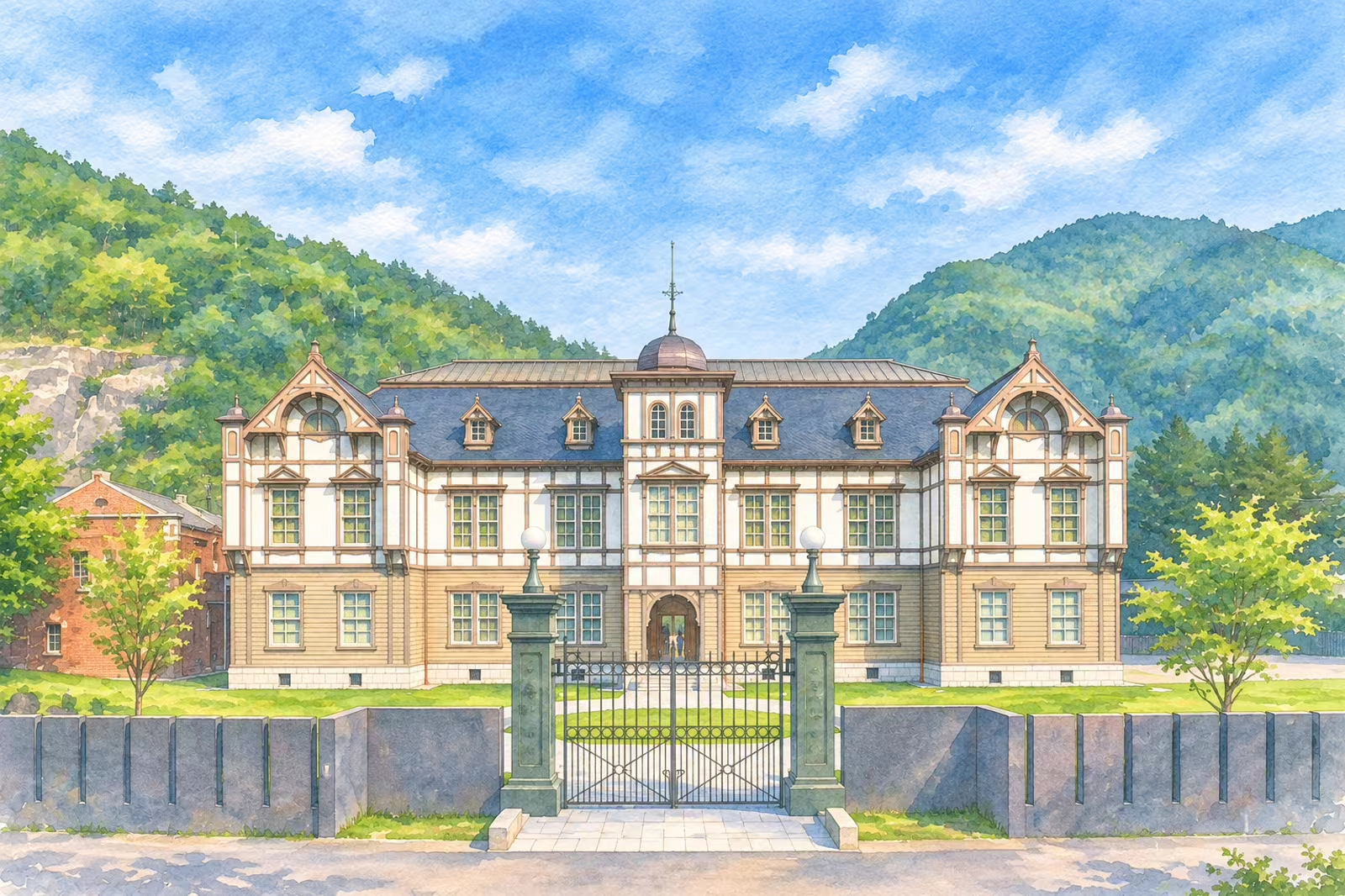
The Ashio Copper Mine lies in the Ashio district of Nikkō City, Tochigi Prefecture (formerly the town of Ashio, merged into Nikkō in 2006), in the valleys of the upper Watarase River. Copper was mined here from the Edo period, and in the Meiji era, under Furukawa Ichibei, Ashio became one of Japan’s largest copper producers and an engine of the country’s industrialization. It was also the site of the Ashio copper mine pollution incident, often described as the starting point of environmental pollution problems in modern Japan. The tunnels, smelter ruins, workers’ housing and replanted hillsides along the valley record both stories.
01From shogunate mine to modern industry
According to tradition, copper was discovered at Ashio by local farmers around 1610, and the mine was soon placed under direct shogunate control. In the 17th century its copper went into buildings in Edo and Nikkō and into coinage, and was exported through Nagasaki. Output then declined for a long period, and by the early Meiji years the mine was nearly abandoned. Furukawa Ichibei bought it in 1877. A rich vein was struck in the early 1880s, and Furukawa introduced Western drilling, drainage, electric power and smelting technology. By the late Meiji period Ashio produced a large share of Japan’s copper.
02Pollution, Tanaka Shōzō and the riot
Smelter fumes killed the forests around the mine, logging worsened erosion, and waste water and sediment laden with heavy metals flowed into the Watarase River. Floods in the 1890s carried the pollution onto farmland downstream in Tochigi and Gunma, killing fish and damaging crops. Tanaka Shōzō, a member of the House of Representatives, raised the issue in the Imperial Diet from 1891, and in 1901 he tried to hand a direct petition to Emperor Meiji. The government issued orders for preventive works and later turned the downstream village of Yanaka into a flood retention basin, forcing its residents to leave. In 1907 miners rioted over working conditions, and troops were sent to suppress them.
03What can be seen today
Mining at Ashio ended in 1973, and smelting continued until the late 1980s. Part of the Tsūdō tunnel has been converted into a show mine that visitors can enter. The Honzan area keeps the chimney and buildings of the former smelter, and the Kakemizu district preserves Furukawa’s guesthouse and staff residences. The slopes of Matsuki, stripped bare by smelter smoke, have been the focus of erosion control and tree planting since the Meiji era; parts are green again, though recovery is still under way. Water draining from the old workings must still be treated before release, and the treatment plant continues to operate. The Tsūdō and Honzan tunnels, the Utsuno powder magazine and other remains are reported to be designated a national Historic Site, and local groups are working toward World Heritage nomination.